
Just 20 kilometers from Croatia’s bustling capital, a hidden gem awaits – still delightfully under the radar.
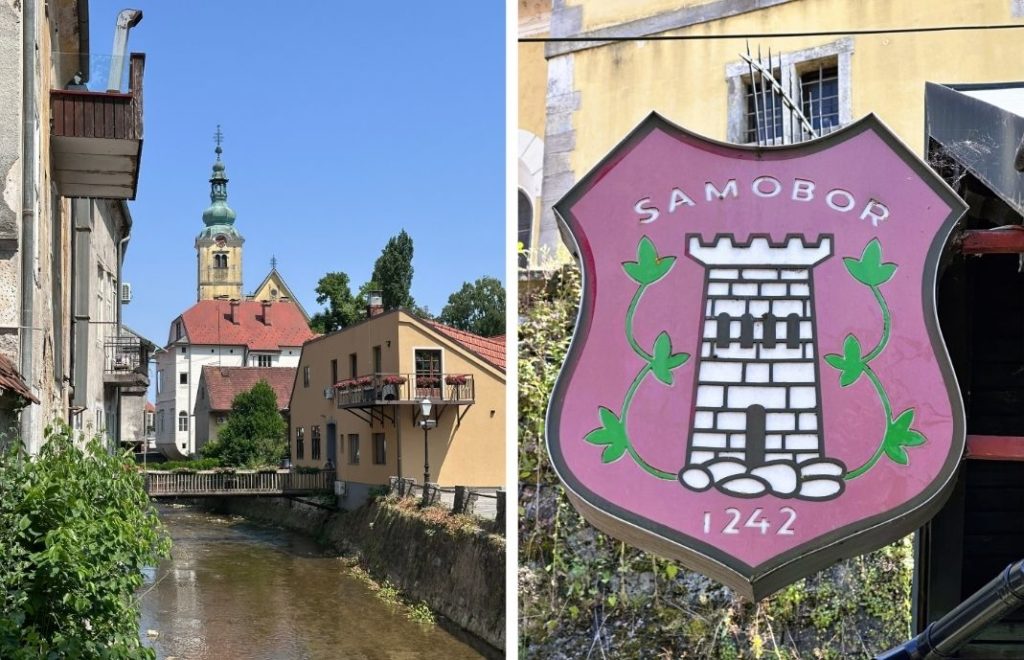
Imagine a charming medieval town, nestled where rocky cliffs rise from rolling, forested hills. A place where your pulse slows, your appetite stirs, and the atmosphere invites you to simply breathe.
Here, baroque buildings whisper stories of the past. Church bells echo softly through narrow alleyways lined with cobblestones, cozy cafés, and niche boutiques tucked into historic nooks.
At the heart of it all lies a picturesque square, framed by colorful facades and a whimsical old well. The scent of freshly baked pastries drifts through the air, sparkling wine bubbles in your glass, and every dish is a celebration of local flavors.
Welcome to Samobor – small in size, rich in soul, and overflowing with charm.
Why visit Samobor?
Croatian writer Antun Gustav Matoš once said that Samobor is the most Croatian of all towns in the country.
And honestly, that’s reason enough to add it to your travel list.
Samobor was officially granted town status in 1242, when King Béla IV named it a royal market town – recognizing its key role in trade and commerce.
Today, a gentle breeze from the past still lingers over this relaxed medieval town, rich in history and charm.
It’s the kind of place where you can truly breathe – where shoulders drop and daily stress fades away.
Life moves slowly here. No one’s in a rush. Plates are filled with hearty, homemade specialties, and according to a beloved local song, the wine is best enjoyed straight from the barrel.
Samobor isn’t a place you stay for long. A day or two will do. But it’s more than worth the detour.
King Tomislav Square
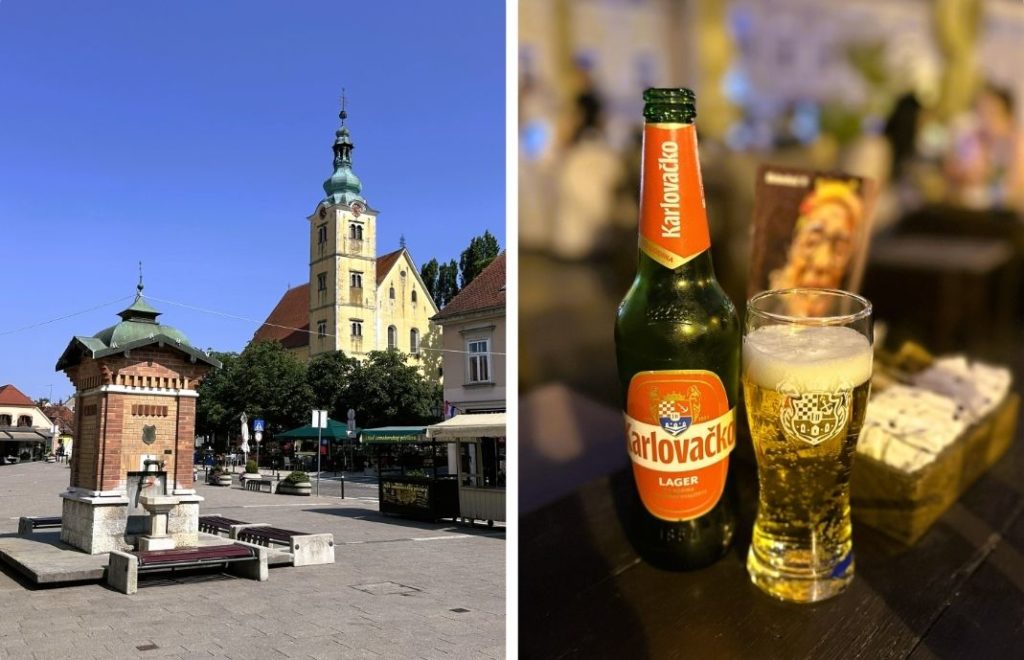
Samobor’s beating heart is King Tomislav Square – just as it has for centuries. It’s still the town’s central gathering place, where locals and visitors come together to stroll, sip, and soak in the charm.
Named in 1925, the square is surrounded by colorful buildings in a delightful blend of architectural styles -from baroque and neoclassical to early 20th-century Bauhaus. Today, these façades house inviting cafés, family-run restaurants, boutique shops, and charming little hotels.
In the middle of the square stands an old stone well. Legend has it that if you drink from it, you’ll return to Samobor – again and again.
And one more fun fact: there are no pigeons on the square. Just saying…
Kremšnita cream cake
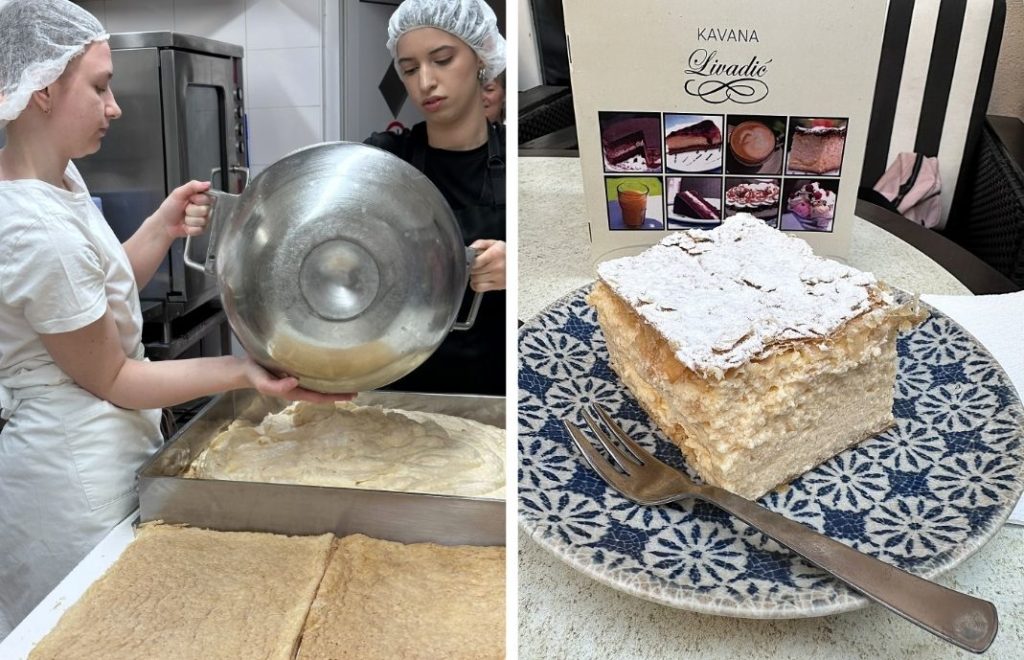
You haven’t truly been to Samobor unless you’ve had at least one slice of kremšnita cream cake. This iconic dessert is nothing less than the town’s sweetest symbol.
While you’ll find kremšnita all across Croatia, it’s in this little town that you’ll taste the very best. So good, in fact, that stopping at just one slice is practically impossible.
This delicate local specialty is made with layers of flaky pastry, filled with luscious vanilla custard, and topped with a dusting of powdered sugar.
The recipe was first created in 1921 by Marko Lukačić, and to this day, Samobor’s bakers still make it exactly the same way – tradition served by the slice.
How to make it: Samobor custard slice kremšnita
Parish Church of Saint Anastazija
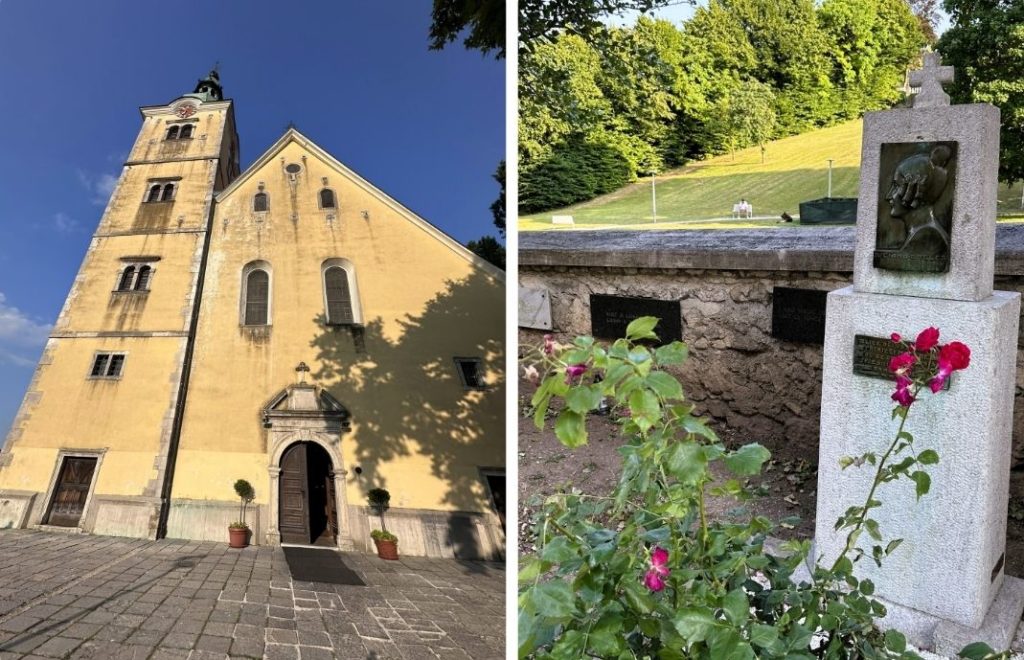
Just a few minutes’ walk from the main square stands the striking yellow Church of Saint Anastazija, a place of quiet beauty and deep historical roots.
First mentioned in 1334 and consecrated in 1688, the church is a rare example of baroque architecture in Croatia, blending several artistic styles and details in one harmonious whole.
It is also the only church in northern Croatia dedicated to Saint Anastasia. Inside, you’ll find an evocative sculpture of a “Wounded Jesus,” which was originally housed in a small chapel beside the square’s well during the 18th century.
Over the centuries, the bell tower has been repeatedly covered with copper plating, and during World War I, its bells were melted down and repurposed into cannonballs. The bells you hear today were consecrated in 1927 by Bishop Antun Bauer.
The altar dates to the 19th century, the stunning stained-glass windows were installed in 1889, the paintings are from 1896, and the pipe organ – still in use – was crafted in 1900.
licitar Hearts
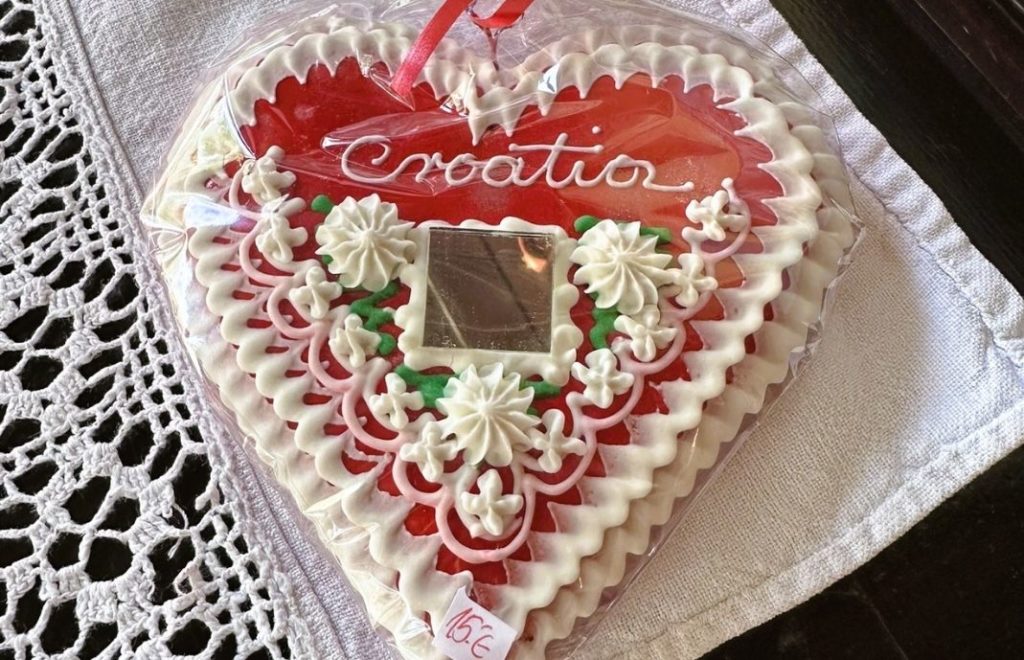
These charming heart-shaped ornaments are one of the most recognizable symbols of Croatia – especially in Zagreb – and they make for a truly meaningful souvenir.
Licitars hearts are made from a honey- or gingerbread-based dough, hand-painted in vibrant red and decorated with colorful icing, tiny mirrors, and often a small handwritten note. They come in all sizes and are as intricate as they are symbolic.
The tradition dates back to the Middle Ages, when the hearts were lovingly given as tokens of affection to someone special.
Today, they’re among Croatia’s most beloved souvenirs – a piece of folk art that carries history, emotion, and craftsmanship in every swirl of icing.
Though made from gingerbread, they’re not meant to be eaten – they’re ornamental keepsakes, crafted to be admired, not devoured.
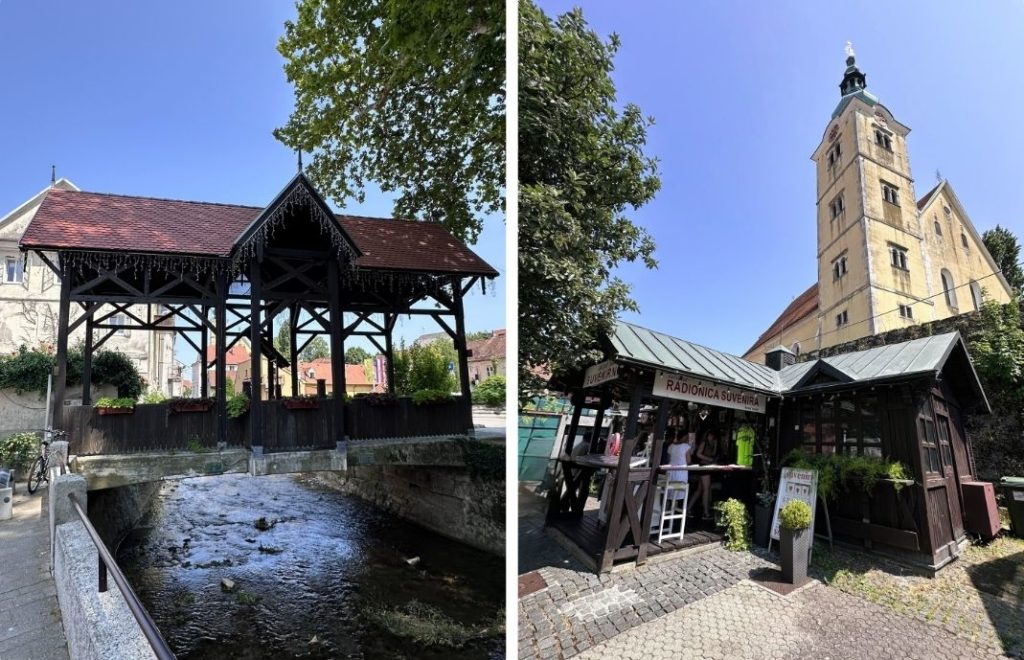
You can find licitars hearts (along with other handmade souvenirs) at Radionica Suvenira, a small local shop dedicated to preserving this colorful tradition.
Food and drink in Samobor
Samobor is known for its distinctive local specialties, and you’d be wise to try as many as you can.
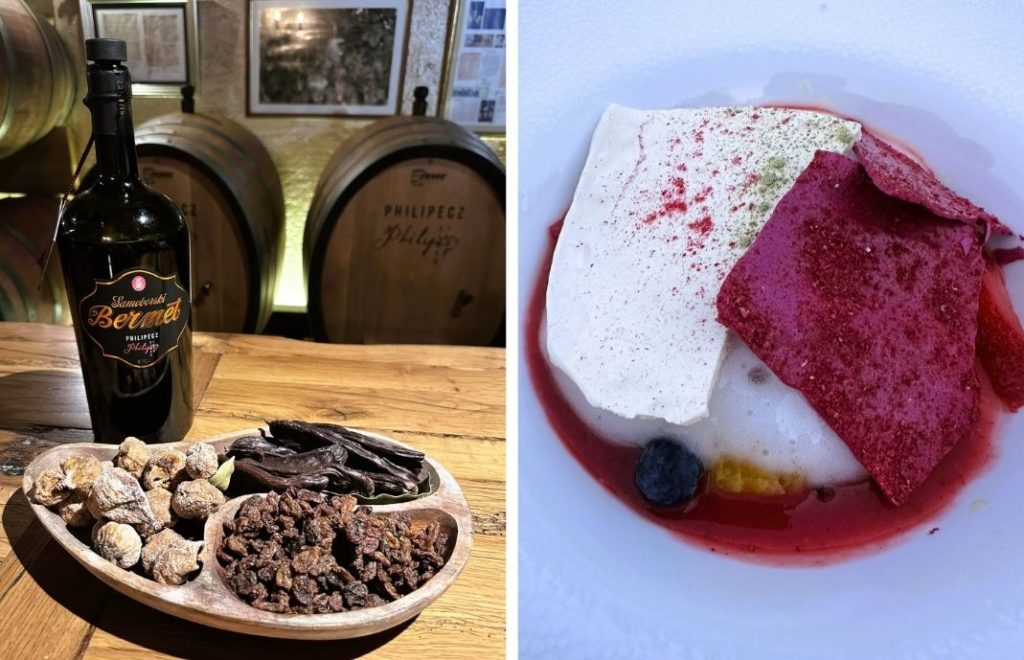
Of course, the town’s most famous treat is the kremšnita cream cake, but your culinary adventure shouldn’t stop at dessert. Local highlights include dry-cured salami, wild mushroom soup, smoked sausages, kotlovina (a rustic meat stew), greblica (a thin savory pie filled with cheese and Swiss chard), krafne (Croatian-style doughnuts), and muštarda – a sweet, spicy mustard unique to the region.
For a classic taste of tradition, head to Grabreku 1929, a long-established eatery known for its meat-forward menu and rich, earthy mushroom soup. As the name suggests, this family-run spot has been serving hearty Croatian fare since 1929.
Perched on a hillside overlooking the town, Cantilly is a newer addition to Samobor’s culinary scene. Opened in 2025, this family-run restaurant offers both indoor seating and a spacious terrace with panoramic views. The cuisine is refined and seasonal, made with fresh local ingredients, and paired with an excellent wine list that elevates every bite.
Another great choice is Samoborska Klet, a charming, family-owned restaurant with a cozy outdoor dining area. The menu is wide-ranging and full of tempting local favorites.
And don’t leave town without visiting Filipec Cellar. One of Samobor’s oldest families, the Filipecs have been producing bermet (an aromatic spiced wine) and muštarda since 1946. Tour the cellar, learn about the traditional methods of production, and finish with a tasting of both specialties – an experience that blends history, craftsmanship, and flavor in one memorable sip.
Where to stay in Samobor
While Samobor doesn’t offer a wide array of accommodations, it’s not the kind of town where you’ll need more than a night or two. That’s part of its charm.
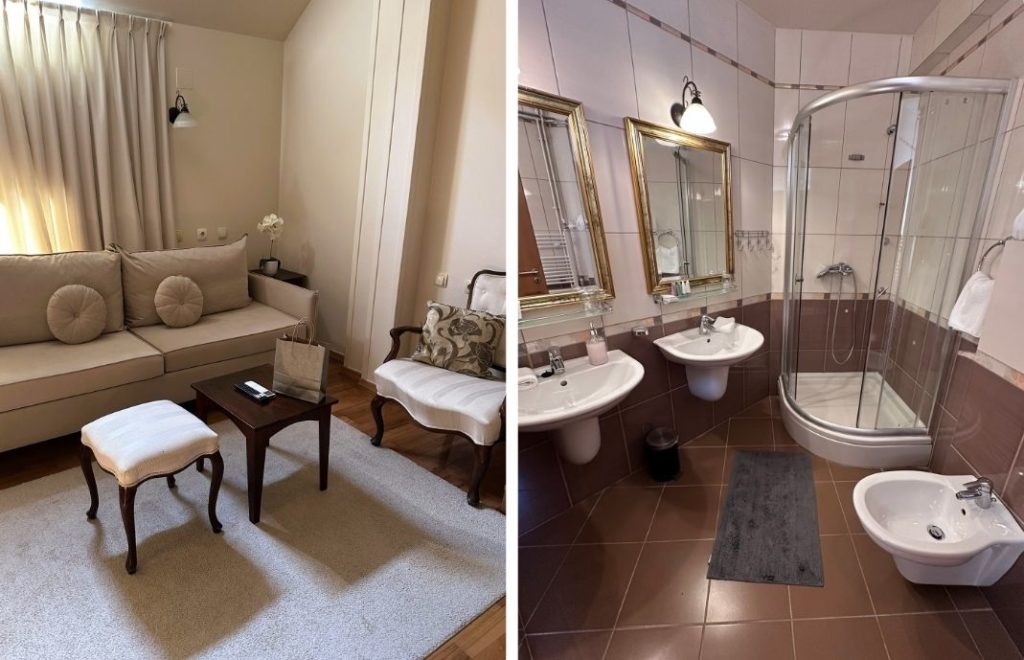
A great choice is Hotel Livadić, a cozy three-star hotel located right on the main square. Full of character and local flair, it features an inviting on-site restaurant and a peaceful outdoor terrace tucked away in the courtyard.
Set in a historic building, the hotel’s rooms are all individually styled – no two are alike in size or décor. Each room is equipped with air conditioning, a private bathroom, television, and complimentary Wi-Fi.
With its central location and warm atmosphere, Hotel Livadić offers the perfect base for soaking up Samobor’s charm – day and night.
How to get to Samobor
Located just 20 kilometers from Zagreb, Samobor is the perfect destination for a day trip.
If you don’t have a car, getting there is easy – buses run several times a day from Zagreb’s main bus station, and the journey takes about one hour.
If you’re driving yourself, expect a scenic and straightforward ride of around 40 minutes.
Don’t miss these blog post about Croatia:
Dubrovnik – The pearl of the Adriatic
Why you should visit Zagreb County
