
The Giant’s Causeway is steeped in myth and legend. Majestic. Mysterious. Beautiful. Crafted by a giant – or so the stories go.
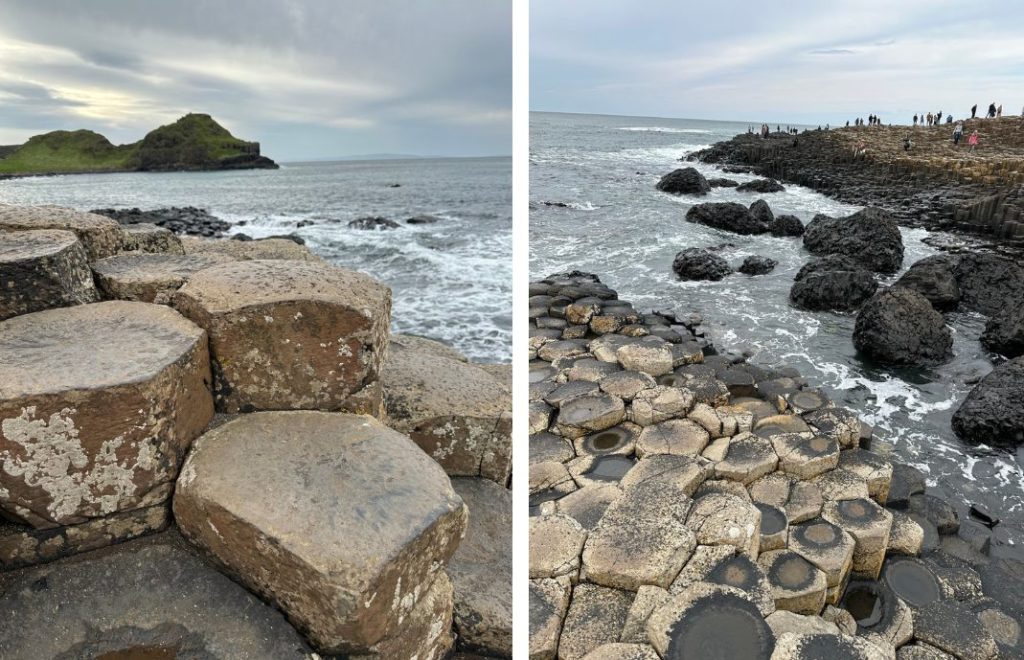
Standing at the edge, gazing down, you’re met with the awe-inspiring sight of thousands of black basalt columns – most of them hexagonal – battered by the crashing waves of the Atlantic Ocean.
There’s no denying it: the Giant’s Causeway is a truly epic spectacle, born from the raw, untamed power of nature. It’s little wonder that this geological wonder earned a well-deserved spot on UNESCO’s World Heritage List back in 1986.
The Giant’s Causeway is, without question, a must-see for anyone venturing to Northern Ireland!
What is the Giant’s Causeway?
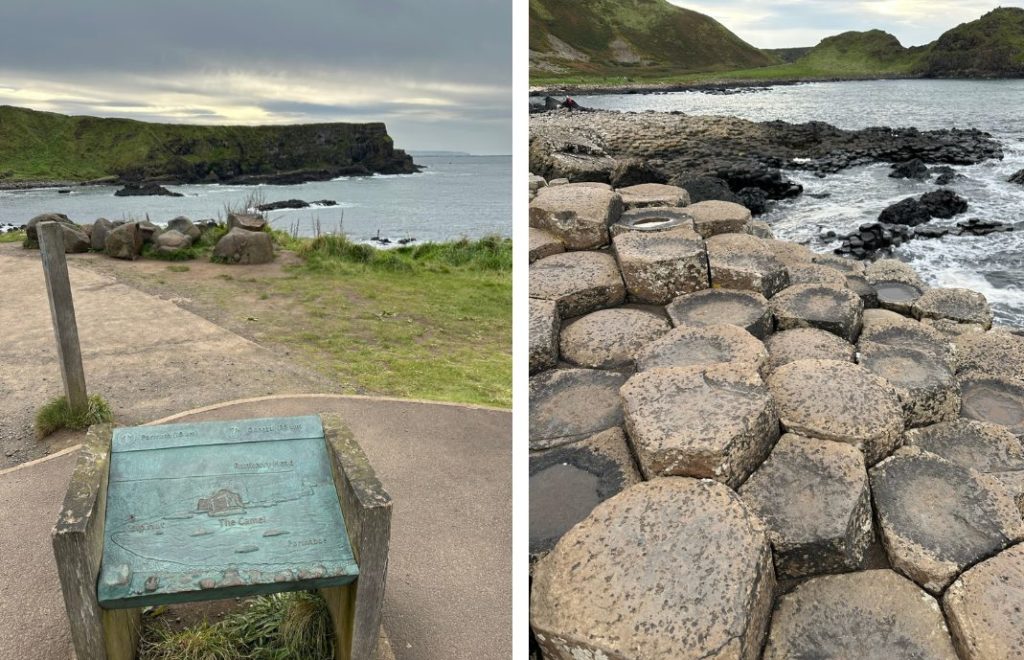
This extraordinary natural formation consists of 40,000 basalt columns stretching out into the sea, forming a sort of causeway that extends 275 meters into the Atlantic.
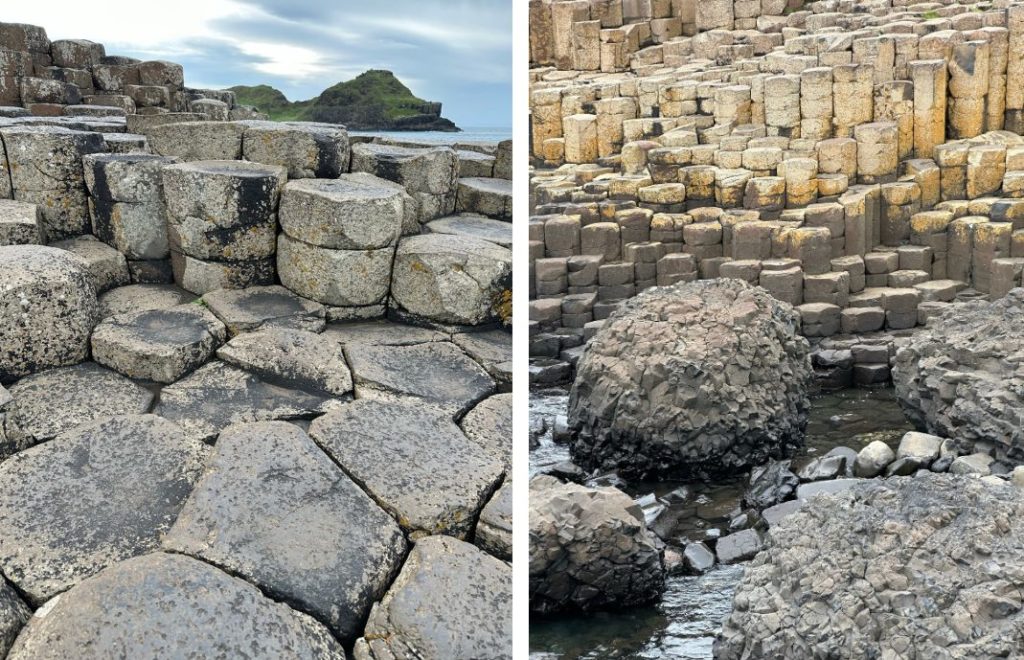
Each column measures between 40 and 60 centimeters in diameter, most of them perfectly hexagonal. The phenomenon is the result of a subterranean volcanic eruption some 60 million years ago. As molten lava forced its way up through layers of chalk, it cooled and contracted – much like drying clay – fracturing into the distinctive pillar-like shapes we see today.
Yes, there are other places around the world with similar geological features, but the Giant’s Causeway is arguably the most stunning and awe-inspiring of them all.
Its location only adds to its allure. Perched along a rugged, windswept coastline, the Giant’s Causeway is enveloped in an atmosphere of mystery and raw, captivating beauty.
The legend of the Giant’s Causeway
Each year, thousands of visitors flock to the Giant’s Causeway to marvel at its bizarre and beautiful formations. But beyond the geological wonder lies a tale spun from the fabric of myth and folklore.
Legend has it that these incredible basalt columns are the remnants of a mighty causeway built by the Irish giant Fionn mac Cumhaill – better known as Finn MacCool – a warrior tied to the clan of the Fianna.
Finn’s mission? To defend the coast of Northern Ireland against his formidable Scottish rival, the giant Benandonner. One day, Benandonner issued a challenge – and Finn answered.
Drawing upon his titanic strength, Finn tore massive chunks of stone from the land and hurled them into the sea, forging a path across the water to reach his adversary. But when the two giants finally met, chaos followed. The causeway was torn apart – scattered and shattered – and what remains today is known as the Giant’s Causeway.
Some say Finn MacCool never died. Instead, he sleeps in a hidden cave, waiting for the day when the horn of his clan is sounded three times – at which point he will rise again to defend Ireland in its hour of greatest need.
Another version of the legend tells a more mortal tale: that Finn was slain in the Battle of Gabhra and lies buried between the hills of Tara and Skryne, side by side with his beloved Gráinne. When archaeologists excavated the area in 1931, they uncovered two skeletons – one male, one female – sparking whispers that the legend might be more truth than myth.
Which story you choose to believe… well, that’s entirely up to you.
You can experience the full tale of Finn MacCool and Benandonner on the big screen at the Giant’s Causeway Visitor Centre.
Where is the Giant’s Causeway?
This iconic tourist destination is nestled along the Antrim Coast in the northern reaches of Northern Ireland.
It lies on the scenic Causeway Coast, with the charming village of Bushmills as its closest neighbor. For those coming from farther afield, Belfast is about 90 kilometers away, while Derry (Londonderry) sits roughly 70 kilometers to the west.
When is the best time to visit the Giant’s Causeway?
The Giant’s Causeway is one of the most visited attractions in the United Kingdom, and for good reason.
Peak season runs from May through September, so don’t expect to have the place to yourself. The upside? This is also when the weather is at its most pleasant – hopefully, that is. After all, this is Northern Ireland, where sunshine is never guaranteed.
If you’re visiting during the busy season, it’s highly recommended to arrive early. The earlier you come, the more likely you are to enjoy the site with fewer crowds.
For the bold-hearted who don’t mind braving the elements, winter offers a much quieter experience. Just be sure to dress warmly – layers and waterproofs are essential for facing the moody coastal weather.
The Giant’s Causeway is open to the public all day long. The Visitor Centre operates from 9:00 AM to 6:00 PM in summer, and from 9:00 AM to 5:00 PM in winter.
Highlights of the Giant’s Causeway
Once you arrive at the Giant’s Causeway, there are five must-see spots that bring the magic and mystery of this legendary landscape to life:
Grand Causeway
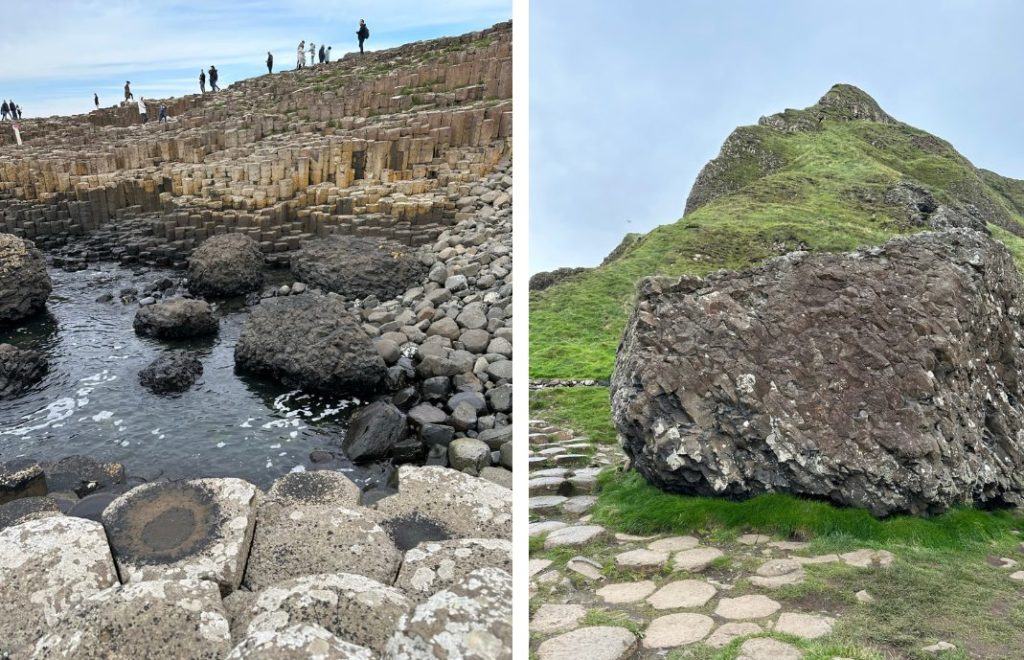
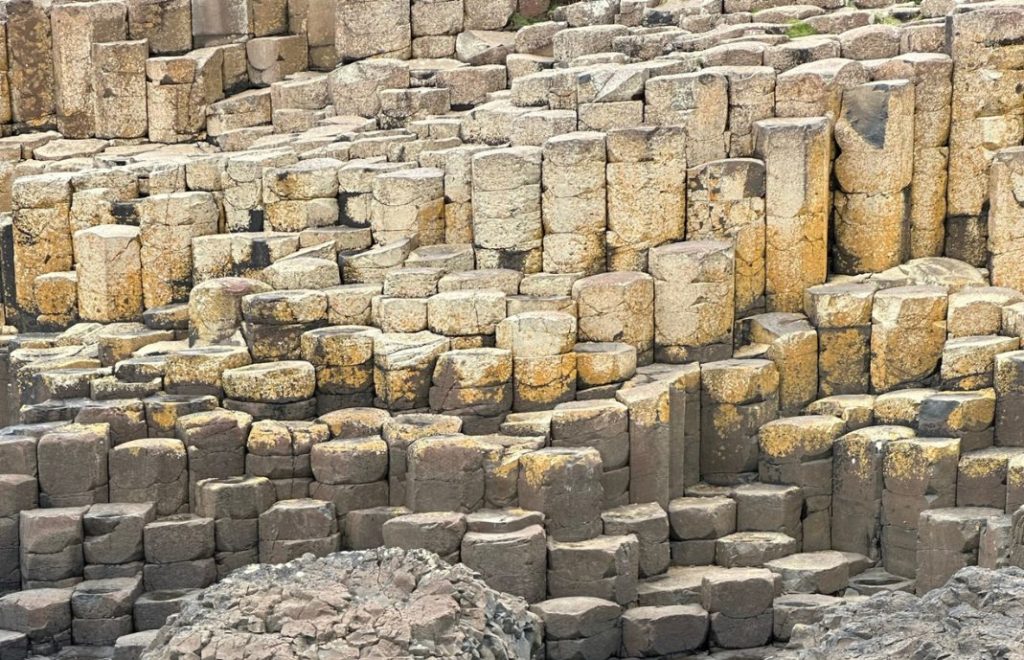
The largest of the three main rock outcrops that make up the Giant’s Causeway, the Grand Causeway is a mesmerizing cluster of hexagonal basalt columns. It’s this striking natural formation that helped earn the site its UNESCO World Heritage status in 1986 – and it’s the very heart of the Causeway’s dramatic charm.
Giant’s Boot
Venture along a narrow trail in Port Noffer, and you’ll stumble upon one of the Causeway’s most famous landmarks: the Giant’s Boot. Legend says this oversized boot once belonged to Finn MacCool himself – lost in his hasty retreat from the furious Scottish giant Benandonner. For the curious: it’s estimated to be a whopping size 93.5!
The Camel
The most legendary “resident” of nearby Portnaboe is none other than Finn’s faithful camel. Said to be the only creature capable of carrying the giant across vast distances, the beast was tragically turned to stone. Today, it rests at the base of the cliffs, its shape frozen in time. In reality, the “camel” is a basaltic rock formation, sculpted by cooling lava that intruded through older layers of stone – yet its form and story continue to enchant.
Wishing Chair
Feel like royalty as you take a seat on the famous Wishing Chair – nature’s very own throne. Once reserved only for women, this naturally formed basalt seat is now open to all. Worn smooth and polished by countless visitors, the Wishing Chair is not only a photo-worthy spot but also surprisingly comfortable.
Clifftop Trails
Strap on your hiking boots and set off on a trail adventure that reveals the Giant’s Causeway from above, offering a stunning bird’s-eye perspective of this geological wonder and its dramatic coastal surroundings.
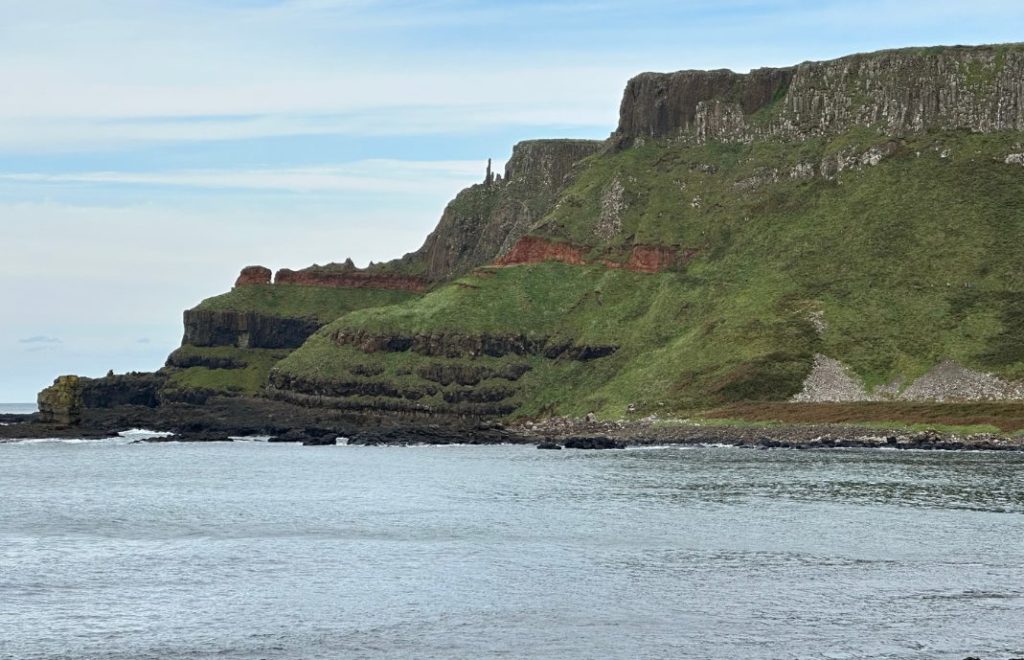
Along the way, you’ll be treated to panoramic views of the Causeway’s surreal basalt formations, the wild Atlantic Ocean, and the rugged cliffs that frame this legendary landscape.
There are several color-coded trails to choose from: Red, Blue, Green, and Yellow – each varying in length and difficulty, so there’s something for every level of explorer.
For those seeking a deeper connection with the land and its stories, consider joining the Clifftop Experience: a guided 8-kilometer hike that takes you along the cliff’s edge, where every step offers a new and unforgettable vista.
Visitor Centre
Opened in 2012, the Giant’s Causeway Visitor Centre is an award-winning masterpiece of sustainable architecture, blending seamlessly into the surrounding landscape while offering a world-class introduction to this iconic site.
This is where your journey begins. Present your ticket, pick up your audio guide – available in 11 languages – and prepare to step into the myth, geology, and wonder of the Causeway.
Inside, you’ll find a cozy café, clean restrooms, and a spacious gift shop brimming with locally crafted treasures. From handwoven textiles to unique artworks and keepsakes, over 80% of the items are made by Northern Irish artisans, giving you the chance to take home a piece of the Causeway’s spirit.
Practical information
Dogs are more than welcome at the Giant’s Causeway – as long as they’re kept on a lead. Your four-legged companion can even join you on guided tours, inside the Visitor Centre, and in the café. Water bowls are provided at the entrance and exit of the centre to keep your pup hydrated.
For those who may find the walk from the Visitor Centre down to the Causeway challenging, a convenient shuttle bus runs regularly between the two points. You’re free to walk down and take the bus back – or vice versa. Tickets are purchased directly onboard.
Getting to the Giant’s Causeway is simple. You can drive and park at the Visitor Centre, hop on a bus, or even cycle along the scenic Causeway Coast.
If you’re arriving by train from Belfast or Londonderry, disembark at Coleraine, where connecting buses will take you the rest of the way to this legendary landscape.
There is so much to see and do in Northern Ireland – you won’t be bored!
Click here for more inspiration to plan your visit
