
As a certified elephant lover, I’d long dreamed of experiencing these magnificent creatures in their natural habitat – and Addo Elephant National Park delivered beyond anything I could have imagined.
From the moment I entered the park, it felt like a dream come true. I had elephant encounters that literally took my breath away – raw, awe-inspiring moments of connection that I’ll carry with me forever.
Regarded as one of the best places in Africa to see elephants up close, Addo is nothing short of a wildlife wonderland. Here, both big and small grey charmers roam freely, filling the landscape with quiet majesty and unmistakable presence.
If elephants make your heart skip a beat, Addo will steal it completely.

Where is Addo Elephant National Park?
Addo Elephant National Park is located just 32 kilometers from Port Elizabeth (now known as Gqeberha) in South Africa.
From Port Elizabeth, you can reach the park via two main routes:
- Take the R335 north (77 km) to the Addo Main Gate
- Or follow the N2 (40 km) to enter through the Matholweni Entrance Gate
Inside the park, a scenic road connects these two gates, allowing you to drive in through one entrance and exit through the other. The route can be enjoyed in either direction, offering flexibility and a full immersion in the park’s breathtaking landscapes and wildlife.
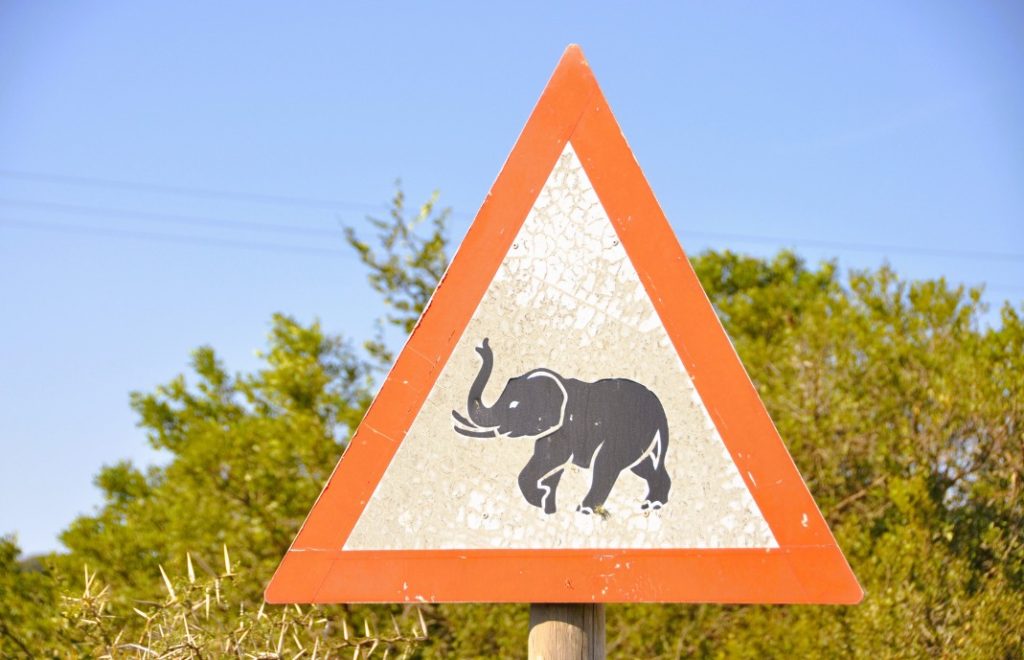
The story of Addo Elephant National Park – From tragedy to triumph
To truly appreciate how remarkable Addo Elephant National Park is today, you need to journey back to 1931, the year it was officially proclaimed. The park’s mission was simple yet urgent: to protect the last 11 surviving Addo elephants from extinction.
Once, the region teemed with vast herds of elephants. But during the 1700s and 1800s, intensive hunting and ivory trade pushed these majestic animals to the brink. As farmlands expanded throughout the 19th century, elephants began to clash with farmers – raiding crops, draining waterholes, and stirring resentment.
The conflict escalated until farmers demanded that the government eliminate the elephants entirely.
Tragically, the authorities agreed. In 1919, they brought in Major Pretorius, who carried out the grim task. Over the course of just one year, 114 elephants were slaughtered – leaving a devastated landscape and only a handful of survivors.
But public opinion slowly began to change. In a long-overdue act of redemption, the government set aside 2,000 hectares of land in 1931 to create Addo Elephant National Park, offering a sanctuary for the last remaining elephants.
Even then, the park’s early years weren’t easy. The fences weren’t effective, and human-wildlife conflict persisted. But what followed was a story of resilience, recovery, and hope – one that would eventually make Addo a global symbol of conservation success.
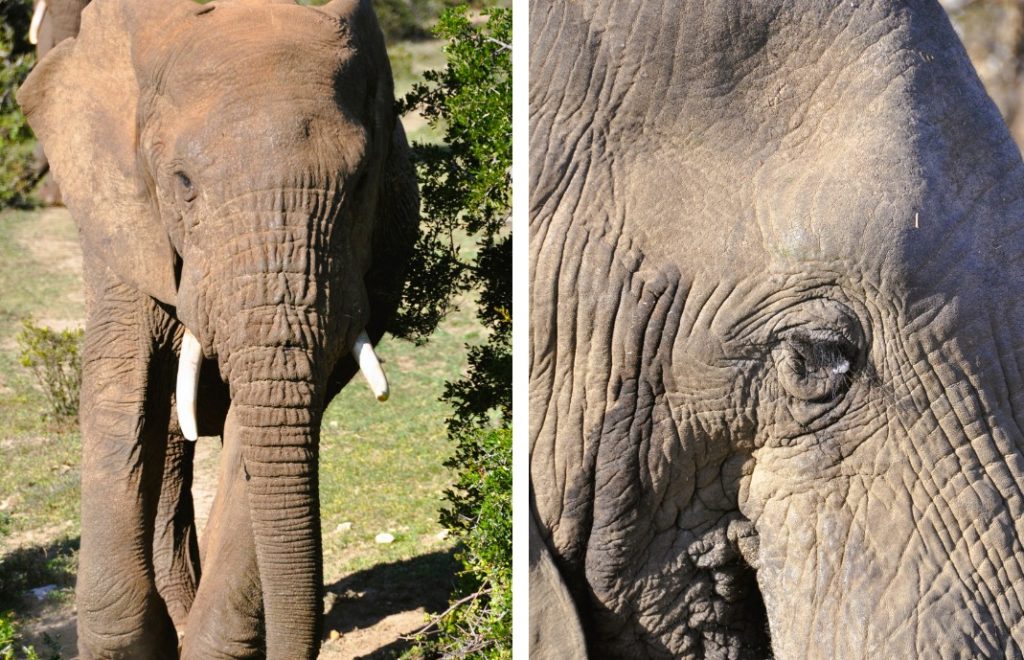
From 22 to 600: The evolution of Addo Elephant National Park
In 1954, a major turning point came when then-park director Graham Armstrong developed an elephant-proof fence. Large parts of the park were enclosed, protecting both the elephants and the surrounding farmland. At the time, just 22 elephants roamed the reserve.
The barrier, known as the Armstrong Fence, is still in use today – a testament to its ingenuity and effectiveness.
Though the park was originally founded to protect a single species, its mission has grown. Today, Addo Elephant National Park safeguards an impressive range of biodiversity, offering sanctuary to a wide variety of animals beyond elephants.
Now home to over 600 elephants, Addo has become a thriving haven where these gentle giants roam freely through a landscape they once nearly lost.
With an area of 1,640 square kilometers, Addo is now the third-largest national park in South Africa, after Kruger National Park and the Kgalagadi Transfrontier Park – a powerful symbol of what dedicated conservation can achieve.
Safari in Addo Elephant National Park – Your adventure, your way
There are two ways to go on safari in Addo Elephant National Park – with a guide or on a self-drive adventure.
Opting for a guided safari in an open vehicle means you can sit back, relax, and fully immerse yourself in the experience while a knowledgeable guide shares fascinating insights about the park’s wildlife, landscapes, and flora.
You can choose between a private guided safari (perfect for a more intimate experience) or join a shared group tour, where you’ll explore alongside other guests.
Safaris are available as half-day excursions (morning or afternoon) or as full-day experiences for those who want to soak up every moment.
Booking is easy – you can reserve in advance or secure your spot upon arrival at the Reception Center near Addo Main Gate.
No matter how you choose to explore, Addo’s magic is guaranteed.
Self-Drive safari – Freedom on four wheels
The second – and highly recommended – option is to drive yourself through Addo Elephant National Park. This gives you the ultimate freedom to set your own pace, decide where to stop, and stay as long as you like at each sighting.
Before you begin, make sure to purchase your entry permit – available at both the Addo Main Gate and the Matholweni Entrance Gate. Along with the permit, you’ll receive a park map to help guide your adventure.
If you’re planning just a one-day visit, there’s no need to book in advance. Simply show up, pay, and start exploring.
Important tips for self-drivers:
- Stay only on roads marked “Tourist Roads”
- Make sure your fuel tank is full
- Bring plenty of water, snacks, and food. You’ll also find a petrol station, restaurant, café, and souvenir shop with kiosk near the Addo Main Gate
A self-drive safari in Addo gives you the chance to connect with nature on your own terms – quiet, personal, and unforgettable.
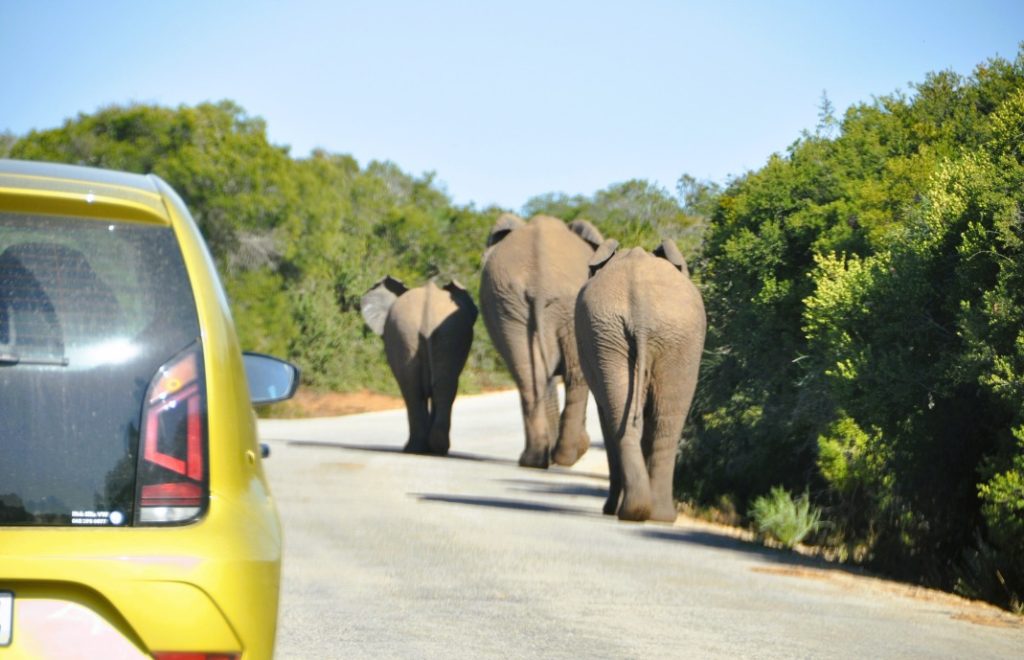
Practical tips for a Self-Drive safari in Addo Elephant National Park
Exploring Addo by car is not only easy. It’s a fantastic way to experience the park at your own pace. The park has a well-maintained road network, and you don’t need a 4×4 vehicle – a regular car will do just fine.
Some roads are paved, while others are gravel – but all are kept in excellent condition for smooth driving.
You’re welcome to bring your own food and drinks, and enjoy them at Jack’s Picnic Site, a fenced area equipped with picnic tables and toilets. It’s a perfect spot for a break.
A few important notes for self-drivers:
- Respect the park’s opening hours, which vary by season
- You must exit the park before closing time
- If you’d like more time to explore, consider staying overnight at one of the park’s many accommodation options and enjoy a two-day safari experience
And above all – remember that the animals have the right of way. This is their home, and we are the guests. Drive slow, stay alert, and let the wild moments come to you.
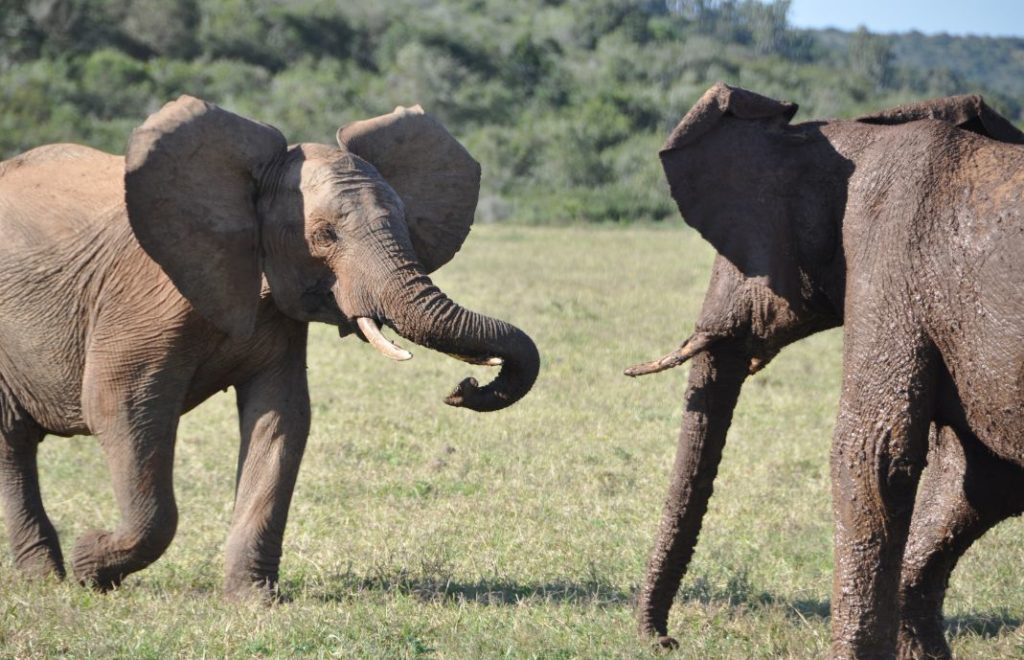
What animals can you see in Addo Elephant National Park?
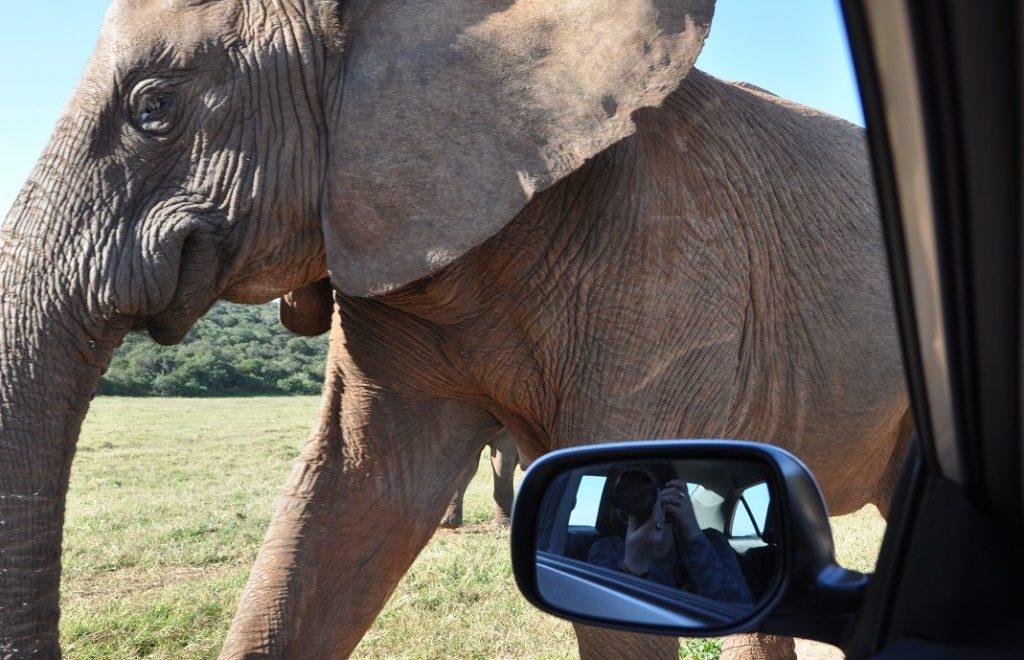
There’s no question – the stars of the show are the elephants. Around 600 gentle giants roam freely through the park, and watching them in their natural habitat is nothing short of magical.
But Addo offers much more than elephant encounters. While on safari, you’ll (hopefully) spot a variety of large and small animals, each adding to the richness of your journey.
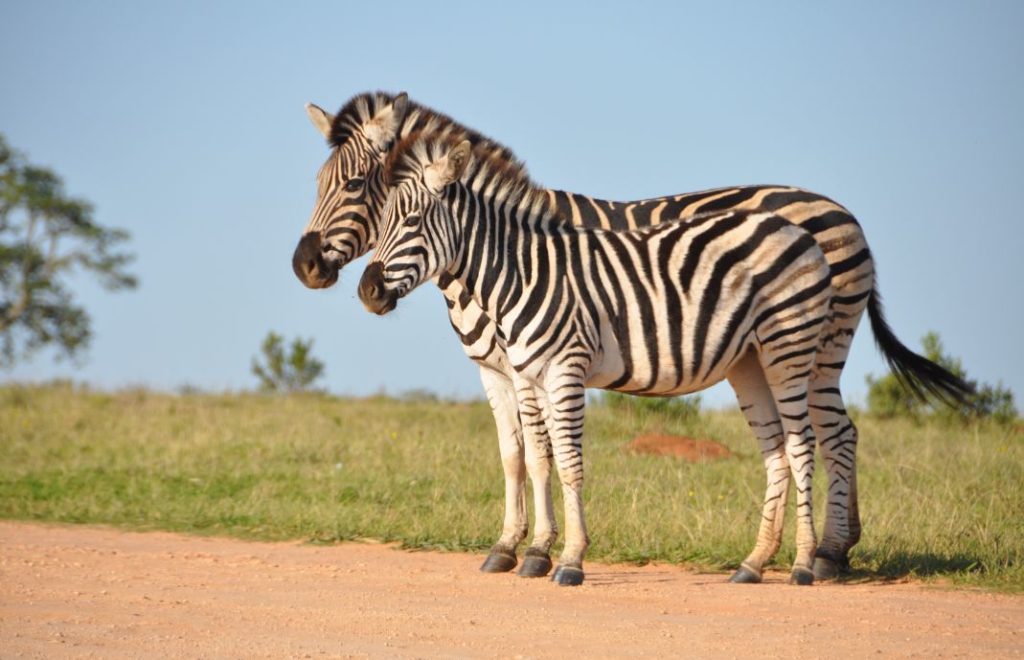
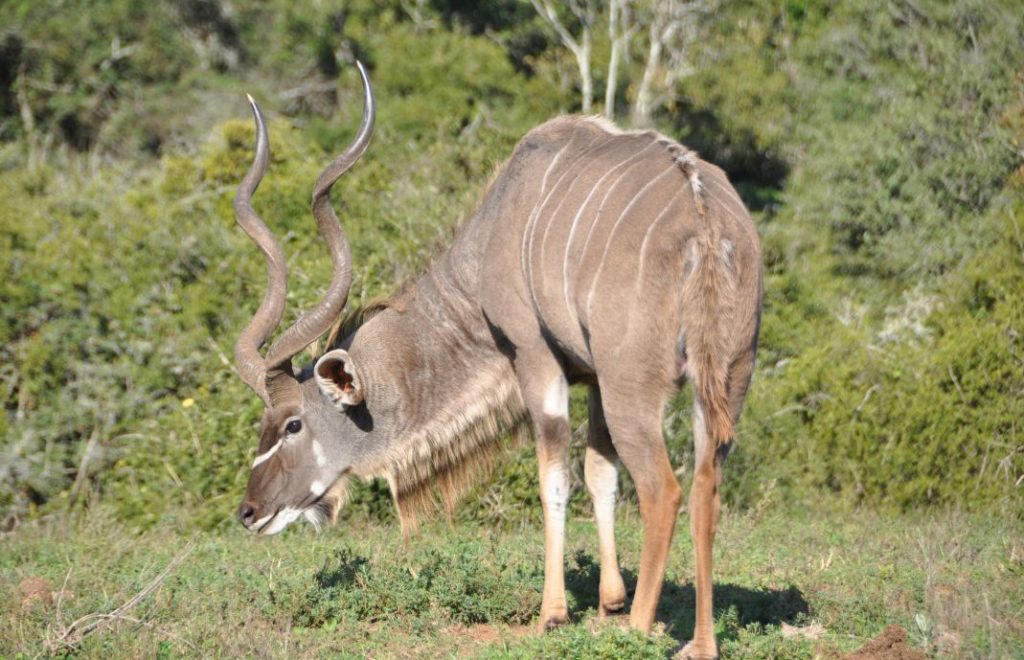
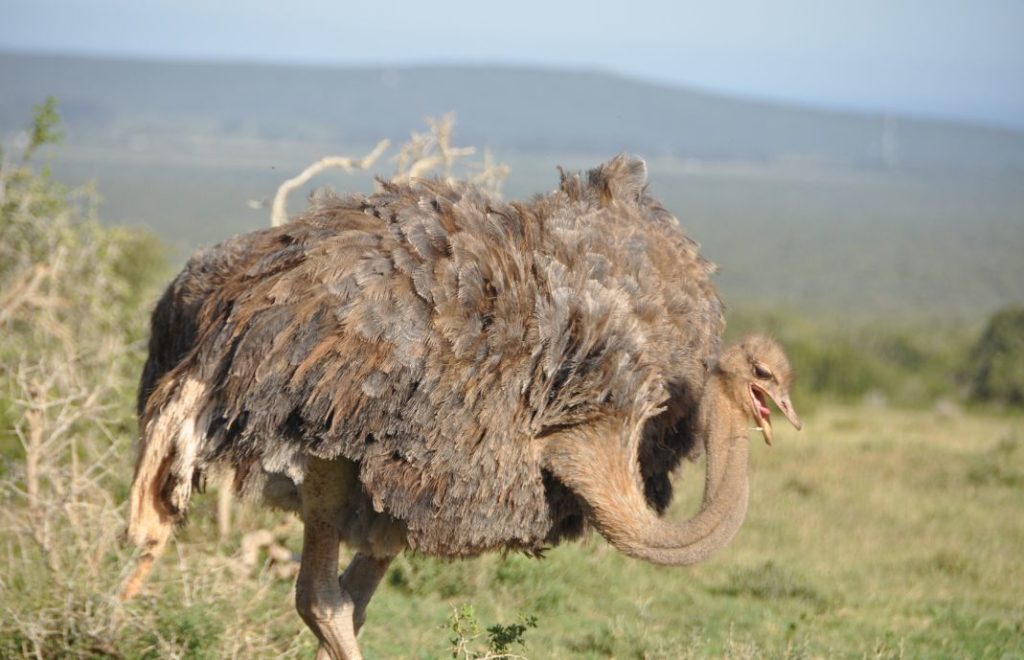
Look out for Cape buffalo, leopard, black rhino, zebra, warthog, ostrich, and a host of antelope species including kudu, eland, and the striking red hartebeest. In 2003, lions and hyenas were reintroduced to restore balance by naturally managing the antelope populations.
And don’t forget to look down!
Addo is also home to a quirky, unsung hero – the flightless dung beetle, often seen industriously rolling perfect balls of elephant dung across the road.
These tiny creatures are so vital to the park’s ecosystem that signs are posted throughout Addo warning drivers: Do not harm the dung beetles!
From the majestic to the miniature, Addo’s wildlife is a thrilling mix of power, grace, and surprise.
More inspiration: Ele-phantastic in Addo
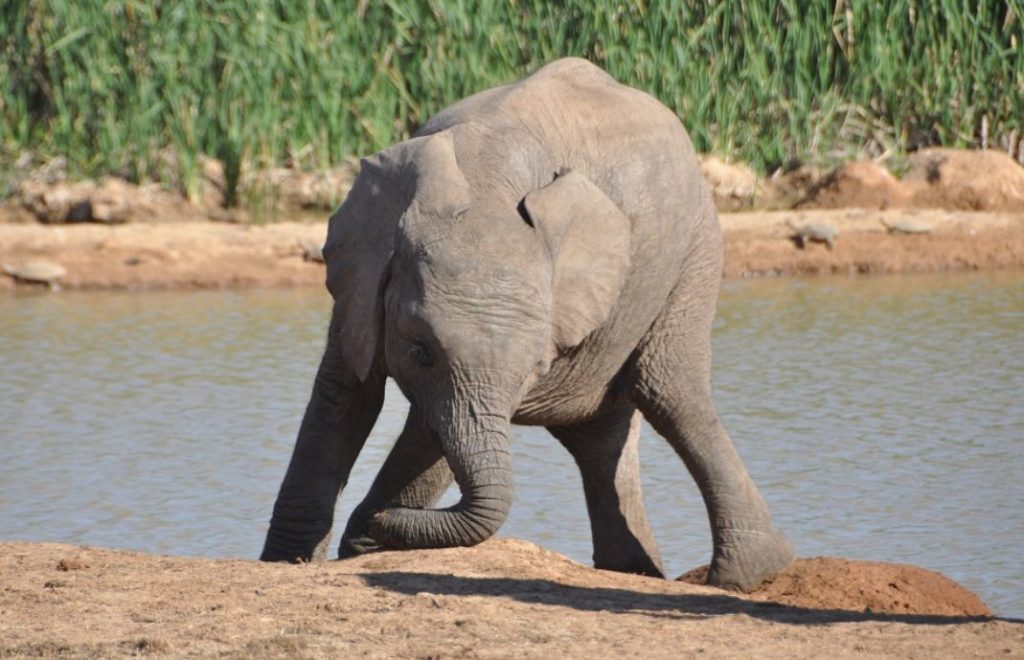
A sust-see in Addo Elephant National Park -The Legacy of Hapoor Dam
No visit to Addo Elephant National Park is complete without a stop at Hapoor Dam, located in the southwestern part of the park. This iconic watering hole isn’t just a prime spot for wildlife viewing – it’s steeped in the story of one of Addo’s most legendary elephants.
The dam is named after Hapoor, a dominant male who roamed the park from 1944 to 1968. His name comes from Afrikaans: “hap” meaning nick and “oor” meaning ear – a reference to the distinctive notch in his ear, believed to have come from a bullet during a hunting attempt. After surviving the shot, Hapoor developed a deep, lasting hatred for humans – a reputation that made him both feared and revered.
Whenever Hapoor appeared, park staff often had to flee for safety – a regular and nerve-wracking occurrence. In the 1960s, younger bulls began to challenge his rule, but none succeeded – until Lanky, a younger male, finally dethroned him in 1968.
Driven from the herd, Hapoor became a solitary wanderer. That same year, he did something no elephant had done before: he broke through the Armstrong Fence, which had stood “elephant-proof” for 20 years. Due to his increasing aggression, the heartbreaking decision was made to put him down.
Today, Hapoor Dam stands not only as a great spot to watch elephants gather and play, but also as a tribute to a complex, powerful, and unforgettable figure in Addo’s history.
Don’t miss the chance to witness this special place where the past and present meet – where every elephant’s silhouette on the water seems to echo the spirit of Hapoor.
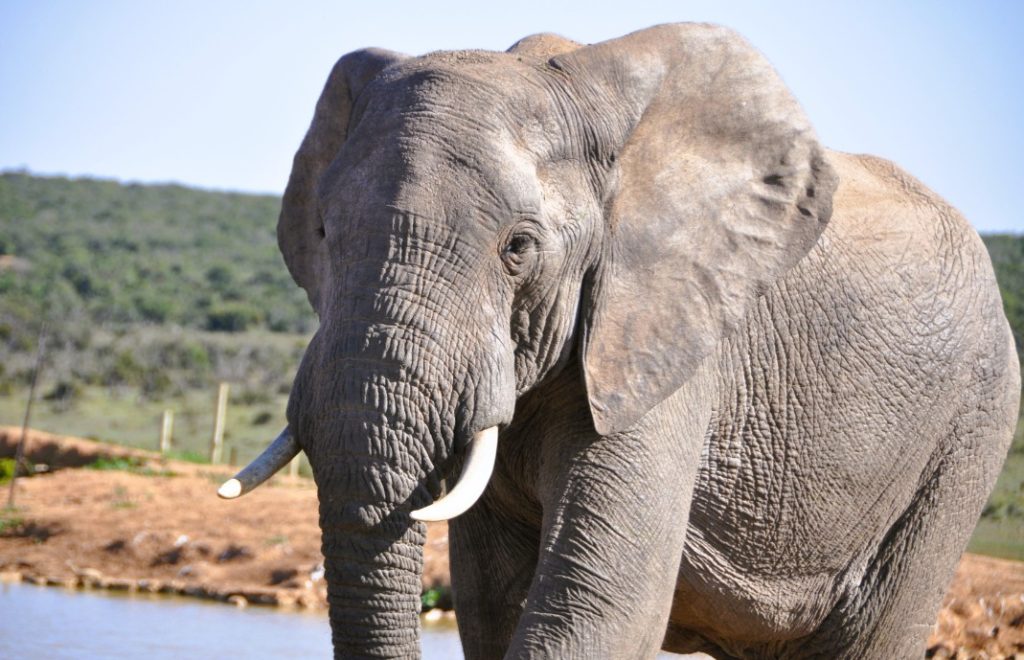
Domkrag Dam – A viewpoint with a legendary backstory
Another must-see spot in Addo Elephant National Park is Domkrag Dam, a peaceful lookout point with a rather extraordinary namesake.
The dam is named after Domkrag, a giant tortoise that once roamed the park and became a local legend. The name Domkrag means “jack” in Afrikaans – a nod to his unusual (and impressive) habit of crawling under parked cars and lifting them off the ground with sheer strength.
Domkrag’s story, however, ended on a somber note when he fell into a hole and couldn’t climb out. His shell is now on display at the park’s Interpretive Center, where his memory lives on.
Stop by Domkrag Dam not only for the tranquil scenery and wildlife viewing, but to reflect on one of Addo’s most unusual and beloved characters – a slow-moving icon with legendary might.
When is the best time to visit Addo Elephant National Park?
Addo Elephant National Park is a year-round destination, but May to September – the dry winter season in South Africa – is widely considered the best time to visit. During this period, animals tend to gather around waterholes, making wildlife sightings more frequent and unforgettable.
Days are cool and crisp, while nights can get chilly – even with occasional frost – so pack accordingly.
If you’re planning to visit between November and February (South African summer), prepare for hot conditions, with temperatures soaring up to 40°C (104°F). While wildlife is still active, the heat can be intense.
Rain is possible throughout the year, but heavier showers usually fall in February/March and October/November.
So whether you’re chasing golden sunsets in the dry season or embracing the green vibrancy of the rains, Addo always has something wild and wonderful to offer.
South Africa has so much to offer – no matter why you decide to come:
Click here for more inspiration to this amazing country
