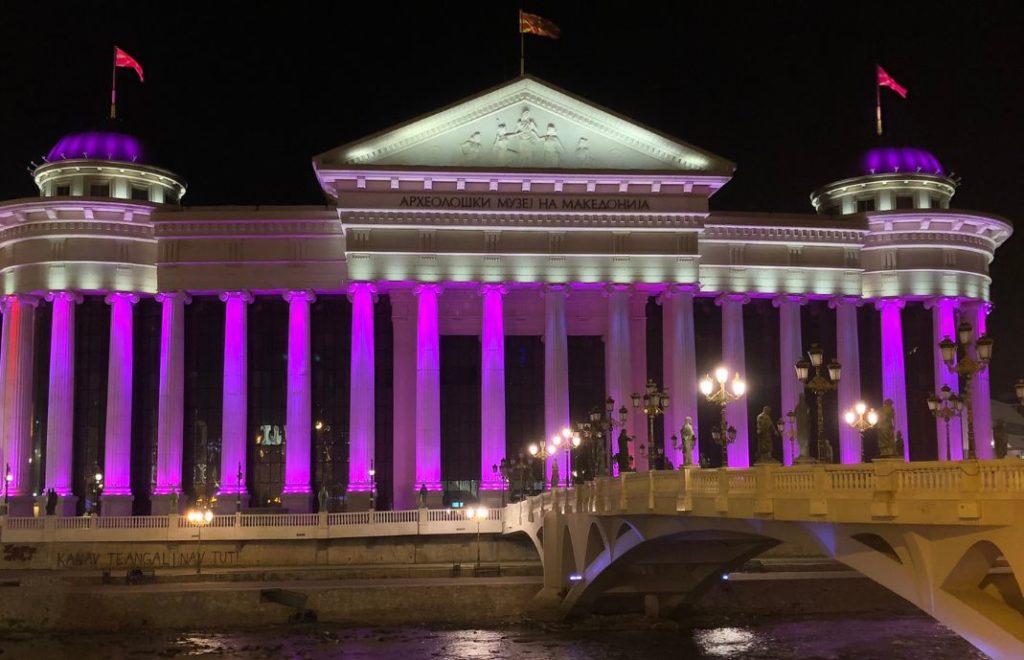
North Macedonia is a country that perfectly embodies the rich cultural tapestry of the Balkans. It may not yet top most travelers’ bucket lists, but trust me – the tide is turning, and visitor numbers are bound to rise in the coming years.
For now, Skopje remains refreshingly authentic, a city that offers an unfiltered glimpse into Balkan life. Far from overrun by crowds, it rewards curious travelers with a blend of history, charm, and character – without the tourist trappings you’ll find elsewhere.
Despite its under-the-radar status, Skopje lacks nothing. From grand monuments and fascinating museums to vibrant markets, cozy cafés, and a burgeoning culinary scene, this city has it all. Add in an array of accommodations to suit every style and budget, and you’ve got a destination primed for discovery.
It’s time to turn your gaze toward Skopje – Europe’s little secret that won’t stay secret for long.
Project “Tourism” – The rebirth of Skopje
Like much of the Balkans, Skopje bears the scars of a turbulent past. Over the centuries, countless rulers have laid claim to this land, and in 1991 North Macedonia emerged as an independent nation after breaking away from the former Yugoslavia. Adding to its hardships, the city suffered a devastating earthquake in 1963, which left large parts in ruins.
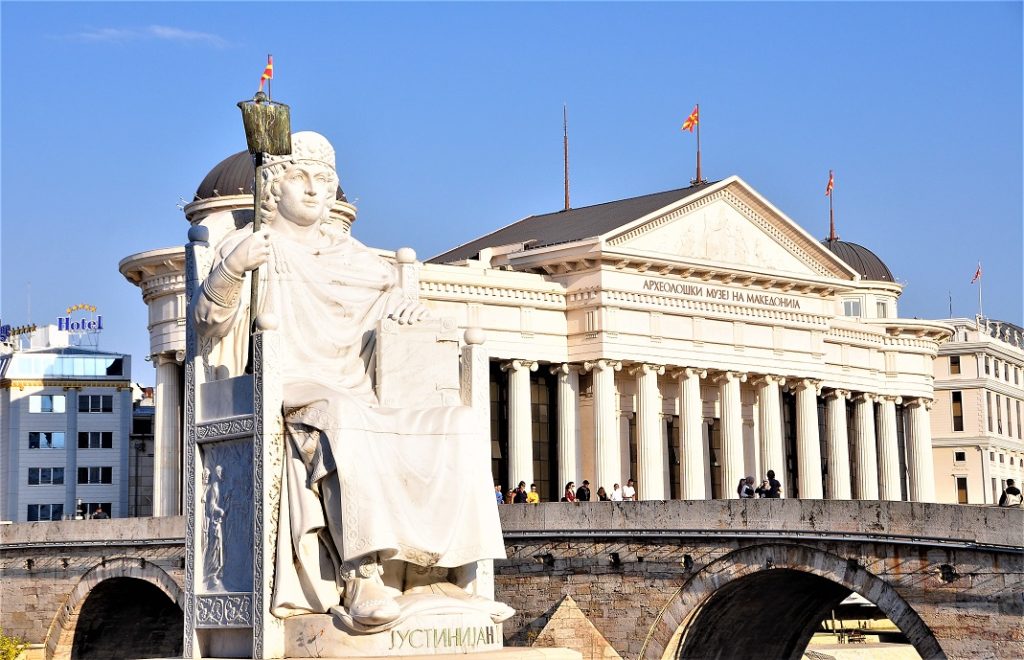
Fast forward to 2014, and a bold plan was set in motion: Skopje 2014, an ambitious urban revitalization project designed to give the capital a dramatic facelift. The goal? To restore the city’s historical grandeur and reclaim its Macedonian identity, all while positioning Skopje as an attractive European destination.
The vision was nothing short of grandiose – 20 new buildings and 40 statues and monuments within just four years.
But not everyone was impressed. The project sparked widespread controversy. North Macedonia is one of Europe’s poorest nations, and the government’s decision to pour hundreds of millions of euros into statues and neoclassical facades struck many citizens as frivolous when public services were struggling.
Still, for visitors, the transformation has created a fascinating urban landscape. A city where old Ottoman charm meets bold, sometimes flamboyant new architecture.
The result? Skopje is now a quirky blend of past and present, a destination that intrigues, surprises, and begs to be explored.
Macedonia Square – The beating heart of Skopje
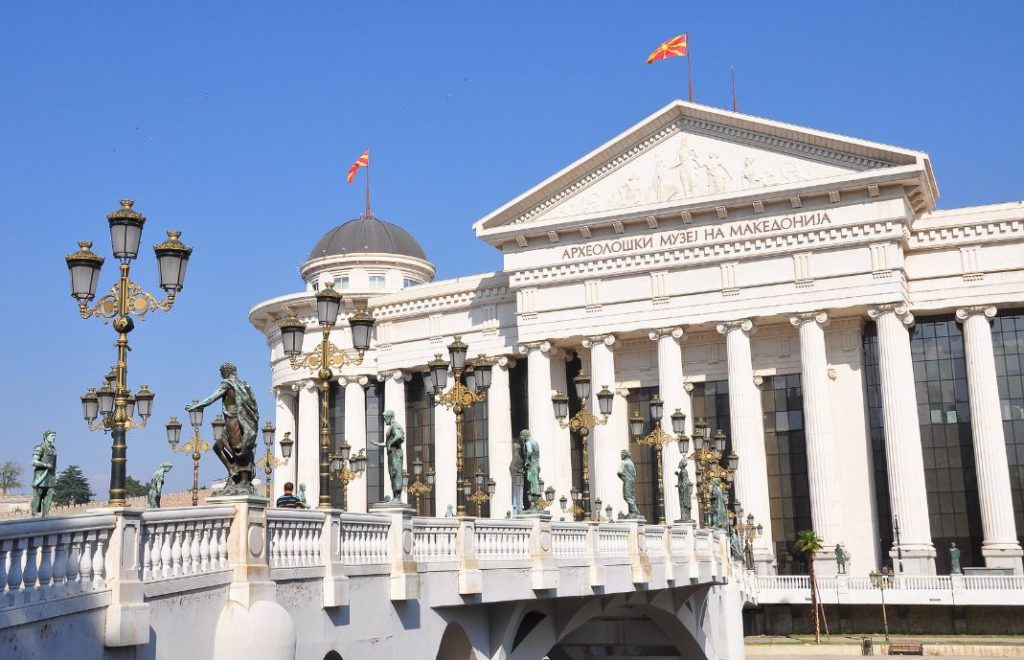
Every visit to Skopje should begin at Macedonia Square, the city’s grand centerpiece and a symbol of its new identity. At its core stands the imposing statue of Alexander the Great – or rather, the “Equestrian Warrior,” as it’s officially called. Sword raised high, mounted on a rearing horse, he dominates the skyline in a display of power and pride.
This monument, however, isn’t without controversy. Its very presence ignited long-standing disputes with neighboring Greece, which also claims Alexander as part of its heritage. The disagreement grew so intense that Skopje’s airport, once called Alexander the Great Airport, was renamed to appease tensions.
The square itself is a striking blend of neoclassical ambition and modern flair. White marble tiles gleam underfoot, bronze statues and elaborate fountains punctuate the open space, and rows of ornate, baroque-inspired buildings frame the scene. Around its perimeter, cafés, restaurants, and boutiques buzz with life, offering perfect spots to sit, sip a coffee, and watch the world go by.
As daylight fades, Macedonia Square transforms into a dazzling spectacle. Buildings glow with golden light, and the fountains erupt in a colorful dance, creating a magical backdrop for an evening stroll in the heart of Skopje.
The Stone Bridge – A timeless icon of Skopje
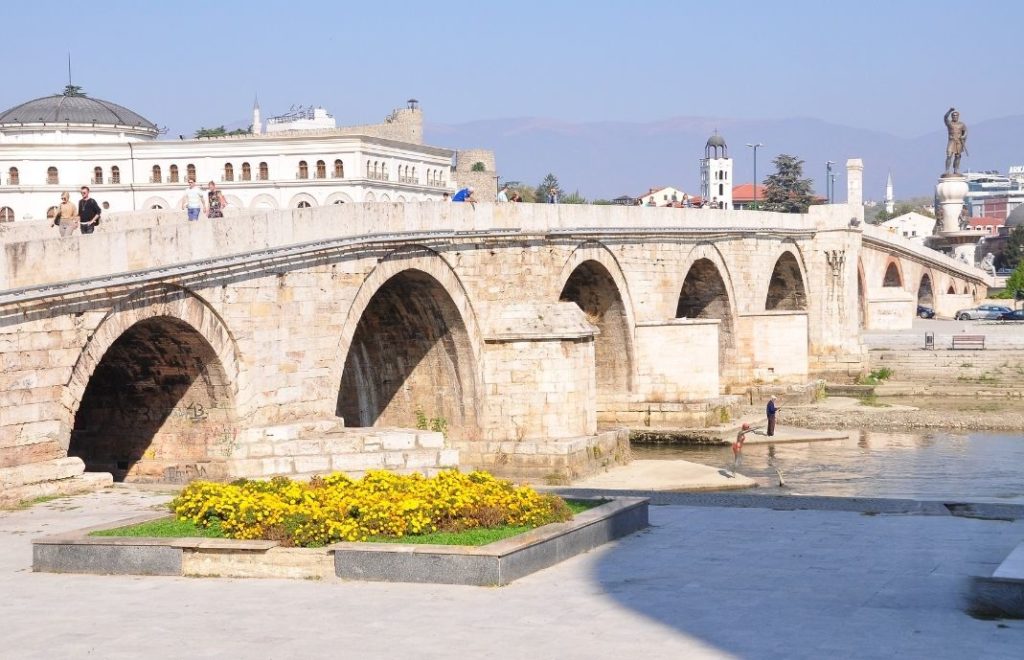
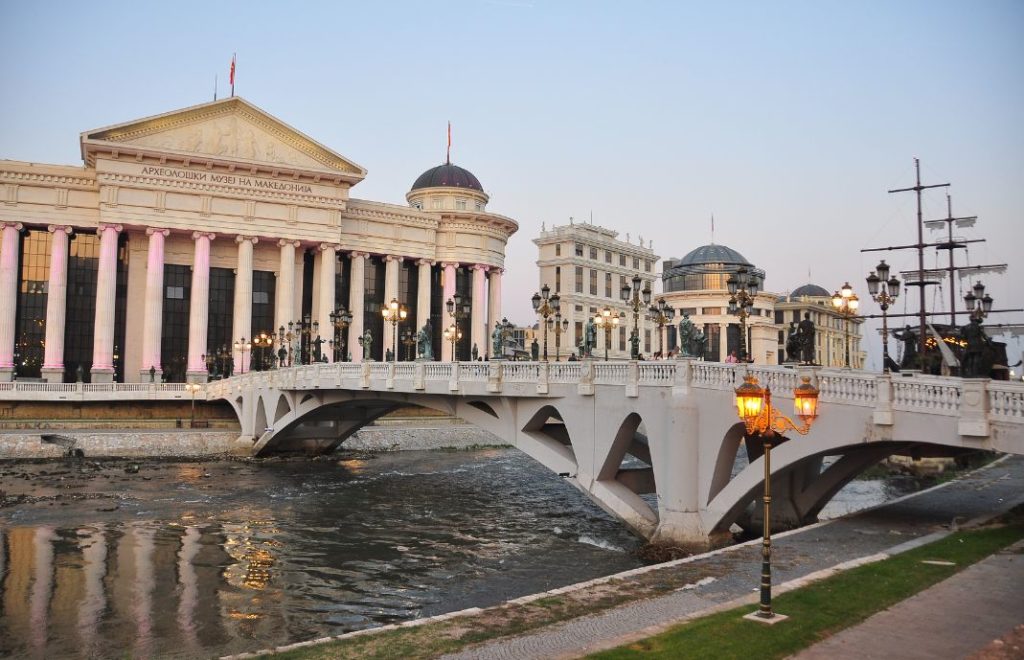
Stretching gracefully across the Vardar River, the Stone Bridge is more than just a passage. It’s a living piece of history and the proud symbol of Skopje, even featured on the city’s coat of arms and flag.
Built between 1451 and 1469 on the remnants of an ancient Roman structure by order of Sultan Mehmed II, the bridge stands as a remarkable example of Ottoman architecture. Measuring 214 meters long and six meters wide, it has borne witness to centuries of triumphs, turmoil, and transformation.
Through the ages, the bridge has endured damage and restoration. Perhaps its most dramatic chapter came in 1944, when retreating Nazis rigged it with explosives. Only a passionate plea from Skopje’s leading citizens spared it from destruction—a testament to its enduring significance.
Today, the Stone Bridge retains its authentic character, though its mihrab-shaped guard tower – a nod to Islamic architecture – is a modern reconstruction from 2008. Crossing it feels like stepping through time: one moment you’re in the grand modern square, and the next you’re wandering into the heart of Skopje’s Old Bazaar, where Ottoman heritage breathes through narrow lanes, vibrant markets, and centuries-old mosques.
This bridge isn’t just a landmark; it’s a gateway to the soul of the city.
The Old Bazaar – A journey through time
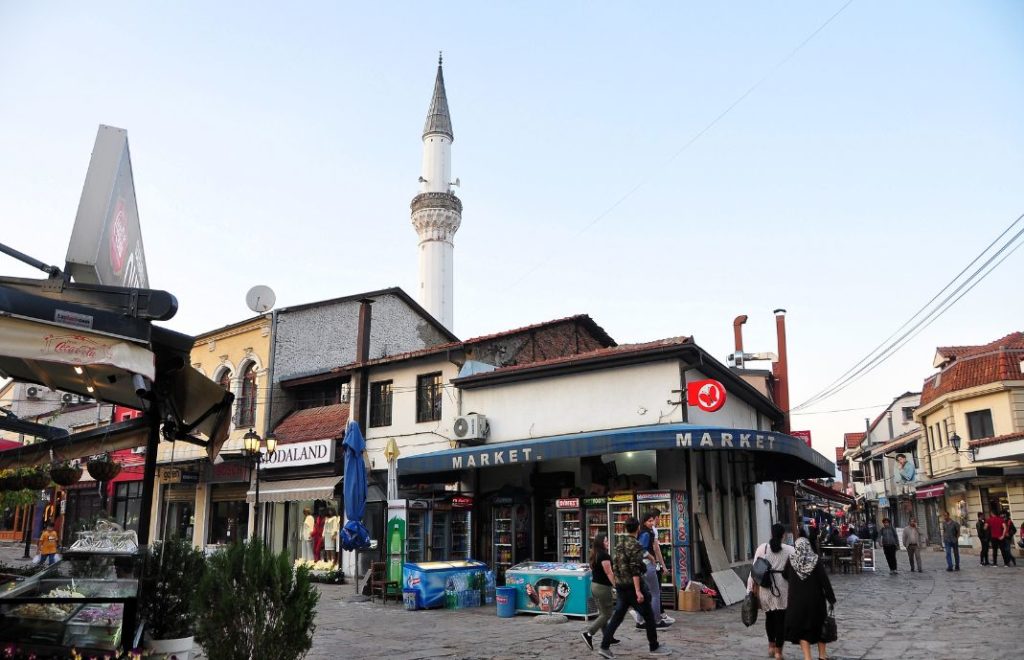
Cross the Stone Bridge, and you step into a world where time seems to pause. The Old Bazaar (Stara Čaršija), sprawling across the east bank of the Vardar River, is a vibrant tapestry of cultures, histories, and aromas. Cobbled streets wind through narrow alleys lined with shops and workshops, while the scent of sizzling kebabs and fresh-baked bread drifts from cozy eateries and tea houses.
This marketplace has been a hub of trade since the 13th century. During the Ottoman era (1392-1912), it blossomed into the beating heart of commerce and culture in Skopje. Though earthquakes – first in 1555 and later in 1963 – and the devastation of two World Wars left their scars, the Old Bazaar has risen time and again, preserving its soul through careful restoration.
Today, it remains North Macedonia’s only cultural monument that reflects the layered heritage of multiple civilizations. Ottoman architecture dominates, but Byzantine influences peek through, creating an eclectic, living museum.
Wander its atmospheric lanes, and you’ll discover art galleries, goldsmiths, souvenir stalls, and countless boutiques, including entire rows of bridal shops where tulle and lace spill onto the sidewalks. Tucked between these are mosques with elegant minarets, two Christian churches, a stately clock tower, and museums like the Museum of Macedonia and the Museum of the Skopje Old Bazaar, perfect for those who want to dive deeper into its storied past.
Pull up a chair at a traditional café, order a steaming cup of Turkish coffee, and let the rhythm of the bazaar envelop you. Here, history isn’t locked behind glass – it’s alive in every cobblestone and every smile.
Skopje Fortress – The sentinel of the city
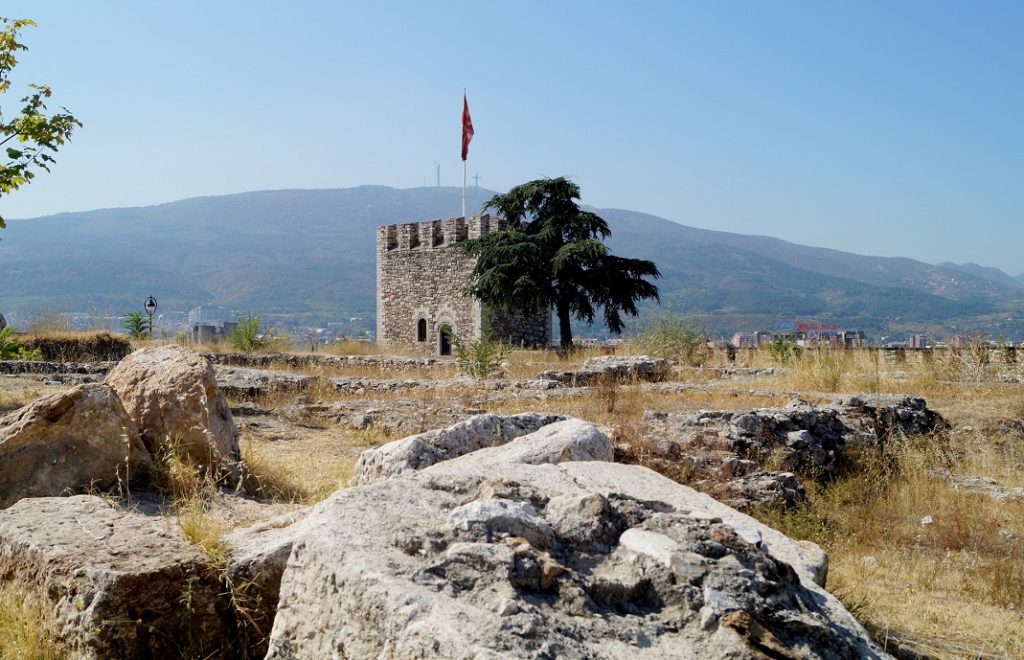
Perched on the city’s highest point, Skopje Fortress, or Kale (from the Turkish word for “fortress”), is impossible to miss. Its imposing walls dominate the skyline, a constant reminder of the city’s layered past. So iconic is Kale that it proudly graces both Skopje’s coat of arms and flag.
The first fortress here dates back to the 6th century, built using stone salvaged from the ancient Roman city of Skupi, which was destroyed by a massive earthquake in 518 AD. Over the centuries, Kale has endured its share of turmoil – battles, sieges, and repeated destruction – only to rise again and again as a resilient guardian of the city.
Today, the fortress is less about defense and more about panoramic views. From its ramparts, the entire city unfolds beneath you: the winding Vardar River, the Stone Bridge linking past and present, and the eclectic skyline punctuated by grand neoclassical façades and Ottoman relics. It’s the perfect vantage point to watch the sunset paint Skopje in shades of gold and crimson.
100 faces of Skopje – A city of bronze
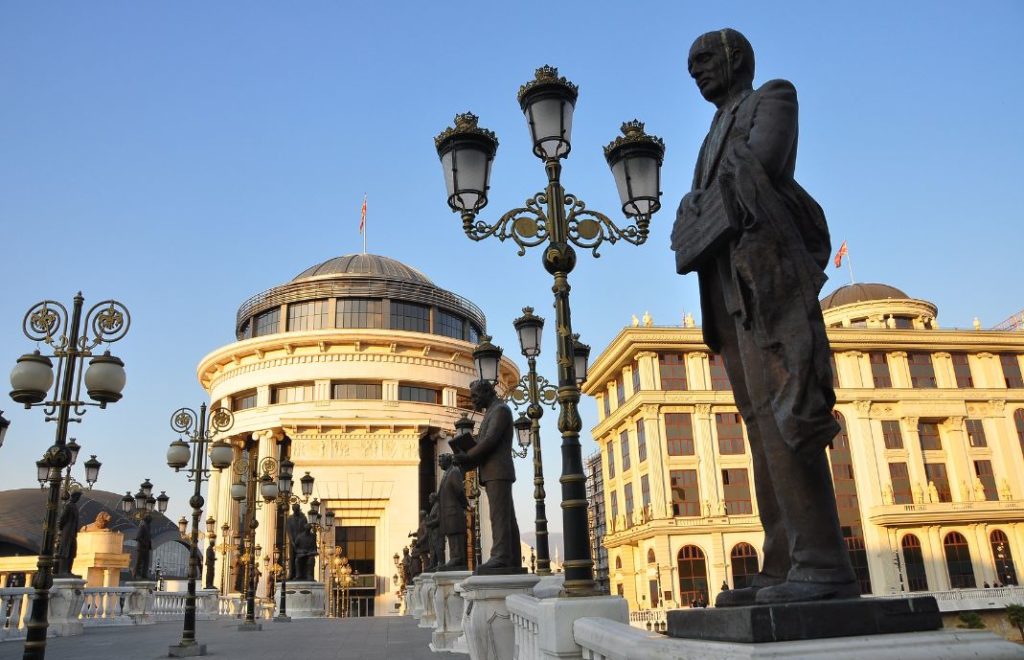
In Skopje, statues aren’t just landmarks – they’re everywhere. It’s not only Alexander the Great towering over Macedonia Square who’s earned a place in bronze. His parents, Philip II and Olympias, also stand proudly in the cityscape, joining an entire cast of historical figures immortalized as part of the Skopje 2014 project.
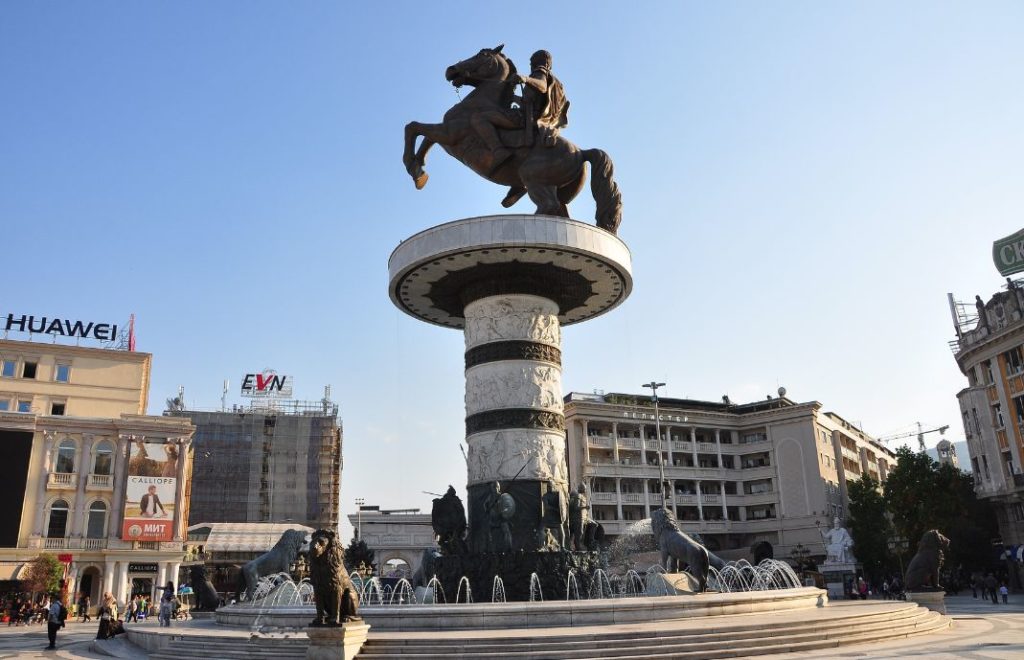
Cross the Art Bridge, one of the city’s most photographed spots, and you’ll encounter 29 statues honoring Macedonian artists and musicians. This elegant walkway isn’t just a bridge; it’s an open-air gallery that celebrates the country’s creative legacy.
And the artistic parade doesn’t stop there. Skopje boasts over 100 statues scattered across its streets and squares – from warriors and poets to lions, fish, and even oxen, all striking dramatic or whimsical poses.
The result? A city that feels like a living museum, where every stroll becomes an unexpected encounter with bronze storytellers.
For visitors, it’s part of Skopje’s unique charm: a blend of history, ambition, and a dash of eccentricity that guarantees plenty of photo-worthy moments.
A taste of Skopje – Where tradition meets flavor
Skopje is a city that knows how to please the palate. With restaurants and cafés on nearly every corner, you’ll find flavors from across the globe, yet it’s the traditional dishes that truly capture the soul of North Macedonia.
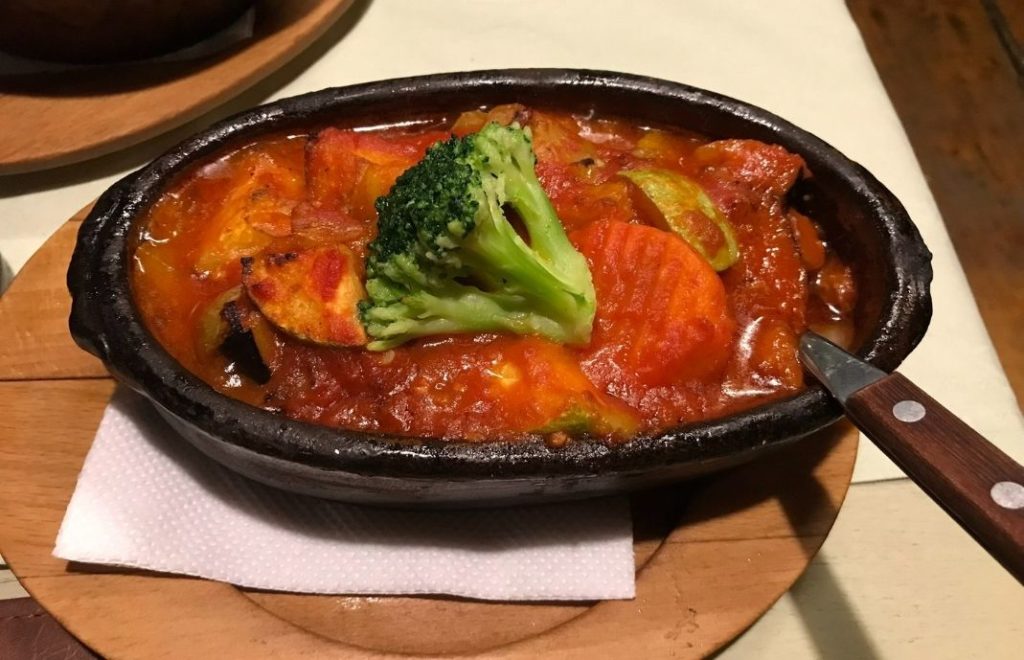
Start your culinary adventure with Tavče Gravče, a hearty national favorite made of baked beans and tomatoes, slow-cooked to perfection. For the main course, try Tava, a rustic clay-pot stew featuring tender chicken or pork simmered with seasonal vegetables – a dish that warms both heart and soul.
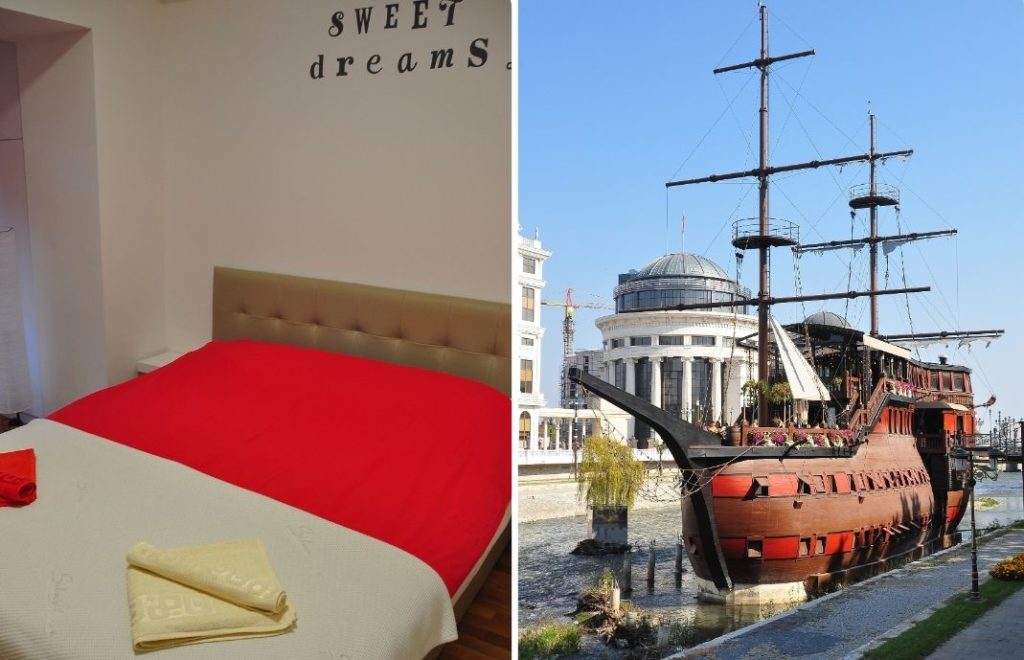
Dining in Skopje isn’t just about the food; it’s about the experience. Along the Vardar River, quirky pirate ships house floating restaurants and even accommodation, offering a meal with a view – and a story.
For lunch, we headed to Senigallia, a charming spot that proved every bite as delightful as its riverside setting. But the true highlight came later, at Old City House (Stara Kuka), an atmospheric restaurant steeped in history since 1836. Here, Macedonian tradition takes center stage: thick wooden beams, antique décor, and an irresistible menu brimming with authentic flavors. Every dish is cooked in a wood-fired oven, just as it has been for generations.
The garlic bread? Let’s just say it melts in your mouth – and leaves you plotting a return visit before the night is even over.
Cheers to Skopje – A toast with Rakija
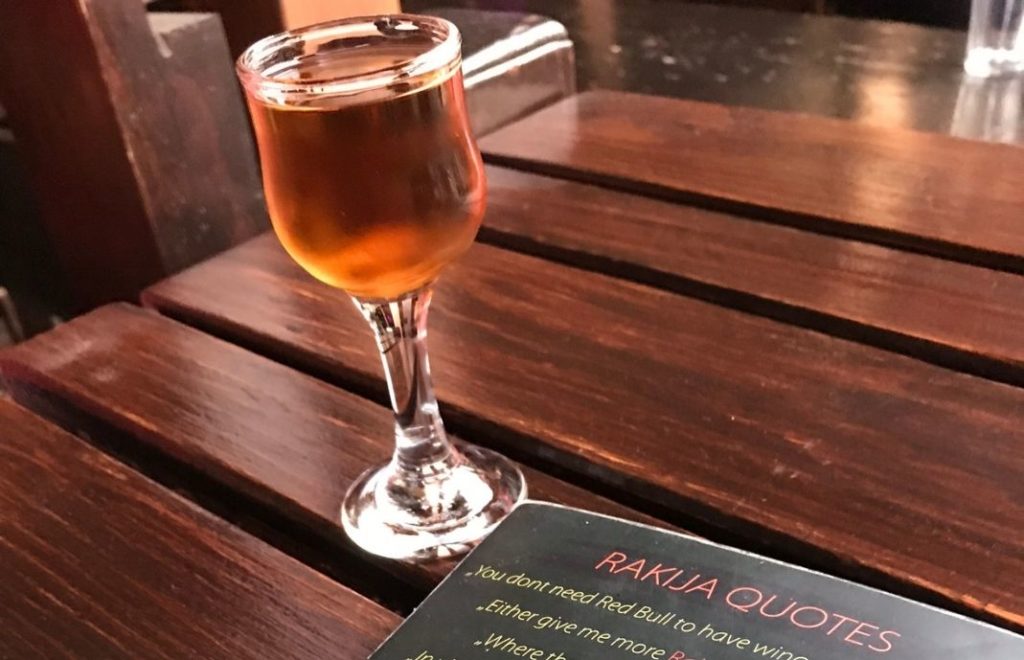
No culinary journey through Skopje is complete without sampling Rakija, the fiery fruit brandy beloved across the Balkans. Typically packing a punch at around 40% alcohol, this traditional spirit is more than just a drink – it’s a cultural ritual.
Rakija is usually served as a small shot, but don’t let that fool you into knocking it back in one go.
The locals will tell you: sip it slowly, preferably in good company and with a table full of food. Our server even offered a cheeky piece of advice: “Never drink Rakija on an empty stomach.” She didn’t elaborate – and honestly, we didn’t dare to ask why!
Whether you enjoy it as an aperitif or a warm nightcap, Rakija is the perfect way to raise a glass to Skopje’s hospitality and flavor.
«In victory you deserve Rakija. In defeat, you need it”.
Local saying
Millennium Cross – A sky-high landmark above Skopje
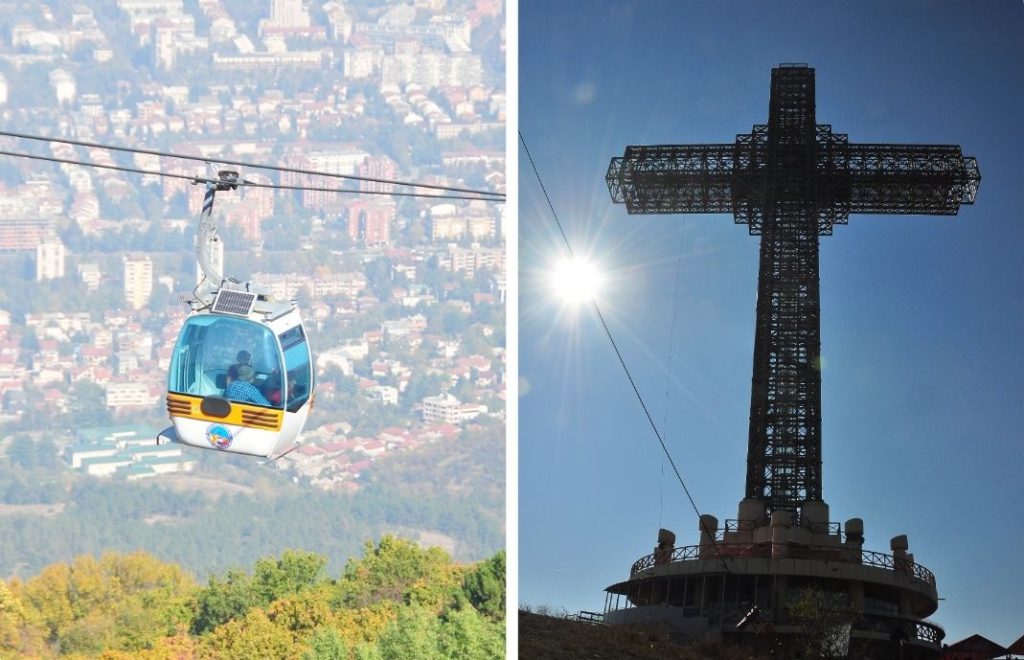
Just a short trip from Skopje’s bustling center rises Mount Vodno, a favorite getaway for both locals and visitors. Standing at 1,066 meters, it offers fresh mountain air, scenic trails, and one of the most iconic sights in North Macedonia – the Millennium Cross.
You can choose your adventure:
- Hike it: From the parking area, the trek to the summit takes 3-6 hours, depending on your pace. Bring sturdy shoes, water, and a snack for the journey.
- Ride in comfort: Opt for the cable car and glide effortlessly to the top while soaking in panoramic views.
At the summit, you’ll be rewarded with breathtaking vistas of Skopje and the imposing Millennium Cross, soaring 66 meters high – making it one of the tallest crosses in the world. Built to mark 2,000 years of Christianity in the region, the structure is as symbolic as it is impressive. Inside, an elevator whisks visitors up to a viewing platform for an even higher perspective.
After dark, the cross is dramatically illuminated, a beacon visible for miles and a glowing reminder of Skopje’s cultural and spiritual heritage.
Good to know before visiting Skopje
Airport and transportation
Skopje International Airport is about 30 minutes from the city center by taxi.
An airport bus also connects the terminal to the center.
Traveling overland? There’s a train from Belgrade that takes around 9 hours.
Price level
Skopje is a budget-friendly destination. Dining out costs only a fraction of what you’d pay in most European cities, so treat yourself without guilt.
Currency
The currency is the Macedonian denar (MKD).
ATMs are widely available, and most restaurants and shops accept credit cards.
Where to stay in Skopje
Skopje offers accommodation for every budget – from modern apartments to luxury hotels, and even some quirky options for those seeking something unique.
Hotels & international chains
Several global hotel brands have established themselves in Skopje, offering high standards and central locations for business and leisure travelers alike.
Our stay: Sweet Cozy Apartment
We opted for Sweet Cozy Apartment, a charming, spotless, and well-maintained property in a quiet residential neighborhood. It’s conveniently located within walking distance of a shopping center, bakery, and grocery store. The nearest bus stop is just five minutes away and the city center about 15 minutes on foot.
Note: Payment is in cash upon arrival.
Stay on the river
Looking for something a little different? Spend the night on a pirate ship anchored in the Vardar River. These floating hotels combine novelty with comfort and are an unforgettable way to experience the city.
Things to do in and around Skopje
Skopje is a compact and charming city, perfect for exploring on foot. Two full days is plenty to cover its highlights, leaving time to soak up the local atmosphere at a relaxed pace.
Day trips & excursions
One of Skopje’s greatest perks? Its strategic location for day trips. Within a short drive, you can explore other gems in North Macedonia or even hop across the border into Kosovo for a quick international adventure.
By car
Renting a car is a convenient option for flexibility. International rental companies like Avis and Hertz have offices in downtown Skopje.
Tip: If you plan to cross into Kosovo, make sure your rental agreement includes written permission from the company.
Guided tours
Not keen on driving? No problem. A range of local operators offer day tours, both as group excursions and private guided experiences.
Skopje’s central location means that Matka Canyon, Lake Ohrid, and charming mountain villages are all within reach for an easy day trip – making your visit even more rewarding.
More inspiration: A day trip to Kosovo