
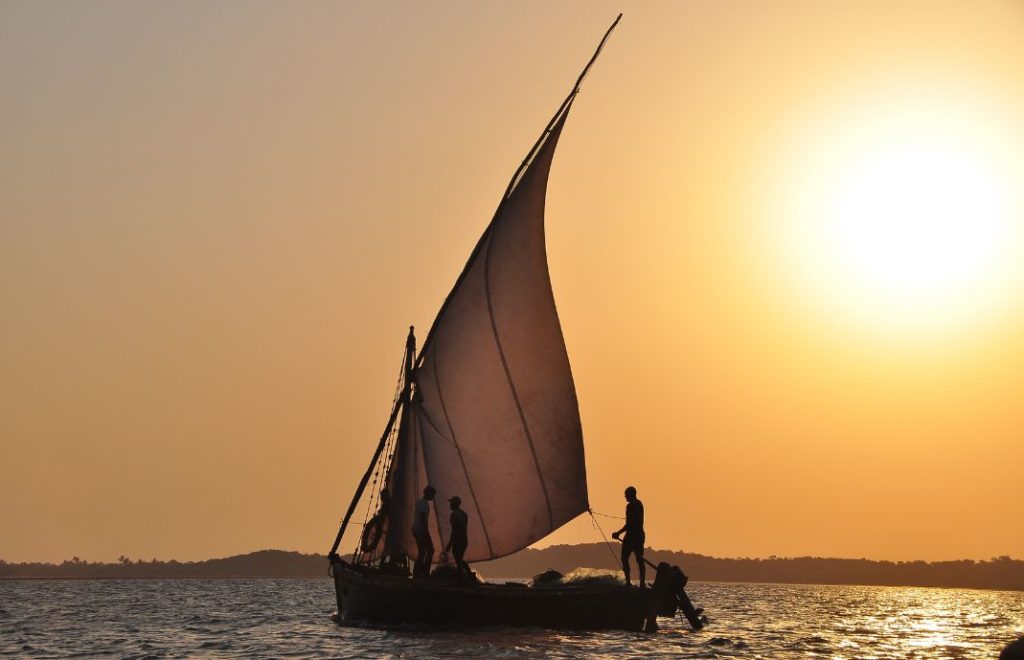
We sit on the beach, watching the horizon glow with the soft hues of dusk. In the distance, a dhow glides steadily toward us, its silhouette framed against the fading light. Moments later, the green-painted wooden vessel slips gracefully onto the sandbank. Captain Marcus greets us warmly, inviting us aboard.
The dhow is a traditional boat design, once crafted in the regions surrounding the Arabian Sea and the Persian Gulf. Characterized by its lateen sails and a hull with either a flat stern or transom, it carries with it centuries of maritime heritage.
Interestingly, the term dhow was not originally used by the Arabs themselves; it is likely derived from Swahili or an old Arabic word for “boat.”
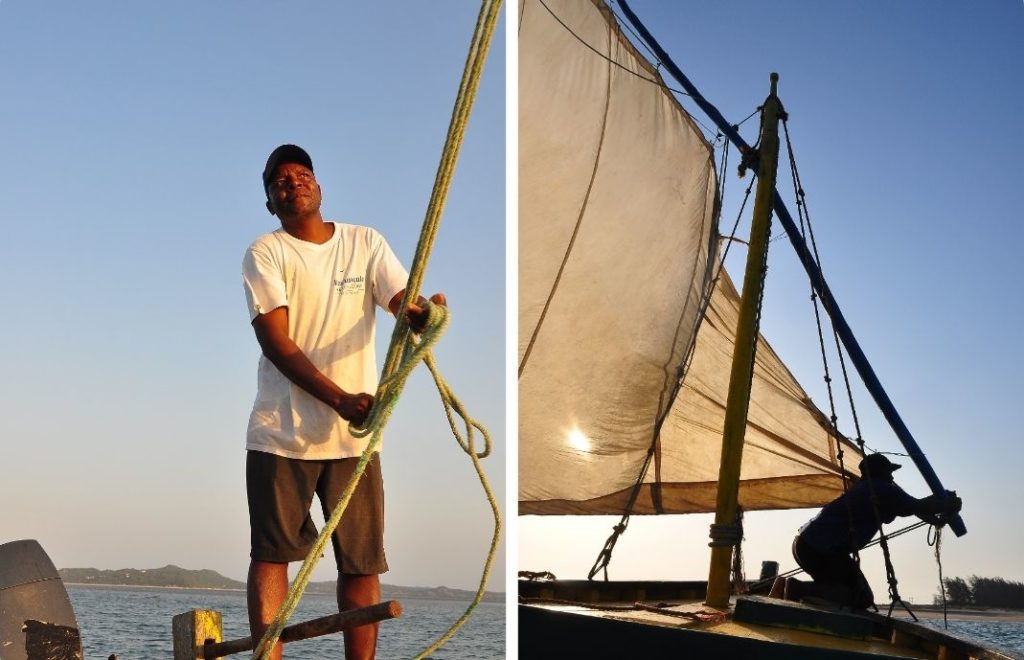
With practiced ease, Marcus and his first mate push the dhow off the sandbank and hoist the sail. A gentle breeze catches the canvas, and soon we’re gliding effortlessly across the water. There’s nothing to do now but lean back, savor the salty air, and lose ourselves in the magic of a sunset voyage.
A perfect trip
We’re off the southern coast of Mozambique, skimming the turquoise waters near the stunning Machangulo Peninsula – just a two-hour boat ride from the capital, Maputo. This slender stretch of land is framed by three nature reserves and two marine sanctuaries, their untouched beauty drifting slowly past as our dhow slices through the shallows.
On a nearby sandbank, a flamboyance of flamingos gathers, their delicate silhouettes glowing in the afternoon light. Here, the rhythm of life follows the tides. Locals know how to harness the ocean’s moods – and when to simply surrender to its whims. Low tide can be a challenge, Captain Marcus explains, making it nearly impossible to ferry goods and passengers between the islands. Patience, he says, is the islander’s most essential skill.
For us travelers, the ebbing tide brings unexpected wonders. Like the sight of two fishermen, stranded mid-sea, strolling home with their boat in tow. A surreal scene – two figures walking across what should be deep water.
Then the breeze sharpens, filling the sail with a sudden whoosh. The dhow surges forward, slicing gracefully through the Indian Ocean. The first mate appears with a tray: cold drinks and a tin of homemade snacks. Never have onion fritters tasted so divine.
Conversation flows easily. We ask about island life; the captain responds with wide smiles and halting English, telling us about his three children, his work as both fisherman and sailor, and the vibrant birdlife that thrives in this coastal paradise.
Into the sunset
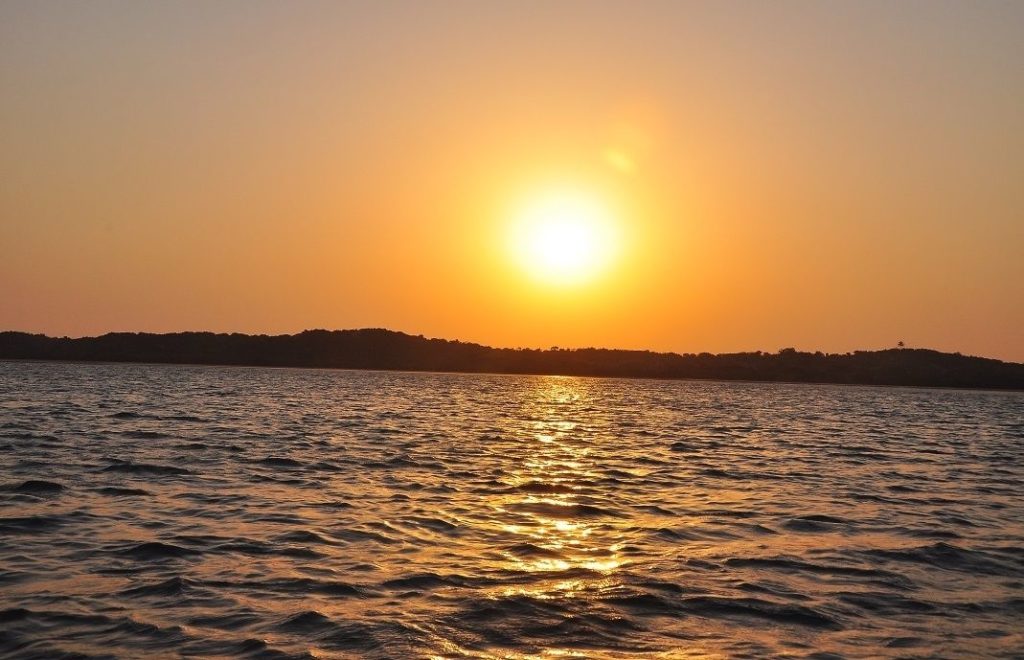
The sun sinks toward the horizon, painting the sky in blazing hues of gold that shimmer across the glassy surface of the water. Our dhow glides silently past a fishing boat, where the crew is wrapping up their day. Nets are hauled in, and the catch sorted. Our first mate explains that the largest fish will journey to Maputo for sale, while the smaller ones will grace the family tables of these hardworking fishermen.
Gold deepens to crimson. It’s as if the sky and sea have conspired to erupt in color, drenching the world in fire. The sail flutters softly in the breeze as Captain Marcus keeps a steady course – straight into the heart of the sunset. When we asked to sail into the dusk, he clearly took us at our word. Moments later, the sun vanishes, swallowed whole by the sea.
Captain Marcus turns to us with a smile. “Good trip?” he asks.
“Magical,” we reply, without hesitation – far beyond anything we imagined – as we reach for one last perfectly crispy onion ring.
The dhow’s origins may be lost to history, but this voyage will linger in memory forever: the shimmering waters of Mozambique, the warmth of a captain’s smile, and a sunset that burned itself into our souls.
More inspiration to visit Mozambique:
Check-In: Machangulo Beach Lodge
