
– Don’t hit the elephant!
Not exactly a phrase I ever expected to shout.
But on a self-drive safari through Addo Elephant National Park in South Africa, those were the words that burst out of my mouth.
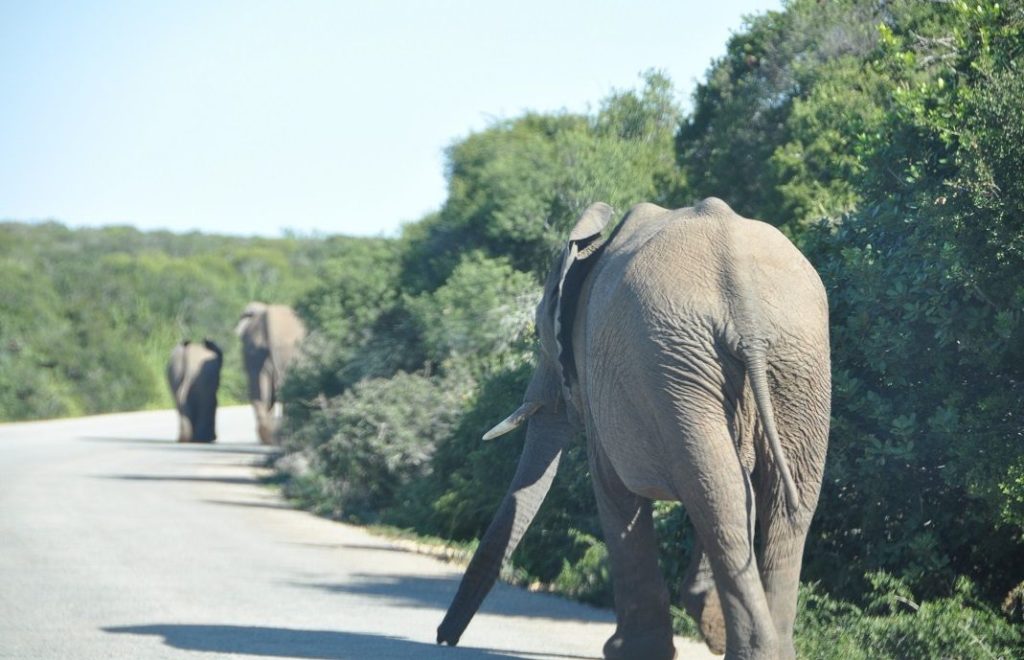
Two massive elephants were ambling casually down the road ahead, commanding our full attention. What we didn’t notice – until the last second – was a third giant emerging from the thicket on our right, completely unbothered by the small metal box we called a car. Clearly, he was eager to rejoin his family, and we were mere obstacles in his path.
For a heartbeat, we were centimeters away from a collision – one that would have ended far worse for the car than for the elephant. Try explaining that to the rental company. Then again, this is South Africa… they’ve probably heard it before.
For nearly five minutes, we crept along behind the trio, who had absolutely no intention of vacating the road. They were in no hurry, and honestly, neither were we. Watching those colossal backsides sway rhythmically against the backdrop of bushveld felt surreal. After all, it’s not every day you find yourself stuck in traffic behind three elephants.
The story of Addo Elephant National Park
Just an hour’s drive from Port Elizabeth lies Addo Elephant National Park, South Africa’s third-largest national park – a sanctuary born from tragedy and resilience.
The park’s roots stretch back to 1931, when it was created to protect the last 11 Addo elephants surviving in the region. Once, vast herds roamed freely across the Eastern Cape, but relentless hunting in the 18th and 19th centuries decimated their numbers. By the late 1800s, settlers claimed surrounding lands for farming, sparking fierce competition for water and crops.
Tensions reached a breaking point in 1919, when farmers demanded the extermination of all elephants. In the grim years that followed, 114 elephants were slaughtered. The species teetered on the brink of extinction.
Then came a change of heart. In 1931, public outcry saved the remaining 11 elephants, leading to the creation of Addo Elephant National Park. Yet the battle for coexistence wasn’t over. In 1954, the park’s warden, Graham Armstrong, designed an innovative elephant-proof fence to keep the growing herd contained – protecting both wildlife and farmland. Known as the Armstrong Fence, it still serves its purpose today.
What began as a last-ditch effort to save one species has evolved into a vast conservation success. Today, Addo safeguards not just elephants, but an entire ecosystem of flora and fauna, creating a safari paradise for visitors from around the globe.
In the land of giants
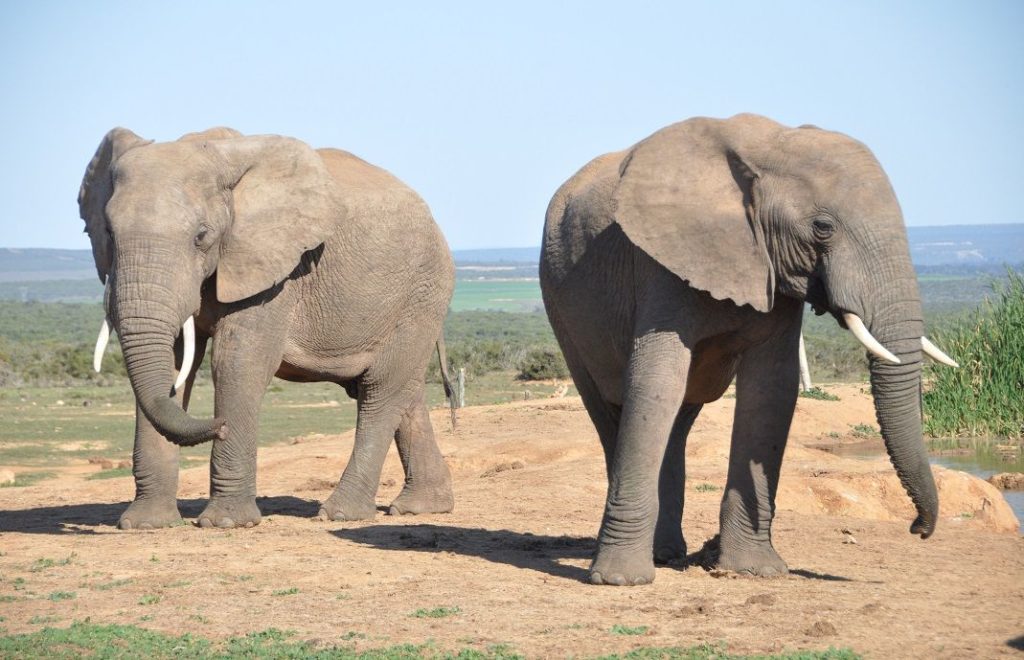
Today, Addo Elephant National Park is home to nearly 600 elephants, sharing their vast 1,640-square-kilometer domain with lions, warthogs, zebras, ostriches, buffalo, leopards, and a dazzling array of antelope species – not to mention birds, jackals, and the ever-curious meerkats.
Most visitors begin at Addo Main Camp, where the adventure truly takes shape. You can opt for a guided safari or embrace the thrill of independence by purchasing a self-drive permit. With permits in hand, a detailed park map, and a quick briefing on dos and don’ts, we’re ready. A smiling ranger checks our paperwork at the gate, swings it open, and with that, we roll into the wild.
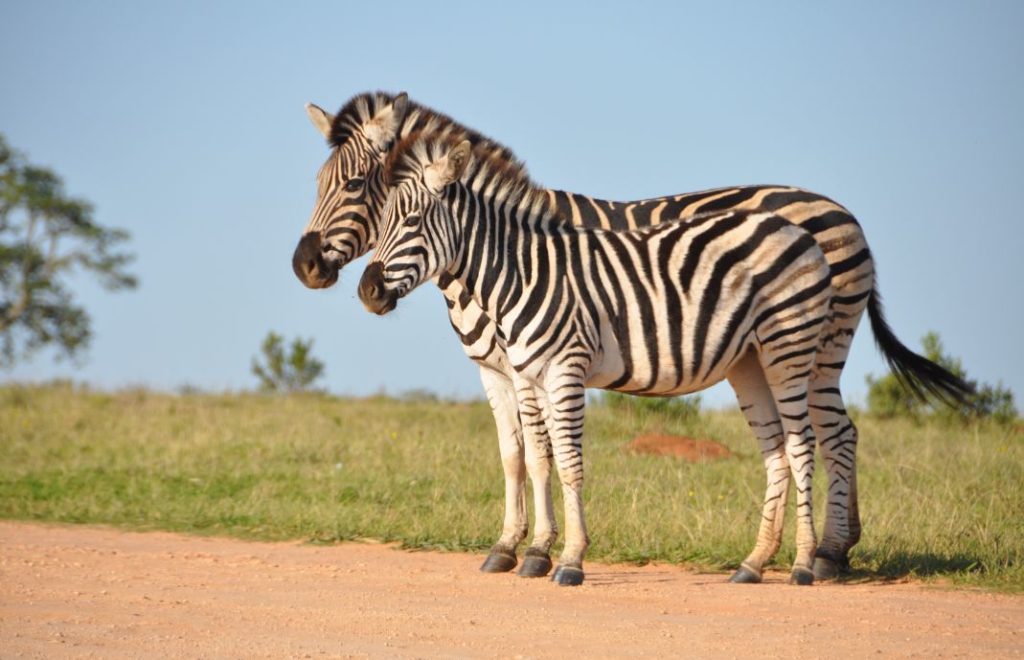
Barely minutes in, we spot our first wildlife: warthogs, snuffling in the dust, their oversized heads forcing them to kneel on their front elbows to graze. Next come zebras, their black-and-white stripes rippling in the heat haze, and stately kudus with their elegant spiral horns. We even glimpse eland, South Africa’s largest antelope, moving with surprising grace for its size.
But let’s be honest – we’re here for the elephants.
We steer toward Hapoor Dam, and that’s when the earlier drama unfolds: three enormous elephants commandeering the road, including one surprise guest bursting from the thicket to rejoin his family (cue our near-collision heart attack). For five long minutes, we crawl behind them, savoring every ponderous step – even if all we see are their swaying rumps.
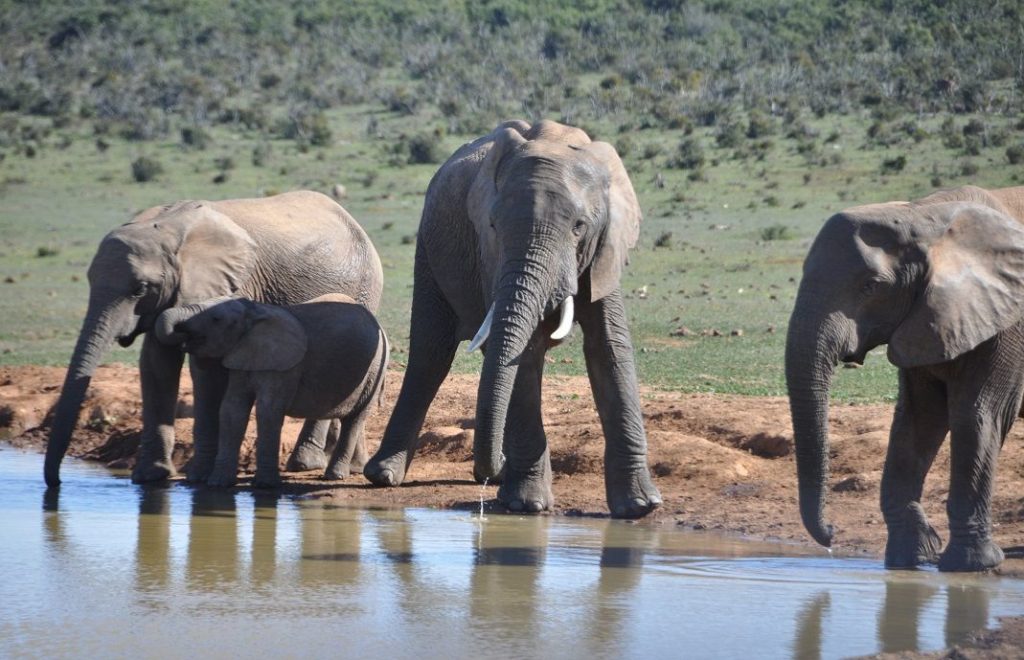
At the dam, our patience is rewarded. Five elephants stand shoulder to shoulder at the waterhole, trunks curling gracefully as they drink. We pull to the side, cut the engine, and let the moment wash over us. The scene is quiet, timeless – Africa at its most primal and profound.
The legendary Hapoor
The name Hapoor carries a legacy as vast as the Addo plains themselves – a name etched into the park’s history and whispered among those who know the tales of Africa’s giants. Hapoor was no ordinary elephant. For 24 years, from 1944 to 1968, he reigned supreme, a dominant bull whose presence commanded respect and fear alike.
His name tells his story: “Hap” meaning “cut” and “oor” meaning “ear” in Afrikaans, a grim reminder of the hunter’s bullet that tore through his ear and left its mark for life. That scar ignited an enduring hatred of humans – a hatred that drove even seasoned rangers scrambling for safety whenever Hapoor appeared on the horizon.
For decades, no rival could topple him – until the day Lanky emerged, a younger bull with strength enough to challenge the king. Driven from his herd, Hapoor became a solitary wanderer. In an astonishing feat of determination, he eventually scaled the park’s famed “elephant-proof” fence – unchallenged for nearly 20 years. Sadly, freedom was fleeting. Aggressive and unpredictable beyond the park’s borders, Hapoor became a danger to humans, and in 1968, the rangers made the heartbreaking decision to end his life.
Yet Hapoor’s spirit lingers here, especially at Hapoor Dam, the waterhole named in his honor. Today, we sit by its edge, watching his descendants – majestic, serene, utterly at peace – slake their thirst in the golden light.
We are not alone. Cars line up along the track, every window framing nature’s grandeur: the largest land mammals on Earth, oblivious to our awe.
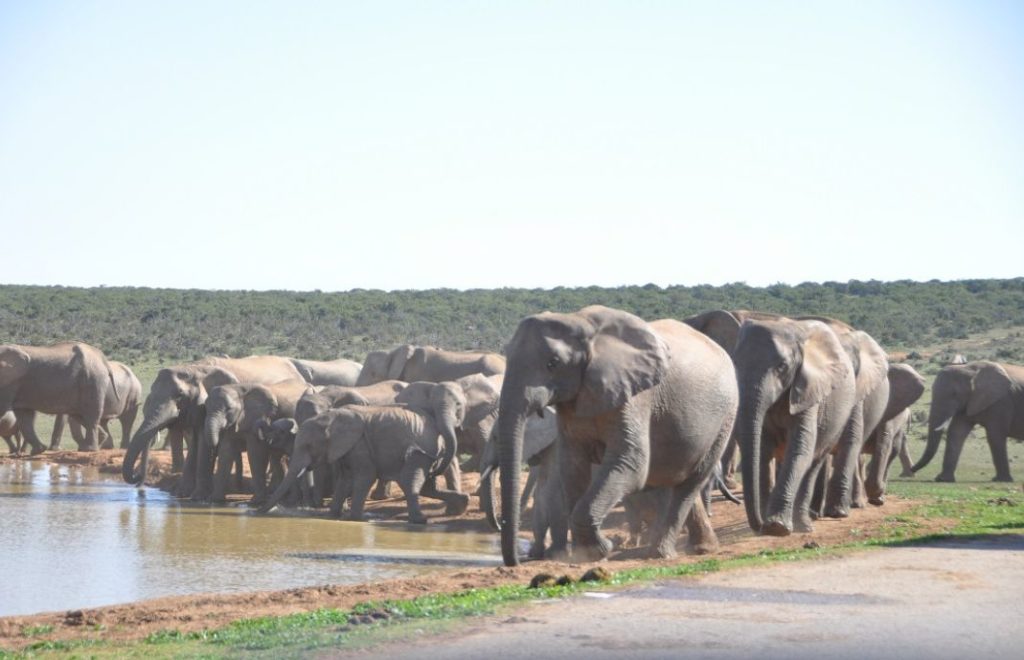
And just when I think this day can’t possibly get any better, the horizon stirs. One by one, elephants emerge from the tree line. A parade of giants, calves nestled close to their mothers, adolescents swaggering, elders moving with quiet authority. They keep coming, an endless procession flowing across the savanna like a living river of gray.
It’s a sight so magnificent, so infinite, that I forget to breathe. In the land once ruled by a legend, life marches on – bigger, stronger, more beautiful than ever.
Among the majestic elephants
Slowly, they move among the cars – graceful in their enormity, swinging trunks like pendulums, giving a lazy shake of their colossal heads. The vehicles keep multiplying, yet the elephants remain unfazed. And then it happens: the gathering grows. Ten elephants, then twenty, then fifty… until we’re surrounded by nearly a hundred of these gentle titans.
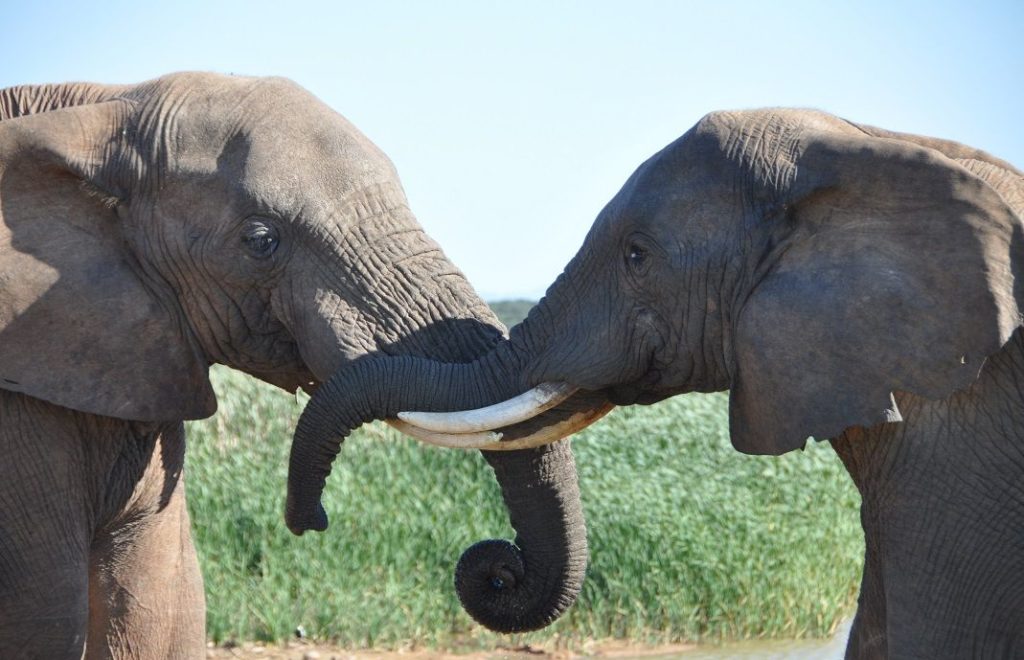
We sit in stunned silence, watching life in its purest form unfold before us. Around our cars, the herd goes about its day with majestic nonchalance. Drinking deeply from the dam, sparring in playful wrestling matches, caressing each other with tender trunk gestures, even relieving themselves without a shred of self-consciousness. Ever attentive, they shield their tiniest members from harm, their sense of family palpable in every movement.
The African elephant – Earth’s largest land mammal – is, at its heart, a creature of astonishing sensitivity. Their social bonds are profound, especially among females who remain within their family group for life. After even the briefest separation, their reunions are tender displays of affection, trunks intertwining in a gesture that feels strikingly familiar – like an embrace.
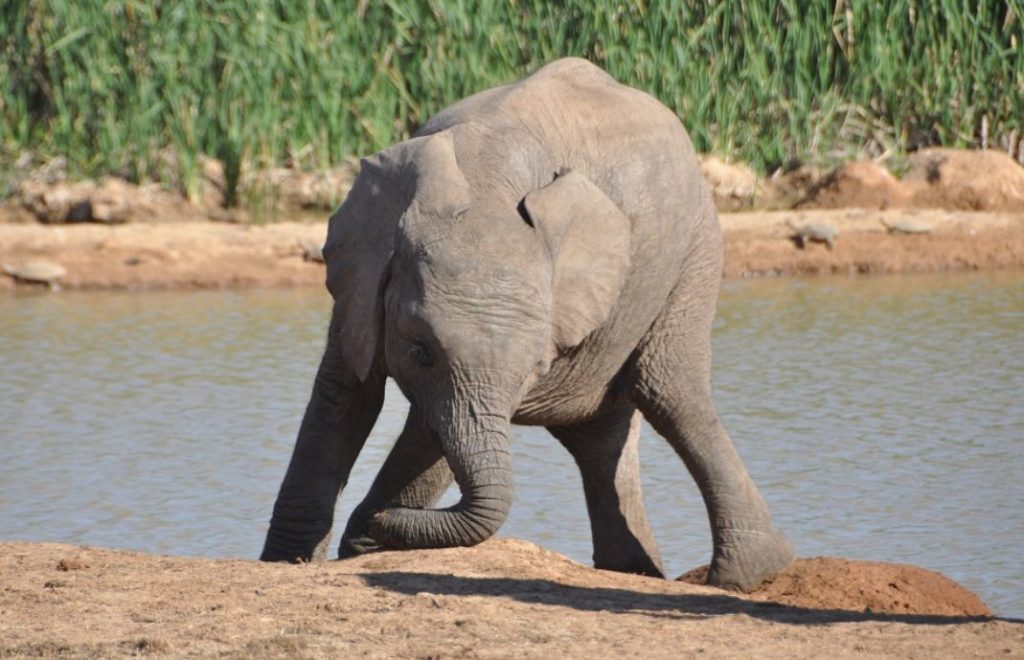
But today’s scene-stealer is a tiny calf, still wobbling on legs that seem unsure of their purpose. His trunk whips about with comic ineptitude, like a firehose with a mind of its own. In an attempt to drink, he overreaches – and tumbles spectacularly into the mud. A startled squeal pierces the air, and in an instant, the cavalry arrives: mother, aunts, cousins, all rushing to comfort and coax him upright. After a few clumsy scrambles, he’s back on his feet – shaken, muddied, but safe. For the rest of the afternoon, he clings tightly to his mother’s side, a living reminder of both the fragility and resilience of life in the wild.
We watch in awe, feeling like time itself has paused – letting us savor this extraordinary communion with creatures whose ancient wisdom dwarfs our own.
The rest of the park is calling
After half an hour of this unforgettable elephant spectacle, the great herd begins to drift away, their towering silhouettes melting into the horizon. We feel no disappointment – how could we? This has been one of the most breathtaking safari experiences of my life.
But here on the savanna, the animals rule. When they decide it’s time to move on, there’s nothing to do but tip an imaginary hat and let them vanish into the wilderness.
I confess, it’s with a heavy heart that I finally allow my partner to turn the ignition and ease us forward. Addo is vast, and who knows what other wonders await beyond the next bend?
And sure enough, the magic continues. At the edge of the bush, kudus graze serenely, their spiral horns like works of art. A pair of warthogs scurry off in comic urgency, tails held stiffly upright like little antennae. Moments later, a regal ostrich strides past, its long neck stretched skyward in aristocratic disdain. On the road ahead, a cluster of zebras loiters casually, their foals frolicking in carefree delight, painting the landscape with black-and-white stripes that seem to dance under the African sun.
Every turn is a revelation, every encounter a reminder that in this wild kingdom, we are guests – privileged witnesses to the rhythm of life on the plains.
Elephant Spa Day
Barely ten minutes later, we brake again – and for the most delightful reason: an elephant at the spa!
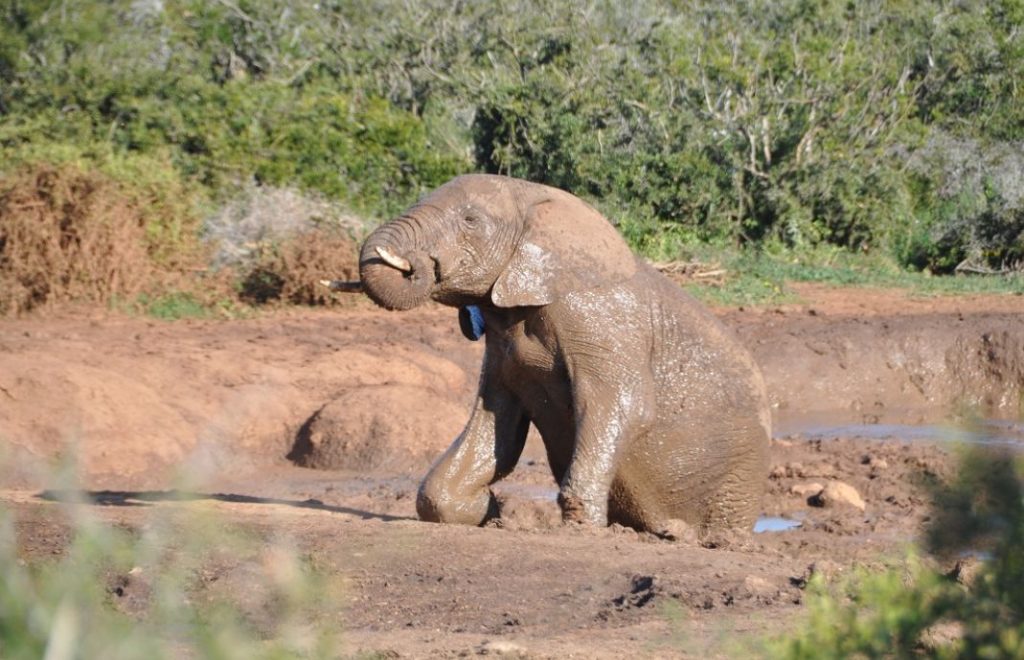
A solitary bull has claimed a mud hole for his private pampering session, and he’s reveling in it with pure, unselfconscious joy. First, that colossal backside lowers into the ooze with a satisfying squelch. Then, with surprising grace for his size, he rolls onto his side, coating every fold and crease in cooling earth. His trunk swings high, flinging arcs of mud over his massive head like a seasoned spa therapist applying the final touches.
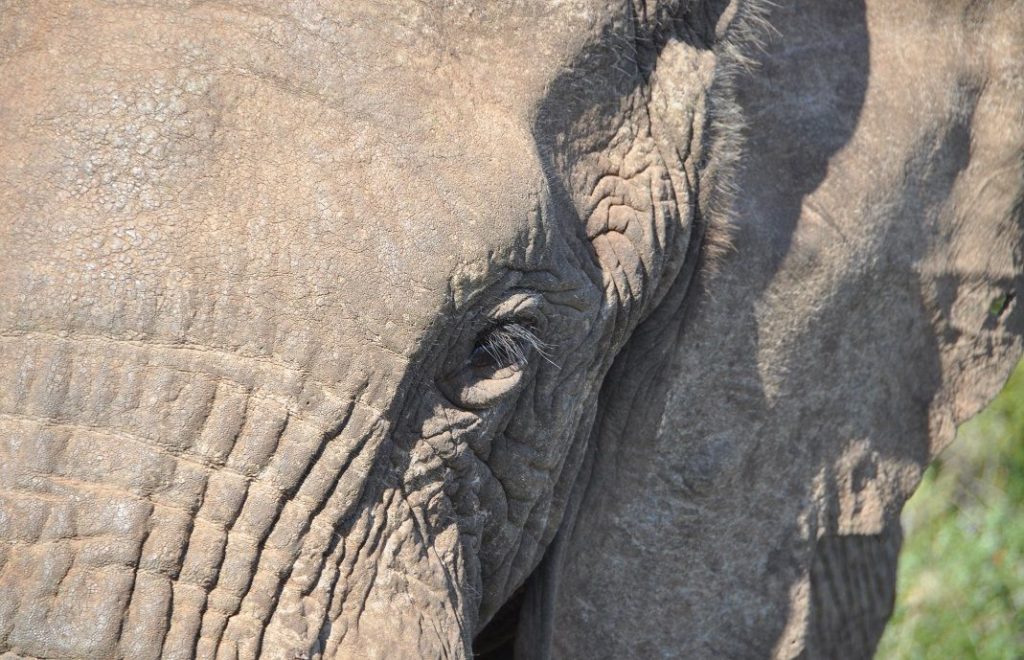
There’s more to this indulgence than simple pleasure. Elephant skin – thick, wrinkled, and up to four centimeters deep – is a marvel of natural engineering. Those countless creases increase surface area, trapping water and mud that help regulate body temperature long after bath time ends. Mud also acts as sunscreen and insect repellent, making this ritual as practical as it is playful.
Eventually, the great gray spa-goer hauls himself upright, glistening in his muddy armor. He ambles toward us with serene confidence, pausing to tear a mouthful of grass as if to say, “Show’s over.” Then, with a lazy shake of his head, he melts back into the thicket, leaving us grinning at the memory of his improvised wellness routine.
When giants clash
The day’s magic isn’t done with us yet. We continue slowly along Addo’s dusty tracks, eyes scanning for movement in the bush. Zebras flick their tails lazily. Kudus graze with regal calm. A dozen warthogs, comically earnest, kneel on their elbows to nibble at the grass – a lunch scene straight out of a wildlife documentary.
Then, from the crest of a hill, the land opens before us. Below, elephants dot the plains like moving boulders. But two bulls have broken away, and their purpose is clear.
It’s a showdown.
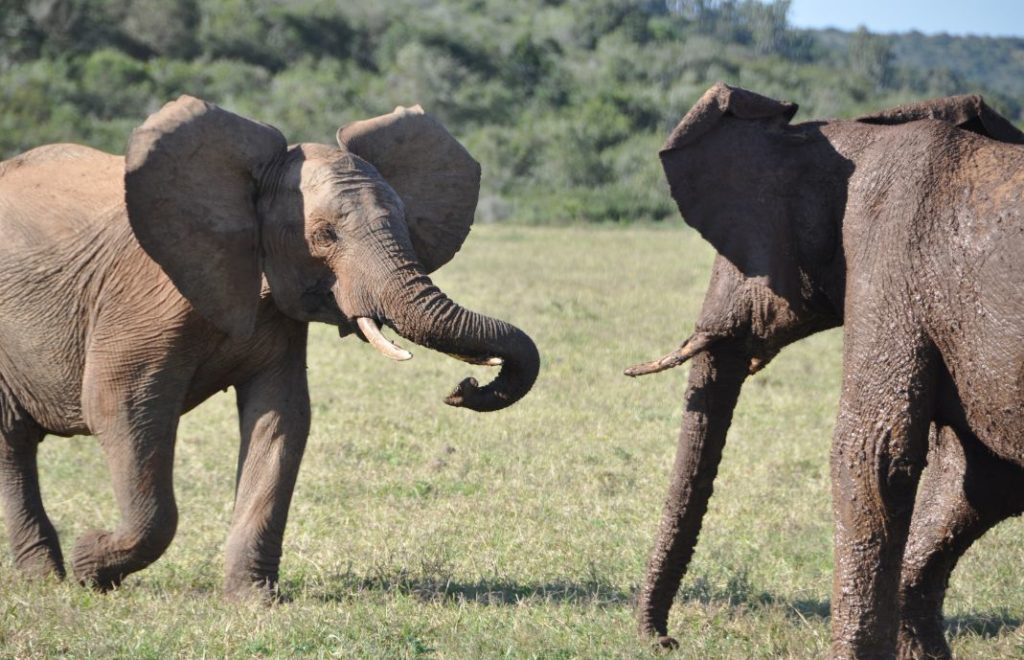
When male calves reach adolescence – around twelve years old – they leave the maternal herd. Some wander alone; others join bachelor groups where a subtle but crucial hierarchy of dominance begins to take shape. Sparring is part of the ritual, a test of strength and nerve that defines future kings.
The bout we witness isn’t brutal, but it’s serious enough to command respect. The young bulls circle, trunks curling, tusks clashing with a hollow clack. Dust swirls as they push and grunt, muscles rippling in the sunlight. This is elephant diplomacy – a conversation of power written in bone and sinew.
We keep a respectful distance, cameras poised. The car ahead does the opposite, edging closer – an act that defies every rule of safari etiquette. It gets worse. As the struggle spills into the road, the vehicle advances still, as if chasing drama.
And then, a heart-stopping sight: further ahead, a matriarchal herd approaches – eight females with calves in tow, moving with deliberate grace. The car in front barrels toward them. When the elephants pass within a whisper of the metal shell, a passenger does the unthinkable: she reaches out to touch them.
In an instant, the fragile boundary between wild and human shatters. My pulse spikes. These are not circus animals – they are wild giants, and they command respect. Rules exist for a reason. And today, we’re reminded that in Addo, survival – ours and theirs – depends on it.
A lifetime of memories
Mercifully, the elephants ignore the reckless car ahead, their focus fixed on the prize: a cool, muddy waterhole shimmering in the afternoon heat.
We, however, are hemmed in by vehicles – a traffic jam in the wild. My pulse quickens as the elephants loom closer, their immense forms brushing the edge of our comfort zone. But who’s complaining? From this front-row seat, we watch the ultimate spa ritual unfold.
Ten elephants crowd the shallow pool, trumpeting softly as they jostle for space. Mud flies, trunks curl, and massive bodies sink into the cooling embrace of clay. It’s a scene of chaos and harmony all at once – a social ballet in shades of gray. Once a pair finishes their treatment, they lumber off with stately calm, making way for the next contenders in this pachyderm queue.
All too soon, time betrays us. We must press on toward Port Elizabeth, our route planned to exit via the park’s southern gate – a scenic sweep that leaves just thirty minutes’ drive to the coast.
Yet my heart resists the road ahead. Saying goodbye to Addo feels like parting with a dream. Among all the safaris I’ve experienced, this ranks firmly in my top three – if not higher. The memory that lingers strongest? The vision of nearly a hundred elephants streaming across the savanna, converging on a waterhole in timeless ritual.
It’s the kind of moment that etches itself into your soul – a reminder of why we journey, why we protect, why wild places matter.
This wasn’t just a safari. It was, quite simply, an ele-phantastic day.
Practical information:
Addo Elephant National Park
Addo is the country’s third biggest park after Kruger and Kgalagadi Transfrontier Park.
Wildlife at a glance
Home to around 600 elephants, as well as lions, rhinos, hippos, leopards, zebras, antelope species, warthogs, ostriches, and hundreds of bird species.
Location & Access
The main gate (Addo Main Camp) is 72 km from Port Elizabeth (Gqeberha). You can drive through the park and exit at Matyholweni Gate, just 39 km from the city. The route works both ways.
Self-Drive or guided?
Addo is perfect for self-drive safaris, as long as you stick to roads marked “Tourist Road.” Expect a mix of paved and gravel tracks. Guided safaris (morning, afternoon, or full-day) are also available.
Where to stay
Options range from budget-friendly rest camps to luxury lodges within the park. Plenty of accommodation is also available just outside the gates.
Day visitors
No need to pre-book if you’re driving yourself for the day. However, book organized activities in advance.
Facilities at Main Camp
Buy your day pass here. There’s also a gas station, restaurant, souvenir shop, toilets, and spots to stock up on drinks and snacks.
Picnic options
Bring your own food and enjoy it at Jack’s Picnic Site – a fenced-off area with braai (BBQ) facilities and restrooms.
More inspiration: A guide to Addo Elephant National Park

Threats facing elephants
Ivory trade
Despite an international ban on ivory trade that’s been in place for decades, demand for elephant tusks remains alarmingly high. Poaching continues to pose a severe threat, with an estimated 8% of the elephant population killed every year for their ivory.
Loss of habitat
Between 1979 and 2007, Africa lost nearly two-thirds of the elephants’ natural range, leaving them with drastically reduced grazing grounds. As once-protected areas shrink, herds become increasingly vulnerable to poachers and human interference.
Human-wildlife conflict
As settlements expand across Africa, elephants frequently come into conflict with local communities. Their search for food often leads them into farmland, where they can devastate crops and damage property – sparking retaliatory killings.
Climate change
Africa is acutely vulnerable to climate change. Average temperatures have risen by almost 1°C in the last decade, with projections suggesting even higher increases. This shift affects water sources, food availability, and overall habitat stability – further endangering elephant populations.
More inspiration to safari in South Africa:
Safari in Kruger National Park
Safari at Pumba Private Game Reserve
