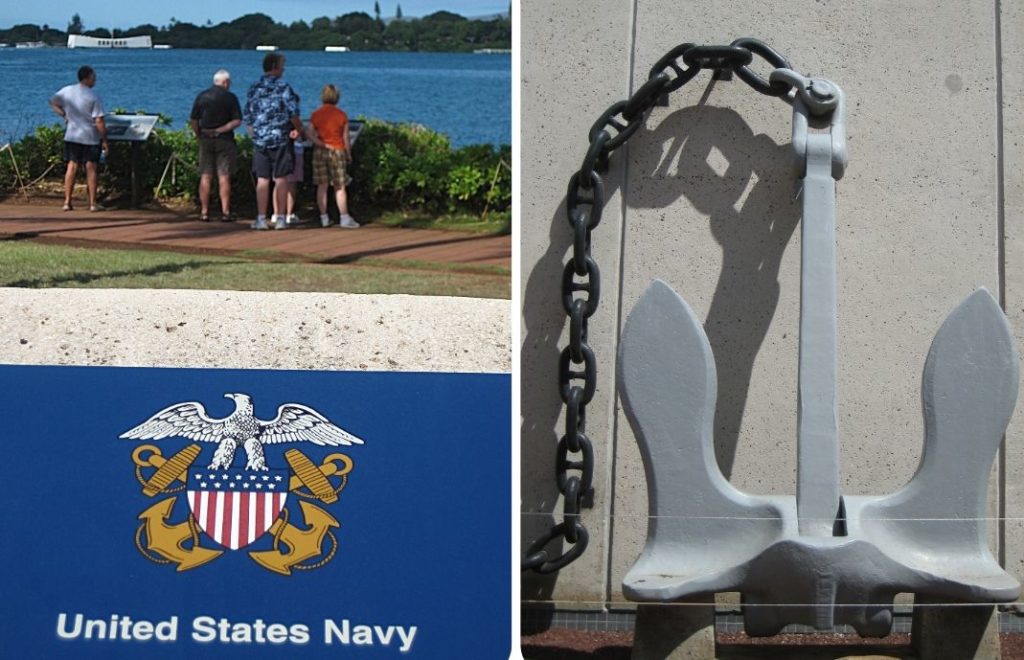
The island of Oahu is a tropical paradise – a wonderland of sun-drenched beaches, swaying palms, colorful Hawaiian shirts, and the clink of glasses crowned with paper umbrellas. Visitors are greeted with warm smiles and the melodic aloha that embodies the spirit of the islands. Fittingly so, for Oahu means “gathering place.”
Yet this idyllic island also bears the weight of history.
On the morning of December 7, 1941, Sunday dawned as it always did. Locals enjoyed breakfast, headed to church, or strolled to the beach. Life moved at its usual gentle pace.
No one could have imagined that within hours, events would unfold that would hurl the United States into the throes of World War II.
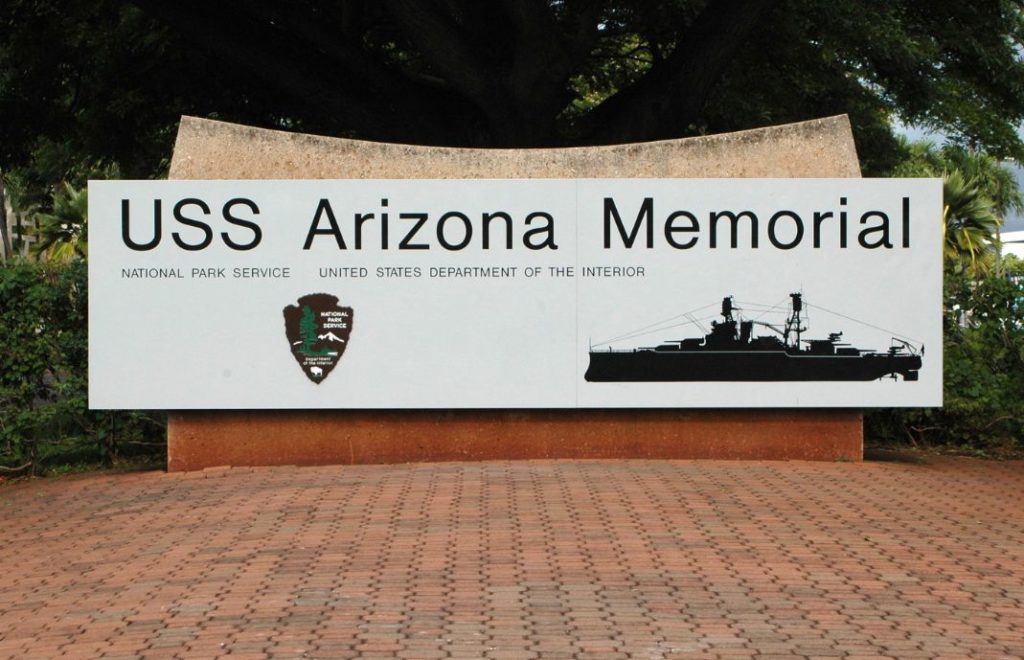
Pearl Harbor – December 7, 1941
“In the distance, the faint hum of aircraft engines grew steadily louder. On the naval base at Pearl Harbor, no one paid it much attention. Earlier that morning, the incoming Japanese planes had been detected by the U.S. Army’s radar station at Opana Point – but they were mistaken for American B-17 bombers expected from the mainland. The warning never reached command.
At 7:53 a.m., the first wave struck. A total of 363 Japanese aircraft swept in across two devastating waves. Leading the assault were slow, vulnerable torpedo bombers – 183 planes strong – targeting American battleships and carriers at anchor, while dive bombers pummeled airfields to cripple any counterattack. Hickam Field, the largest air base, and Wheeler Air, the primary fighter base, were among the first to fall under relentless fire.
In mere minutes, the tranquil Sunday morning erupted into chaos. Japanese planes roared overhead, transforming Pearl Harbor into an inferno of fire, smoke, and explosions. Machine-gun bursts strafed the decks as crews scrambled from their bunks, battling flames, braving the shrapnel, and struggling to save their ships.
On the bridge of the battleship USS Arizona, Rear Admiral Isaac C. Kidd and Captain Franklin Van Valkenburgh directed the desperate defense. Then came catastrophe: a 40 cm armor-piercing bomb, dropped from high altitude, tore through two armored decks before detonating in the forward ammunition magazine. In a single shattering blast, the Arizona was gone.”
The assault raged for 90 minutes, leaving unimaginable devastation in its wake: 2,390 Americans killed, 1,178 wounded, and 18 ships sunk or crippled.
It was a morning that ended an era of peace – and thrust America into the crucible of war.
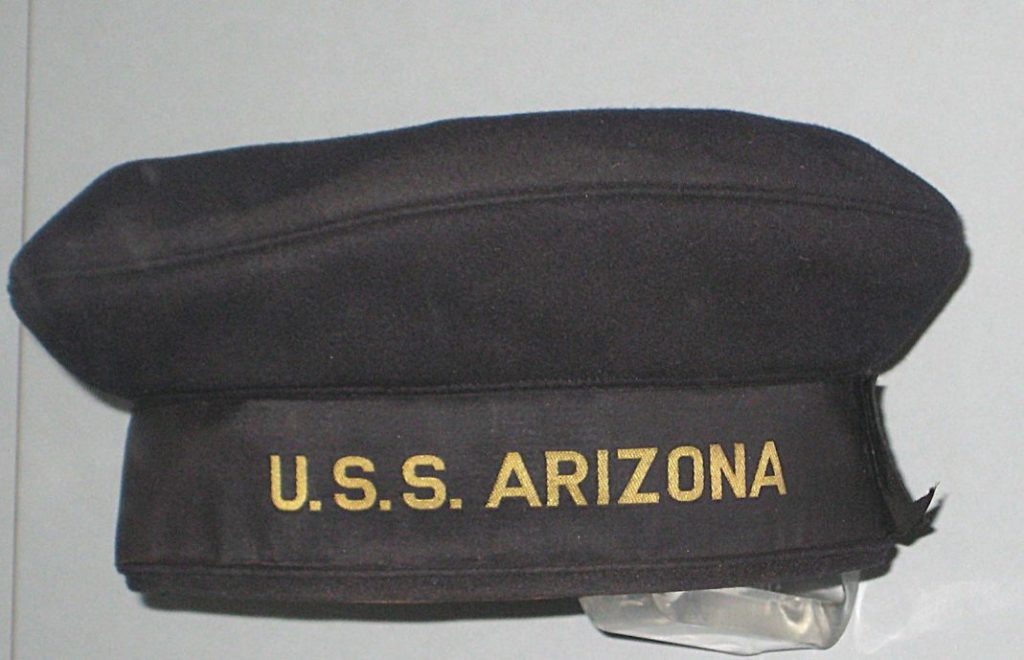
Pearl Harbor Historic Site
This hallowed site honors the service and sacrifice of soldiers and civilians who fought across the Pacific during World War II. Visiting Pearl Harbor is not just a journey through history – it’s a profound reminder of resilience and remembrance.
Here are the key experiences you shouldn’t miss:
Visitor Center Waterfront Park
Stroll along the waterfront for sweeping views of the harbor and the solemn USS Arizona Memorial. Along the way, interpretive exhibits bring the tragic events of December 7, 1941, vividly to life.
Exhibit Galleries
Step into immersive displays that chronicle life on Oahu before, during, and after the attack. These galleries feature personal belongings, haunting photographs, and powerful artifacts that tell the human story behind the headlines.
Ford Island access
Take the complimentary shuttle from the Battleship Missouri stop to Ford Island, where you’ll find the USS Oklahoma Memorial, a moving tribute to the 429 sailors who lost their lives aboard the battleship Oklahoma.
Every corner of Pearl Harbor Historic Site invites reflection – on the courage of those who served, the cost of war, and the enduring call for peace.
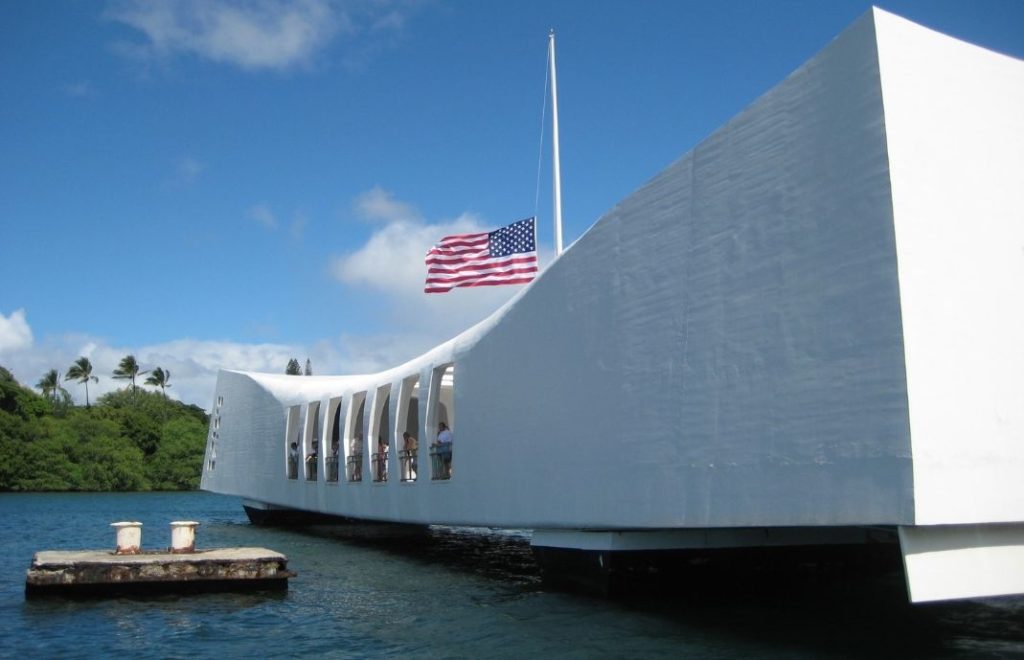
USS Arizona Memorial
A visit to the USS Arizona Memorial is a deeply moving experience. Every day, between 4,000 and 8,000 visitors arrive to pay tribute to those who perished on that fateful morning.
Begin at the Visitor Center with a 23-minute film that vividly recounts the dramatic events of December 7, 1941, through the eyes of sailors and civilians who lived them.
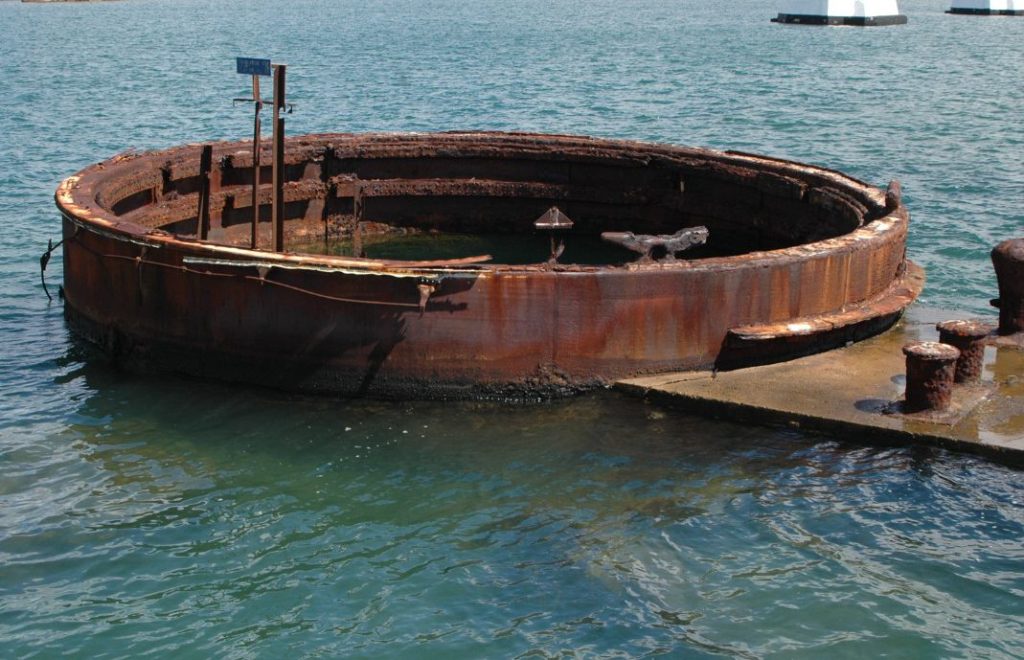
Then, board the shuttle boat for the short journey across the harbor to the memorial itself. Beneath you lies the shattered hull of the USS Arizona. In some places, fragments of the battleship are visible above the waterline; in others, they rest just below the surface.
Drops of oil still seep from the wreckage – a phenomenon poignantly known as “the tears of the Arizona.”
Remember, this is a sacred place. More than a thousand men lost their lives aboard the Arizona, and many remain entombed within its steel grave. This quiet memorial stands as their final resting place – a solemn reminder of sacrifice and the heavy price of peace.
Inside the USS Arizona Memorial
The USS Arizona Memorial stretches 56 meters across the water, its elegant design dipping gently at the center. This symbolic curve represents the arc of America’s experience during World War II: the nation’s pride before the attack, the deep despair after December 7, 1941, and the resurgence of strength that followed victory.
The memorial is divided into three distinct sections:
- The Entry Room – A space to pause and reflect as you begin your visit.
- The Assembly Room – Where visitors gather in quiet contemplation, overlooking the sunken battleship.
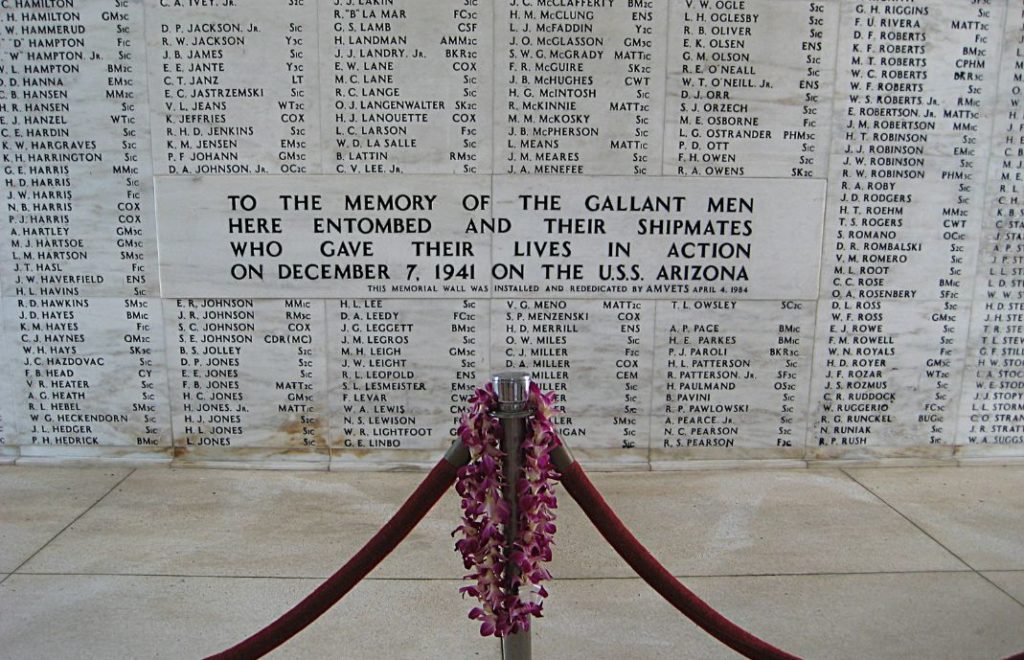
- The Shrine Room – The most solemn space, housing the names of the fallen.
A small opening in the floor reveals the decks of the USS Arizona below. Here, visitors often lay flowers in tribute.
At the far end, a gleaming white marble wall, roped off with velvet, bears the engraved names of 1,177 men who lost their lives in the attack. To the left, a modest marker lists the names of approximately 30 survivors who later passed away.
In a poignant tradition, any USS Arizona crew member who survived the attack may choose to have their ashes interred within the sunken ship, a ceremony carried out with honor by U.S. Navy divers – returning these sailors to rest among their fallen comrades, in the place they once called home.
Practical information
Opening hours
Pearl Harbor Historic Sites is open daily, except for a few holidays each year.
USS Arizona Memorial
A must-see for every visitor to Oahu. The USS Arizona Memorial draws 1.8 million visitors annually to honor the fallen.
Admission
Free, but reservations are required and limited. Tickets can be booked up to 8 weeks (56 days) in advance, with a $1 reservation fee. Bring printed or digital confirmation.
Duration
The full experience – including an introduction, boat ride, and memorial visit – takes about 45 minutes.
Arrival
Check in at least 1 hour before your scheduled time, and no later than 10 minutes before departure. Allow extra time for parking, and if you plan to watch the introductory film, arrive even earlier.
Dress code
Modest attire is required – remember, this is both a memorial and a gravesite.
What to include:
- Visitor Center Waterfront Park
- Exhibit Galleries
- Film about the attack
- Boat ride to USS Arizona Memorial
Additional highlights:
- Pacific Fleet Submarine Museum
- Battleship Missouri Memorial
- Pearl Harbor Aviation Museum
- USS Oklahoma Memorial
For families
Pearl Harbor offers many interactive exhibits. For a shorter, family-friendly option, choose the Remember Pearl Harbor Tour.
This solemn yet fascinating experience is a profound journey into history – a chance to honor the past while standing in a place that changed the course of the world.