The Renaissance jewel of Florence is a living gallery, a treasure chest brimming with art and architectural marvels. Here, every step reveals a masterpiece, every piazza whispers stories of brilliance. This is the city that birthed visionaries whose ideas and creations shaped the course of Western civilization.
A short journey away lies Siena, an unspoiled glimpse into the Middle Ages. The entire city feels like an open-air museum, its stunning Gothic churches and palaces linked by a maze of winding streets and graceful archways. This is history you can wander through – stone by stone, shadow by shadow.
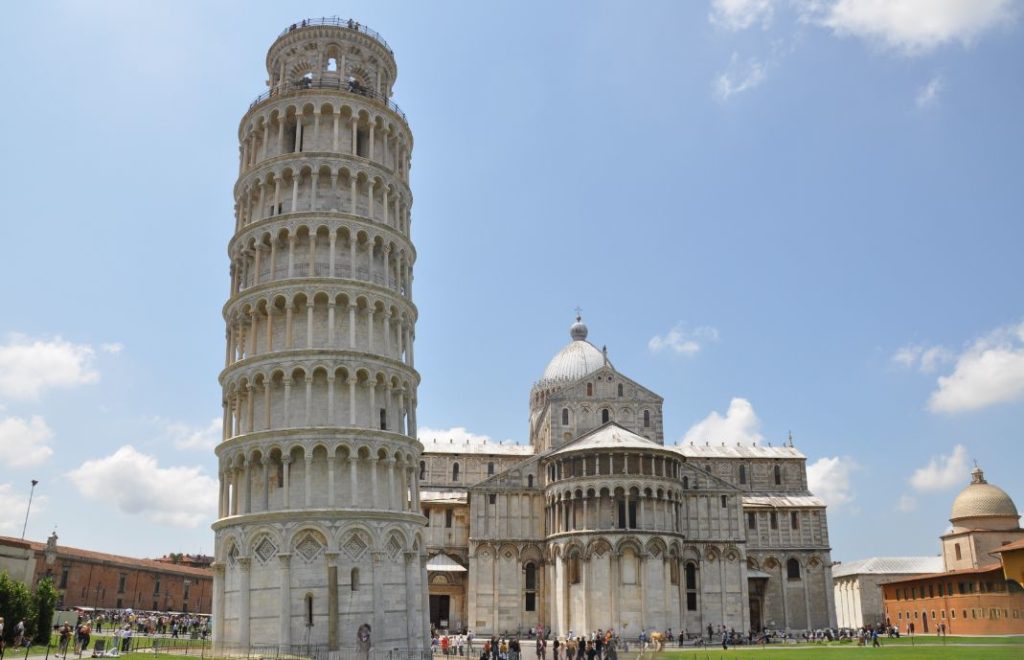
And then there’s Pisa, a name synonymous with its most famous blunder: the Leaning Tower, the unintended result of a 12th-century engineering mishap. Yet this iconic tilt is just one piece of an exquisite ensemble – a Romanesque cathedral complex so striking that the very style came to bear the city’s name.
Together, these three Tuscan treasures form a triad of art, faith, and ingenuity – a journey through centuries where every horizon holds another wonder.
Patience put to the test
After giggling our way through the flight from Oslo to Pisa – because sometimes everything is inexplicably funny – we head to pick up the rental car. And then, the mood changes.
The scene that greets us at the rental counters is sheer chaos. People everywhere: standing, slumped, sprawled. The air inside is thick and stifling, hope draining from faces faster than sweat from foreheads. With four flights landing at once, you’d think the company (which I’ll kindly leave unnamed) would have staffed more than two people.
We inch forward at a snail’s pace. That old phrase about “slowly moving up the line” takes on a whole new meaning. Frustration builds. Tempers flare. Some people boil over entirely.
We trade off standing in line and darting outside for air. The little shop on the outside is our mirage of salvation – until we learn their card machine is dead and they have no change. One and a half hours later, parched and desperate, we would happily hand over €50 for a soda.
Finally, we collapse against the counter when our turn arrives. The clerk – hardly brimming with cheer – slides the keys across. We sign like lightning and snatch them up before he can even mutter “Have a nice trip.”
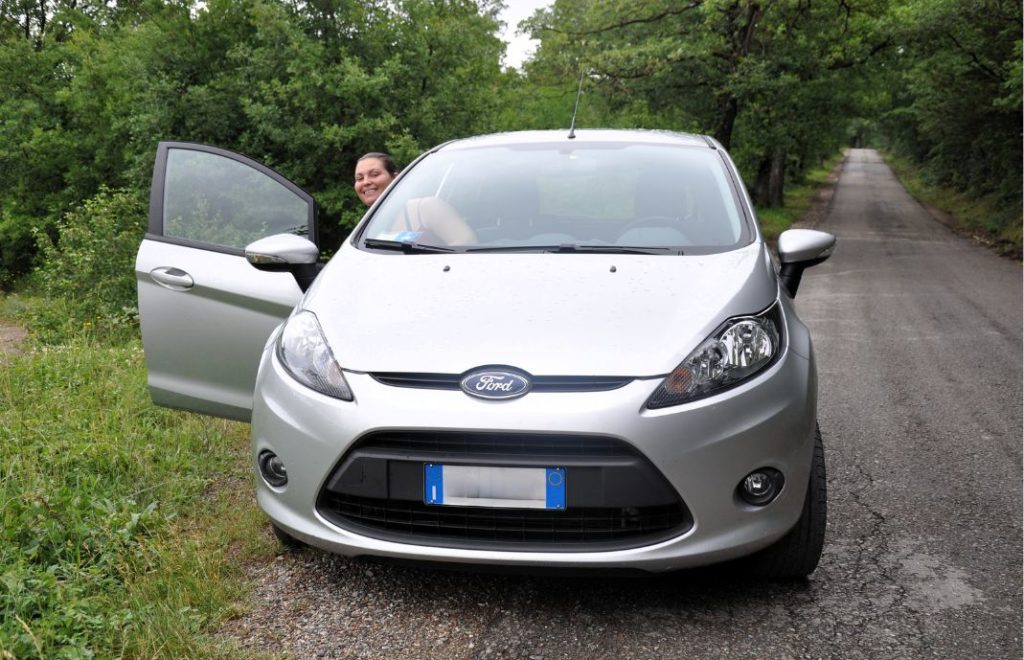
Outside, in the glare of the Tuscan sun, our little silver car awaits. Luggage in, doors slammed.
First mission: find water. Next: the road to Cortine. After that: food.
Our rumbling stomachs almost drown out the engine as we speed toward the vineyard where we’ll spend the night – a small oasis at the end of a long, chaotic day.
Siesta troubles
We finally arrive at La Canonica de Cortine, a charming vineyard retreat, and are greeted by a smiling hostess who checks us in. Our first question – naturally – concerns food. Our stomachs, empty since Oslo, are already composing a thank-you speech for the feast we imagine is coming.
Her response shatters that dream.
“No, no. Food not now. Later!” She says it with the authority of someone explaining gravity to a child.
Desperation makes us press for details.
“Later” means after siesta, which, as luck would have it, has just begun. No food until 7:15 p.m. Her tone suggests that Italy itself might crumble if we dare question this sacred ritual.
We ask – plead, really – if there’s a café open in the nearby village.
“Seven,” she says firmly. Then, with an almost nationalistic pride: “Italy needs to rest.”
Crushed, we shuffle toward our room, buoyed only by her suggestion to “enjoy something from the minibar.” Hope flickers. Maybe some snacks? A tiny bottle of Chianti?
The room is spectacular – airy and elegant, Tuscan charm in every corner. The minibar? Less so. We burst out laughing when we find its entire inventory: one tiny packet of peanuts. The kind you get on a plane. Five nuts totalt. At three euros.
Dinner feels like a lifetime away. If we survive until then, we’ll raise a glass to the sacred siesta – though right now, it feels like Italy’s most dangerous sport.
Siesta is over – and wild boar tales
As the clock inches toward dinner, we drift down to the reception like survivors of a long famine. The receptionist is back, rubbing sleep from her eyes.
“Going to town for dinner?” she asks casually.
“Yes,” we reply, smiling with the innocence of people who think a stroll under the Tuscan sky sounds romantic.
Her reaction nearly stops our hearts.
“You cannot walk to town!” she shrieks, shaking her head with such vigor you’d think we’d just proposed swimming to Sicily.
Then, with a voice climbing an octave, she delivers the punch line: “Wild boars! Many wild boars! They can eat you!”
Apparently, these creatures don’t just grunt – they hunt. Especially if they have babies in tow.
Our terror is brief; hunger trumps everything. We assure her we’ll take the car, thank her for her concern, and head out – laughing so hard we can barely hold the keys.
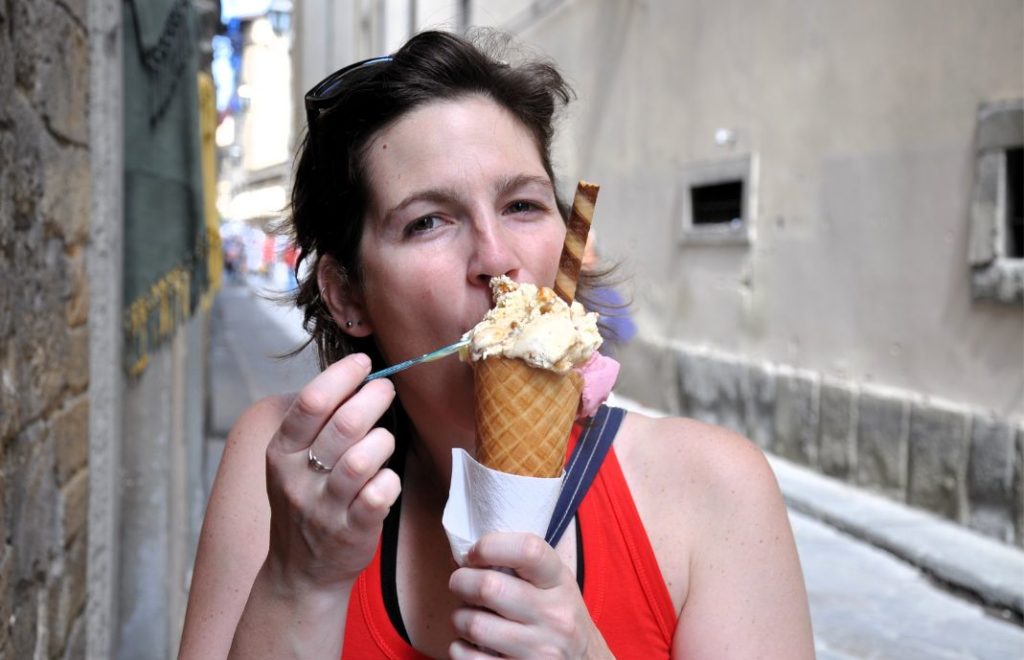
Minutes later, we’re parked in a sleepy little town, devouring pizza and gelato like it’s the last supper. Each bite tastes like salvation.
And those killer wild boars? Not a snout in sight.
Pure medieval magic in Siena
The crossroads in Cortine leave us scratching our heads – one sign points right to Siena, another left. Turns out, in Italy, all roads don’t just lead to Rome; they lead to Siena, too.
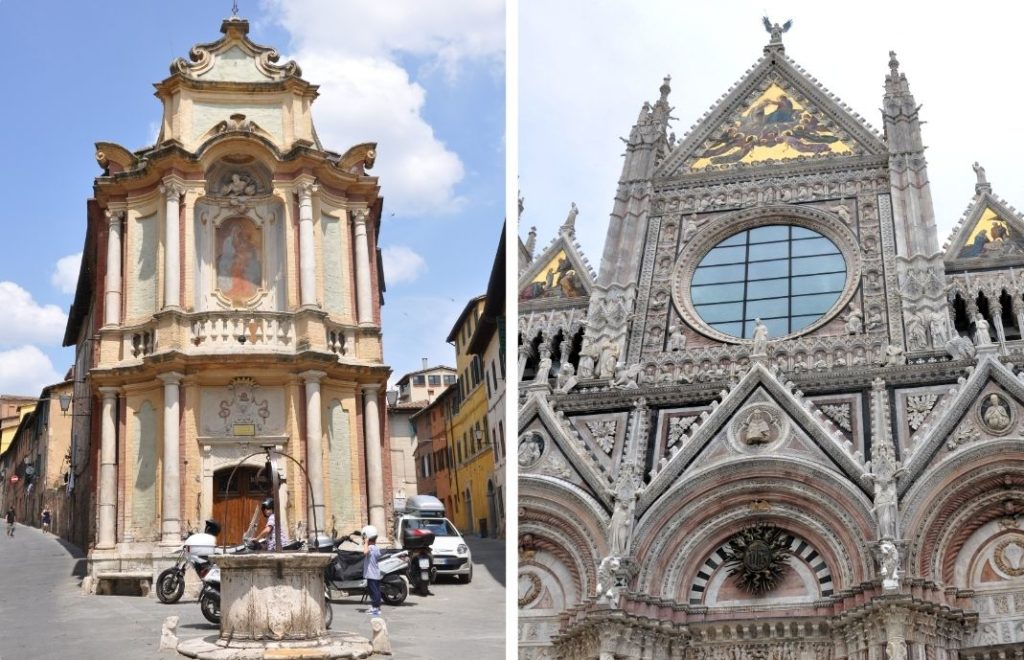
And what a destination it is. Siena is pure, unfiltered Middle Ages. A living museum of cobbled lanes, arched gateways, and architectural treasures that seem untouched by time. Gothic churches rise like stone lacework, flanked by palaces that once belonged to the city’s great families. Beyond the walls, green fields roll into the horizon, framing this jewel in a Tuscan embrace.
At its heart lies Piazza del Campo, widely hailed as Italy’s most beautiful square. Shaped like a grand amphitheater, it radiates warmth and energy under a brilliant blue sky. The Palazzo Pubblico, Siena’s stately town hall built between 1298 and 1310, soars above the square like a proud sentinel.
We soak in the scene until hunger calls us to a café under a crisp white parasol. Plates of pasta arrive, wine glows ruby in the glasses, and the hum of laughter and conversation fills the air. Life feels perfect.
Then the sky splits open. Rain lashes down, scattering tourists in every direction, leaving the square eerily deserted. We congratulate ourselves for staying dry – until our parasol collapses without warning, dumping ten liters of rainwater squarely on my travel companion’s head.
I should feel guilty for laughing. But as I roll off my chair in hysterics, I realize some moments in Tuscany are too perfectly chaotic not to enjoy.
Florence – A treasure chest of art and architecture
The sun greets us warmly the next morning as Florence beckons. A city where every step feels like a brushstroke in the grand canvas of the Renaissance. Here, the ghosts of brilliance linger in every square and on every facade: Leonardo da Vinci, Dante, Donatello, Michelangelo – names that changed the course of history and still draw pilgrims from across the globe.
The price of such glory? Crowds. Endless lines and relentless jostling. We let the current of humanity carry us from one masterpiece to the next.
Our journey begins at Piazza della Signoria, Florence’s political heart since medieval times. From the balcony of the Palazzo Vecchio, dukes once thundered fiery speeches to the masses below. At the square’s center stands the equestrian statue of Grand Duke Cosimo I, the man who united Tuscany by force of arms. Nearby, the Neptune Fountain, crafted by Ammannati, gleams in white marble – a proud tribute to Cosimo’s naval triumphs.
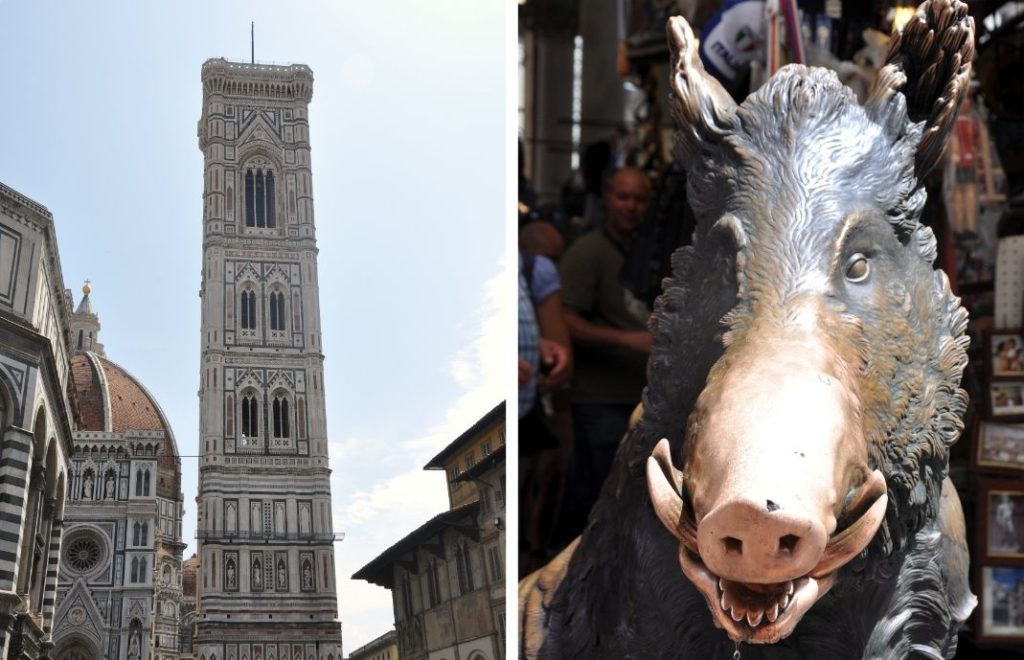
We wander on to Piazza del Duomo, where the cathedral complex rises in breathtaking splendor. Its facade – a striped colossus of green and white marble – frames an octagonal baptistery that, for many, is the true jewel of this sacred ensemble.
Then there’s Santa Croce, Italy’s largest Franciscan church and arguably its most stirring. Begun in 1294 and consecrated in the mid-1400s, it shelters the tombs of some of Italy’s greatest minds, beneath a canopy of vibrant frescoes. Outside, a stern Dante glares from his pedestal, as if judging us all.
After the frustrations of missed meals, siesta woes, and chaotic car rentals, we seek a little fortune at Il Porcellino, Florence’s famous bronze boar. His snout, polished to a gleam by countless hopeful hands, promises luck to those who rub it. We join the ritual, laughing – because after Tuscany’s twists and turns, we’ll take all the luck we can get.
When things get a little tilted
Fully aware we’re walking into a tourist magnet, we set our sights on Pisa – because some things are worth seeing… even if they lean a little.
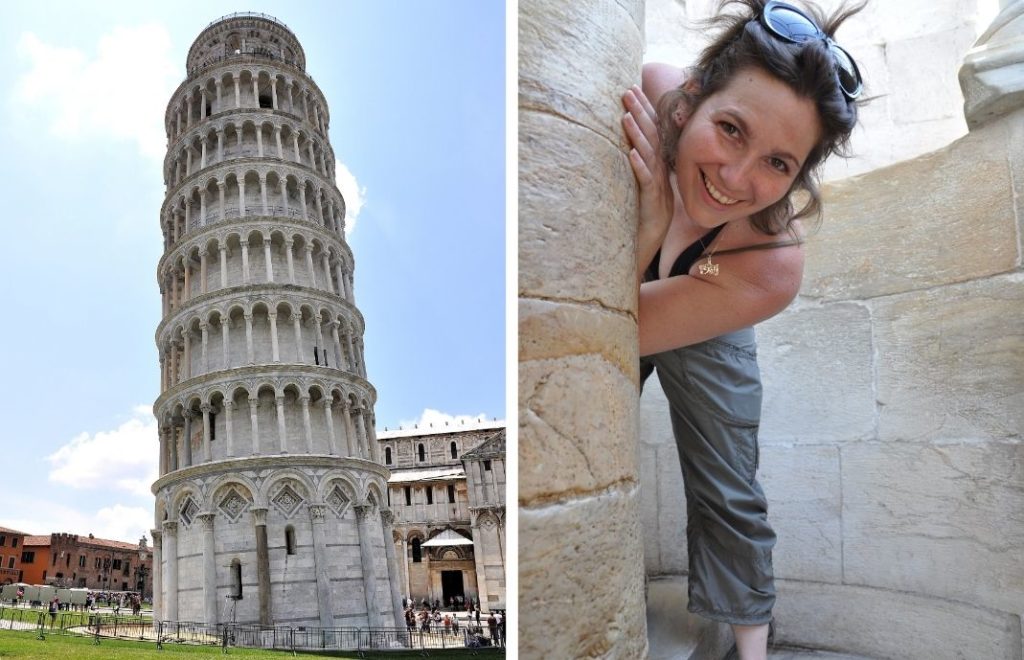
And lean it does. The iconic Leaning Tower rises ahead like a defiant architectural accident, a symbol of imperfection that became world-famous. Unsurprisingly, the crowds here rival those in Florence – and yes, they’re about as long as the car rental queue in Pisa Airport.
We join the line for tickets only to learn the next available entry slot is two hours away. No problem. Pisa has more to offer than its photogenic mishap.
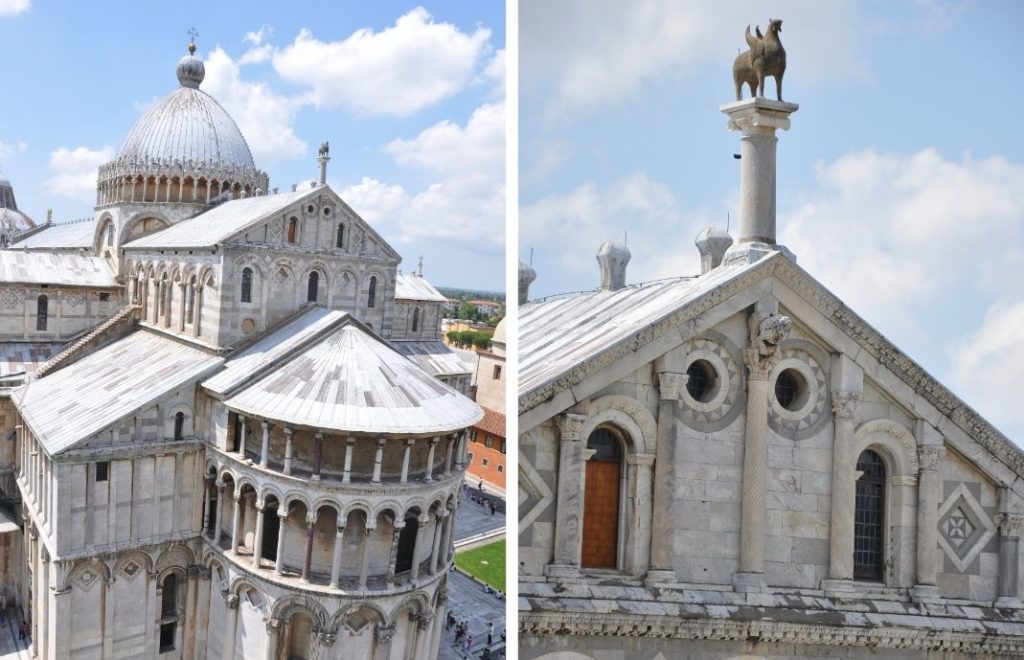
We wander over to the Duomo di Pisa, the cathedral that anchors this magnificent square. Built between 1064 and 1121, it stands as one of the purest examples of Pisan Romanesque architecture. Inside, much of the original décor was tragically lost in a 1595 fire, yet treasures remain: Cimabue’s shimmering mosaic of Christ in the apse and Giovanni Pisano’s intricately carved pulpit from 1311. The ancient bronze doors from 1180 still guard the entrance, their panels telling stories from the life of Christ in exquisite detail.
As we sip espresso in a nearby café, the famous tower looms in view, tilting ever so precariously – as if inviting the entire world to lean in closer. And, of course, to take that photo.
A tingle in the balance
It’s amusing to think that Pisa owes its global fame to a mistake – an error in the 12th-century foundation work, perhaps fueled by a little too much wine. Whatever the cause, the Leaning Tower remains irresistibly captivating, its graceful tilt making it look as though it, too, has enjoyed one glass too many.
Surrounding the tower is a vision of Romanesque beauty – a cathedral complex so iconic that the architectural style itself is named after this city: Pisan Romanesque.
Engineers have since straightened the tower by 42 centimeters – a modest adjustment after years of labor and staggering costs. Still, at 55 meters tall, it leans a dramatic 4.5 meters, and standing beneath its curve is an awe-inspiring experience.
Tickets in hand, we step inside and begin the ascent: 294 spiraling steps to the top. Halfway up, it hits us – that peculiar sensation in the inner ear as the incline plays tricks on our balance. It’s a strange, almost giddy feeling, like standing on the deck of a ship tilting at sea.
Construction of this marble giant began in 1174 and stretched on and off until 1350. Even before it was finished, it had started to lean. And yet, for over 800 years, this 12,000-ton monument has defied gravity and odds alike – a feat of resilience and perhaps a little miracle.
Back on solid ground, we snap the inevitable photos – pushing the tower upright with our palms – before bidding farewell to Italy. A little dizzy from wine, dazzled by architecture, and still chuckling over those sacred siestas (and the wild boars that never came), we drive off with our balance – and our hearts – forever tilted toward Tuscany.
3 (surprising) facts about Siena
1. The legend of the She-Wolf lives here too
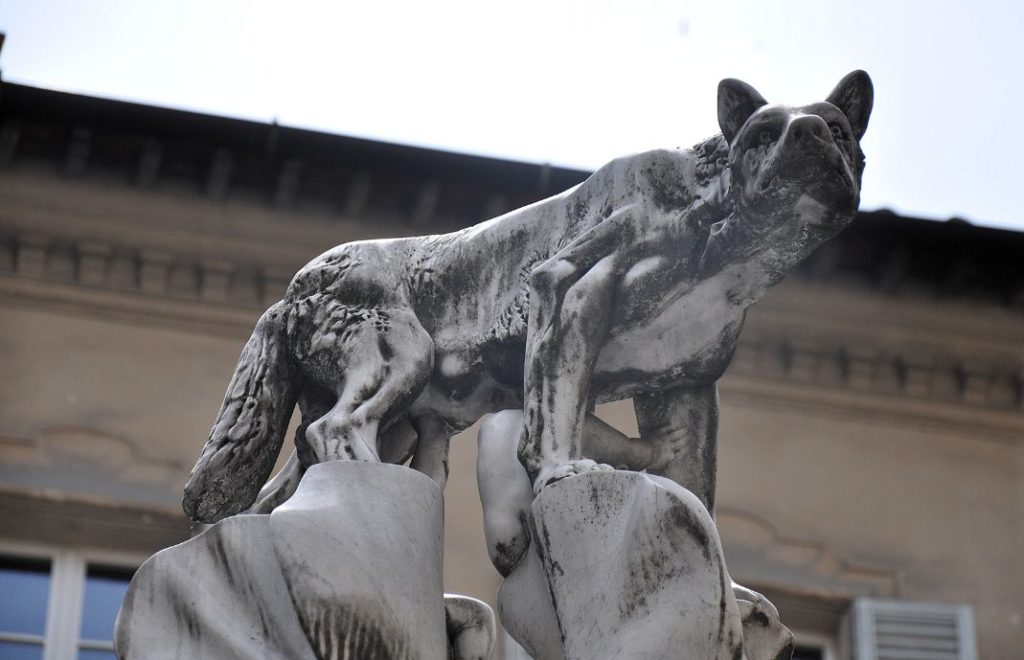
Think the story of the wolf nursing twins belongs only to Rome? Think again. According to legend, when Romulus and Remus were abandoned in the Tiber, a she-wolf saved them by nursing them. Romulus killed his brother and founded Rome – but Remus’ sons, Senius and Ascius, rode north on a white and a black horse and founded Siena. To this day, sculptures of the she-wolf and twins can be found across the city, including outside the cathedral.
2. Siena is the home of panforte
One of Italy’s most famous sweet specialties, panforte, originated in Siena. This dense, spiced cake is crafted from the finest ingredients: almonds, nuts, cocoa, honey, dried fruits, cinnamon, and cloves. The classic dark version is rich and bold, while the lighter, modern twist adds candied citrus and vanilla for sweetness. Look for artisan panforte shops near the Duomo, such as those tucked along Via dei Fusari.
3. Italy’s Patron Saint was born here
Siena gave the world Saint Catherine of Siena, Italy’s patron saint. Her legacy lives on in the Church of San Domenico, where her preserved head is displayed – a striking relic of devotion and history.