
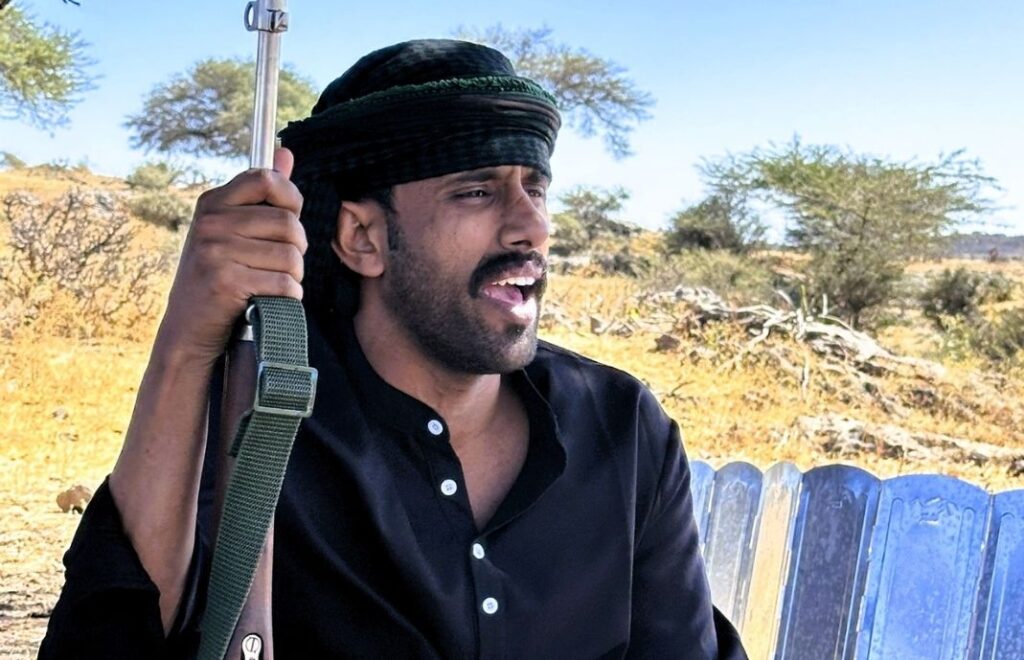
Arif, a young herder who can usually be found in the rugged outback of the Dhofari mountains with his 30 camels and 300 cows, bursts into song. No instruments, no lyrics to read from. His sits up straight, one hand resting on the rifle, and closes his eyes. His voice carries across the wadi, filled with emotions. He is performing an art form that has been passed down since time immemorial. It’s the haunting lament of the nana.
His audience, three Norwegians and a Finnish, are mesmerized. It’s impossible not to stare, and the solid voice captivates us. Arif has a firm grip on his audience. Although we have no idea what he is singing about, we are under his spell.
Where Dhofar’s ancient heart still beats
It is my first time to Oman, and I have traveled to the southernmost part of the Arabian Peninsula. It’s a place where the Sultanate of Oman really holds on to its culture. Here, in Jebel Samhan in Dhofar, it truly comes to life.
Dhofar hosts a diversity of indigenous languages and cultures that bind the people to this region. Its history is so old it pre-dates Islam and the spread of Arabic. One of these languages – Jabali, or Shehri as it is also known, both meaning “mountain” – is what Arif sings in.
Jabbali, combined with the region’s unique music, dance and oral storytelling, contributes to making this one fantastic experience. Dhofar is a heartland of cultural and authentic experiences, where – luckily for us – centuries-old traditions continue to thrive.
For centuries, Dhofar has been a crossroad of commerce, culture, and innovation. The region’s spirit is deeply intertwined with its strategic location along the trade routes that linked the Arabian Peninsula with the world.
Frankincense (known locally as luban), was once considered more precious than gold. It was harvested from the trees of Dhofar and was traded across ancient routes from Egypt to Rome.
Today, the warm and friendly members of the mountain tribes are welcoming us into a world of Dhofari traditions, ensuring the region’s cultural heritage remains alive.
Our first taste of the Ghudu experience
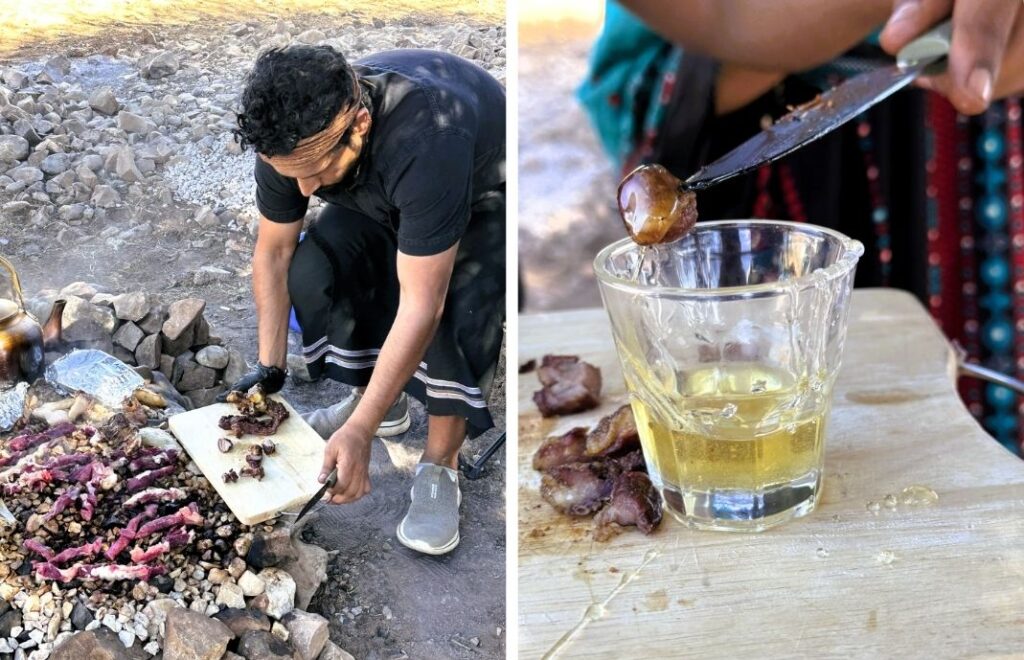
We arrive by car and are greeted by the smell of meat cooked on open fire, with Hakim being the chef. A colorful blanket is spread out under a big tree, with soft pillows to sit on. The view is amazing. All is set for a perfect day out.
A beautiful, young lady approaches us, her smile can melt an iceberg.
– Welcome, I am so glad you could come! I am Nooralhuda al Mandhari, but you can call me Noor.
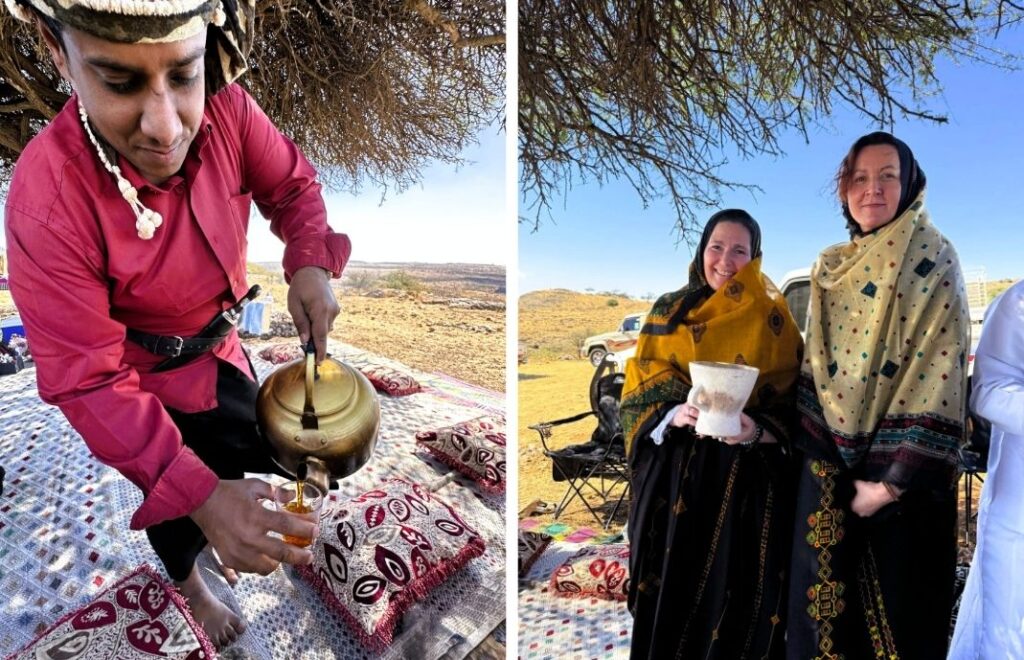
We are offered tea and are asked to sit down. Hakim is still working on getting the meat ready, and the smell spread across the mountain side, carried by the light breeze.
– Before I explain what you will experience today, we need to get you dressed.
Noor is nothing but smiles as she pulls out colorful dresses and scarves for us ladies. The rule is simple: When in Oman, do as the locals.
Once we are dressed, sitting on a pillow, cup of tea in our hands, Noor explains what we can expect.
– It will be an experience you won’t forget, I promise.
The trailblazing women behind the experience
Our visit was organized by Ghudu, which means “Let’s Go” in Jabali. It is run by two Omani women, and it is no surprise that Noor is one of them. Her partner, Wisal al Rashdi, couldn’t join us.
Without Ghudu, this small, sustainable tour operator, it would be impossible for us to have this experience. Many of the communities in Dhofar still rely on farming. They are immensely private, with women rarely leaving the home. The men are doing their work in tribal clothes with elaborate head wraps, rifles and decorative daggers, known as khanjars.
Noor tells us she and Wisal spent years visiting Dhofar to recruit tribal communities as guides and experience providers.
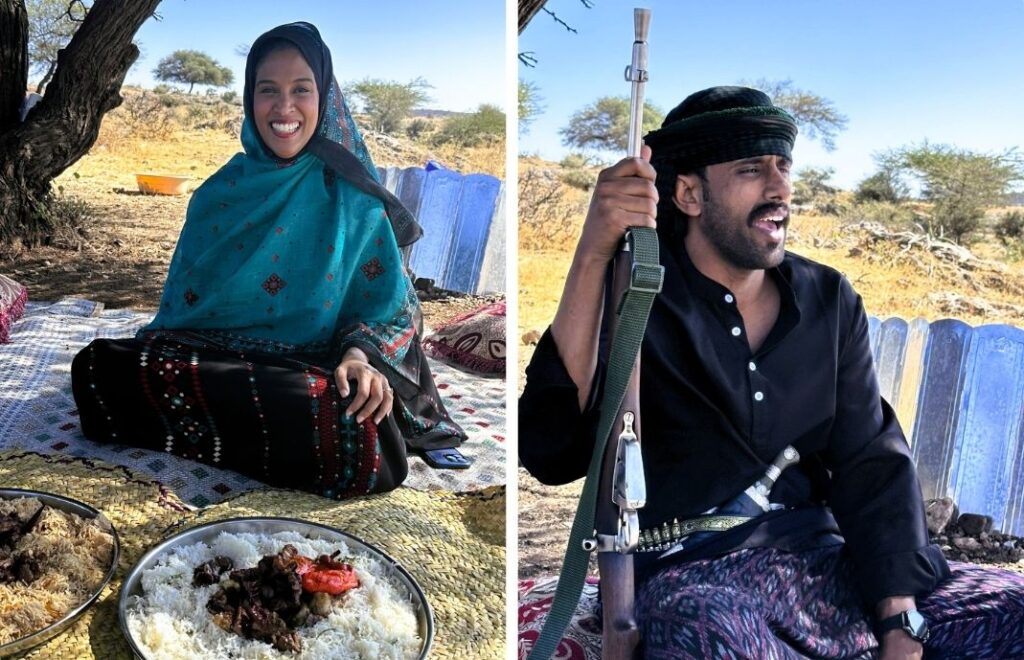
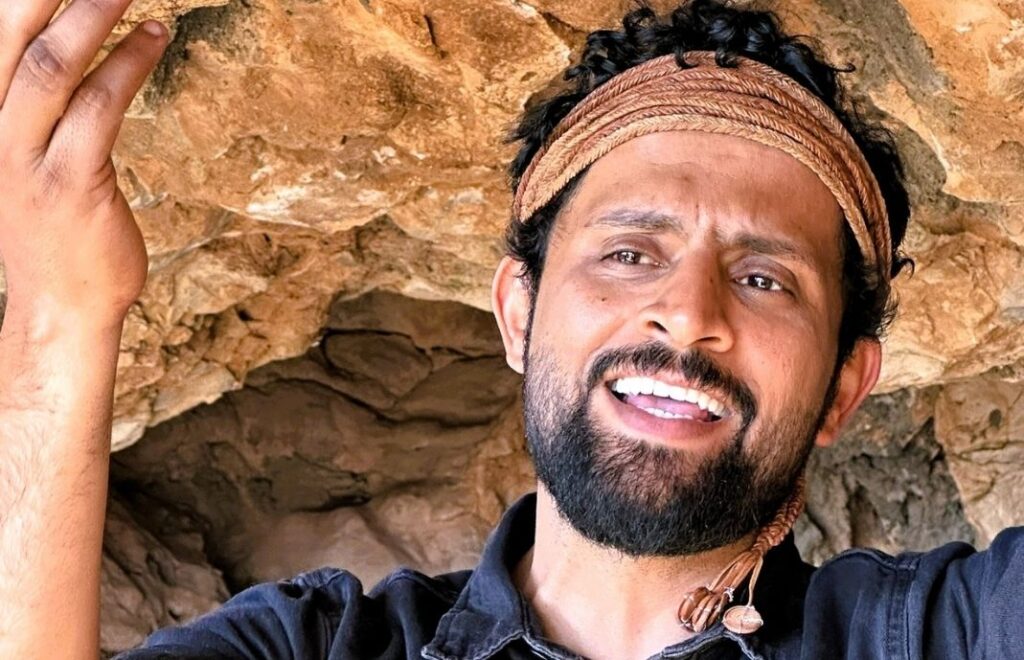
And here we are. On a large blanket under a tree, high in the mountains, in the middle of nowhere. We are the honorable guests of the ever-smiling Noor, with her colorful abaya. Hakim, the charmer who pretends to be a bit shy. Arif, with a dagger and a rifle, which he claims is for scaring off the Arabian leopards that threatens his flock.
We have a front row seat where Arif performs nana, a folkloric song form in which the singer performs a plaintive lament to nature. This is something tourists don’t usually have access to. None of us foreigners understand the language. But at this moment it does not matter. We understand how Arif and his people feel connected to the land – and how precious this connection is.
Cooking traditions you’ll never forget
As we wait for Hakim to finish our lunch, we get a demonstration on how the mountain people cook their milk. It is an impressive show, and no piece of cake. It really takes time and effort.
Hakim decides to let meat be meat and head over to join the show. His warm smile can’t hide the fact that he is mighty proud when showing off his skills.
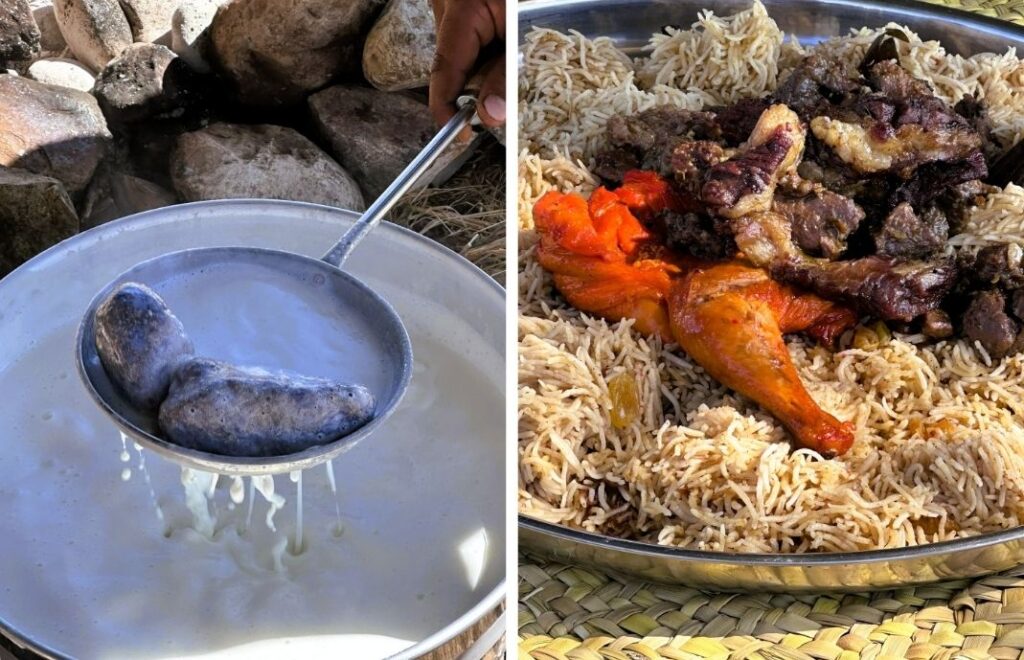
The milk is boiled over a wooden fire in a cauldron, using a technique called maa’theeb-pish, where hot stones are added to the milk to bring it to boil. This traditional method is used to ensure the milk is safe to drink by eliminating bacteria from raw milk.
It does not taste too bad either.
Lunch is finally ready and we sit down and dig in. Once again, we do as the locals and eat with our hands. It tasted delicious and was of – of course – prepared in a traditional way: Slow-cooked in an underground sand oven.
All good things must come to end. We are not ready to say goodbye to our new friends. Hakim decides to surprise us once more. Not only is he a great chef – he is also an entertainer. His amazing voice echoes across the valley. Even the cows that are grassing nearby stop eating and raise their heads to listen.
Of all the amazing experiences I had in Salalah – this is definitely my favorite one!
What is The Ghudu Experience?
It is a community tourism project based in Dhofar, South of Oman.
The word meaning “Let’s go” in the local Shehri Jabali language was chosen to honor the people and the culture of Dhofar.
Ghudu offers visitors from around the world unique experiences to see the true beauty of Dhofar in all its seasons within the year.
The aim for the Ghudu project is to create an all-inclusive experience that is sustainable. Every detail considered is sourced from Dhofar. The experiences are provided by the locals and the food served is sourced locally to support women and local business. Products that are used do not harm the environment.
A percentage of the profits are given back to support their guides, environmental conservation and local societies in Dhofar.
A warm thank you and much appreciation to Experience Oman and United Spirit Nordic for inviting me Salalah. My flights, accommodation, transportation, activities and food were covered. There were no requirements from the partners regarding posts or promotion on social media. Opinions and photos are, as always, entirely my own.
