
Terezín, a quiet town tucked into the Czech countryside just an hour north of Prague, holds a history far heavier than its peaceful present suggests. Built in the late 18th century as a grand Habsburg military fortress, it later became one of the most infamous sites of World War II: the Theresienstadt Ghetto and concentration camp.
Today, its streets, barracks, and preserved fortifications stand as a powerful reminder of Europe’s turbulent past. It offers travelers not only a lesson in history, but a moment to reflect on humanity’s capacity for both cruelty and resilience.
Visiting Terezín (German: Theresienstadt) is not a typical travel experience; it is a journey into layers of memory. From imperial ambitions and military engineering to wartime propaganda and personal stories of survival, the town encompasses centuries of transformation.
Understanding its history is essential for appreciating why Terezín continues to play a vital role in Europe’s culture of remembrance – and why it remains one of the Czech Republic’s most significant historical sites.
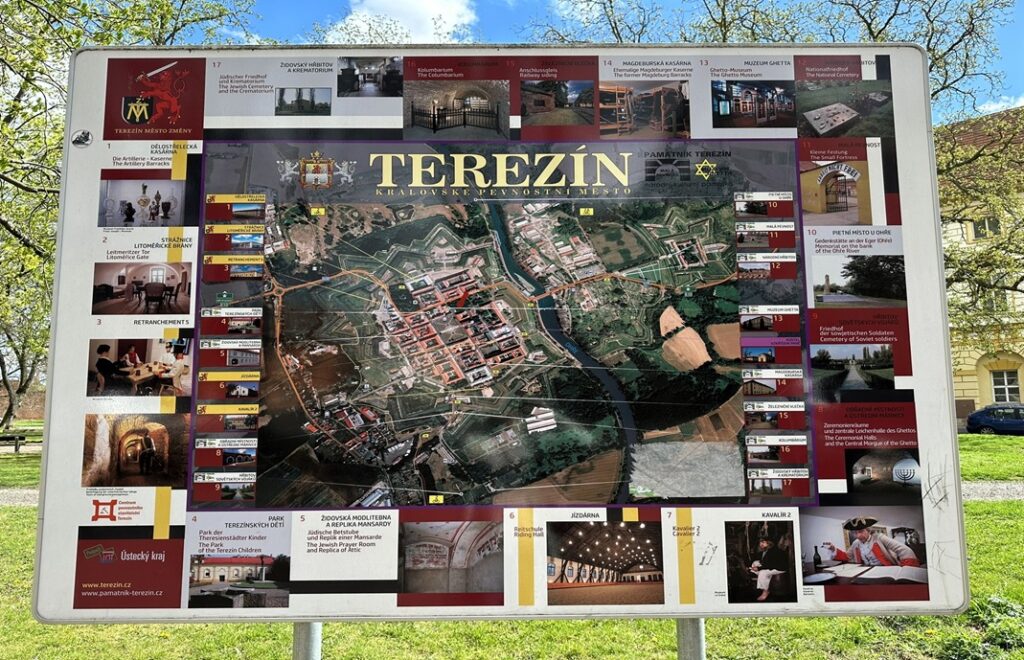
The history of Terezín: From imperial fortress to Nazi concentration camp
Terezín, located roughly 60 kilometers north of Prague, carries a layered history far deeper than its modest size suggests. Its story begins not with the Second World War, but with the ambitions of the Habsburg Empire, long before it became synonymous with the Theresienstadt Ghetto.
An imperial vision: The founding of Terezín (Late 18th Century)
Terezín was established in the 1780s by Emperor Joseph II, who sought to strengthen the northern defenses of the Habsburg monarchy against Prussian expansion. Constructed as a sophisticated military fortress system, the town was meticulously planned with star-shaped bastions, defensive ramparts, underground corridors, and a geometric street layout that reflected Enlightenment-era engineering principles.
Rather than a typical civilian settlement, Terezín was intended as a garrison town. Its very design – self-contained, heavily fortified, and structured for control – would later make it disturbingly suitable for an entirely different purpose under Nazi occupation.
Changing roles under a changing Europe (19th – early 20th Century)
In the centuries that followed, Terezín’s military importance waned. The fortress never saw major combat, though it played various administrative and military roles within the Austro-Hungarian Empire. During World War I, the Small Fortress – one of the two major components of Terezín – was used as a political prison. Among its most famous prisoners was Gavrilo Princip, whose assassination of Archduke Franz Ferdinand sparked the war.
By the interwar period, Terezín had become a quiet, somewhat forgotten town. Its original defensive purpose was rendered obsolete by modern warfare.
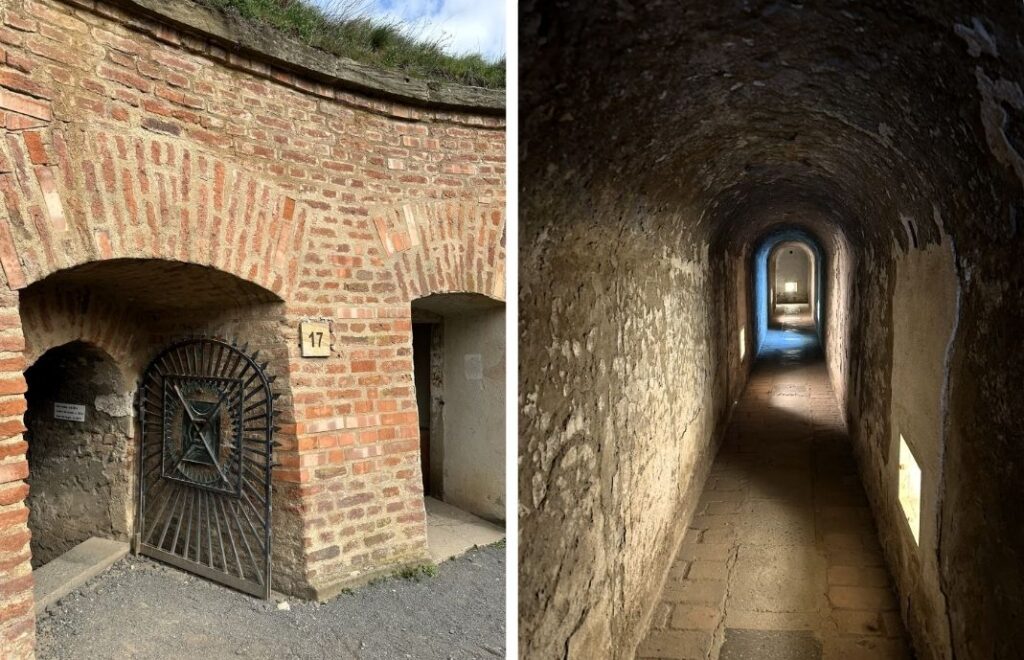
Nazi occupation: Terezín becomes Theresienstadt (1941)
Everything changed after Nazi Germany occupied the Czech lands in 1939. Recognizing Terezín’s contained fortress layout, the SS repurposed it in 1941 as the Theresienstadt Ghetto and concentration camp, a hybrid facility with multiple functions in the Nazi camp system.
Terezín served as:
1. A transit camp
Jews from Czechoslovakia, Germany, Austria, the Netherlands, and Denmark were deported here before being sent on to extermination camps such as Auschwitz, Treblinka, Sobibor, and Majdanek.
2. A propaganda tool
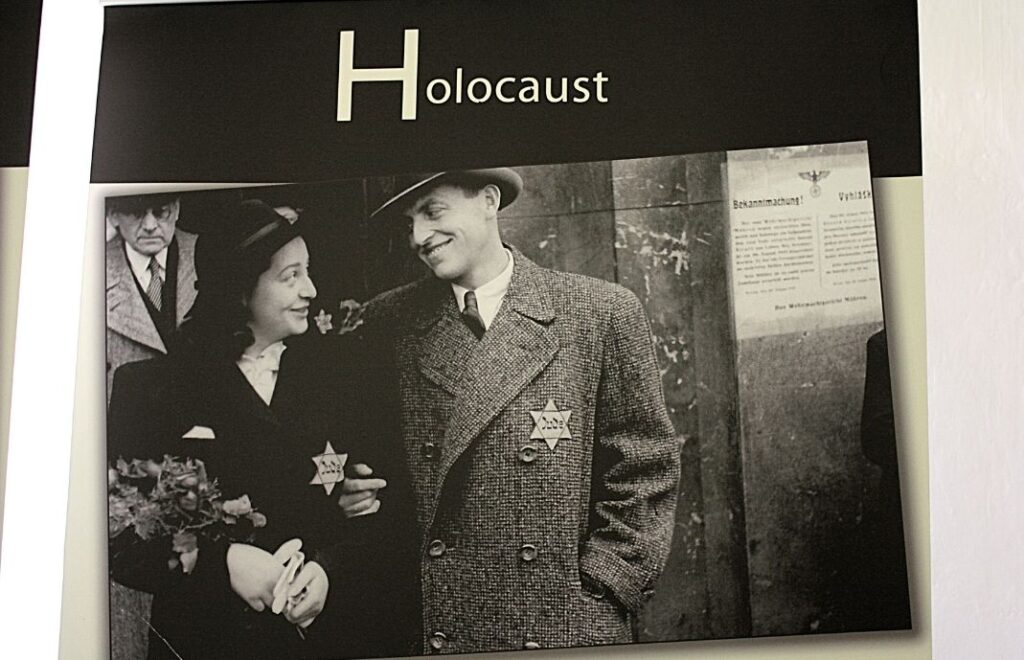
Uniquely, the Nazis used Theresienstadt as a “model ghetto” to deceive the international community. When the Red Cross visited in 1944, the SS staged an elaborate façade – beautifying streets, organizing fake concerts, and showcasing carefully selected prisoners to create the illusion of humane conditions.
3. A site of immense suffering and death
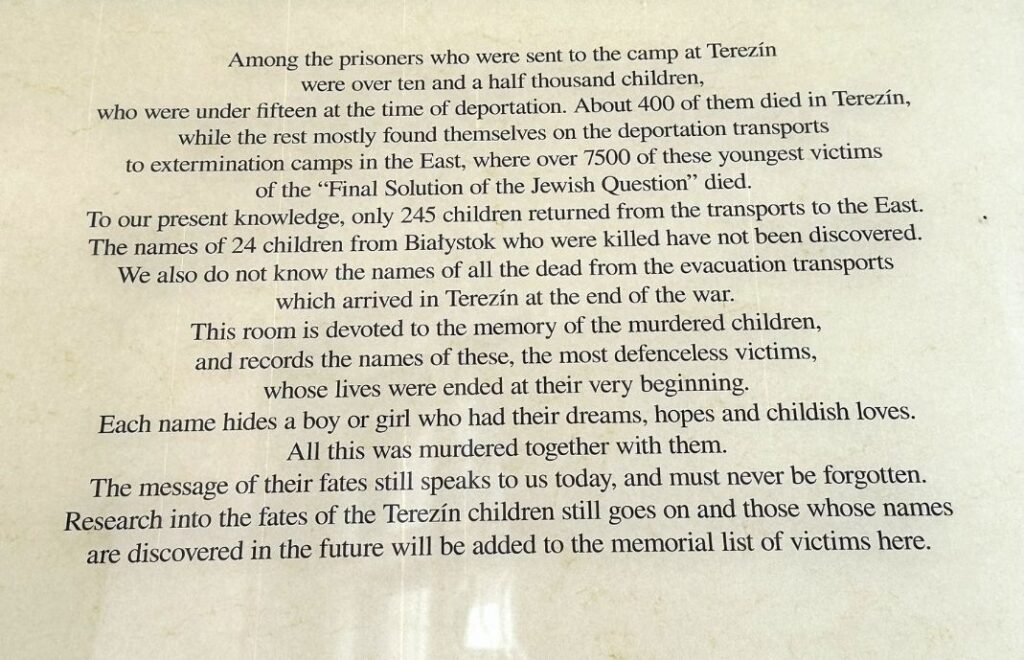
Despite propaganda efforts, the reality of life in Theresienstadt was grim. Overcrowding, starvation, disease, and forced labor led to tens of thousands of deaths within the ghetto itself. Of the approximately 140,000 people sent to Theresienstadt, nearly 90,000 were transported eastward to extermination camps, and around 33,000 died within Terezín’s walls.
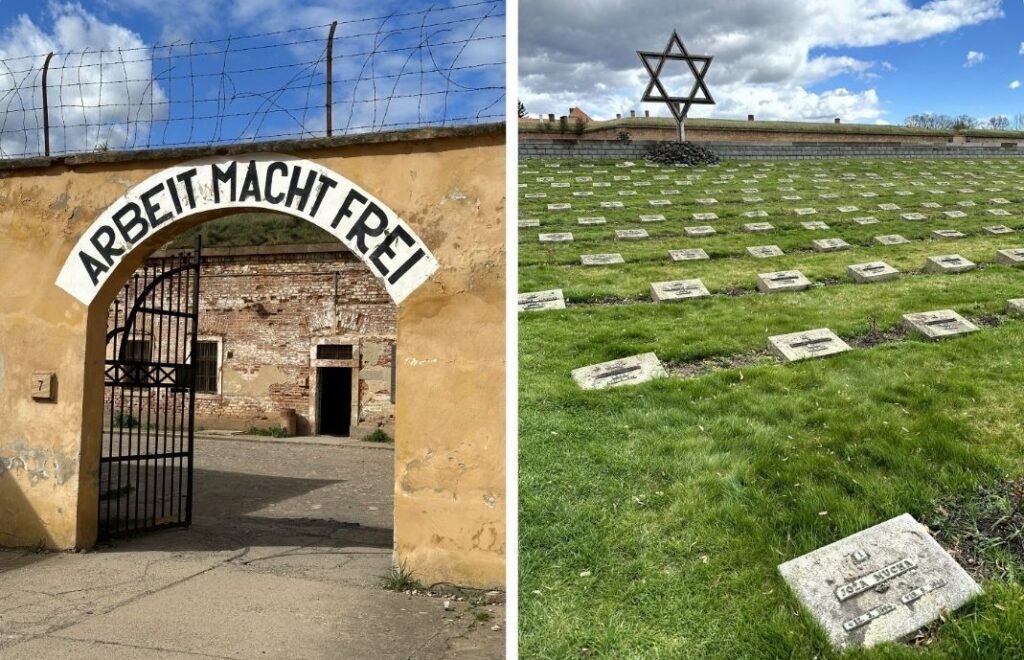
Cultural life amid horror
One of the most extraordinary aspects of Terezín’s history is the flourishing of cultural and intellectual life under impossible conditions. The ghetto held many prominent Jewish artists, musicians, writers, and scholars. All were forced there not only because of their identity but also for their symbolic value in Nazi propaganda.
Despite the circumstances, inmates created:
- Concerts and operas
- Theater productions
- Lectures and educational programs
- Artworks documenting life in the ghetto
- Secret writings and diaries
This cultural resistance stands today as a powerful testament to human resilience.
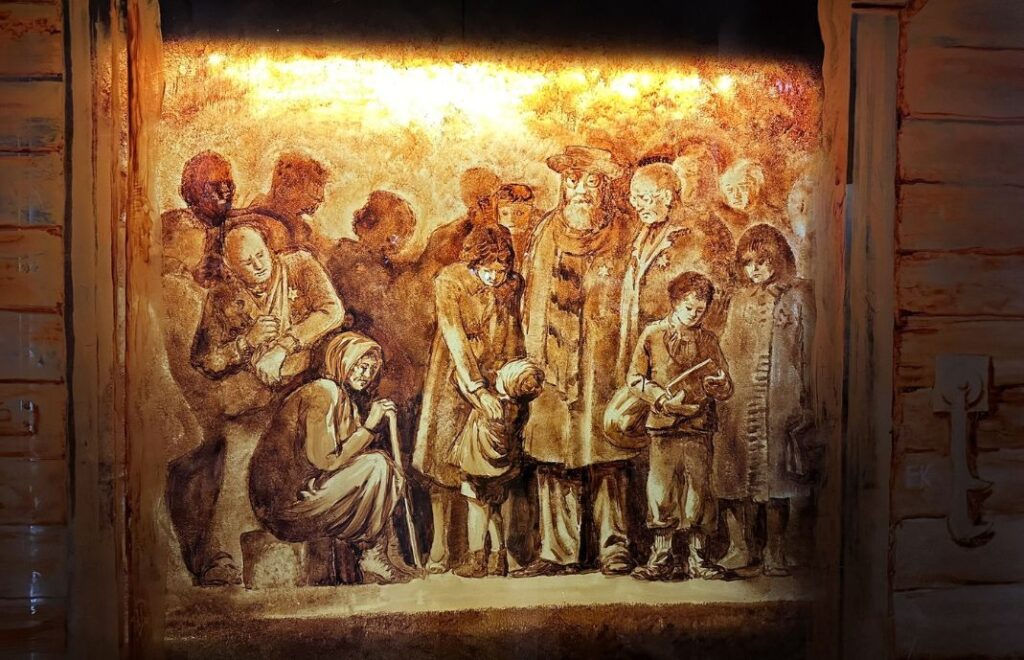
Liberation and aftermath (1945)
Terezín was liberated by Soviet forces on May 8, 1945. By then, it had become a place of chaos and disease, as the Nazis had sent thousands of prisoners from other camps there in the war’s final months. Typhus epidemics raged even after liberation.
In the postwar years, survivors dispersed across Europe and beyond, carrying with them the memory of the ghetto. The Small Fortress was briefly used as an internment camp for ethnic Germans during the turbulent expulsions that followed the war.
Terezín today: A place of memory
Modern Terezín is peaceful, but the weight of history is ever-present. The former ghetto and fortress sites are preserved as part of the Terezín Memorial, established in 1947. Visitors walk through barracks, courtyards, cemeteries, museums, and tunnels that tell the story of both suffering and cultural defiance.
The site stands as one of Europe’s most important memorials to the Holocaust – an enduring reminder of the consequences of hatred, propaganda, and unchecked power.
Why Terezín’s history matters
Terezín’s layered past is not only about tragedy. It encapsulates how a place can be reshaped by the forces of empire, nationalism, ideology, and war. Its transformation – from a meticulously engineered fortress to a Nazi concentration camp – reveals the fragility of human rights and the importance of remembrance.
For travelers, understanding Terezín’s history adds depth to the experience of walking its quiet streets. Behind every wall lies a story that deserves to be known.
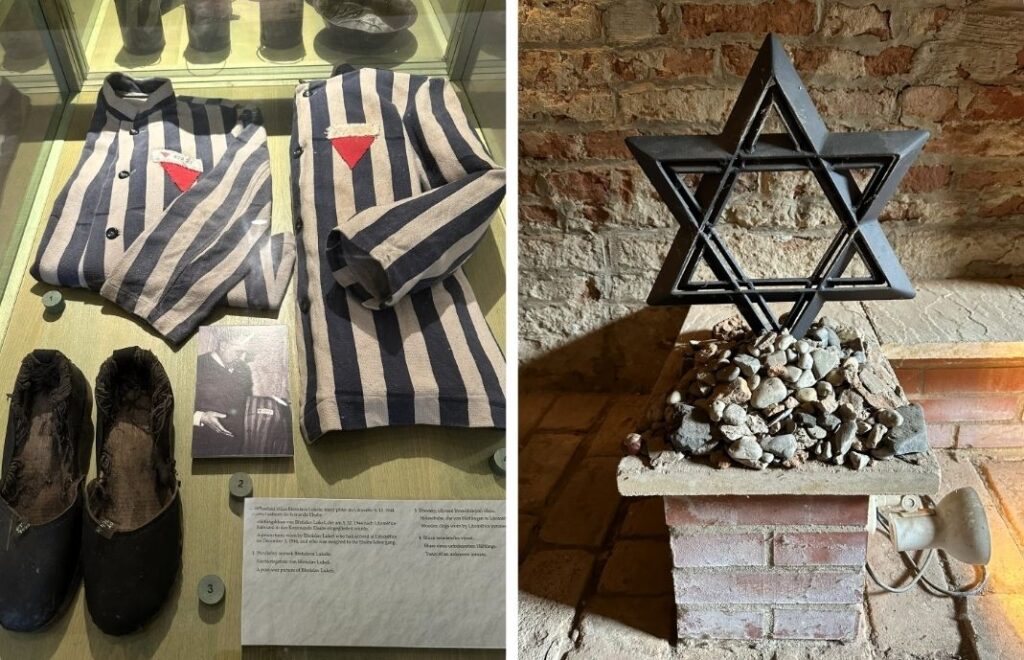
Visiting Terezín: A practical guide for travelers
Terezín is one of the most meaningful day trips from Prague, offering a profound journey through history. Unlike many destinations, visiting Terezín is not about sightseeing. It’s about remembrance, reflection, and understanding the human stories behind one of Europe’s darkest chapters.
This guide will help you make the most of your visit while approaching the site with the respect it deserves.
How to get to Terezín
From Prague (Approx. 1 hour)
- By bus: Direct buses run from Prague’s Holešovice station to Terezín and neighboring Litoměřice several times a day. The trip takes about 55 minutes.
- By car: Terezín is easily accessible via the D8 motorway. Parking is available near the memorial sites.
- Guided tours: Many Prague-based tour operators offer half-day or full-day excursions, often including transport, a guide, and entrance fees.
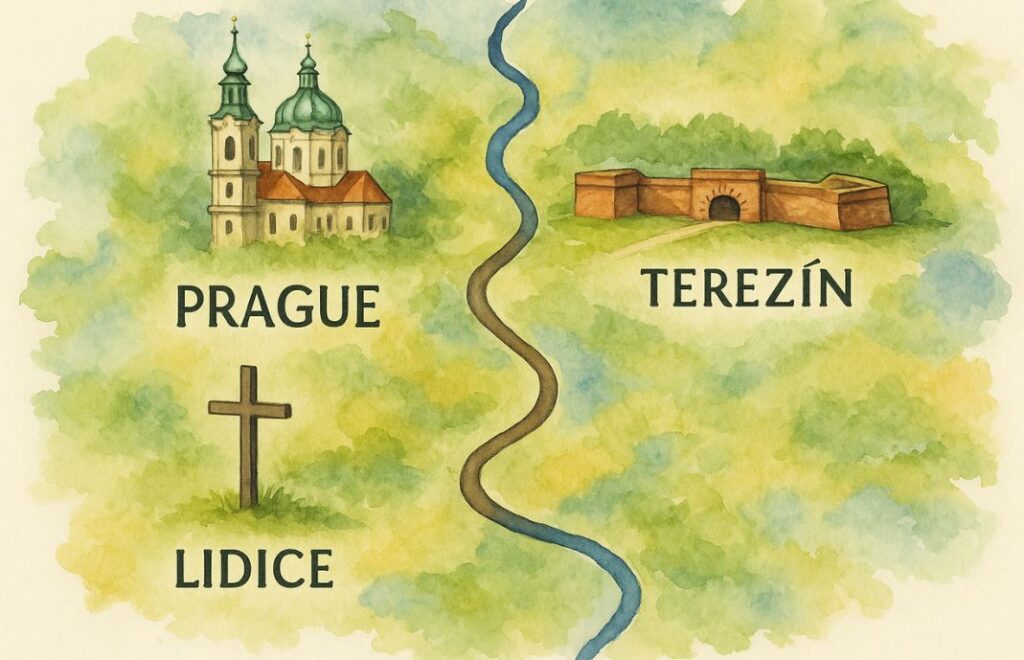
What to see in Terezín
1. The Small Fortress
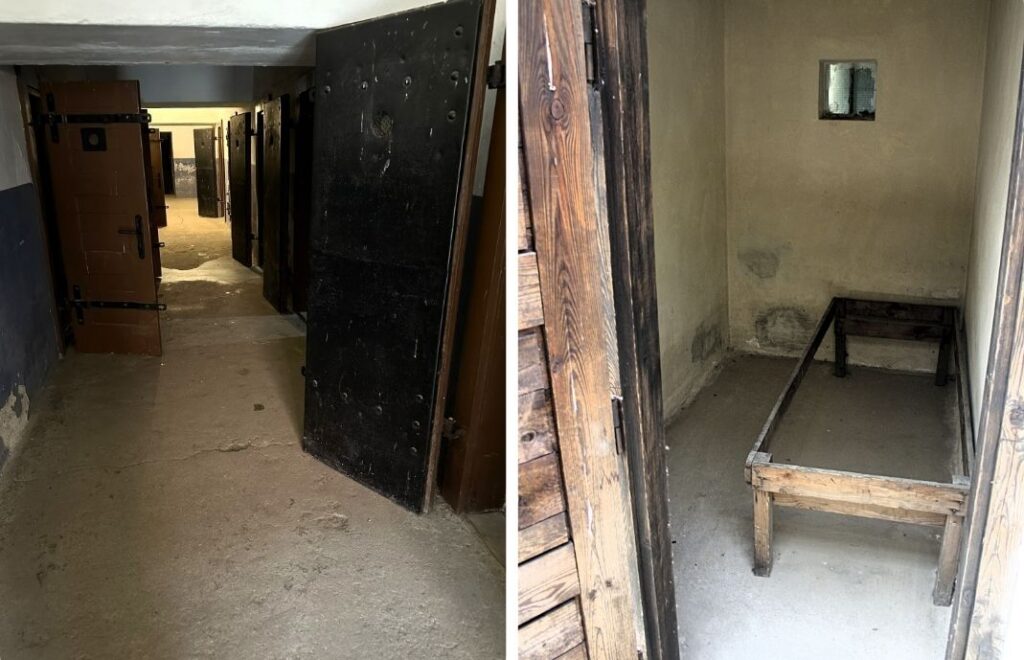
The Small Fortress served as a Gestapo-run prison and is one of the most powerful sites in Terezín.
Visitors can explore:
- Prison cells and barracks
- Solitary confinement rooms
- Torture and interrogation spaces
- The execution ground
- Memorial cemeteries outside the walls
Audio guides and guided tours provide essential context for understanding the experiences of political prisoners detained here.
2. The Ghetto Museum
Located in a former school building, the Ghetto Museum explores daily life in the Theresienstadt Ghetto through:
- Survivor testimonies
- Archival documents
- Personal belongings
- Artwork created by imprisoned children and adults
This museum is often considered the emotional heart of a visit, offering an intimate look at the people who lived – and died – within the ghetto.
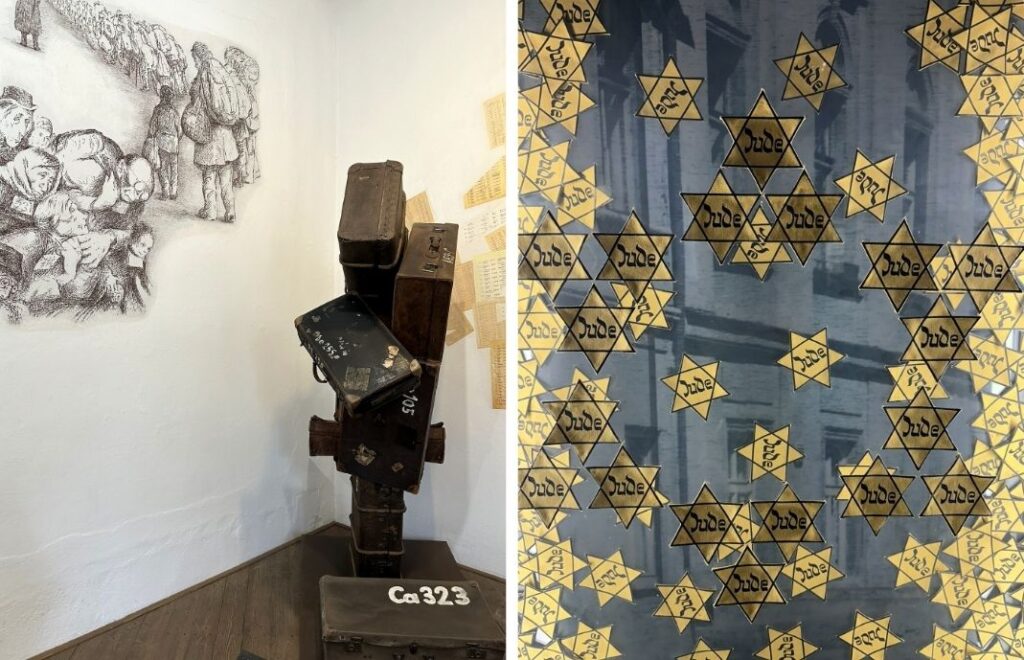
3. The Magdeburg Barracks
These restored barracks housed members of the Jewish self-administration during the ghetto era.
Today, they host:
- Exhibitions on cultural life in the ghetto
- Original drawings, posters, and theatre materials
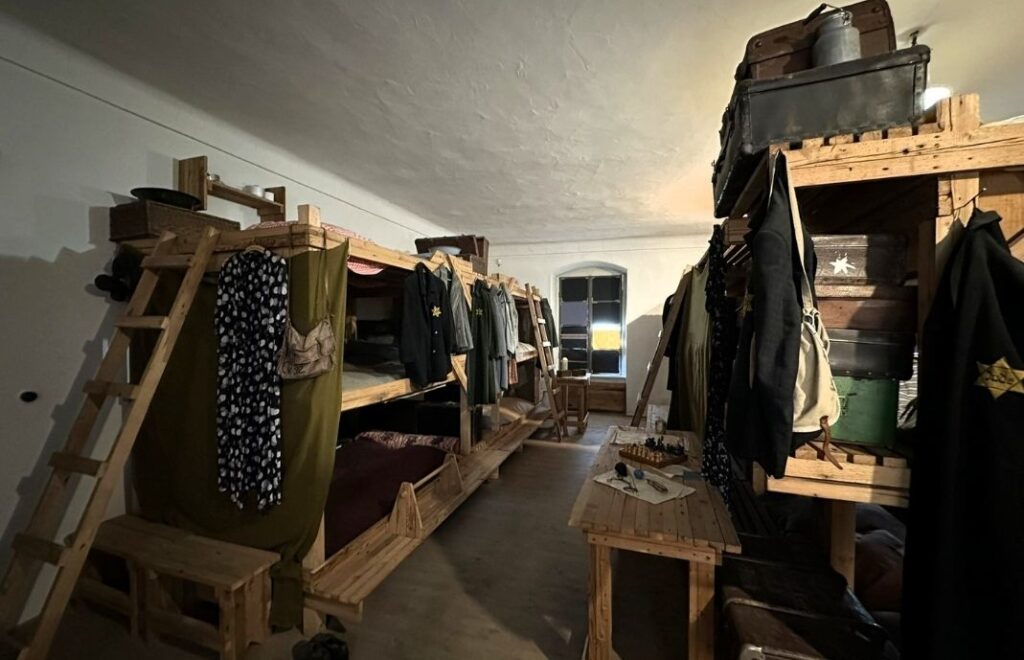
- Reconstructed living quarters
This space highlights the extraordinary resilience of artists, musicians, and intellectuals imprisoned in Terezín.
4. Crematorium and Jewish cemetery
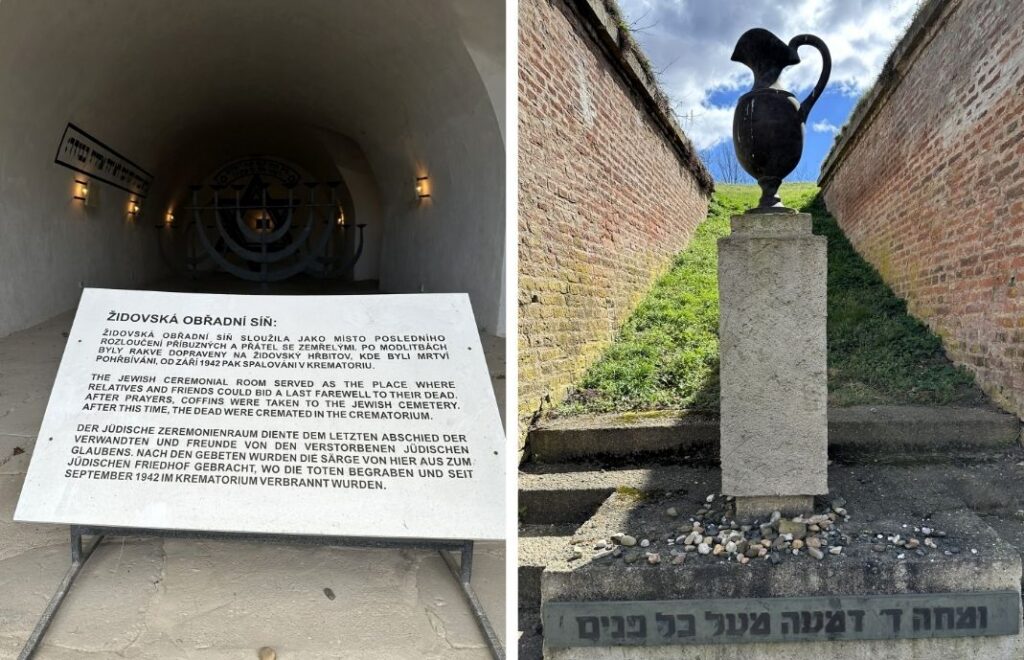
A short walk from the main ghetto area, the crematorium and cemetery serve as solemn memorial spaces.
Visitors can see:
- The crematorium building
- The columbarium (largely destroyed by the Nazis in 1944)
- Thousands of graves in the adjoining cemetery
This is one of the most sobering areas of Terezín, offering a stark reminder of the scale of loss.
5. The former railway spur
This reconstructed section of railway tracks marks the site where tens of thousands of Jews were deported from Terezín to extermination camps. It is a powerful, minimalist memorial – quiet yet unforgettable.
Visitor experience: What to expect
Atmosphere
Terezín is not a crowded tourist site. The atmosphere is quiet, contemplative, and emotionally heavy. Most visitors spend their time reflecting rather than photographing.
Recommended visit duration
For a meaningful visit, plan 4–6 hours, allowing enough time to explore both the Small Fortress and ghetto sites.
Guided vs. self-guided
- Guided tours offer deeper historical context.
- Self-guided visits allow for more personal reflection.
Audio guides are available in several languages.
Accessibility
Most major sites are accessible, though some fortress sections include uneven surfaces, stairs, and narrow passages.
Best time to visit
Terezín is open year-round.
- Spring and autumn offer mild weather and fewer visitors.
- Winter visits can feel especially stark, enhancing the emotional impact but requiring warm clothing.
- Summer has longer opening hours, though tours may be busier.
No matter the season, dress comfortably for walking, and bring water – facilities are limited.
Visitor etiquette
Because Terezín is a memorial site, certain behaviors are encouraged:
- Speak quietly and respectfully
- Avoid loud music, inappropriate photography, or disruptive behavior
- Dress modestly
- Do not climb on memorials or restricted structures
- Follow all posted guidelines and respect ceremonies or moments of silence
- Reflecting on the history is part of the visit
Nearby places of interest
If you wish to extend your trip:
- Litoměřice: A charming historic town only a few kilometers away
- Říp Mountain: A symbolic Czech landmark with hiking trails and panoramic views
- Štětí and the Elbe River region: Scenic countryside offering a contrast to the gravity of Terezín
These areas can offer a gentle way to decompress after an emotionally demanding visit.
A visit that stays with you
Travelers often describe Terezín as a place that lingers long after they leave. The preserved barracks, silent courtyards, and personal stories carved into the site encourage visitors not only to learn history – but to remember it.
