Have you ever looked at a flag and wondered what on earth all those colors, symbols, and strange little details actually mean?
Most of us recognize the Stars and Stripes instantly. But beyond America’s famous national flag, every state has its own design, complete with fascinating stories that often go unnoticed.
And some of those stories are rather surprising!
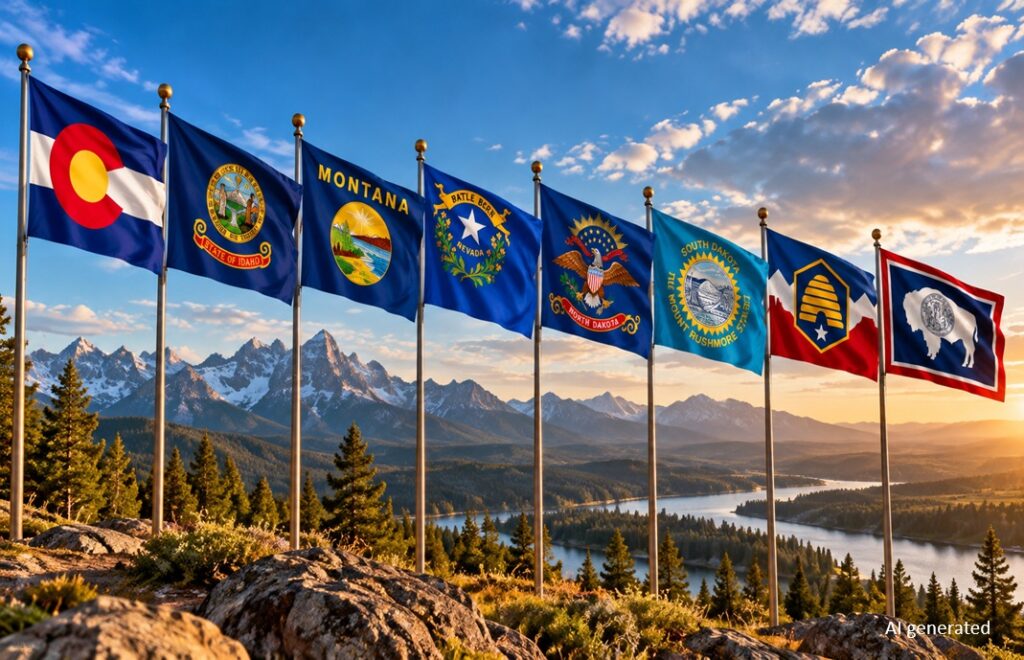
From majestic bison and soaring eagles to mountain landscapes, mining traditions, and symbols of freedom, the flags of America’s Western states offer a colorful glimpse into the history, culture, and character of this extraordinary region.
Some designs are wonderfully simple, while others seem determined to squeeze an entire history lesson onto a single piece of fabric. There are flags inspired by breathtaking landscapes, flags that celebrate the pioneering spirit, and others that carry reminders of the people and events that shaped the American West.
But what makes these flags particularly interesting is that every symbol has a reason for being there. A color might represent a natural resource, an animal might reflect the region’s wildlife, and a seemingly ordinary emblem could reveal a fascinating chapter of history.
So, let’s take a closer look at the flags of Colorado, Idaho, Montana, Nevada, North Dakota, South Dakota, Utah, and Wyoming.
Eight States. Eight flags. And plenty of stories waiting to be discovered.
After all, who knew that a little piece of fabric could tell us so much about a destination?
Colorado: A golden sun, snowy mountains, and a giant red C
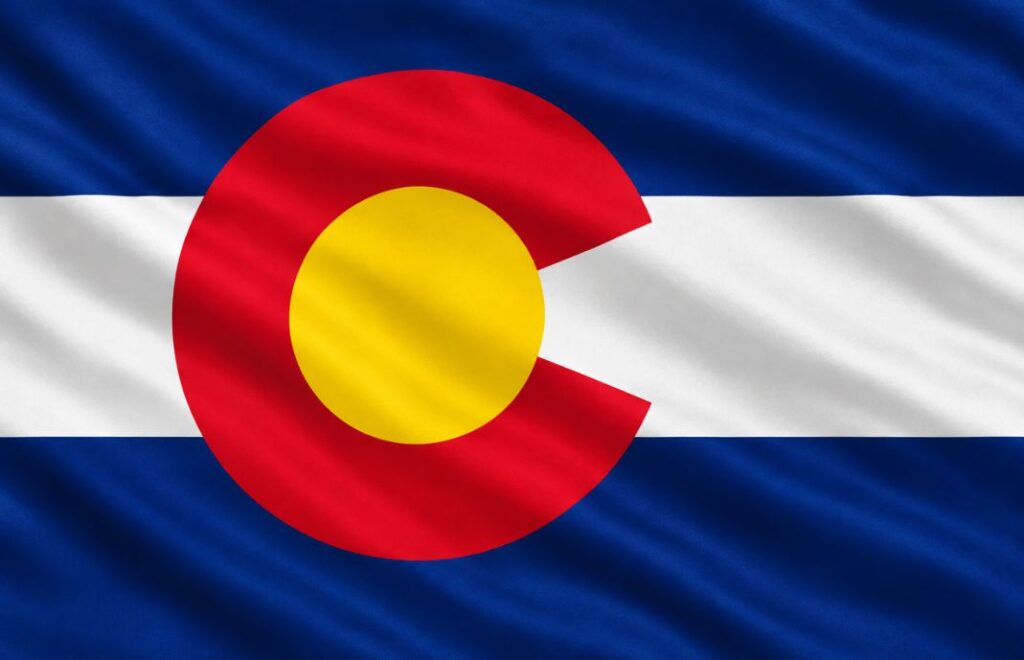
A giant red C, a golden circle, and three bold stripes. Colorado’s state flag might look wonderfully simple, but there’s a fascinating story behind its colorful design.
The blue stripes represent Colorado’s magnificent skies, while the white stripe recalls the snow-covered Rocky Mountains. The golden circle celebrates the state’s abundant sunshine, and the red C represents Colorado’s name and the reddish earth found throughout the region.
But here’s something surprising.
When the flag was first adopted in 1911, the exact colors and proportions weren’t clearly specified. As a result, early versions looked rather different from one another.
More inspiration: Discover the fascinating story behind Colorado’s state flag
Idaho: A miner, a woman, and a rather remarkable state seal
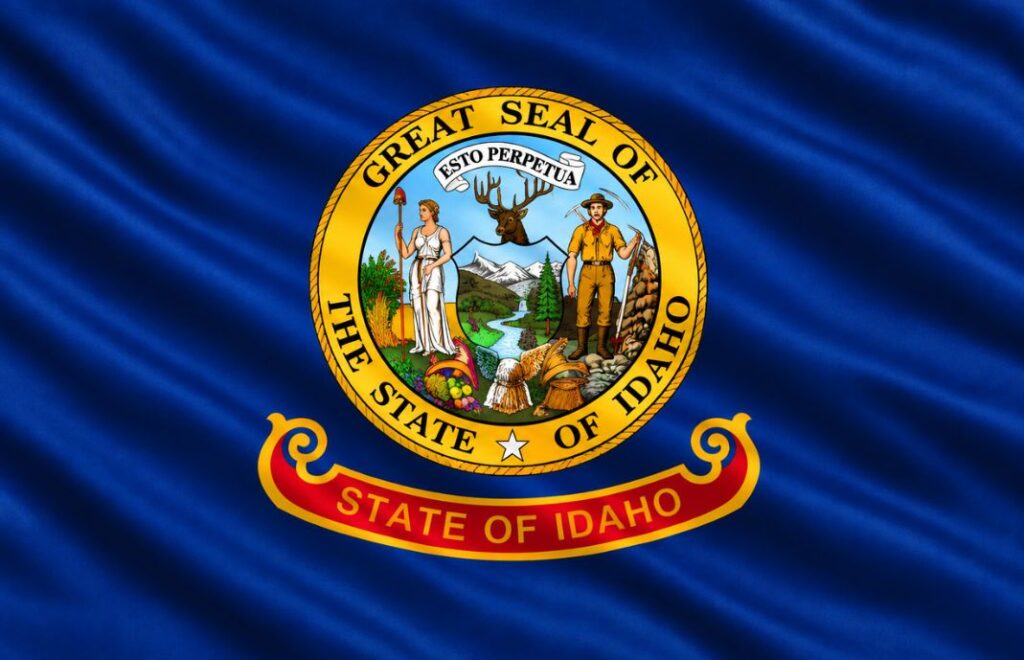
A miner, a woman, a magnificent elk, and a colorful landscape. Idaho’s state flag certainly has plenty of interesting details.
Against a deep-blue background sits the state’s elaborate seal, featuring symbols of mining, agriculture, wildlife, and natural beauty.
Above the seal appear the words “State of Idaho,” while a red-and-gold banner beneath completes the design.
But here’s something fascinating.
Idaho’s original state seal was designed by Emma Edwards Green, an artist who won a competition in 1891.
She remains the only woman credited with designing the official state seal of a U.S. state.
And that makes Idaho’s flag rather special.
Montana: Mountains, mining tools, and a Spanish surprise
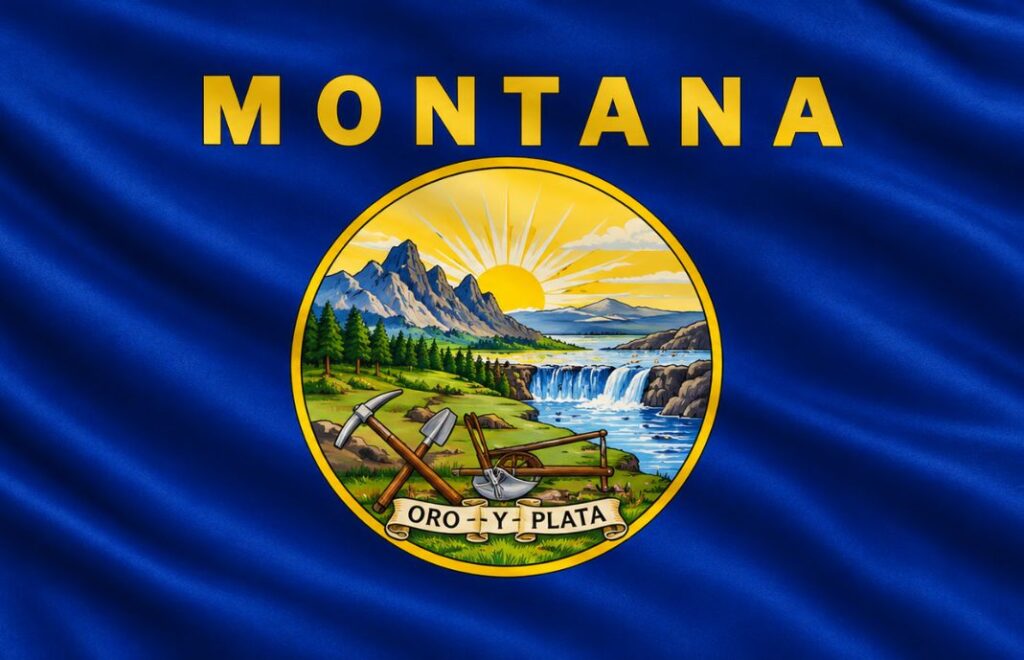
Magnificent mountains, a beautiful waterfall, and a collection of mining tools. Montana’s state flag is almost like a miniature postcard from the American West.
Against a deep-blue background sits the state seal, depicting the Great Falls of the Missouri River, the Rocky Mountains, and tools representing Montana’s mining and agricultural heritage.
But here’s something rather unexpected.
Beneath the landscape appears the Spanish motto “Oro y Plata,” meaning “Gold and Silver.”
It’s a fitting tribute to the precious metals that attracted prospectors to Montana during the nineteenth century.
And here’s another curious detail: the state’s name was added to the flag in 1981 to make it easier to identify.
Nevada: A silver star and a battle born state
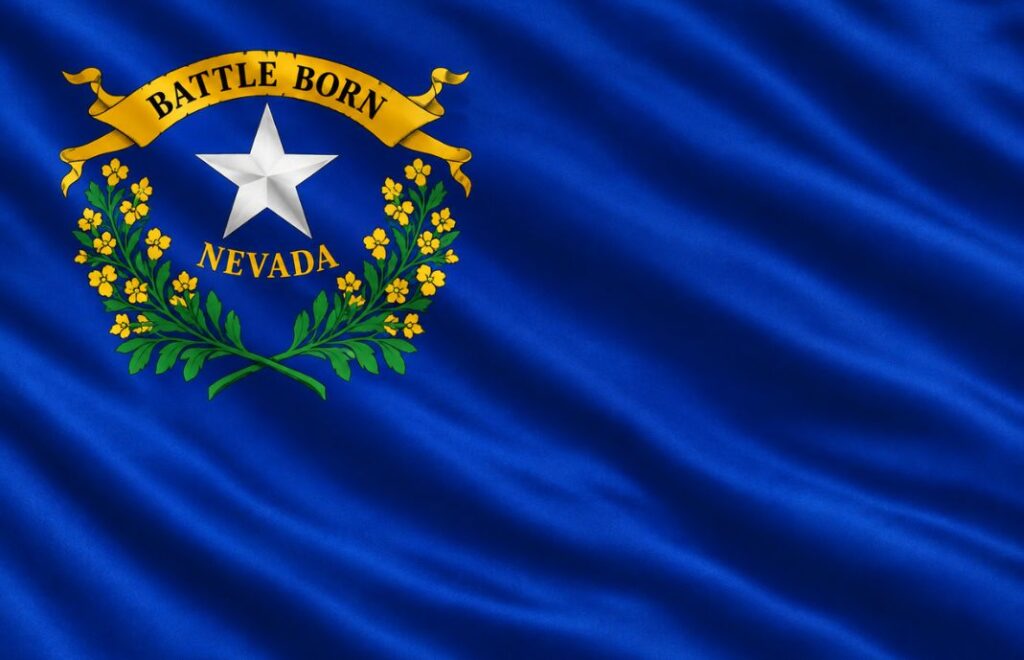
Nevada’s flag might look rather simple at first glance, but there’s a fascinating story hidden in its deep-blue background.
In the upper-left corner, a silver star celebrates the state’s rich mining heritage, while the words “Battle Born” commemorate Nevada joining the United States during the American Civil War in 1864.
And those beautiful yellow flowers surrounding the star? They’re sagebrush, a hardy desert plant that has become one of Nevada’s most recognisable symbols.
It’s a wonderful little tribute to the Silver State, where mining fortunes, desert landscapes, and a dramatic chapter of American history come together.
North Dakota: An American eagle and thirteen golden stars
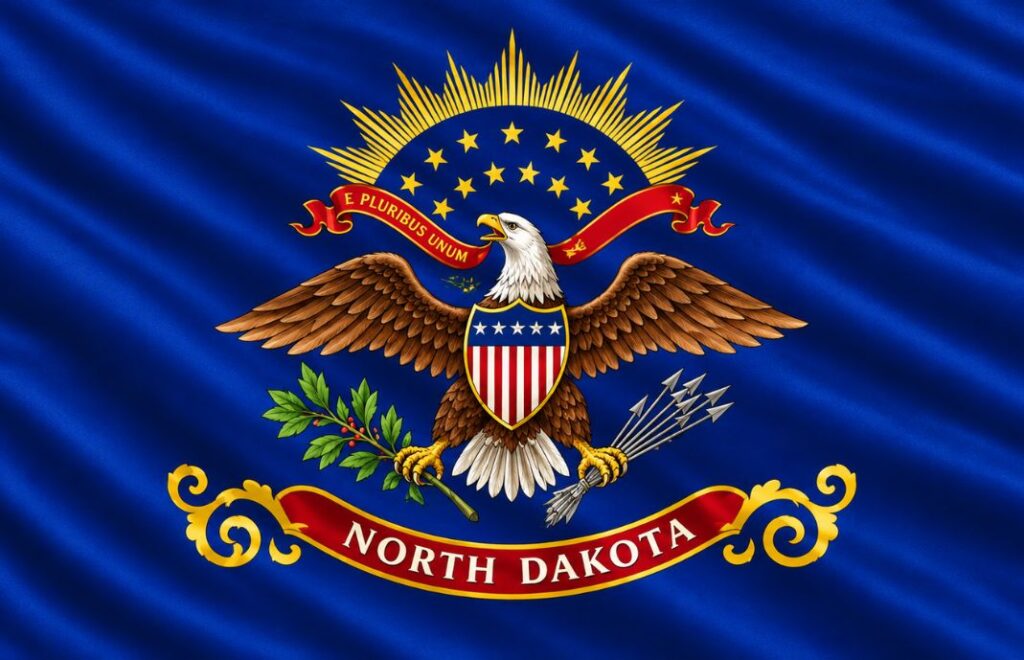
An American eagle, thirteen golden stars, and a ribbon carrying the words “E Pluribus Unum.” North Dakota’s state flag looks wonderfully patriotic.
Against a deep-blue background, a bald eagle holds an olive branch and arrows, representing peace and the willingness to defend the nation.
Above the eagle, thirteen stars celebrate America’s original colonies.
But here’s something surprising.
The design was inspired by the flag carried by North Dakota soldiers during the Spanish-American War in 1898.
When the state adopted its official flag in 1911, it chose to preserve this military connection rather than create an entirely new design.
More inspiration: Discover the fascinating story behind North Dakota’s state flag
South Dakota: The Mount Rushmore state and a shining sun
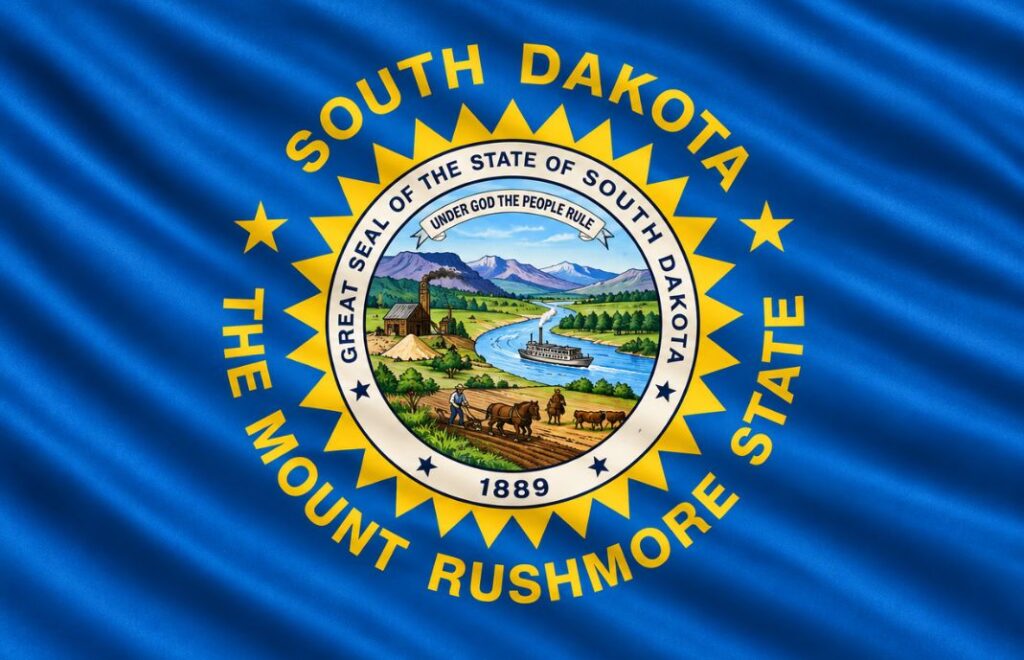
A brilliant golden sun surrounding an elaborate state seal. South Dakota’s flag certainly knows how to celebrate its identity.
Against a beautiful sky-blue background, the seal depicts a farmer, a steamboat, mountains, and other symbols of the state’s agricultural and industrial heritage.
The golden rays surrounding the seal recall South Dakota’s earlier nickname, the Sunshine State.
But here’s something interesting.
In 1992, the wording on the flag was changed to celebrate South Dakota’s more famous nickname, Mount Rushmore State.
And despite that name, the flag doesn’t actually feature Mount Rushmore.
More inspiration: Discover the fascinating story behind South Dakota’s state flag
Utah: Mountains, a beehive, and a bold new design
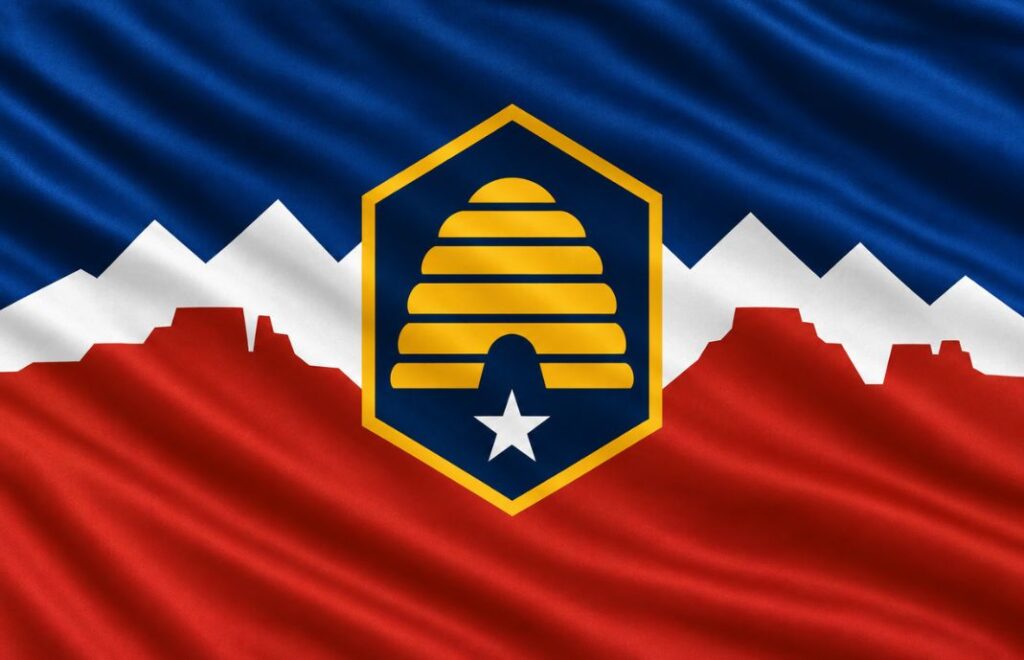
A magnificent mountain range, a golden beehive, and a bold combination of red, white, and blue. Utah’s state flag has a wonderfully fresh appearance.
Officially adopted as the new state flag in 2024, the design features blue representing Utah’s skies and lakes, white symbolizing its snow-covered mountains, and red recalling the spectacular red-rock landscapes of southern Utah.
At its center sits a golden beehive, celebrating industry, cooperation, and community.
But here’s something fascinating.
The beehive has been associated with Utah since its pioneer days and remains one of the state’s most recognisable symbols.
This traditional state flag, featuring Utah’s elaborate seal, is still recognized as the state’s historic flag.
Wyoming: A mighty bison and a little hidden symbolism
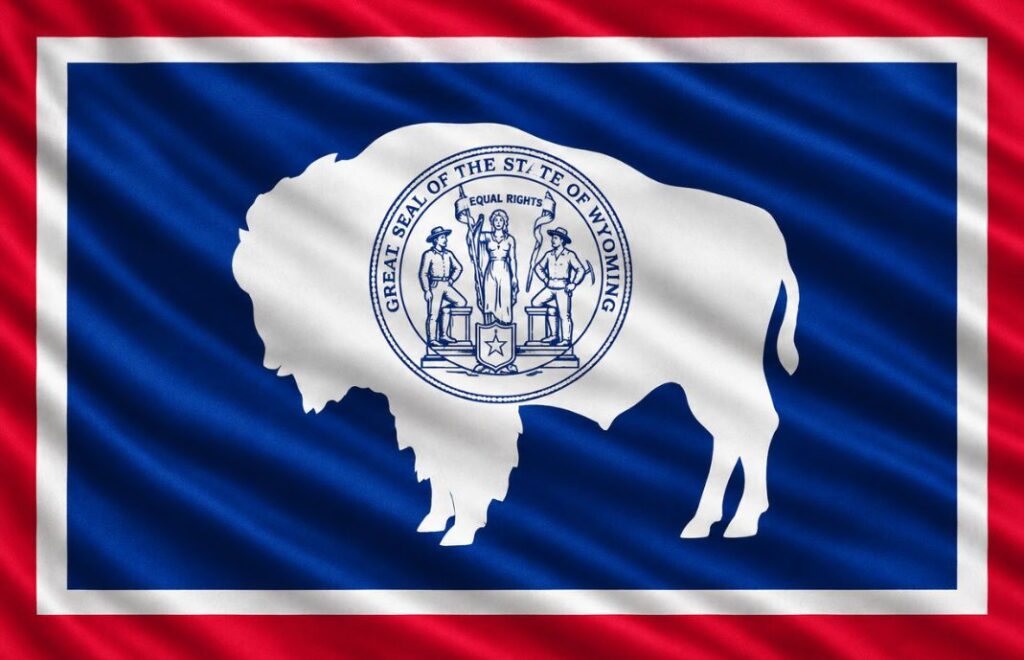
A magnificent American bison against a brilliant blue background, surrounded by a bold red-and-white border. Wyoming’s state flag certainly captures the spirit of the Wild West.
The bison represents Wyoming’s extraordinary wildlife and Western heritage, while the colors celebrate courage, purity, and loyalty.
But look closely at the animal, and you’ll discover something unusual.
A small version of Wyoming’s state seal appears on the bison’s body, symbolizing the tradition of branding livestock.
And here’s a wonderful detail.
The flag was designed by Verna Keays, a young woman who won a statewide competition in 1916.
Her creation was officially adopted in 1917 and remains one of America’s most distinctive state flags.
More inspiration: Discover the fascinating story behind Wyoming’s state flag