
Let’s be honest. If you were exploring the Galápagos Islands, surrounded by enormous giant tortoises, prehistoric marine iguanas, and ridiculously entertaining Blue-footed boobies, would you really stop to admire a little brown bird?
Probably not. And that might just be the biggest mistake of your entire Galápagos adventure.
Because these rather ordinary-looking little birds have an extraordinary claim to fame. They helped inspire one of the most revolutionary scientific ideas in human history: Charles Darwin’s theory of evolution by natural selection.
The secret? Well, much of it comes down to their beaks.
Some are short and powerful, perfect for cracking tough seeds. Others are long and slender, better suited to catching insects or feeding on cactus flowers. These seemingly small differences reveal a fascinating story about how animals adapt to their environments for generations.
Here’s something particularly surprising: Darwin himself didn’t immediately realize just how important these little birds would become. Their remarkable story only began to unfold after his famous voyage aboard HMS Beagle.
Let’s travel back to 1835 and discover how a collection of unassuming little birds helped change the way we understand life on Earth.
Because sometimes, the biggest discoveries come in the smallest packages.
A young naturalist and some very ordinary birds
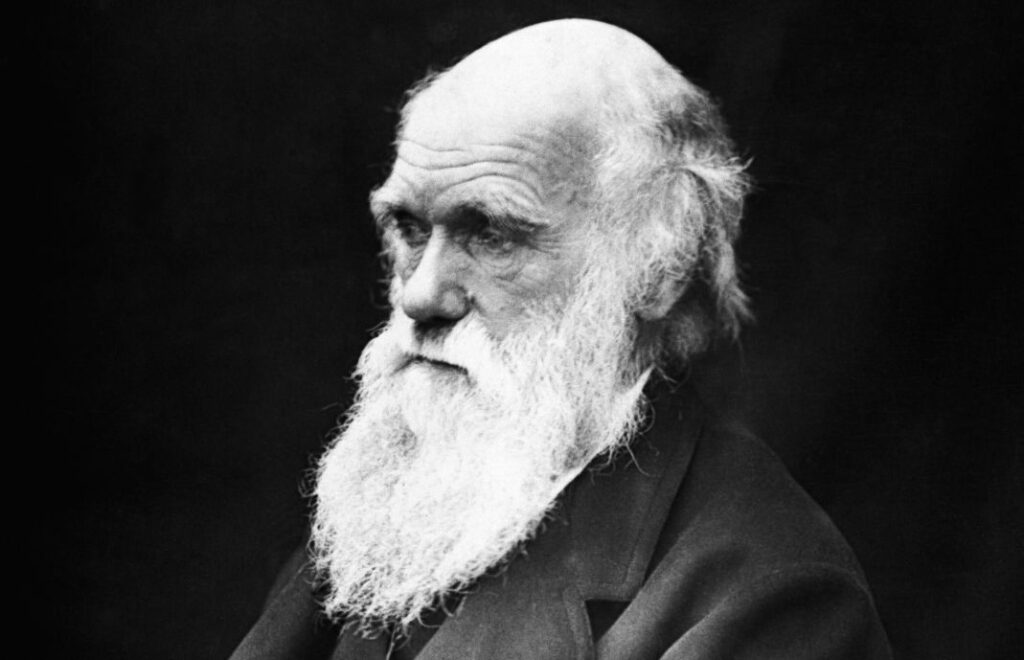
In September 1835, a 26-year-old naturalist named Charles Darwin arrived in the Galápagos Islands aboard HMS Beagle. He had already spent several years exploring South America, collecting specimens, studying wildlife, and making observations that would eventually transform our understanding of the natural world.
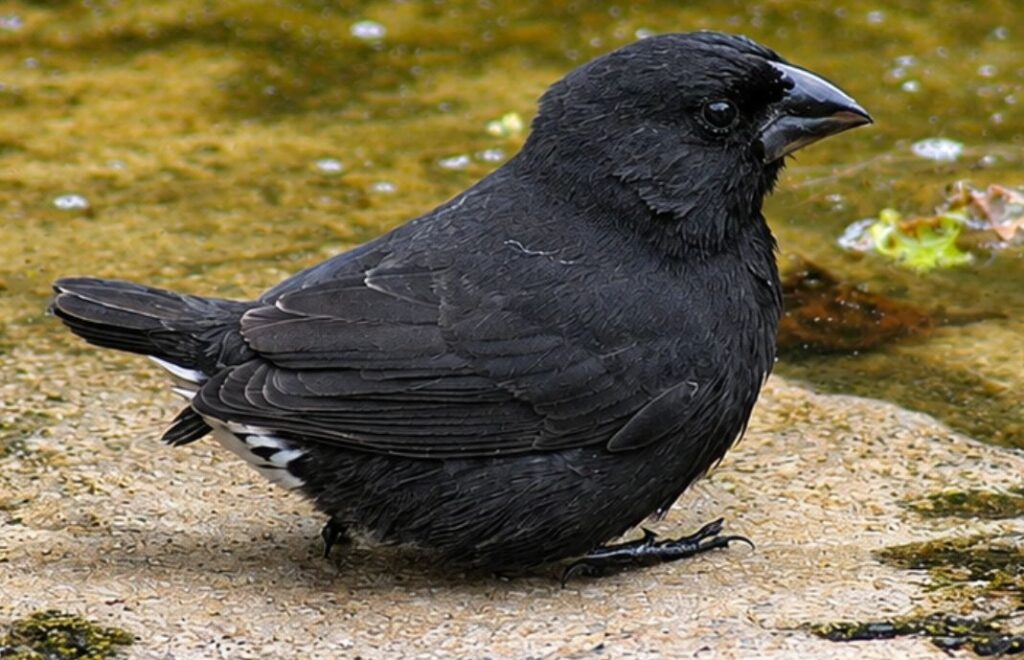
The Galápagos Islands immediately offered plenty to investigate. Their dramatic volcanic landscapes, enormous tortoises, unusual reptiles, and remarkably fearless birds were unlike anything Darwin had encountered before. Among the creatures he collected were several small, rather ordinary-looking birds that would later become known as Darwin’s finches.
Here’s the surprising part. Darwin didn’t initially recognize these birds as closely related species. Their different beak shapes and eating habits led him to believe that some belonged to entirely different groups of birds. It wasn’t until he returned to England that ornithologist John Gould examined the specimens and identified their remarkable similarities.
And suddenly, those little brown birds became much more interesting.
The discovery helped reveal how closely related species could develop different characteristics while living in different environments.
Im-beak-able evolution: When dinner shapes your destiny
Imagine arriving at a restaurant where everyone is served a different meal, but nobody is allowed to use cutlery. Suddenly, having the right kind of beak becomes rather important.
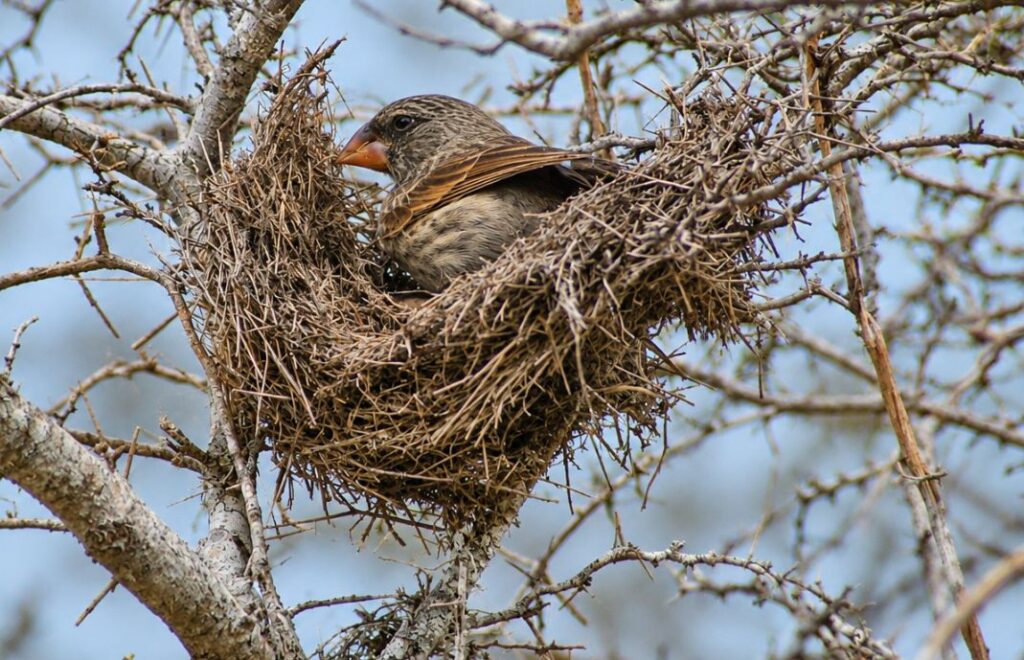
Darwin’s finches provide a remarkable example of how evolution helps species adapt to different environments. Although they descended from a common ancestral population, these little birds gradually developed different beak shapes and sizes as they spread across the Galápagos Islands.
Some evolved thick, powerful beaks capable of cracking hard seeds, while others developed slender, pointed beaks better suited to catching insects. Certain finches even became specialists at feeding on cactus flowers and fruit.
But how did these differences develop?
The answer lies in natural selection. Birds naturally vary in their inherited characteristics, including beak shape. When a particular beak makes finding food easier, its owner may be more likely to survive and reproduce, passing those useful characteristics to the next generation.
Over many generations, these small advantages can produce remarkable evolutionary changes.
Different environments, different menus, and eventually, different species.
“It is not the most intellectual of the species that survives; it is not the strongest that survives; but the species that survives is the one that is able best to adapt…”
Charles Darwin
The Origin of Species: A revolutionary idea takes flight
Charles Darwin didn’t step onto the Galápagos Islands in 1835, take one look at a finch, and suddenly discover the secret of evolution.
As wonderful as that story sounds, the truth is considerably more interesting.
Darwin’s theory of evolution developed gradually, through years of observation, research, and scientific investigation. His experiences in the Galápagos were important, but so were the fossils, plants, animals, and geological formations he studied during his voyage aboard HMS Beagle.
One particularly significant clue came from the Galápagos mockingbirds. Darwin noticed differences between birds from separate islands, raising questions about how closely related species could develop distinct characteristics.
Over the following decades, these observations helped Darwin develop his theory of evolution by natural selection. He proposed that species change over generations as inherited characteristics that improve survival and reproduction become more common.
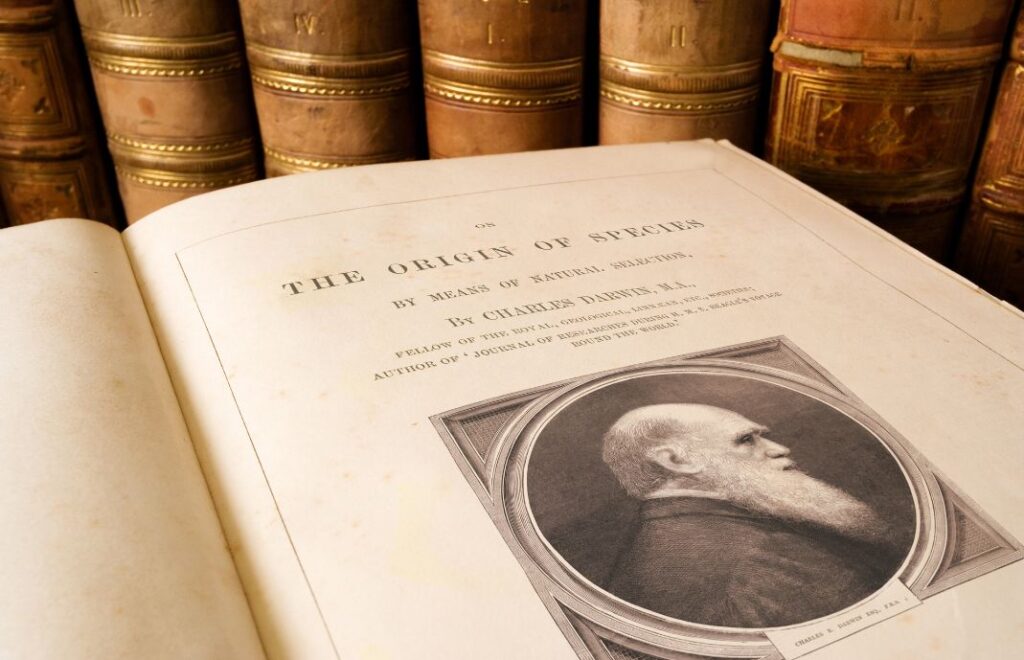
Then, in 1859, Darwin published On the Origin of Species, a groundbreaking book that transformed biological science and challenged long-established ideas about the natural world.
And those little Galápagos finches?
They eventually became one of the most famous illustrations of his revolutionary theory.
Evolution isn’t just history. It’s happening right now
You might think evolution is an incredibly slow process, taking millions of years before anything noticeable happens. But Darwin’s famous little finches have a rather surprising story to tell.
Scientists have observed evolutionary changes in these birds within just a few generations.
Beginning in 1973, biologists Peter and Rosemary Grant spent decades studying finches on the tiny Galápagos island of Daphne Major. By carefully measuring their beaks, monitoring their food supply, and following generations of birds, they discovered something extraordinary.
During a severe drought in 1977, many small, soft seeds disappeared, leaving mostly larger, harder seeds behind. Finches with bigger, stronger beaks were generally better equipped to crack the remaining food and were more likely to survive.
Here’s the remarkable part: the next generation had a larger average beak size.
The Grants’ research demonstrated how environmental changes can influence natural selection surprisingly quickly. As conditions change, different inherited characteristics may become advantageous.
Darwin’s theory was no longer simply something illustrated by the distant past. Scientists could observe natural selection happening in the wild.
Almost 150 years after Darwin’s famous voyage, those little Galápagos finches were still helping us uncover the secrets of evolution.
Something tells me Charles Darwin would have been absolutely delighted.
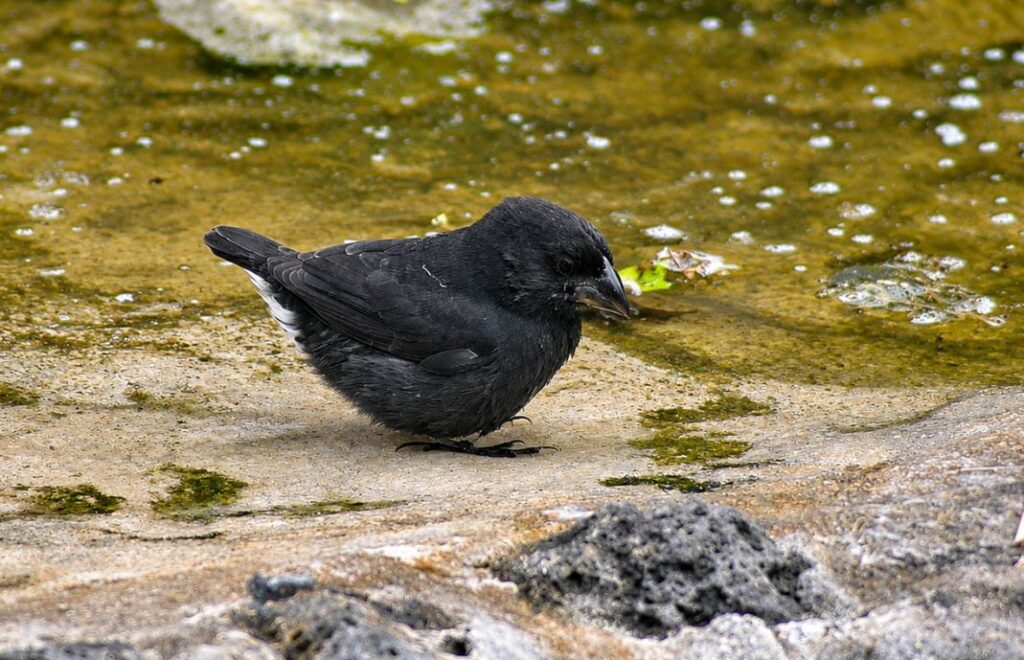
Small birds, an enormous legacy
They don’t have the spectacular colors of flamingos, the enormous wingspans of albatrosses, or the entertaining dance moves of Blue-footed boobies. In fact, Darwin’s finches are so ordinary looking that you might walk straight past them without giving them a second glance.
Yet these unassuming little birds have become some of the most famous creatures in the history of science.
Their story has helped generations of scientists understand how species evolve, adapt to changing environments, and sometimes develop into entirely new species. Even today, researchers continue studying their behavior, genetics, and remarkable beak variations to uncover more secrets about evolution.
But perhaps their greatest legacy is the way they’ve changed how we look at nature.
Every living creature, no matter how small or seemingly insignificant, has an extraordinary evolutionary story behind it.
And nowhere does that lesson feel more meaningful than in the Galápagos Islands, where isolation and natural selection have helped create one of the world’s most remarkable collections of wildlife.
So, when you encounter a little brown finch hopping across a volcanic rock, take a moment to appreciate it.
You might just be looking at one of the most influential little birds in the history of natural science.
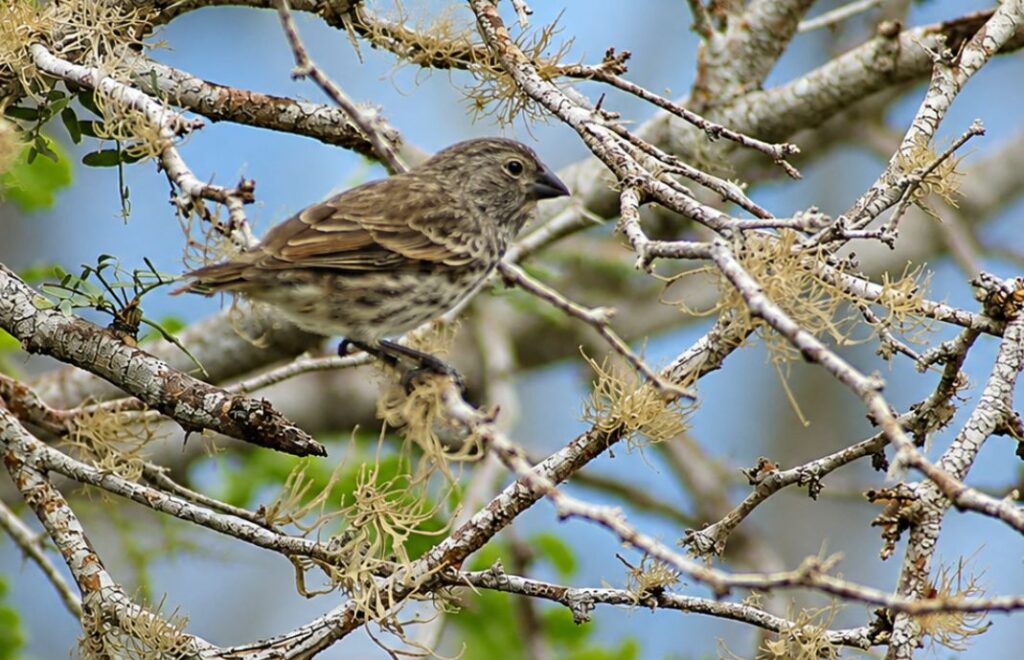
The beauty of looking beyond the obvious
The Galápagos Islands are filled with extraordinary creatures that demand your attention. Giant tortoises, prehistoric marine iguanas, playful sea lions, and birds with ridiculous blue feet make it almost impossible to know where to look first.
And then there’s a little brown finch, quietly hopping between the rocks.
Nothing particularly spectacular. Nothing that immediately catches your eye.
But sometimes, nature’s greatest wonders hide in plain sight.
Darwin’s finches remind us that discovery begins with curiosity. By asking questions, noticing small differences, and looking beyond the obvious, we can uncover stories far more remarkable than we ever imagined.
And isn’t that one of the greatest joys of traveling?
It’s not simply about visiting beautiful places or photographing extraordinary wildlife. It’s about discovering the fascinating stories behind what we see and returning home with a deeper understanding of the world around us.
Because every destination has something to teach us, if we’re willing to look a little closer.
When you find yourself exploring the Galápagos Islands, don’t forget to appreciate those seemingly ordinary little birds.
They may not be the most colourful or entertaining residents of the archipelago, but their remarkable story helped change the way humanity understands life on Earth.
And that might just be the most extraordinary discovery of all.
