
Little Jiminy Cricket and his cousins lie on a plate before me – crispy and freshly fried. Next comes a dish of deep-fried scorpions, followed by a plate of ox penis and another of roasted larvae.
The waiter watches me expectantly. I’m stunned. No, I am shocked. The word vegetarian clearly doesn’t exist in this restaurant’s vocabulary. Perhaps it’s a language barrier. Or maybe they simply don’t care that I don’t eat animals – big or small, mammals or insects.
Welcome to Baoding – a name you’ve likely never heard of, and one that certainly doesn’t appear on (any) tour operator’s itinerary. This is China off the beaten path, where dining becomes an adventure in itself, and the unexpected is always on the menu.
When vegetarianism meets rural China
According to Chinese standards, Baoding is just a village – though its “village” population of ten million says otherwise. Located about 150 kilometers south of Beijing, it’s hardly on any tourist map, which is exactly why I came. I wanted the authentic China, and oh, did I find it.
The waiter beams and gestures for me to try the next delicacy: a glass of snake wine, complete with an entire snake coiled inside the bottle. It’s “good for the skin,” I’m told. Normally, I pride myself on having an open mind, but this time? Hard pass.
My guide grins as he sums up the Chinese culinary ethos with a saying:
“We eat everything in the air except airplanes. Everything in the water except boats. Everything on land with four legs or more – except chairs and tables.”
I attempt to smile, though my eyes betray a mix of horror and fascination.
Sensing my discomfort, he reassures me: “Don’t worry – no dog or cat today.”
Comforting? Hardly.
Again, I explain – slowly – that I’m vegetarian. Nothing with a heartbeat. Finally, I order boiled vegetables, rice, and sweet potato, hoping to start this culinary adventure gently. The waiter returns, unimpressed, and slams the plate down, stabbing a fork into my greens so hard they scatter across the table. I politely ask for chopsticks, hoping at least that gesture might soften his glare.
Meanwhile, my guide happily devours every crispy critter and exotic oddity on the table. Grasshoppers, roasted larvae, even ox penis – all washed down with snake wine, slurping and burping like a man in paradise.
Me? I survive the lunch – barely. I leave the table hungry but victorious, clinging to my principles in the face of cultural pressure and culinary shock.
Baoding: Where ancient traditions meet modern China
Baoding’s story stretches deep into China’s past, tracing its roots back to the Western Han Dynasty. It was razed during the Mongol invasions in the 13th century, only to rise again when the Yuan Dynasty took shape.
Today, the city straddles two worlds: the old quarter to the east, steeped in history and tradition, and the “modern” administrative districts sprawled to the north and south. At its heart lies the bustling train station, the true pulse of Baoding life.
The name Baoding translates loosely as “Protector of the Capital,” a fitting title for a city lying in the shadow of Beijing – just 150 kilometers away. Yet unlike its cosmopolitan neighbor, Baoding is framed by endless patchworks of farmland. It’s these rural outskirts and their people that drew me here.
After the neon dazzle of Beijing – where global brands like Nike and Diesel strut down Wangfujing and office towers gleam in designer glass – Baoding feels like stepping into another era. Here, tradition still lingers in the markets, the kitchens, and the quiet courtyards where elders sip tea under gnarled trees.
For me, travel isn’t just about places – it’s about people. The locals are the living threads of culture, the keepers of heritage. In Baoding, you feel that authenticity in every glance, every smile, every steaming bowl of hand-pulled noodles.
My morning in a Chinese park
I woke to the sound of a rooster with a serious scheduling problem – greeting the world at 4 a.m. instead of sunrise. By the time the sun finally appeared, the poor bird was hoarse, and the coop was silent.
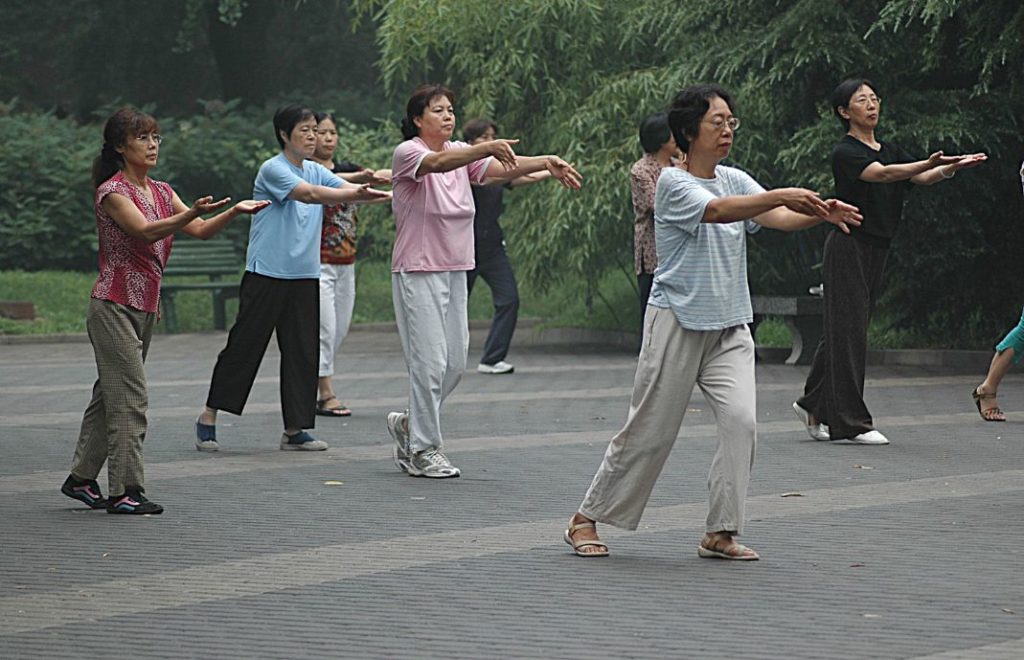
At 6 a.m., I stepped into the main street, heading for the local park – a hub of early-morning life in China. Every day, hundreds of locals gather for tai chi, meditation, and an obligatory round of ping pong. By the time I arrived, the park was already buzzing like a hive – I was clearly late to the party.
Stretch, bend, twist, turn!
The elders had formed a circle around a tiny woman barely a meter tall, her voice sharp as she barked out instructions. Before I knew it, I was invited to join. Graceful? Not even close. But my clumsy attempts earned smiles and warm applause.
No sooner had I caught my breath than I was challenged to a ping pong duel. My opponent? A sprightly grandfather who’s probably been smashing forehands since before I was born. Needless to say, I was annihilated.
Defeat number two came with a twist – literally – when a retired army officer extended a hand and invited me to dance. From his ancient radio came the crackling strains of a waltz, and soon I was spinning clumsily across the park. Within minutes, word of the foreign woman waltzing in the morning sun spread like wildfire, and a crowd gathered to watch.
And there I was, laughing, twirling, and realizing something profound: the soul of China isn’t only in its palaces or pagodas – it’s in these small, joyful moments shared in the open air.
An ox, a wagon, and an unique ride
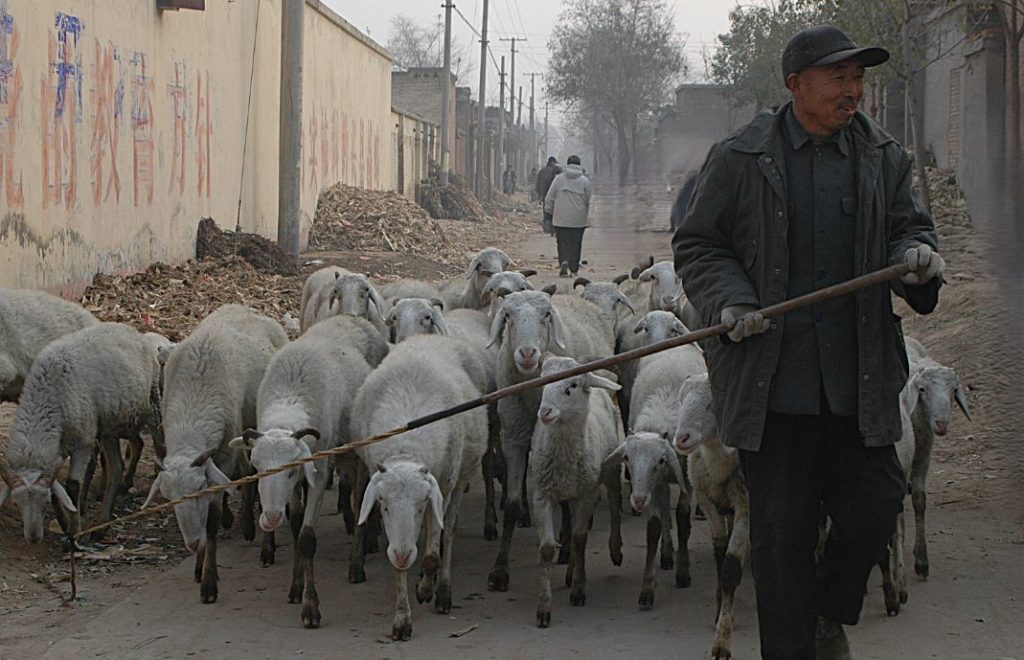
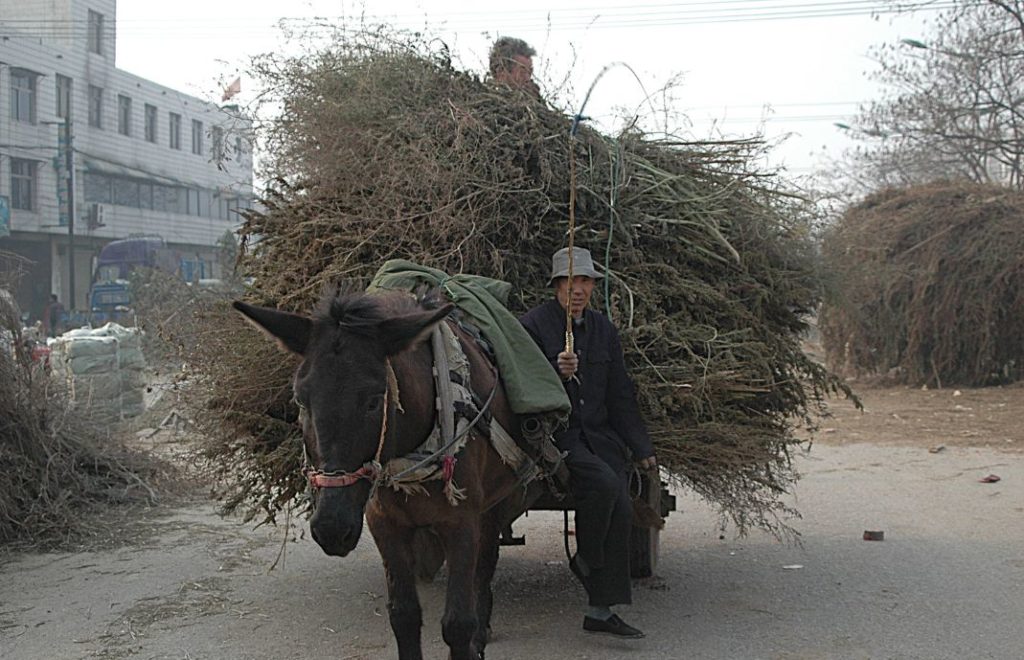
Still giggling from my morning of tai chi and waltzing in the park, I wander out into the dusty streets, eager to see more of the countryside. My wish comes true in the most unexpected way: a farmer heading to market waves me over. His vehicle? A sturdy wooden cart piled high with produce – pulled by a patient, lumbering ox.
We trundle along at a pace that makes a snail look ambitious, but out here, time moves differently. The farmer, like everyone else in Baoding’s rural outskirts, has no interest in rushing.
Communication is a delightful challenge. He doesn’t speak English, and my Chinese vocabulary barely stretches beyond “hello,” “thank you,” and, thanks to yesterday’s culinary adventure, the very practical phrase “I’m full.” Still, with a mix of hand gestures, exaggerated facial expressions, and shared laughter, we manage a kind of conversation.
The cart creaks. The ox snorts. Fields stretch endlessly on either side – golden patches of corn, ribbons of green vegetables, and the occasional glimpse of a farmer bent low over the soil. Life here feels timeless, tethered to the rhythm of nature rather than the tyranny of the clock.
As the village market comes into view, I hop down from the wagon, dust clouding around my boots. I wave goodbye, palms pressed together in gratitude. The farmer grins, revealing a row of weathered teeth, and flicks the reins gently. The ox plods on.
For a fleeting moment, I feel like I’ve stepped into a different century – where the simplest journeys leave the deepest impressions.
The market where nothing goes to waste
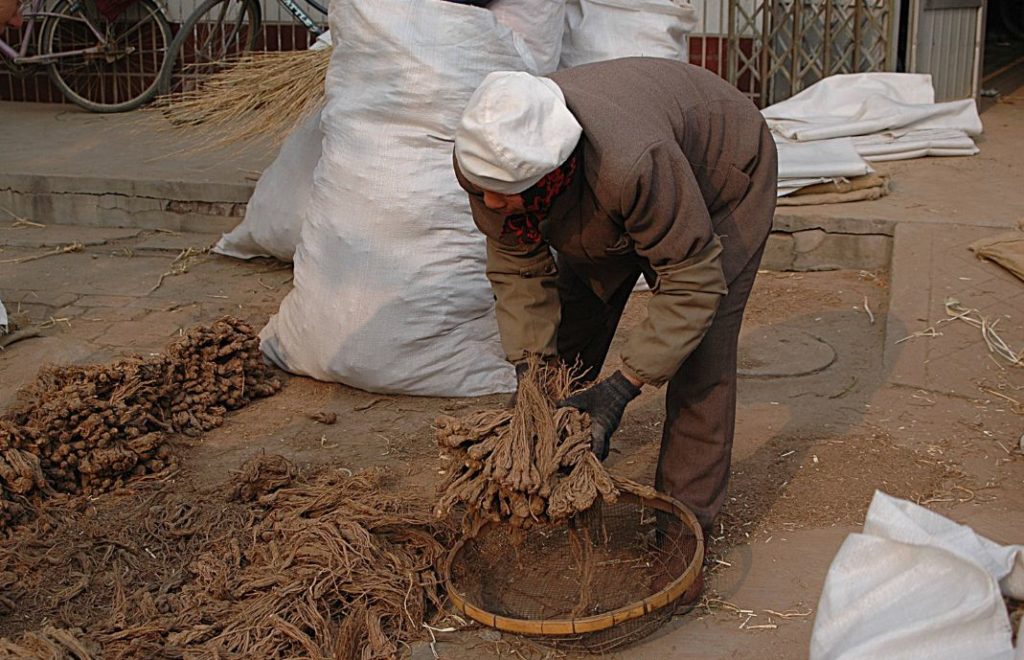
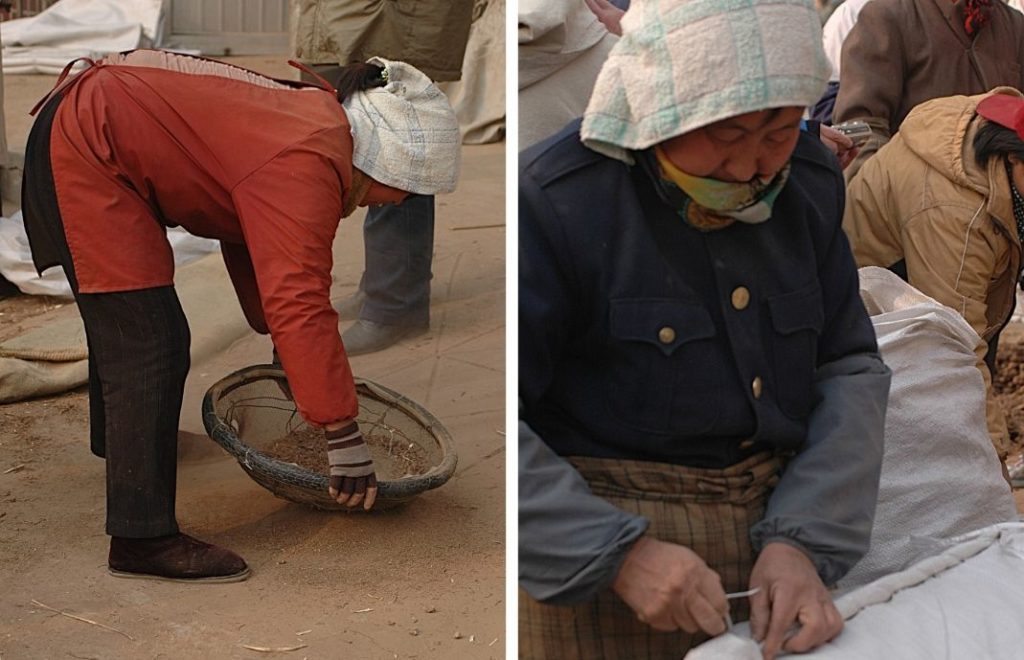
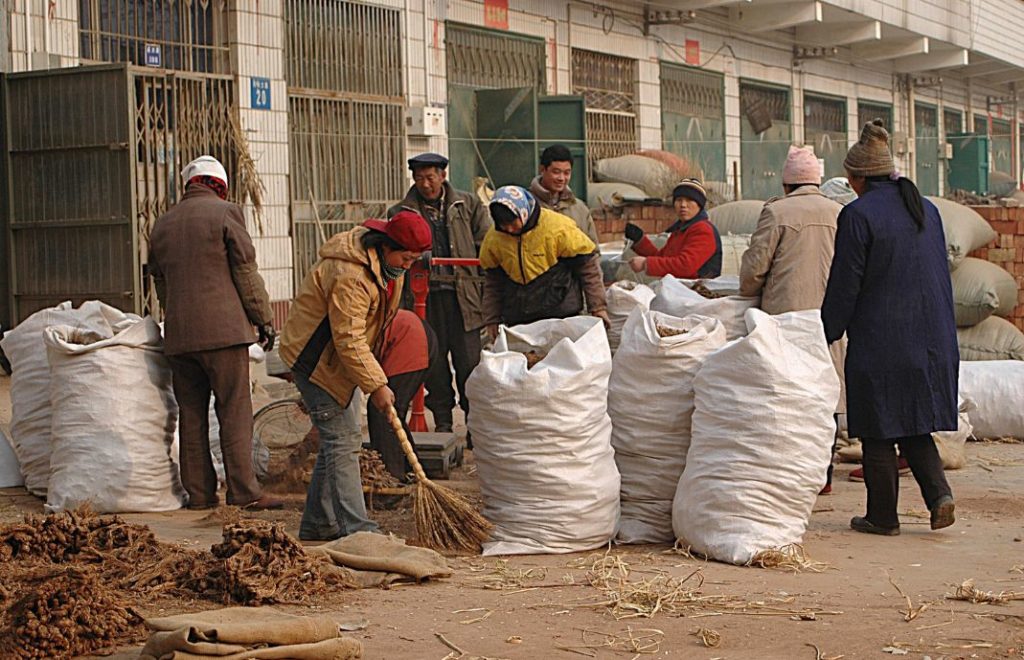
The market sits inside a cavernous warehouse, its sides wide open to let in the crisp countryside air. Inside, chaos unfolds in the most mesmerizing way: pyramids of glossy green peppers, heaps of fragrant herbs, roots tangled like old secrets, bolts of fabric in every color imaginable. There are slabs of meat laid out on wooden tables, baskets of eggs, jars of mysterious powders, and rows of amber bottles promising cures for ailments I didn’t even know existed.
The hum of chatter fills the air, punctuated by the slap of playing cards as a group of vendors huddle together in a corner. Others sip steaming tea from chipped porcelain cups, unconcerned with the occasional customer browsing their wares. The whole atmosphere feels timeless – part marketplace, part social club.
As an obvious outsider, I draw curious glances and, soon enough, an older man approaches me with a warm smile. “Do you speak English?” he asks. My jaw nearly drops. His words are clear, his tone calm. A retired sailor, he explains, and offers to be my guide.
We weave through the crowded aisles, and I feel like I’ve stumbled into a secret world. Then, at a modest wooden stall, a tiny woman steps forward. Her face is a roadmap of deep-set wrinkles, her eyes glittering with the wisdom of decades. She beams at me with a smile so wide it could light the darkest alley.
With great pride, she lifts something from the table – rubbery, pale, and utterly perplexing.
“It’s placenta,” my new friend translates matter-of-factly. “From a new mother. Good for fertility.”
My stomach lurches. I muster a polite nod, unsure whether to faint or flee. Before I can react, the woman’s smile widens even further. She pats my belly twice and flashes two enthusiastic thumbs-up. What does that even mean? Congratulations? Encouragement? A cosmic joke at my expense?
Against all logic, I hand over a few crumpled bills. She folds the money into her puffy jacket, wraps the precious “delicacy” in a scrap of paper, and presses it into my hands like a gift. Then, with a regal nod, she waves me off as if we’ve just sealed the most important deal of the day.
I leave the stall clutching my unusual purchase, both amused and slightly queasy. Welcome to rural China, where nothing – and I mean nothing – goes to waste.
Tea, chickens, and a surprise invitation
My guide meets me after the market adventure, and together we wander along the dusty village lanes. Life here unfolds at its own gentle rhythm: dogs dozing in the sun, old men playing cards under a tree, and the occasional tractor rumbling by with a load of fresh corn.
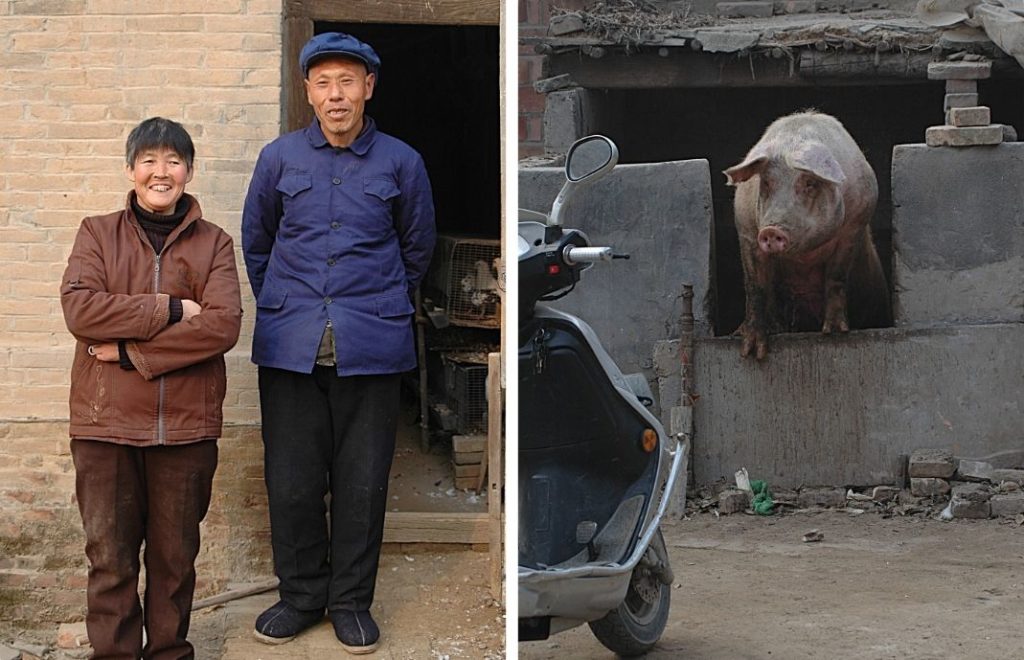
Suddenly, a family waves enthusiastically from their courtyard, motioning us in for tea. How could I resist such a warm welcome?
Inside the yard, chaos has its own charm. Chickens scatter underfoot and, to my astonishment, clamber up onto the tiled roof like daredevils in feathers. A curious pig pokes its snout out from a wooden pen just beneath the family’s outdoor toilet – a clever (if not entirely appetizing) arrangement. Above us, golden maize is spread across the rooftop, drying in the sun like a rustic tapestry.
“Doesn’t that attract birds?” I ask.
“Oh yes,” my guide chuckles, “but there are far fewer birds than mice.”
Tea is poured into small cups as we settle onto low stools. The steam curls up into the cool morning air, carrying the faint aroma of toasted grains. Conversation flows easily despite my limited Mandarin and their limited English, thanks to the endless patience of my guide. Laughter bridges every language gap.
Just when I think this impromptu visit couldn’t get any better, the young daughter-in-law—who turns out to be a schoolteacher – asks, ever so politely, if I might come meet her students.
Before my guide can even finish translating, I’m nodding with delight. Of course, yes! I’d love that.
On the way, we stop by the village shop to pick up small gifts for the children. The selection is… modest, to say the least. But I manage to grab some colorful pens, a few notebooks, and a bag of candies that I’m sure will win hearts faster than any vocabulary lesson.
As we step back into the sunshine, gifts in hand, I can’t help but smile. What began as a simple stroll through the village has turned into something much richer – a glimpse of life lived close to the earth, full of kindness and quiet generosity.
Suddenly, I’m the English teacher
The school principal comes out to greet me, his face glowing with pride. In halting English, he explains that I am the very first foreigner ever to visit the school. I’m not sure who is more excited – him or me.
With great ceremony, I’m ushered into a classroom where rows of bright-eyed children rise in unison to greet me. Their voices chorus a shy but enthusiastic, “Welcome!”
I smile, wave, and prepare for a few polite questions – until I realize the sweet young teacher has something else in mind. Suddenly, I’m the English teacher.
There’s no time to hesitate. I take a deep breath and dive in. We start with the basics – counting from one to ten in English, then again in Norwegian, which sends a ripple of giggles across the room. They repeat every word with such focus, sitting perfectly straight, their eyes sparkling with curiosity. Laughter bubbles up when I mix in a few funny faces to keep things lively.
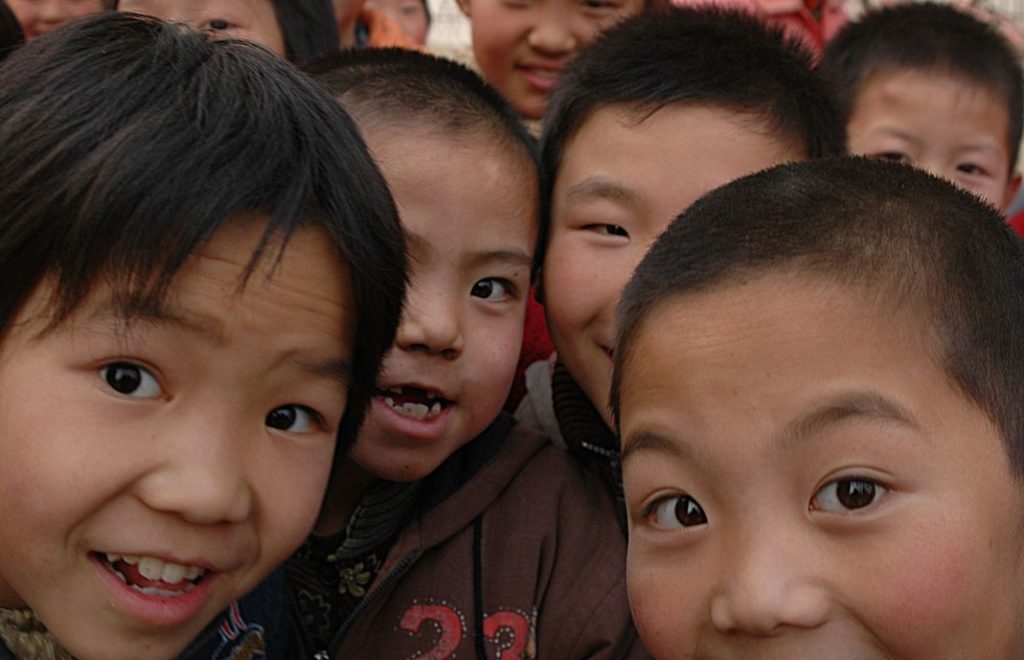
By the time the bell rings, I’m completely smitten with this little class – and the feeling seems mutual. The moment we step outside, chaos erupts. The students swarm around me, their laughter filling the courtyard. Why? I have a camera. And a camera, out here in rural China, is pure magic.
They jostle, giggle, and pose, crowding in so tightly it feels like I’m in the middle of an excitable flock of hens. Every click of the shutter brings squeals of delight as they rush to see themselves on the tiny screen.
Eventually, the principal calls order and herds them back into their classrooms, though not without a few lingering waves and shy smiles. I’m escorted back to the gate like an honored guest, and as I leave, they call after me: “Come back soon!”
Baoding will never make it into glossy travel magazines, and you won’t find it in any guidebook. But it’s real. Here, people are open-hearted, generous, and unpretentious.
This – this is the authentic China. A place far richer than its famous monuments, a land full of small, unexpected moments that stay with you long after the journey ends.
More inspiration to China:
Eat your way through China
Volunteering with pandas
