
Some places capture your heart the moment you arrive. The Orkney Islands are one of those rare and unforgettable destinations. It’s a place where history, nature, and culture come together in a way that feels almost otherworldly.
Here, the past isn’t just remembered – it’s alive. With over 5,000 years of human history layered into the land, you’ll feel as though you’re traveling through time. Ancient standing stones, Iron Age villages, Viking ruins – they’re not just stories from the past, they’re part of the present, shaping everything around you.
And then, there’s the wild, windswept beauty of the islands themselves. Orkney is very much alive – with every crashing wave, every seabird cry, every seal bobbing playfully offshore. Let the sight of adorable puffins charm you senseless, or simply sit still and let the sound of the wind and waves wash over you.
This is a paradise for nature lovers, walkers, cyclists, and anyone eager to see the islands from a kayak or boat. The landscape invites exploration, from windswept cliffs to sandy beaches and dramatic coastal trails.
But Orkney isn’t just about silence and solitude. It’s also a place where culture and community welcome you with open arms – through lively festivals, intimate museums, traditional music sessions, and warm conversations in cozy pubs.
There are countless reasons to fall in love with the Orkney Islands.
Here are eight of them:
1. A 5,000-year-old story
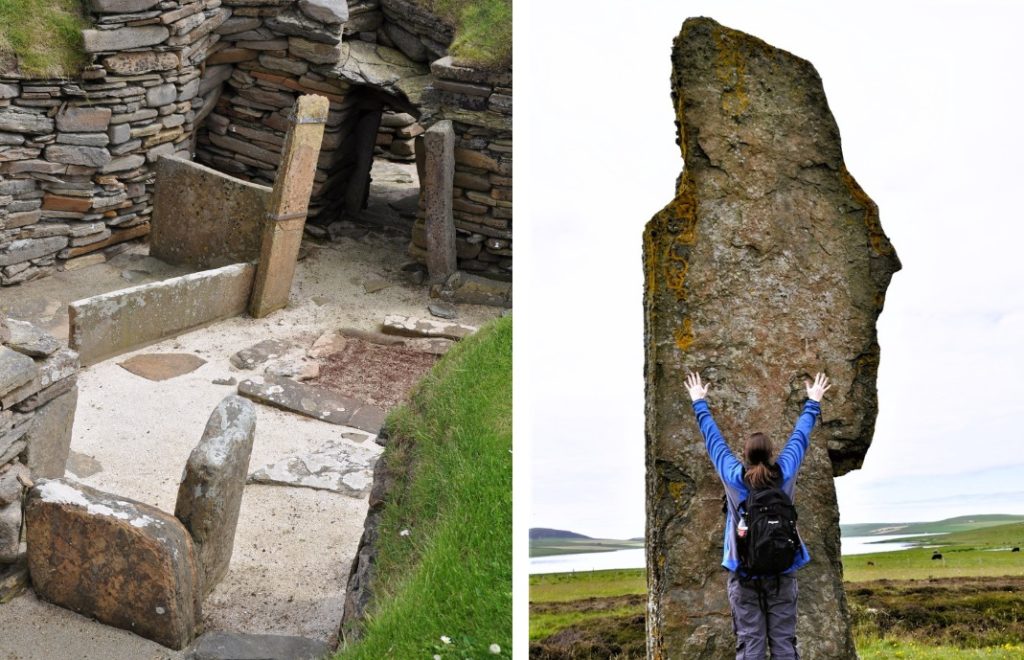
The Orkney Islands are home to four UNESCO World Heritage Sites – and for very good reason. These extraordinary archaeological treasures – Skara Brae, the Ring of Brodgar, the Standing Stones of Stenness, and the Maeshowe Chambered Tomb – form the heart and soul of what’s known as the Neolithic Orkney.
At the center of this ancient landscape is Skara Brae, a remarkably well-preserved Neolithic village that was abandoned over five thousand years ago after being buried beneath a powerful sandstorm. Today, it is considered the best-preserved prehistoric settlement in Western Europe.
Visitors are transported millennia into the past as they explore stone homes complete with built-in beds and seating areas. A life-sized reconstruction of a Neolithic house offers even deeper insight into what daily life might have looked like all those centuries ago.
Begin your journey at the visitor center, where exhibitions showcase artifacts uncovered during major excavations in the 1970s. And don’t miss the location itself – Skara Brae sits beautifully beside the white sands of the Bay of Skaill, adding coastal charm to this ancient wonder.
Just as magical is The Ring of Brodgar, a hauntingly beautiful stone circle that ignites the imagination. Built between 2500 and 2000 BC and spanning nearly 8,500 square meters, it’s the third-largest stone circle in the British Isles. Today, 27 of the original 60 standing stones remain upright, still powerful in their silence.
Mystery clings to the site like morning mist. Was it a sacred space for rituals? A celestial calendar aligned with solstices and equinoxes? We may never know. What’s certain is its timeless, almost otherworldly presence, especially when the sun sets and the stones cast long, golden shadows across the moor.
This is not just history – it’s an experience of deep time, written in stone and waiting for you to discover it.
Exploring the ancient magic of Orkney
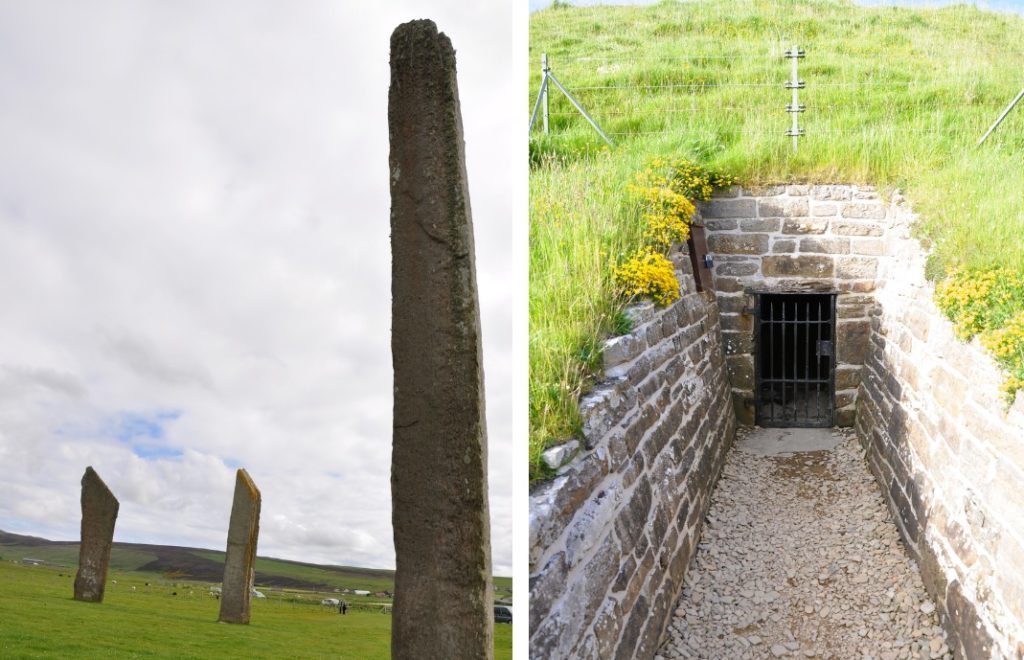
When you visit the Standing Stones of Stenness, you’re likely standing before the oldest stone circle in the British Isles.
Once composed of twelve towering stones, some reaching up to six meters in height, only four majestic stones remain today. But even in their reduced number, they exude an ancient power that pulses through the Orkney landscape. This site is both raw and mystical – a silent sentinel of rituals long lost to time.
Nearby lies one of the most awe-inspiring achievements of Neolithic architecture: the Maeshowe Chambered Tomb.
Regarded as one of Europe’s finest prehistoric burial monuments, Maeshowe is a masterclass in ancient engineering and spiritual alignment.
To enter, you pass through a low, narrow corridor carved from stone – a carefully designed passage that, during the winter solstice, captures the last light of the setting sun, illuminating the tomb’s inner chamber with an ethereal glow. It’s a breathtaking alignment that speaks to the deep cosmic knowledge and reverence of Orkney’s early inhabitants.
Together, these ancient sites don’t just tell the story of the past – they invite you to feel it, to stand in the presence of a people whose legacy still echoes across wind-swept moors and under starlit skies.
2. The irresistibly charming puffins
No visit to the Orkney Islands is complete without going puffin spotting!
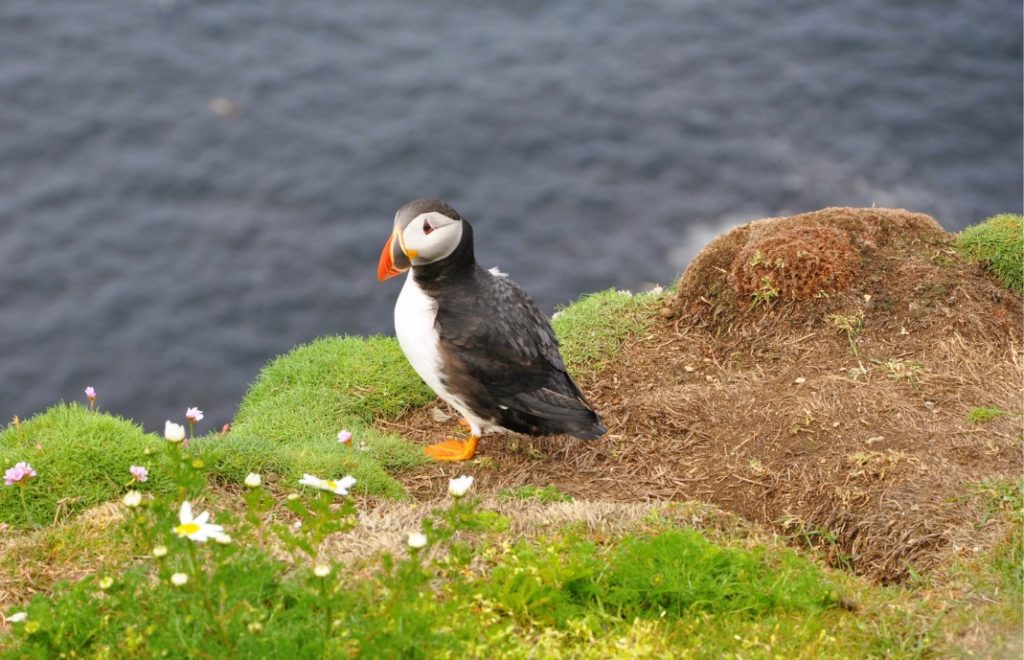
These adorable birds, affectionately nicknamed “sea parrots” for their colorful beaks – or sometimes “clowns of the sea” – are a delight to encounter in their wild island habitat.
Standing at just around 30 centimeters tall, puffins are a magical sight amid Orkney’s rugged cliffs and sea-sprayed landscapes.
What makes them even more enchanting is their beak transformation: during the winter, it’s a muted grey – but come breeding season in spring, it bursts into vivid hues of orange, blue, and yellow, like nature’s own celebration of life.
With their comical waddles, striking looks, and undeniable charm, puffins are a beloved highlight of the Orkneys – treasured by locals and visitors alike. Keep your binoculars ready – you might just fall in love at first sight.
More inspiration: The best places to see puffins in the Orkney Islands
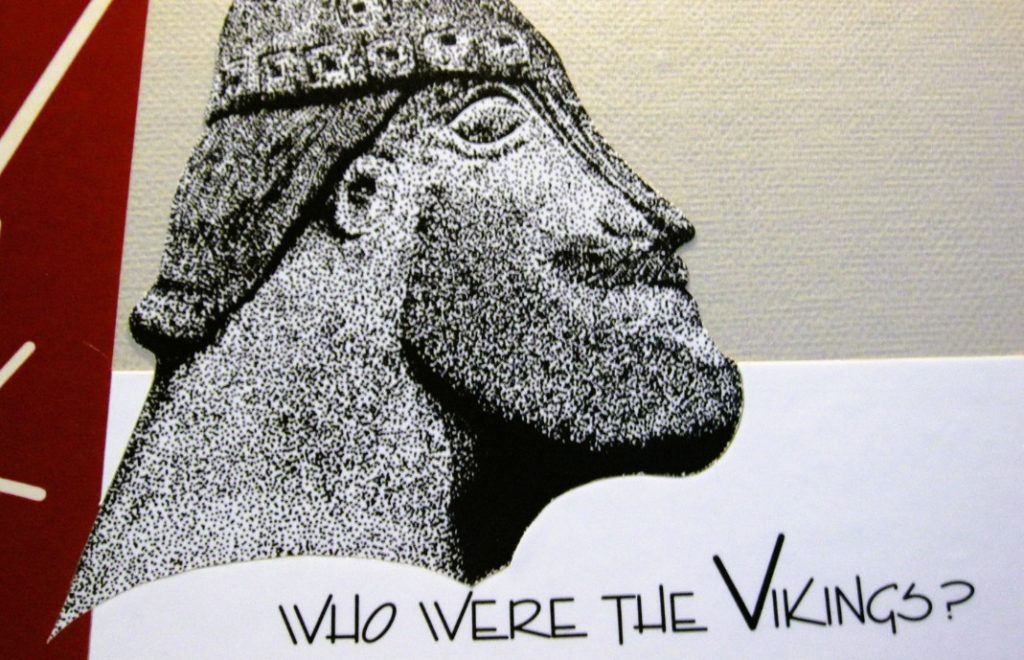
3. The Vikings are coming!
As you explore the Orkney Islands, it quickly becomes clear – the Viking spirit is alive and well.
Place names echo the Scandinavian language, and the landscape is scattered with archaeological sites that bring the Viking Age vividly to life. Don’t be surprised if locals proudly trace their ancestry back to Norse settlers who arrived from Norway in the 9th century.
In fact, Orkney remained part of the Scandinavian kingdom until 1468, when Danish King Christian I, strapped for cash, pawned Orkney and Shetland to the Scottish crown as a dowry for his daughter Margaret’s marriage to James III of Scotland. Since the debt was never repaid, the islands have belonged to Scotland ever since – but their Norse roots remain deeply woven into the cultural fabric.
For a hands-on Viking experience, follow the Orkneyinga Saga Trail – a captivating journey through time with informative signposts marking key moments and sites from the Viking era.
To dive deeper, pick up a copy of the Orkneyinga Saga, written around 1200 by an anonymous Icelandic author, chronicling the daring deeds and tangled legacies of Orkney’s Norse rulers.
Don’t miss other Viking-related landmarks such as St. Magnus Cathedral, the Brough of Birsay, Maeshowe Chambered Tomb (with rare Norse runic graffiti), and Egilsay Island, where Saint Magnus met his martyrdom.
In Orkney, the Viking legacy isn’t just history – it’s part of the island’s living soul.
4. Hoy – The Highlands of Orkney
Named by the Vikings as the “high island”, Hoy truly lives up to its name. Rising dramatically from the sea, this is Orkney at its wildest and most awe-inspiring.
From the moment you set foot on Hoy, you know you’ve arrived somewhere special. The landscape feels untouched, almost mythical – a place where sea meets sky and cliffs fall away into crashing waves.
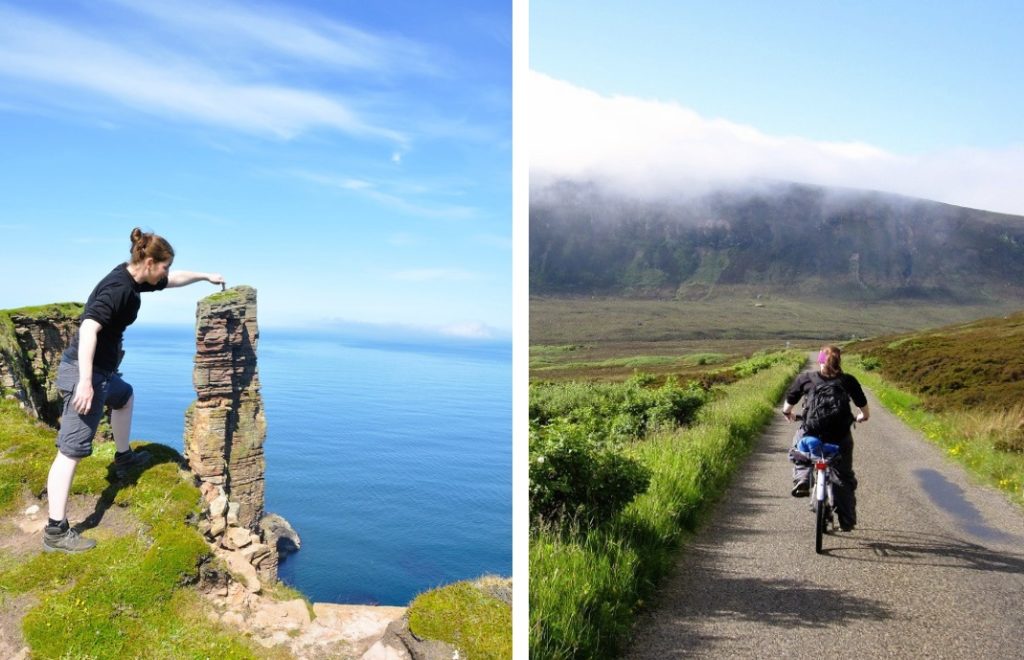
Whether by bike or on foot (I did both and have no regrets!), exploring Hoy is a journey into raw, scenic beauty.
The island is home to Ward Hill, the highest point in Orkney at 457 meters, as well as St. John’s Head, the tallest vertical sea cliff in the UK, plunging 346 meters straight into the Atlantic. Birds wheel overhead, and sheep graze freely along the hillsides – a symphony of wild and serene.
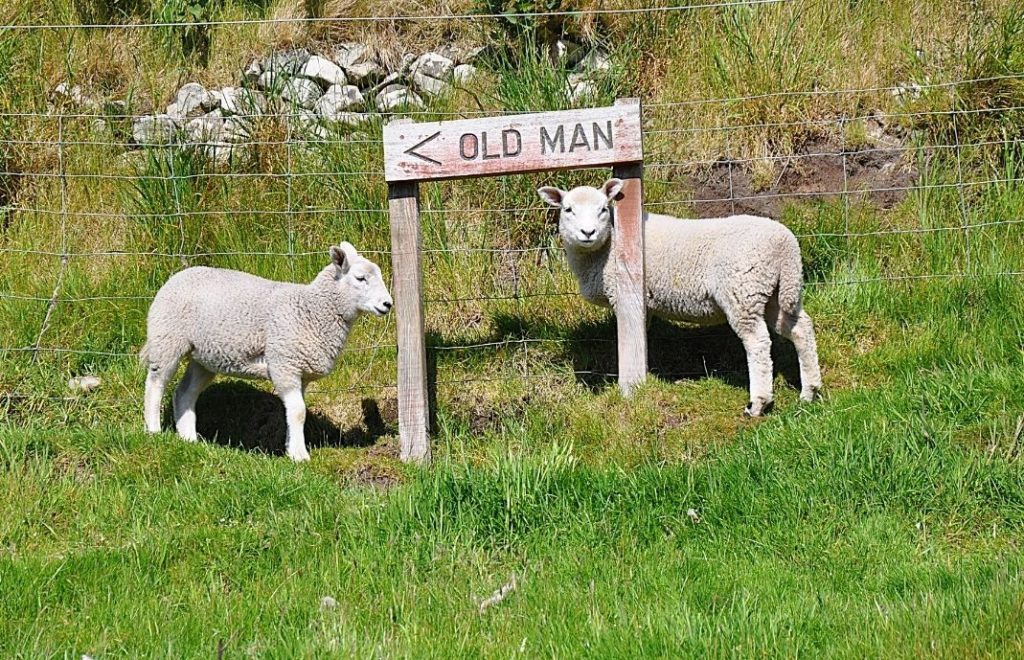
But Hoy’s most iconic sight is the legendary Old Man of Hoy. This striking 137-meter sea stack of red sandstone rises from the waves like a giant sentinel. A bucket-list destination for climbers, it was first summited in 1966 and continues to challenge and inspire adventurers from around the world.
You can reach the Old Man by foot via a stunning clifftop trail from Rackwick, a walk that offers breathtaking views at every turn. It’s a pilgrimage every visitor should make – because some places don’t just impress you, they leave their mark on your soul.
Unraveling the mystery of Hoy’s Dwarfie Stane
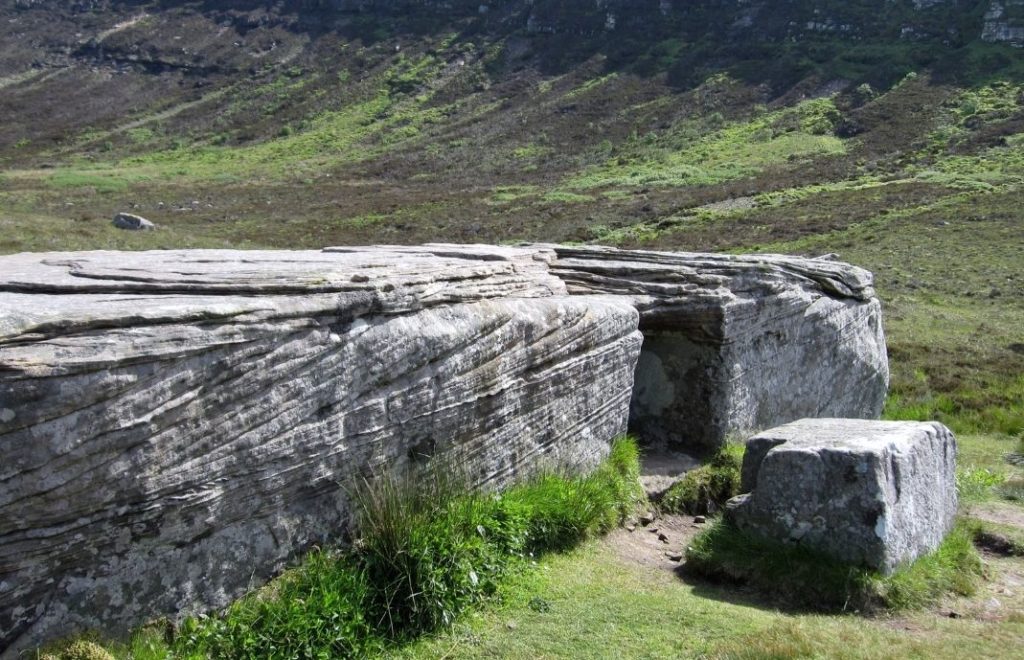
Another truly unique site on Hoy is the Dwarfie Stane – a prehistoric megalithic chamber tomb hewn entirely from a single block of sandstone. Believed to be the only structure of its kind in all of Britain, it stands as one of Orkney’s most enigmatic ancient wonders.
Nestled in a quiet, peat-covered valley, the Dwarfie Stane is thought to date back to around 3500 BCE. Measuring eight meters long, it features a narrow entrance that leads into a small inner chamber with two stone bed-like recesses. Lie down in one of them and you’ll instantly understand how the tomb earned its curious name.
Shrouded in mystery and silence, the Dwarfie Stane has never been fully excavated by archaeologists, and it’s not mentioned in any historical texts. The tomb was once sealed with a large slab of sandstone, which still rests just outside the entrance, where it was reportedly found in the 1600s.
With no written record and no definitive explanation, the Dwarfie Stane invites the imagination to run wild. Who built it? Who lay inside? And why, on this remote island, was such a monument carved with such precision?
At this windswept, otherworldly site, you don’t just visit the past – you feel its riddles wrap around you.
5. Stromness – A gem shaped by the sea
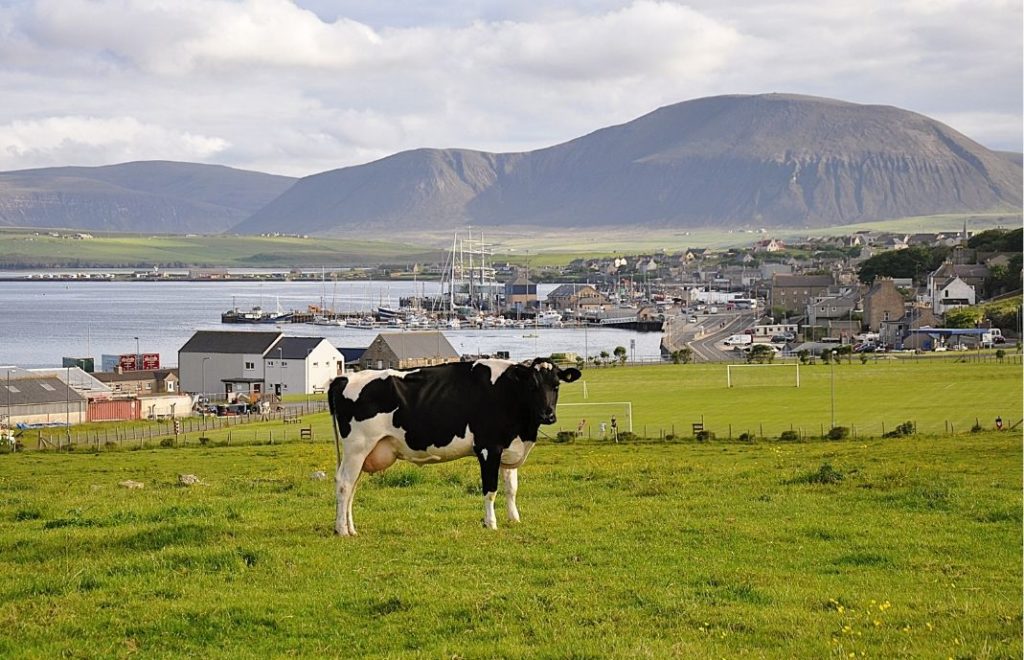
Calling Stromness a “city” might be a stretch – it’s more of a quaint and captivating coastal hub. But what it lacks in size, it more than makes up for in charm and character.
Wander its narrow, cobbled streets, flanked by centuries-old stone houses, and you’ll feel as though you’ve stepped straight into another time. Along the way, you’ll spot blue plaques offering snippets of Stromness’s rich maritime and cultural history.
Despite its small footprint, Stromness hums with life. You’ll find cozy pubs, inviting restaurants, artisan shops, and vibrant galleries, all tucked into its winding lanes.
The Stromness Museum is well worth a visit, revealing stories of seafarers, explorers, and local lore that have helped shape this waterfront town.
The town truly comes alive during annual events like the Orkney Folk Festival (May), the Orkney Blues Festival, and the fun-filled Stromness Shopping Week – each one a celebration of local music, community, and island spirit.
With a population of just around 2,000 people, Stromness might be small, but it has a big soul. It’s the perfect base for launching deeper explorations across the Orkney Islands.
6. St. Magnus Cathedral – The soul of the Orkneys
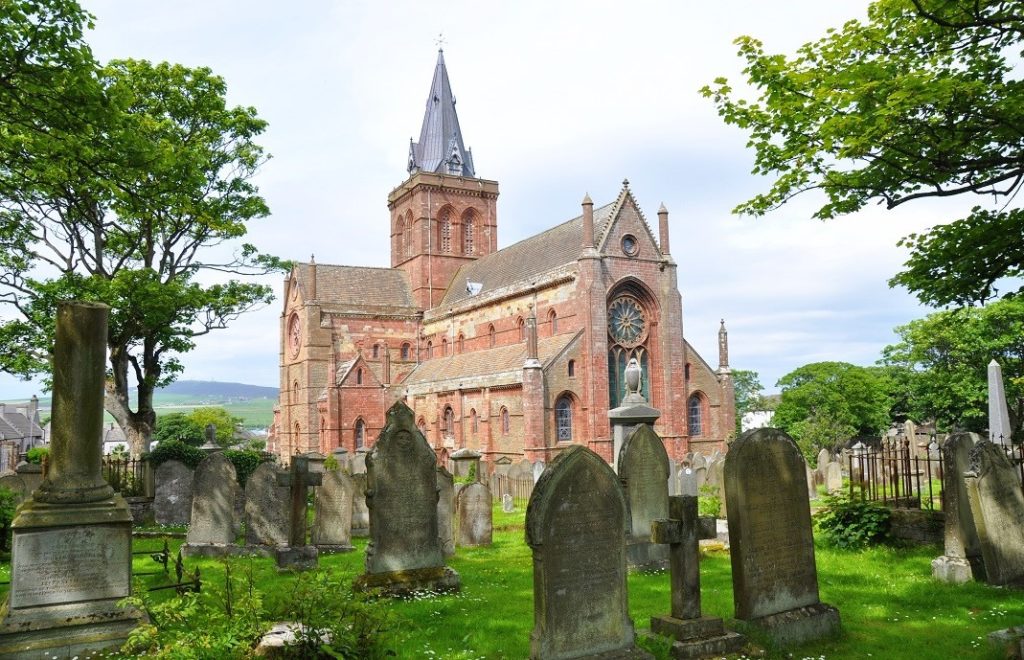
Welcome to the most iconic building in the Orkney Islands – the majestic St. Magnus Cathedral.
With its striking red sandstone façade rising above the skyline of Kirkwall, the cathedral is impossible to miss. Construction began in 1137 and took nearly three centuries to complete, making it not just a landmark, but a labor of enduring devotion.
The cathedral is dedicated to Magnus Erlendsson, Earl of Orkney, who ruled alongside his cousin Haakon Paulsson. Their power-sharing grew tense and bitter, driven by jealousy and ambition, until Magnus was betrayed and martyred on the island of Egilsay in 1115.
In his honor, his nephew Ragnvald commissioned the building of the cathedral – a monument of both faith and family legacy. Today, St. Magnus’s relics are enshrined in a shrine near the altar, a sacred tribute to the man who became a saint.
For nearly 900 years, St. Magnus Cathedral has stood as the spiritual heart of the Orkneys, and today it continues to inspire – as a place of worship, music, exhibitions, and deep reflection.
It is widely considered the best-preserved medieval building in Scotland, and without a doubt, it is the most powerful reminder of Orkney’s Norse heritage – a timeless sanctuary where stone meets story.
7. A wild paradise – Orkney’s incredible wildlife
For animal and bird lovers, the Orkney Islands are nothing short of a natural wonderland – one of the finest places in the British Isles to witness wildlife in its raw, untamed beauty.
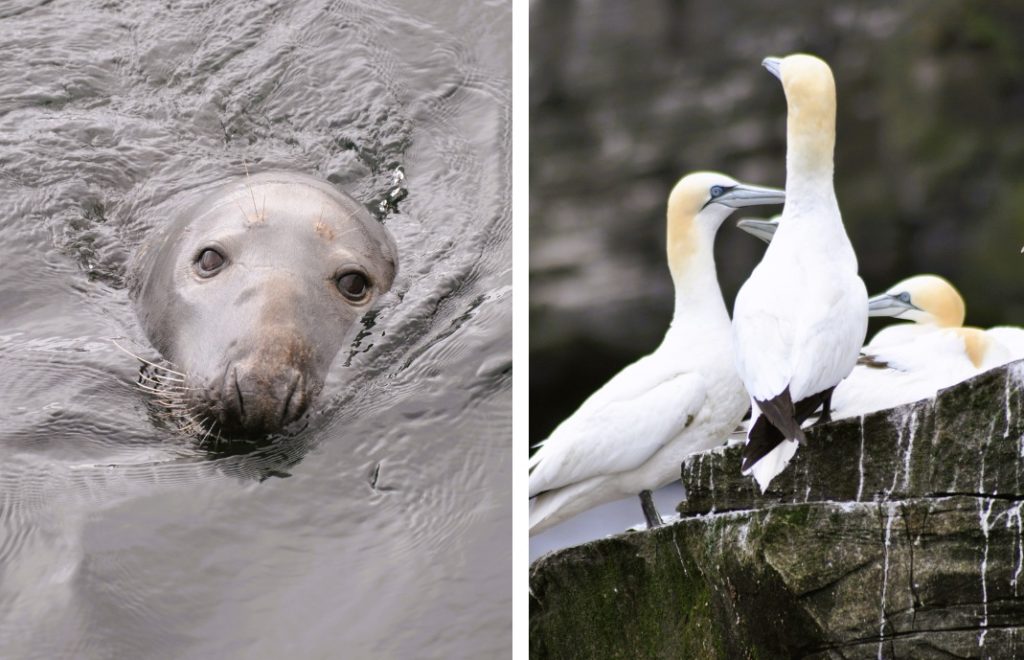
Towering sea cliffs plunge into the Atlantic, providing dramatic nesting grounds for thousands of seabirds. Puffins, kittiwakes, gannets, and gulls fill the skies and ledges with their calls and color.
Venture into the islands’ heathlands and wetlands, and you’ll find yourself in a birder’s paradise. These rich habitats are home to elusive species like the short-eared owl, hen harrier, and a variety of raptors that rule the open skies.
Out at sea – or even while walking along the shoreline – you’ve got a good chance of spotting dolphins, seals, and even the occasional whale surfacing in the waves. A quiet stroll along the beach might reveal crabs, starfish, and other treasures of the tide.
To truly celebrate Orkney’s wild side, don’t miss the Orkney Nature Festival, launched in 2013. It’s a vibrant gathering where locals and visitors come together to celebrate, explore, and be inspired by the islands’ rich biodiversity. From wildlife boat tours to nature photography workshops, it’s a chance to connect deeply with Orkney’s living landscape.
Whether on land, in the air, or beneath the waves, Orkney is bursting with life. So grab your binoculars and camera – because there’s no better place to go wild.
8. Kirkwall –- A capital steeped in Viking Spirit
Kirkwall may be small, but it’s a capital city with a big heart, deep roots, and a soul forged in Viking fire.
The town’s name comes from the Old Norse “Kirkjuvagr”, meaning “church bay,” a nod to its seafaring Norse founders. In 1486, King James III of Scotland officially granted Kirkwall the status of a royal burgh, anchoring its importance in Scottish history.
Today, Kirkwall offers a perfect blend of historic charm and cosmopolitan spirit. Its winding streets, colorful storefronts, and welcoming atmosphere invite you to explore at a relaxed pace.
The main street is lined with pubs, cafés, restaurants, and independent shops, selling everything from artisan crafts to locally distilled gin. You’ll also find a range of hotels, from cozy inns to boutique accommodations – something for every traveler’s style.
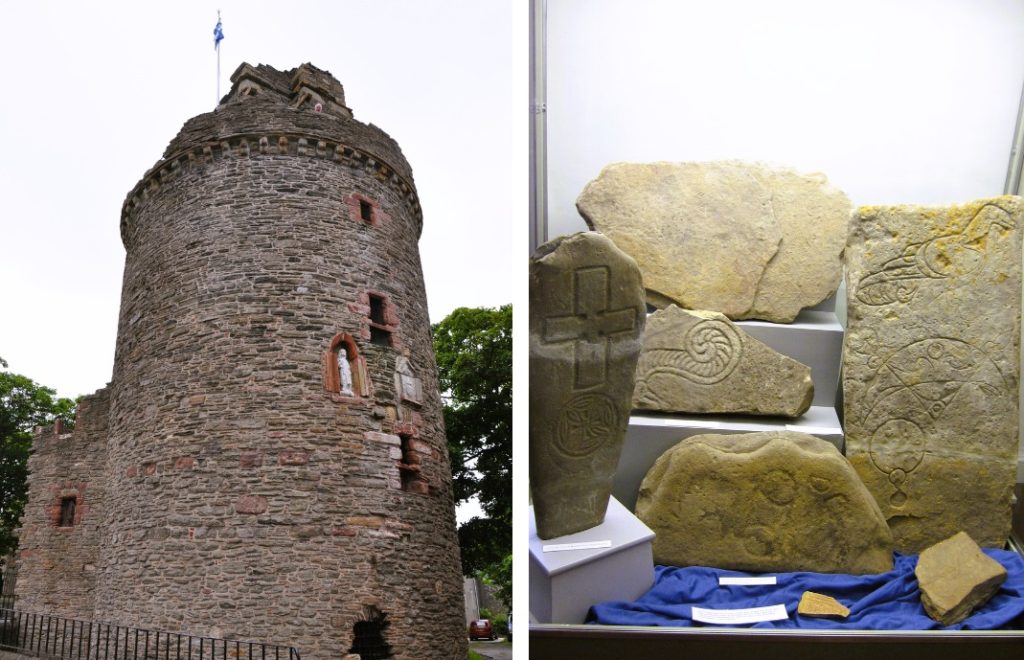
Must-see highlights include the awe-inspiring St. Magnus Cathedral, the fascinating Orkney Wireless Museum, the Earl’s Palace, the lively harbor, and the Orkney Distillery, where you can sample the island’s handcrafted spirits.
With its Viking heritage, rich culture, and warm community feel, Kirkwall is the perfect final chapter to any Orkney adventure – a place where ancient history meets modern island life.
More inspiration to visit the Orkney Islands:
Fantastic Orkney by bike
