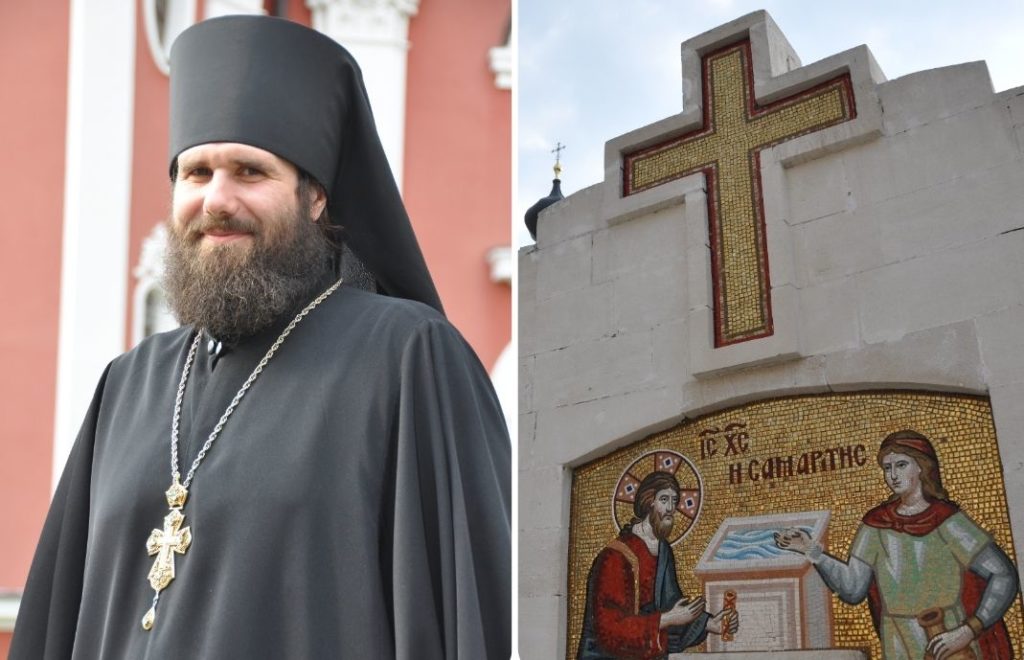
Two stone-faced soldiers stand guard beneath a towering archway, frozen in solemn stillness. Between them, framed in the gateway, is a monk – his long black beard cascading over his chest, hair neatly braided into a ponytail, robes as dark as midnight, hands clasped in silent prayer.
The sun catches him just so, casting a soft glow around his figure – an almost divine radiance. For a fleeting moment, it feels as though I’ve arrived at the Pearly Gates. The monk before me radiates an overwhelming sense of peace and goodness. I half-expect to fall to my knees and beg forgiveness for every sin I’ve ever committed.
But this is no heavenly realm.
I’ve arrived at the Curchi Monastery in Moldova. The man standing before me is Father Lov, and he’s about to guide me on a spiritual journey into the heart of the Orthodox Church.
Into the Holiness
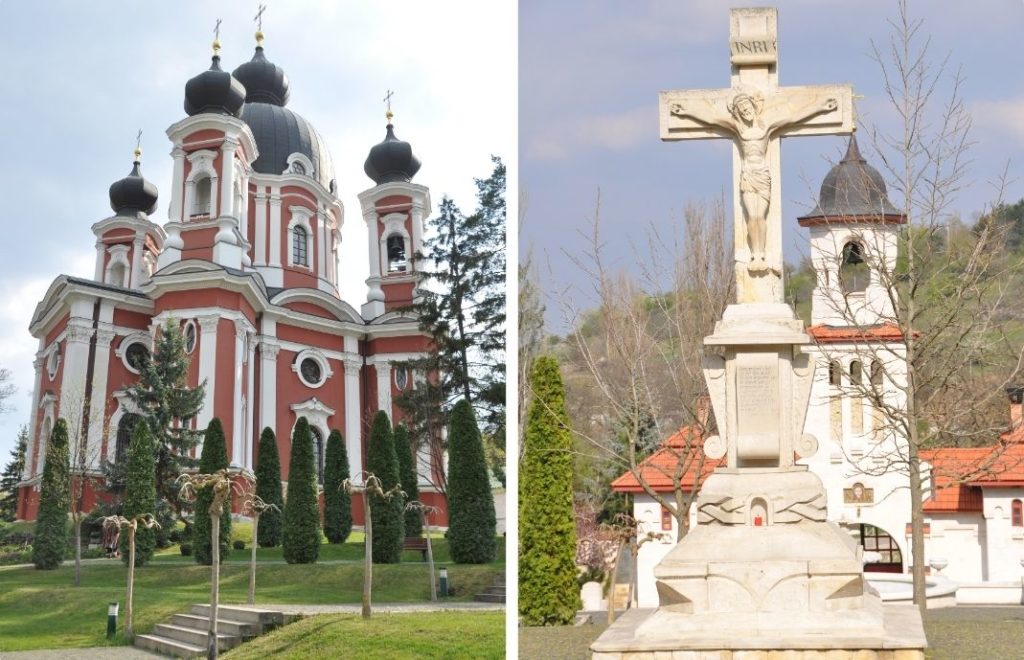
Curchi Monastery isn’t just one of Moldova’s most significant architectural treasures. It’s also among the country’s most breathtakingly beautiful and revered holy sites. Nestled along the banks of the Vatic River, embraced by orchards and forested hills, the setting feels almost cinematic. This monastery is a true gem of Moldova, radiating serenity and spiritual harmony.
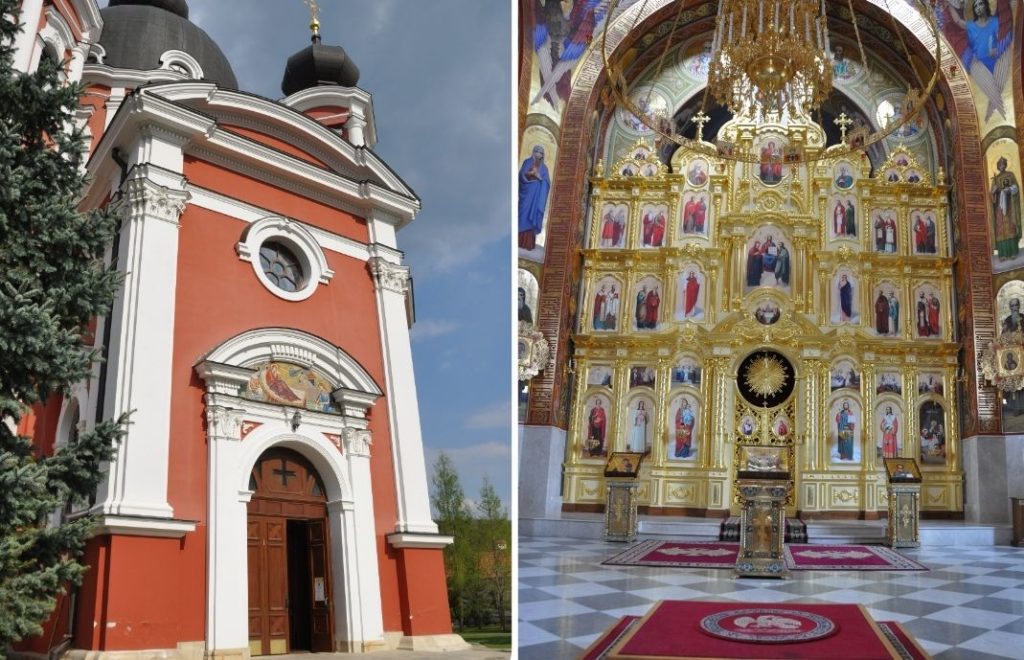
Father Lov leads the way to Nașterea Domnului, the Cathedral of the Nativity, built in 1872. Painted a striking crimson with white trim and topped by jet-black domes, the cathedral is nothing short of spectacular.
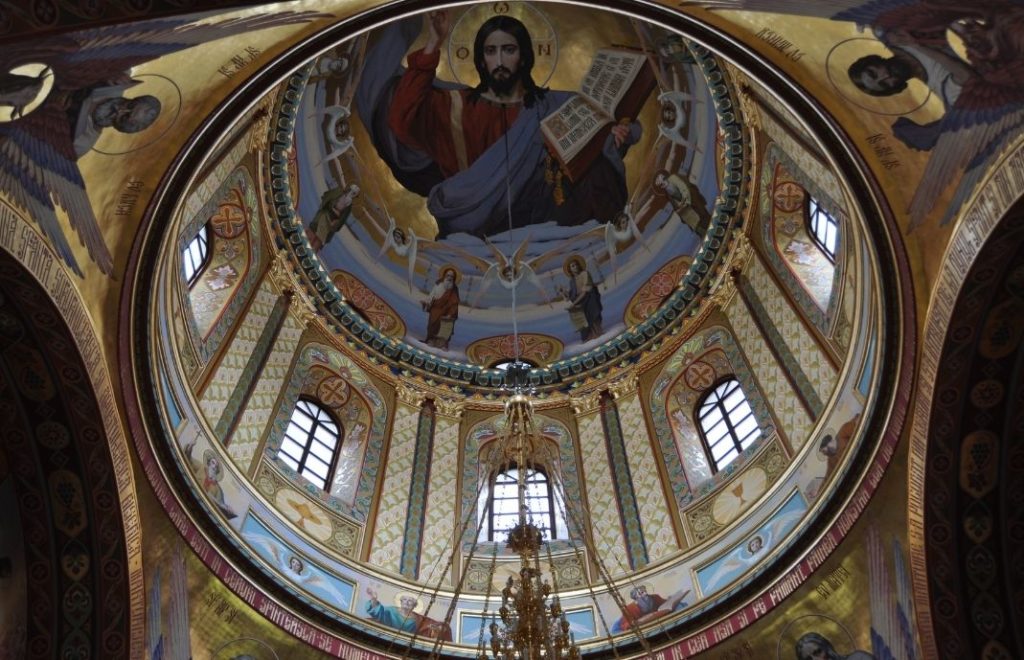
Yet for all its external grandeur, it’s what lies inside that truly captivates. Alone in the vast sanctuary, we’re enveloped by a kaleidoscope of icons, ornate iconostases, and a sense of divine calm. The central dome towers 57 meters overhead – the tallest in all of Moldova – creating a space that humbles and uplifts in equal measure.
Father Lov points and gestures as he explains the sacred symbolism and stories within. He doesn’t speak English, so our guide translates – but even without the words, the reverence in his voice is unmistakable.
The monastery itself is steeped in as much mystery as holiness.
Some stories claim it was founded by the legendary Stephen the Great, in gratitude after a victorious battle. Others speak of two brothers – one known as Lord Curchi – leaders of a band of outlaws who, after murdering an elderly couple in the forest, were haunted by misfortune and grief. Seeking redemption, they turned to God, became monks, and built a small wooden church on the grounds – a humble beginning for what would later rise in stone.
The truth behind the monastery’s origins may be forever lost to time, veiled in legend and faded memory. But standing within its hallowed halls, surrounded by beauty and silence, the stories don’t feel far off. They live on in every stone and shadow.
Curchi Monastery
What we do know for certain is that the monastery’s story began in 1773, when a modest wooden church was first built on the site. Nearly a century later, in 1868, the church was transformed into a monastery – an event now recognized as its official founding.
For many years, Moldova lay under Soviet rule, and Curchi Monastery entered a dark chapter. Religion was forbidden, and between 1959 and 1995, the monastery was repurposed as a psychiatric hospital.
It wasn’t until the early 2000s that a massive restoration project breathed life back into the monastery, returning it to its former glory. Today, it’s easy to see why Curchi is celebrated as one of Moldova’s most beautiful and spiritually resonant monastic complexes.
The grounds include more than just the grand cathedral. There’s also the wooden church of St. Demetrius, dating back to 1755, a stone church built in 1810, and the unfinished winter church of St. Nicholas, whose construction spanned from 1936 to 1939.
Every structure here, whether fully restored or still bearing the marks of time, adds to the monastery’s atmosphere of quiet reverence and layered history. A place where beauty, faith, and resilience intertwine.
When the monk starts pouring …
Our guide suddenly announces that Father Lov would like to invite us for tea and cake – a delightful surprise, and certainly not something we had anticipated. But when someone who communes directly with higher powers offers you hospitality, you don’t say no. We accept without hesitation.
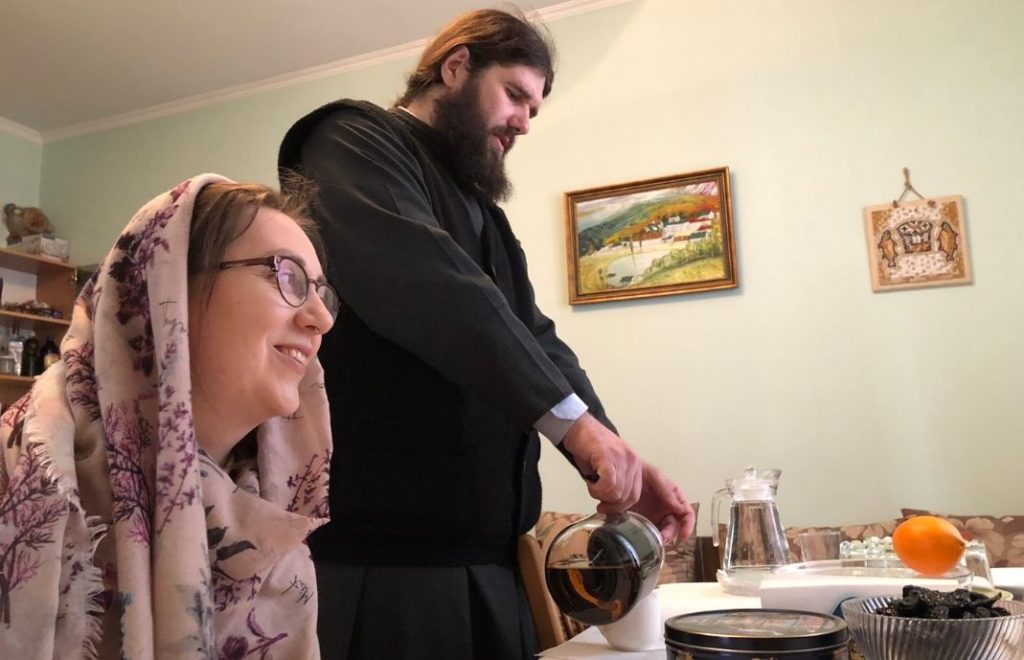
Inside the monastery’s cozy little kitchen, the air is warm and inviting. Father Lov sets both tea and coffee to brew, and soon the table is laden with cakes, fruit, and gentle hospitality. Ever the gentleman, he circles the room with the serving tray each time someone wants another bite.
But the humble monk is also deeply curious. He asks thoughtful questions about Norway – our culture, values, and way of life. Three cups of tea later, we’ve covered everything from education and politics to religion and Nordic customs.
Then comes a moment we didn’t see coming. With a smile, the sweet-hearted monk declares that we must toast to our new friendship. I glance down at my empty teacup, silently thinking I don’t want to drink another drop.
But Father Lov has other plans. He’s not thinking of tea. He’s thinking of… cognac.
That was the last thing I expected from a man in flowing black robes. Yet, without a trace of irony, he rises, retrieves a bottle of cognac, and pours it with the practiced grace of a seasoned bartender.
I rarely drink, and I’ve never been fond of cognac. But this moment is too rich, too rare, too beautifully absurd to decline.
We raise our glasses and teach our new friend to say skål (cheers) in Norwegian. Naturally, he nails the pronunciation on the first try.
The liquid burns as it goes down. Tears well in my eyes. Father Lov and the guide probably think I’m overcome by the emotional gravity of the moment. In truth, the cognac is just very strong.
But Father Lov isn’t done. One toast becomes two… then three. He declares that the bottle must be finished. By the third round, I’ve forgotten that I dislike cognac. The burn has vanished, replaced by a mild blur to my vision and a surprising warmth in my soul.
Then, just as I’m wondering what comes next, the monk rises, dons a tall black hat, places a heavy gold cross around his neck, and announces:
“Come, my friends. It is time for the service.”
A (bit) tipsy in the House of God
With steady, purposeful steps, this remarkable man – Father Lov – makes his way toward the winter church of St. Demetrius. I follow behind him, a little less steady on my feet.
What, I wonder, will the higher powers think of me – showing up to church slightly tipsy (because let’s be honest, that’s exactly what I am)?
We’re not alone. Several locals have gathered, heads bowed, quietly awaiting the procession of priests. The air is thick with reverence. Icons line the walls, and candles flicker in hushed devotion.
Then, the doors to the sanctuary open wide. A procession of around ten priests and monks, including Father Lov, steps solemnly into the space.
Incense fills the room – a central element in Orthodox liturgy, without which the ceremony would feel incomplete. A priest swings a beautifully crafted censer, sending fragrant plumes wafting across the icons and congregation. Worshippers reach for the smoke, drawing it toward their chests in a deeply symbolic act.
The prayers are chanted in a language I don’t understand, but the resonance of their voices rolls like thunder through the church. The priests and monks move rhythmically through the space, and I feel entirely swept away. This is, without question, the most spiritual moment I have ever experienced.
Eventually, the clergy retreat once more behind the sacred doors. Our guide gently waves us toward the exit. It’s time to return to the modern world. I shake my head, trying to pull myself out of the trance-like state I’ve slipped into.
Never – never – in my wildest dreams did I imagine I’d be sipping cognac with a monk in a remote monastery, only to find myself moments later, slightly intoxicated, participating in a mystical Orthodox mass.
But this is Moldova. And anything, it seems, is possible here.