
While most travelers come to Svalbard for its outdoor thrills and Arctic landscapes, stepping indoors can be just as rewarding – especially at the Svalbard Museum.
Located in the Svalbard Science Center and opened in 1979, this thoughtfully curated museum takes you on a compelling journey through 400 years of Svalbard’s history. As you wander through its engaging exhibits, you’ll discover the intimate ties between sea and land, nature and culture, that have shaped life in this remote archipelago.
In true Svalbard tradition, remember to remove your shoes (or cover them with provided plastic) when you enter. It’s a custom dating back to the coal mining days, when keeping soot out of buildings was essential. It’s a small gesture, but one that instantly immerses you in local life.
The Svalbard Museum is the perfect place to gain context and depth before – or after – your Arctic adventures.
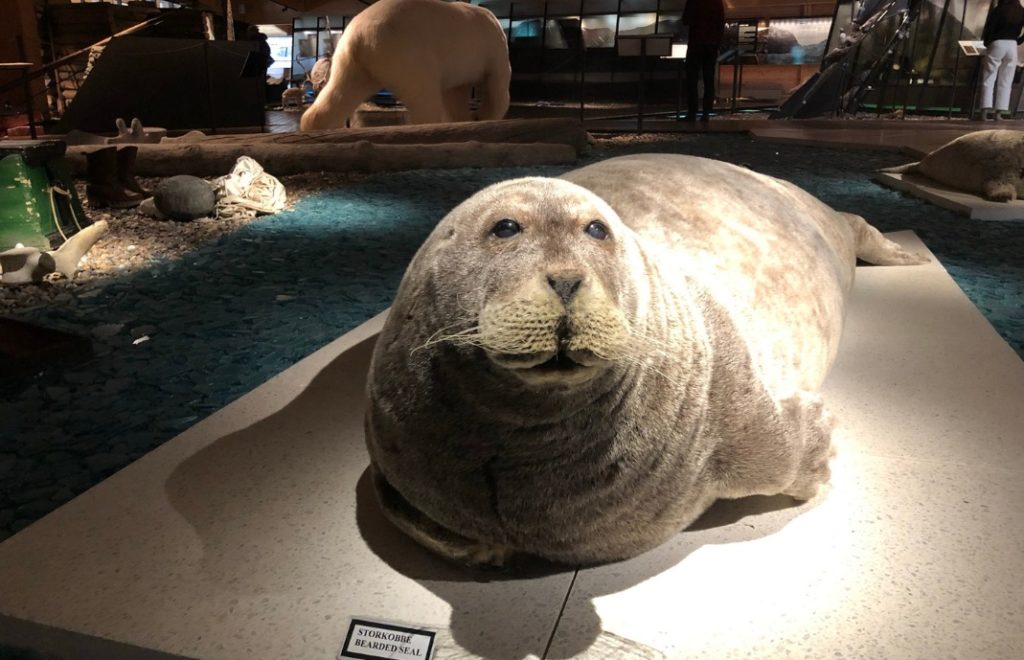
Svalbard Museum – A quiet journey through Arctic time
Barefoot and full of anticipation, you step into the Svalbard Museum, ready to journey through the fascinating story of life on the edge of the Arctic.
Though modest in size, the museum is rich in artifacts, photographs, and interpretive displays – more than enough to keep you captivated for hours. The dim lighting and calm atmosphere invite slow exploration, encouraging visitors to take their time and absorb the stories held in these walls.
With a collection of over 55,000 objects and 25,000 photographs, the museum paints a vivid picture of Svalbard’s past and present. Its permanent exhibition guides you through 400 years of cultural history, showcasing tools, relics, and remnants left behind by those who came before.
From flora and fauna to mining, geology, tourism, and scientific research, the Svalbard Museum offers a beautifully layered understanding of this remote and remarkable archipelago.
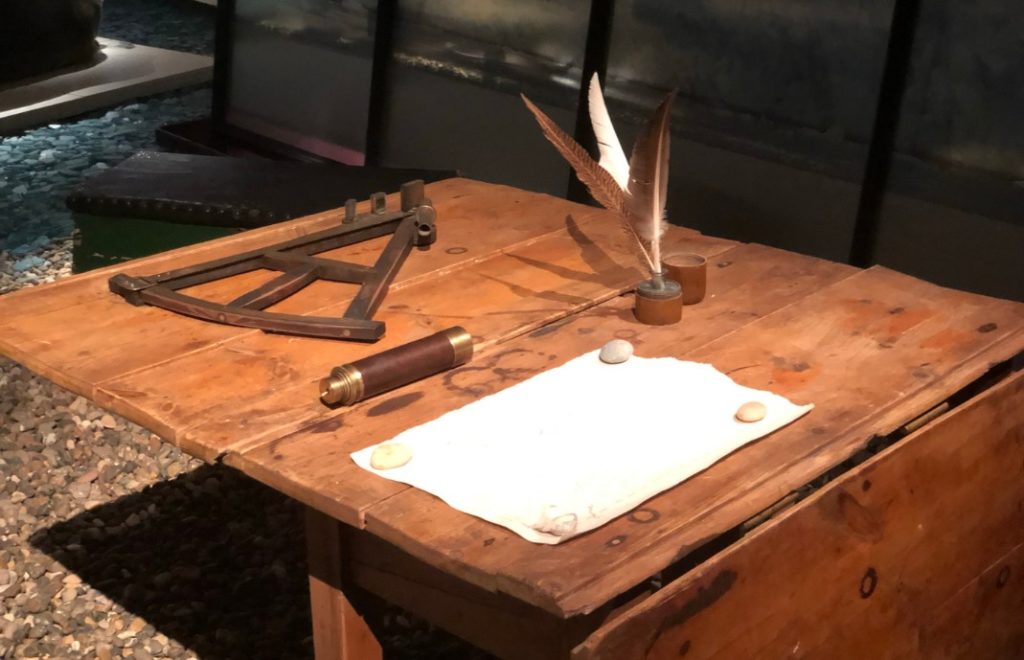
A museum for everyone – from curious kids to Arctic enthusiasts
The Svalbard Museum is designed to engage visitors of all ages, making it a perfect stop for families exploring the Arctic together.
Children will find plenty to spark their imagination – from digging for plesiosaurs (a long-extinct marine reptile) to crawling through a recreated mine entrance, there’s hands-on fun around every corner. Many of the exhibits and models are placed at child-friendly heights, ensuring even the smallest explorers feel included.
When your Arctic curiosity is satisfied, unwind in the cozy “Inner Arctic” lounge – a quiet space where you can relax with a book or simply gaze out at the tundra landscape just beyond the glass.
At the Svalbard Museum, discovery comes with comfort, making it a thoughtful, enriching experience for the whole family.

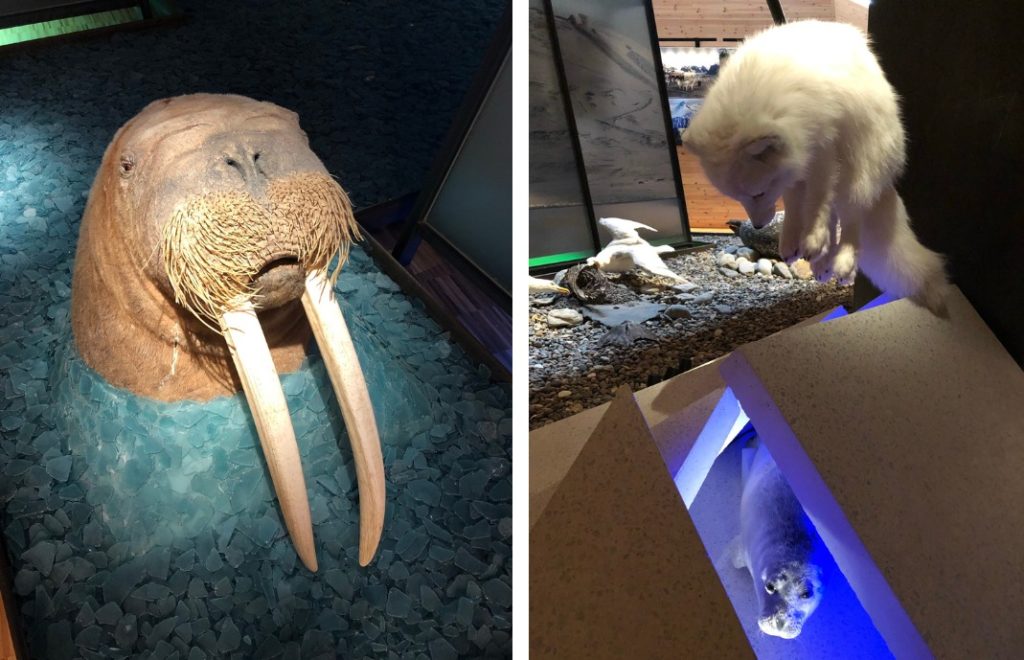
The “Birthing Den” – a hidden refuge in the ice
With the help of their powerful front claws, ringed seals are able to create breathing holes deep within solid sea ice – accessing remote, frozen territories that no other seal species can reach.
Above these breathing holes, the seals dig snow dens, where they rest and, crucially, where females give birth to their pups. These birthing dens, known as kastehull in Norwegian, offer vital shelter from the harsh Arctic weather and provide some level of protection from predators.
If a polar bear or Arctic fox begins digging through the roof of the den, the noise alerts the seal, giving it a precious moment to escape into the water below.
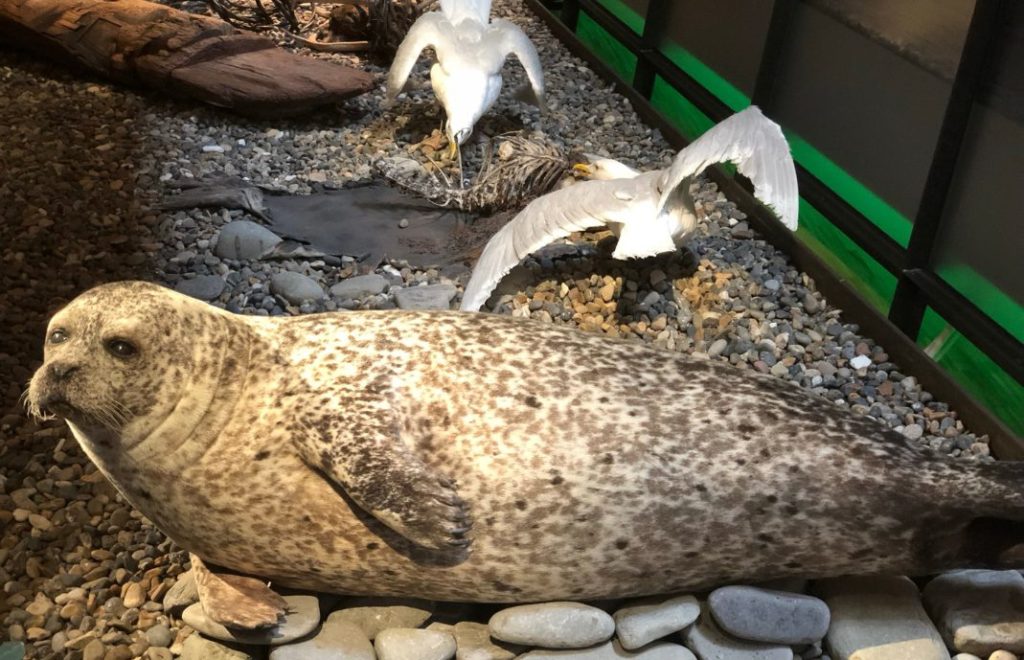
Despite these adaptations, young ringed seals face many natural threats – including Arctic foxes, polar bears, glaucous gulls, and ivory gulls – all skilled hunters of vulnerable pups hidden beneath the snow.
Key facts about the Svalbard Museum
The Svalbard Museum is a must-visit cultural stop in Longyearbyen.
General information
- Founded: 1979
- Location: Housed in the Svalbard Science Centre in Longyearbyen
- Open: Daily, except on May 17 (Norwegian Constitution Day)
- Entrance rule: Visitors must follow local tradition and remove their shoes or wear protective covers
Exhibitions & collections
- Permanent Exhibition: Covers 400 years of human and natural history on Svalbard
- Themes include:
- Arctic flora and fauna
- Geology and climate
- Whaling, hunting, and coal mining history
- Scientific research and modern tourism
- Collection size:
- Over 55,000 objects
- Around 25,000 photographs
- Design: Exhibits are dimly lit and thoughtfully arranged to create a calm, reflective experience
- Child-Friendly: Features interactive elements like a mining tunnel and fossil dig area for kids
Special features
- “Inner Arctic”: A relaxing lounge area with books and views over the tundra
- Location Relevance: Situated in the world’s northernmost town with year-round human activity
- Multilingual: Information panels are available in Norwegian and English
The Svalbard Museum offers an intimate, well-curated introduction to life in the High Arctic – past and present – making it an ideal stop before or after your polar adventures.
More inspiration to visit Svalbard:
Woof, woof in the Arctic wilderness
A coal-black encounter in Mine 3
The Svalbard Code of Conduct
Check-In: Svalbard Hotell Polfareren
Pyramiden – The Ghost Town of the Arctic
