
It’s hard to imagine a creature more charming than the puffin.
With their brightly colored beaks and waddling gait, these adorable birds – often called “sea parrots” or “clowns of the sea” – are among the most beloved sights in the Orkney Islands, delighting both locals and visitors alike.
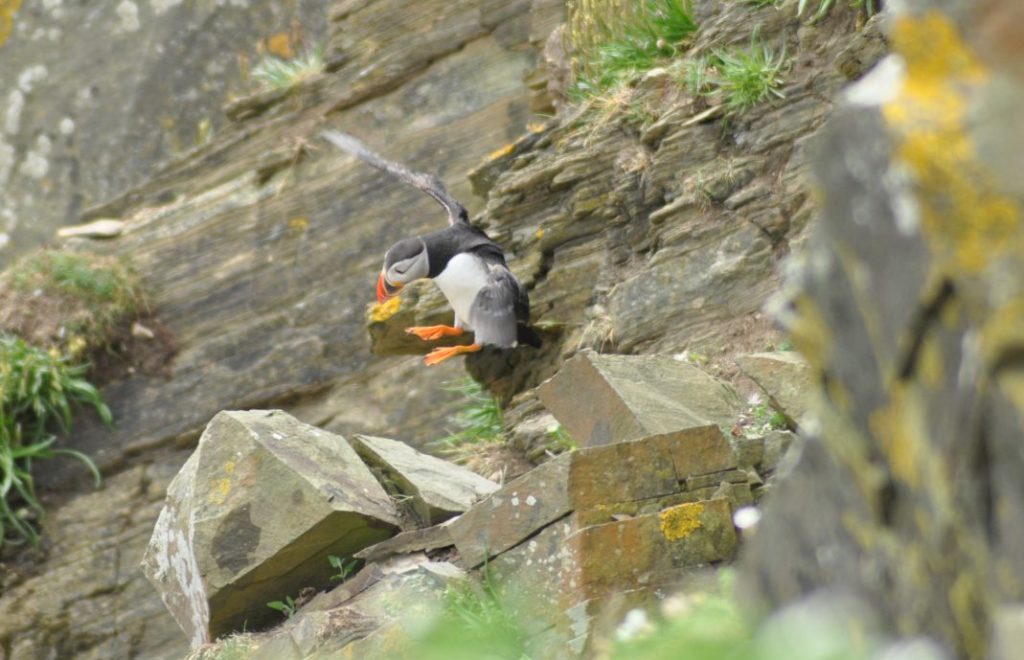
Standing no taller than 30 centimeters, puffins spend most of their lives out at sea. But in April and May, they return to the coastal cliffs of Orkney to nest. Puffins are faithful to their chosen nesting sites, returning year after year to the same spot. As colony nesters, they often gather in large groups on grassy cliffs and rocky outcrops.
In May and June, the female puffin lays a single egg – usually deep in a burrow up to two meters long, or tucked into rocky crevices or scree slopes. Both parents share incubation duties over the next 40–45 days.
After hatching, the chick remains in the burrow for six to ten weeks, until it’s strong enough to head out to sea on its own. Once the fledgling leaves the nest, it begins its solitary life – entirely independent of its parents.
By August, the puffins vanish from the cliffs, returning to the open sea until the next breeding season. So if you want to see them in the Orkneys, you’ll need to plan your visit carefully – their window on land is short, but unforgettable.
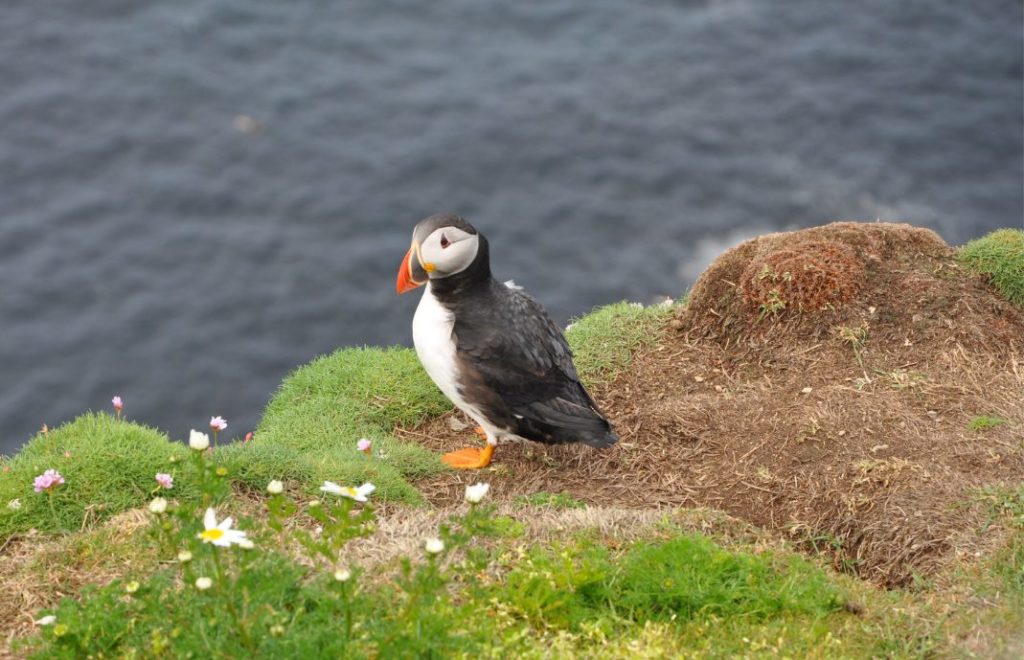
Castle of Burrian, Westray
Widely considered the best place to see puffins in the Orkney Islands, the Castle of Burrian is a must-visit for birdwatchers and wildlife lovers alike.
Located on the eastern coast of Westray, this narrow sea stack offers ideal nesting grounds for hundreds of puffins, who return here each spring and summer to raise their young. The surrounding cliffs form a natural amphitheatre, giving visitors excellent vantage points without disturbing the birds.
Bring a pair of binoculars, and you’ll be rewarded with up-close views of these colorful, charismatic seabirds as they perch, preen, and flap about on the cliffs. Whether you’re a seasoned birder or simply enchanted by the puffin’s charm, Castle of Burrian is an unforgettable stop on any Orkney adventure.
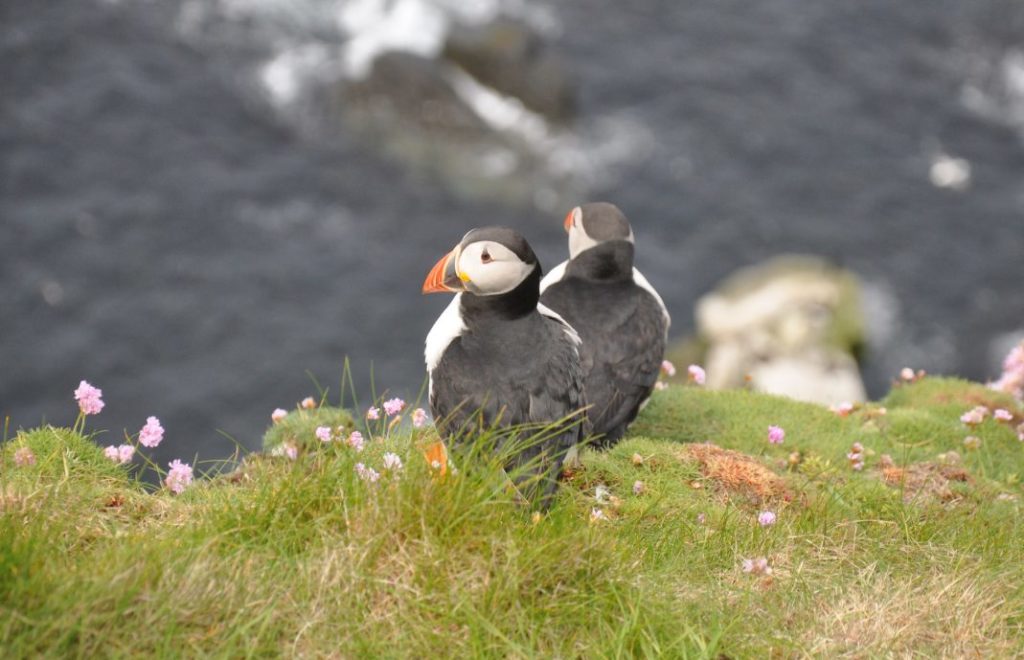
RSPB Hoy Nature Reserve, Hoy
The island of Hoy is a spectacle in itself, with its dramatic landscapes and raw natural beauty. A vast expanse of wild moorland sweeps down to some of the highest sea cliffs in Britain, creating a scene that is as breathtaking as it is untamed.
Perched on these cliffs – particularly near the iconic Old Man of Hoy – you’ll find thriving colonies of puffins, nesting alongside a cacophony of other seabirds. The constant flurry of wings and the lively chorus of calls make this a vibrant, noisy haven for birdlife.
This RSPB reserve offers not only a chance to see puffins up close in their natural habitat but also a deeper appreciation for the rugged wildness that defines Hoy. It’s a place that stirs the soul – especially when those colorful little birds make their seasonal return to the cliffs.
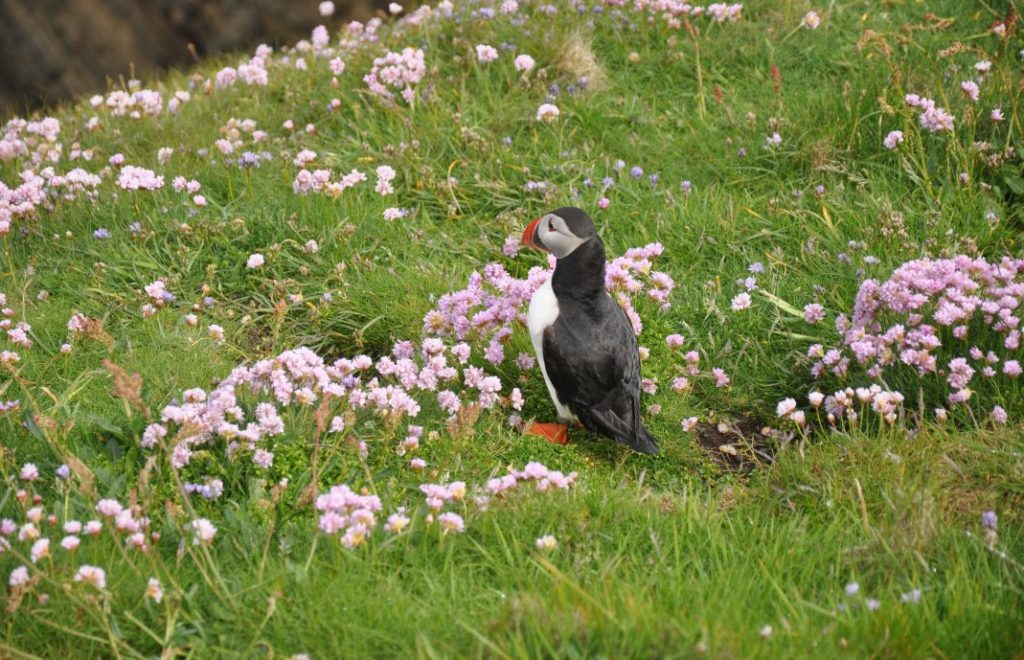
RSPB Marwick Head, West Mainland
Marwick Head is another of Orkney’s true birding havens – home to thousands of seabirds that flock to these towering cliffs each breeding season.
While puffins do nest here, they share the cliffs with vast colonies of guillemots, kittiwakes, and fulmars, making it a bit of a challenge to spot them at first. But don’t worry – if you scan the grassy patches and rocky crevices, those distinctive bright orange beaks will soon catch your eye.
Bring patience, a good pair of binoculars, and maybe a flask of tea, and you’ll be rewarded with views of puffins popping in and out of burrows, nestled among the cliffside chaos. It’s a dramatic and rewarding place to connect with Orkney’s wild coastal life.
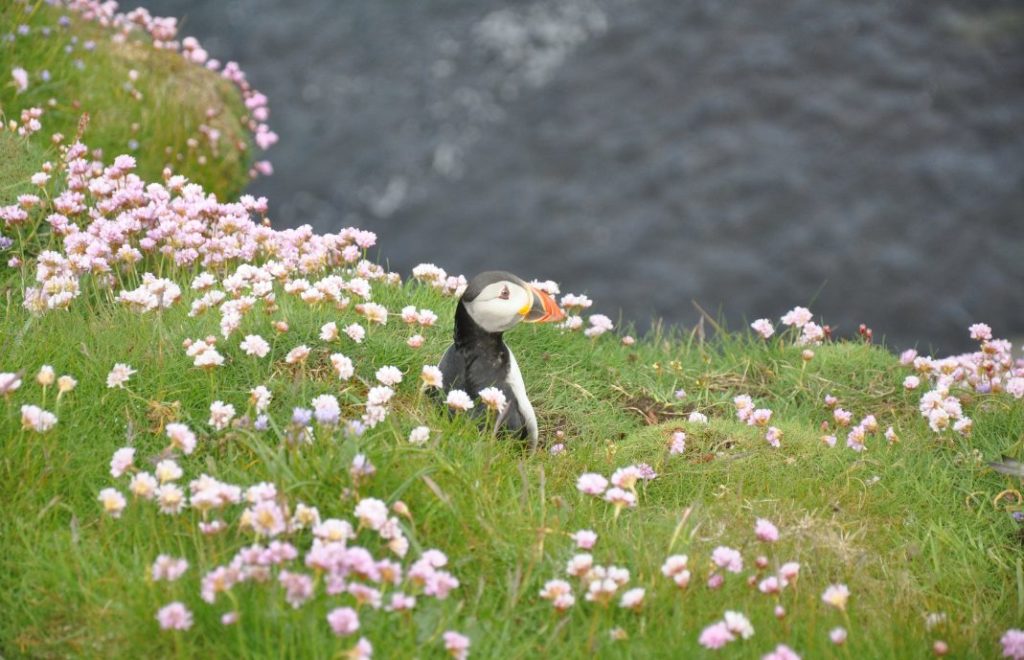
Brough of Birsay, West Mainland
Perched off the west coast of Orkney’s Mainland, the Brough of Birsay is a small tidal island that offers not only sweeping sea views and Norse ruins – but also some of the best puffin-watching in the area.
You’ll find puffins nesting along the cliffs surrounding the island, especially near the lighthouse on the western edge, where they dot the grassy ledges and rocky crags with their signature bright beaks and curious expressions.
But timing is everything – Brough of Birsay is only accessible at low tide. Check tide times carefully and give yourself plenty of time to explore and return before the sea rises again. For up-to-date access info and safety tips, it’s a good idea to stop by the Skara Brae visitor centre or a local tourist office before heading out.
And if you’re still on the puffin trail, don’t miss Papa Westray and Stronsay – two more Orkney gems where these beloved seabirds make their seasonal homes.
More inspiration to the Orkney Islands:
8 reasons to fall in love with the Orkney Islands
Fantastic Orkney by bike
