
At first glance, Pyramiden appears to be a typical industrial settlement – complete with buildings, factories, monuments, and grid-like streets. But one crucial element is missing: people.
Tucked beneath a pyramid-shaped mountain in a remote corner of Svalbard, Pyramiden is a deserted Soviet mining town, once hailed as a model society and prestige project. What remains today is a frozen-in-time relic of a bold communist dream, left behind when the town was abandoned in 1998.
Now, its most frequent visitors are gulls, Arctic foxes, and the occasional polar bear – alongside curious travelers in search of one of the world’s most haunting and fascinating ghost towns.
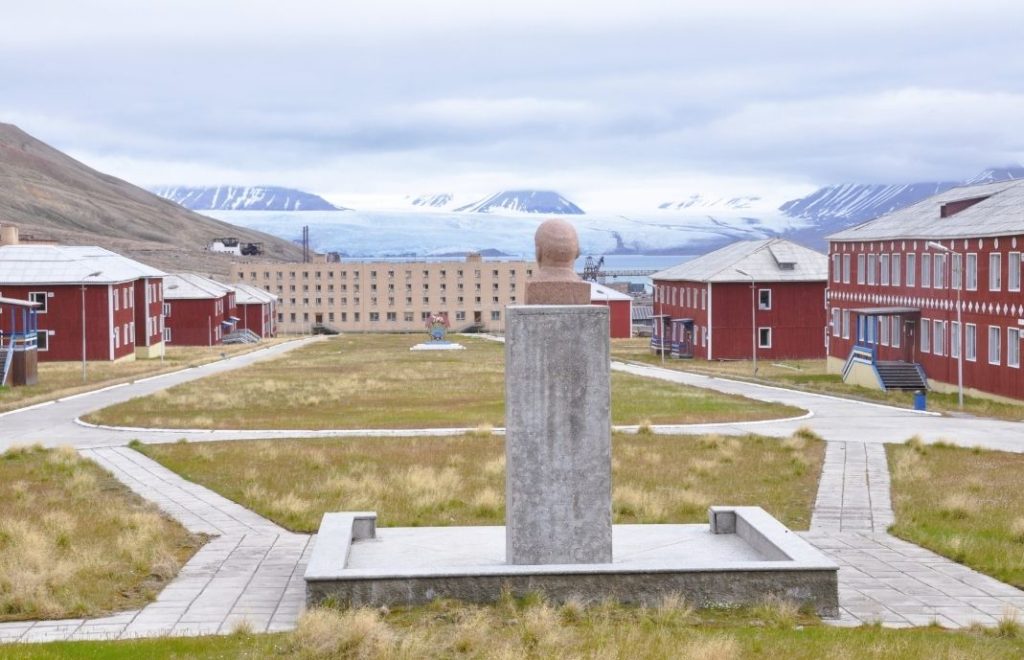
Rusting industrial structures, empty apartment blocks, a Lenin bust still watching over the central square – Pyramiden is both eerie and captivating, a surreal blend of Soviet ambition and Arctic wilderness.
Whether you’re drawn by history, photography, or the thrill of exploring the edges of civilization, a visit to Pyramiden offers a truly otherworldly experience – and a glimpse into a place where time stands still.
The history of Pyramiden – from Soviet Utopia to Arctic Ghost Town
The story of Pyramiden begins not with Russia, but with Sweden, who founded the settlement in 1910. It was sold to the Soviet Union in 1926, and while initial exploration took place, it wasn’t until after World War II that mining operations truly ramped up.
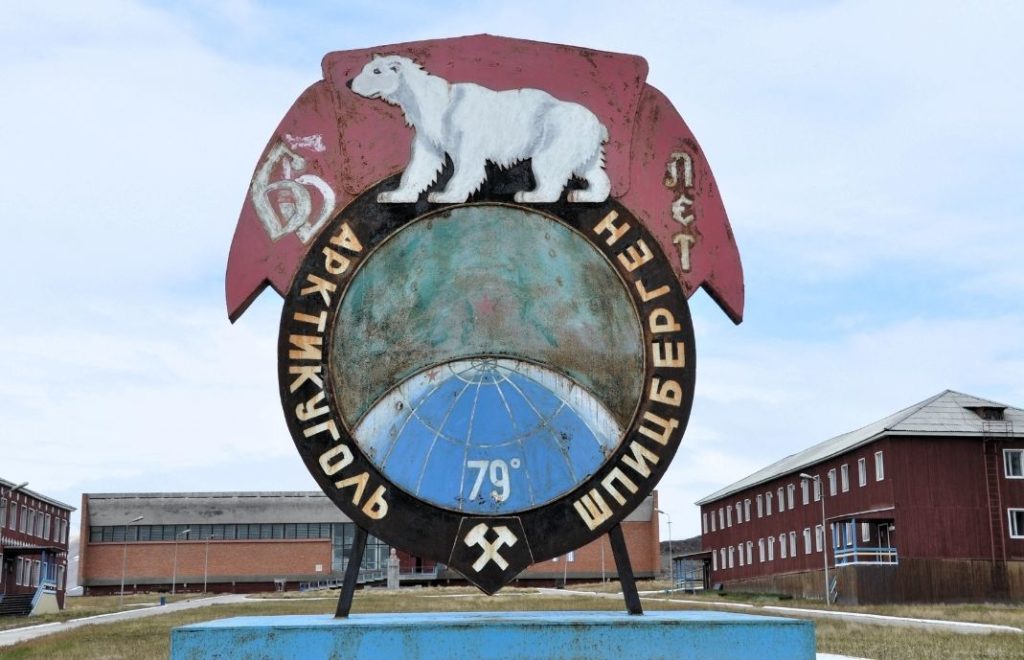
In the post-war years, the Soviet Union was desperate for coal to fuel its reconstruction – especially as many mines in the Donbass region had been destroyed during the war. In 1946, the Soviets reestablished mining operations in Pyramiden and founded the coal company Trust Arktikugol, meaning “Arctic Gold.”
Pyramiden became much more than a mine – it became a prestige project. Situated at nearly 79 degrees north, the Soviets envisioned it as a model society at the edge of the world. By the 1980s, over 1,000 people lived in this isolated Arctic town.
It was a fully functioning community, with:
- A fuel station
- Greenhouses and barns
- A school and kindergarten
- Housing blocks, a restaurant, a hotel
- And even sports facilities, including a grand indoor gymnasium and swimming pool
At the heart of the town, a bust of Lenin still stands proudly, gazing eastward toward the magnificent Nordenskiöld Glacier, surrounded by grass that was imported from Siberia – a surreal detail in this remote, icy environment.
After 53 years of continuous operation, Pyramiden’s story came to an end. In April 1998, Trust Arktikugol shut down the mine due to:
- Falling global coal prices
- Increasing difficulty in extraction
- A devastating plane crash at Operafjellet in 1996 that claimed 141 lives, many from the mining community
Today, only a handful of caretakers and guides remain in Pyramiden, working to preserve and restore what’s left of this once-vibrant Arctic outpost.
Pyramiden now stands as a haunting yet captivating monument to Soviet ambition, Arctic resilience, and the impermanence of even the most idealistic utopias.
Iron dogs in the sea – a cold farewell from Pyramiden
Life in Pyramiden was governed not only by routine and regulations, but by the quiet weight of expectation. Most workers came to the Arctic mining town on fixed-term contracts, often far from home and family. For some, one tour of duty was enough. Others hoped to stay longer. But in true Soviet fashion, whether you returned was not entirely your choice. It depended on your performance.
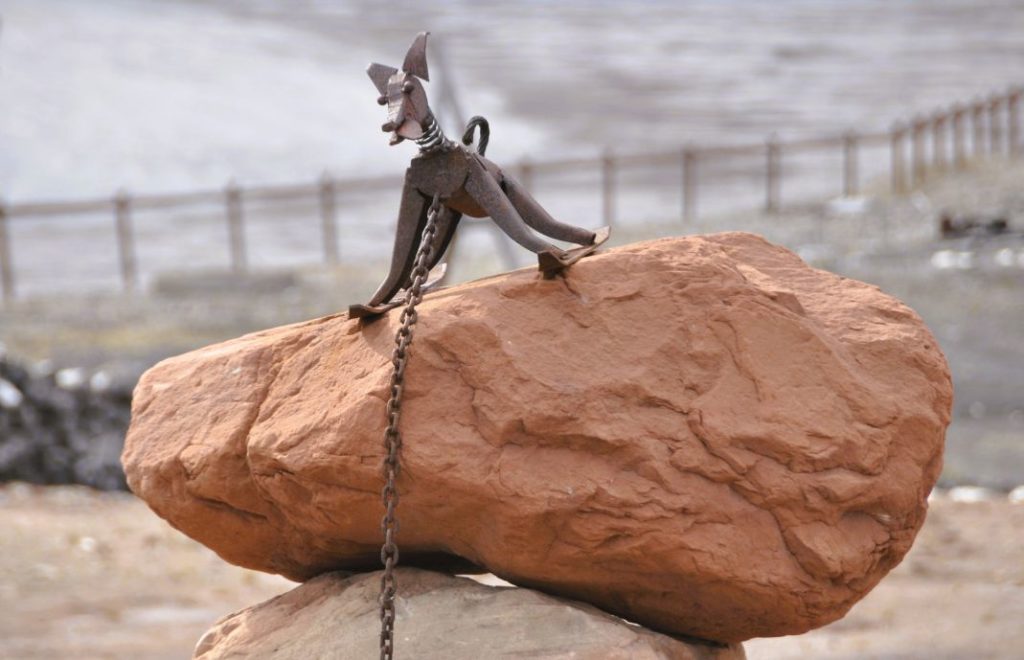
At the end of a contract, workers received a symbolic farewell gift: a small iron dog.
But this wasn’t a gesture of affection – it was a performance rating cast in metal.
A small iron dog meant you had done well – you were welcome to return.
A large dog? It meant the opposite: you had not met expectations, and your presence was not wanted back.
Understandably, the gesture didn’t sit well with everyone.
In a final act of defiance – or perhaps frustration and heartbreak – many departing workers threw their iron dogs into the sea from the dock before boarding the ship home. To this day, it’s said that the seabed near Pyramiden’s harbor is littered with heavy, rusting iron dogs, each one a silent symbol of ambition, judgment, and disappointment in the Arctic cold.
A haunting footnote in the story of a ghost town – where even loyalty had weight, and farewells came with sharp canines.
Pyramiden – The Ghost Town that time forgot
Just under a kilometer from the dock lies Pyramiden, the abandoned Soviet mining town now frozen in time – literally and figuratively.
As you walk in, you pass the town’s only phone booth with coverage. Once, every resident made their calls from here, braving the cold Arctic wind just to reach the outside world.
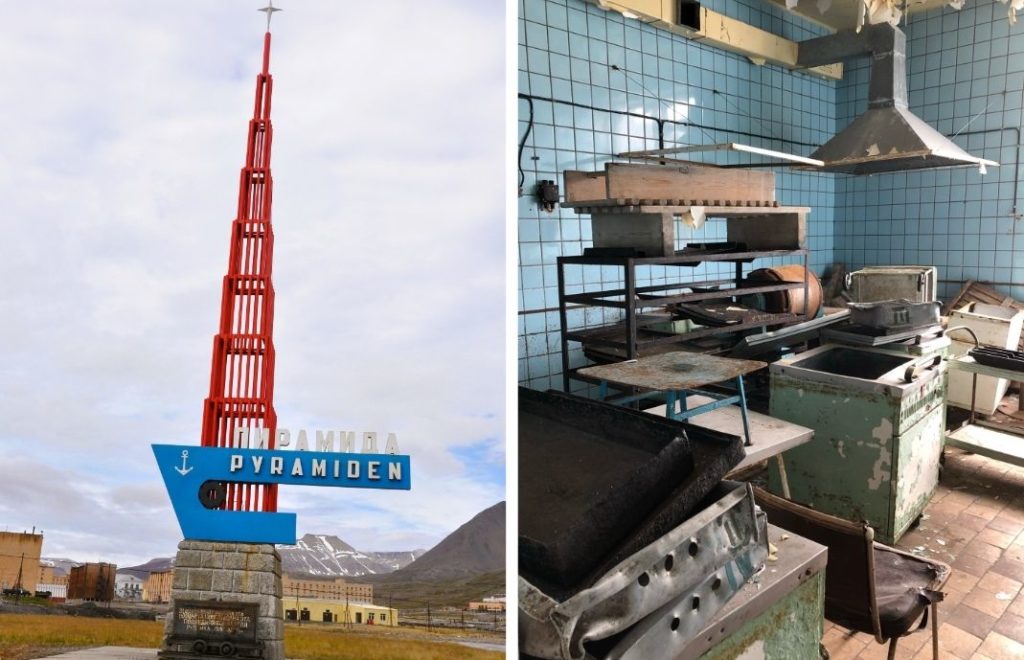
Then comes the iconic Pyramiden sign, its bold red, white, and blue backdrop bearing the town’s name in both Cyrillic and Latin letters – a symbolic echo from a vanished era. It stands proudly, defiantly, as if refusing to be forgotten.
At the town’s entrance, you’re met by a Russian guide – armed, due to the ever-present risk of polar bears. From here, you step not just into a ghost town, but into a surreal time capsule.
In Pyramiden, it feels as though life simply paused.
- Cups still sit on tables.
- Faded newspapers cling to bulletin boards.
- Ski boots and poles rest in the entryway as if their owners might return any moment.
- Wilted plants remain in the dining hall.
- Ropes sag in the empty swimming pool.
- A lone handball waits in the gym, as if ready to be thrown.
Eerie. Haunting. Mesmerizing.
This Arctic ghost town doesn’t just tell a story – it whispers it from the walls, corridors, and frosted windows. A place where the air is heavy with nostalgia and lost ambition, where every snow-dusted step is a journey through the rise and fall of a Cold War utopia.
Visiting Pyramiden is not just about exploring an abandoned town. It’s about feeling the pulse of history, still faintly beating beneath the silence.
Your visit to Pyramiden – a walk through Soviet dreams
As you wander the quiet, icy streets of Pyramiden, it’s hard not to be struck by the eerie stillness – and the ambition that once echoed here.
This wasn’t just any mining town. It was a grand Soviet experiment, a showcase meant to prove that communism could thrive—even at 79° north, in a remote corner of the permafrost.
Pyramiden was a utopia in miniature.
- Salaries were good.
- Social benefits generous.
- Community spirit strong.
- No one lacked what they needed.
There were no kitchens in the homes – the canteen was open 24/7, always staffed, always stocked. You could simply drop in whenever hunger struck.
- Living arrangements were structured and strategic:
- Single men and women lived in separate buildings.
- Families had their own blocks.
- The tallest buildings, at a modest 4–5 storeys, were affectionately called “Arctic skyscrapers”, nicknamed London, Paris and the like.
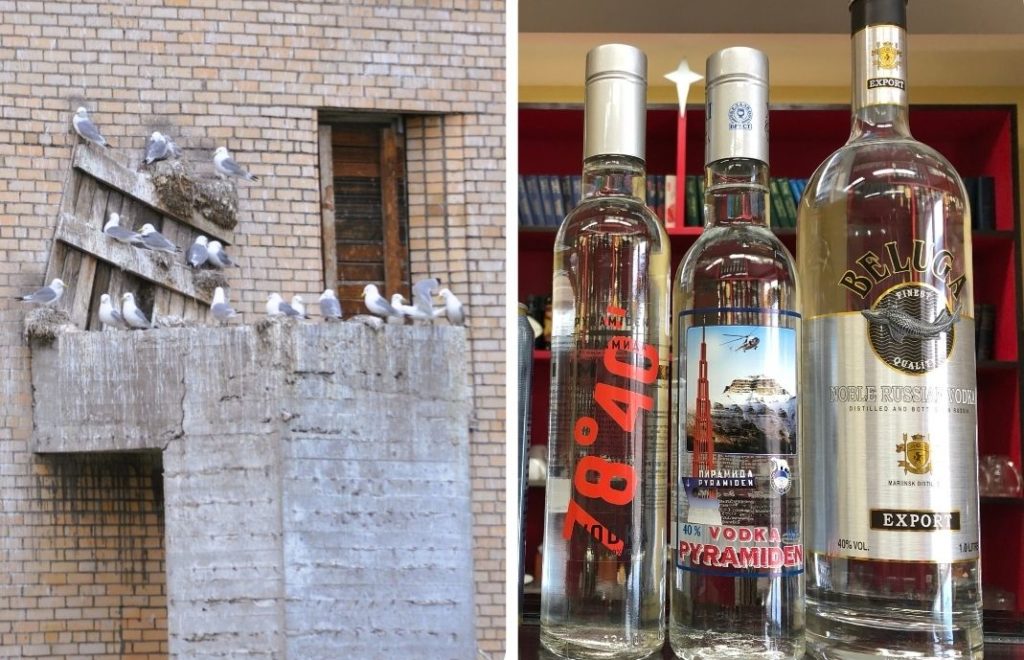
Today, those towers are ruled by colonies of gulls, circling above like restless ghosts.
Yet the heart of Pyramiden still beats – softly.
- The old hotel remains open, housing both the dedicated caretakers and intrepid tourists.
- The café/restaurant serves hearty Russian fare, with a side of nostalgia. Sip on a shot of vodka, nibble on Soviet chocolate, and toast to a time that once was.
To visit Pyramiden is to step into a living museum – not of artifacts, but of ideals, dreams, and faded glory. The silence speaks volumes. And if you listen closely, it tells the story of a world that tried to rewrite the rules of survival.
How to get to Pyramiden
To visit Pyramiden, you must join an organized tour departing from Longyearbyen. This isn’t a place you stumble upon – it’s a destination you earn, and the journey there is part of the adventure.
The Route
Tours to Pyramiden are conducted by boat or RIB (rigid inflatable boat) and take around one hour, weather permitting. The passage through Svalbard’s icy fjords is breathtaking, with rugged cliffs, floating ice, and a chance to spot wildlife like seals, whales, seabirds – or even a polar bear.
Along the way
On the way out, your guide will often make short stops at historic remnants of old trapper cabins and research stations – silent witnesses to Svalbard’s polar past. It’s not uncommon to pass glacier tongues or spot arctic foxes prowling the rocky shores.
The return via a glacier
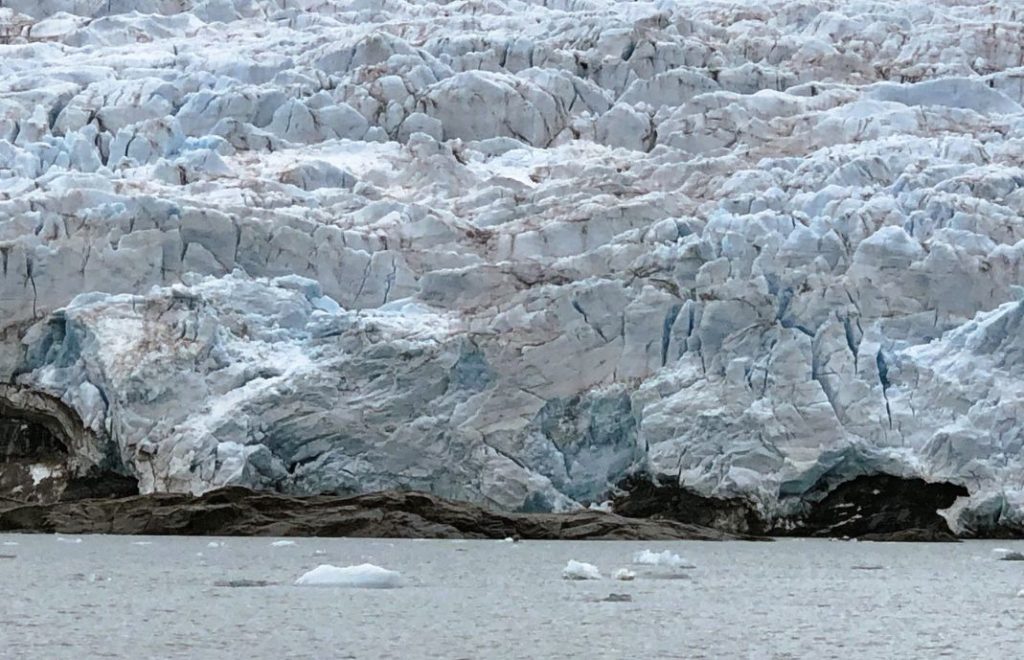
On the return leg, many tours detour to the stunning Nordenskiöld Glacier, nestled at the head of Billefjorden. This colossal glacier stretches 25 km in length and spans hundreds of meters in width – a wall of blue ice named after the pioneering Finnish-Swedish geologist Adolf Erik Nordenskiöld, who led several Spitsbergen expeditions and was the first to sail to 81°N in 1868.
Insider tips:
- Book in advance, as these tours are weather-sensitive and fill up fast during the high season.
- Dress warmly in windproof, waterproof gear – the Arctic chill is real, even in summer.
- Bring binoculars and a fully charged camera – this is a photographer’s dream.
Getting to Pyramiden is not just travel – it’s time travel. One moment you’re cruising through the raw, icy wilderness. The next you’re walking through the hushed streets of a Soviet ghost town, frozen in time.
A big thank you to Svalbard Adventures for inviting me. There are no requirements from the supplier regarding posting or promotion on social media. Opinions and photos are, as always, my own.
More inspiration to Svalbard:
Woof, woof in the Arctic wilderness
Svalbard Museum – Ice, history, and tradition
A coal-black encounter in Mine 3
Check-In: Svalbard Hotell Polfareren
The Svalbard Code of Conduct
