
Welcome to the world’s northernmost town – a place unlike anywhere else on Earth.
Perched high in the Arctic, Longyearbyen may be small, but it’s remarkably cosmopolitan: around 2,400 residents from 54 nations call this remote community home. The result is a tiny yet vibrant town with an atmosphere you won’t find anywhere else.
Longyearbyen is also the gateway to experiences that feel almost otherworldly. Here, the wilderness begins the moment you step outside your door – a vast, untouched landscape of glaciers, mountains, and Arctic silence that seems to stretch on forever.
It’s a place full of contrasts and surprises. For visitors, almost everything feels new, unusual, and fascinating. For locals? It’s just daily life at the top of the world.
Here are 7 surprising (and slightly unusual) facts about Longyearbyen – things you probably didn’t know before planning your Arctic adventure.
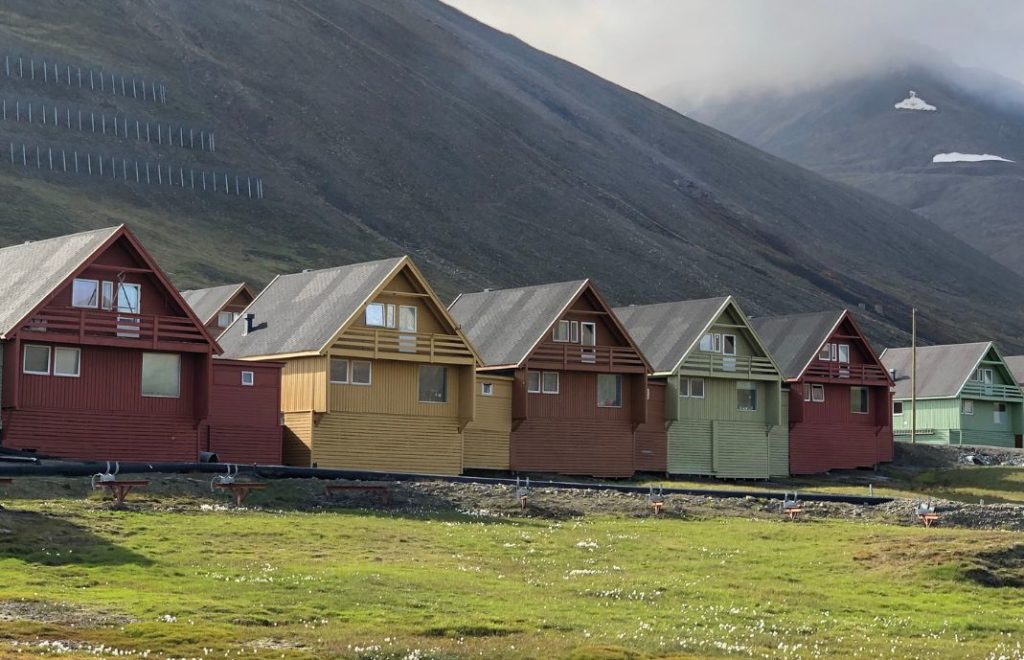
1. Take your shoes off!
One of the first surprises in Longyearbyen greets you before you’ve even stepped inside: you must take off your shoes. Not just in private homes, but also in hotels, museums, restaurants, and even some shops.
The tradition dates back to the early mining days, when workers returned from the coal mines covered in dust. To keep buildings clean, everyone removed their boots at the door – and the custom simply never disappeared.
Today, you’ll still find rows of shelves or baskets by the entrance where visitors leave their shoes. Most places provide indoor slippers, or you can bring your own cozy socks.
It feels a bit unusual at first, but it’s one of the small, charming reminders that Longyearbyen is a community shaped by harsh nature, practical habits, and a deep sense of Arctic tradition.
And honestly? It’s incredibly relaxing to wander around in socks in the world’s northernmost town.

2. Rudolf is wandering the streets
In most towns, you look both ways for cars.
In Longyearbyen, you look for reindeer.
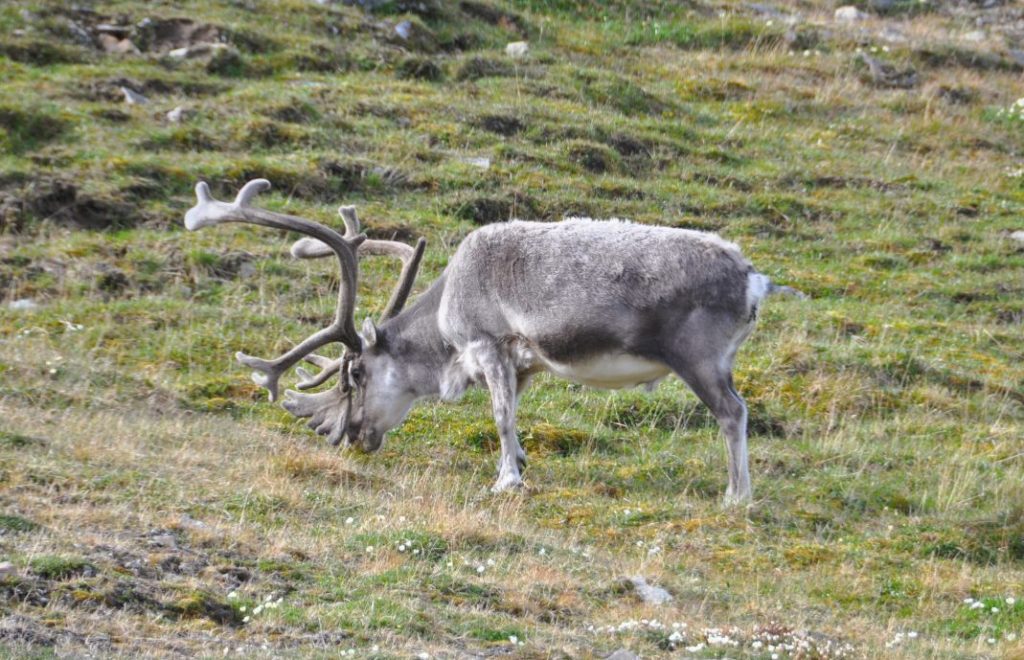
Svalbard reindeer roam freely across the settlement, and it’s completely normal to spot them grazing between houses, strolling past the supermarket, or blocking the road like they own the place – and in some way, they do.
Unlike mainland reindeer, Svalbard reindeer are smaller, fluffier, and incredibly calm. They are not aggressive and rarely shy away from people, which makes encounters both magical and surprisingly close.
But there is one important rule: Admire them from a distance.
These animals may look like characters from a Christmas movie, but they are wild, protected, and deserve plenty of space.
On Svalbard, Rudolph’s nose isn’t red – but it is remarkable. It warms up the icy air the reindeer breathe in. In just the short moment it takes for the air to travel from nose to lungs, it is heated from –40°C to +38°C. The colder it gets, the more efficiently the nose works.
Seeing reindeer casually walking through town is one of the most endearing reminders that in Longyearbyen, nature isn’t something outside the city – it is the city.
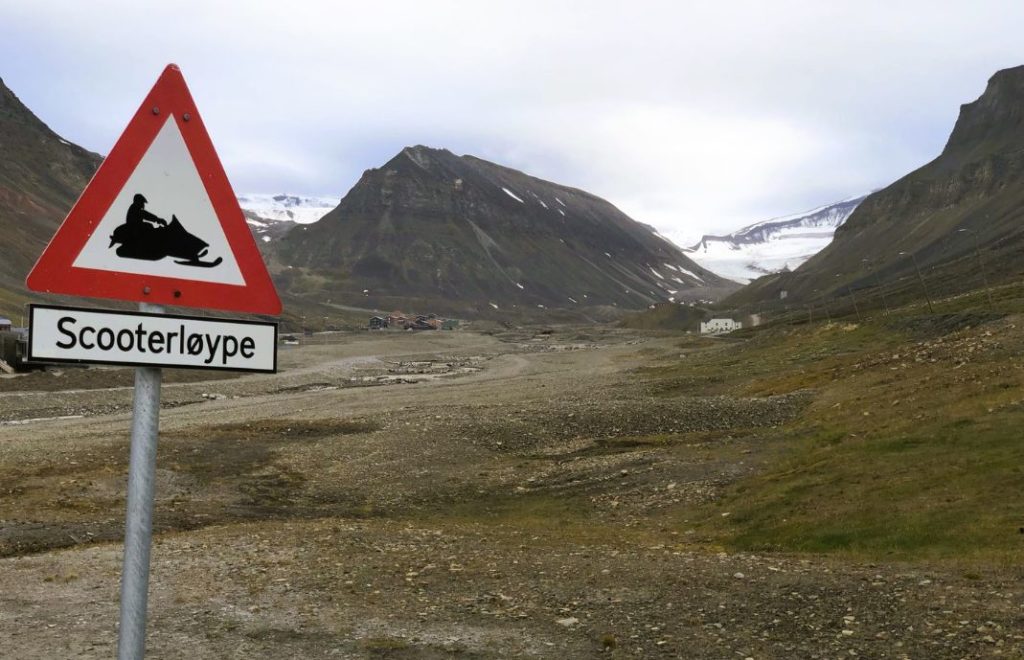
3. There are separate roads for snowmobiles
In most places, snowmobiles are a novelty.
In Longyearbyen, they’re simply transportation.
With no roads connecting the town to the rest of Svalbard – and winter dominating most of the year – snowmobiles (locals call them snowscooters) are the most practical way to get around. So practical, in fact, that Longyearbyen has its own network of snowmobile routes, separate from regular roads.
These marked trails stretch out from town and across the wilderness, linking valleys, glaciers, cabins, and remote research stations. During peak season, you’ll see long lines of scooters heading out on adventures while cars stay parked.
A few fun details:
- Snowmobiles outnumber cars by a huge margin.
- Locals use them for everything – commuting, grocery runs, weekend trips.
- There are even “snowmobile parking lots” around town.
If you visit in winter or spring, chances are you’ll end up on a scooter yourself. It’s the most thrilling way to experience Svalbard’s endless white landscapes – and the clearest sign that life here follows Arctic rules, not mainland ones.
4. The old ration-card system for alcohol still exists
Longyearbyen may feel modern and international, but one tradition firmly rooted in its past is still very much alive: alcohol rationing.
Yes – even today, locals use a ration card to buy certain types of alcohol.
The system dates back to the early mining days, when the Norwegian authorities wanted to prevent excessive drinking in the isolated settlement. Life was harsh, dark, and dangerous, and alcohol abuse posed real risks in such an extreme environment.
Surprisingly, the rules never disappeared.
Here’s how it works today:
- Residents must show a personal alcohol card to buy strong liquor and beer over 4.7%.
- Each person has a monthly quota, stamped or registered at purchase.
- Visitors can buy alcohol freely at bars and restaurants, but not at the state-run liquor store without the right paperwork.
While it may sound strict, most locals see it as a quirky part of Svalbard life – one more reminder that Longyearbyen isn’t just any town. It’s a small, remote Arctic community with traditions shaped by survival, isolation, and a unique history.

5. All the pipes run above ground
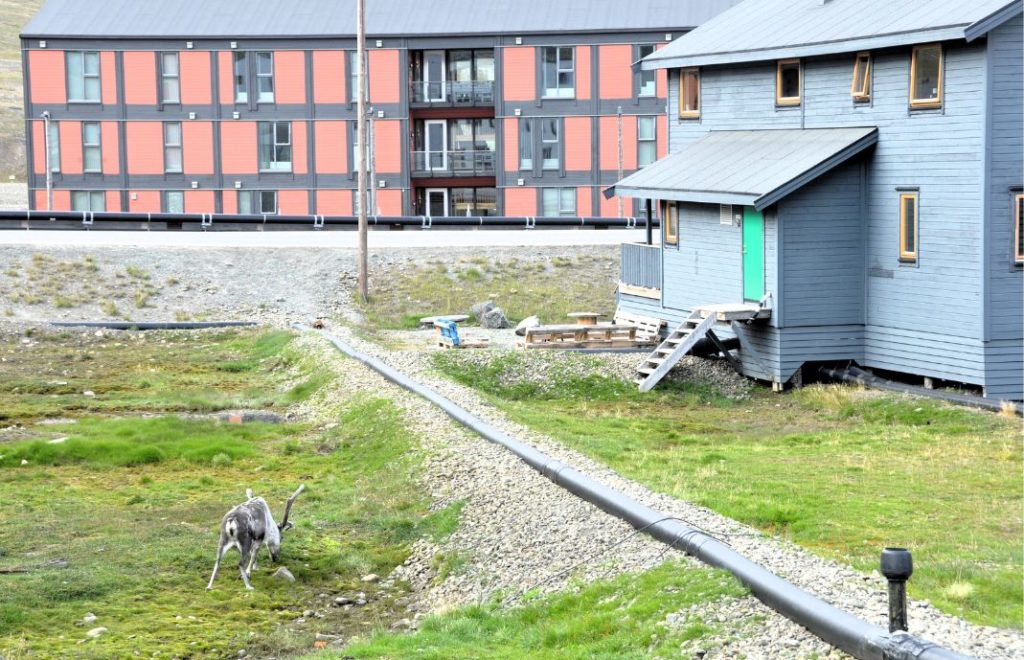
Take a walk around Longyearbyen, and you’ll notice something unusual: All the pipes are above the ground.
Water pipes, sewage pipes, heating pipes – everything runs through insulated tubes that snake across the landscape or are mounted on stilts. It looks a bit like a sci-fi outpost on the moon.
Why?
Because the entire town sits on permafrost – permanently frozen ground. If you dig into it or bury warm pipes underground, the heat will melt the permafrost, causing the ground to shift and buildings to collapse. Keeping the infrastructure above ground protects the frozen foundation Longyearbyen is literally built on.
And speaking of frozen ground…
It’s also the reason why people are no longer buried in Longyearbyen. The cemetery stopped accepting burials in the 1950s.
The permafrost is so cold, so stable, and so preserving that bodies never decompose. When scientists investigated graves from the early 1900s, they found them astonishingly well-preserved – including samples of the Spanish flu virus. This raised serious health concerns.
It’s one of the most unusual – and haunting – aspects of living in the Arctic. Permafrost protects the town, shapes daily life, and even dictates what happens after death.
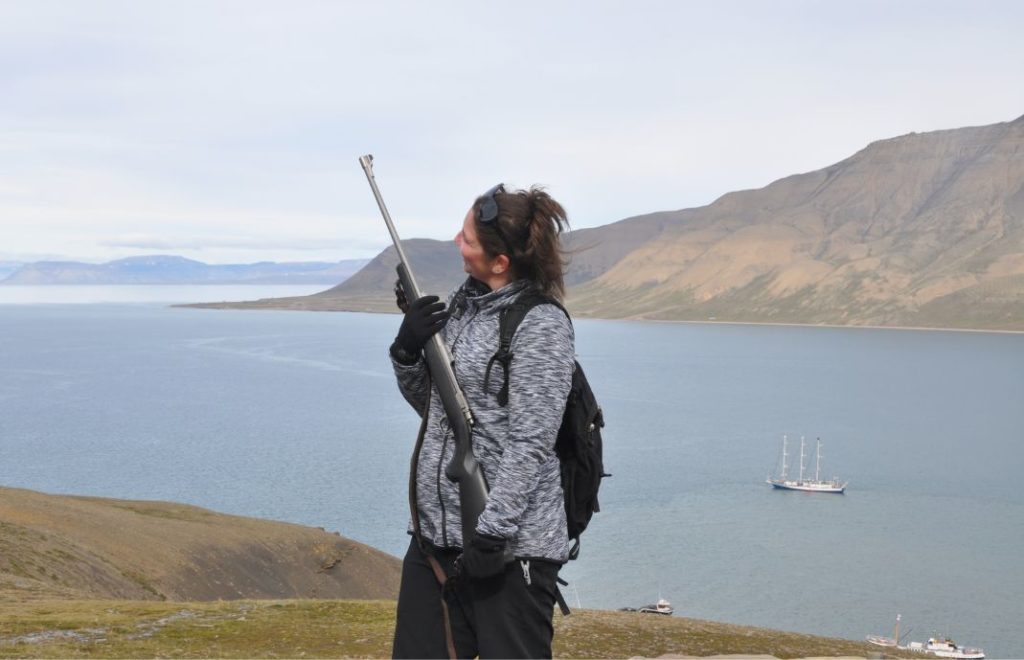
6. It’s normal to carry a weapon everywhere
In most places, carrying a rifle in public would be alarming.
In Longyearbyen, it’s simply part of staying safe.
Svalbard is polar bear territory, and polar bears can be found anywhere outside the town limits. Because of this, it is mandatory to carry protection when you leave the settled area – usually a rifle, sometimes a flare gun, and ideally both. It’s not about hunting; it’s about deterrence and survival.
Here’s what visitors should know:
- You cannot walk outside the town boundaries without proper polar bear protection.
- Only people with the correct training and permits may carry rifles.
- Guided tours always bring safety equipment, so you never have to carry a weapon yourself.
- Inside Longyearbyen, weapons must be unloaded and secured.
For locals, grabbing a rifle before heading out on a hike is as normal as grabbing a jacket. It’s not dramatic – it’s practical. The rule isn’t about fear; it’s about respect for one of the Arctic’s most powerful animals.
The locals usually take a trip to the store or a restaurant after their hike.
What do they do with the weapon?
They are looked in an armory of course.
Restaurants, hotels, shops and public buildings all have a secure armory. The owner can either place the weapon himself or have an employee do it.
Seeing people with rifles on their backs may feel surreal the first time, but it’s one of the clearest reminders that Svalbard isn’t just remote – it’s wild.
7. The ultimate fashion statement is a reflective vest
Paris has couture.
Milan has runways.
Svalbard has… reflective vests.
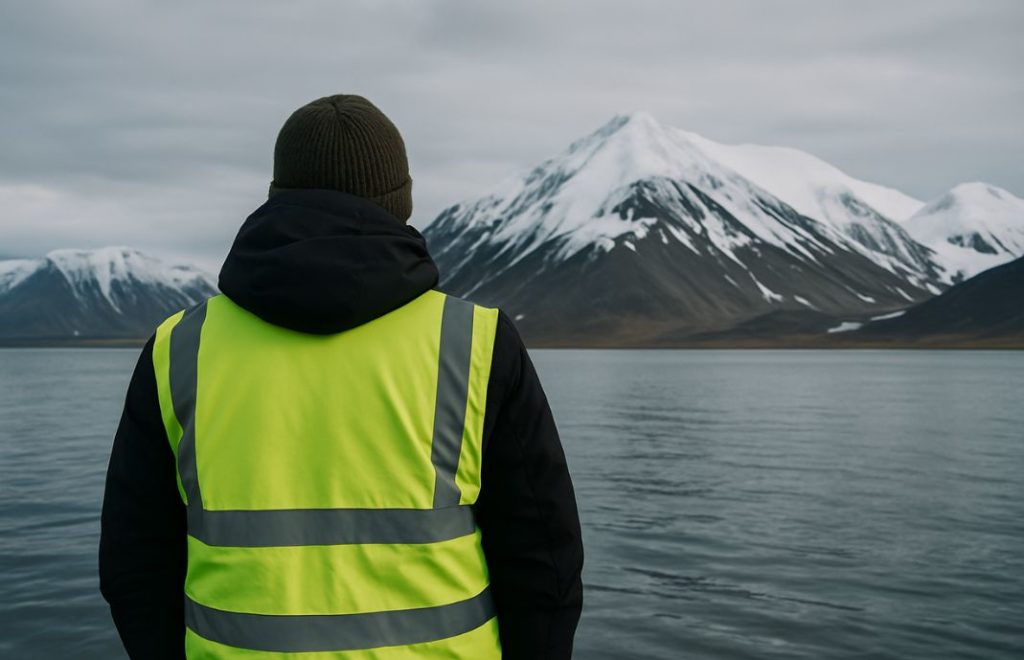
In Longyearbyen, the most practical item in your wardrobe is also the most fashionable. During the long polar night, when the sun doesn’t rise for months, visibility drops to almost zero – and staying safe becomes a stylish necessity.
That’s why everyone wears reflective gear. Kids, shop owners, tour guides, researchers, dog walkers – you name it. Bright yellow or neon vests are everywhere, and no one bats an eye. In fact, the locals joke that the reflective vest is the unofficial national costume of Svalbard.
Why is it such a big deal?
- The polar night is really dark – darker than most visitors expect.
- Snowmobiles, cars, and even reindeer can appear out of nowhere.
- Visibility saves lives in an environment where nature makes the rules.
So yes, in Longyearbyen, high visibility is high fashion.
And honestly? Everyone looks great in neon under the Arctic sky.
Did you know that …
… there is only one grocery store in Longyearbyen?
… all old mining infrastructure is protected?
… the streets in Longyearbyen don’t have regular names, only numbers?
… university students must learn how to handle firearms?
… enjoying a beer outdoors often happens with mittens on?
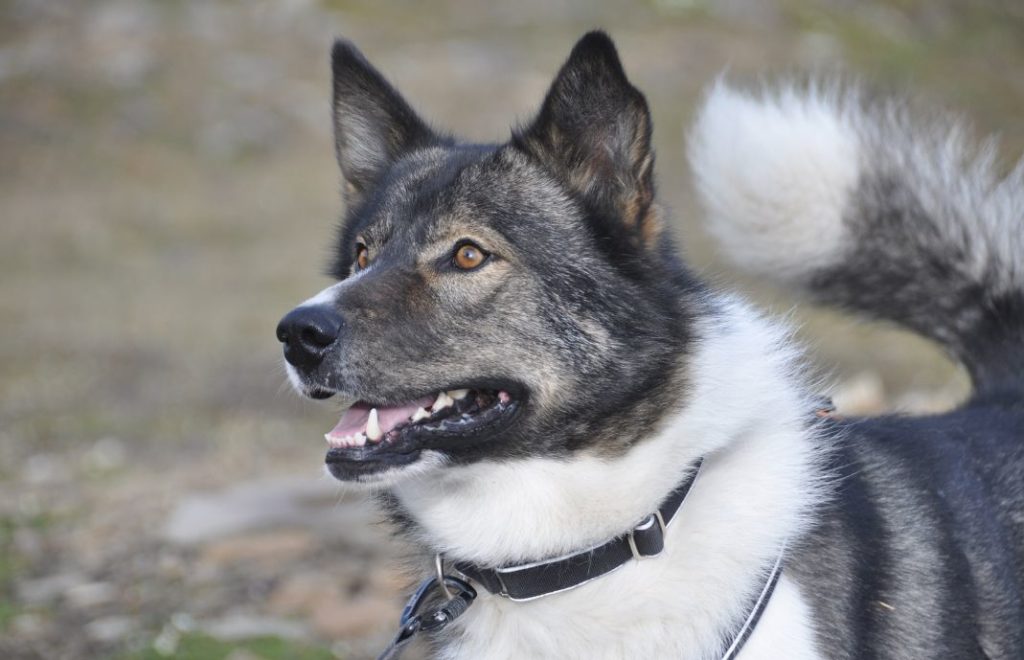
… Longyearbyen is home to around 1,000 charming sled dogs?
… there are only 40 km of roads in Longyearbyen?
… Longyearbyen sits at 78° north, just 1,316 km (818 miles) from the North Pole?
Here you’ll find more inspiration to visit Svalbard
