
Travel is often associated with joyful discovery. Sun-drenched beaches, vibrant cultures, and uplifting encounters. But some journeys take us deeper. They remind us that the world is not always idyllic, but shaped by hardship, loss, and resilience.
And these places are, perhaps, the most important to visit. Because they don’t just whisper of the past – they speak boldly of human endurance, of our ability to rise again after unthinkable darkness.
Where battlefields once echoed with despair, today you’ll find destinations that draw visitors not out of morbid curiosity, but out of a deep need to remember, to honor, and to understand. It is the people you meet – those who’ve emerged from the shadows – who turn tragedy into testimony. They present their history not to dwell in sorrow, but to ensure we never forget.
Cambodia is one such place. A land of haunting beauty and unimaginable suffering, its recent history is as harrowing as any in modern memory. And yet, it is also a country filled with warmth, hope, and strength.
A journey here is more than travel – it is a pilgrimage of the soul. A powerful reminder that even in the aftermath of horror, humanity endures.
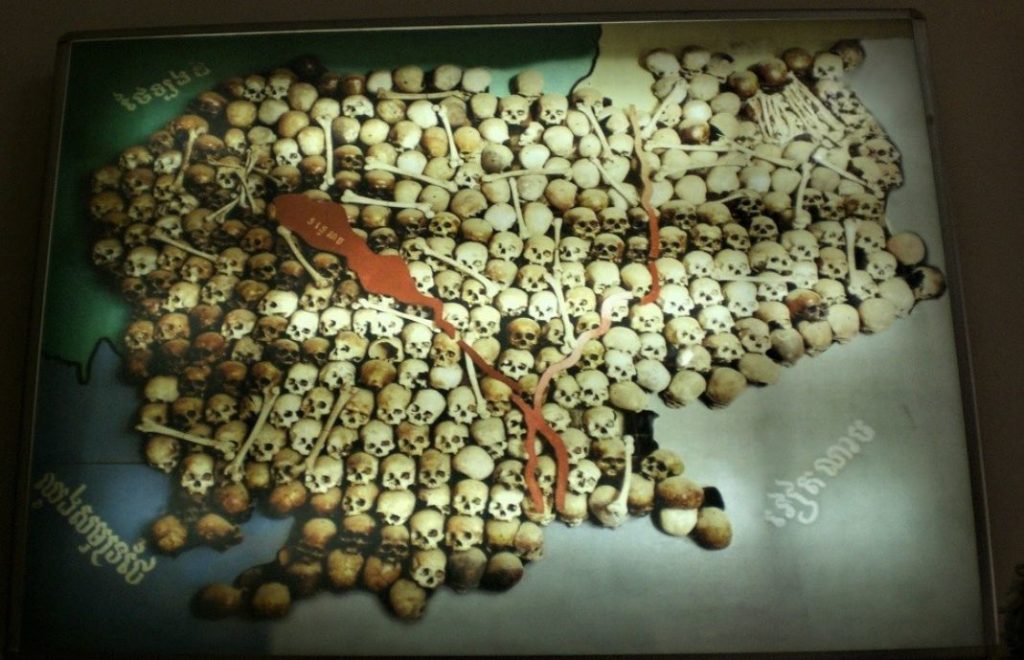
Cambodia’s tragic past – A journey into shadows
Between 1975 and 1979, Cambodia fell under the brutal grip of the Khmer Rouge – a radical communist regime led by Pol Pot. Their twisted vision of a purified, agrarian utopia became one of the darkest chapters in human history.
In pursuit of eradicating “enemies of the revolution,” the Khmer Rouge targeted not only perceived political dissenters, but also the educated, intellectuals, ethnic Vietnamese and Chinese. Only “pure” Cambodians were deemed worthy of survival.
An estimated 500,000 people were executed, while countless others perished from starvation, torture, and forced labor. In total, nearly two million lives – a quarter of the population – were lost under Pol Pot’s reign.
To begin understanding this national trauma, start your journey at Tuol Sleng Genocide Museum, once a school turned notorious prison, where thousands were detained, interrogated, and condemned. It is a place that whispers of unimaginable suffering but insists we listen.
Next, travel to Choeung Ek, one of the most infamous Killing Fields, where mass graves serve as haunting reminders of lives cut short. A quiet memorial now rises here, giving voice to the silenced.
End your reflective pilgrimage at the Cambodia Landmine Museum, founded by Aki Ra – a former child soldier turned deminer. The modest museum stands not only as a testament to Cambodia’s four decades of war and destruction, but also as a symbol of hope, resilience, and healing.
This journey isn’t easy. But it is necessary. Because only by walking through the ashes of the past can we truly honor those who never made it out – and vow to never let such darkness return.
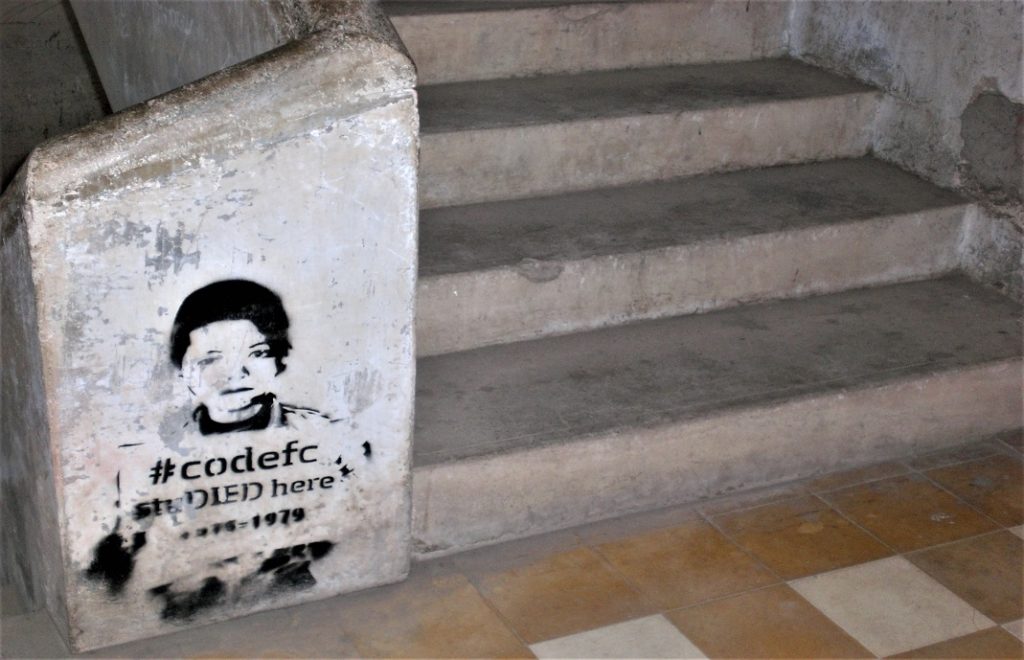
Tuol Sleng Genocide Museum – The school that became a place of horror
Encircled by rusting barbed wire, Tuol Sleng still breathes an eerie silence, heavy with sorrow. It’s a place where the past doesn’t whisper – it echoes. And with good reason: some of Cambodia’s darkest atrocities were committed here.
Once a secondary school in Phnom Penh, the building was seized by the Khmer Rouge in 1976 and converted into a prison and torture facility – infamously known as Security Prison 21 or S-21. It’s estimated that more than 20,000 prisoners passed through its gates, yet only seven survived.
At first glance, it might resemble any typical school: five concrete buildings surrounding a modest courtyard shaded by trees. But the atmosphere shifts the moment you step inside. This is no ordinary campus- It is a haunting journey into the heart of a regime built on fear, brutality, and genocide.
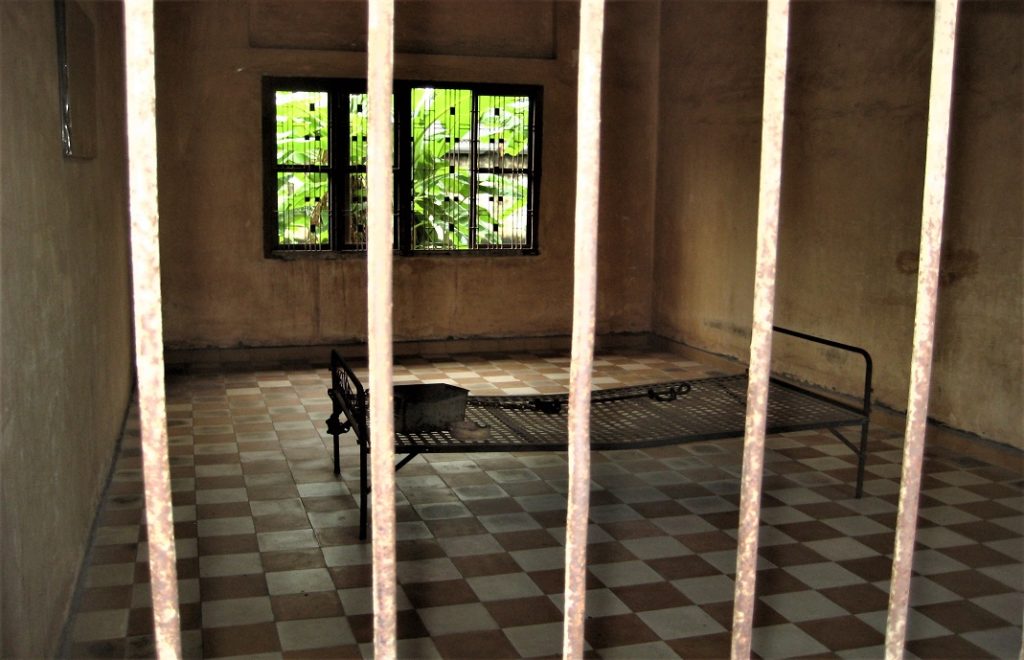
In one of the buildings, the classrooms on the ground floor remain nearly untouched since 1977. These were the interrogation rooms. Spartan and chilling, they hold a desk, a chair, and a rusted steel bed with ankle restraints. On the walls hang black-and-white photographs – grisly portraits of the lifeless bodies that were once shackled there, pools of blood still visible in the historic images. The room remains exactly as it was when two Vietnamese journalists discovered the prison in 1979, frozen in time, a damning testament to unspeakable cruelty.
Tuol Sleng is more than a museum. It is a graveyard of innocence, a place where silence speaks volumes, and a vital reminder of why the world must never turn a blind eye to tyranny.
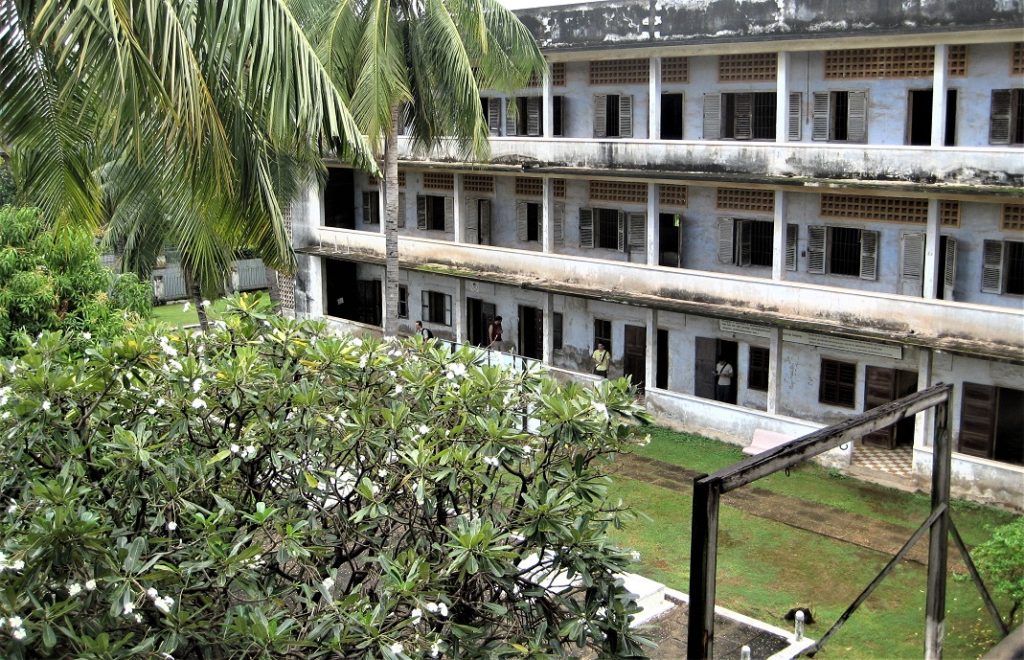
A visit that stirs the soul
Perhaps nothing strikes harder at Tuol Sleng than the haunting gallery of faces. Like the Nazis, the Khmer Rouge were disturbingly meticulous in documenting their atrocities. Every interrogation was recorded in detail, and nearly all prisoners were photographed – though their names were erased. Today, close to 6,000 portraits remain, each one a silent testament to anguish. In their eyes, we see shock, resignation, confusion, defiance, and fear – emotions frozen in time.
Walking through these halls is not just a museum visit; it is an emotional odyssey. These faces, these rooms, breathe life into the stories of those who perished here, allowing their memory to echo through time.
The buildings remain nearly untouched since 1979, offering a powerful sense of historical immediacy.
Visitors can still see the tiny cells, the courtyard gallows, and chilling displays of torture devices. Blood stains remain embedded in the floor tiles of the torture chambers. Deep scratches – made by human fingernails – scar the walls of cramped cells. At several exits, strands of barbed wire still hang ominously, once placed to prevent desperate prisoners from ending their own lives.
The commandant of Tuol Sleng, Kang Kek Iew (better known as Duch), was sentenced in 2010 to 35 years in prison for crimes against humanity. The sentence was later reduced to 19 years – a fact that continues to stir debate.
In 2009, Tuol Sleng was inscribed on UNESCO’s Memory of the World Register, a solemn recognition of its harrowing legacy. It stands today not just as a museum, but as a warning – etched in stone and silence – of the dangers of unchecked power and ideological extremism.
Choeung Ek – The Killing Fields outside Phnom Penh
Seventeen kilometers south of Phnom Penh lies Choeung Ek – better known as The Killing Fields. The journey begins at a stark roadside sign, marking the very spot where trucks once arrived from Tuol Sleng prison. It’s a chilling, sobering introduction to one of Cambodia’s darkest chapters.
This was one of the Khmer Rouge’s most notorious execution sites, where perceived enemies of the regime were systematically slaughtered. Most of the victims from Tuol Sleng were brought here, First as bodies, then as prisoners still clinging to hope. Trucks arrived two to three times a month, or roughly every three weeks, carrying their silent, terrified human cargo – blindfolded and bound.
They were brought here not to be questioned, but to be silenced. Forever.
As you step onto the quiet grounds of Choeung Ek, it’s hard to imagine the horrors that once unfolded here. But the silence speaks volumes. The air is heavy, not with sound, but with memory – of those who never left.
This isn’t just a memorial. It is a sacred site of remembrance. A reminder of the cruelty of unchecked power – and the resilience of a nation determined never to forget.
In memory of the victims
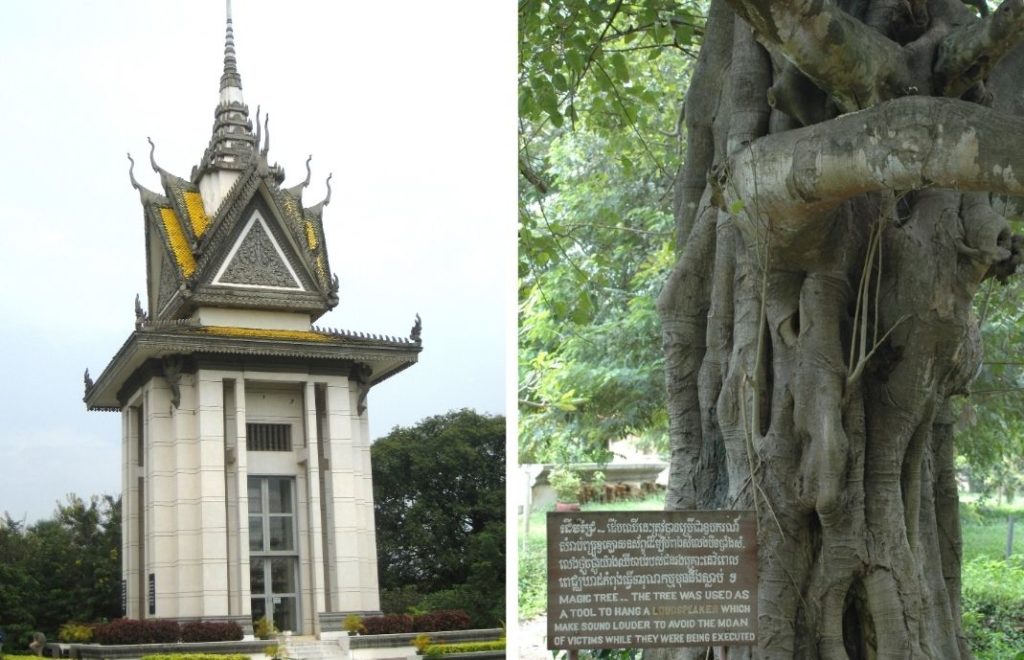
Upon arrival at Choeung Ek, prisoners were led directly to the site of their execution. Today, throughout the memorial grounds, signs mark the exact places where unspeakable acts took place. One sign, next to a towering tree, states with chilling clarity that guards would bash children against its trunk – justifying the cruelty by claiming it prevented future vengeance.
Visitors stand in solemn silence beside a mass grave where the headless remains of 166 people were unearthed.
Between 1975 and 1979, an estimated 17,000 souls were executed here. After each killing spree, executioners would rinse their hands and weapons in a nearby pond. Bullets were considered too expensive; instead, victims were killed with poison, farming tools, or sharp bamboo stakes.
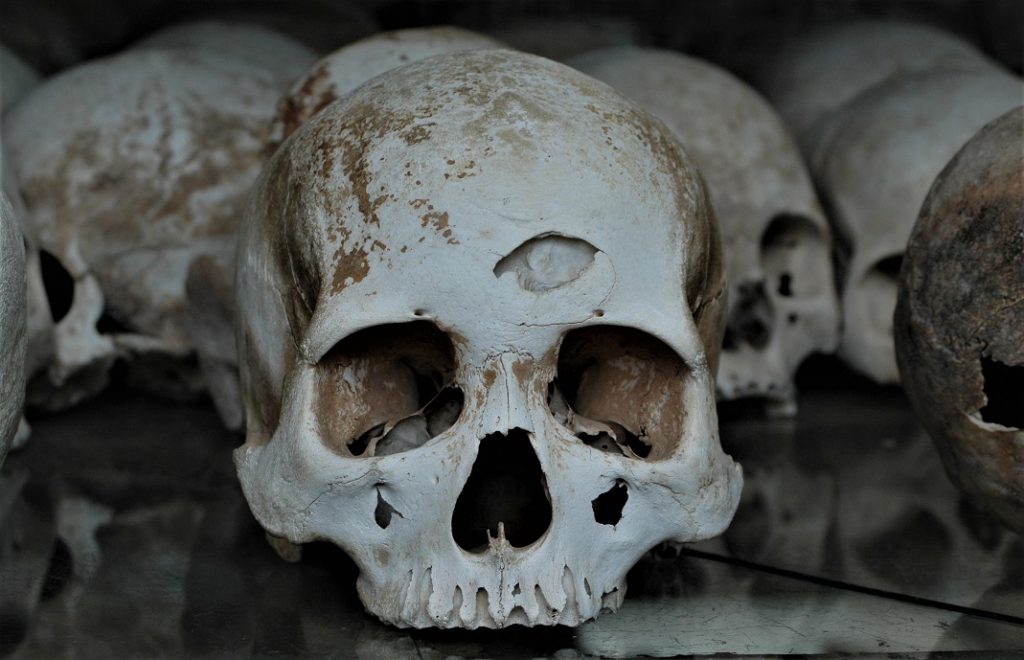
Today, a striking memorial stupa rises from the center of the field – a peaceful yet powerful Buddhist tribute. It contains the skulls of over 8,000 victims, preserved behind glass panels. Many are cracked or shattered, bearing witness to the brutal methods used. Fragments of clothing, once worn by the dead, are also on display.
Before your visit, it’s worth watching The Killing Fields (1984), a haunting film that recounts the true story of this place and those who perished here. The film – and this visit – serve as deeply moving reminders of a past that must never be repeated.
Cambodian Landmine Museum (Siem Reap)
Located 25 kilometers outside Siem Reap, the Cambodian Landmine Museum & Relief Center offers a powerful and deeply personal window into nearly four decades of conflict and the lingering devastation of war. Tucked amid the countryside, this humble yet extraordinary museum brings Cambodia’s turbulent past to life in a way few places can.
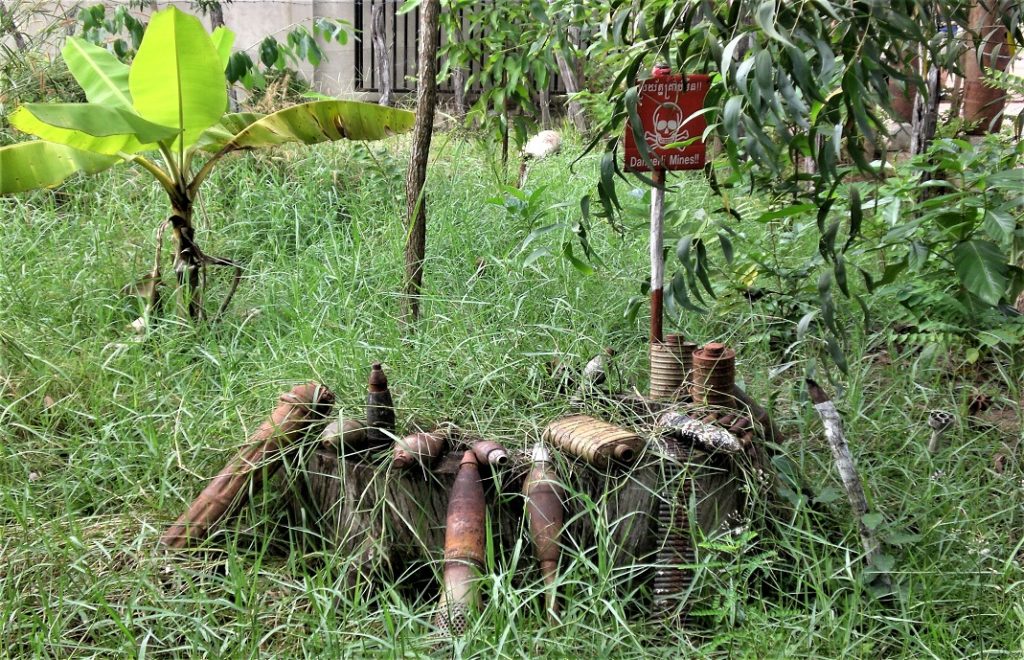
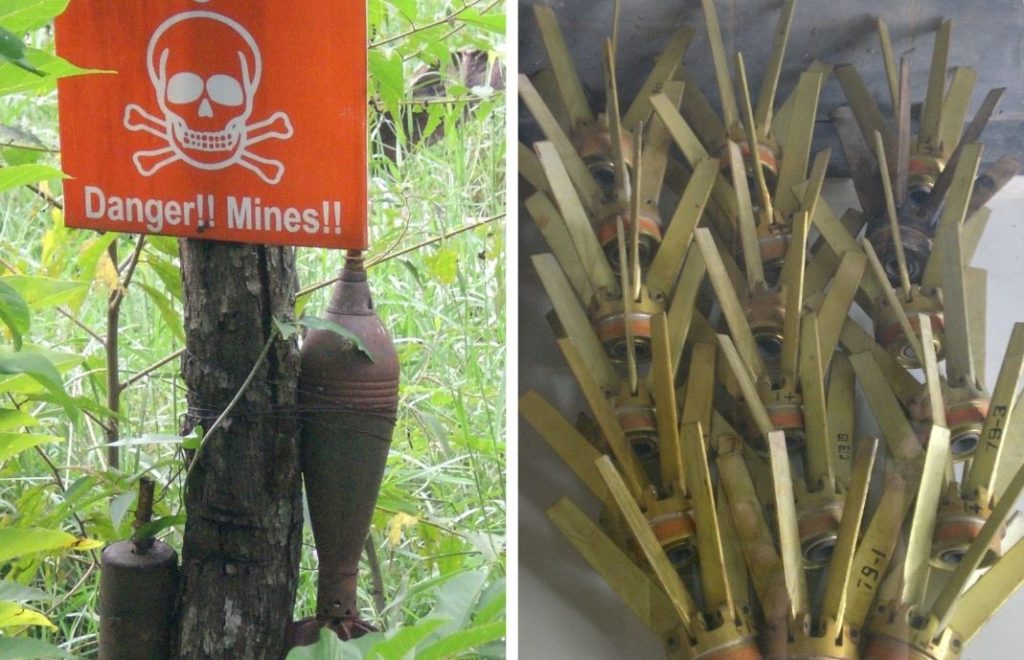
The museum houses an extensive collection of landmines and war relics, displayed both inside and around a cluster of wooden huts. Its arsenal includes thousands of mines – ranging from crude Cambodian devices to more advanced Chinese, Russian, Vietnamese, French, and American explosives. It’s a chilling reminder that the Khmer Rouge weren’t the only ones who left behind a legacy of destruction.
Cambodia remains one of the most heavily mined countries in the world. Decades of conflict – including civil war, the genocidal reign of the Khmer Rouge, relentless U.S. bombing campaigns, and Vietnamese occupation – have turned much of the countryside into a minefield. While tourist areas have largely been cleared, millions of hidden mines still dot farmland, trails, and forests, particularly in rural provinces.
Despite the wars being long over, the danger is far from gone. Landmines continue to claim around 120 lives each year. Clearing them is painstaking, dangerous work – and it’s expected to take several more decades to complete.
Visiting this museum is not only an eye-opening experience, but also a sobering reminder of war’s long shadow – and the resilience of those who work every day to heal their homeland.
Founded by a former child soldier
The Cambodian Landmine Museum owes its existence to one man: Aki Ra. A former child soldier, he was forcibly recruited into the Khmer Rouge army and spent his youth fighting in wars that ravaged Cambodia for over 35 years. What sets his story apart is what he chose to do once the conflict subsided.
After the war, Aki Ra returned to the very villages where he had once helped bury deadly landmines. He began the painstaking process of removing them by hand. The deactivated mines he safely extracted were eventually put on display, and in 1997 he opened the doors of his first small museum to the public.
Most mine victims in Cambodia are young boys and men – often those working the fields or wandering through the forest. During his demining work, Aki Ra encountered many children who were either orphaned or abandoned, some of whom had even been used as human mine detectors by military forces. He brought them into his home, where he and his wife Hourt offered them shelter, care, and the chance at a future.
The current museum opened in 2007, thanks in large part to Canadian filmmaker Richard Fitoussi, who helped raise the funds to expand the project into what it is today.
A visit here offers a raw, deeply personal look into one of the darkest chapters of Cambodia’s modern history. It’s a sobering contrast to the grandeur of Angkor Wat, but one that adds immeasurable depth and understanding to any journey through Siem Reap. It is, without question, a place that deserves a spot on every traveler’s itinerary.
“I want to make my country safe for mye people”
Aki Ra – Founder of Cambodian Land Mine Museum
Other destinations for reflection
Travel isn’t always about sun-drenched beaches or bucket-list thrills. Sometimes, the most meaningful journeys are those that take us deep into the heart of human history. Where courage, suffering, and resilience shape the stories we carry home. These destinations are powerful reminders of the past, urging us to remember, to honor, and to learn.
Warsaw, Poland –- A city of scars and strength
Few places bear the marks of World War II as visibly and profoundly as Warsaw. The Polish capital was almost completely destroyed during the war, but from its ashes rose a city that refused to be broken.
Monuments, memorials, and museums are woven into the city’s fabric, honoring both heroes and victims. Whether walking the streets of the former Jewish Ghetto or visiting the deeply moving Warsaw Uprising Museum, every step is a lesson in perseverance.
Explore: World War II in Warsaw to discover the places that tell this harrowing chapter of history.
Normandy, France – The shores of liberation
The cliffs and beaches of Normandy whisper of sacrifice and freedom. This tranquil corner of northern France was the site of the legendary D-Day landings, where Allied forces began the liberation of Europe.
Today, over 18 museums and memorials pay tribute to that pivotal day and its aftermath. From the poignant silence of Omaha Beach to the solemn rows at the American Cemetery, Normandy is a journey into bravery and loss.
Start with: Normandy – The road to freedom for guidance on what not to miss.
Berlin, Germany – The heart of a fallen empire
No city is as steeped in the dark legacy of Nazism as Berlin. This was the epicenter of Hitler’s regime – the place where policies of terror were conceived and where the war came to its crushing end.
From the Topography of Terror museum to the ruins of the Führerbunker, Berlin is layered with stories of horror and hope. It’s a city that forces confrontation with the past while showcasing how a society can face its history and grow.
Begin your journey with: Walking through Hitler’s Berlin, a guide through the key sites of the Nazi era.
