
Betsy Ross (1752 – 1836) lived a life worthy of recognition but is most famous for making the first American flag. Although Betsy purportedly sewed the first flag in 1776, she was not credited with this work during her lifetime.
But is the account of her contribution to the American Revolution simply a legend?
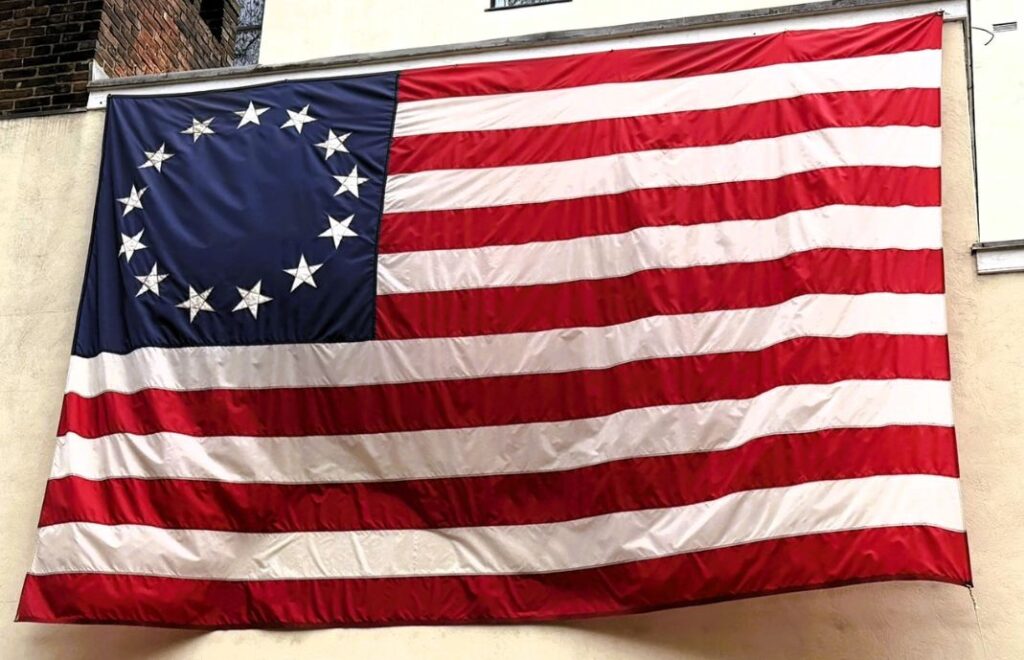
This is what we really know
It was Betsy’s grandson, William Canby, who first told the story in a speech he made to the Historical Society of Pennsylvania in 1870. Canby, along with Ross’s daughter, niece and granddaughter, signed sworn affidavits stating that it was Betsy herself who told them the story of the making of the first flag.
Their affidavits were published in Harper’s New Monthly Magazine in 1873 and soon became part of the United States history curriculum.
According to Canby, Ross recounted a visit she had received in late May or early June of 1776 by three men: General George Washington, financier of the Revolutionary War Robert Morris and Colonel George Ross, a relative.
During this meeting Betsy was allegedly presented with a sketch of a flag that featured 13 red and white stripes and 13 six-pointed stars. She was asked if she could create a flag that matched the proposed design. Ross agreed, but suggested a couple of changes, including arranging the stars in a circle and reducing the points of each star to five instead of six.
The following year, on June 4, 1777, Congress officially adopted the Stars and Stripes as the national flag.
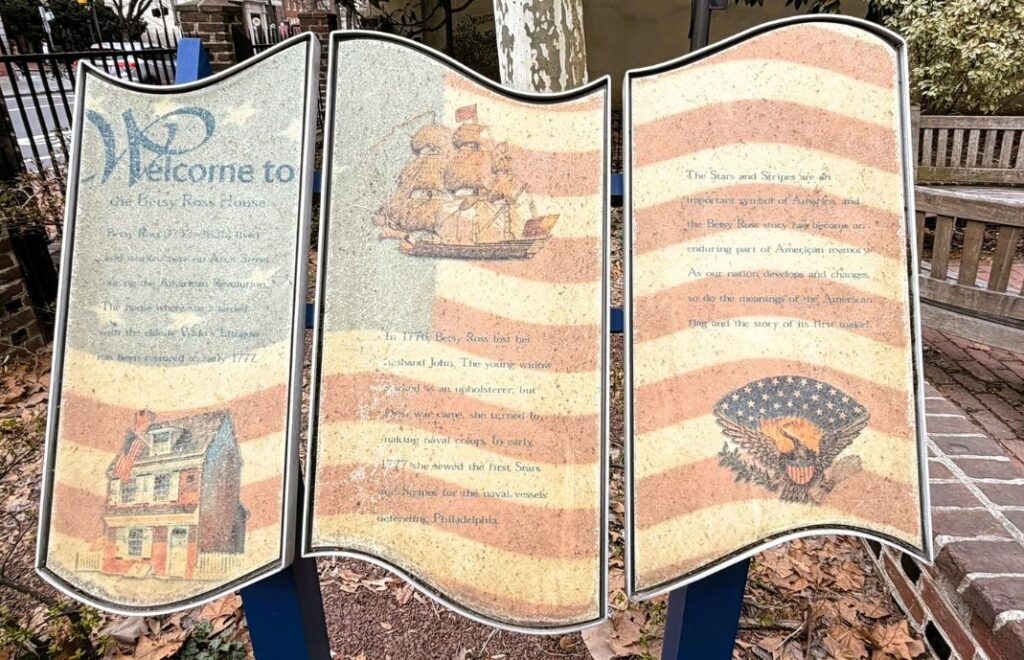
Evidence that the legend is true
No official documents have been found to confirm that Betsy Ross was responsible for creating the very first flag, but there is mounting evidence leading historians to believe the legend could be true:
- George Ross, a member of the Flag Committee, was the uncle of Betsy’s late husband, John. This could be one of the reasons why Betsy was chosen to make the first flag.
- Another uncle-in-law, George Read, was a delegate from Delaware and a member of the Marine Committee with Robert Morris. Since making the flag was an act of treason, it is significant that these men would know of Bety’s allegiance to the Revolutionary cause.
- Historians at Mount Vernon have discovered documents that showed Betsy and John Ross made bed hangings for George Washington in 1774. This indicates that Washington would have been familiar with her and the quality of her work.
- It was common for upholsters to take up other forms of work during wartime. Because they were no longer getting their regular upholstery work, many earned money by making tents, uniforms and flags for the soldiers.
- On May 27, 1777, Betsy was paid a large sum of money from the Pennsylvania State Navy Board for making flags. On June 14, 1777, Congress adopted the Stars and Strips as the official national flag.
- Betsy continued to make flags for over 50 years, many of which were through government contracts. Many receipts exist for her work in the first two decades of the 19th century. For example, in 1811, Betsy made over 50 garrison flags for the U.S. Arsenal on the Schuylkill River.
- In the 18th century, flags were not revered as they are today. The flag had not yet become a symbol of liberty or patriotism. It was more frequently regarded as a military tool like a tent or a uniform. It is most likely that Betsy thought it somewhat insignificant that she made the first flag. Instead, she told her children and grandchildren the legendary story because General George Washington, a great man who later became the first President of the United States, visited her home and asked her to make something for him.
It is up to you whether you believe Betsy Ross made the first American flag or not. Regardless of your opinion on this matter, there is no doubt that she was a prominent early American flag maker who stitched flags for the local government for more than 50 years.
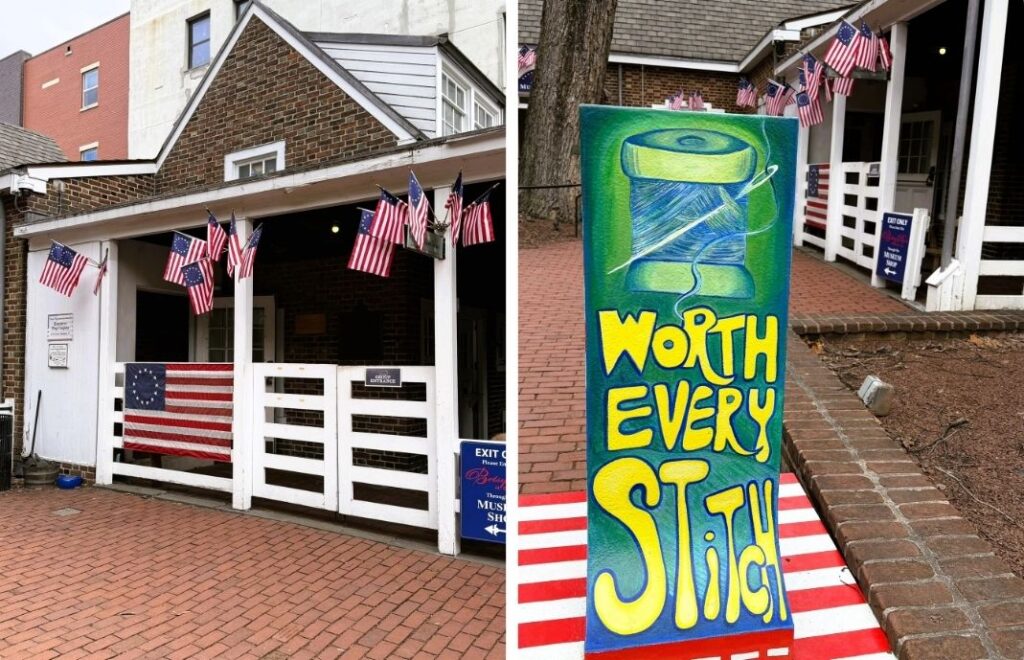
You can learn more about Betsy and her remarkable life when you visit Betsy Ross House in Philadelphia.
Source: Historic Philadelphia
