
Tiny Gambia may be best known for its sun-drenched beaches, ice-cold drinks, and the soothing soundtrack of waves rolling ashore. But a trip here can – and absolutely should – go beyond the simple pleasures of sunscreen and seaside swims.
Because Gambia is so much more than just a beach destination.
In just three days, we ventured deep into village life and lush jungle, drifted along riverbanks on boat safaris, spotted dazzling birdlife, and retraced the powerful threads of Gambia’s rich and often heartbreaking history.
The result?
An unforgettable journey that lingers far beyond the last grains of sand.
A fascinating ferry crossing into the heart of Gambia
The clock has just passed six in the morning when our headlights pierce the darkness wrapping around us. The hotel guard leaps up to swing open the gates, and we greet our driver, Muhammed, and our guide, Baks. With our bags stowed in the back, we’re ready to begin the first chapter of our Gambian adventure.
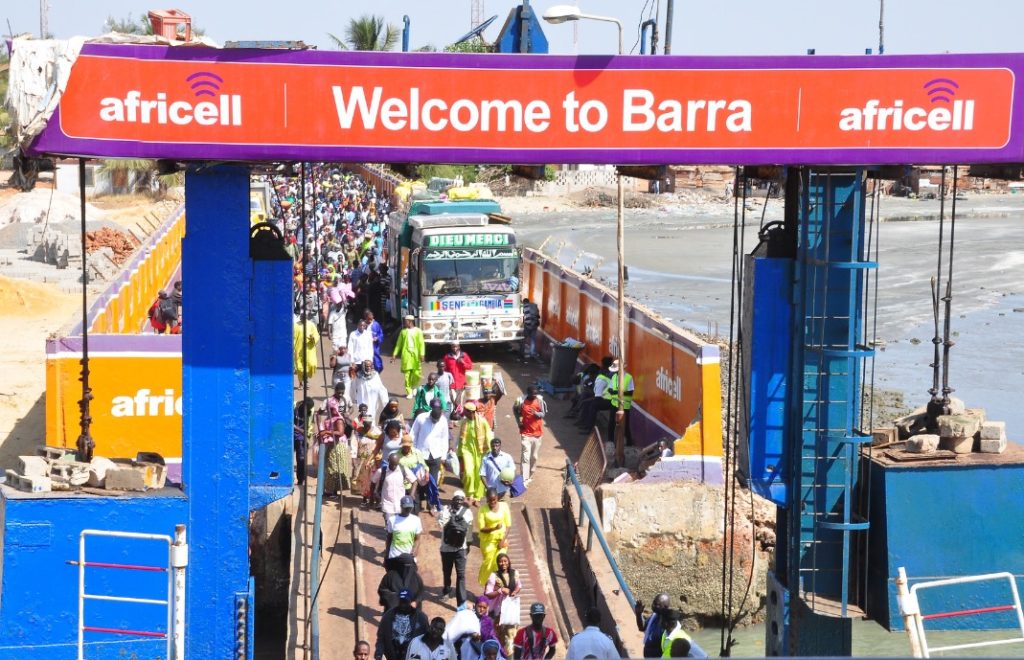
Our day begins with a 45-minute ferry ride from Banjul to Barra, on the northern bank of the Gambia River. Despite the early hour, the ferry crossing is vibrant and full of life. The passenger list is a colorful mix – locals on foot, wide-eyed tourists, donkeys, pigs, and chickens all jostling for space.
Disembarking is a spirited dance of organized chaos. Vehicles, lorries, bicycles, and pedestrians all try to disembark at once. There’s no separate walkway for foot passengers – everyone exits via the same ramp at the bow of the ferry. For the uninitiated, it’s a bit overwhelming. But beneath the surface, there’s a rhythm and order known only to those who call this crossing routine.
In Barra, we wait a short while for our car before a smiling Muhammed pulls up to collect us.
We’re quickly impressed by the surprisingly smooth roads – better than expected. Speed limits appear to be more of a suggestion than a rule. Muhammed only slows down for the many roadside checkpoints. Each passed with a polite exchange and a nod of recognition to the officers.
Our journey carries us through lush wetlands, emerald-green fields, and sleepy villages where herds of cattle meander freely across the road. Gambia, it turns out, has already begun to charm us before we’ve even reached our first stop.
Gambia’s magic unfolds on the river
Our first stop is one of the country’s most breathtaking natural wonders: River Gambia National Park. Nestled in the heart of the country, this sanctuary is where Gambia reveals its wild, untouched soul.
Waiting at the riverbank, a boat bobs gently on the water, ready to carry us on an adventure around Baboon Island – a protected haven for chimpanzees and home to the remarkable Chimpanzee Rehabilitation Center. But the magic of this place stretches far beyond primates. The lush, tropical landscape teems with life: vibrant bird species soar overhead, vervet and colobus monkeys chatter in the trees, while the waters conceal both crocodiles and hippos.
In every direction, nature whispers stories of the wild.
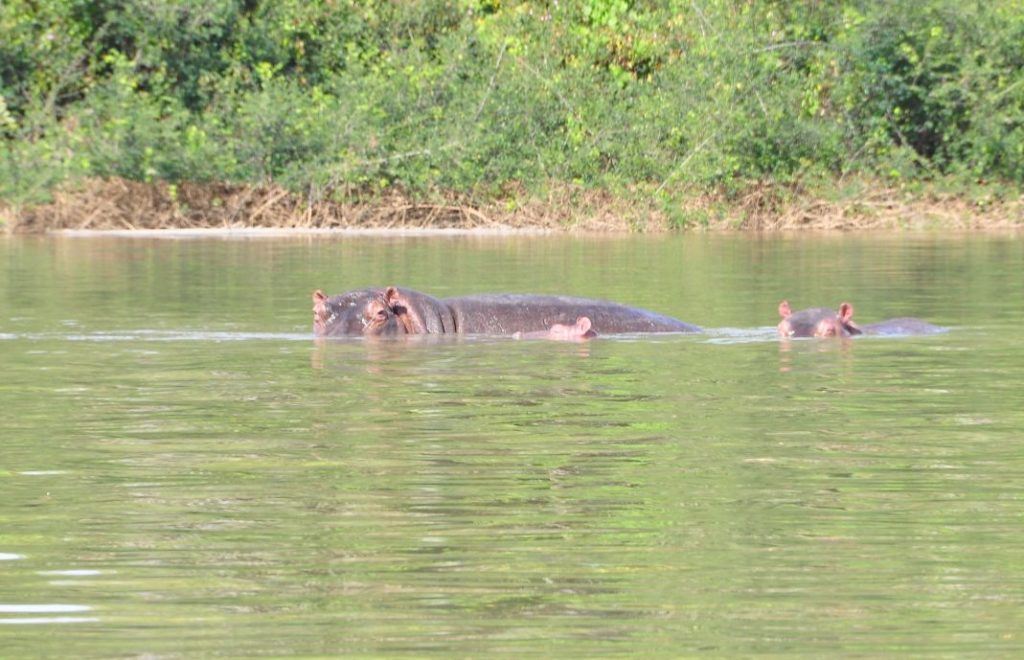
Our boat glides silently over the smooth, mirror-like river. It doesn’t take long before the captain points out into the distance – just beneath the surface, a series of massive heads bob rhythmically. Hippos! They emerge like floating boulders, briefly surfacing before slipping back under with barely a ripple, only to reappear slightly closer to our boat.
Excitement spreads among us like wildfire. These are the first animals we’ve seen on our journey – and they’re spectacular.
The Gambia River, calm and rich with life, is already living up to its reputation as one of Africa’s hidden gems.
Monkey business in the jungle
But it’s the chimpanzees that truly steal the spotlight.
Our captain steers the boat slowly along the densely forested riverbanks, eyes scanning every branch and shadow. The jungle is hushed – no shrieks, no rustling leaves. For now, the chimpanzees remain elusive.
But he’s not giving up that easily.
Determined to deliver a magical moment, he glides the boat around a bend and cuts the engine, letting the silence settle like a mist. We drift gently, eyes fixed on the green wall of vines and branches.
And then – movement.
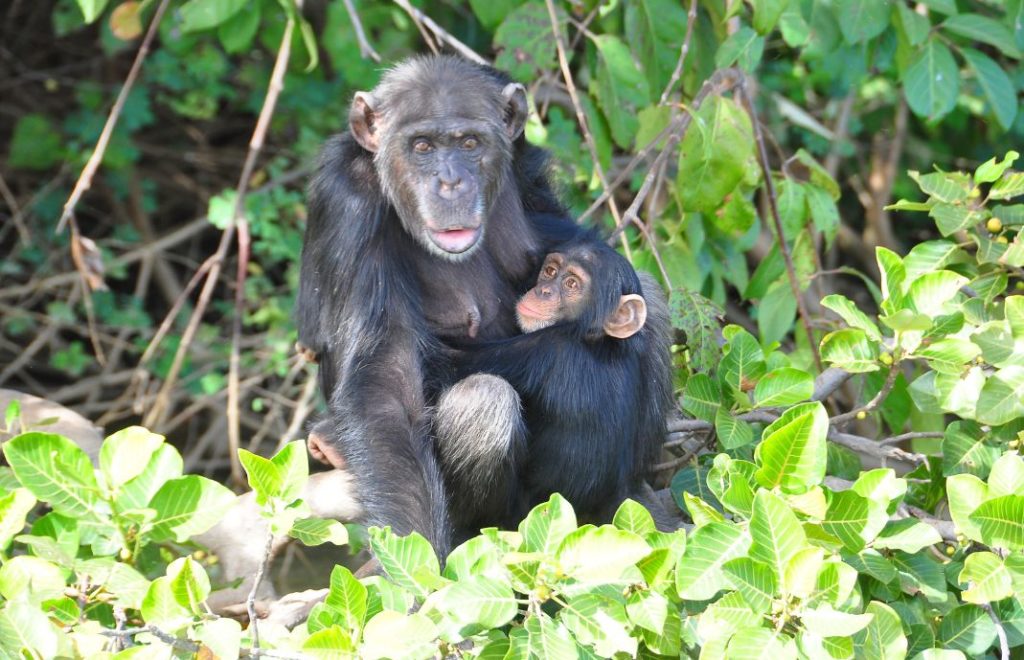
A single black arm parts the foliage, and there she is. A female chimpanzee sits calmly on a thick branch, perfectly poised, as if she knows just how much this moment means to us.
The jungle holds its breath – and then the magic doubles.
Out comes her baby, clambering clumsily onto a lower branch, dipping down to sip from a puddle of water, tumbling playfully in the leaves. A few moments later, he scurries back into his mother’s arms, curling up for comfort and milk.
We sit in hushed awe, hearts full, witnessing an intimate moment of jungle life – unfiltered, wild, and unforgettable.
Gambia’s answer to a wishing well
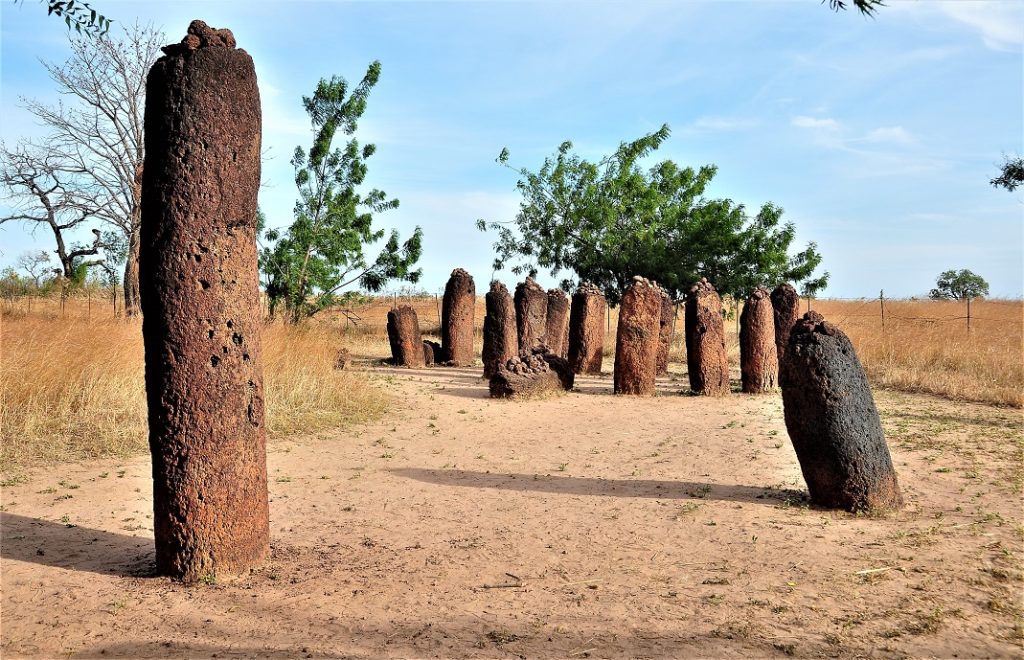
Little is truly known about the people who created the mysterious stone circles that await us next. Believed to have been erected between the years 500 and 1000 by communities of farmers and hunters, these ancient formations are thought to mark the burial grounds of kings and tribal leaders. But even today, scholars continue to debate their exact origins and purpose.
The Wassu Stone Circles are among the most impressive and best preserved of these archaeological enigmas.
Our visit begins at a modest museum where we’re introduced to some of the prevailing theories about the region’s early inhabitants. It’s a glimpse into a world that once was – a culture whose stories are etched in stone, but whose voices have long since faded.
Stepping outside, we find ourselves surrounded by several large circles, each made up of 10 to 24 laterite pillars – a rusty red volcanic rock. These silent sentinels stand between 1 and 2.5 meters tall. Excavations have unearthed iron and bronze artifacts, arrowheads, shards of pottery, and human bones, offering tantalizing clues to the lives once lived here.
On top of nearly every stone pillar, small pebbles have been carefully placed. Our guide Baks explains that the site is considered sacred. According to local belief, if you place a stone on top of a pillar while making a wish – silently, without telling a soul – it may just come true.
I quietly select a smooth stone, rest it atop one of the ancient columns, and make a wish.
I won’t tell you what it was. So far, it hasn’t come true… but who knows what tomorrow may bring.
A night in the jungle
As day melts into dusk, we arrive at our overnight stop deep in the heart of The Gambia’s wild interior: Janjanbureh Camp.
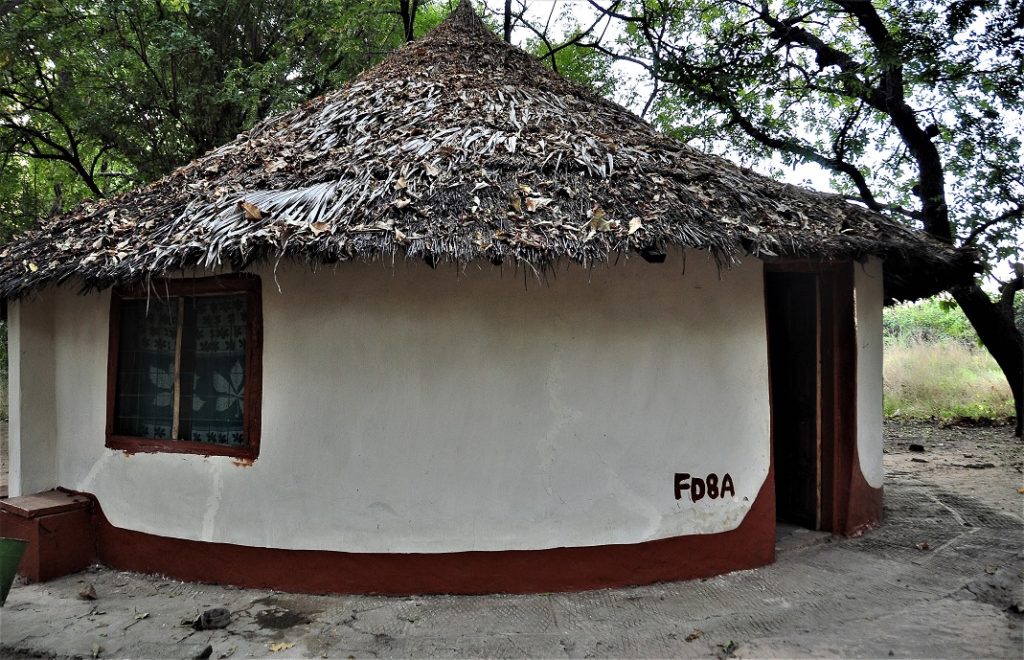
If you’re searching for five-star comfort, hot showers, and WiFi, you’ll need to adjust your expectations. This is not luxury. This is authenticity. There’s no electricity, no hot water – but what you get in return is something far more valuable: raw, unfiltered connection with nature.
Above us, vervet monkeys swing with ease through the canopy. Birds serenade the sunset. The last golden rays of the day shimmer over the nearby river.
Our bungalow is charmingly simple. A bed draped with mosquito netting. A single candle and a box of matches. There’s a basic toilet and a rustic shower setup.
Want to brush your teeth or wash your hands? Use the clay jug of water left on the bathroom shelf. Need to visit the bathroom at night? You’ll want to light a candle first – the only source of illumination once the sun sets.
The shower is a shaky spout, but to our delight, the water isn’t icy – it’s naturally warmed by the heat of the day.
Pro tip: Bring a good flashlight (and extra batteries). You’ll thank yourself later.
Dinner is served beneath the trees, accompanied by the steady rhythm of African drums and the joyful dance of local women.
It’s not a five-star hotel. It’s a five-billion-star sky. And that, sometimes, is worth so much more.
Breakfast among bandits
Breakfast in the jungle comes with its own unique set of challenges.
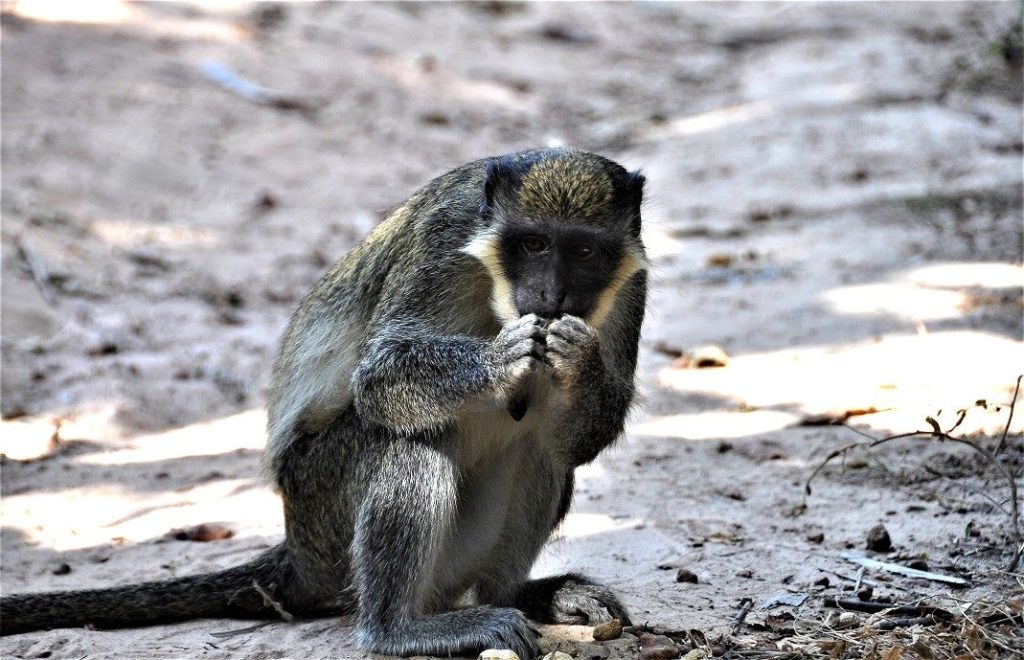
At Janjanbureh Camp, meals are served outdoors beneath the trees. Idyllic, yes, but also prime territory for The Gambia’s cheekiest residents: the monkeys.
As the morning sun filters through the canopy, the breakfast buffet is laid out on the rustic bar counter. Guests begin to gather, lured by the promise of fresh bread, cheese, and warm muffins. But we’re not the only ones eyeing the spread.
From the treetops and nearby underbrush, small troops of monkeys begin to assemble with stealthy precision. They’re alert, organized, and boast the kind of team coordination that would make a professional football coach envious. The staff try to deter them – stomping, shouting, and even thumping sticks against the ground – but to no avail. These jungle tricksters are fearless and fast.
They descend like furry ninjas, making off with bits of breakfast before you even know what’s missing. One moment you’re sipping your coffee, the next your muffin has vanished into the treetops.
It’s nearly impossible to stay mad. Their accuracy is impressive, their timing impeccable, and their antics genuinely entertaining. Laughter ripples through the camp as each guest falls victim to the great breakfast heist.
Let’s just say we all left a little hungrier – but with much better stories to tell.
A journey into Janjangbureh’s past
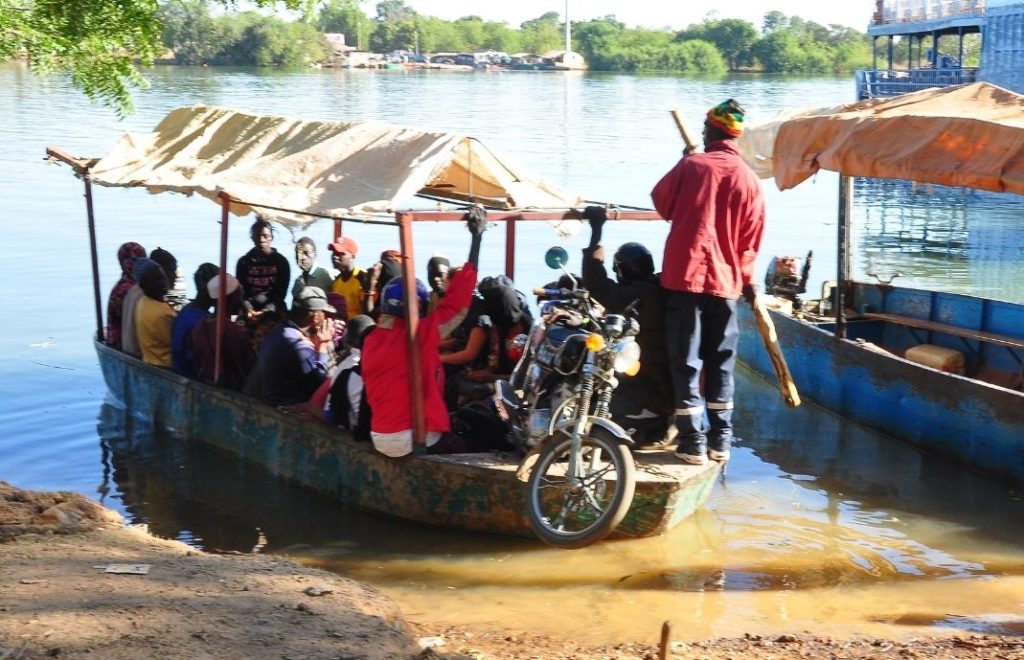
We cross the Gambia River just like the locals do – wedged into an overcrowded wooden pirogue that bobs gently in the current. The boat seems full to capacity, yet the captain casually adds a motorcycle to the load, placing it across the bow. Its owner clings to it tightly, balancing both nerves and machine as we drift across the river.
Our destination: the quiet town of Janjangbureh.
Founded by the British in 1832 and known as Georgetown until 1995, Janjangbureh sits peacefully on MacCarthy Island. Life moves slowly here. There’s no rush, no noise. Just the easy rhythm of a place untouched by the bustle of modern tourism.
But beneath the calm lies a complex, painful history.
When the British purchased the island in 1823, the transatlantic slave trade had been officially abolished. Yet local slave trading persisted. To combat this, the British established a military base called Fort George, turning the island into a refuge for runaway slaves. Those who made it here were welcomed and protected within the walls of the fort.
Today, Janjangbureh is a living memory – quiet and unassuming, yet rich in the echoes of a turbulent past. As we stroll the sleepy streets, it’s impossible not to feel the weight of history underfoot, a reminder that this peaceful island once stood at the crossroads of oppression and freedom.
Where history lives and breathes
Begin your exploration of Janjangbureh at Fort George, where remnants of a haunting past still linger. Within the crumbling structure, rusted shackles hang silently from the walls – grim reminders of the countless enslaved men and women once imprisoned here. The air is heavy, as though the walls themselves remember.
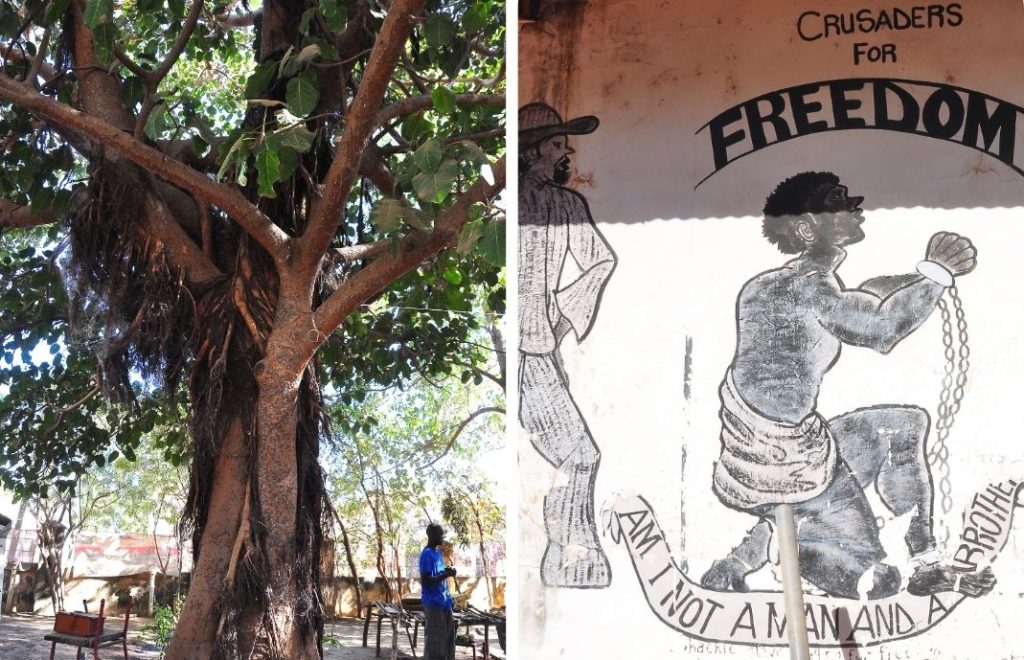
From there, make your way to the town’s symbolic heart: the Freedom Tree.
Once a site of cruel irony, the tree played a dark role in British colonial games. Enslaved people were told they could earn their freedom if they could reach the tree from the docks. Many tried, running toward hope with all the desperation of a life on the line. Most never made it. British soldiers fired their rifles or unleashed hunting dogs to prevent escape. Only those who managed to touch the tree had their names recorded and their freedom granted.
The original tree, like so many of its hopeful runners, did not survive. But in 2002, a new tree was planted in its place – an emblem of healing and a beacon of new beginnings. Today, it stands in a quiet park, a place for reflection and remembrance.
Leaving the park, the heavy mood lifts. Back on the sunlit streets, laughter rings out. Curious children wave excitedly and shout, Toubab, toubab! – the Wolof word for “white person.” They clamor for photos, beaming with joy when shown the images on a camera screen.
Janjangbureh is a place of contrasts: solemn and joyful, haunted and hopeful. Its story is etched into stone and soil – and written brightly on the faces of the children who now call it home.
Free as a bird
Our adventure presses on as we journey to our next destination: Tendaba Camp, nestled peacefully along the banks of the Gambia River.
Compared to our previous stop, the comforts here feel almost extravagant. There’s electricity, proper showers, and working toilets – a modest but welcome slice of luxury. The staff greet us with warm smiles and cold drinks on the shaded terrace. With the river glistening in the late light, there’s little more to do than sit back and simply enjoy the moment.
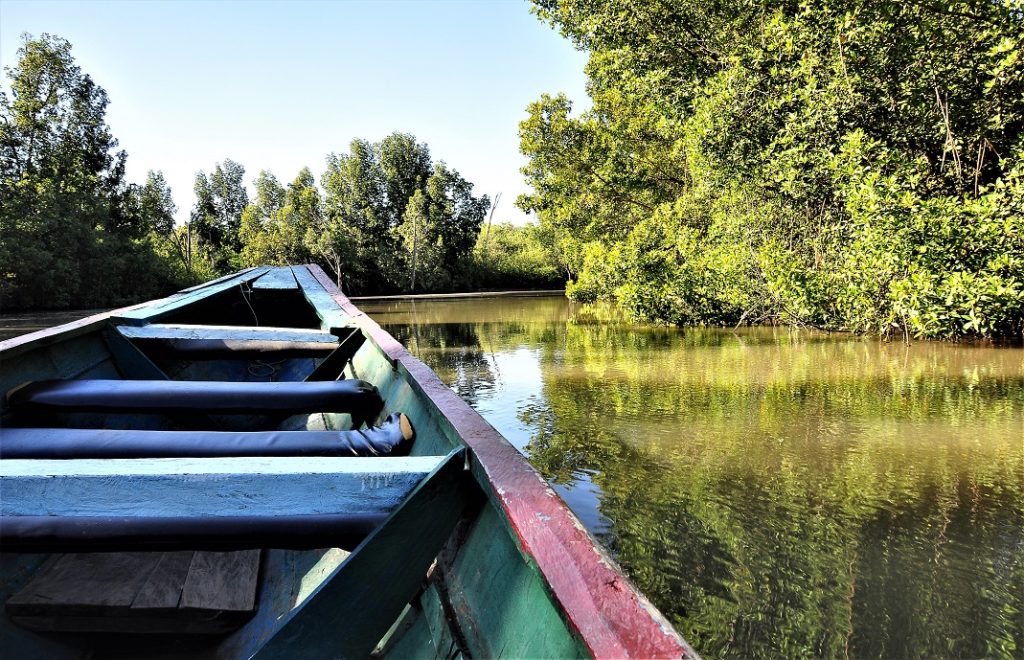
This region is a haven for birdwatchers, and the best time to experience it is either at dawn or as the day winds down. We choose the latter, boarding a small boat as the sun begins its descent.
The boat drifts gently into the mangroves, navigating narrow creeks where the world feels hushed, almost sacred. Birds of every size and hue flutter across our path. Some darting like arrows through the trees, others gliding lazily above the canopy. Their calls echo around us, punctuating the silence with bursts of life.
The real show, however, begins on our return. As the sun melts into the horizon, the river catches fire in a brilliant shade of crimson. The sky above fades from gold to indigo, casting long reflections across the water.
It’s a sight that stills you – a reminder of how breathtakingly simple, and simply breathtaking, life by the river can be.
Lunch beneath the trees
Our journey through Gambia is drawing to a close. The long drive back to Banjul is softened by stops at bustling local markets, peaceful rice fields, and – perhaps the highlight – a lunch break out in the open air.
Our host, Barry, is more than just our guide. He’s a changemaker. His travel company employs only locals, and part of the revenue goes toward building wells, schools, and homes throughout the country. It’s one of the reasons we chose to travel with him – and why we’re so grateful we did.
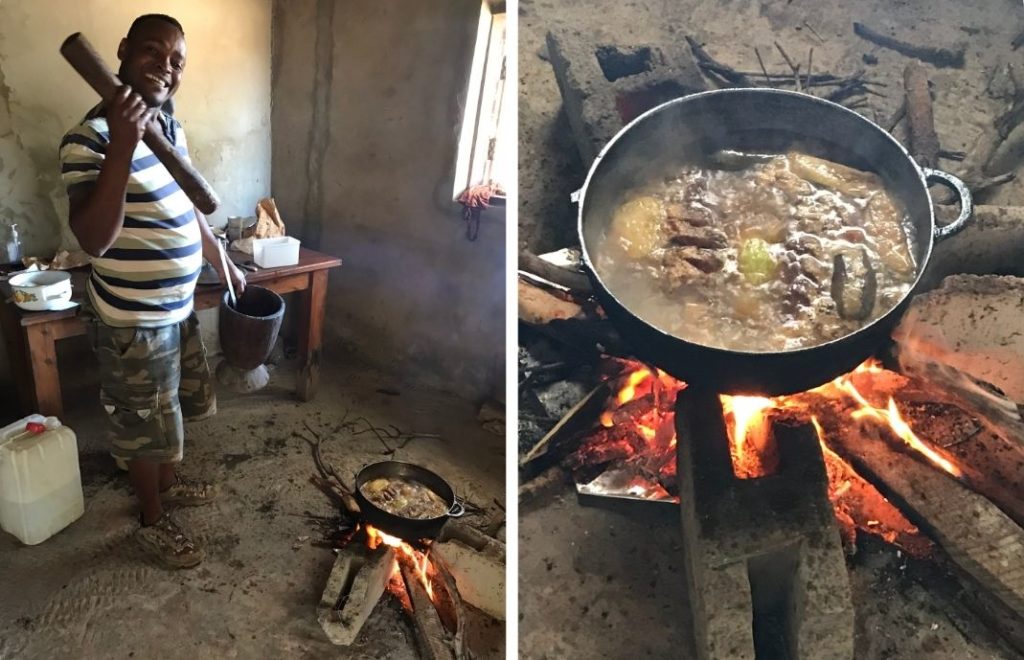
As a heartfelt gesture, Barry invites us to an authentic Gambian lunch in the countryside. The ingredients -fresh vegetables and tender chicken – have been sourced from nearby farmers in the small village of Kuloro. Barry, as it turns out, is not only a passionate guide but also an incredibly skilled cook. The meal simmers in a cast-iron pot over an open flame, and when served, it comes with a generous portion of pride.
“Does it taste alright?” he asks, with just a flicker of doubt in his voice.
“Mouthwateringly good,” we reply, barely able to speak between bites.
The smile that spreads across his face could melt a glacier.
Barry is Gambia – genuine, generous, open-hearted, and fiercely proud of his homeland. And rightly so.
This trip into the heart of Gambia has exceeded every expectation. We’ve glimpsed a nation beyond the beaches, vibrant with soul and authenticity.
The tan will have to wait. For now, we leave with something far more lasting.
More inspiration to visit Gambia:
18 great reasons to visit The Gambia
The last journey
