The gentle waves erase my footprints as if they were never there. This quiet beach hides countless stories – of lives uprooted, of journeys taken without hope of return. For thousands, this was the final shore they touched before being torn from everything they knew.
A small island etched into the pages of history – its name whispered with both sorrow and remembrance.
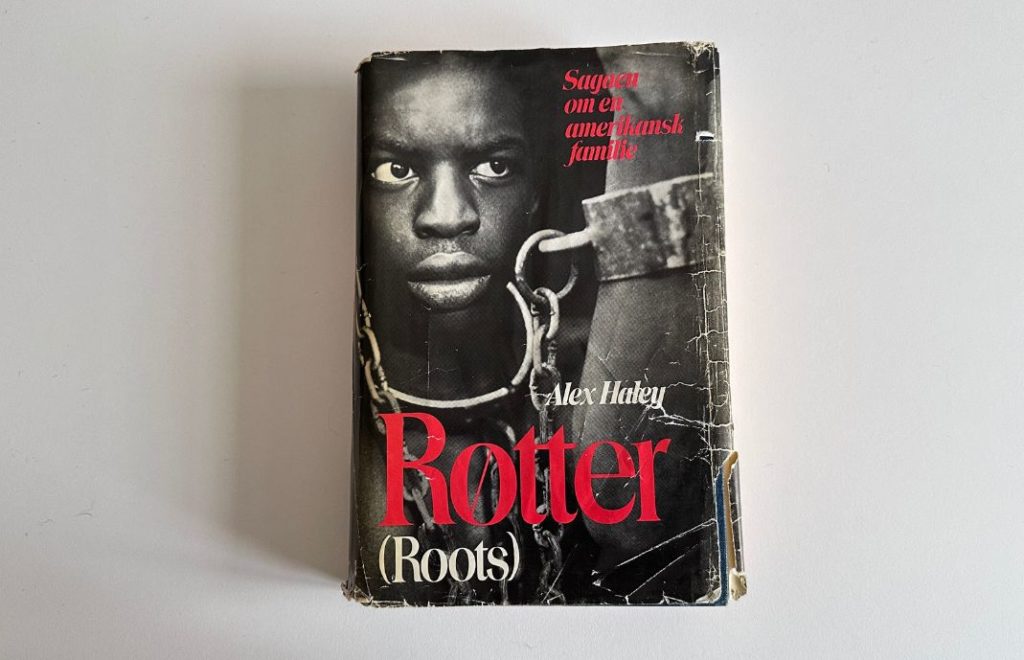
The world came to know it through Alex Haley’s groundbreaking book Roots, and later the television series that captivated millions in the 1970s. Through the story of Kunta Kinte, it unveiled the brutal truth of slavery and the resilience of those who endured it, shaking readers and viewers to their core.
Here, the sands are not just grains of earth – they are silent witnesses to the darkest chapters of human history.
A small place with a big story
Alex Haley’s monumental work Roots chronicles the journey of his Gambian ancestor, tracing the lineage back seven generations. It took Haley nine relentless years to uncover his family’s beginnings. A quest that eventually led him to an elderly man in Gambia who spoke of the Kinte family and a boy named Kunta.
Kunta Kinte was born in 1750 in Juffureh, a modest riverside village in Gambia. In 1767, his life was shattered when slave traders captured him. Along with 98 others, he endured the horrific Middle Passage, shackled in the cramped, dark hold of a slave ship bound for America. There, he would be forced into the brutal life of plantation labor – a fate shared by millions.
Today, Juffureh looks much like any other Gambian village: simple tin-roofed homes, vegetable gardens, children laughing as they play, goats and chickens wandering freely, and men seeking shade beneath sprawling trees.
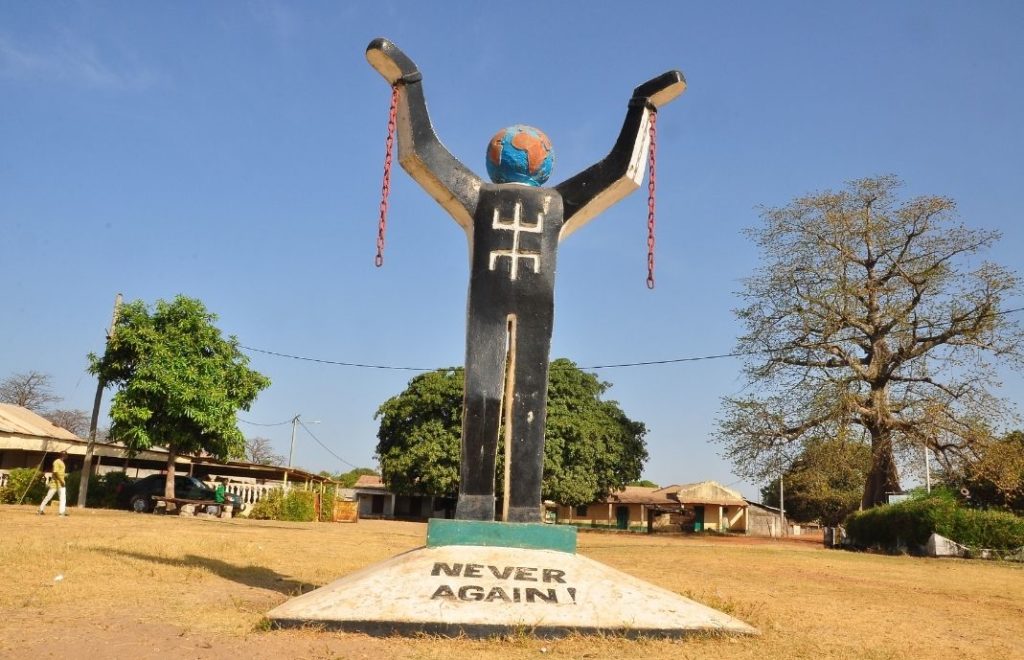
But one striking difference marks this village as extraordinary: a nine-meter-tall black monument, fists raised to the sky, broken chains dangling from its arms.
At its base, a solemn inscription reads: “NEVER AGAIN!”
This statue is not just stone – it is a cry, a promise, a reminder of a past the world must never repeat.
Gambia’s most important village
This is where it all began – the birthplace of Kunta Kinte.
Today, Juffureh stands as a place of remembrance, a destination where visitors come not only to learn about Gambia’s tragic role in the transatlantic slave trade, but also to reflect and honor the lives torn apart by it.
The story of Kunta Kinte – and the millions like him – reached the world through Alex Haley’s groundbreaking work, Roots. When the book was adapted into a television series in the 1970s, it broke barriers. It was the first major TV series to feature Black protagonists and did not shy away from portraying white slave owners as cruel and inhumane.
The series became a cultural phenomenon, winning Golden Globe and Emmy Awards, while Haley earned a Pulitzer Prize.
More importantly, it reshaped the conversation on race and history in America – prompting schools and universities across the country to include African-American slave history in their curriculum.
To this day, descendants of Gambian slaves return to Juffureh, alongside travelers from around the globe, seeking connection, understanding, and closure.
Your visit begins at the imposing nine-meter monument, chains broken, arms raised in defiance, bearing the inscription: “NEVER AGAIN!”
A solemn reminder that the atrocities of the past must never be repeated.
From there, the guide leads a short walk through the village – past the school, modest homes, and wandering chickens – before arriving at the Slave Museum. Opened in 1996 and housed in the historic Maurel Fréres building, constructed by the British in the 1840s, the museum chronicles the brutal trade that forever changed Africa and the world.
Slave Museum – A haunting reminder of humanity’s darkest chapter
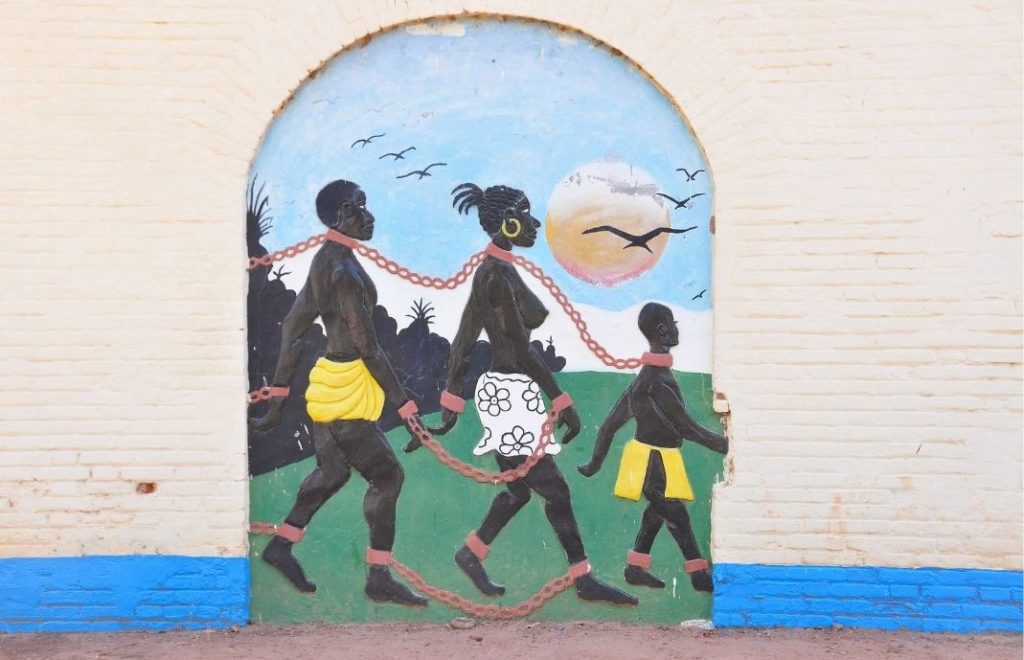
The Slave Museum in Juffureh is not an easy visit – and it’s not meant to be. Modest in size yet profound in impact, it confronts visitors with the brutal reality of a trade that scarred generations and reshaped history.
Inside, the silence is heavy. The guide offers no explanations – just a quiet nod, inviting us to walk through and absorb the weight of the past at our own pace.
The exhibits speak louder than words:
- Iron neck and foot shackles once used to restrain human beings like cargo.
- Faded photographs and illustrations depicting the horrors of capture and transport.
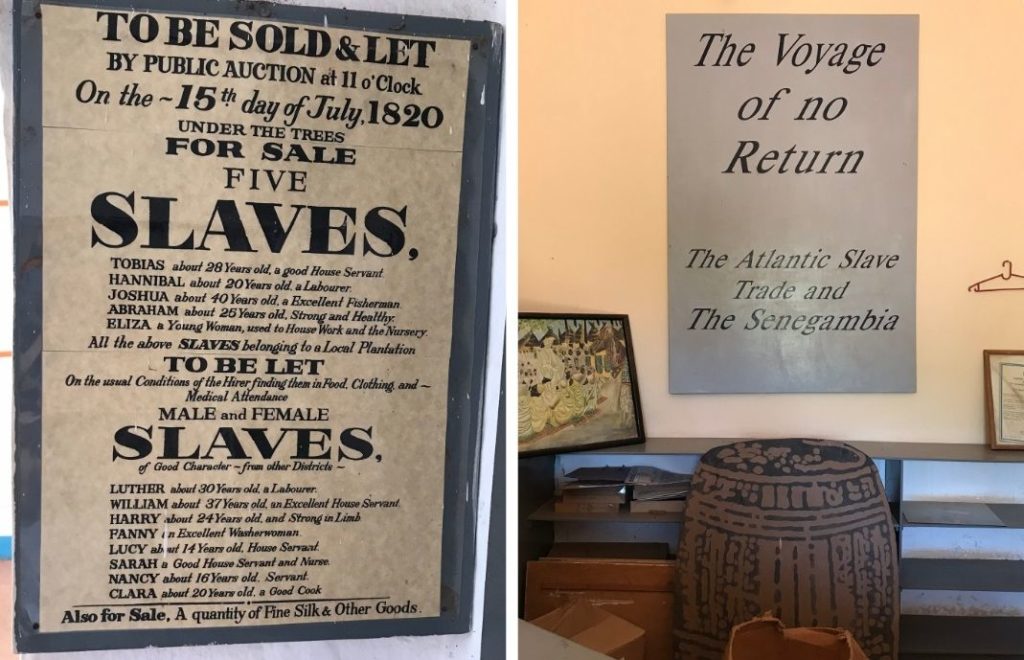
- Auction posters advertising men, women, and children for sale – reducing lives to mere property.
This museum stands as a stark testament to the trade once cynically referred to as “black ivory”, a commerce where 10-20% of enslaved people perished during the “Voyage of No Return.”
I leave with a knot in my stomach – overwhelmed, somber, and deeply reflective.
Outside, the warmth of the Gambian sun and the laughter of children pulling at my sleeve for photos lift the heaviness, reminding me that resilience and joy survive even the darkest of histories.
Final stop: Kunta Kinte Island
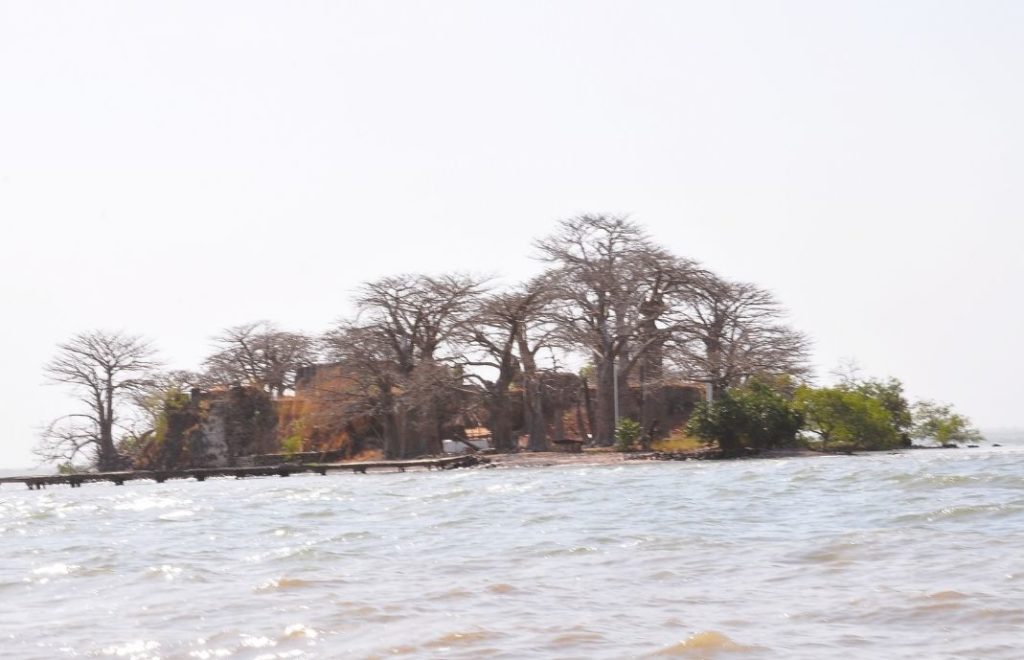
The wooden boat rocks gently as the captain extends a hand to help us aboard. Ahead, a small, low-lying island emerges on the horizon – hardly more than a sliver in the wide expanse of water.
This is our final destination, just as it once was for thousands of enslaved Africans – a grim threshold to the unknown. From here, there was no return.
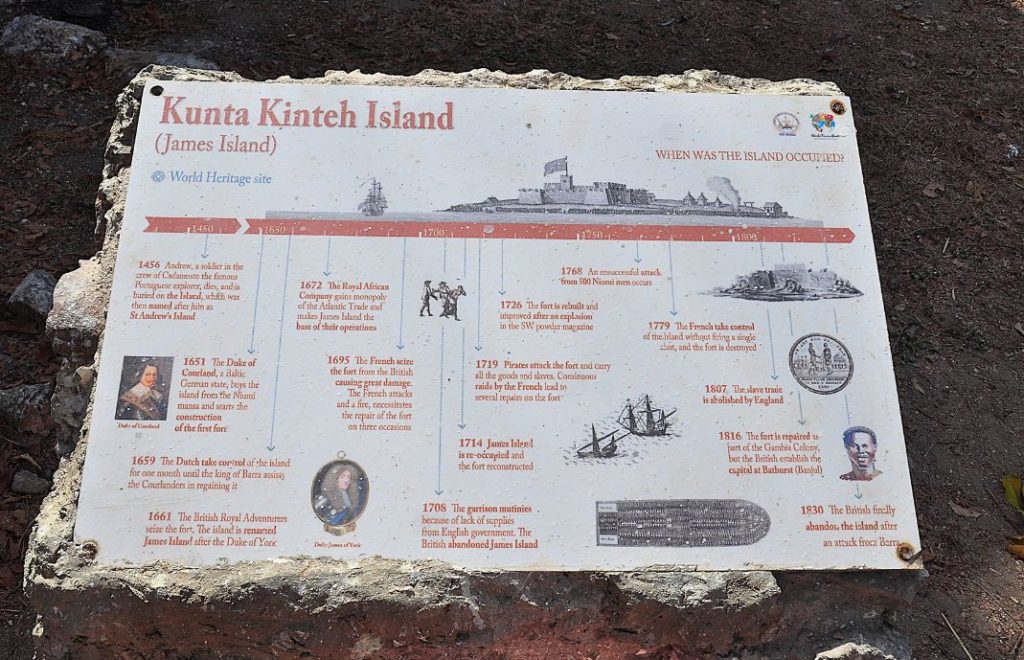
Today, it is known as Kunta Kinte Island, a name it was given in 2011 to honor Gambia’s heritage and reclaim its history. For centuries, it bore the name James Island, bestowed during the colonial era.
The island sits where the Gambia River meets the Atlantic Ocean, its strategic location making it a focal point for the transatlantic slave trade. Here, countless men, women, and children were held in captivity before enduring the harrowing voyage across the ocean – a journey from which most would never come back.
Standing on its shores, with the river behind and the Atlantic ahead, you can almost feel the weight of those lost voices, the echoes of chains, the despair – and the defiance—that once filled this place.
The story of Kunta Kinte Island
Long before its current name, this tiny island bore witness to centuries of conquest and cruelty.
In 1456, the Portuguese acquired the island from local rulers and built a fortified outpost, Fort Jacob. When the British took over, they renamed the island James Island and the fort Fort James, honoring the Duke of York (later King James II of England). The purpose was clear: a stronghold to dominate trade – first in gold, ivory, and spices, later in human lives.
Here, thousands of enslaved Africans were imprisoned before the Middle Passage. They were crammed into dark, airless cells, denied light and dignity. Food was tossed through a small hatch, barely enough to survive. For those who lived through the nightmare of captivity, there was no return – only the harrowing voyage across the Atlantic.
At its peak, the island held 875 captives at one time. Between 1731 and 1740 alone, more than 36,000 enslaved men, women, and children passed through this place of despair, destined for the plantations of the Americas and Europe.
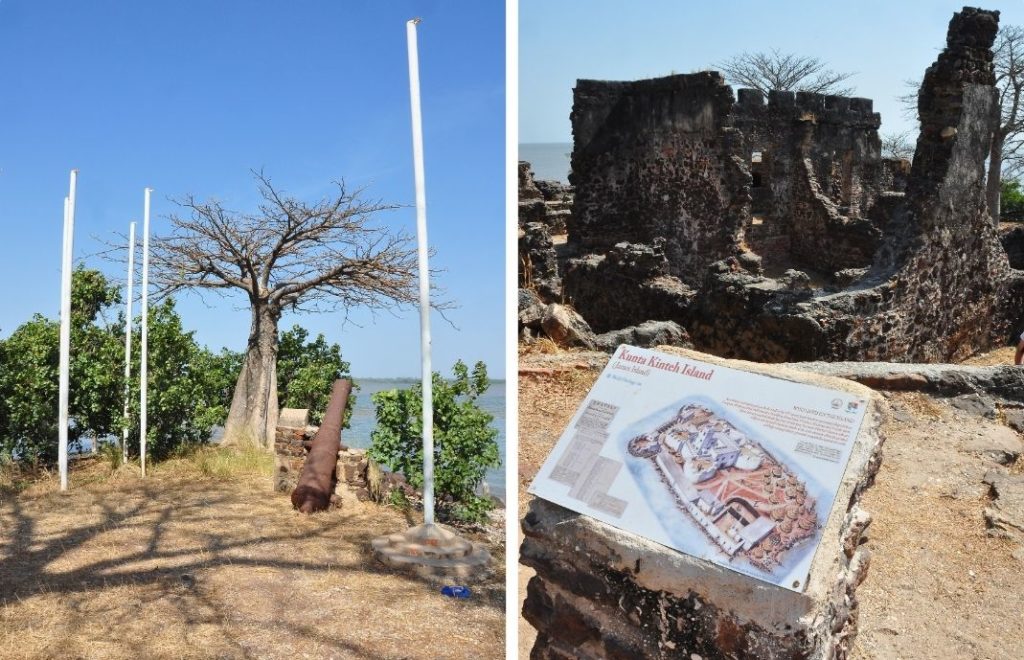
Today, Fort James lies in ruins, eroded by time and tide – only a fraction of the island remains, a ghostly fragment of history. Yet its significance endures, recognized as a UNESCO World Heritage Site – a memorial to those whose lives were stolen and voices silenced.
On the quiet boat ride back to the mainland, none of us speak. Even our guide and captain are solemn. I turn for one last look at the island and the village beyond. The gentle waves erase the footprints I left on the sand, just as they did for so many before me.
Good to know: Visiting Juffureh & Kunta Kinte Island
Day trip from Banjul
You can explore Juffureh and Kunta Kinte Island on a full-day excursion from Gambia’s capital.
Boat journey
The standard ferry ride along the Gambia River takes about 3 hours each way.
Pro tip
Do what we did – hire a private boat with a captain. It’s faster, more comfortable, and gives you a dedicated guide for a personalized experience.
Our pick
We booked through Tour Gambia, a company committed to supporting local communities. All their staff come from nearby villages – a great way to ensure your visit gives back.
What to bring
- Sunscreen
- Hat & sunglasses
- Camera
- Plenty of water
Bonus
Keep an eye out for dolphins on the river journey – it’s an unforgettable sight!
Make a difference
Pack a few pencils, crayons, and notebooks for the school in Juffureh. Small gestures make a big impact here.