Kosovo may not top the average traveler’s bucket list. Its turbulent past and landlocked location in the heart of the Balkans tend to keep it under the radar. But don’t be too quick to dismiss this young nation. What it lacks in coastline, it more than makes up for in character, culture, and unexpected charm.
From ancient monasteries and bustling markets to lively cafés and stunning mountain scenery, Kosovo invites you to dig beneath the surface and discover a place that’s both deeply historic and vibrantly alive.
If you’re nearby, a day trip is more than worth your time. You might just find yourself wishing you had planned for longer.
Day trip from Skopje to Kosovo
Our visit to Kosovo may have been short, but it certainly left us wanting more.
While staying in Skopje, North Macedonia, we figured – why not hop across the border while we had the chance? We’d heard whispers of long waits and skeptical advice warning us it might not be worth the hassle. But we ignored the naysayers, rented a car, and set off with open minds.
The border is only a 30-minute drive from Skopje, leading us through a stunning mountain valley. Verdant hills rolled alongside us as we ascended gently into higher terrain. We kept a safe and steady pace, unlike some of the daring locals who think nothing of overtaking blind corners on narrow roads. We preferred to arrive safely – and with our nerves intact.
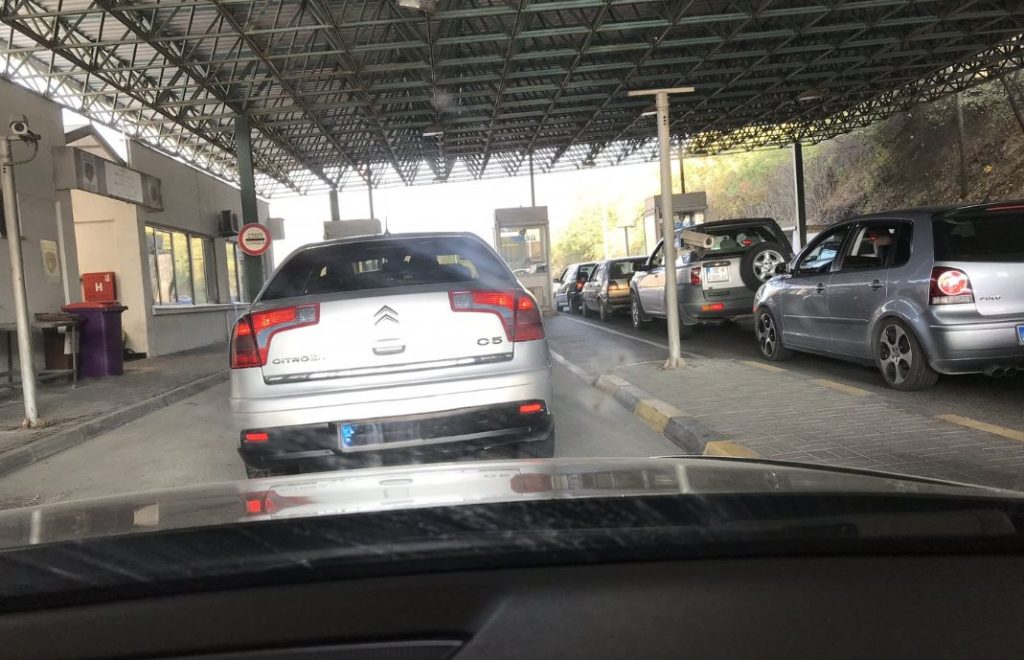
At the border crossing, we were relieved to find only four cars ahead of us. First came the exit checkpoint for North Macedonia, where we presented our passports and a signed permission slip from the rental agency allowing us to take the car into Kosovo. A few meters ahead, the Kosovo border officer greeted us with a smile, stamped our passports, and wished us a pleasant journey.
Just like that – we were in. Let the adventure begin.
Welcome to Kosovo – Europe’s second-newest country
And just like that, we found ourselves in the heart of Europe’s second-youngest nation. While Kosovo’s independence remains contested internationally, the stamp in our passports is validation enough for us. We were officially in a new country, and excited to explore Pristina, the capital.
Kosovo’s name comes from Kosovo Polje (“Field of Blackbirds”), the historic battlefield where a Serbian prince faced off against Ottoman forces in 1389. Another major battle occurred on the same plains in 1448, when a Hungarian army defeated the Ottomans.
Kosovo’s story is a complex one: a part of the Ottoman Empire until 1913, later absorbed into Serbia and then Yugoslavia in 1946. Tensions rose sharply in the 1990s between the Albanian majority and Yugoslav authorities, culminating in NATO’s air campaign in 1999. After the conflict, the UN took over administration of Kosovo, and in 2008, the country declared its independence.
As of March 2020, only 96 of the UN’s 193 member states have formally recognized Kosovo as a sovereign nation.
But politics aside, we were here – and ready to discover the spirit of a young country shaped by a long and layered past.
Presidential praise in Pristina
Crossing into Kosovo, we’re immediately struck by the sweeping scenery – and the modern infrastructure. So much for the rumors of poor roads; the highways are pristine, and at one point we cruise over one of the most striking bridges we’ve ever seen.
Just over an hour later, we roll into Pristina, Kosovo’s capital, which first appeared in the historical record in 1342. Today, it’s a vibrant mix of past and present, where cheerful greetings from locals come freely and smiles are plentiful.
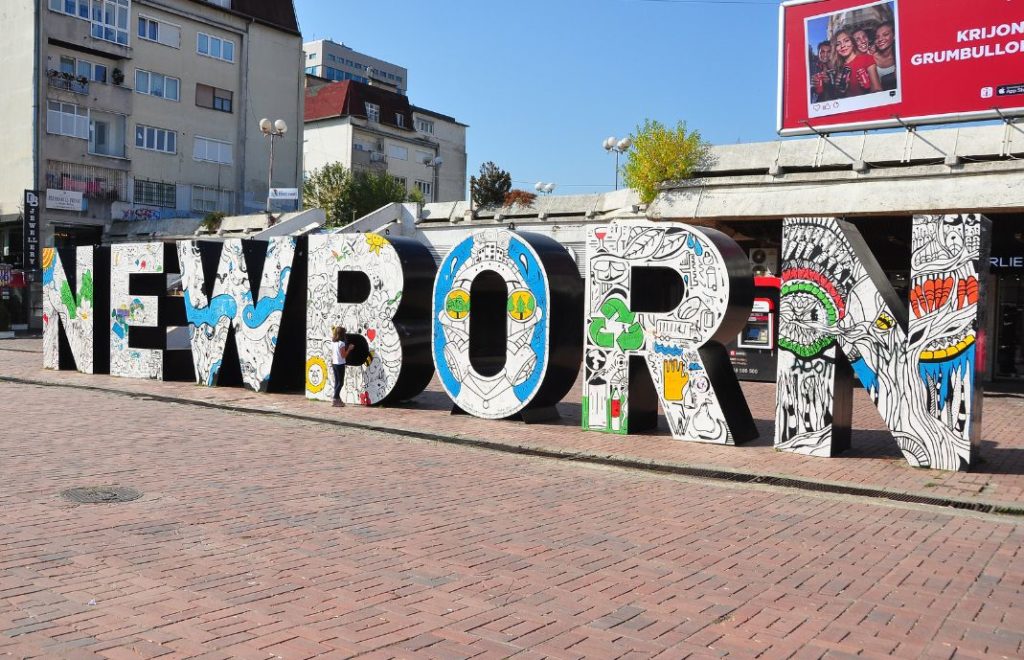
We park near the national football stadium and stroll past one of the city’s most iconic symbols – the Newborn Monument, unveiled on the day Kosovo declared independence from Serbia. Colorful, bold, and ever-changing with new designs, it’s a magnet for selfies and a proud emblem of Kosovo’s new chapter.
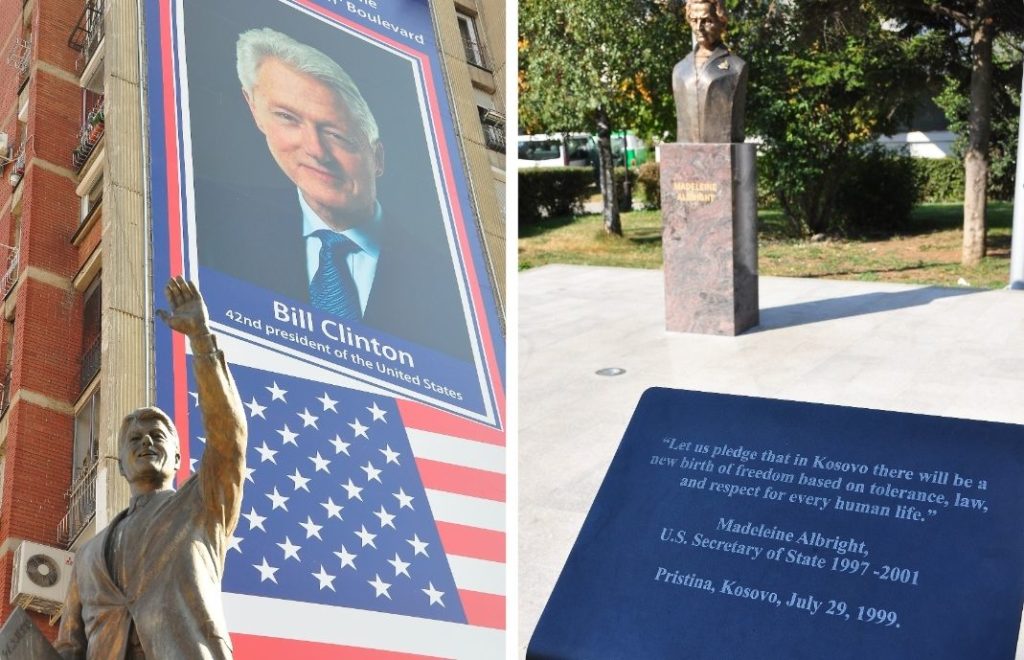
Then, we find ourselves on Bill Clinton Boulevard, and yes – there’s even a statue of the former U.S. president standing proudly in a suit and tie, waving to passersby. At first, it’s a bit surreal. But with a quick dive into history, it all makes sense. The people of Kosovo hold deep gratitude toward Clinton for NATO’s 1999 intervention during the Kosovo War, which played a crucial role in ending the conflict with Yugoslavia. The three-meter bronze statue was unveiled in 2009, and just beside it? A clothing shop aptly named Hilary.
The presidential tributes don’t stop there. George W. Bush also has a street named in his honor, a nod to his early recognition of Kosovo’s independence. And in towns like Prizren, you’ll even find roads dedicated to Woodrow Wilson, who supported Albanian self-determination after World War I.
In Kosovo, American presidents aren’t just names in textbooks – they’re woven into the very fabric of the nation’s streets.
Picturesque Prizren – Kosovo’s cultural gem
With Pristina behind us, we hit the road again – this time bound for Prizren, one of Kosovo’s most charming cities. Just 60 kilometers south of the capital, the journey is short, but the change in scenery is striking.
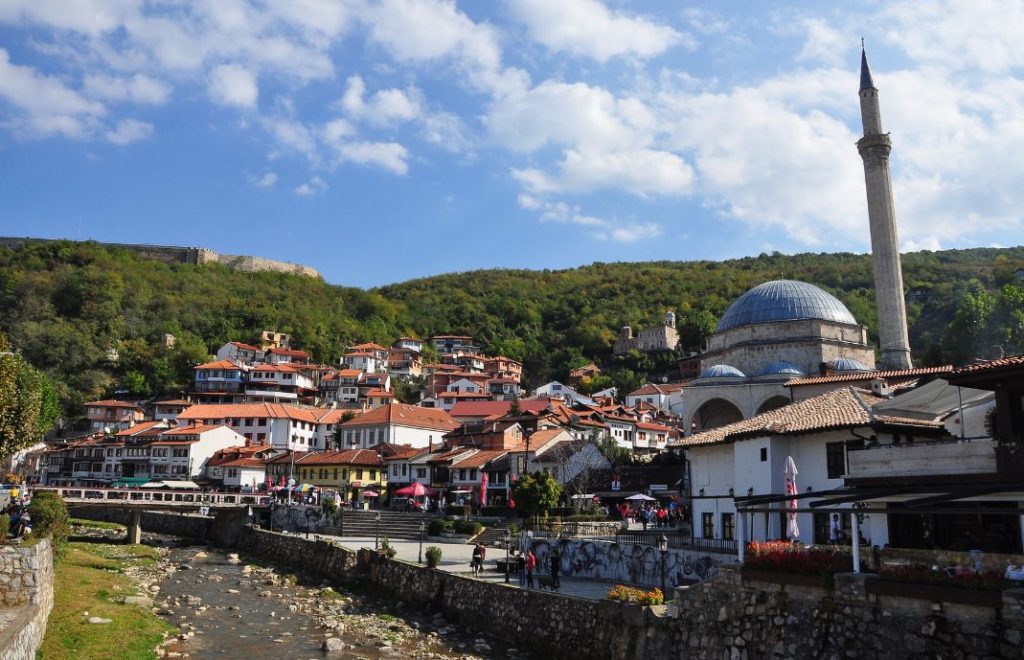
Nestled on both sides of the Bistrica River, Prizren is an architectural time capsule. Cobbled streets wind through neighborhoods dotted with ancient mosques, Ottoman-era buildings, and welcoming cafes. Towering above it all is Kaljaja Fortress, built in the 11th century to shield the city from invaders. The view from the top? Absolutely worth the hike.
As midday hunger sets in, we cross the iconic stone bridge from the 16th century – a symbol of the city’s Ottoman past. The streets hum with activity; the sounds of chatter and clinking cutlery drift through the warm air as diners enjoy meals under the sun.
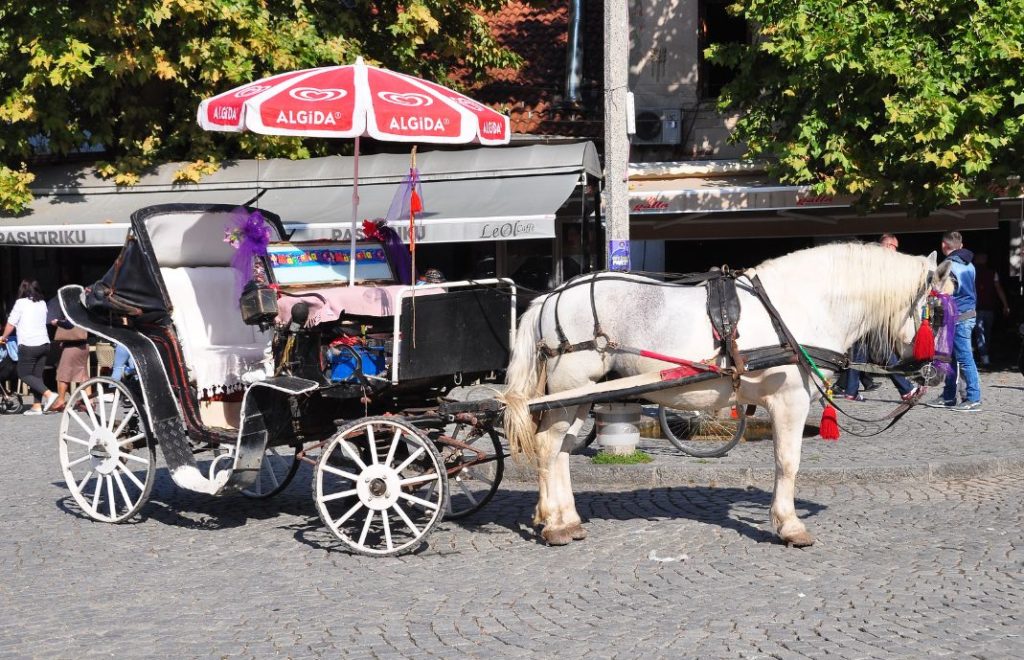
We make our way to Shadervan, the historic square and true heart of Prizren. Horse-drawn carriages trot by (three drivers offer us rides within minutes), and the entire square feels like a step back in time.
At the center of it all: a public fountain where locals and tourists alike take a sip from the cool, clear water. Legend has it that if you drink from the Shadervan fountain, you’re destined to return to Prizren.
Judging by the city’s warmth, beauty, and vibrant culture, we wouldn’t mind if the legend were true.
Sinan Pasha – byens eldste moské
Vi finner en restaurant med ledig bord helt ved gaten og slår oss ned.
Menyen har en rekke fristende retter og det er vanskelig å bestemme seg. En smilende og noe småstresset servitør kommer for å ta bestilling. Siden det er midt i lunsjtiden går visst drikkebestillingen i glemmeboken – både vår og nabobordets. Bare bagateller, drikken kommer til slutt. Servitørens gjestfrihet og gode retter gjør at vi sitter igjen med en god opplevelse.
Besøket, om en ganske kort, i Pizren, avsluttes ved Sinan Pasha, byens eldste og største moské. Inskripsjonene forteller oss at den ble bygd i 1615. Den store kuppelen dominerer bybildet og er byens landemerke.
Det er på tide å sette kursen tilbake til Skopje.
Grensepasseringen går like raskt og effektivt. Da vi forlater Kosovo spør passoffiseren om vi har hatt et fint besøk. Vi kan ikke annet enn å bekrefte at det har vi hatt – og at vi gjerne kommer tilbake.