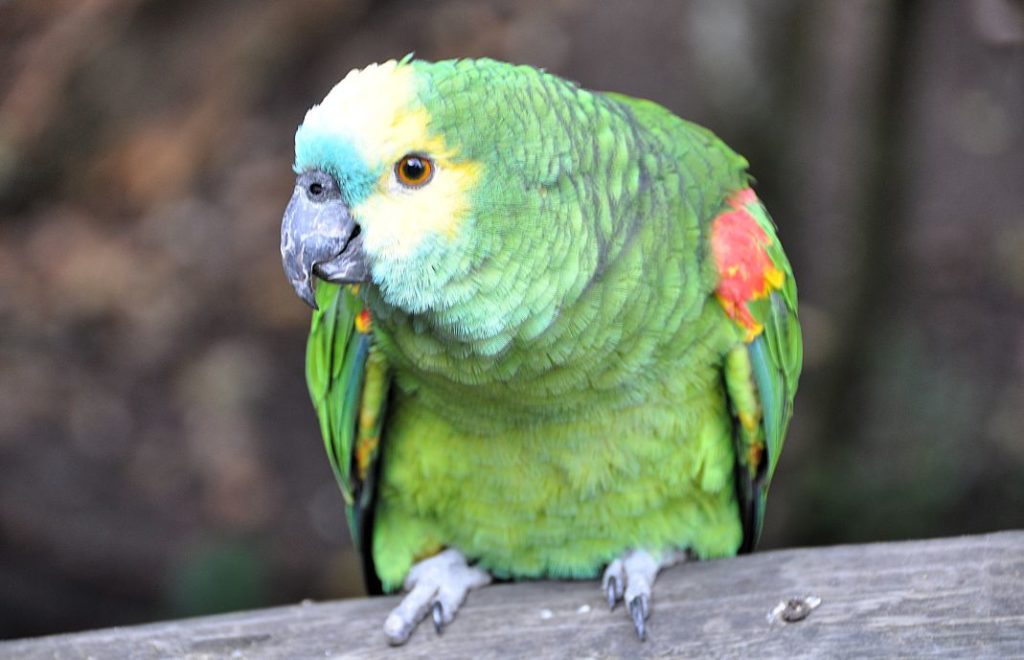
Tucked away just outside Plettenberg Bay lies a true avian paradise – Birds of Eden. This award-winning sanctuary is home to some 3,500 birds representing over 220 species, each one fluttering freely beneath the world’s largest single-dome free-flight aviary.
Here, the birds have, quite literally, regained their wings – and their freedom.
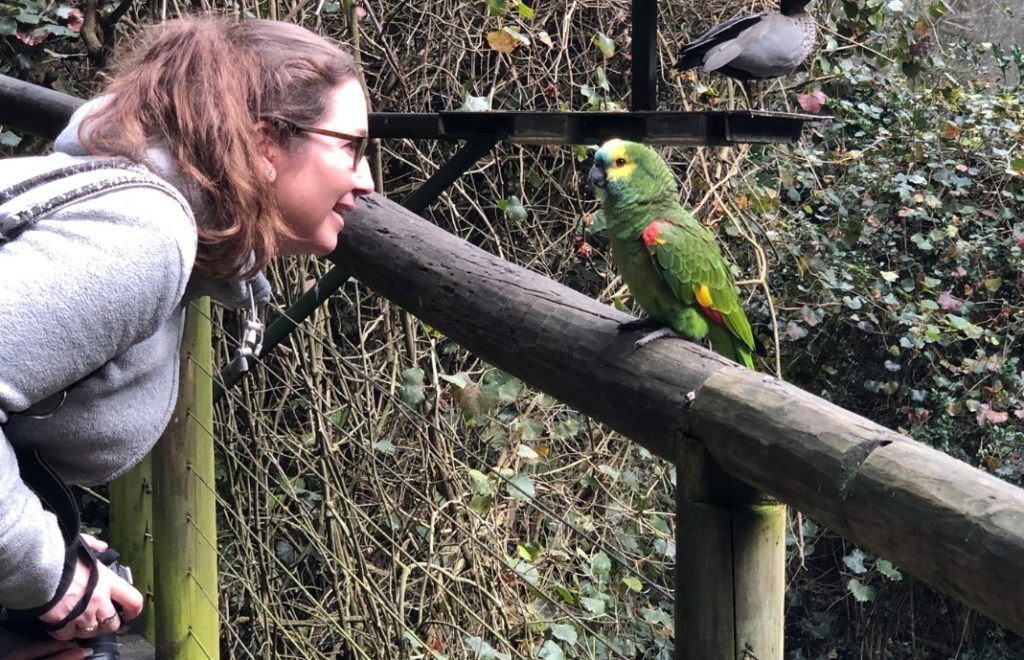
Every resident once lived in captivity or endured dire conditions. Hand-fed and caged, many have become remarkably tame and unafraid of human presence. They’ll often approach you with curious eyes and graceful ease – but don’t be tempted to touch or feed them. Respect for their space is part of the sanctuary’s golden rule.
Birds of Eden isn’t just a sanctuary – it’s a soaring tribute to second chances, where feathers and freedom go hand in hand.
A skyward sanctuary engineered with heart
Before taking flight beneath the world’s largest free-flight aviary, every bird at Birds of Eden goes through a careful rehabilitation process. This colossal sanctuary spans an impressive 21,761 square meters, with a soaring dome enclosing 375,372 cubic meters of airspace. Its skeletal frame is supported by 28 towering masts ranging from 2 to 34 meters in height – a breathtaking engineering feat.
What makes this project even more remarkable is its heart: the entire construction was carried out by locals from the neighboring village. Though initially unskilled, they received hands-on training both before and during the four-and-a-half years it took to bring this dream to life.
Nature inside the dome is a lush mosaic of indigenous forest and flowing river. Over 70% of the vegetation is native, allowing the landscape to flourish authentically. The river, which exists entirely within the sanctuary, has no external source – an intentional design that prevents pollution and keeps the water pristine.
Scattered throughout are tranquil pools where ducks and waterfowl wade in contentment.
Visitors are invited to explore this avian Eden via a 1.2-kilometer wooden walkway, much of it elevated, offering an enchanting bird’s-eye perspective of a sanctuary where freedom takes flight.
Free as a bird
Welcome to an aviary like no other!
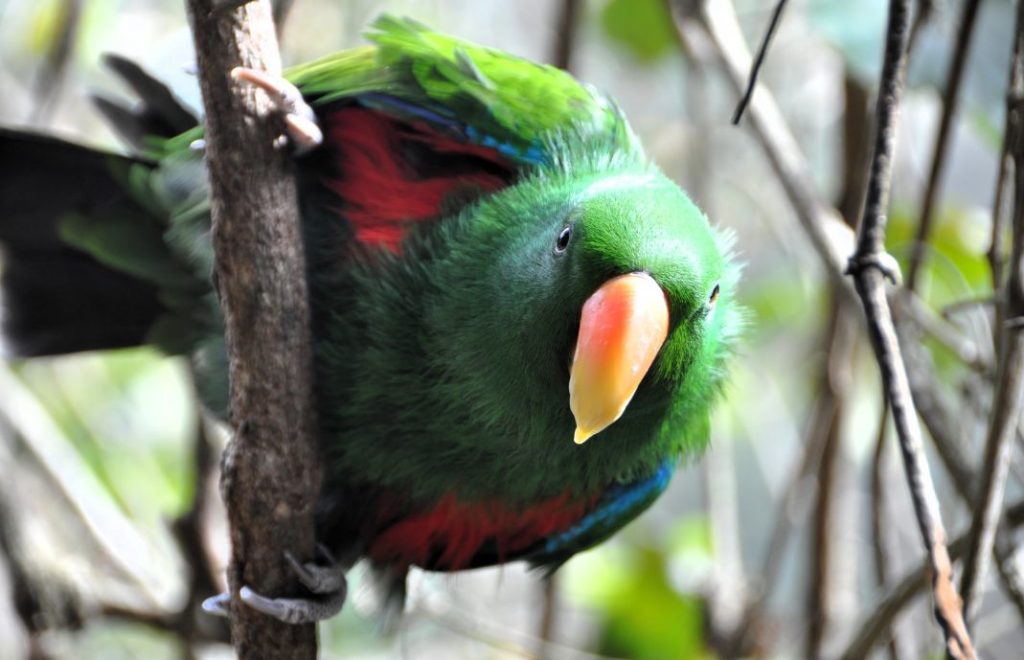
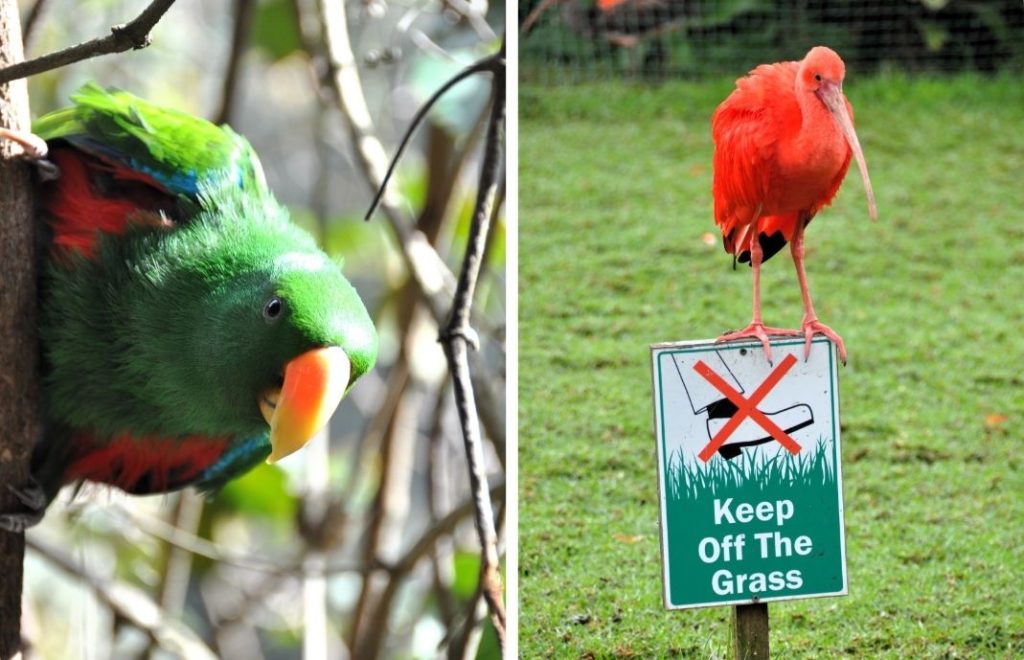
Birds of Eden is a vibrant haven for parrots, swans, flamingos, ducks, starlings, pheasants, toucans, hornbills, and, of course, Africa’s dazzling turacos.
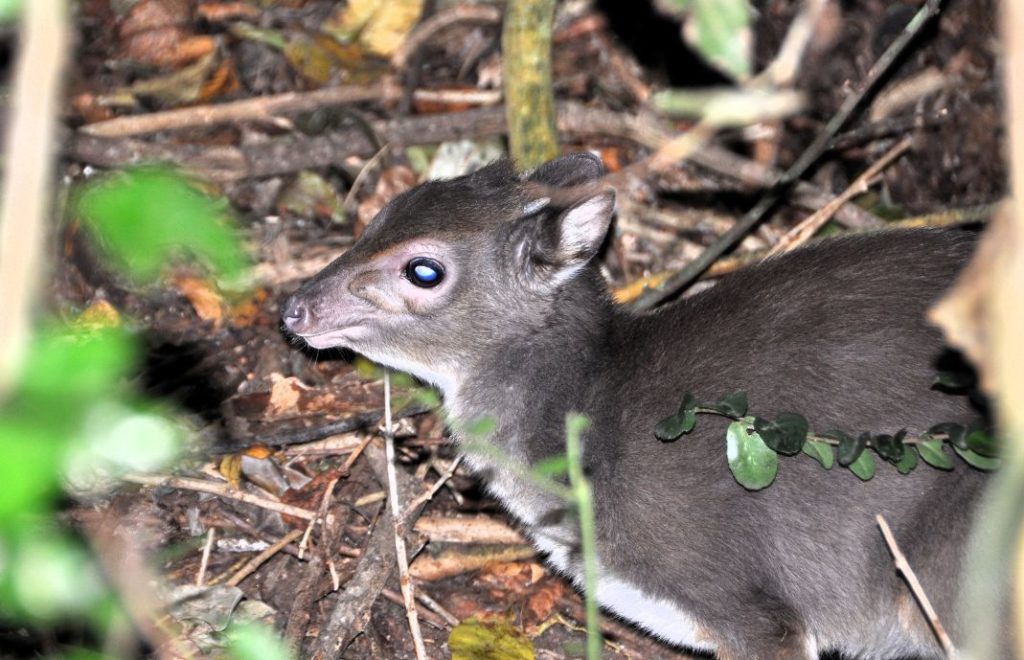
But this sanctuary is more than just a birdwatcher’s paradise. Here, you might also glimpse fluttering fruit bats, tiny monkeys darting through the branches, and even South Africa’s smallest antelope, the elusive Blue Duiker.
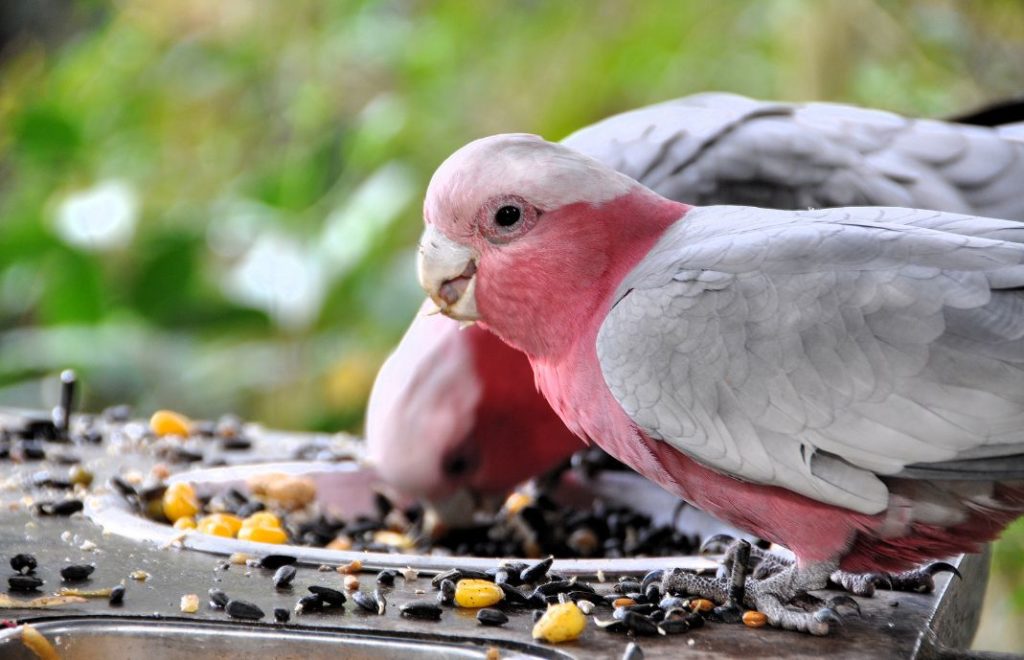
Visitors are free to wander at their own pace, following the winding paths through a lush landscape alive with birdsong and bursts of tropical color. Along the way, feathered charmers casually stroll along railings or nibble from feeders, their curiosity often leading them to approach guests with playful intrigue.
In parts of the sanctuary, the trees grow so densely that sunlight filters through in soft, scattered beams, casting an almost mystical glow over the forest floor. A suspended bridge offers sweeping views, and just beyond it, a delicate waterfall tumbles into a serene pool where birds splash in the morning light.
Take your time. Pause. Look up. Soak it all in.
Whether you can name every species or recognize only a handful – parrots, ducks, flamingos – the experience is nothing short of magical. A celebration of freedom, color, and the quiet poetry of the natural world.
More than just birds
In the shadowy depths of the forest, we’re lucky enough to spot a truly rare gem – South Africa’s tiniest antelope, the elusive Blue Duiker.
She darts through the undergrowth below, weaving in and out between tree trunks with graceful ease. Moments later, she reappears just meters ahead of us on the path. She’s petite, delicate.
Fully grown, Blue Duikers stand just 32–41 centimeters at the shoulder and weigh between 3.5 and 9 kilograms. Females are slightly larger than males, both sporting short, spiked horns that peek through a tuft of fur. True to their nature, these gentle creatures are monogamous, staying close to their lifelong partners.
As the trail draws to a close, it leads to a charming restaurant perfectly nestled at the edge of a tranquil lake. With a drink in hand and a plate of something delicious, you can sit back and watch the birds enjoying their own little piece of paradise on the water.
It’s a fitting finale to an unforgettable journey – where forest, feathers, and a touch of wild magic come together in one harmonious Eden.
Did you know…
… a bird’s heart beats an astonishing 400 times per minute at rest – and up to 1,000 times while in flight?
… what truly sets birds apart in the animal kingdom is their feathers? They’re the only creatures on Earth that have them.
… not all birds are built to fly – emus and ostriches, for example, are grounded, proving that flight isn’t a defining trait of all birds.
… a bird’s average body temperature is typically 7-8 degrees Celsius higher than that of a human?
… ornithophobia is the name for an intense, persistent fear of birds? For those who suffer from it, even the sound of wings can trigger deep anxiety.
Practical information
Birds of Eden is located in Plettenberg Bay, roughly a two-hour drive from Port Elizabeth.
It sits right next to Monkeyland, which is also well worth a visit.
Birds of Eden is one of three sanctuaries operated by the South African Animal Sanctuary Alliance (SAASA).
The other two are Monkeyland and Jukani Wildlife Sanctuary.
No advance booking is required.
You’re free to explore Birds of Eden on your own, but guided tours are available if you prefer.
Combo tickets including Monkeyland and/or Jukani are available for purchase.
Birds of Eden is wheelchair accessible.
On-site you’ll find a restaurant, restrooms (including inside the dome), and a gift shop.
You’ll leave with a newfound appreciation for birds – and part of the fun is spotting and identifying the many species along the way.
Bring a field guide with photos and descriptions so you can check off each feathered friend as you go!
More inspiration to the sanctuaries:
Where the monkeys are in charge
Where Big Cats are safe
Lara Mostert – A fierce advocate for the voiceless