
Normandy holds an unshakable place in history. It was here, on these windswept shores, that Allied soldiers waded through crashing surf on June 6, 1944 – the day that marked the beginning of Europe’s liberation and the eventual end of World War II.
“It’s around 05:00 on June 6. German Major Werner Pluskat scans the Atlantic through his binoculars. He’s done so several times tonight. At 00:20, he had calmly reported to Berlin headquarters: ‘Sea rough, no ships.’ But this time, the view steals his breath. ‘There must be 10,000 ships out there!’ he stammers. Then his voice is drowned out by the thunder of naval guns…”
Before him lay the largest amphibious invasion in history: 7,000 ships, 11,600 aircraft, and 156,000 troops, converging on the beaches of Normandy.
This was Operation Overlord – the Allies’ bold bid to open a second front, force Hitler’s Reich into a war on three fronts, and ultimately crush it into surrender. What began as a storm of steel and fire on those fateful beaches became the first step toward victory – and freedom – for an entire continent.
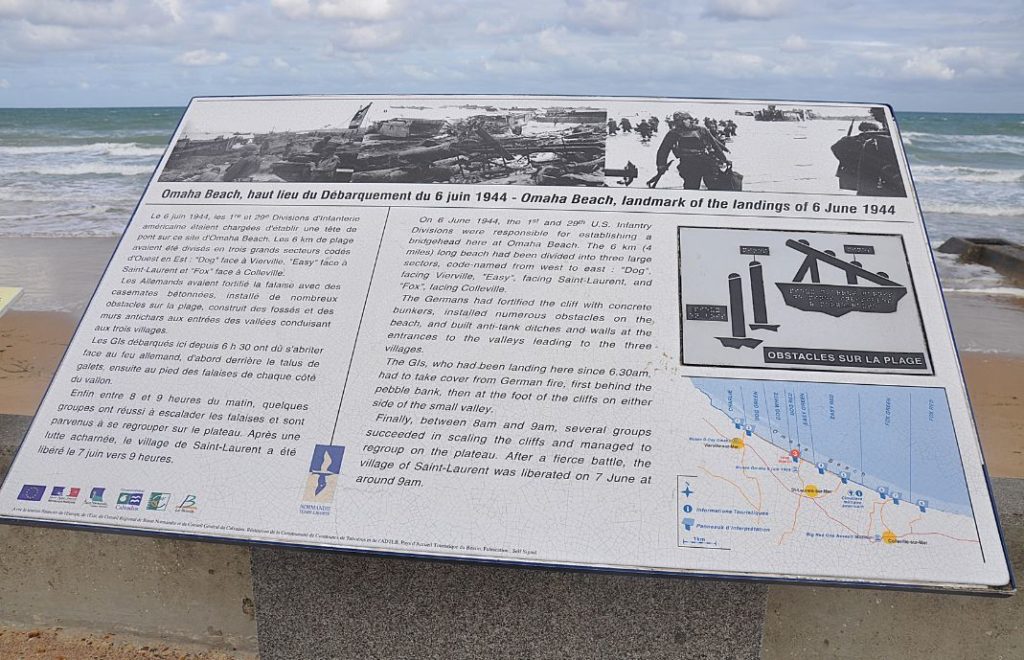
Pointe du Hoc – Where heroes scaled the impossible
The first stop on any journey to relive the battle for Europe’s freedom should be Pointe du Hoc.
This sheer 30-meter cliff, looming between Utah and Omaha beaches, was a formidable stronghold during World War II. The Germans had fortified it with concrete casemates, artillery positions, and interlocking fields of fire. On D-Day, the task of neutralizing this deadly position fell to the elite U.S. Army Rangers of the 2nd and 5th Ranger Battalions, led by Lieutenant Colonel James Earl Rudder.
The plan was audacious: three companies – D, E, and F of the 2nd Battalion – would land directly beneath the cliff, then scale it using ropes, ladders, and grappling hooks, all while under relentless enemy fire. Of the 225 Rangers who fought their way to the top, 135 would never see home again.
Today, Pointe du Hoc remains scarred by the ferocity of that day. Bomb craters gape like open wounds, and the shattered bunkers still echo faintly with imagined sounds: the pounding boots of soldiers, the staccato crack of machine guns, the shouted orders of men in the chaos of battle.
Stand at the edge and look down. It’s easy to picture the Rangers clawing their way up rain-slicked ropes, German bullets whistling overhead, the salty spray of the Channel stinging their faces.
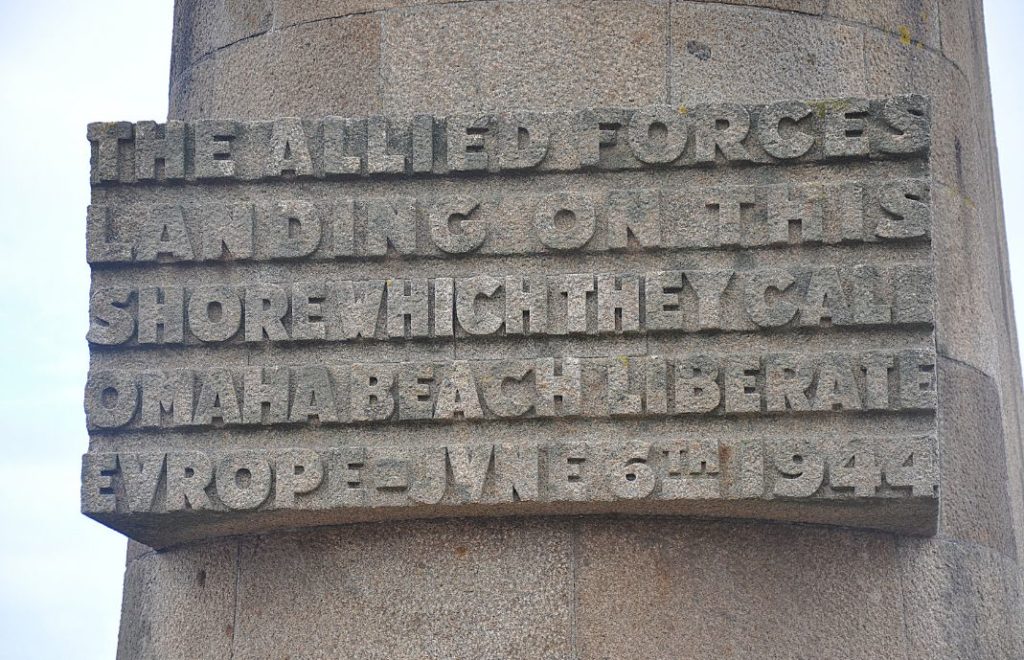
Every visitor pauses at the solemn Rangers Memorial, a tribute to those who scaled the impossible and changed the course of history. Here, on this wind-battered headland, courage is carved into the very rock.
”And the American rangers began to climb. They shot rope ladders over the face of these cliffs and began to pull themselves up. When one ranger fell, another would take his place. When one rope was cut, a ranger would grab another and begin his climb again. They climbed, shot back, and held their footing. Soon, one by one, the rangers pulled themselves over the top, and in seizing the firm land at the top of these cliffs, the began to seize back the continent of Europe. ”President Ronald Reagan, June 6, 1984
Operation Overlord – The plan behind D-Day
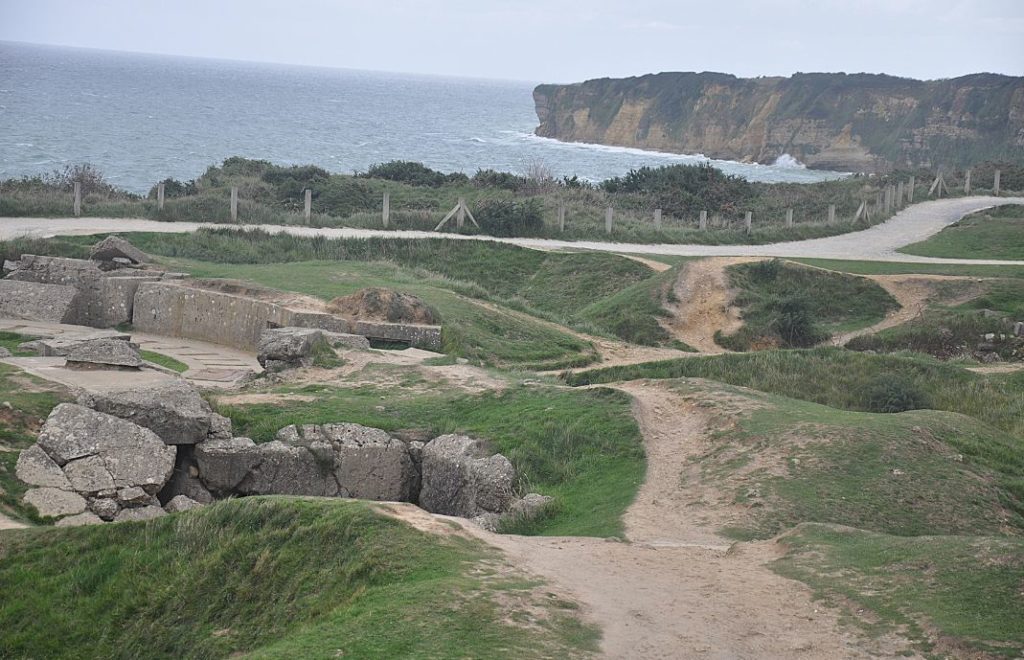
On the night of June 6, 1944, the greatest amphibious invasion in history began as an Allied armada crossed the English Channel toward the shores of Normandy. Their objective: secure five carefully chosen landing zones and open a Western Front to liberate Europe from Nazi control.
The invasion beaches were divided into five sectors: Sword, Juno, and Gold in the east (assigned to British and Canadian forces) and Omaha and Utah in the west (under U.S. command). Before the landings, three airborne divisions were tasked with a daring mission – parachuting behind enemy lines to seize bridges, disrupt reinforcements, and secure the flanks.
Following intense aerial bombardment and naval gunfire meant to weaken German defenses, the first assault waves stormed the beaches, establishing precarious footholds under relentless fire. Behind them, wave after wave of reinforcements poured ashore, pressing inland to link the scattered beachheads.
The ultimate goal for D-Day was ambitious: by nightfall, Allied forces aimed to capture Bayeux and merge the eastern sectors and airborne zones into a single strong forward position.
It was the start of Operation Overlord – a bold gamble that would change the fate of the war and the future of Europe.
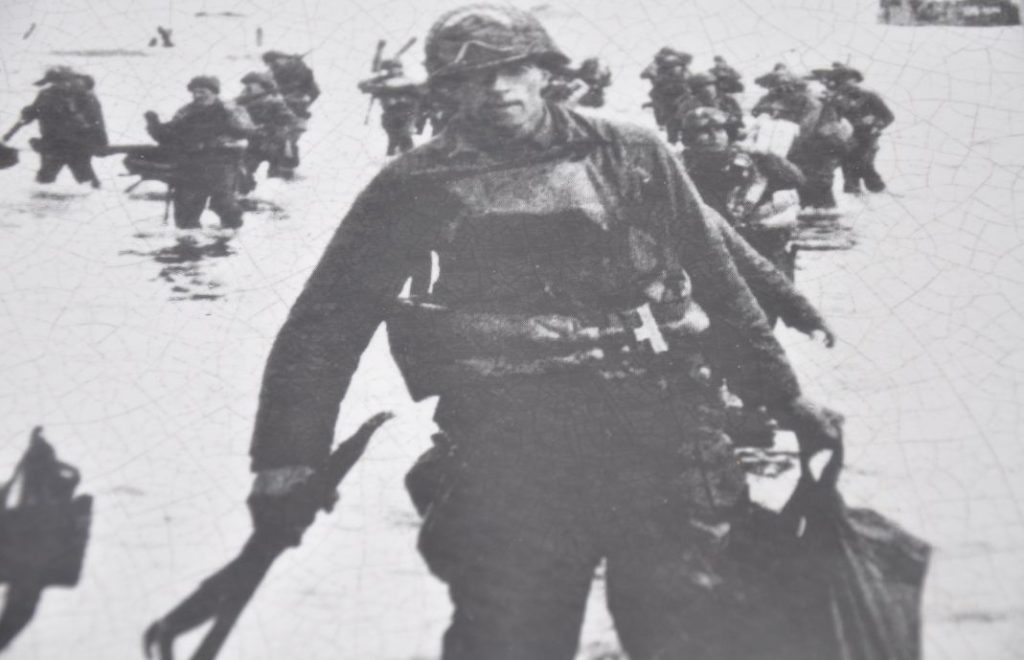
Omaha Beach – June 6, 1944
“06:30 hours. The assault on Omaha Beach begins. Even before the first wave lands, things have gone terribly wrong. Rough seas and treacherous tides turn the landing into a nightmare before it even starts. Naval bombardments, intended to neutralize German defenses, fall short of their mark.
Heavily burdened with gear, soldiers wade through frigid water up to their necks, pushing toward the shoreline – only to be met by a storm of deadly fire. German machine guns rake the beach, cutting down men before they can even leave their landing craft. The defenders’ strength has been vastly underestimated; the fortifications here had recently been reinforced, a fact Allied intelligence failed to uncover.
Throughout the morning, chaos reigns. American troops fight tooth and nail to claw their way off the open sand and up the blood-stained bluffs. Boys become men in a single, harrowing day – some through acts of unimaginable courage, others in their final breath.
By afternoon, the situation remains uncertain. Omaha is a killing ground, its tide laced with sacrifice. Yet, against all odds, a fragile foothold begins to form – the first step toward liberation carved in blood and bravery.”
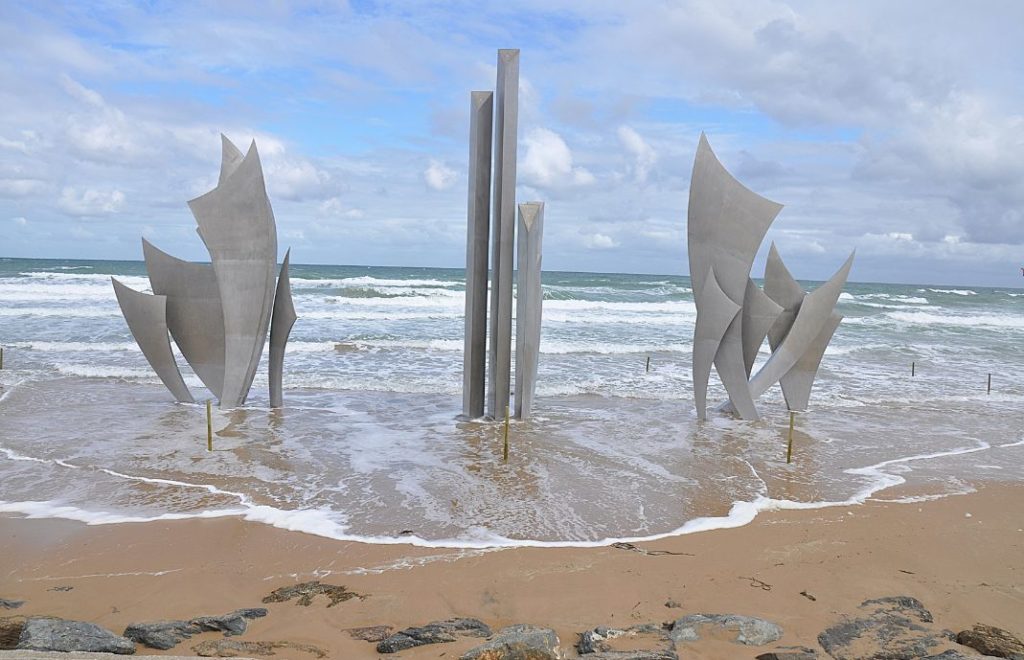
Omaha Beach – A shoreline of sacrifice
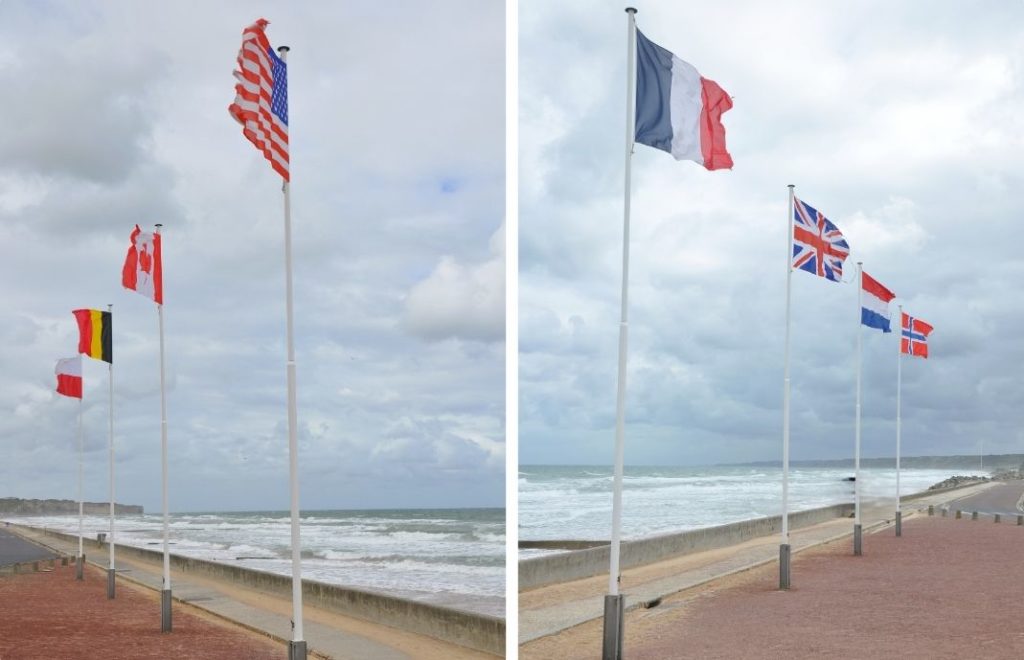
Today, the steel sculpture Les Braves rises from the sands of Omaha Beach – an arresting monument to the courage and suffering that unfolded here on June 6, 1944.
The roar of the sea and the whip of the wind cannot erase the echoes of that day: the drone of transport planes overhead, the relentless chatter of machine guns, the anguished cries of the wounded and dying. Once, these waves ran crimson with blood; now they lap gently at a shore haunted by memory.
Sitting on the beach, gazing out across the Channel, the stories of survivors come alive. They speak of a landing meticulously planned to the last detail – yet when the hour came, chaos reigned.
On that fateful morning, 43,250 American infantrymen stormed Omaha Beach, thrust into a gauntlet of fire. German snipers lay hidden among the cliffs, picking off soldiers one by one. The air was thick with the stench of gunpowder, the crash of shells from naval guns reverberating like thunder, while the surf turned red in the wake of unimaginable sacrifice.
Omaha was not just a beach – it was a crucible of courage. And its sands will forever bear the weight of that history.
The soldier who never came home
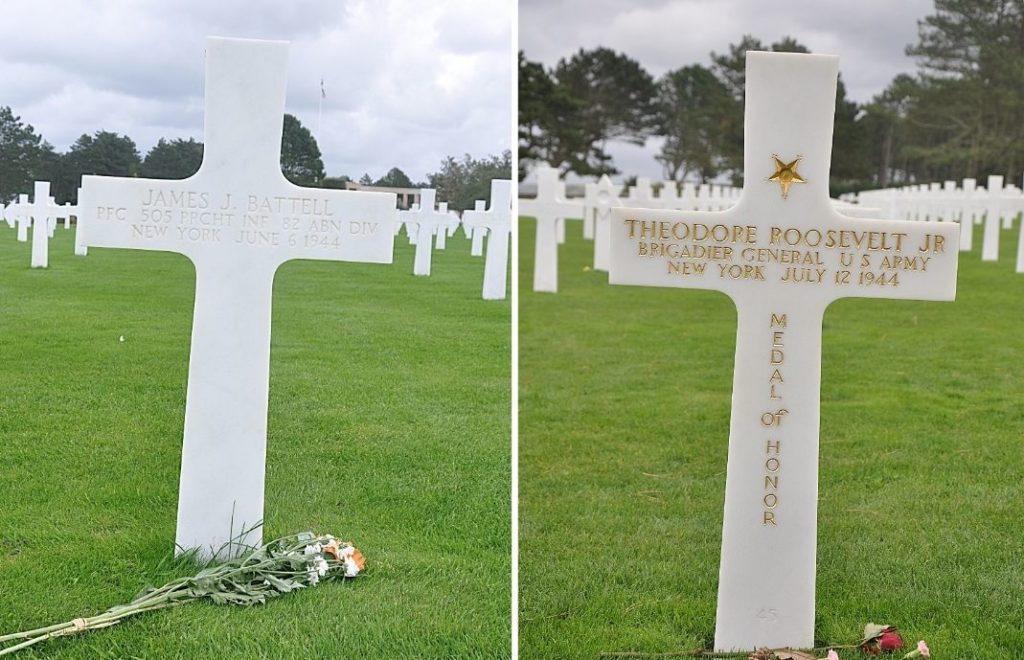
An elderly man stands with his head bowed before a simple white cross. The inscription reads: June 6, 1944. Beneath it lies his father – a man he never truly knew. He was just two years old when his father fell on Omaha Beach.
Every year, he makes the journey from the United States to Normandy, to honor the man who gave everything.
I approach quietly and ask, almost hesitantly: “What do you feel – anger, frustration, bitterness?”
He looks up, his eyes calm, and says softly: “No. Only gratitude.”
I feel the same. Gratitude. That’s why I came here – to pay my respects, to express my thanks to those who fell for our freedom.
He smiles faintly. “You know, the war changed everything – lives, futures, entire generations. Not just for those who fought, but for those left behind. You’re young… why are you here, if I may ask?”
“Out of respect and gratitude,” I reply, aware of how cliché it sounds, yet utterly sincere. “These men and women gave their lives so I could grow up in a free Europe. I owe them everything.”
He studies me for a moment, then nods. “Then I was wrong. You’re young, but you understand.”
Gently, he pats my cheek, before turning back to the grave. His voice trembles as he whispers – perhaps to his father, perhaps to himself: “Thank you. I miss you.”
The American Cemetery – A place of honor and silence
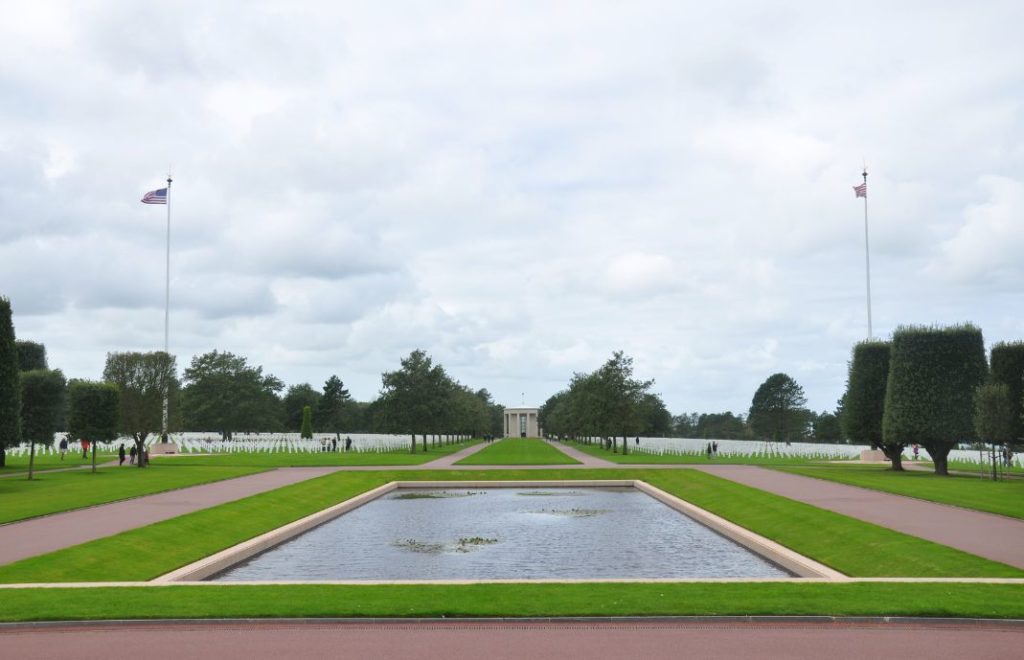
A profound sense of sorrow and reverence lingers over the Normandy American Cemetery, a place as solemn as it is beautiful.
Here rest 9,387 soldiers who gave their lives for freedom. Among them are 9,238 white crosses, 149 Stars of David, 1,557 whose names were once unknown, 41 sets of brothers, and three recipients of the Medal of Honor.
The rows of headstones stretch with perfect precision across the emerald lawn, each one a silent sentinel to sacrifice. Above them, the American flag stirs gently in the breeze.
In the Garden of the Missing, the names of those still unaccounted for are etched in stone. Beside some names, a small bronze rose glimmers – a mark that their remains were later found and laid to rest.
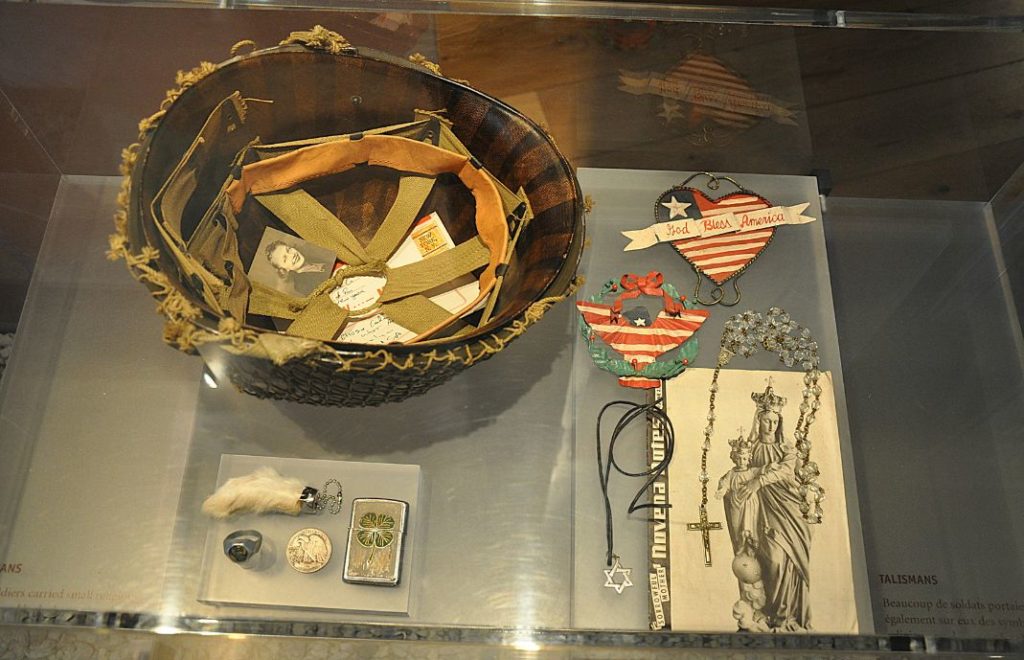
At the entrance stands a museum well worth visiting. Inside, photographs, uniforms, medals, and personal stories bring history vividly to life, giving faces and voices to the fallen who rest just beyond its walls.
This is more than a cemetery. It is a sanctuary of memory, a place where freedom whispers through the wind and gratitude takes root in every heart that walks among these hallowed grounds.
”Their graves are the permanent and visible symbol of their heroic devotion and their sacrifice in the common cause of humanity.”
A moment of reflection
Meeting the elderly man – proud yet wistful in the military shirt of his fallen father – left a profound mark on me. Year after year, he returns to this sacred ground, not out of anger, but out of pride and gratitude. His mission now is to ensure that future generations never forget what these soldiers sacrificed for a free Europe.
Our brief conversation put life into perspective, a stark reminder of what truly matters.
Standing on Pointe du Hoc and, most of all, on Omaha Beach, the events of D-Day cease to be mere words in a history book or dramatic scenes on a screen. Here, the invasion becomes tangible. The silent beaches remain steadfast witnesses to unimaginable courage and suffering. The wind seems to carry the echoes of gunfire, the cries of the wounded, the acrid tang of gunpowder – and yes, the cost of freedom.
Every step here whispers the same truth: humanity’s capacity for both greatness and brutality is boundless. And with that realization comes an unshakable vow – we must never allow such horrors to happen again.
Thank you for freedom
Operation Overlord was, without doubt, one of the most pivotal military operations in history. If it had failed, the world would probably look quite different today.
On June 5, 1944, thousands of soldiers gathered in 6,939 ships off the coast of southern England, setting their course for Normandy. They were the spearhead of an army that would fight its way across Europe and bring an end to World War II.
On the beaches of Normandy, our nations were reclaimed – but at a terrible cost.
From June 6, 1944, until May 8, 1945, the world watched as Allied troops pressed forward, bearing with them the hopes and prayers of millions yearning for peace. They fought bitterly, relentlessly, seizing Europe meter by meter. With every step, they marched toward victory.
The success of D-Day made it virtually impossible for the enemy to push the Allies back. The establishment of a second front marked a decisive turning point in the war, sealing the fate of Nazi Germany. By May 1945, Hitler’s dream of a Thousand-Year Reich lay in ruins.
But victory came at a price – a staggering, heartbreaking price. The first step toward peace and a free Europe was taken on the blood-soaked sands of Normandy. Today, these shores lie quiet, their waves whispering of a past etched forever into history. Here, freedom was forged, and those who fought – both the fallen and the survivors – earned their eternal place in history – and our gratitude.
Thank you for our freedom.
“I started out to cross the beach with thirty-five men and only six got to the top, that’s all…”2nd Lieutenant Bob Edlin – US Army, 2nd Ranger Infantry Battalion
Worth seeing in Normandy
- Utah, Omaha, Gold, Juno & Sword Beaches – The five landing beaches where history was written on June 6, 1944.
- Pointe du Hoc Ranger Monument – Honors the heroic U.S. Rangers who scaled 30-meter cliffs under fire.
- Normandy American Cemetery & Memorial – A solemn resting place for 9,387 fallen soldiers overlooking Omaha Beach.
- Musée Mémorial 1944 – Bataille de Normandie – In Bayeux, this museum offers deep insight into the Normandy campaign.
- Musée du Débarquement (6 June 1944 Museum) – Located in Arromanches, focusing on the Mulberry harbors and D-Day logistics.
- The Merville Battery – A key German gun position neutralized by British paratroopers before the landings.
- Pegasus Bridge – Site of the daring British glider assault that secured vital crossings.
Sources
Antony Beevor: D-Day: The Battle for Normandy
History magazine: A World in Flames
Read more about D-Day and World War II:
Why is it called D-Day?
Walking through Hitler’s Berlin
World War II in Warsaw
Westerplatte – Where the Second World War began
