
On September 1st, 1939, hell broke loose at Westerplatte. It was here that the very first shots were fired, plunging the world into yet another devastating war.
Because of its immense historical significance, Westerplatte today stands as one of Gdańsk’s most important and compelling attractions.
Before the Second World War
Until the outbreak of war, Westerplatte was best known for its elegant spa and beautifully landscaped park.
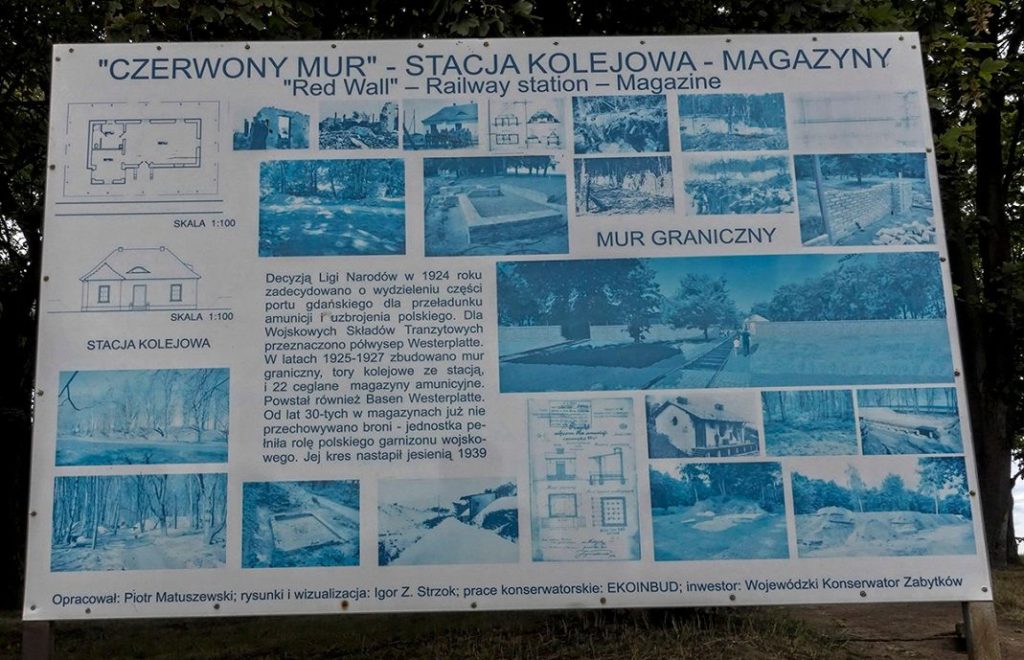
In 1925, Poland was granted permission by the League of Nations (established in 1920 as part of the Treaty of Versailles) to set up a Military Transit Depot on Westerplatte. The facility became operational the following year. At the time, Westerplatte lay within the territory of the Free City of Danzig – today’s Gdańsk.
Poland was allowed to station an armed guard of 88 soldiers here. Amid growing political and military tensions in 1939, this force was quietly increased to 182 men. The site had no formidable fortifications – only a wall facing Gdańsk and a handful of partially reinforced guardhouses hidden among the trees.
The Polish garrison existed as an isolated enclave within the Free City of Danzig, connected to the mainland only by a narrow land bridge.
The military strategy was simple: if attacked, the garrison was to hold out for 12 hours – just long enough for regular Polish units to arrive as reinforcements.
When Germany launched its invasion of Poland in 1939, Westerplatte was the very first target. This marked the first military engagement in Europe during the Second World War.
The outbreak of the Second World War
On September 1st, 1939, German forces attacked the Polish garrison at Westerplatte. The battle signaled the opening move of Germany’s invasion of Poland – and the beginning of the Second World War.
In late August 1939, the German battleship SMS Schleswig-Holstein arrived in the Free City of Danzig, ostensibly for a routine courtesy visit. It anchored in the canal just off Westerplatte.
On board were German storm troops (Stosstruppen), under orders to seize Westerplatte on August 25th. However, those orders were abruptly rescinded at the last moment. The reason was twofold: the signing of the British–Polish military alliance that same day, and German uncertainty after Italy’s hesitation to fully commit to the obligations of the Pact of Steel – a mutual defense agreement between Germany and Italy signed in May 1939.
The battle of Westerplatte
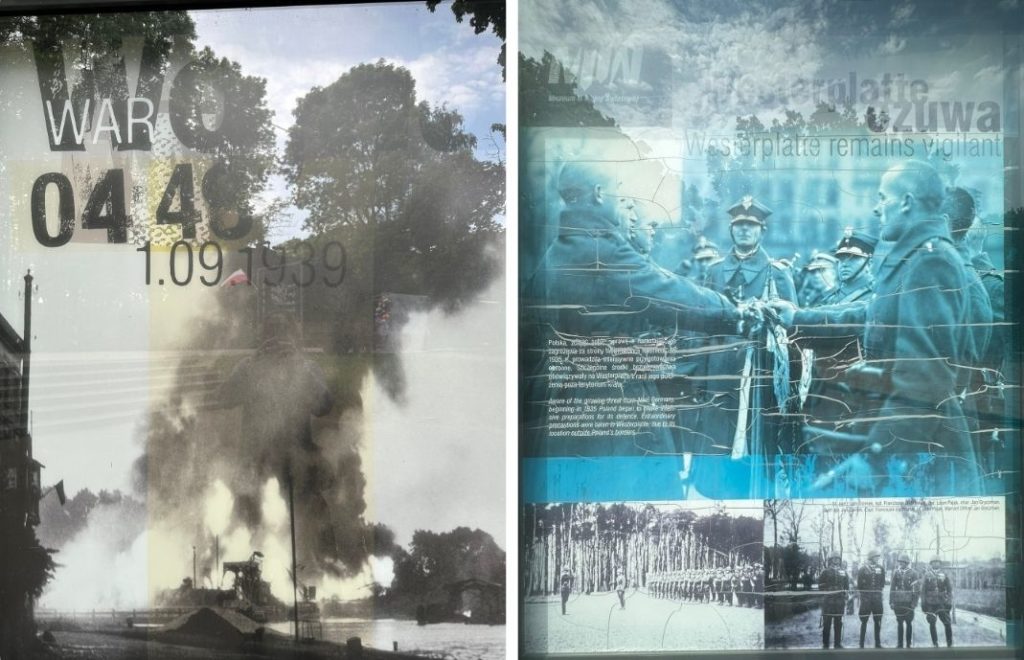
At 04:01 on September 1st, 1939, Germany launched its campaign against Poland. Five minutes later, the SMS Schleswig-Holstein opened fire on the Polish garrison at Westerplatte.
German troops stormed ashore soon after, expecting a swift victory. Instead, they encountered fierce and determined resistance. The Polish defenders had prepared a meticulous ambush, ensnaring the attackers after they breached the wall forming the first line of defense.
The initial assault failed, prompting the Germans to resume heavy bombardment. Later that same morning, a second attack was launched – only to be repelled again.
German losses exceeded expectations, while the Poles tightened their defensive lines. After firing 28 shells at German positions, their sole field gun was destroyed.
By the end of the first day, one Polish soldier had been killed and seven wounded – three of whom would later succumb to their injuries.
In the days that followed, the Germans subjected the garrison to relentless bombardments, including two devastating dive-bombing raids by Junkers Ju 87 Stukas. Once lush and green, Westerplatte was reduced to a barren, cratered moonscape.
Repeated German ground assaults were beaten back by the increasingly exhausted Polish defenders. Each morning, Polish radio proudly broadcast reports of the heroic stand at Westerplatte, turning the garrison into a symbol of courage for the entire nation.
An impossible task
On September 7th, 1939, Polish commander Major Henryk Sucharski concluded that the situation had become hopeless. The garrison was critically short on water and medical supplies, making it impossible to properly care for the wounded.
His decision to surrender was met with resistance from several of his officers and soldiers, who wished to fight on.
So impressed were the Germans by the defenders’ courage that their commander, General Friedrich Eberhardt, allowed Major Sucharski to carry the Polish ceremonial sabre during the surrender – and even into captivity (though it was later confiscated).
The fierce resistance and unwavering spirit of the Polish soldiers at Westerplatte played a vital role in sustaining national morale in the early stages of the war.
In the aftermath, a popular myth claimed the garrison had fought to the last man, with no survivors. In reality, between 15 and 20 soldiers were killed, and 53 wounded. All surviving members of the garrison were taken prisoner when they laid down their arms.
German losses were far heavier, with between 200 and 400 soldiers killed or wounded.
In 1943, a Polish unit was named in honor of the Westerplatte defenders: the 1st Polish Armoured Brigade “Defenders of Westerplatte.”
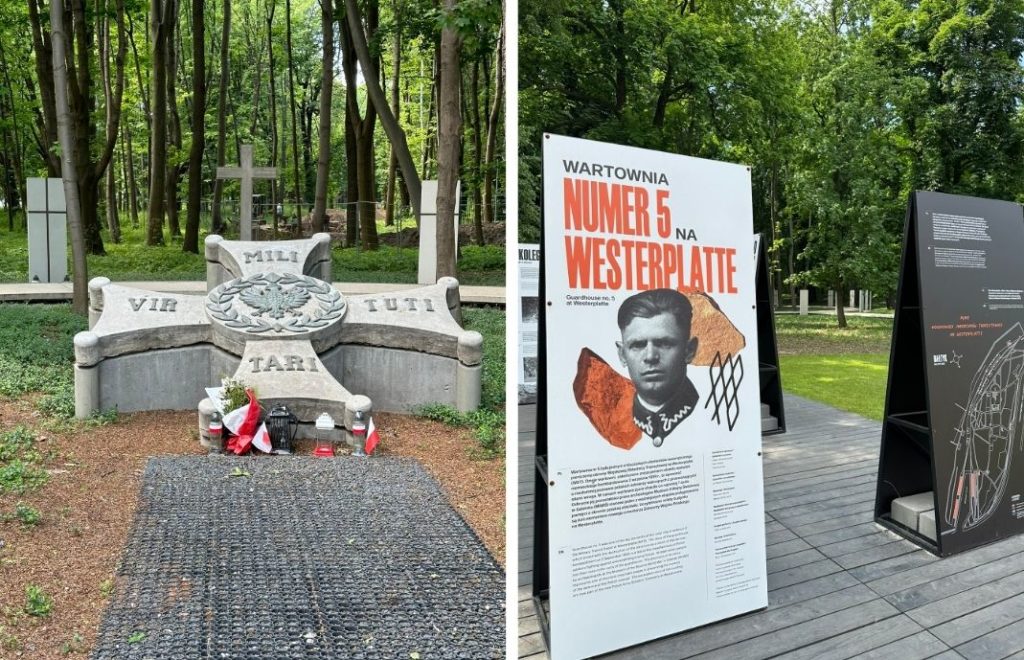
What you can see at Westerplatte today
Today, Westerplatte stands as a historic park and memorial, honoring the Polish heroes who defended it.
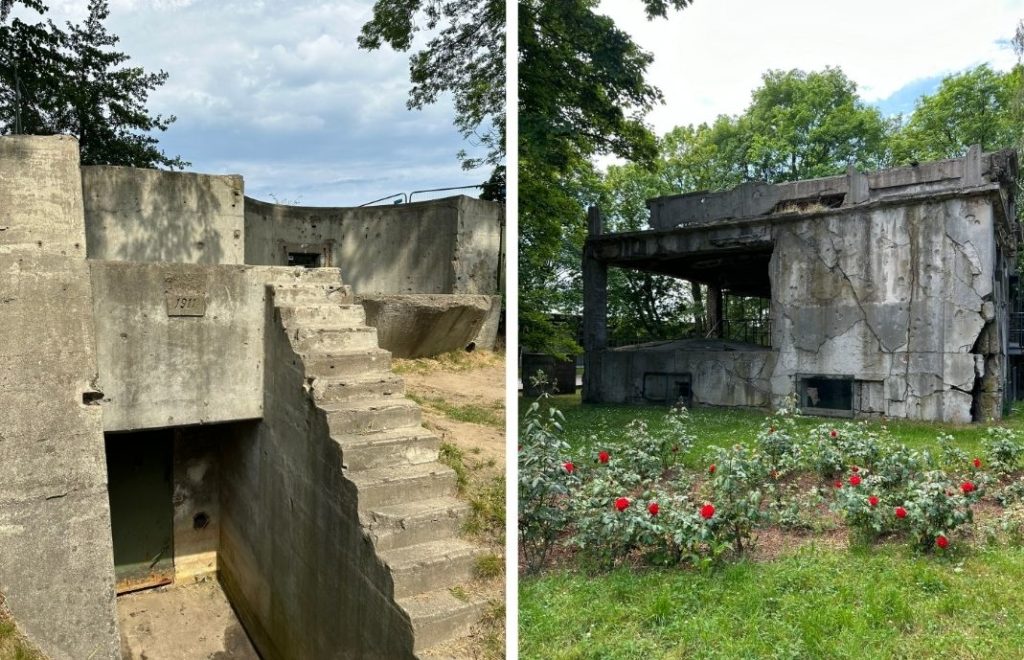
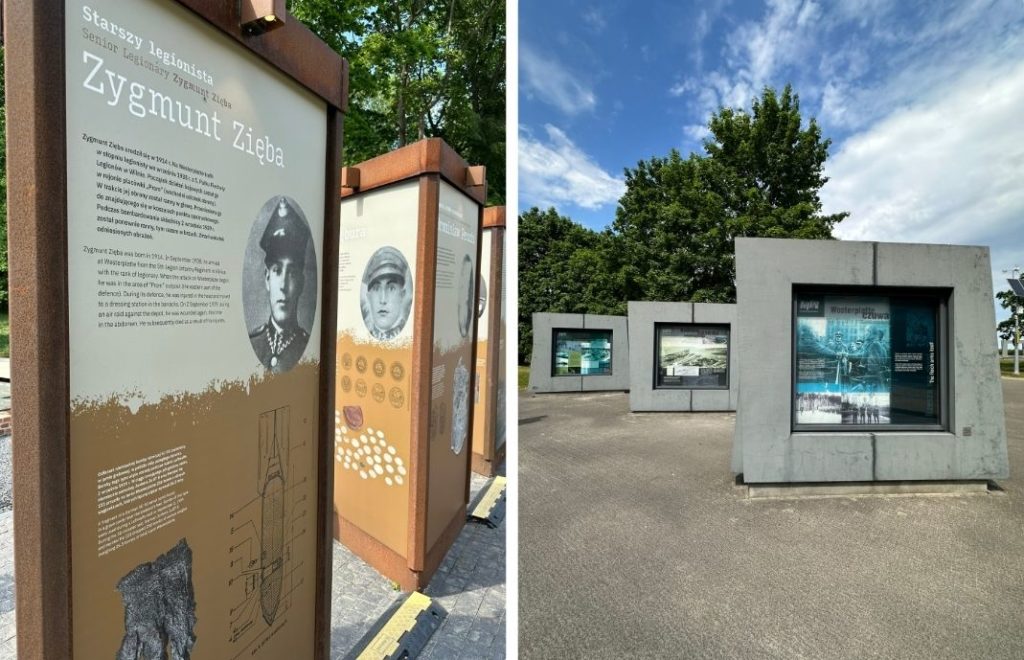
Visitors can explore the haunting ruins of the barracks and guardhouses. In Guardhouse No. 1, a small seasonal museum tells the soldiers’ stories through photographs and information panels, alongside a dedicated memorial in their honor.
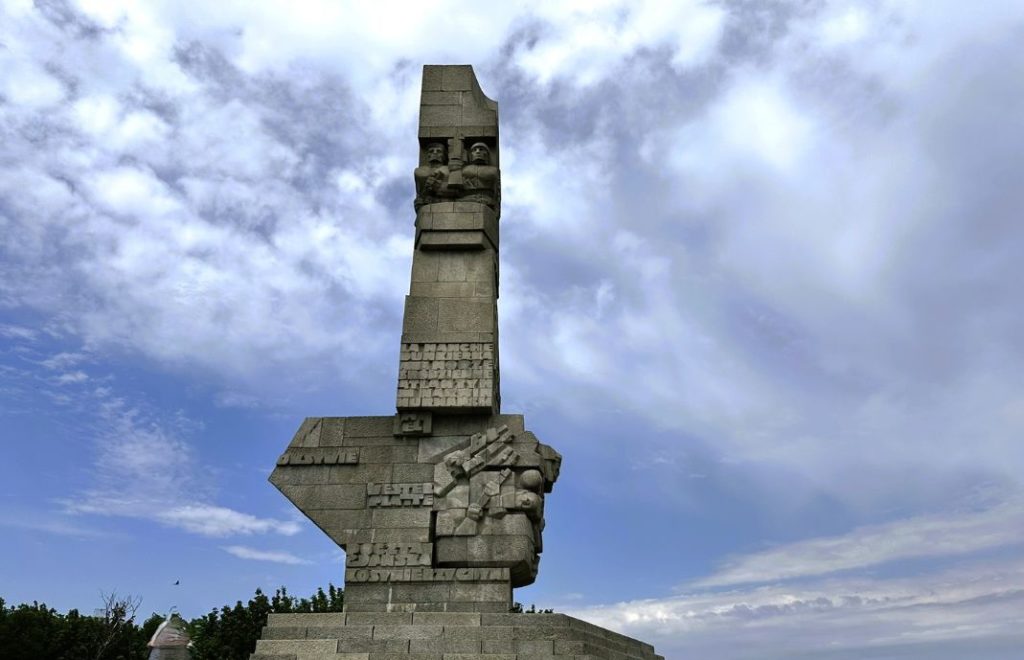
The site’s most striking landmark is the towering “Defenders of the Coast” monument, unveiled on October 9th, 1966. Shaped like a jagged bayonet thrust into the ground, the monument rises 25 meters high, is built from 236 stone blocks, and weighs an astonishing 1,150 tons.
At its base, seven eternal flames burn – each representing one of the seven days the Polish soldiers held out against overwhelming German forces.
The inscription reads: “Glory to the liberators” (Chwała wyzwolicielom), a tribute carved in stone to the courage and sacrifice that unfolded on this small but fateful strip of land.
How to get to Westerplatte
In summer, the easiest and most scenic way to reach Westerplatte is by boat (Water Tram F5). Departing from outside the Hilton Hotel at Targ Rybny, it sails directly to Westerplatte – and back again.
Another option is public transport from the main railway station, with Bus 106 stopping conveniently outside.
Taxis (Neptun Taxi is recommended) or a rental car are also excellent choices, giving you the flexibility to explore at your own pace.
More inspiration to visit Gdansk:
14 things you don’t want to miss in Gdańsk
A guide to the Museum of the Second World War
A quick guide to the European Solidarity Center
Lion hunt in Gdańsk
