
A gentle breeze drifts in from the Adriatic, carrying with it the scent of salt and sun. Golden rays spill over the ancient stone walls that have guarded this city for centuries. In a quiet side street, a dog snores softly behind wrought-iron gates, while the aroma of fresh seafood wafts from a tiny tavern boasting its specialty – octopus.
Out on the glistening water, fishing boats chug toward the harbor, their decks piled high with tomorrow’s catch.
This is Dubrovnik today. Timeless yet alive, a jewel of history and culture gleaming under the southern European sun.
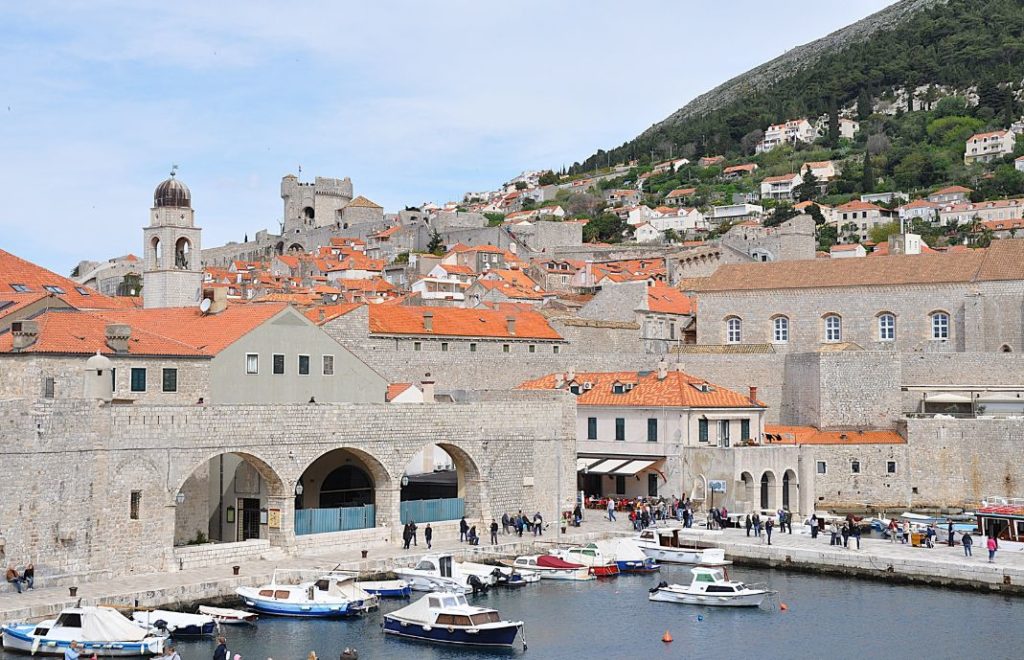
When the war came to Dubrovnik
Just a few decades ago, Dubrovnik’s story was starkly different. The year was 1991, and on St. Nicholas Day (December 6), the skies above the Pearl of the Adriatic darkened. Not with clouds, but with a rain of bullets.
The votive cross on Mount Srđ was torn down, the baroque walls of the Old Town trembled under relentless shelling, and enemy warships anchored in the harbor, their holds packed with death. Behind the city’s medieval walls, columns of smoke and fire clawed skyward as chaos consumed the streets.
The warning signs had been there. Nearby towns like Cavtat had already fallen, and residents feared Dubrovnik would be next. Their nightmare became reality: war had arrived on the Adriatic’s most beautiful jewel.
Six harrowing months later, the siege lifted. Dubrovnik lay scarred, but not defeated. As a UNESCO World Heritage Site and a beloved global destination, the city became the focus of urgent restoration efforts. Donations and support poured in from around the world to return this masterpiece of stone and sea to its former glory.
The mission succeeded.
Today, Dubrovnik once again shines as one of the world’s most enchanting cities – drawing travelers with its irresistible blend of history, beaches, and Mediterranean cuisine. With 2,774 hours of sunshine a year, and its sheltered position behind Mount Srđ, the city enjoys a warm embrace of light and calm that even the harshest wars could not steal away.
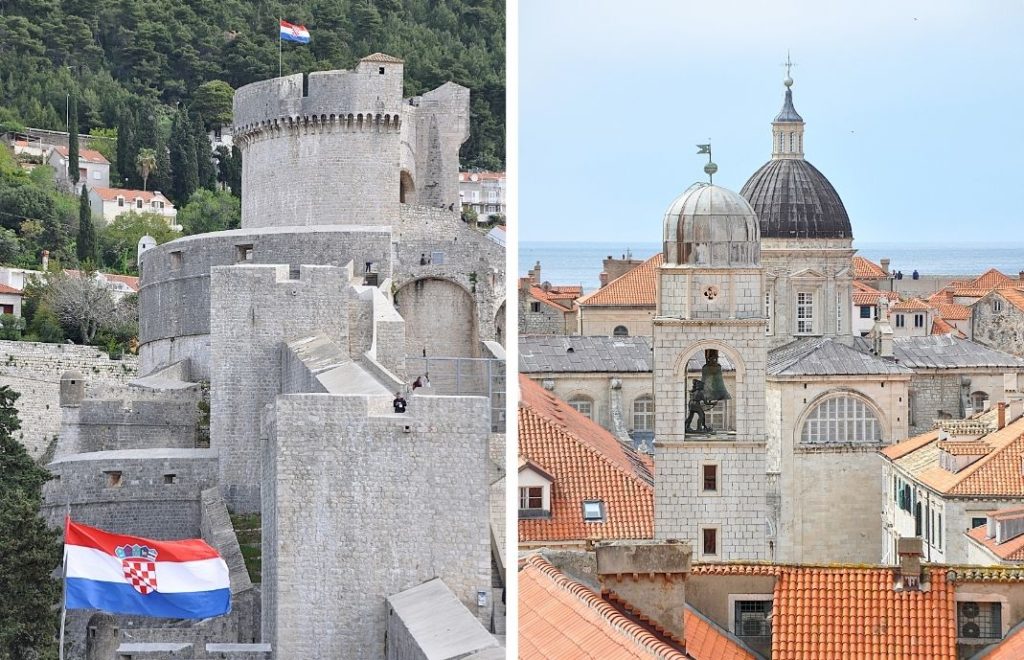
Walking the city wall of Dubrovnik
Dubrovnik’s heartbeat is Stradun – also known as Placa – a gleaming limestone promenade where life spills out from cafes, boutiques, and historic facades. Once a narrow canal dividing Slavic and Roman settlements, it was filled in during the 12th century, becoming the city’s main artery. Today, it’s the perfect starting point for one of Dubrovnik’s greatest experiences: a walk along its legendary city walls.
Before stepping up, pause by the Onofrio Fountain near the Pile Gate. This 15th-century marvel, crowned with Dubrovnik’s patron saint, St. Blaise, provided life-giving water for centuries. It survived wars, earthquakes, and sieges, including the bombardments of 1991-1992, after which both the fountain and much of Stradun were meticulously restored.
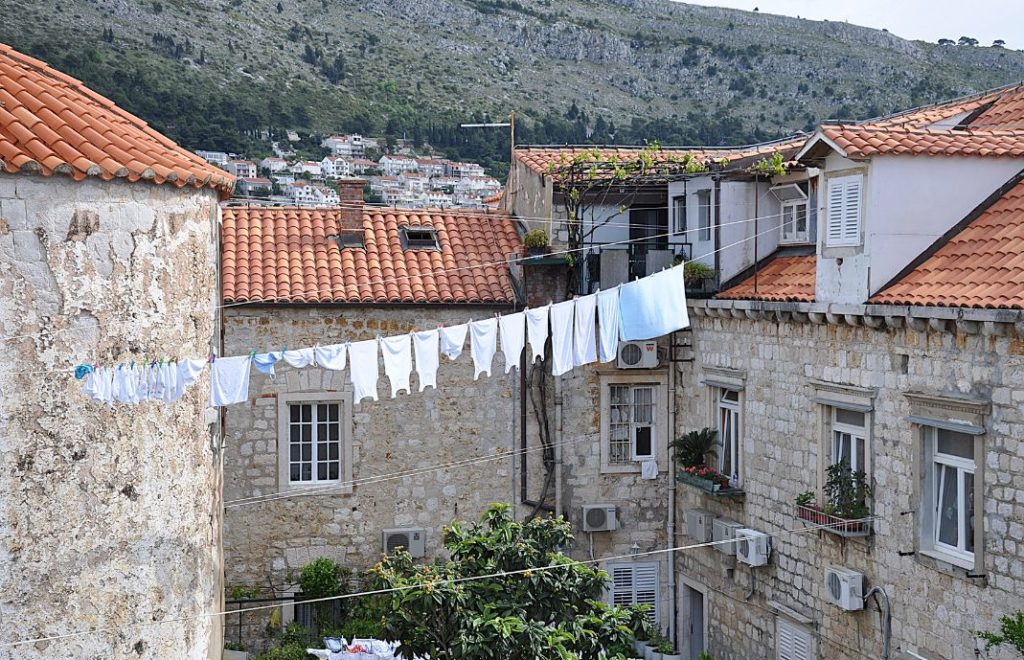
Then, climb to the ramparts and step into history. Stretching nearly two kilometers and soaring 25 meters high, the walls encircle the Old Town like a stone embrace, offering sweeping views of terracotta rooftops – many replaced after the war – cascading down to the glittering Adriatic. To one side, waves crash against sheer cliffs; to the other, laundry flutters from iron balconies and crates of soda are hoisted into tiny shops, giving an intimate glimpse into everyday life behind the postcard-perfect facades.
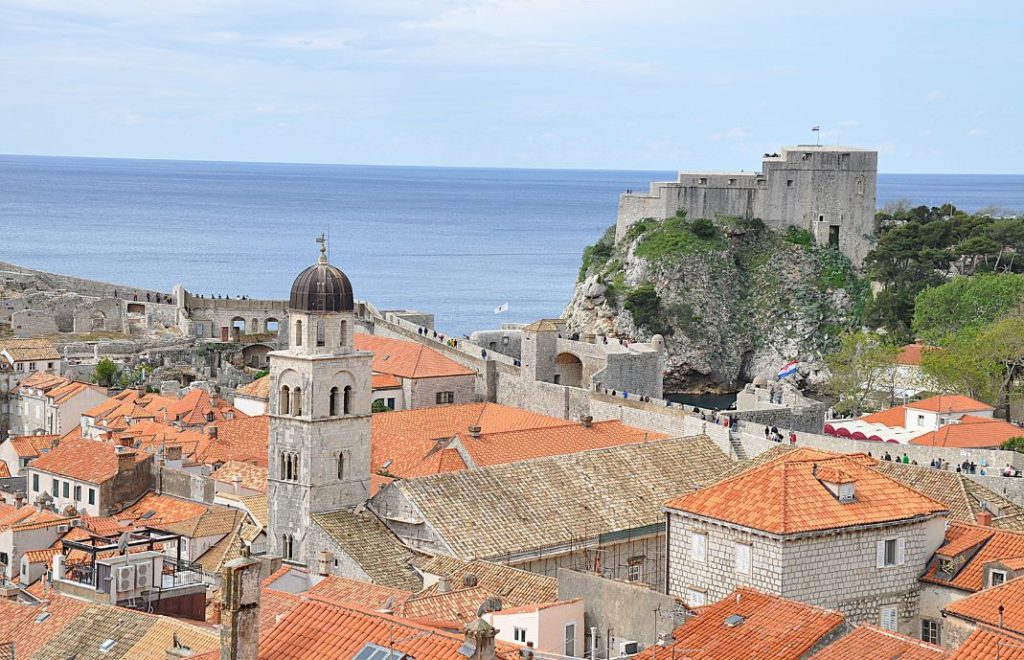
Along the way, gaze out toward Lokrum Island, a lush green oasis, and marvel at mighty fortresses such as Lovrijenac, which for centuries kept invaders at bay.
Walking the walls isn’t just a tour. It’s a journey through time, where every stone tells a story and every view leaves you breathless.
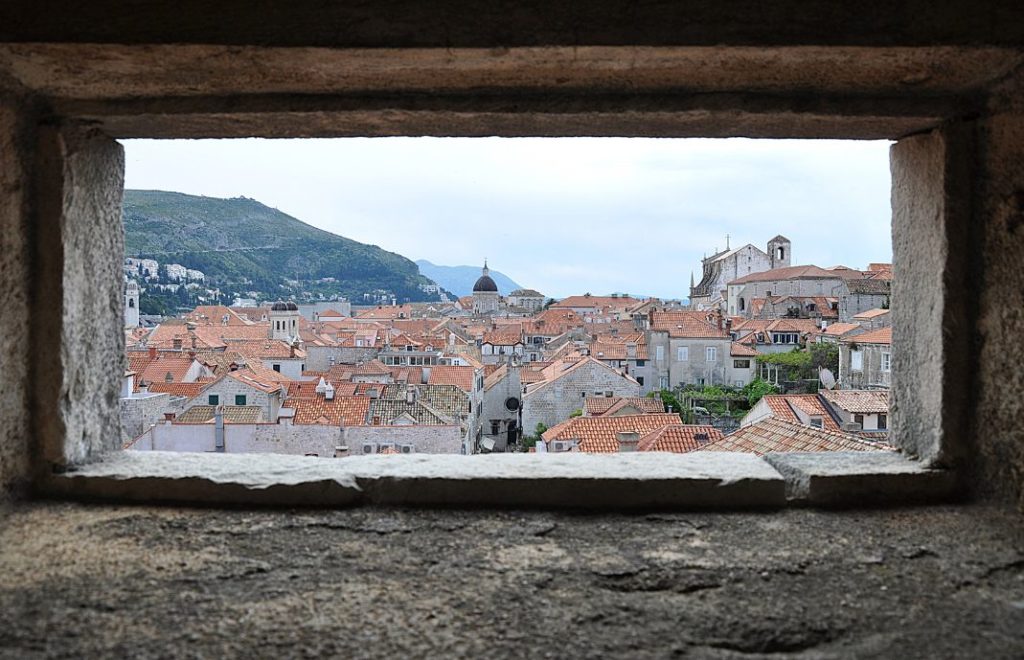
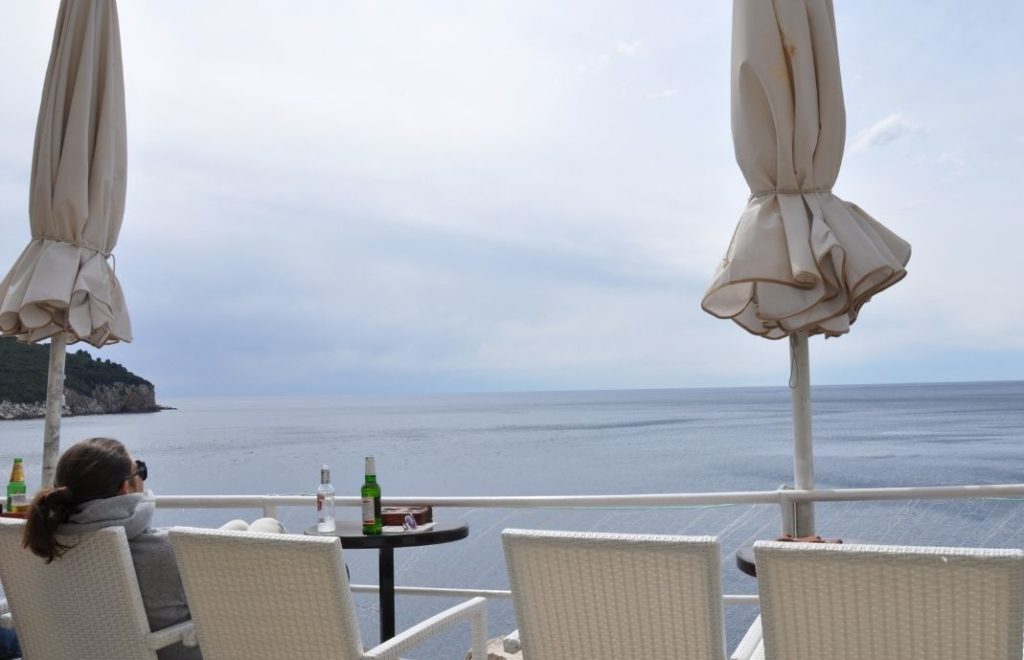
Visit Buza Beach Bar – If you can find it
The mighty city walls of Dubrovnik are studded with three round towers, twelve square towers, five bastions, and two detached forts, with St. John’s Fortress guarding the harbor and Minčeta Fortress standing sentinel on the northwest corner. From Minčeta’s ramparts, the Old Town unfolds in all its terracotta glory, framed by the deep blue Adriatic—a view photographers dream of.
But for an unforgettable break with a splash of adventure, seek out Buza Beach Bar, a quirky little gem perched just beyond the walls. Getting there is half the fun – you’ll need to find a discreet hole in the ancient fortifications, a passage so inconspicuous you might walk past it twice.
The name says it all: Buza means “hole” in an old local dialect, and it’s the perfect description. Through that gap lies one of Dubrovnik’s most magical spots – a sun-drenched terrace clinging to the rocks, offering front-row seats to the endless Adriatic. Sip a chilled drink as waves crash below and the city’s storied stones glow in the afternoon light.
Difficult to find? Absolutely. Worth every step? Without question.
A long and fascinating history
Dubrovnik’s story begins in 639, when it was founded by refugees fleeing the Avars, a nomadic people of Turkic or Mongol origin. By 896, the city had fallen under the rule of the Byzantine Empire and swiftly grew into a powerful maritime hub, commanding a fleet of more than 300 ships.
As the Middle Ages dawned, Dubrovnik emerged as a formidable rival to Venice, standing as the only free city-state on the eastern Adriatic. During the 15th and 16th centuries, it reached an extraordinary zenith of wealth and influence, thanks to its thriving trade and masterful diplomacy.
Centuries brought change. The city came under Ottoman suzerainty, then Austrian rule in 1815, later becoming part of the Austro-Hungarian Empire. In 1918, Dubrovnik joined the newly formed Kingdom of Yugoslavia.
The modern era tested this Adriatic jewel to its core. A devastating earthquake in 1979 shook its foundations, followed by the horrors of war in 1991–1992, when Serbian and Montenegrin forces besieged the city. Homes were reduced to rubble, water supplies destroyed, and infrastructure shattered – leaving behind damage of staggering proportions. The global outcry was immense, and so were the efforts to rebuild.
Today, Dubrovnik has risen from those ashes, restored to its former glory and celebrated as one of the most beautiful and best-preserved cities in the Mediterranean. Its story is one of resilience, elegance, and timeless allure – an enduring testament to the spirit of survival.
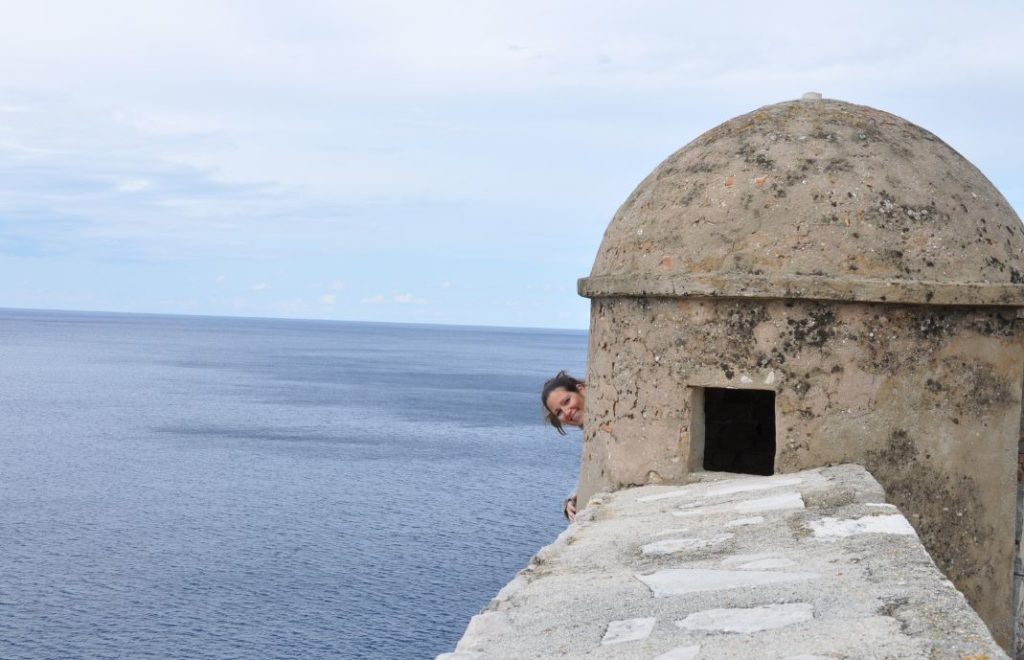
A leisurely stroll on the City Walls
A walk along Dubrovnik’s ancient fortifications is nothing short of mesmerizing. It’s the undisputed highlight of any visit to the Pearl of the Adriatic. Built between the 12th and 16th centuries, these walls stand as a testament to the skill and tenacity of those who shaped this masterpiece of stone.
Up here, the hum of traffic fades to a whisper, replaced by the rhythmic echo of your footsteps as you trace the city’s historic perimeter. Below, life unfolds in narrow lanes and sunlit courtyards, while beyond the walls, the Adriatic sparkles like a sea of sapphires.
The circuit takes about 45 minutes, though you’ll want to linger longer – tempted by charming cafés that beckon with cool drinks and local delicacies.
A word to the wise: Dubrovnik’s walls are bathed in sun for most of the day, and the heat can be intense. Plan your stroll early in the morning or late in the afternoon for gentler light and fewer crowds.
This is more than a walk. It’s a journey through centuries – a chance to savor history at a slow, sun-drenched pace.
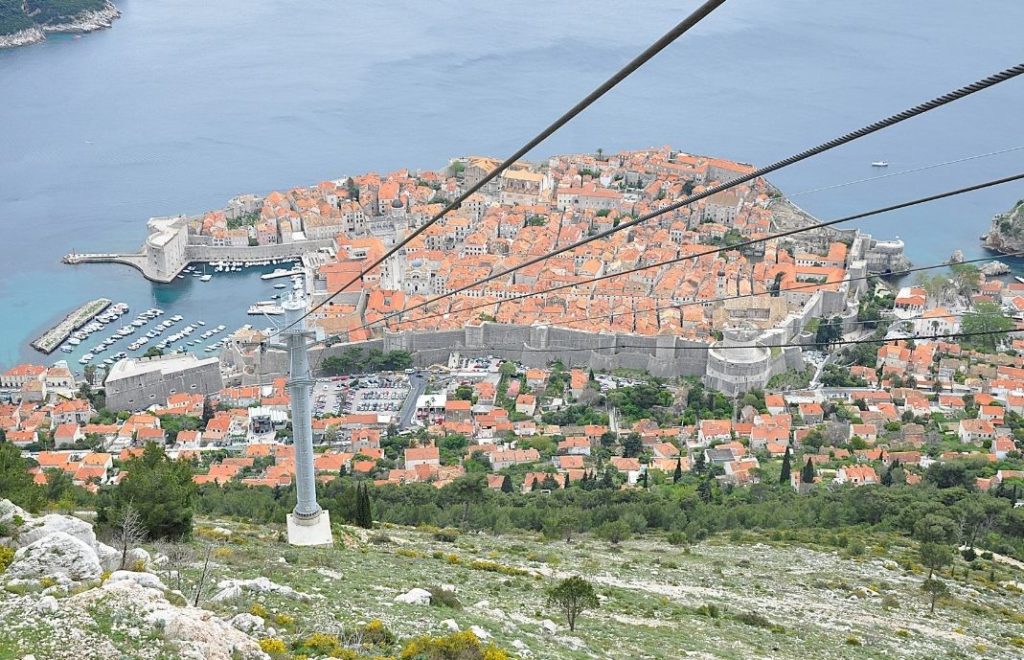
Dubrovnik from above
Mount Srđ rises like a silent sentinel above the terracotta rooftops, casting a dark, majestic presence over Dubrovnik’s storied walls. Below, the sound of life drifts upward – snatches of laughter, clinking glasses, and footsteps echoing across sun-warmed cobblestones as visitors weave through the labyrinthine streets in search of a café table.
The grand palaces of the city’s noble families stand as stone guardians of a bygone era, their facades adorned with plaques that whisper fragments of history to those who linger long enough to read.
But for the ultimate perspective, follow the narrow alleys brightened with bursts of color from potted blooms, nod to a chalk-white cat lounging like a local aristocrat, and slip through one of the old city gates. From there, the cable car whisks you skyward, ascending to the summit of Mount Srđ.
At the top, the view will steal your breath: Dubrovnik sprawls below like a jewel in a crown, its honey-colored walls embraced by the endless shimmer of the Adriatic. From this height, the city is a tapestry of history and horizon. It’s a vision that will linger long after you’ve descended back into its sun-dappled streets.
Dubrovnik – A star on the silver screen
After wandering Dubrovnik’s maze of sunlit alleys and storied walls, it’s easy to see why the city has become a favorite backdrop for filmmakers. There’s an undeniable magic here – a historical aura that seems to suspend time, inviting imagination to run wild.
Among its most famous roles is as King’s Landing in the global phenomenon Game of Thrones. From the towering city walls to the marble-paved streets of the Old Town, Dubrovnik brought Westeros to life with cinematic grandeur.
For true fans, the experience doesn’t end on screen. Join a Game of Thrones walking tour and step into the scenes where power, intrigue, and betrayal played out. Stand where Tyrion plotted, where Cersei schemed, and where the Seven Kingdoms collided – all against the breathtaking backdrop of the Adriatic.
Here, history and fantasy blend seamlessly, proving that Dubrovnik isn’t just a city. It’s a stage where stories, both real and imagined, come alive.
More inspiration to visit Croatia:
Where on earth is Samobor?
Why you should visit Zagreb County
