
It’s an image synonymous with India: trains crammed to bursting, passengers clinging to the sides, lounging on rooftops, or perched casually in open doorways. Overcrowded, chaotic, and distinctly old-fashioned, these locomotives trail plumes of black smoke that hang heavy in the air, leaving behind the pungent tang of diesel and dust.
Trains remain India’s lifeblood of transportation, their steel arteries spanning nearly every corner of the subcontinent. The network stretches an astonishing 63,140 kilometers, making it the fourth largest in the world, and ferries more than seven billion passengers every year.
A train journey in India is an experience – both glorious and grueling, unforgettable in every sense.
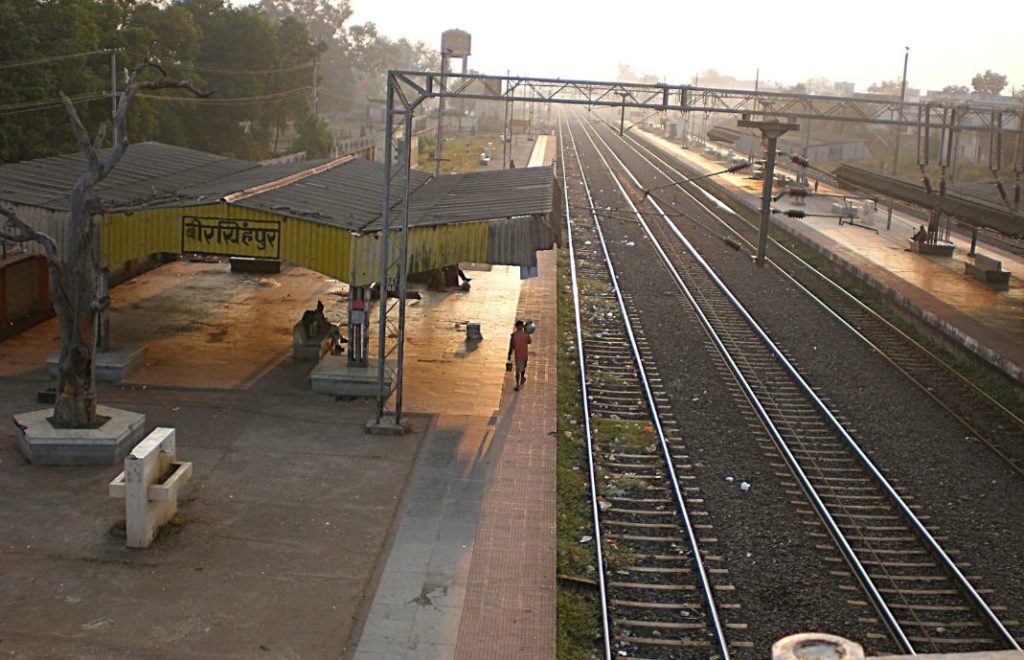
The night train from Agra to Umaria
The station in Agra is a frenzy of movement, a chaotic symphony of voices, luggage, and clattering footsteps. Finding the right platform proves challenging until a kindly man in a vibrant turban and with a beard cascading to his chest points us in the right direction.
Indian train stations are among the most fascinating places on earth – bustling microcosms of life. Crowds press shoulder to shoulder, bags and crates piled high, while the occasional cow munches on garbage or dozes lazily amidst the chaos.
We silently agree: our packs stay on our backs. The platform looks about as inviting as nuclear waste. It’s littered with food scraps, discarded plastic, and mysterious puddles that glisten under the harsh lights. Rats – bold, plump creatures the size of small dogs – scurry along the tracks. The acrid sting of urine lingers in the air.
As the only foreigners in sight, we draw curious glances from sari-clad women and turbaned men. Then the scene takes an unexpected twist. One elegant woman, wrapped in a brilliantly embroidered sari, casually steps aside, lifts her garment ever so slightly, and squats. Moments later, a new puddle graces the platform. When nature calls, decorum bows out.
Thirty minutes past the scheduled departure, a plume of black smoke appears on the horizon, accompanied by the metallic groan of weary brakes. The train has arrived at last. Instantly, the platform erupts into a storm of motion. Passengers surge toward the doors – yes, this train has actual doors – like a living tide. After all, this is the last train to Umaria for a very long time.
Bags, boxes, and bundles collide with saris and turbans in a whirl of color. The noise swells to a deafening crescendo. We hang back, content to watch the chaos rather than dive into it. No need to risk life, limb, or teeth in the battle for a berth. Our bunks are reserved. Why rush?
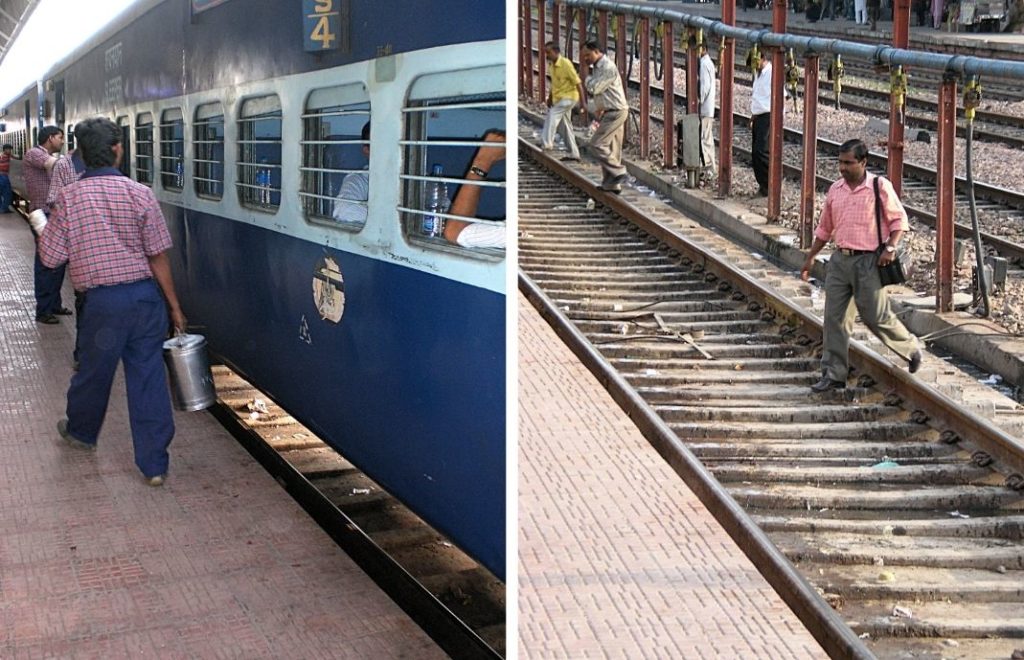
Zero stars
Finally on board!
Laughter comes easily when we see the compartment. It’s ancient – worn down and clinging to the last vestiges of functionality. Far too many tiny bunks are crammed into the space, as if the designers’ only ambition was to fit in every possible passenger.
The smell is… unforgettable. Old foot odor mingles with fresh, while the sweat of fellow travelers creates an aroma that induces a slight gag reflex.
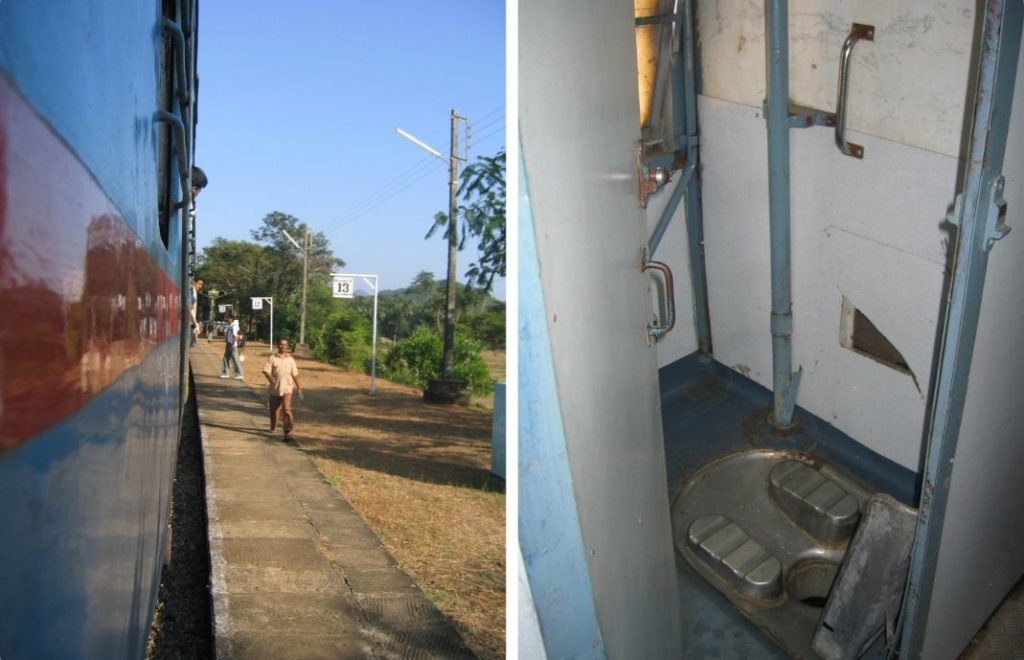
The toilet? A hole in the floor, caked with grime and distinctly uninviting. The door doesn’t lock.
The curtains and blankets likely date back to 1947 – the year India gained independence – and it’s safe to assume they haven’t been washed since. We keep our jackets and shoes on for “bedtime.”
The bunks themselves are minuscule. At 164 centimeters, I can just about stretch out. My travel companion, at 176, has a bigger challenge. Knees and spine will not thank her for this 13.5-hour ride.
Adding to the fun: our luggage shares the bed with us.
And yet, it’s all part of the adventure.
As the train chugs into the night, you grow accustomed to the smells and the chorus of snores. Bathroom breaks require teamwork – one person stands guard because the door won’t close. And don’t touch anything while you’re in there. Wet wipes and toilet paper? Absolute lifesavers.
Against all odds, we manage a few hours of sleep as the train rattles and clanks its way across the Indian countryside beneath a blanket of stars.

He who sleeps .. shall not open the door
When you travel, you learn to expect the unexpected. This train journey was no exception.
As we roll into Umaria, bags packed and ready, we stand by the door – only to discover it won’t open. Why? Because the conductor – the man whose sole job is to open the doors – has fallen fast asleep.
Each carriage has two conductors, one for each side. Unfortunately, ours was dreaming sweet dreams. So instead of stepping off in Umaria, we wave goodbye to the station – and to the driver patiently waiting for us at 5:35 a.m.
We don’t panic. Not too much, anyway.
The very awake conductor on the opposite side unleashes a tirade on his drowsy colleague, who now looks both guilty and mortified. They phone ahead to alert the “station guardians” at the next stop. As a consolation prize, we’re served tea and biscuits – though our berths have already been claimed by new passengers. The next 40 minutes are spent perched on the floor by the doors, laughing at the absurdity of it all.
A very early call goes out to my Indian friend who organized the trip; our driver needs to know we’ll be late. Very late.
The brakes screech again. This time, both conductors make sure the doors swing open.
The platform is literally in the middle of nowhere – just a concrete slab, three meters by three meters. We have no idea where we are, only that it’s 40 minutes by train past Umaria.
Two smiling men appear, holding up signs like heroes in an unlikely rescue mission. The infamous “station guardians” have arrived to assist two lost Norwegians.
My travel companion lights a cigarette to steady her nerves – only to be sternly told smoking isn’t allowed on the platform. If she insists, she’ll have to step down off the concrete block.
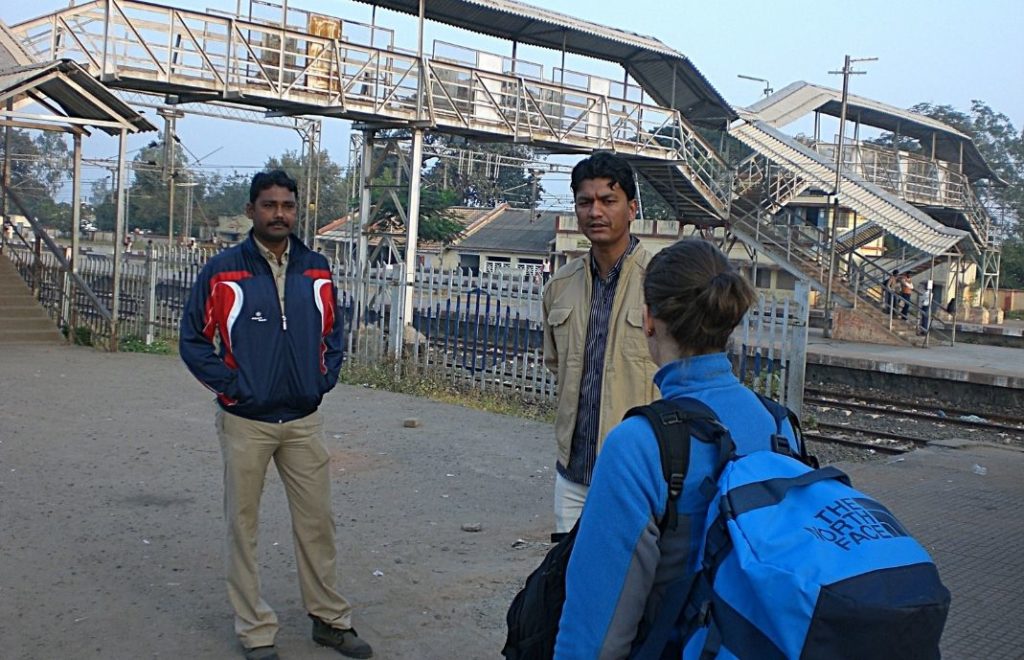
From Nowhere back to Umaria
The hunt for a car to take us back to Umaria is on. I can’t help feeling a pang of sympathy for the poor soul who was dragged out of bed because someone else dozed off on the job.
So, we sit on our backpacks, watching the sunrise paint the sky in soft pastels, waiting for salvation to arrive. A cow ambles past the platform, pauses, and – without ceremony – relieves itself right in front of us. A few minutes later, a woman in a bright sari sweeps in, bends quickly, scoops up the steaming deposit with practiced ease, and slips it into her bag before disappearing down the track.
Soon after, a car pulls up, and a bleary-eyed driver welcomes us with a weary smile: “Welcome to India.”
Our newfound friends – the heroic “station guardians” – insist on riding along to ensure we make it back to Umaria safely and that our original driver is still there.
The hour-long ride gives us time to exchange stories and laughter with our unexpected rescuers. And then, finally, Umaria. Our driver, visibly relieved, greets us with heartfelt concern. Our guardians refuse to leave until we promise to send word once we’ve reached the lodge.
We wave goodbye with gratitude, marveling at the kindness of strangers. The train journey didn’t exactly go as planned – but it delivered us into an adventure of its own.
More inspiration to visit India:
Journey through the Jungle Book
Mumbai’s open-air laundry
India’s Golden Triangle
