
India is the land of contrasts – a country with countless faces. It’s a destination that stirs every sense and emotion, a place as diverse as it is vast. Culturally, spiritually, historically, and geographically, India is a world unto itself. The possibilities for exploration are nearly limitless.
Yet its sheer size and complexity make it impossible to experience the entire nation in a single trip – even if you had a year to spare. The key is to embrace just one slice at a time. Otherwise, your journey becomes a whirlwind instead of an awakening.
Because India isn’t just a country you visit – it’s a country you feel. To truly savor it, you must listen to its sounds, taste its spices, breathe its colors, and absorb the rhythm of its daily life. And in doing so, you’ll discover why every moment here lingers long after the journey ends.
If India had a greatest hits album, the Golden Triangle would be track one – three legendary cities packed with palaces, forts, and flavors you’ll never forget.
India’s Golden Triangle is a journey through the very soul of the subcontinent – a perfect harmony of history, culture, and color. From Delhi’s vibrant chaos, where ancient forts rise beside glittering bazaars, to Agra’s ethereal Taj Mahal, a marble poem to eternal love, and on to Jaipur, the Pink City draped in royal splendor and desert light – this iconic circuit is India at its most dazzling. Every mile reveals a new story, every moment an explosion of sights, sounds, and sensations. If you’ve ever dreamed of India, this is where the dream begins.
The Golden Triangle
For first-time travelers to India, the journey often begins with the legendary Golden Triangle – Delhi, Agra, and Jaipur – a dazzling circuit that sweeps you through layers of history, myth, and modern life.
The adventure starts in Delhi, India’s bustling capital, where the streets are a living mosaic of motion: auto-rickshaws darting in chaotic slaloms, lumbering buses rattling past, honking taxis, and the occasional horse-drawn cart threading through the fray. The noise is relentless, the crowds overwhelming, and everywhere you look, something demands your attention. Ornate Mughal monuments, fragrant bazaars that feel plucked from an Oriental fairytale, and yes, cows wandering freely through the madness.
Delhi is like a richly spiced curry: at first, its complexity can feel jarring, but give it time and its flavors will win your heart. The city unfolds in two contrasting halves: the vibrant chaos and medieval charm of Old Delhi, where narrow alleys teem with life and history, stands in striking counterpoint to the grandeur of New Delhi, with its stately boulevards and manicured gardens.
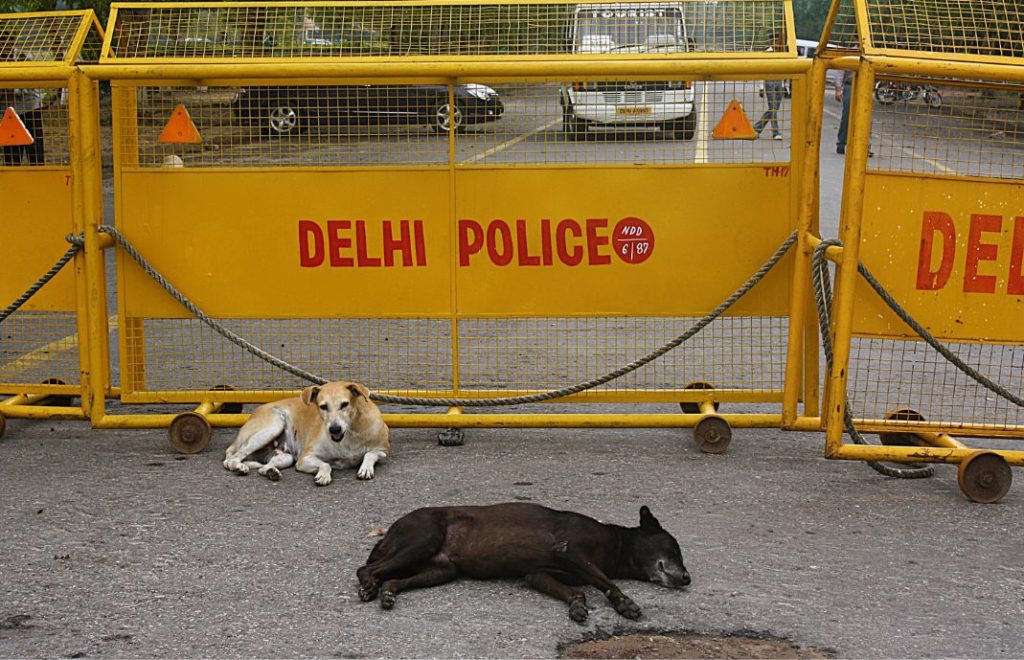
In the old quarters, monkeys swing nonchalantly from tangles of electric wires, while cycle-rickshaw wallahs pedal determinedly through gaps in human traffic, dodging cars with impossible precision. Street dogs nap on sun-warmed pavements as holy cows amble serenely between fruit stalls and honking trucks – a surreal yet strangely harmonious ballet of life.
Delhi – Charming and chaotic
Begin your journey in Old Delhi, a city founded in the 17th century by the Mughal emperor Shah Jahan – a name forever linked to the creation of the Taj Mahal.
In the heart of the frenzy – where tuk-tuks weave through a torrent of honking traffic and humanity swirls in every direction – a sudden oasis of greenery appears. Rising from it in majestic silence is the Red Fort, an immense citadel of red sandstone. Completed in 1648, this UNESCO World Heritage Site once served as both fortress and royal palace, a symbol of imperial power and elegance.
Back on the road, your taxi lurches and weaves through Delhi’s relentless congestion. In India, traffic follows a single rule: the strongest wins. Your driver brakes sharply in front of Jama Masjid, India’s largest mosque, and waves you out with a promise to wait a few streets away.
Outside the mosque, a kaleidoscope of life unfolds. Smiling locals lounge around a small ablution pool, their feet dangling in the water, while others stream in and out of the grand arched gateways. In a small chamber in the northeast corner, you’ll find what is believed to be a footprint of the Prophet Muhammad. The mosque’s soaring minarets pierce the sky at 39 meters, and its courtyard can hold up to 25,000 worshippers.
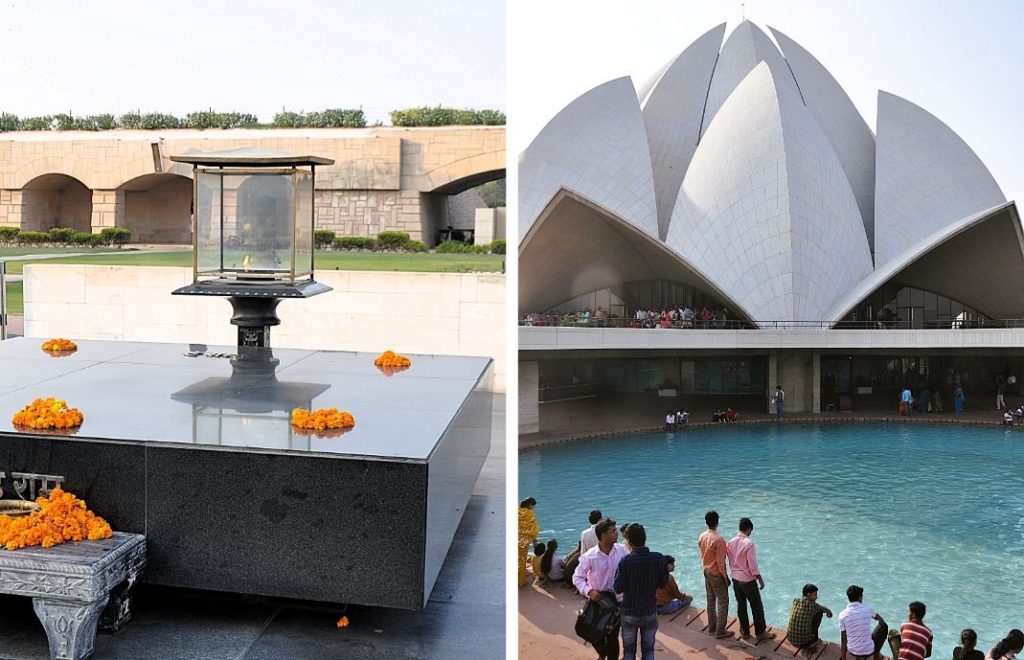
A short drive away lies Raj Ghat, a serene memorial to India’s most revered figure, Mahatma Gandhi. Not far beyond, the futuristic white petals of the Baha’i Lotus Temple bloom against the blue sky. This striking house of worship – dedicated to unity and open to all faiths – invites quiet contemplation.
History echoes at the Qutb Minar Complex, home to the tallest minaret in India at 72.5 meters, built to celebrate the victory of Muslim rulers over the Hindu kingdom of Delhi. Its intricate carvings and weathered sandstone tell stories that span centuries.
And finally, no visit to Delhi is complete without a stop at India Gate. This 42-meter-high triumphal arch, erected by the British, honors the 90,000 Indian soldiers who fell during World War I. Since 1971, the eternal flame has burned here in tribute to the Unknown Soldier – a solemn counterpoint to the city’s unending hum of life.

Historic Agra
Hop on a train to Agra – a journey of just two hours, and an experience in itself. Agra’s fame, of course, rests on the ethereal beauty of the Taj Mahal, that eternal monument to love.
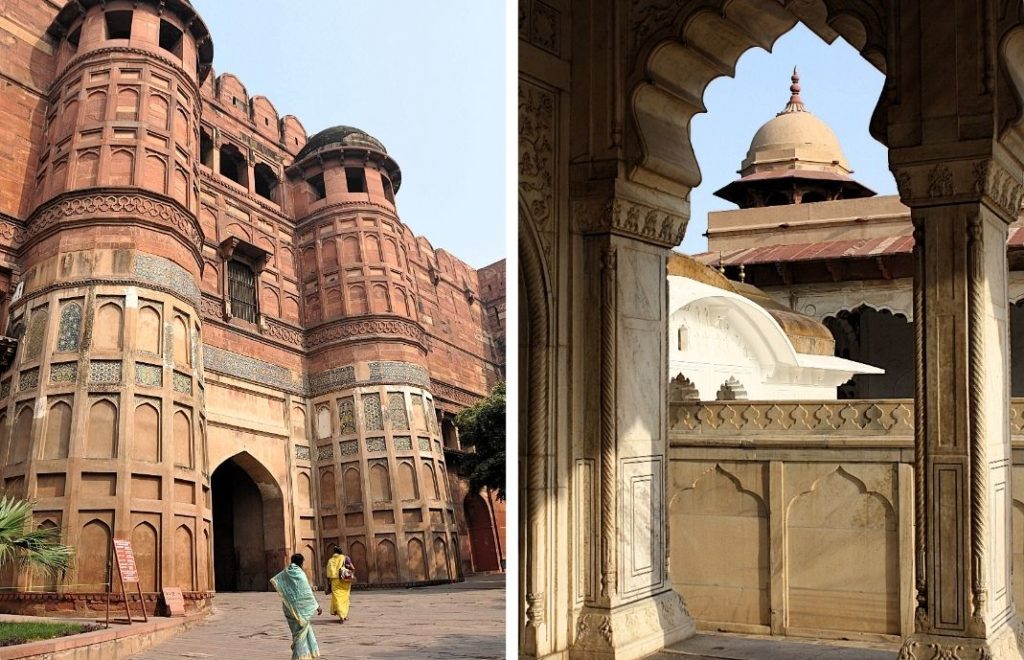
But before surrendering to its allure, begin at Agra Fort, also known as the Red Fort. Construction of this majestic citadel began in 1565 on the banks of the Yamuna River. For centuries, it served as the beating heart of Mughal power, its ramparts sheltering the private world of emperors and their families.
Four generations of rulers left their mark here, shaping a masterpiece of red sandstone and white marble. Within these walls lies a story tinged with tragedy: Shah Jahan, who built the Taj Mahal for his beloved Mumtaz Mahal, was later imprisoned here by his own son. You can still stand in the chamber where the aging emperor spent his final days, gazing toward his marble creation shimmering in the distance – a love he could no longer touch.
Despite its grandeur, Agra Fort feels surprisingly serene. Its sprawling courtyards and manicured gardens create a sense of calm, a world apart from the throngs that gather elsewhere. Squirrels dart across velvety lawns while monkeys leap from parapets, adding a touch of wildness to this architectural poem.
The symbol of love
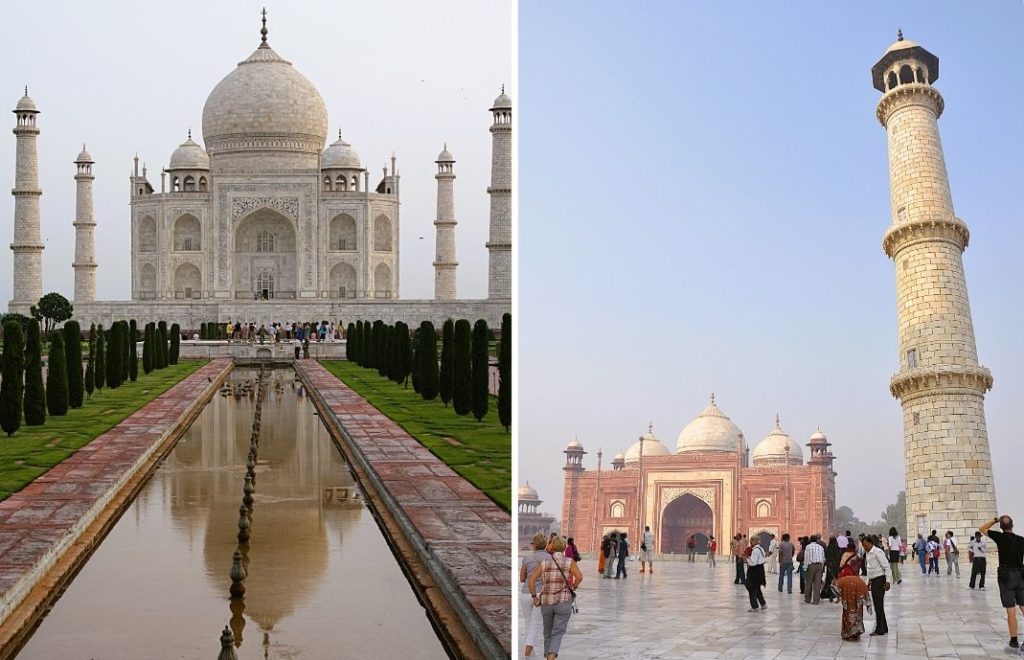
The Taj Mahal needs no introduction. Known the world over, it stands as the ultimate emblem of India – and an enduring testament to love.
Beyond its breathtaking beauty lies a story as captivating as the structure itself. Its name means “Crown of the Palace,” and it is, in fact, a mausoleum. Commissioned in 1632 by the Mughal emperor Shah Jahan in memory of his favorite wife, Mumtaz Mahal, it took 22 years to complete. Some 22,000 artisans and laborers worked tirelessly to bring this vision to life.
Beneath the soaring dome rest two symbolic cenotaphs for Mumtaz and Shah Jahan, their actual tombs lying in the crypt below.
Countless pages have been devoted to this architectural wonder, widely regarded as one of the most exquisite buildings ever created. Today, the Taj Mahal occupies its rightful place among UNESCO’s World Heritage Sites, a monument not just of marble and gemstones, but of devotion eternal.
The state of Rajasthan
From Agra, the road carries you toward the final jewel of India’s Golden Triangle: Jaipur. The four-hour drive is a journey through a living tapestry of history and legend – a landscape where time feels wonderfully elastic.
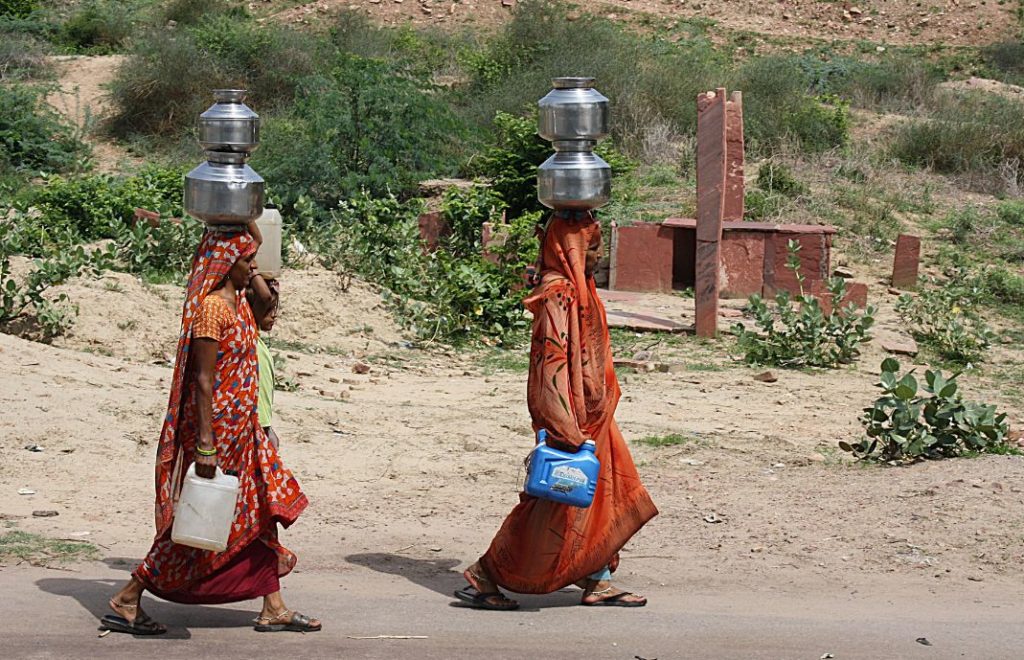
Along the roadside, women glide past with heavy earthen pots balanced effortlessly on their heads, their bright saris billowing like painted sails against the dusty earth. Towering Rajput men stride with regal bearing, their turbans wound high, earrings glinting in the sun, and magnificent beards framing their proud faces.
Dromedaries with swan-like necks and velvet-soft ears plod lazily in their rolling gait, jaws working in slow, deliberate circles. Horses pull wooden carts stacked high with hay and produce, while ancient trucks – patched and painted in carnival colors – barrel past in a cloud of grit and exhaust. From the roadside, schoolchildren in crisp uniforms beam and wave, their laughter carried away on the warm desert breeze.
This is Rajasthan – majestic, storied, and deeply evocative – a place where every mile seems to hum with echoes of kings and caravans, romance and rebellion.
Jaipur – The gem of India
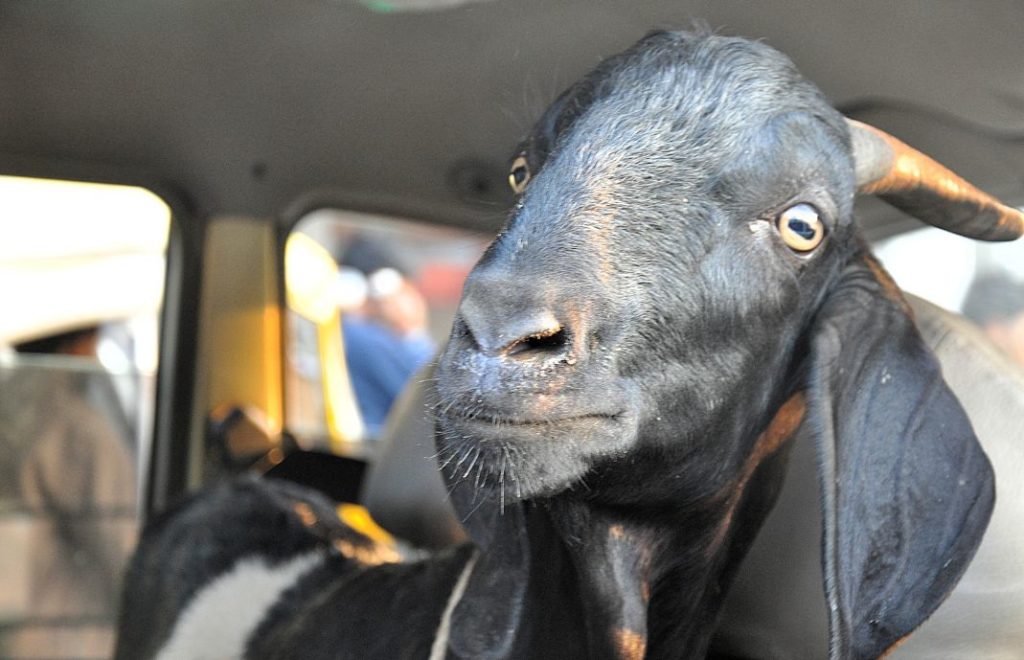
The streets of Jaipur, like much of India, hum with vibrant life and chaotic charm. Sacred cows linger patiently, awaiting scraps from fruit vendors, while nimble goats bound effortlessly across rooftops, courtyards, and alleyways. Mischievous langur monkeys, with their long tails and striking black masks, lurk on sun-drenched ledges, watching the world below. Bullock and camel-drawn carts move at an unhurried pace, a gentle rhythm against the city’s spirited backdrop.
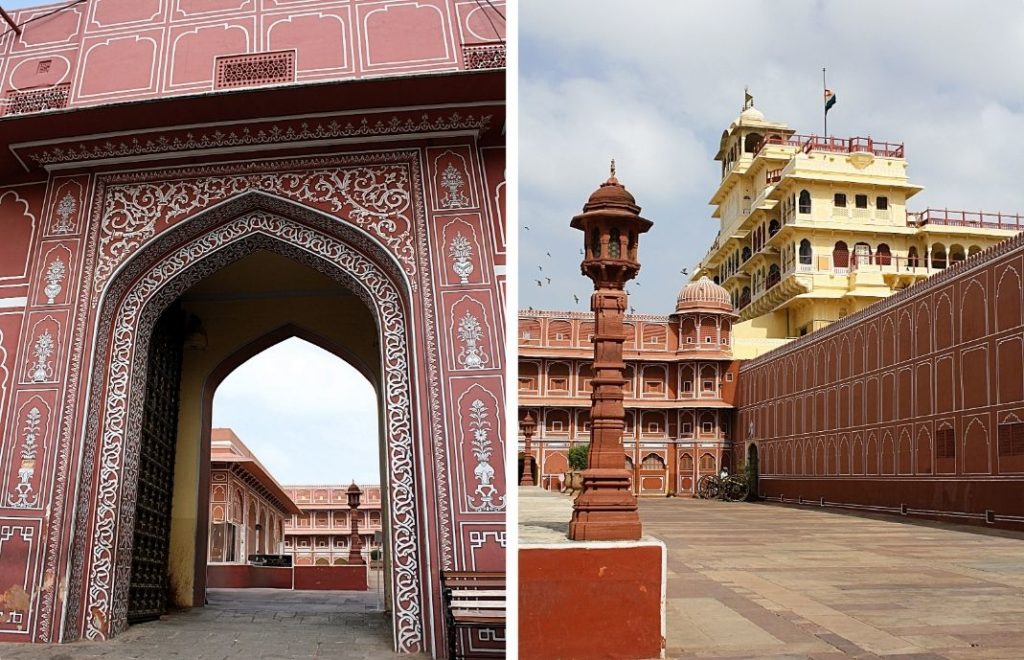
Jaipur is a city of contrasts, divided into two distinct quarters. The old city, founded in 1727 by Maharaja Jai Singh II – after whom Jaipur is named – remains its crowning glory. For many travelers, Jaipur is the most resplendent and exquisitely adorned city they encounter in India. Every inch of the old town was meticulously planned, earning it the affectionate title “The Pink City.” This name harks back to 1853, when its sandstone façades were painted a warm terracotta hue to honor the visit of Prince Albert.
Encircled by formidable walls pierced with battlements and seven grand gates, the old city feels like a living museum. Among these, the Ajmeri Gate – leading to the heart of Jaipur – stands as the most celebrated.
One of the city’s most captivating landmarks is the City Palace, an opulent complex whose walls and majestic entrance were commissioned by Maharaja Jai Singh II himself. At its heart rises the seven-story Chandra Mahal, a regal tower offering sweeping views across the cityscape. Today, the palace’s museum enchants visitors with its treasures: intricate paintings, ancient weaponry, ornate carpets, and gleaming suits of armor – a rich tapestry of Jaipur’s royal heritage.
Amber Fort – The crown jewel beyond Jaipur
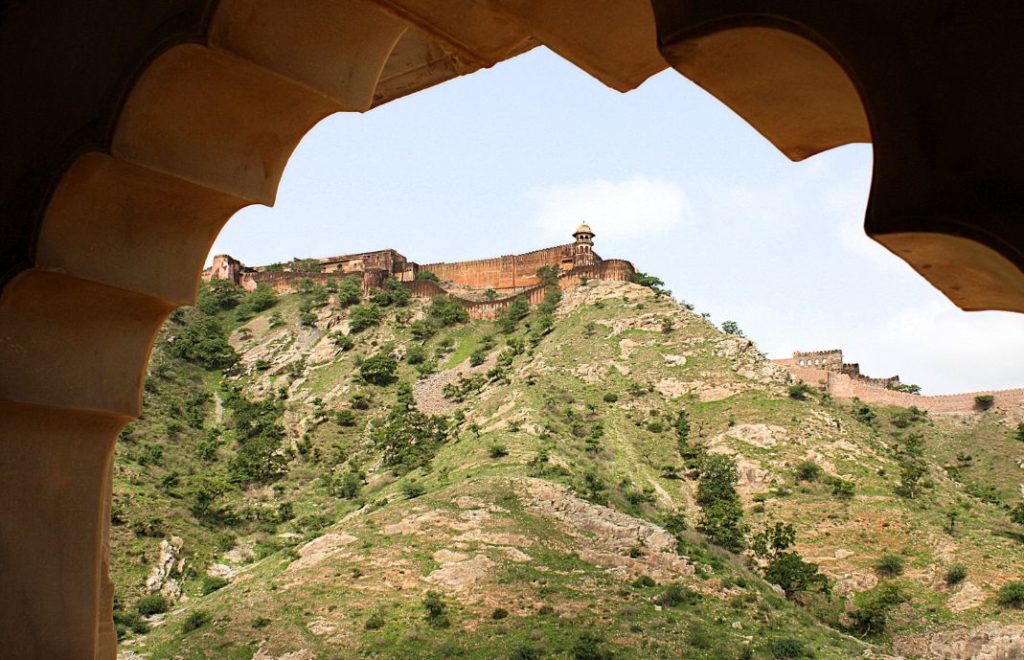
Just beyond the bustling heart of Jaipur lies its most celebrated treasure: Amber Fort, a majestic sentinel perched on a rugged hilltop. Once the capital of Rajasthan, this sprawling palace complex is a masterpiece of Rajput architecture, a glorious echo of an opulent past. Visitors can ascend to its gates on foot or by jeep, rewarded with sweeping vistas that reveal the fort’s commanding presence over the Aravalli hills.
Among its marvels is the Kali Temple, sculpted in pristine white marble. Here, the fierce goddess Kali stands enshrined, adorned with a chilling belt of severed heads – a haunting yet fascinating testament to the depth of India’s spiritual traditions.
Equally captivating is the Jai Mandir, or Hall of Victory, a glittering chamber where countless mirrored mosaics shimmer like constellations against alabaster walls. The artistry is so exquisite that a single flicker of candlelight can set the entire room aglow, creating a dreamlike spectacle.
As dusk descends, Amber Fort transforms into a stage for an unforgettable sound-and-light show. Under a canopy of stars, the fort’s storied past comes alive in a symphony of narration, music, and dazzling illuminations – a truly immersive experience.
A note of caution: While elephant rides up to the fort are often offered, they come at a heartbreaking cost to these gentle giants, who endure harsh training and exhausting hours. For a responsible and ethical journey, choose to walk or take a jeep instead.
Live like royalty in Jaipur
In Jaipur, indulgence takes on a regal dimension – you can live as the maharajas once did, in a palace steeped in history and grandeur.
One such jewel is the Rambagh Palace, a former royal residence transformed into a luxurious heritage hotel. Stroll through manicured gardens, wander beneath elegant archways, and gaze up at majestic domes. Here, every detail – from exquisite cuisine to impeccable service – conspires to make you feel like an Indian prince or princess, wrapped in opulence and timeless charm.
Jaipur forms part of India’s Golden Triangle, a tantalizing introduction to a land of infinite wonders. Along this journey, you’ll quickly realize that India cannot be experienced in one sweep. This country is a sensory symphony – vast, overwhelming, intoxicating – and yet so irresistibly alluring that you’ll find yourself longing to return, again and again.
Namaste – and welcome to the adventure of a lifetime.
Practical information
The famed Golden Triangle – India’s most iconic travel route – connects the cities of Delhi, Agra, and Jaipur, weaving together centuries of history, culture, and architectural splendor.
For the ultimate experience, consider a journey that combines both train and private car travel between these destinations. Glide through the countryside on India’s legendary railways, then switch to the open road for an intimate glimpse into rural life – a perfect blend of adventure and authenticity.
When it comes to accommodation in Jaipur, indulge in royal luxury at the Rambagh Palace, where heritage and hospitality merge to let you live like a maharaja.
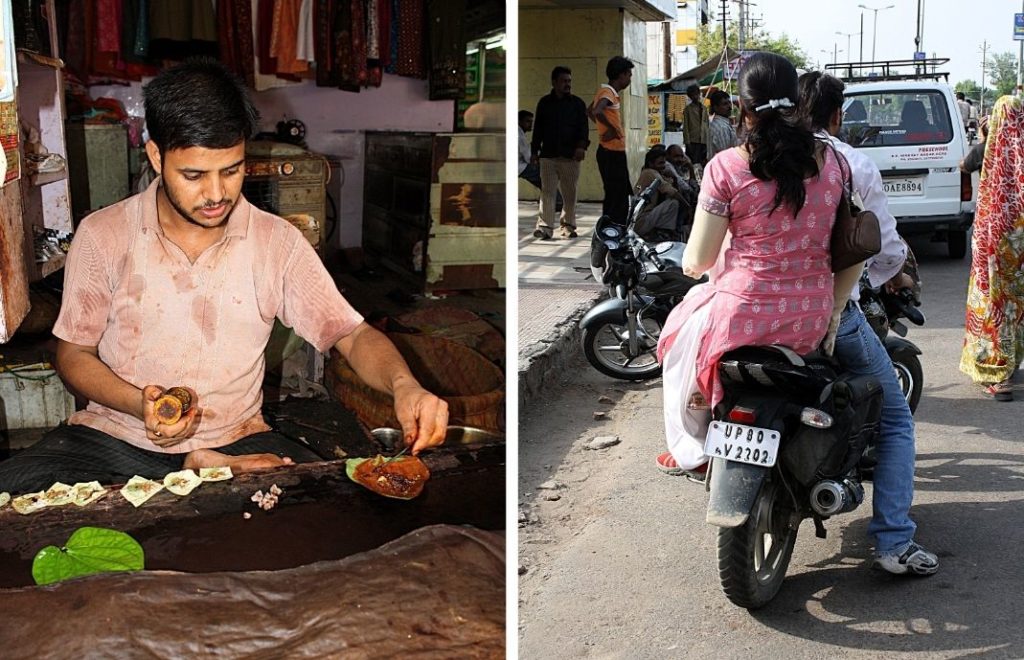
India is an amazing and vaste country – and has so much to offer.
Click here for more isnpiration to India
