
“Once upon a time, a river set out on a journey and met the desert. Instead of vanishing, it embraced the solitude, fanning its lifeblood into a labyrinth of waterways – a shimmering jewel born of resilience. Nature called it the Okavango. The world would come to know it as the crown of the Kalahari.”
This poetic prelude perfectly captures the magic of the Okavango Delta. A place where water defies the laws of its surroundings, creating an oasis of life in the midst of an arid wilderness. A UNESCO World Heritage Site, this lush expanse is not merely a destination; it is a dreamscape sculpted by rivers, ruled by wildlife, and veiled in mystery.
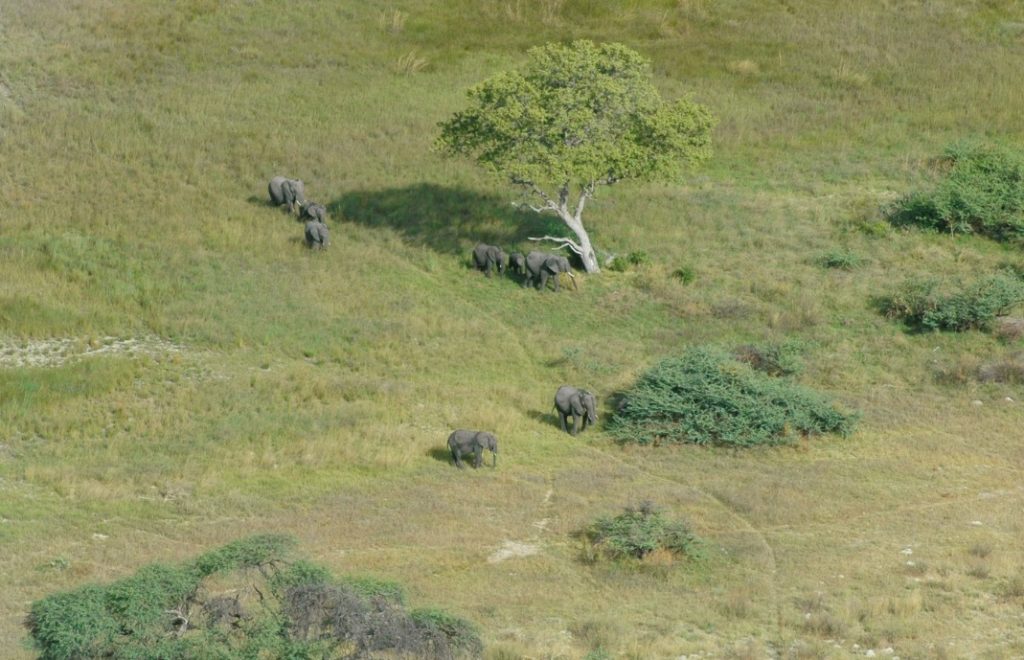
Here, time flows as slowly as the channels that thread through papyrus swamps. Elephants wade like gray giants through the reeds, red lechwe antelopes leap across glittering lagoons, and kingfishers flash like living gemstones against an endless African sky.
A mokoro ride – gliding silently in a dugout canoe – is the ultimate way to explore this water wonderland. No engine hum, no dust, just the rhythmic swish of a pole and the whisper of reeds brushing your fingertips. Every bend reveals a secret: the ripple of a hippo, the watchful eyes of a crocodile, or the vibrant flutter of a malachite kingfisher perched like a tiny emerald on a reed.
The Okavango isn’t just a river delta – it’s an African Eden. And for those who seek solace in wild places, this is as close as it gets to paradise.
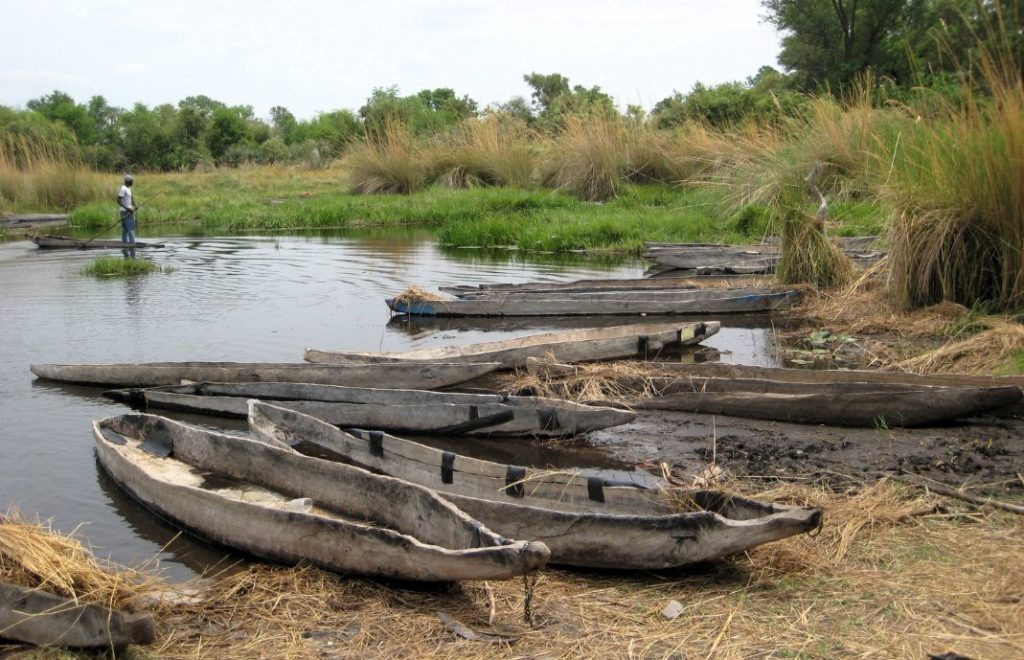
The mokoros await
It’s early morning in Botswana. The sun is still stretching its way up the sky as we arrive at the starting point for our journey into the Okavango Delta.
A pair of ostriches strut lightly past our vehicle. A few zebras graze calmly on a small patch of green. Insects buzz contentedly among the astonishing variety of plants that thrive here – lush, vibrant, and untamed. The entire scene feels both curious and utterly magical.
And then – what on earth?
We stop, stunned – no, downright shocked – by the sight of the boats resting on the sandbank.
Is that what we’re about to venture onto the river with?
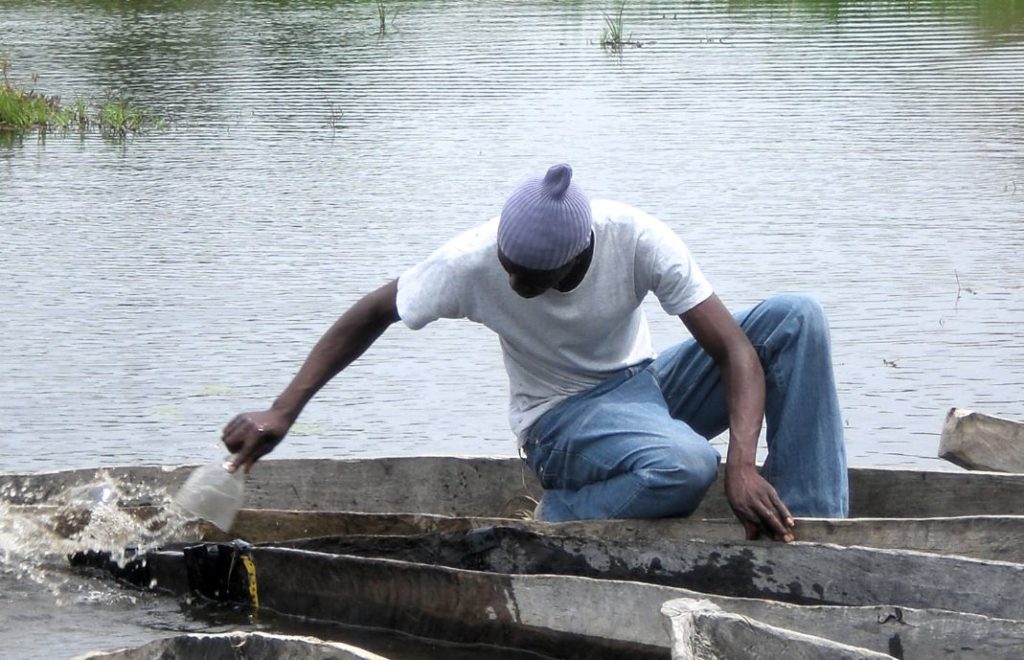
The vessel, known as a mokoro, looks alarmingly weathered, as if it has seen better decades rather than days. To make matters worse, the men who will guide us are busy scooping water out of its hollowed frame.
Our guide smiles reassuringly.
“It’s perfectly safe,” he insists.
Then, almost as an afterthought, adds:
“The biggest danger is the hippos hiding in the reeds. They can flip a boat in an instant.”
I glance at the mokoro and think that even a dragonfly landing on its edge could send us plunging.
But I chose to experience the Okavango’s waterways in this slender canoe of a craft – and so, I will.
A river steeped in magic
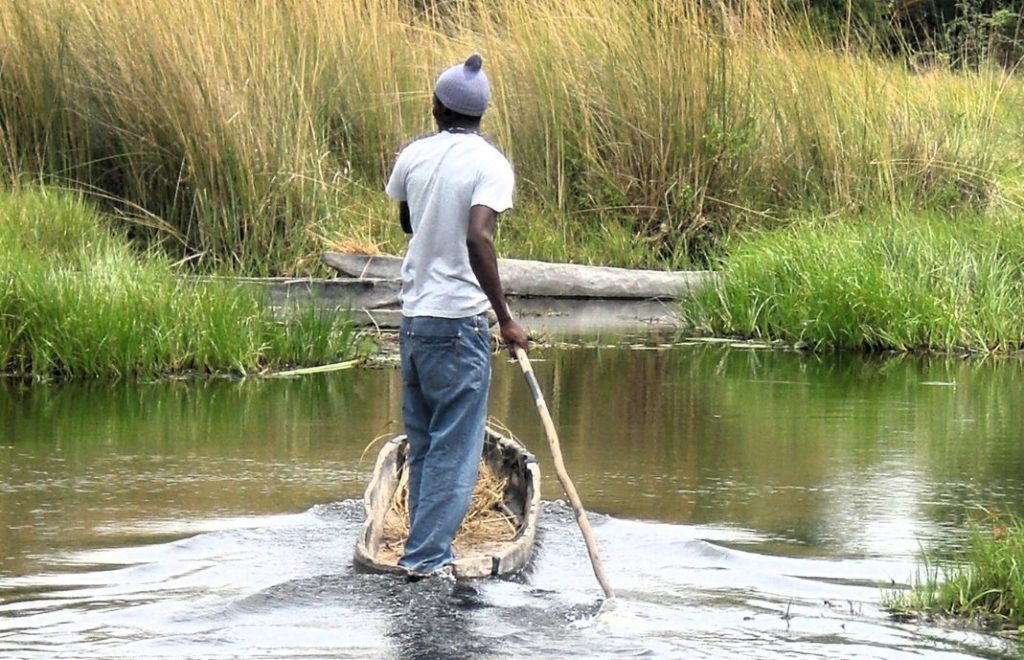
Tents, sleeping bags, food, water, and backpacks are carefully loaded aboard. One by one, we step into the narrow, hollowed-out tree trunk that will be our vessel. At the stern stands Joseph, our boatman, guiding us with a single long pole.
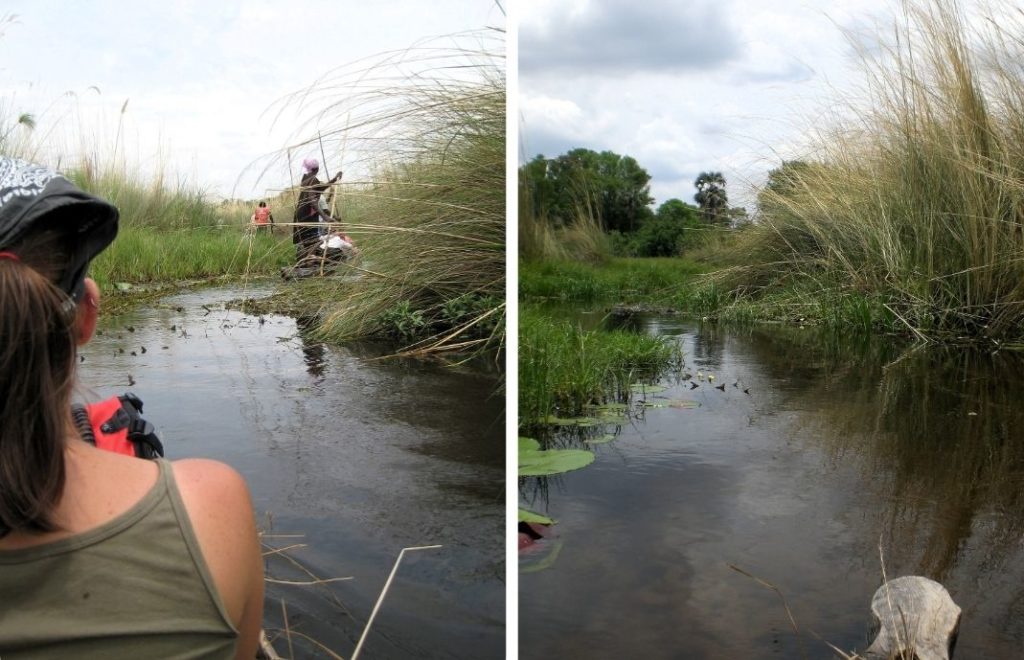
The mokoro I sit in turns out to be enchanting – steady, reassuringly solid. Not a single drop seeps in as we glide silently through the towering grass. A pair of butterflies, wings ablaze with color, flutters past. Above us, the sun hangs like a blazing golden coin in a cloudless sky. And then Joseph begins to sing. His voice, strong and clear, fills the air with melodies in a language I cannot understand – yet the sound is hauntingly beautiful, steeped in soul and atmosphere.
The Okavango Delta, the world’s largest inland delta, sprawls across northern Botswana. Its waters begin life far away, deep within the rugged mountains of central Angola. From there, the river embarks on a slow, four-month pilgrimage south, winding its way toward Botswana’s open plains.
But the Okavango never reaches the sea. Instead, it vanishes into the Kalahari Plateau, creating a vast, shimmering oasis in the heart of a golden desert. Here, more than ninety percent of the water evaporates – though not before breathing life into this extraordinary wilderness, nurturing plants, animals, and people alike.
The delta is a labyrinth of islands scattered across an intricate network of waterways. Some channels are permanent; others shift with the rhythm of the seasons, appearing only when the waters swell. You can always tell a permanent channel, though – papyrus lines its edges like a natural guidepost. The path we follow is thick with it, the emerald reeds rising like silent sentinels, leading us deeper into this waterborne wonderland.
A night in the Delta
A sudden rustle in the reeds sends my pulse racing. No hippos in sight – perhaps they’ve drifted the other way? Moments later, I get an unexpected visitor in the mokoro: a tiny, terrified fish leaps straight into my lap. It thrashes wildly, its eyes wide with panic. I yelp – probably louder than the poor creature deserves – then gently scoop it up and return it to the water. Joseph bursts into laughter, assuring me this is far from an everyday occurrence.
Eventually, we reach a small sandbank and step ashore. Tents are pitched as the camp begins to take shape. The cook gets to work, and before long the aroma of local dishes drifts through the warm evening air, mingling with the earthy scent of the delta.
Joseph leads us a short distance from camp to explain the “bathroom situation.” It’s as rustic as it gets: take the camp spade, walk to this designated spot, do what you must, then cover it up. If the spade is missing, consider the facility occupied.
When darkness falls, things get more serious. Joseph insists on being told before anyone ventures out – so he can provide an escort. He assures an English lady in our group that, during such missions, they always turn their backs respectfully.
Once it’s bedtime, the rules tighten: under no circumstances should anyone leave their tent. Lions, hyenas, jackals, and other predators roam the shadows here. In other words – hold it until dawn.
The lion doesn’t sleep tonight
Night falls swiftly over the Okavango Delta. The campfire crackles gently, casting a warm glow and sending sparks dancing into the velvet sky. We sit close, savoring the comfort of its heat and the lull of the African night, until at last we’re told it’s time to turn in. Tomorrow begins early.
Inside my tent, the sleeping bag wraps me in snug warmth. There is something utterly magical about lying here, deep in the African wilderness, with wild creatures as our unseen neighbors.
Suddenly, I’m wide awake, curling instinctively into myself. A lion’s roar – low, guttural, and distinctly displeased – tears through the darkness. Footsteps rustle in the grass, followed by another roar, and another. A sheen of sweat prickles my skin as the reality sinks in: only a thin sheet of canvas separates me from the sovereign of the savanna. I silently hope he’s not in the mood for a midnight snack.
At dawn, Joseph raps lightly on the tent flap. “Five minutes until breakfast,” he calls cheerfully.
The meal, served on felled tree trunks beneath a sky brushed with the first golden light, tastes divine.
“Did you hear the lion last night?” Joseph asks with a grin.
Every head nods.
“He walked straight through camp,” Joseph says matter-of-factly. “I’ll show you the tracks once you’ve eaten.”
The paw prints, when we finally see them, are staggering. Silent proof of how close the king of beasts came as we slept. Thankfully, it seems that on this night, tourists weren’t on the menu.
On foot in the wild
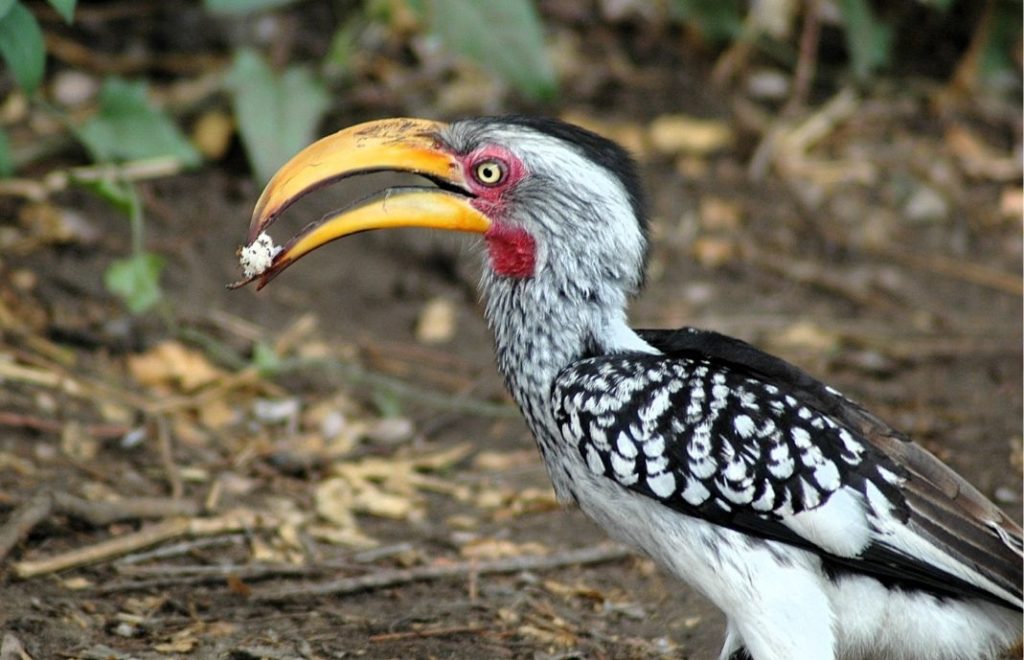
With a rifle slung casually over his shoulder, Joseph leads us into the Okavango on foot. The landscape is breathtaking – an untamed mosaic of life. This truly is an oasis: towering termite mounds punctuate the plains, birds wheel overhead in search of breakfast, and a few antelope peer at us from the shelter of the brush.
We stumble upon a colossal skull – the weathered remains of an elephant that has wandered on to greener pastures beyond this life. Joseph, a living encyclopedia of the delta, shares its secrets with a quiet authority, revealing layers of knowledge that make this wilderness feel even more extraordinary.
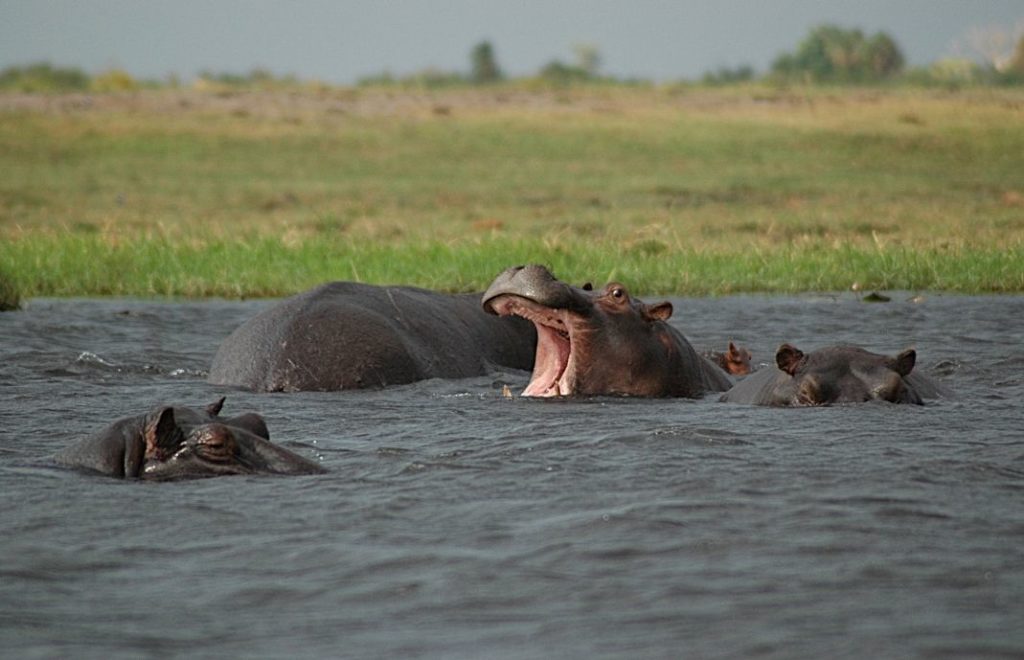
The hike ends at a shimmering lagoon where a pod of hippos wallows contentedly in the morning calm. They look almost comical, snorting and bobbing in the water. Joseph reminds us that if they lose their temper, you’d better pray you’re not in their path.
As if on cue, one explodes with a thunderous pruuust, sending bubbles swirling around its massive frame. Moments later, we’re treated to an even rarer sight: several hippos lumber out of the water and onto land, heaving their immense bodies toward a patch of soft, sun-warmed earth.
Joseph smiles knowingly. “They love the warm ground,” he explains, as we watch these giants settle into their earthen spa.
Stranded in the Okavango
Back at camp, everything is packed and carefully loaded onto the mokoros. It’s time to return to civilization. My heart feels heavy as we drift away from this extraordinary wilderness. If only every day could be like this one.
The mokoro glides quietly across the water, slicing through the stillness. We watch the bends in the channel with quiet anticipation, wondering what the delta will gift us with one last time. Frogs croak in chorus from the reeds, as if bidding us farewell.
The adventure, it seems, has ended – but the Okavango has one final twist in store.
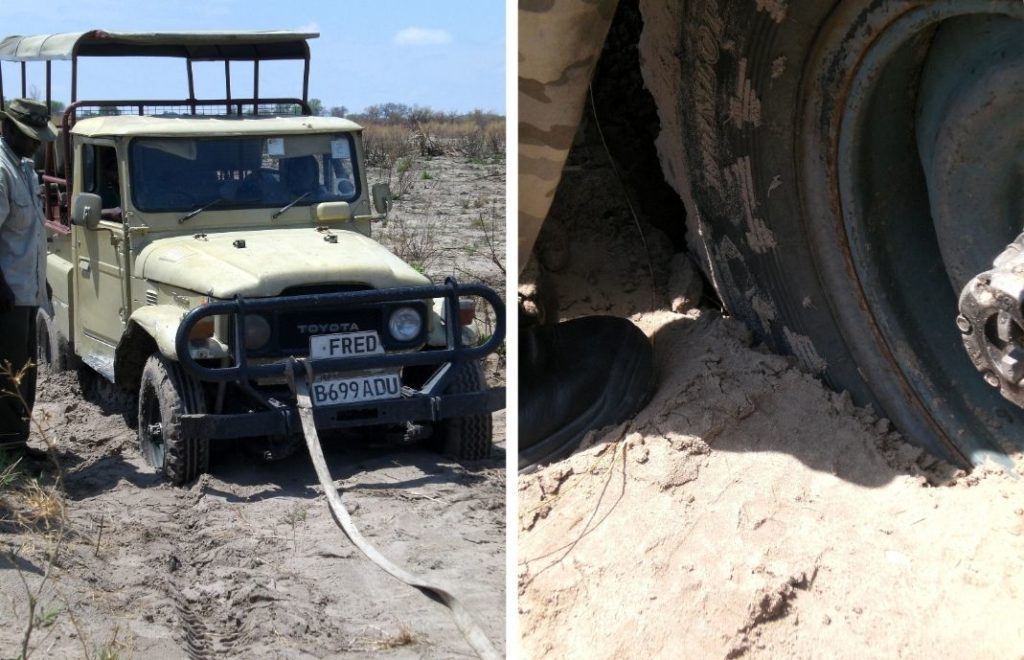
On the drive back to town, our already overstuffed vehicle sinks into the soft sand, leaning ominously to one side. Everyone scrambles out, sleeves rolled up, ready to dig. We heave, push, and sweat under the African sun, but the stubborn earth won’t let go.
Eventually, the driver and guides admit defeat and trek off in search of help. Salvation arrives in the form of a local farmer with a tractor, who tugs our vehicle free like an archaeologist unearthing a relic.
When the tires finally roll onto asphalt again, it hits me – the adventure in the Okavango is truly over.
Only the Okavango is the Okavango
African proverb
Practical information
Getting there
The easiest gateway to the Okavango Delta is via a flight into Maun, the main hub for this remote wilderness.
Wildlife encounters
Expect to see hippos, wildebeest, zebras, and buffalo in abundance. On the islands, keep an eye out for lions and hyenas, which are frequently spotted.
Unmissable experiences
An overnight mokoro expedition is highly recommended. It’s a serene, immersive way to explore the delta’s labyrinth of waterways. Pair this with a classic safari in Chobe National Park and a side trip to the majestic Victoria Falls (Zimbabwe) for the ultimate adventure.
When to go
Botswana is at its best during the dry season, from April to October, when wildlife congregates around waterholes and along the riverbanks, offering some of the most spectacular game-viewing on the continent.
More inspiration to Botswana:
Safari in Chobe National Park
Walking with the San People
A guide to Chobe National Park
There’s a cheetah on the hood
When is the best time to visit Botswana?
