
Long and slender, Vietnam stretches like a ribbon along the sea – an exquisite blend of contrasts and harmony. Here, bustling cities hum with life while quiet villages preserve the charm of tradition. Colorful markets spill over with scents and sounds, and landscapes shift from emerald-green rice terraces to mist-shrouded mountains, from tranquil rivers to golden, palm-fringed beaches.
This is a land steeped in culture and history, where ancient temples and graceful pagodas whisper stories of centuries past. Explore mystical caves carved deep into limestone karsts, or simply savor the rhythm of daily life while sharing a meal with a local family.
Vietnam offers every kind of stay – luxury resorts, rustic bamboo huts, or intimate homestays where hospitality feels like an embrace. The cuisine? A masterpiece of flavors: fresh, fragrant, and unforgettable.
One journey will never be enough. Vietnam is a tapestry so rich, so vibrant, that it calls you back – again and again.
A thousand-year-old capital
My Vietnamese adventure begins in Hanoi, a city with a thousand years of history – a living tapestry of time and tradition. Hanoi is like a box of assorted chocolates: an irresistible mix of everything. Vietnamese grace mingles with French colonial charm, narrow alleys weave into broad boulevards, and architectural gems punctuate the urban sprawl. Add centuries-old traditions and a teeming tide of humanity, and you begin to grasp its essence.
Hanoi enchants, even through the haze of exhaust fumes and the chaos of traffic. It is, undeniably, one of Asia’s most beautiful cities – yet it still clings to the intimacy of a village.
At dawn, the city stirs with a quiet rhythm. My body is slow to wake, but the locals – of all ages – are already gathering at Hoan Kiem Lake for their daily tai chi. They bend and stretch, push and pull, breathe deeply and meditate. Movement seems to be in their blood, a ritual as old as the city itself.
Then, it’s time to wander. The Old Quarter is a delight: intimate, vibrant, and overflowing with character. Tiny shops and market stalls brim with treasures – frog legs, dolls, watches, paper lanterns, herbal remedies, and ornate mirrors. Each street hums with life, each turn reveals another scene of color and texture.
No visit to Hanoi is complete without stepping into the Temple of Literature. Founded in 1070, it became Vietnam’s first university just six years later, devoted to Confucian studies. The architecture is a masterclass in harmony: symmetrical and serene, yet artfully infused with Confucius’ golden mean. Buildings, gardens, lotus ponds, and trees coexist in perfect balance – a quiet sanctuary amid the urban rush.
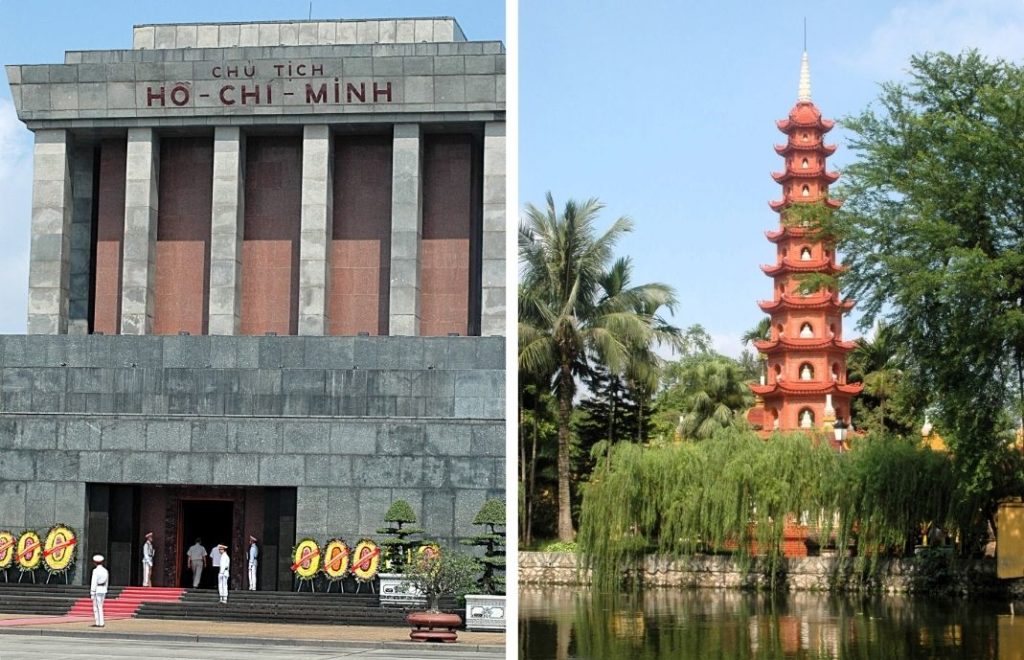
A short journey takes me to Ba Dinh Square, the symbolic heart of the nation. From here, the French once ruled their Indochinese conquests. Later, this same ground witnessed a defining moment: Ho Chi Minh reading the Declaration of Independence in 1945, igniting Vietnam’s new dawn. Today, the revered leader rests in his mausoleum, where visitors shuffle in solemn silence, single-file, to pay their respects.
Before leaving Hanoi, I seek out the Tran Quoc Pagoda, its history tracing back to the 6th century. Standing on the edge of West Lake, this graceful sanctuary is among Vietnam’s oldest – a timeless witness to the spiritual soul of the nation.
Central Vietnam
It’s time to journey south, into the heart of Central Vietnam – a region steeped in history and blessed with endless stretches of pristine shoreline. Life here unfolds at an unhurried pace, even as the area has become one of the country’s most sought-after destinations.
Yet beneath its serene beauty lies a turbulent past. This was the epicenter of the Vietnam War, a land scarred by some of the fiercest battles. Vast tracts of forest were devastated by bombs and poisoned by Agent Orange, the infamous defoliant that left wounds far deeper than the eye can see.
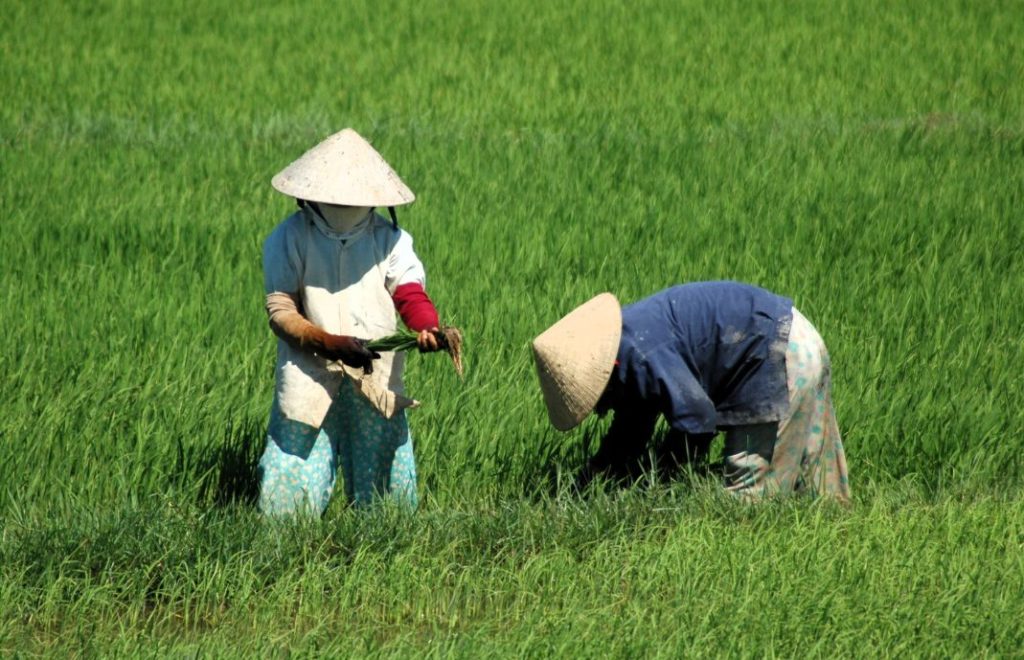
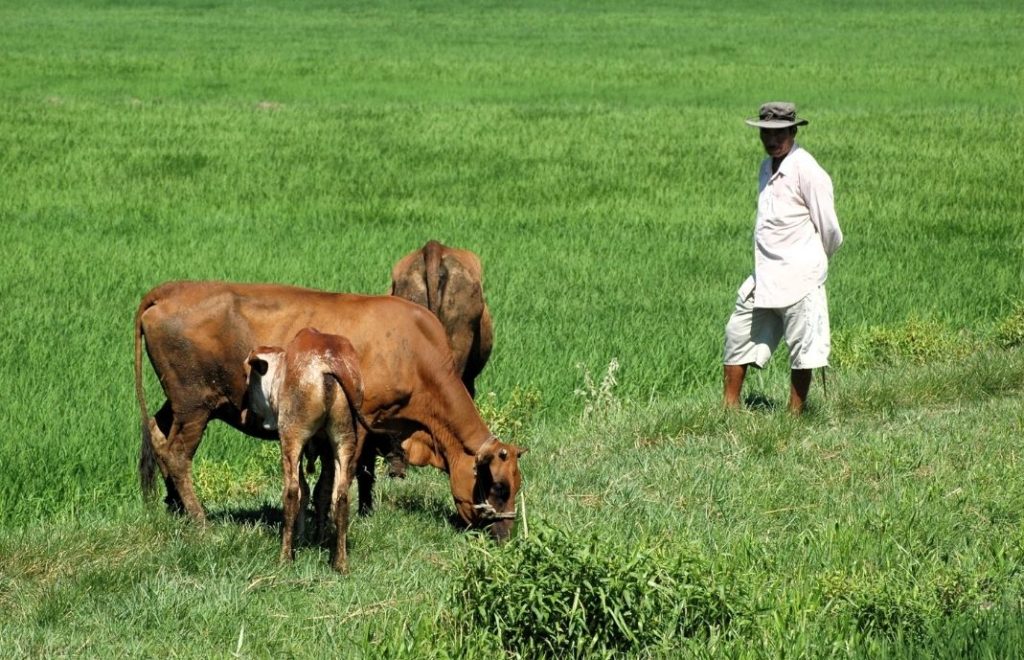
Today, the scars are fading, though the echoes of history linger. As our driver speeds along, scenes of rural life glide past the window: emerald rice paddies where farmers, shaded by iconic conical hats, guide their oxen through the fields; barefoot children waving from dusty roadsides; motorbikes buzzing like dragonflies in the sun.
To the east, the South China Sea unfurls in shimmering blues, its waves rolling gently onto shores that seem to stretch into eternity. Mile after mile of golden sand beckons beneath a sky that melts into the horizon – a promise of calm in a land that has known so much chaos.
The imperial city of Hue
Today, the former royal capital of Hue thrives largely on tourism – yet its timeless charm remains intact.
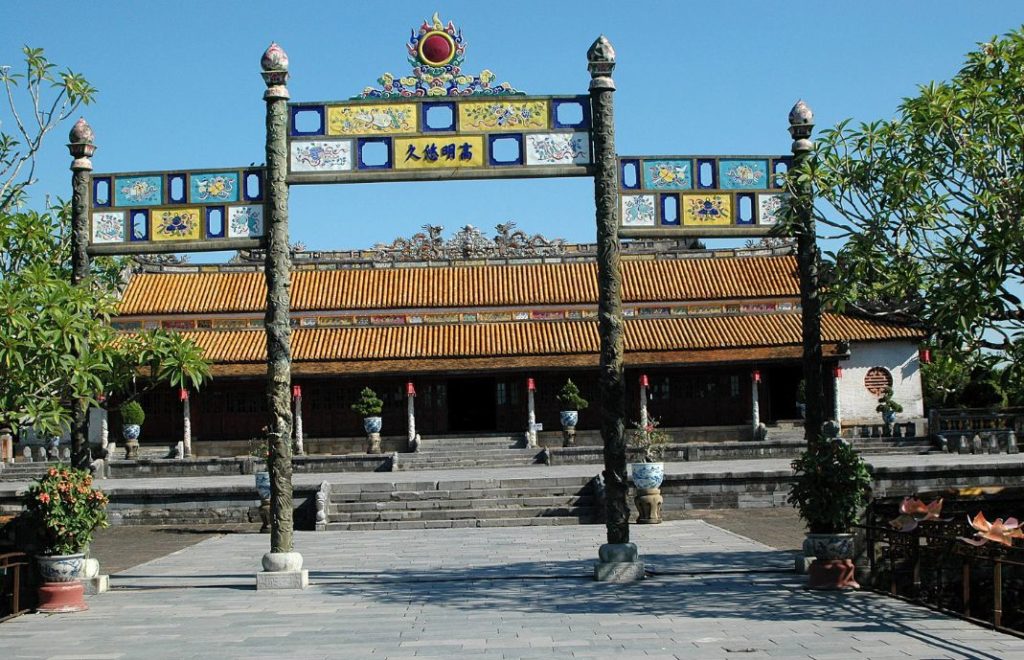
Before 1306, Hue was part of the Hindu kingdom of Champa. History took a turn when the Vietnamese acquired the city and the land north of Da Nang in exchange for a royal bride. Centuries later, in 1802, Emperor Gia Long chose Hue as his imperial seat, drawn by its strategic position in the very heart of Vietnam.
The Perfume River divides the city in two: on one bank lies the imposing citadel and the Imperial City, steeped in dynastic glory; on the other, the elegant French Quarter, a legacy of colonial times. Among Hue’s crown jewels, the ancient Imperial City and the serene Thien Mu Pagoda are absolute must-sees.
Beyond the city, the surrounding countryside brims with royal relics. Majestic tombs, ornate temples, and storied pagodas that echo the grandeur of Vietnam’s imperial past. For those with an adventurous spirit, Hue is also a cyclist’s dream, its gentle terrain and historic backroads inviting exploration at a leisurely pace.
Hue is more than a city; it’s a living chronicle of emperors and empires, where every stone and stream whispers tales of a bygone era.
The Marble Mountains – Legends of the Five Elements
Bidding farewell to Hue’s imperial past, I set my course for Da Nang. The road suddenly veers into the mountainside before twisting upward toward the legendary Hai Van Pass— – aptly named “The Pass of Clouds.” Here, luck and steady nerves are essential, as the serpentine route coils through hairpin bends, climbing ever higher. At the summit, 500 meters above sea level, the reward is pure magic: sweeping views of Da Nang Bay, a stage where both French and American forces once came ashore.
Da Nang itself embodies modern Vietnam – a vibrant contrast to Hue’s regal serenity. Today, it is the central region’s most important port city, a bustling hub of trade and progress. For travelers, the Cham Museum is a treasure trove worth exploring, housing the world’s finest collection of art from the vanished kingdom of Champa – a poignant reminder of the region’s layered history.
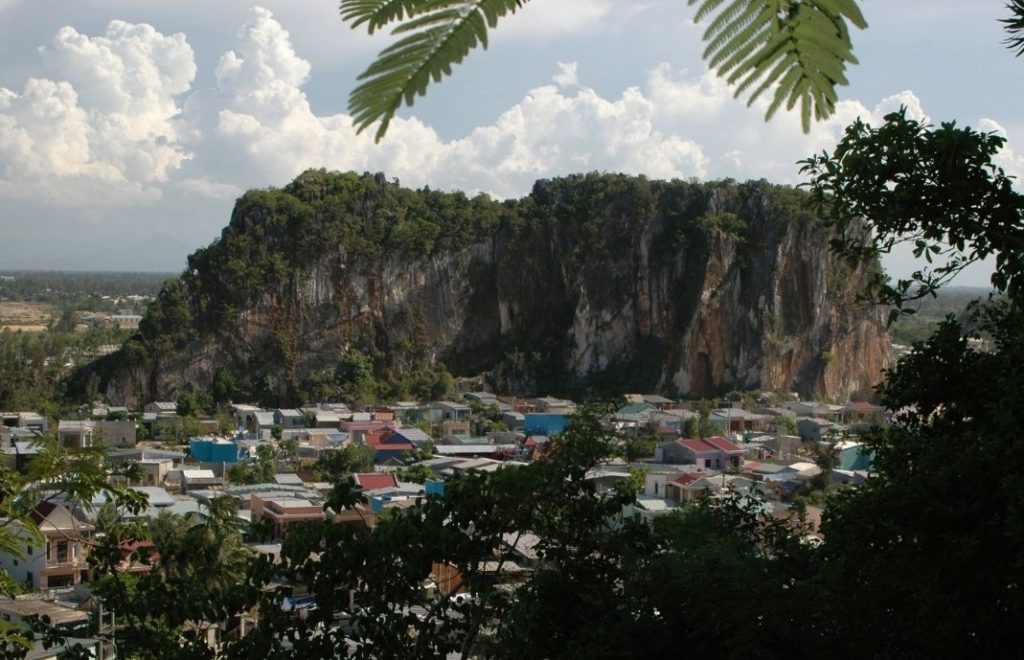
Just beyond the city rises a cluster of limestone outcrops steeped in myth: the Marble Mountains. Legend whispers that they were born from a single egg, laid upon the sands by a divine turtle. When the egg hatched, its shell fractured into five pieces, forming the mountains that now stand as symbols of the five elements: earth, metal, fire, water, and wood.
Of these, Water Mountain reigns supreme, crowned with a vast, echoing cave near its peak. The ascent is no casual stroll. It demands effort, winding up narrow stone paths and, near the top, forcing you to squeeze and scramble through tight shafts of rock. But the struggle is worth every breath: from the summit, the world unfurls in a panorama of sea, city, and sky – a view as timeless and entrancing as the legend itself.
Hoi An – The tailors’ town
The journey continues to Hoi An, a small, enchanting town that feels like a living postcard from another era. Some of Vietnam’s oldest houses still stand shoulder to shoulder along its narrow streets – streets blissfully free of the chaos of motorized traffic. Here, life moves at a gentler rhythm, and everything lies within a leisurely stroll’s reach.
Once a humble fishing village, Hoi An now lures travelers from around the globe. Its charm lies not only in its beautifully preserved architecture, winding canals, and graceful bridges, but also in its atmosphere – a place where time seems to pause.
Hoi An is also celebrated for its exquisite silk products. Step into the famed Trung Luong shop and witness the entire process, from the tireless silkworms spinning their delicate threads to the shimmering fabrics they create. It’s a mesmerizing craft, as precise as it is poetic.
And then, of course, there are the tailors. No visit to Hoi An is complete without slipping into one of the many ateliers, where skilled hands will measure, sketch, and stitch your dream garment in a single day. From elegant dresses to perfectly fitted suits, the result is nothing short of sartorial magic – your own custom-made souvenir from the heart of Vietnam.

A city that pulses with charm
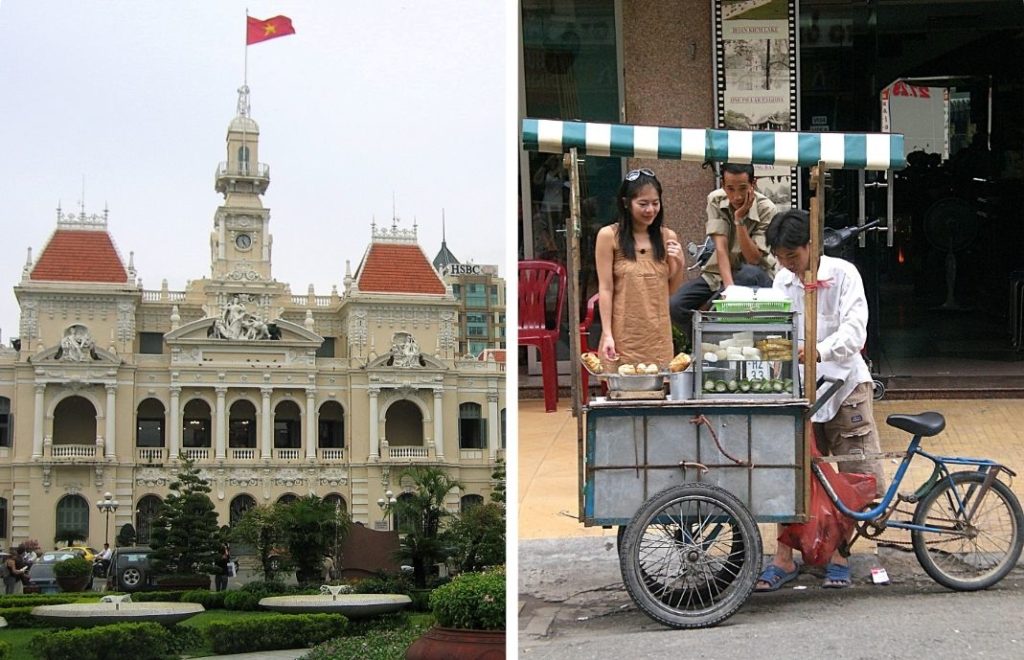
Ho Chi Minh City hits you like a jolt of caffeine – a dizzying contrast to the tranquil towns of central Vietnam. The streets are an endless tide of mopeds, weaving and honking in a relentless ballet of chaos. Exhaust fumes and engine growls curl into every breath, while glassy skyscrapers pierce the skyline, towering above a woman in a conical hat balancing twin baskets on her shoulder. She seems plucked from another era, a striking counterpoint to the suit-clad businessmen striding purposefully to work.
The city is loud, frenetic, and irresistibly alive. Hardly surprising, considering it’s home to some ten million souls.
Once two separate cities – Saigon and Cho Lon – Ho Chi Minh today is a sprawling metropolis where past and present intertwine. Saigon remains its most European quarter, its character forged in the late 19th century under French colonial rule.
Though history doesn’t weigh quite as heavily here as in Hanoi or Hue, it still casts long shadows. Between 1954 and 1975, when Vietnam was divided, the city became a strategic hub, though the war itself never reached its core.
One of the country’s most visited sites, the War Remnants Museum, lays bare the brutal legacy of that era. Outside, rusting helicopters, fighter jets, artillery pieces, and even a French guillotine stand as grim sentinels. Inside, the exhibits pull no punches – haunting photographs and artifacts documenting atrocities committed by French, American, and South Vietnamese forces. It’s a sobering experience, a raw and unflinching reminder of war’s human cost – a warning carved deep into the conscience of the nation.
The colorful monks of Cao Dai
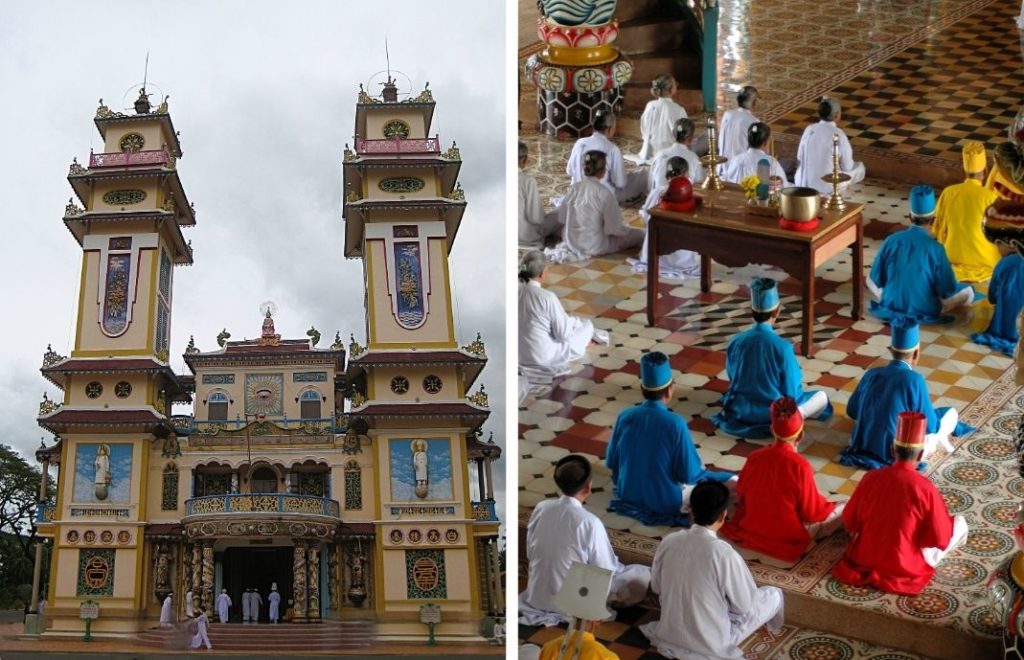
Before me looms a fantastical structure, a pastel-hued palace that could easily belong in a Disney fairytale. Yet this is no theme park. It’s the main temple of the Cao Dai faith, one of Vietnam’s most intriguing and eclectic religions.
The temple is a kaleidoscope of influences – a dazzling blend of colors, architectural styles, and spiritual philosophies. Within its sacred halls, East and West collide in a way that defies convention. Among the sect’s revered saints are Napoleon, Joan of Arc, and Winston Churchill. They even claim spiritual communion with Shakespeare and Lenin – a pantheon as curious as it is captivating.
At first glance, the Cao Dai Temple resembles a European basilica, but look closer and the details tell another story. Serpentine dragons coil around towering columns, which rise from stylized lotus blossoms. Statues of Buddha, Confucius, Laozi, and celestial guardians share space in this vibrant spiritual tapestry. It’s a mélange so audacious, it becomes oddly harmonious – a testament to Vietnam’s ability to absorb and reinvent.
If you visit, time your trip to witness one of the four daily ceremonies. As the hour approaches, the temple comes alive: monks and devotees, robed in brilliant hues, glide into the prayer hall, their colors glowing like jewels beneath the filtered sunlight. It’s a spectacle of faith and pageantry – solemn, surreal, and utterly mesmerizing.
Descending into the war tunnels
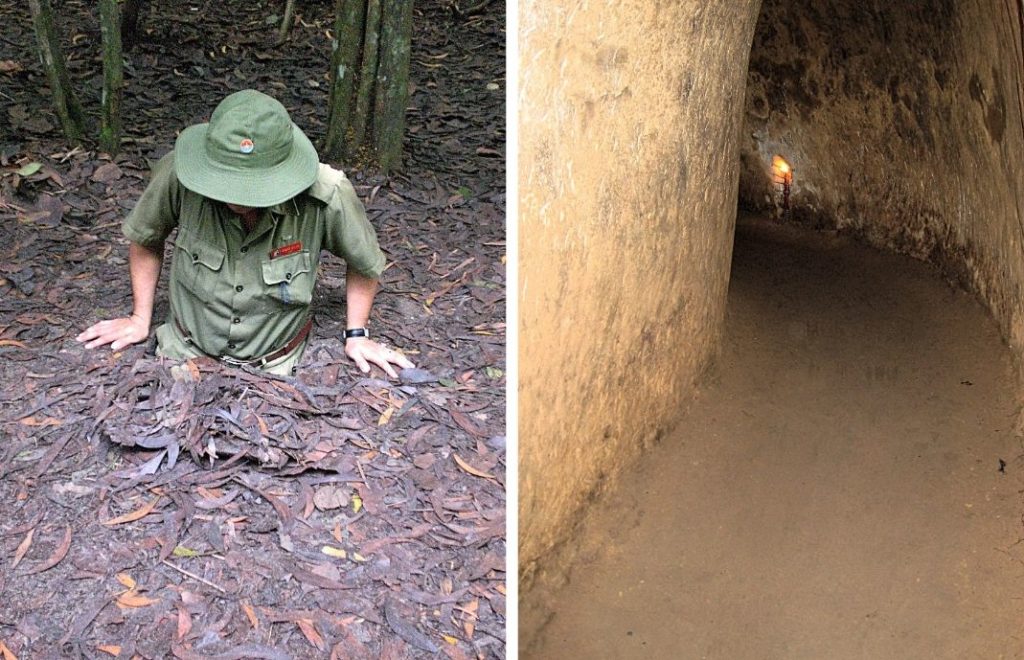
In stark contrast to the vibrant spectacle of the Cao Dai Temple lies an altogether different experience: the Cu Chi Tunnels. Life could not have been easy for those who once called these subterranean passages home. Dug 12 meters deep into the unforgiving earth, this vast network stretches over 200 kilometers, arranged in multiple levels like an underground city.
Originally built for strategic warfare, the tunnels played a crucial role in resisting both French colonial forces and, later, the Americans. Within these narrow confines, fighters lived, planned, and persevered -sustaining a war effort from the shadows beneath the soil.
Today, the site has been transformed into an open-air museum, offering a fascinating glimpse into that harrowing chapter of history.
For the truly curious – and the brave – there’s the chance to crawl through a section of the tunnels yourself. Bent low or on all fours, you shuffle through the stifling darkness, sweat dripping, dust clinging to your clothes. Emerging back into daylight, heart pounding, you carry with you a visceral sense of what life must have been like underground – where survival depended on silence, resilience, and an unyielding will.
Good to know
Vietnam is an extraordinary country to explore, but don’t expect to see it all in one trip – it’s simply too rich, too vast, too layered. And that’s perfectly fine. Even a short journey here promises unforgettable experiences. There’s no need to rush; in fact, slowing down is the best way to truly absorb its essence.
Vietnam is a land of secrets, and it won’t reveal them all at once. That’s part of its magic – each visit uncovers a little more, tempting you back for the next chapter of discovery.
More inspiration to Vietnam:
When is the best time to visit Vietnam?
Vietnam’s five H’s
