
It’s the calm before the storm. The jungle presses close, dense and breathing, as we gather along the wooden railing, anticipation rippling through the crowd. Above us, the canopy spreads like a living roof, its leaves filtering the harsh midday sun into a cool, dappled glow. In the rainforest, daylight never fully reigns; here, shadows linger and the air hums with quiet energy.
From a platform high in the trees, a call rings out – sharp, resonant, almost primal. Silence answers. The call comes again, echoing through the emerald stillness. Then, the jungle stirs. Branches quiver, leaves rustle, and somewhere deep within the green, something moves.
And then we see them. Emerging from the foliage with unhurried grace, the first of the great apes steps into view. Orangutans – our wild cousins, sharing 97 percent of our DNA – swing effortlessly from limb to limb, copper fur catching flecks of sunlight. One by one, they arrive, their movements fluid and assured, drawn by the promise of a meal.
Watching them is like gazing through a window into our own past. An intimate glimpse of a world we’ve long since left behind, but never truly stopped belonging to. Here, in the beating heart of Borneo, the connection between us feels undeniable, raw, and deeply humbling.
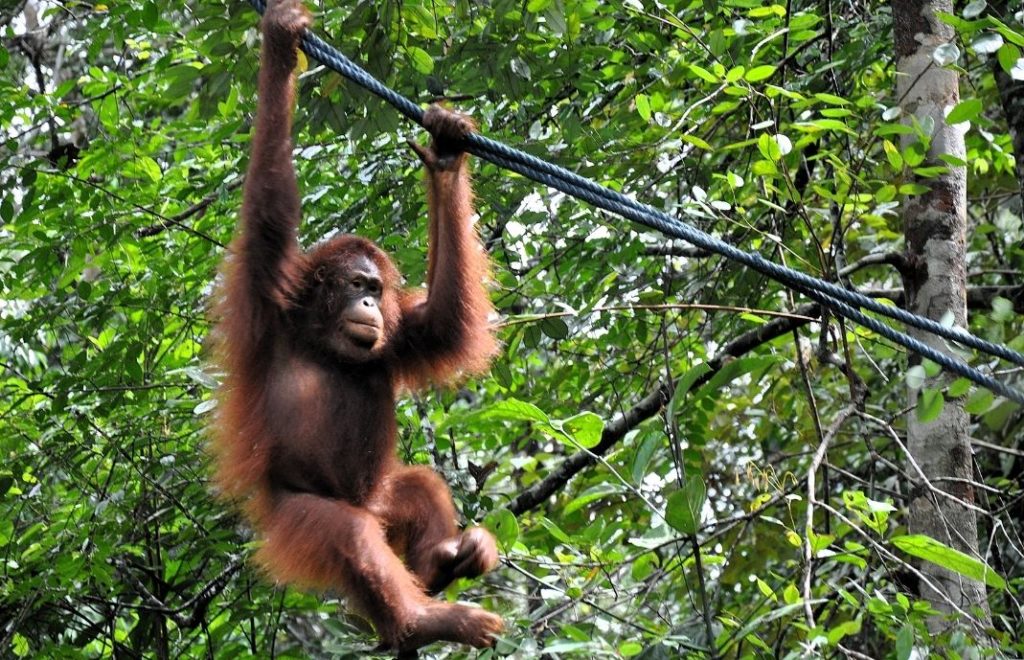
Meeting the orangutans
Sepilok Orangutan Rehabilitation Centre in Sandakan is one of only four orangutan sanctuaries in the world, a pioneering refuge founded back in 1964. Today, it stands as Sabah’s second most visited attraction – just behind the mighty Mount Kinabalu – welcoming around 100,000 visitors each year from every corner of the globe.
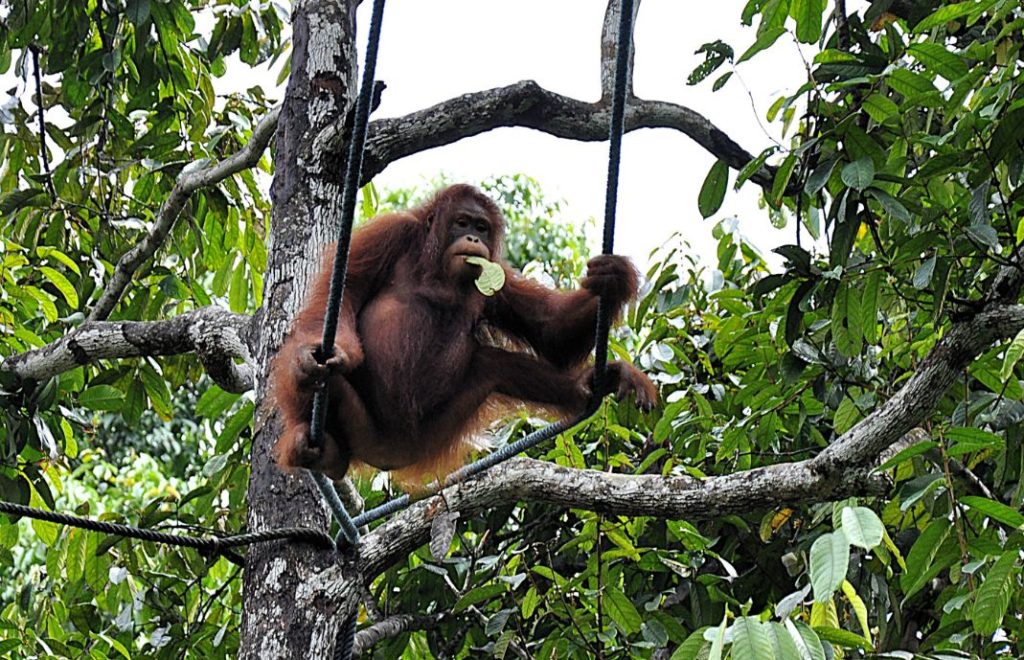
Before me, a massive male orangutan hangs effortlessly upside down, his deep, calm eyes locking onto mine. For a moment, time seems to pause. Here, he is king – this is his home. I’m merely a guest, humbled by his quiet authority.
Then, with languid grace, he shifts his attention to something far more tempting: the bucket of fruit awaiting on the feeding platform. Hand over hand, he glides across the ropes and lands with a gentle thud. A long, shaggy arm plunges into the bucket, fishing out a juicy piece of fruit, which he munches on with evident satisfaction.
Watching him, so powerful yet serene, I feel the extraordinary privilege of this encounter – a fleeting connection in the heart of the Bornean rainforest, with one of our planet’s most remarkable beings.
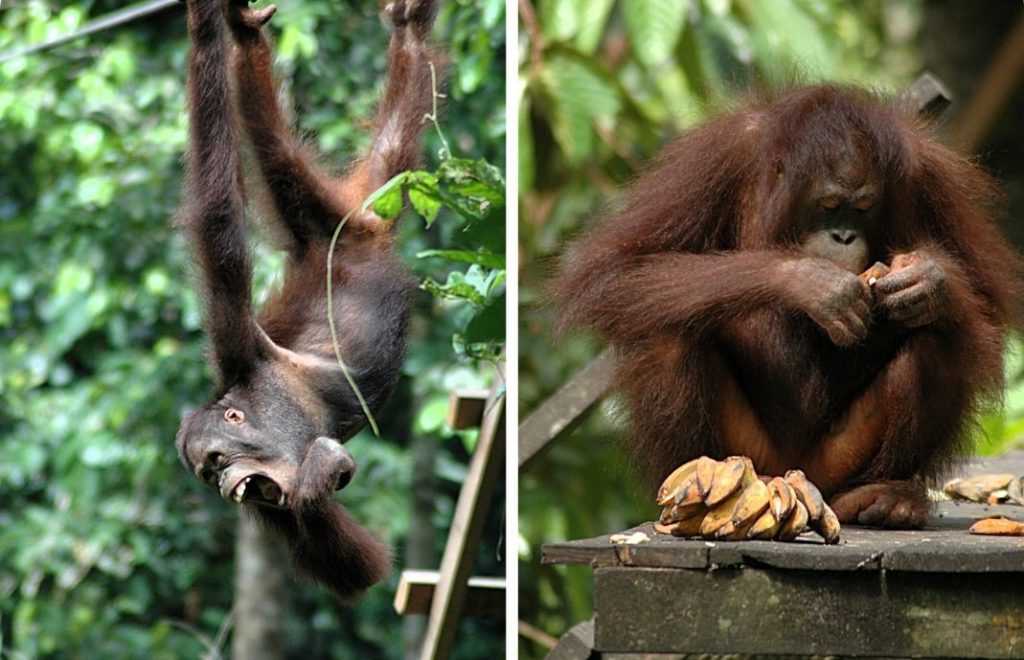
These gentle giants are deeply endangered
Orangutans – aptly nicknamed “people of the forest” – mirror us in both behavior and expression. They are Asia’s only great apes, sharing this rare distinction with chimpanzees and gorillas of Africa.
The magnificent male I’ve been observing is now full, but far from finished entertaining. With astonishing agility, he begins a post-meal workout, swinging effortlessly between branches and ropes. It’s a breathtaking display when you consider the stats: nearly 140 kilograms packed into a frame just 140 centimeters tall, with arms stretching an incredible 2.4 meters. Watching him float through the canopy is like witnessing gravity lose its grip.
Orangutans are true tree dwellers. Everything in their lives – eating, nesting, raising their young – unfolds high above the forest floor, woven into the treetop realm they call home. And yet, this life is under siege. Deforestation, poaching, and habitat loss are pushing these gentle giants to the brink, making every encounter like this one a bittersweet reminder of just how fragile their world – and ours – really is.
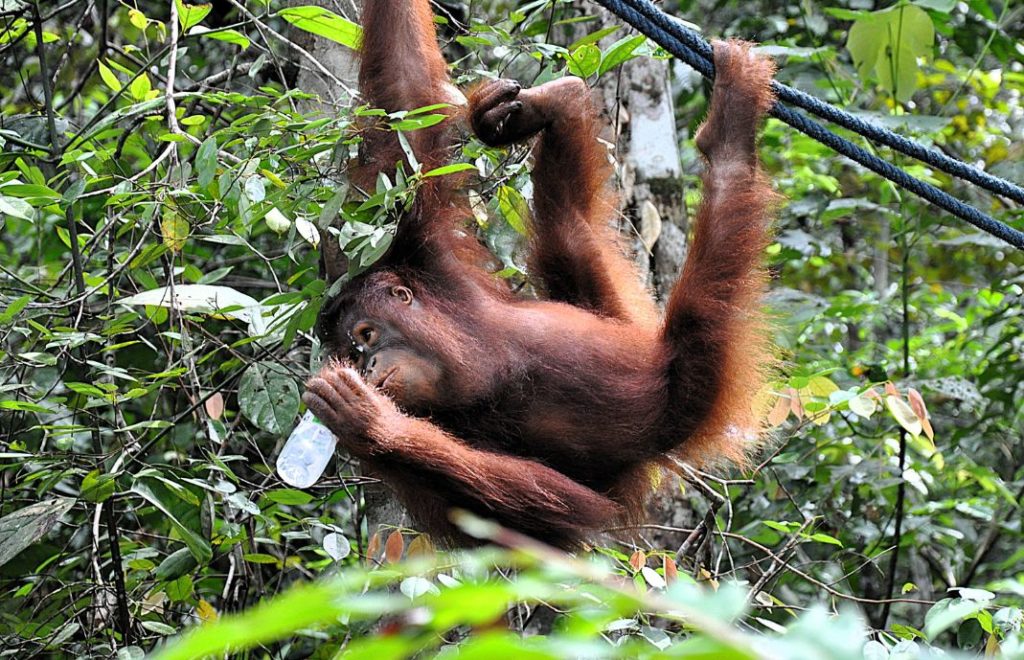
Sepilok Orangutan Rehabilitation Centre
The visit begins with an introductory video – a sobering eye-opener. Emaciated, terrified creatures flash across the screen: orangutans dragged from filthy cages, their bodies frail, their skin bare. It’s a gut punch, a story of suffering etched into every trembling frame.
You feel an ache rise in your chest. Tears threaten – something we share with these great apes, for they, too, are capable of crying. And it hits you: our closest relatives are in agony, and their greatest enemy is us.
Today, only 45,000 to 60,000 wild orangutans remain. At first, that number might sound reassuring – but don’t be fooled. Experts warn that without urgent action, these gentle giants could vanish within a decade.
The culprit? Palm oil production. In the past 20 years alone, orangutans have lost more than half their habitat to sprawling plantations. Their world has shrunk to the islands of Borneo and Sumatra – ironically, the same lands driving this destruction as the world’s leading palm oil producers.
The takeaway is clear: every purchase matters. Think twice before buying products containing palm oil. Your choices can either fuel this crisis – or help save one of Earth’s most extraordinary species from the edge of extinction.
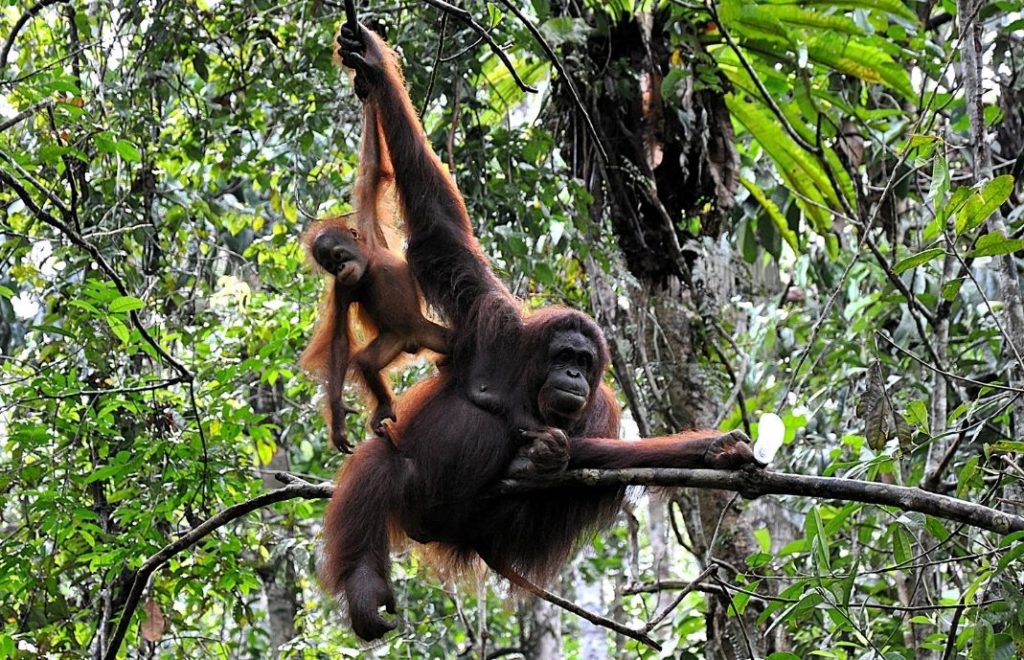
A ray of hope?
Sepilok Orangutan Rehabilitation Centre has become a lifeline for Borneo’s orangutans, carrying out work that is nothing short of heroic. Its mission goes beyond rescuing injured and orphaned apes. It’s about safeguarding the very forests they call home. The centre has long pushed authorities to protect more land, invest in research, and, perhaps most importantly, educate us humans about the consequences of our choices.
Founded in 1964, Sepilok is no newcomer to this battle. Here, orangutans receive nourishment, medical care, and the tender attention they need to heal – along with a second chance at life. The ultimate goal is clear: to return these apes to the wild, strong and self-sufficient.
But reality is harsher than hope. While a few success stories shine through, most orangutans never truly leave. They linger near the feeding platforms, tethered to human support – a bittersweet reminder of how difficult it is to undo the damage once done.
Still, every life saved matters. Every tree spared, every lesson learned, brings us one step closer to ensuring that the forests of Borneo will always echo with the rustle of leaves – and the quiet grace of the “people of the forest.”
Magnificent beings
Fascinating, graceful, and impossibly charming.
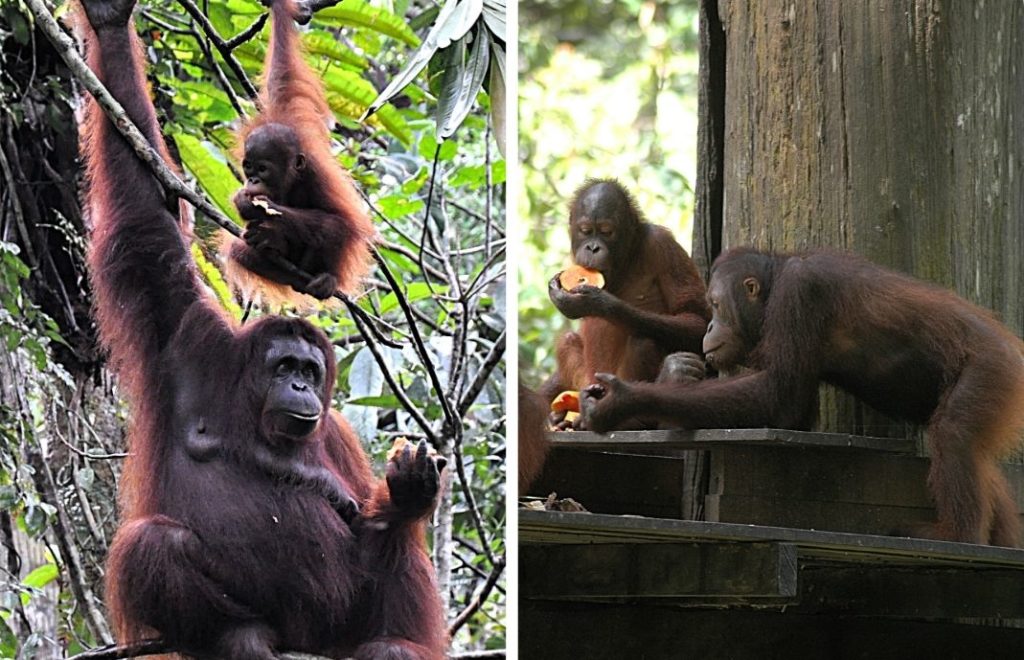
They hang upside down, swing effortlessly from branch to branch, and munch contentedly on their fruit. Their soulful eyes seem to hold a silent plea, as if asking us to come to our senses and leave them in peace. All they want is to live as they were meant to – in the emerald canopy of the jungle. Because no matter how well-intentioned, watching them here at the center is not the same as witnessing their freedom in the wild.
Orangutan young cling to their mothers for seven to ten years, the longest childhood of any land mammal apart from humans. I watch as a tiny bundle of orange fur presses close to its mother, stealing the show with antics designed to melt every heart in sight. Cameras click in rapid fire, capturing the little performer from every possible angle. This baby knows exactly how to charm an audience – and succeeds effortlessly.
But as I look closer, my wish is simple: that when the day comes for this youngster to leave his mother’s side, it won’t be to linger near a feeding platform. It will be to disappear into the great green wild, where he truly belongs.
Practical information
A rare sanctuary
Sepilok Orangutan Rehabilitation Centre is one of only four such facilities in the world. It was founded in 1964 by the passionate conservationist Barbara Harrison.
Get involved
The center welcomes volunteers and offers various ways to support its mission.
Visitor magnet
Drawing around 100,000 visitors annually from across the globe, Sepilok is Borneo’s second biggest attraction – right after Mount Kinabalu.
Endangered species
Orangutans are officially classified as Critically Endangered on the IUCN Red List.
How you can help
You can adopt an orangutan, donate funds, or contribute in other meaningful ways through the center’s programs. Every action counts toward giving these gentle giants a fighting chance.
More inspiration to Borneo:
The magical Turtle Island
Trekking Mount Kinabalu
Kuching – The city of cats
When is the best time to visit Malaysia?
