
High above the bluffs of the Missouri River in Chamberlain, South Dakota, a woman of steel stands in the wind – graceful, powerful, and timeless. Draped in a star quilt shimmering with shades of blue and silver, she gazes toward the horizon as if watching over both the land and the generations who have called it home.
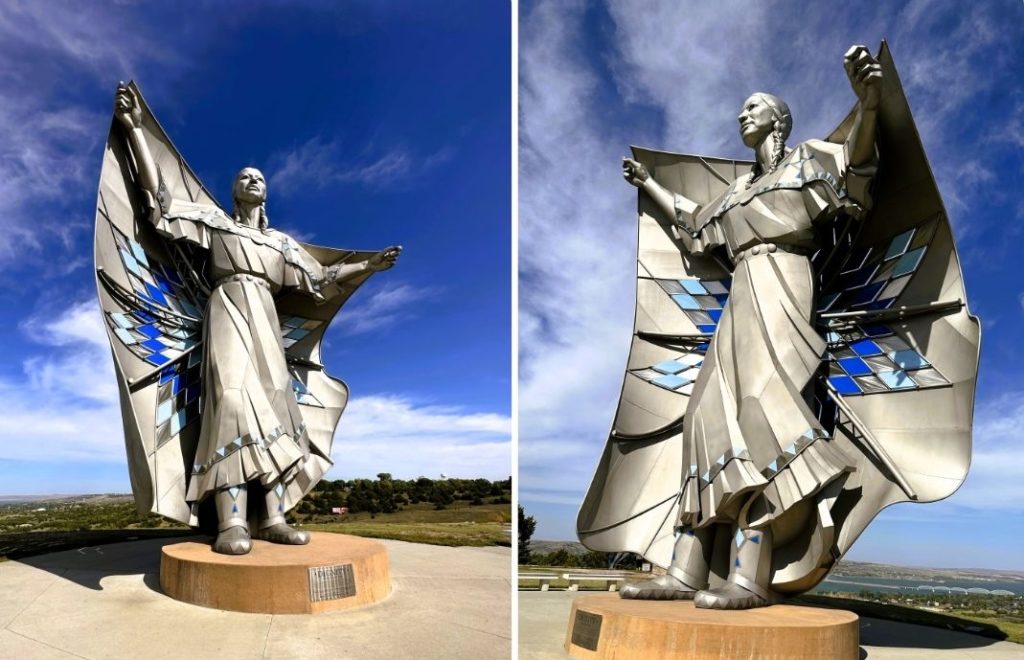
This is Dignity of Earth and Sky – a stunning 15-meter (50-foot) stainless-steel sculpture that has become one of the most beloved landmarks in the American Midwest. Created by South Dakota artist Dale Claude Lamphere and unveiled in 2016, the statue honors the courage, wisdom, and resilience of Indigenous women, particularly those from the Lakota and Dakota Nations.
More than just a monument, Dignity is a meeting of art, landscape, and spirit. It captures a moment of quiet strength – a reminder that beauty and dignity can rise from the heart of the prairie, where the sky stretches endlessly and the wind carries stories older than time.
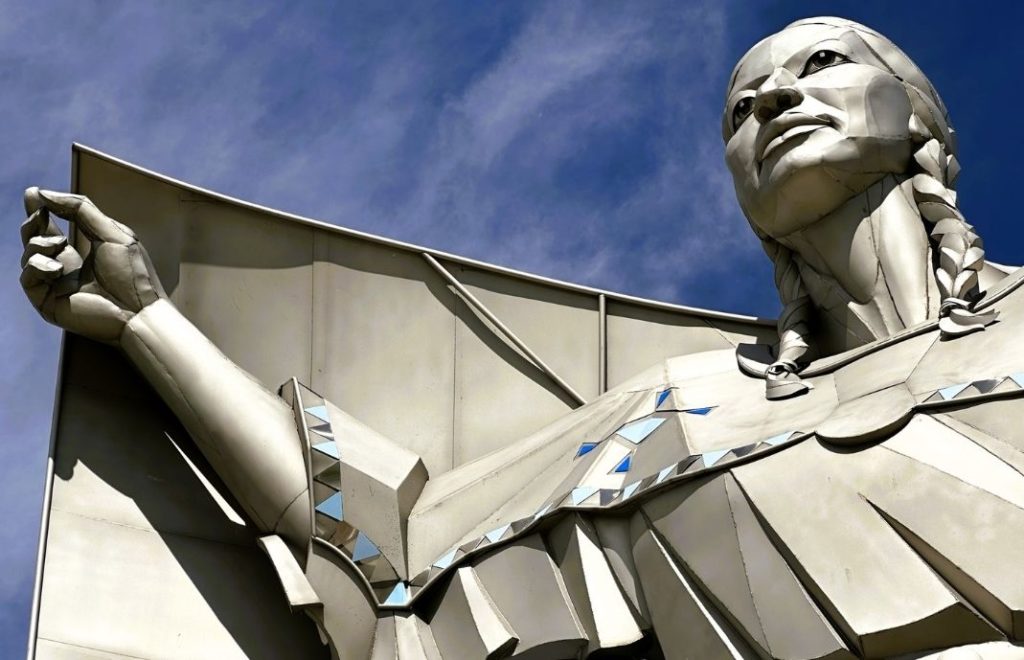
The story and inspiration behind Dignity of Earth and Sky
When South Dakota artist Dale Claude Lamphere first envisioned Dignity of Earth and Sky, he wanted to create more than a statue – he wanted to capture a spirit. His goal was to honor the Native American women whose strength, grace, and resilience have anchored life on the Great Plains for generations.
Commissioned in 2015 by Norm and Eunabel McKie of Rapid City, the sculpture was gifted to the people of South Dakota in celebration of the state’s 125th anniversary. From the start, Lamphere drew inspiration from the Lakota and Dakota cultures, spending time studying their traditions, star quilts, and symbolic gestures of respect and pride.
The figure’s face was modeled after three young Native American women, blending features to represent not one person but an entire lineage – mothers, daughters, and grandmothers bound by history and heritage. Her expression is calm, strong, and eternal – a guardian figure rising from the prairie.
The star quilt she holds – made of more than 100 blue diamond-shaped panels – glimmers in the daylight and glows under the moon. For many Indigenous communities, star quilts symbolize honor, protection, and hope, often given to mark important moments in life. Here, it becomes both cloak and constellation – a bridge between earth and sky.
Through Dignity, Lamphere created not just a sculpture, but a message – one that celebrates survival, beauty, and the unbreakable bond between people and place.
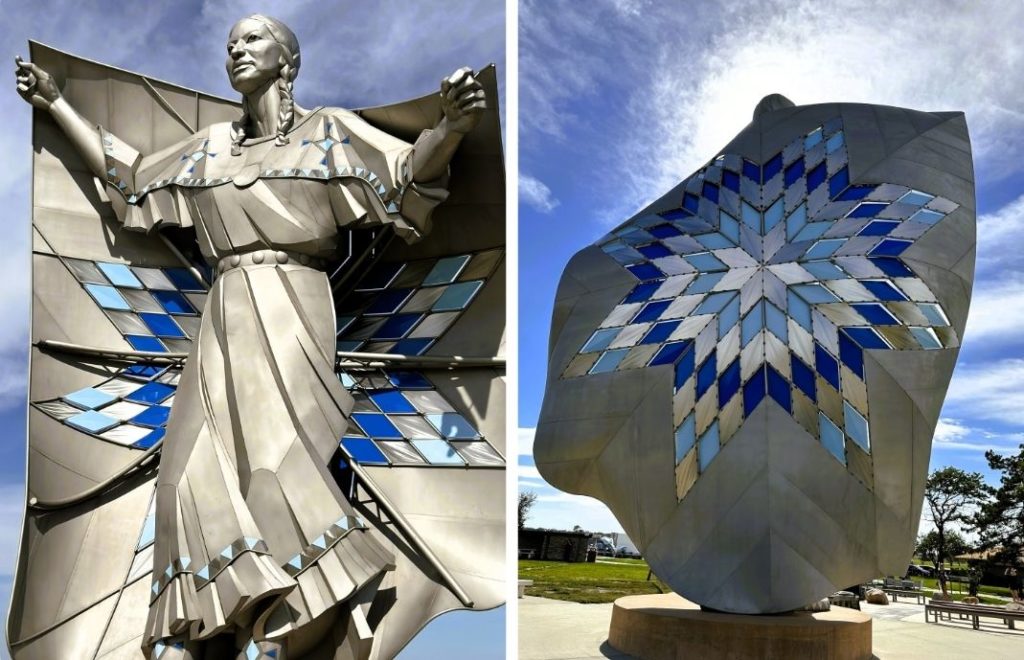
The design and meaning of the sculpture
At first glance, Dignity of Earth and Sky is breathtaking in its scale and serenity. Standing 15 meters (50 feet) tall and weighing nearly 12 tons (27,000 pounds), she rises from a grassy bluff overlooking the Missouri River. Her star quilt billowing behind her like a sail catching the Dakota wind.
But it’s when you step closer that the depth of her design reveals itself. Every curve, every panel, every glint of light carries meaning. Her stance – balanced yet grounded – embodies the strength and stability of the women she represents. Her expression is one of calm pride, looking out across the landscape as though she is both a protector and a witness.
The sculpture’s star quilt, composed of 128 stainless steel diamonds, shifts color with the changing light – silver at dawn, sapphire at noon, and soft gold at sunset. It’s a visual metaphor for harmony: between earth and sky, strength and grace, tradition and modernity.
The material itself, stainless steel, was chosen for its endurance. It’s a reflection of the resilience of the people and cultures it honors. Even the setting was deliberate. Placed high above the river, on land sacred to the Lakota and Dakota peoples, she faces east – greeting the rising sun each morning.
As artist Dale Lamphere once said, “She represents the courage, perseverance, and wisdom of the Native peoples of this land.” And standing beneath her, with the wind rushing through the prairie grass, you can feel it – that sense of dignity, of earth and sky, woven together in shimmering steel.
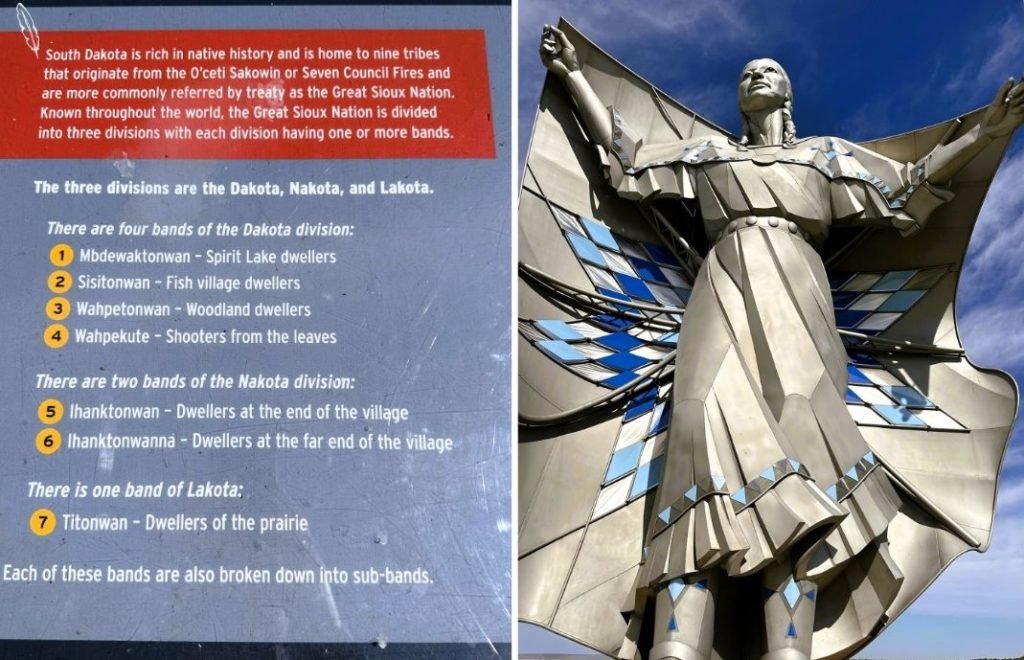
Visiting the Dignity sculpture: What to expect
You’ll find Dignity of Earth and Sky standing gracefully above the Missouri River near Chamberlain, South Dakota, just off Interstate 90, about halfway between Rapid City and Sioux Falls. It’s impossible to miss her. The silver figure gleaming in the sunlight, rising 50 feet above the prairie as though greeting every traveler who passes by.
The sculpture sits within the Dignity Plaza, part of the Lewis and Clark Interpretive Center, where manicured trails and viewpoints invite visitors to pause and take in the sweeping views of the river valley below. From the observation deck, you can see the Missouri River winding through golden fields, a view that perfectly complements the serenity of the monument itself.
What makes the visit truly special, though, is the atmosphere. There’s a quietness here – a sense of reverence that transcends tourism. Many visitors describe feeling a mix of peace and awe, especially at sunrise or sunset when the light reflects off the star quilt, turning it into a mosaic of blues and golds that shimmer across the prairie wind.
There are informational plaques nearby explaining the sculpture’s creation and symbolism. The area also contains rest areas, picnic tables, and a visitor center with exhibits about the region’s Indigenous heritage and history. Entry is free, and the site is open year-round.
Whether you spend ten minutes or an hour here, it’s hard to leave without feeling changed – reminded of how art and landscape can come together to tell a story of strength, beauty, and belonging.
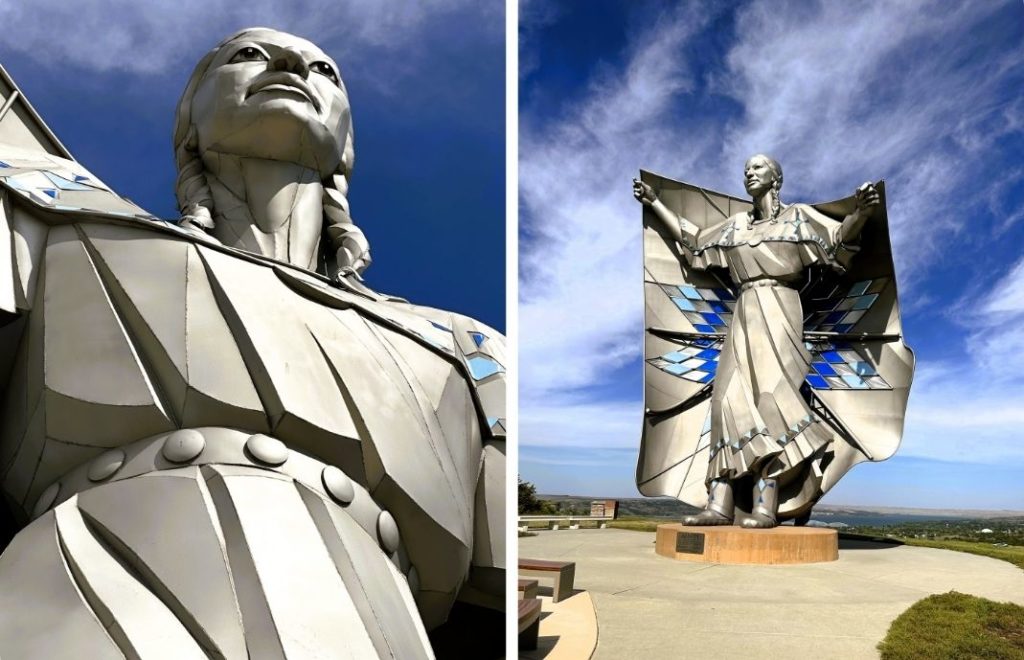
The cultural significance and legacy of Dignity of Earth and Sky
To understand Dignity of Earth and Sky is to understand that she is not merely a monument – she is a message. She stands as a tribute to the Indigenous peoples of the Great Plains, particularly the Lakota and Dakota Nations, whose cultures have shaped this landscape for centuries.
In a country where Native American stories have too often been overlooked or misunderstood, Dignity brings them to the forefront – not through words, but through presence. Her steel form carries a quiet strength, representing the enduring spirit of Native women who have been the backbone of their communities through generations of change and challenge.
The star quilt she holds is especially meaningful. In Lakota and Dakota traditions. They are given to honor individuals for their achievements or to celebrate life’s most sacred milestones. To see one on such a monumental scale – floating between earth and sky – is both symbolic and emotional. It speaks to unity, respect, and protection, values deeply woven into Indigenous life.
Since her unveiling in 2016, Dignity has become a modern landmark and cultural touchstone, visited by travelers from around the world. She has inspired poems, paintings, and countless reflections – standing not just as an emblem of Native heritage, but as a beacon of reconciliation and hope.
For many, she’s a reminder that dignity is not something given – it’s something that rises, quietly but powerfully, from the land itself.
Here you will find more inspiration to visit South Dakota
