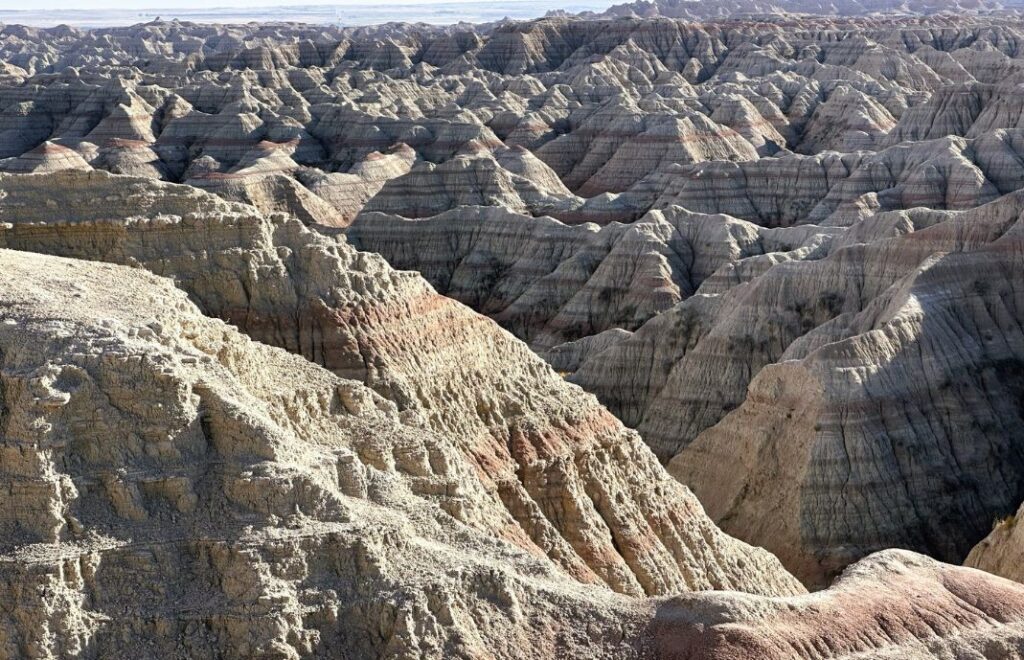
Nature worked very hard to create one of the most impressive geological wonders in South Dakota. It is easy to understand why the mosaic of colorful rock formations, flat-topped mesas, rocky buttes, parched gullies, and slender spires have received the name ‘bad’.
Add a rutted landscape that is almost impossible to navigate through. It’s a place where temperatures range from scorching highs of 47 degrees (117 Fahrenheit) to lows of freezing cold in the winter. Here, ancient stories also seem to rise from the ground itself. All these elements are the sole definition of an unforgiven landscape.
Welcome to the Bad Boy of national parks, with a name that lives up to its reputation: Badlands.
How did the Badlands get its name?
The name Badlands is as dramatic as the landscape, but long before it became a national park, this rugged area of South Dakota was known as a difficult and unforgiving place to cross.
You might wonder why anyone would call a park bad and then hope to entice people to come visit. The name Badlands is homage to the Lakota people, who lived in the area long before it was a national park. For hundreds of years, the Lakota people have called this area mako sica, which literally translates to “bad lands”.
Later, when French fur trappers passed through the area, they called it les mauvaises terres a traveser (‘bad lands to travel across’). Since the French fur trappers spent time with the Lakota, it is likely that the French named is derived directly from the Lakota one.
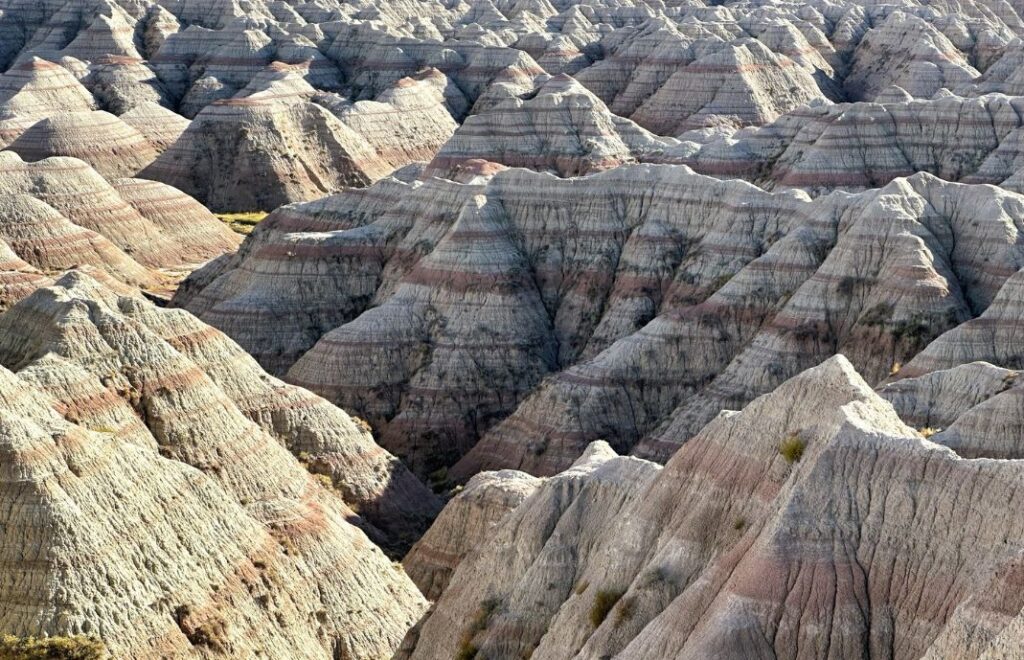
Both names describe the same harsh reality, and the Badlands presents many challenges to easy travel. The jagged canyons and buttes that cover the landscape make it hard to navigate. Winters are cold and windy while the summers are hot and dry. When it rains, the wet clay becomes slick and sticky, making it very difficult to cross. The few water sources that exist are normally muddy and unsafe to drink.
Today, the name feels almost poetic. What was once seen as difficult and hostile is now considered one of the most striking landscapes in the United States. The sharp pinnacles, layered rock formations, open prairies, and endless skies make the Badlands a place that feels wild, ancient, and unforgettable. It’s a reminder that beauty is not always soft or easy.
How were the Badlands formed?
It took millions of years by a powerful combination of deposition and erosion to create this unique landscape. Long before the area became the dry, rugged landscape we see today, layers of sediment were slowly laid down by ancient rivers, floodplains, lakes, and changing environments.
Over time, these layers were built up in different colors and textures. Volcanic ash, clay, silt, sand, and minerals helped create the striped appearance of the rocks. Each band tells part of the story, like pages in a natural history book.
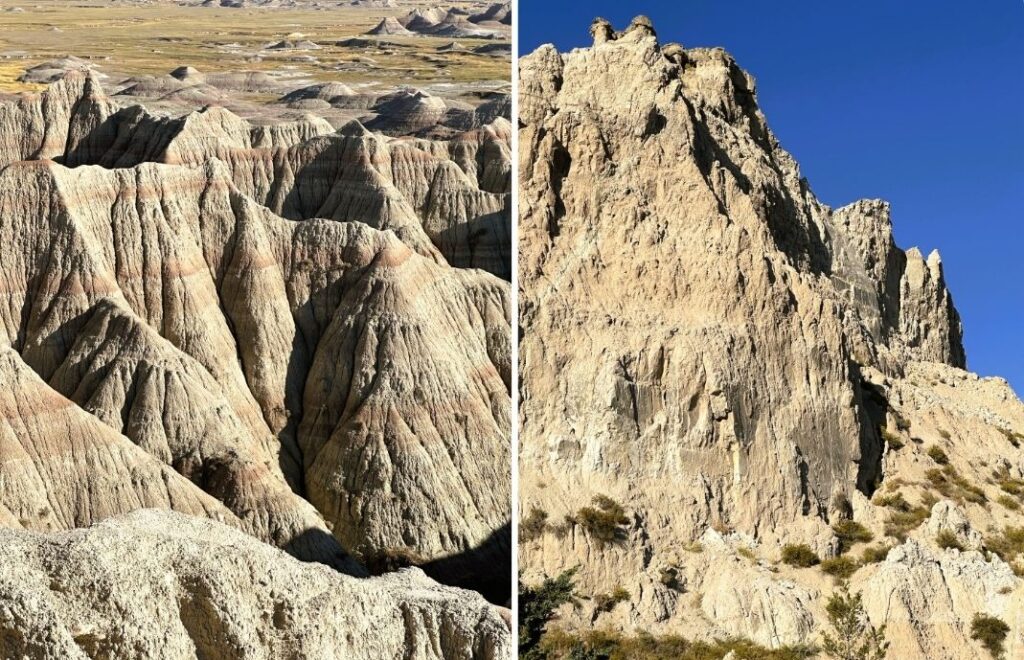
The landscape changed dramatically when wind and water began carving into these softer layers. Rainstorms, frost, streams, and constant weathering slowly cut through the sediment, creating sharp ridges, deep gullies, buttes, and dramatic pinnacles.
Nature is not done working on the Badlands. The landscape continues to erode at a fast rate compared with many other landscapes, which means the formations are constantly changing. What you see now is only one moment in a long geological story. You are standing in a landscape that is still being sculpted by time, weather, and the forces of nature.
Fun fact
In 1922, when Badlands was first proposed as a national park, the suggested name was Wonderland National Park.
More inspiration: 10 reasons to visit Badlands National Park