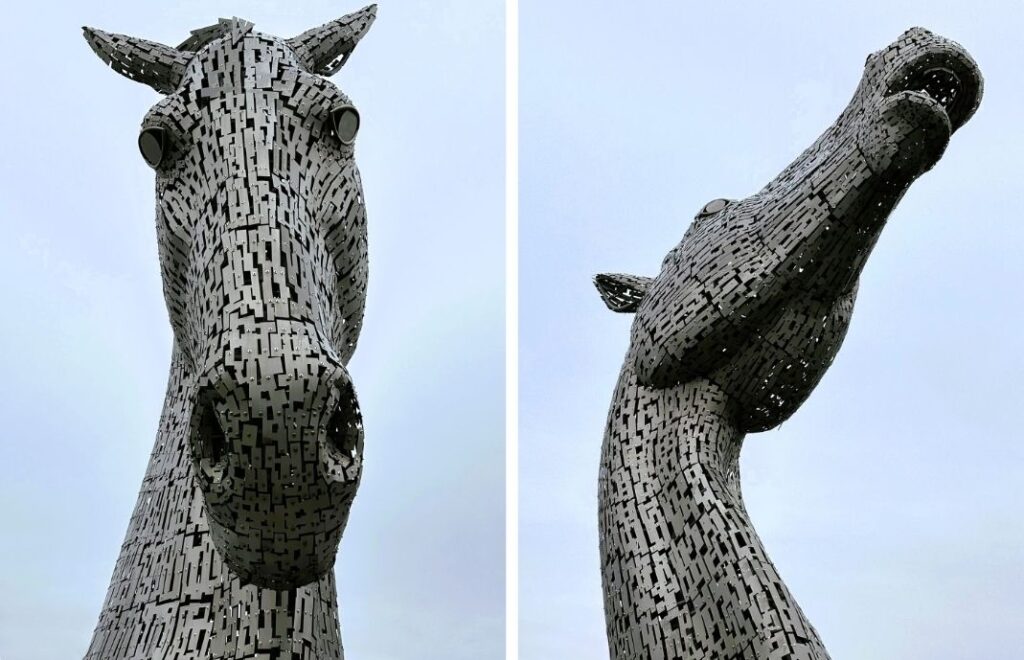
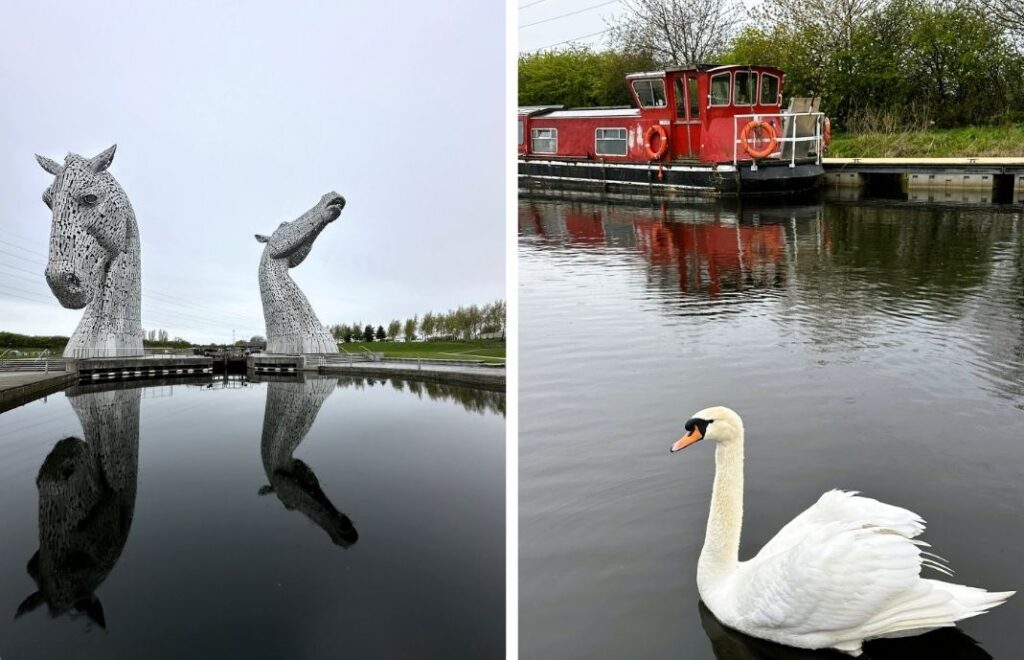
Rising dramatically from the landscape of central Scotland, The Kelpies are among the country’s most unforgettable modern landmarks. These towering steel horse-head sculptures stand over 30 meters tall, blending contemporary art, ancient myth, and industrial heritage into a single, striking vision.
Inspired by the legendary kelpies of Scottish folklore – shape-shifting water spirits said to haunt rivers and lochs – the sculptures celebrate both the power of myth and Scotland’s deep connection to horses, waterways, and engineering.
Whether encountered by day beneath shifting skies or illuminated after dark, The Kelpies are not just a photo stop, but a powerful symbol of modern Scotland’s creativity and storytelling.
The story behind the Kelpies
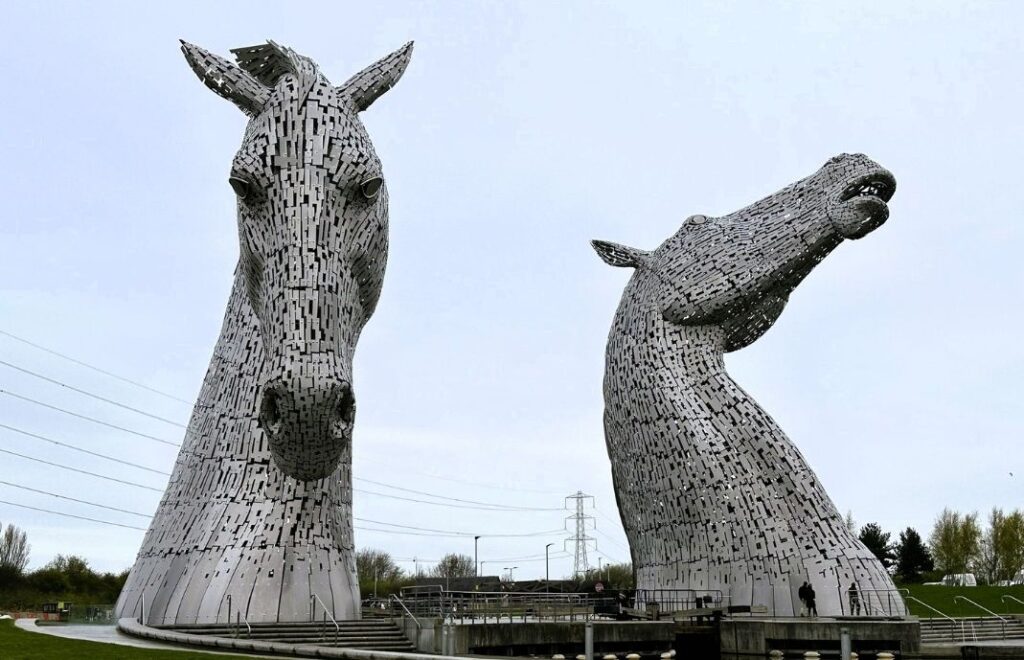
The idea for The Kelpies was born as part of a major regeneration project aimed at reconnecting Scotland’s canals with the surrounding landscape. Designed by renowned Scottish sculptor Andy Scott, the sculptures were unveiled in 2013 and quickly became one of the country’s most recognizable modern landmarks.
Standing over 30 meters (100 feet) tall, The Kelpies are the largest equine sculptures in the world. While their name comes from Scottish folklore – where kelpies are mythical water spirits that take the form of horses – the sculptures also honor the real working horses that once powered Scotland’s canals, farms, and industries. These animals played a crucial role in hauling barges, transporting goods, and shaping everyday life during the Industrial Revolution.
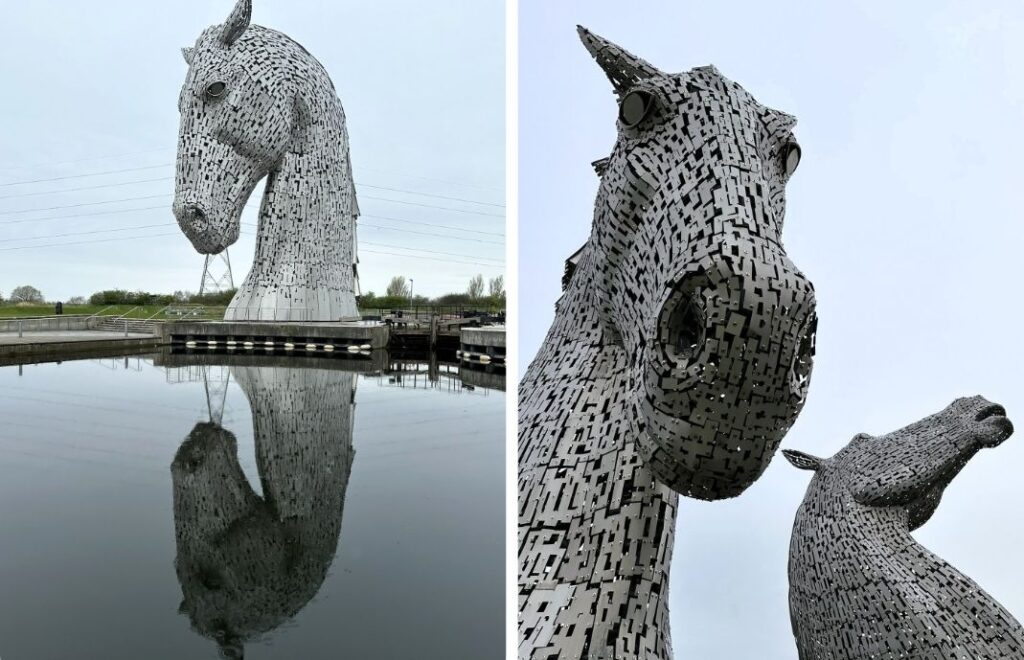
Andy Scott drew inspiration from the strength, beauty, and raw power of heavy horses such as Clydesdales. The intricate steel framework reflects both organic movement and industrial precision, symbolizing the intersection of nature, myth, and engineering. Each horse’s head is slightly different, giving them distinct personalities while maintaining a powerful sense of unity.
Placed beside the Forth & Clyde Canal, The Kelpies act as guardians of the waterway – linking ancient legend with modern ambition. Today, they stand not only as a tribute to Scotland’s working past, but as a bold statement of cultural confidence, creativity, and renewal.
What is a kelpie?
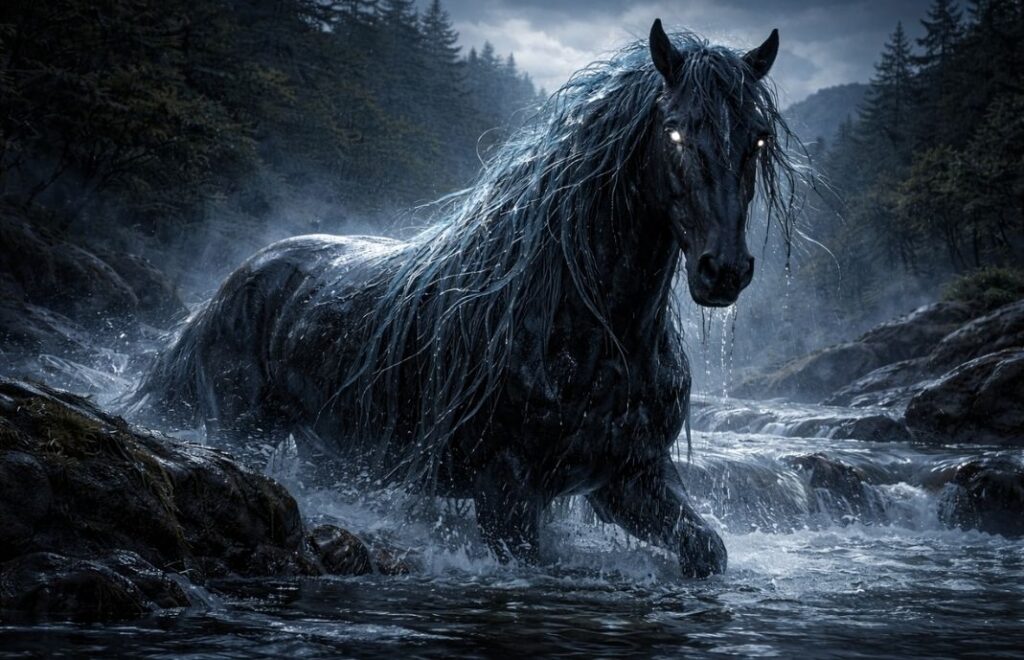
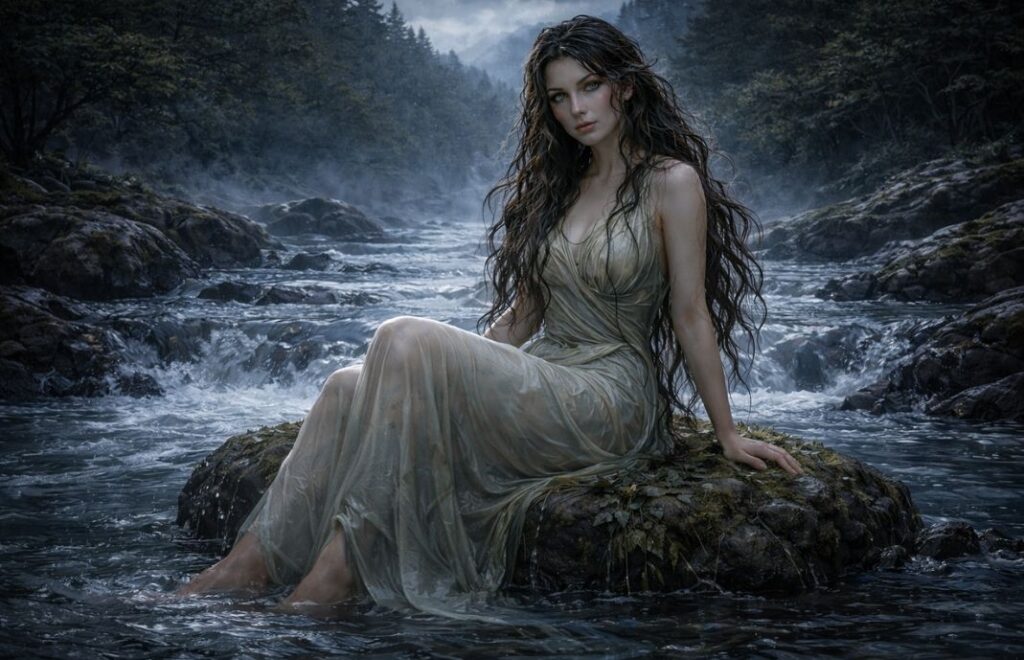
In Scottish folklore, a kelpie is a shape-shifting water spirit said to inhabit rivers, lochs, and streams. Most often appearing as a powerful horse, the kelpie is both alluring and dangerous – known for luring unsuspecting travelers onto its back before dragging them into the water.
These mythical creatures are closely tied to Scotland’s relationship with water: beautiful, unpredictable, and sometimes unforgiving. Legends describe kelpies as intelligent beings capable of taking human form. They may materialize as a beautiful young woman, hoping to lure young men to their death. No matter the shape, their true nature is always revealed by their inescapable connection to water.
Despite their darker reputation, kelpies also symbolize strength, endurance, and the untamed forces of nature. This duality – beauty and menace, myth and reality – is what makes the kelpie such a compelling figure in Scottish storytelling, and why it remains a powerful source of inspiration in modern culture.
How to handle a kelpie
Kelpies can also use their magical powers to summon up a flood in order to sweep a traveler away to a watery grave.
The sound of a kelpie’s tail entering the water is said to resemble that of thunder. And if you are passing by a river and hear an unearthly wailing or howling, take care: it could be a kelpie warning of an approaching storm.
But there is some good news: a kelpie has a weak spot – its bridle. Anyone who can get hold of a kelpie’s bridle will have command over it and any other kelpie. A captive kelpie is said to have the strength of at least 10 horses and the stamina of many more and is highly prized. It is rumored that the MacGregor clan have a kelpie’s bridle, passed down through the generations. It is said to have come from an ancestor who took it from a kelpie near Loch Slochd.
The kelpie is even mentioned in Robert Burns’ poem Address to the Deil:
“…When thowes dissolve the snawy hoord
An’ float the jinglin’ icy boord
Then, water-kelpies haunt the foord
By your direction
And ‘nighted trav’llers are allur’d
To their destruction…”
Practical visitor guide
Location
The Kelpies, Helix Park, Falkirk
The sculptures are located roughly halfway between Edinburgh and Glasgow, making them an easy stop on a Central Scotland itinerary.
Getting there
- By car: The Kelpies are easily accessible by car, with clear signage from major roads. On-site parking is available at The Helix Park.
- By train: The nearest stations are Falkirk High and Falkirk Grahamston. From either station, it’s a 30–40-minute walk or a short taxi ride to The Kelpies.
- By tour: Many day tours from Edinburgh and Glasgow include The Kelpies, often combined with Stirling Castle or the Falkirk Wheel.
Opening hours
Helix Park itself is open daily, generally from early morning until evening.
The sculptures are accessible year-round, and there’s no need to book in advance to see them from the outside.
Entrance fees
Free to visit.
You can walk around and photograph The Kelpies at no cost.
Optional: Guided tours inside the sculptures are sometimes available for a fee and must be booked in advance.
Best time to visit
- Daytime: Ideal for appreciating the scale and intricate steelwork
- Golden hour: Beautiful lighting for photography
- After dark: The Kelpies are illuminated in shifting colors, creating a dramatic and atmospheric experience
Evening visits are especially popular.
How much time you need
Most visitors spend 30 to 60 minutes exploring the area, taking photos, and walking around the sculptures.
Allow more time if combining the visit with the Falkirk Wheel or canal paths.
Facilities
- Café and visitor center nearby
- Restrooms on site
- Well-maintained walking paths
- Family-friendly and suitable for all ages
Accessibility
The paths around The Kelpies are flat and fully accessible, making the site easy to explore for visitors with mobility needs.
Photography tips
- Bring a wide-angle lens to capture the full height
- Walk around both sculptures – each offers different perspectives
- Night photography works beautifully thanks to the lighting design