
Tucked away in the Black Hills of South Dakota lies an unexpectedly amazing park. It houses thousands of wildlife, scenic drives, thrilling hiking trails, lakes and a breathtaking landscape.
The first thing I notice in Custer State Park is movement and how alive the park feels. Bison wander across the road without urgency, birds sing in the trees and a donkey’s loud bray echoes through the forest. Prairie grass bend with the wind and granite spires rise suddenly from rolling hills.
Being here in this amazing park doesn’t feel like entering a protected space. It feels like stepping into a landscape that simply exists on its own terms, indifferent to schedules and expectations. As I am driving through the park, time slows in a way that feels natural rather than forced. Wildlife appears unexpectedly and light shifts constantly across the land. The sense of scale is both grounding and humble.
It does not take long before I realize there is quiet confidence in Custer State Park. A feeling that nothing needs to be staged or explained. This is a place that invites you to pay attention, to move at the park’s own pace and to experience the Black Hills. Not as scenery but as a living, breathing landscape.
Here is what you need to know before you visit this amazing treasure.

The landscape: Granite, grassland, and open space
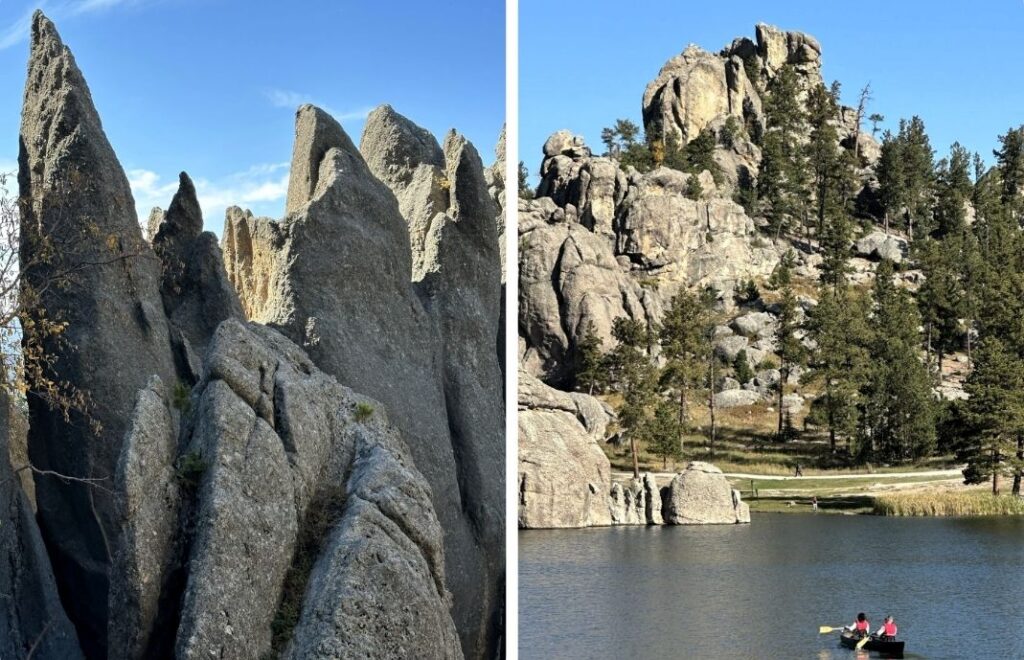
One of the most striking aspects of Custer State Park is how quickly the landscape changes as you move through it. Rolling prairie stretches outward in soft waves, only to give way suddenly to granite spires and rugged rock formations that feel almost sculptural. These transitions happen without warning, shaping an experience that feels dynamic rather than static.
Forested hills add another layer, bringing shade, texture, and a sense of enclosure that contrasts with the openness of the grasslands. Clear lakes appear almost unexpectedly, reflecting sky and stone and offering moments of stillness amid constant movement. Whether driving or hiking, the park never feels repetitive; each turn reveals a different mood, color, or scale.
This diversity defines how the park is experienced. You’re not moving through a single environment, but through a sequence of landscapes that encourage curiosity and attention. It’s this constant shift – from open to enclosed, soft to rugged – that makes time in Custer State Park feel immersive and alive, inviting exploration without ever feeling overwhelming.
Wildlife at the heart of the park
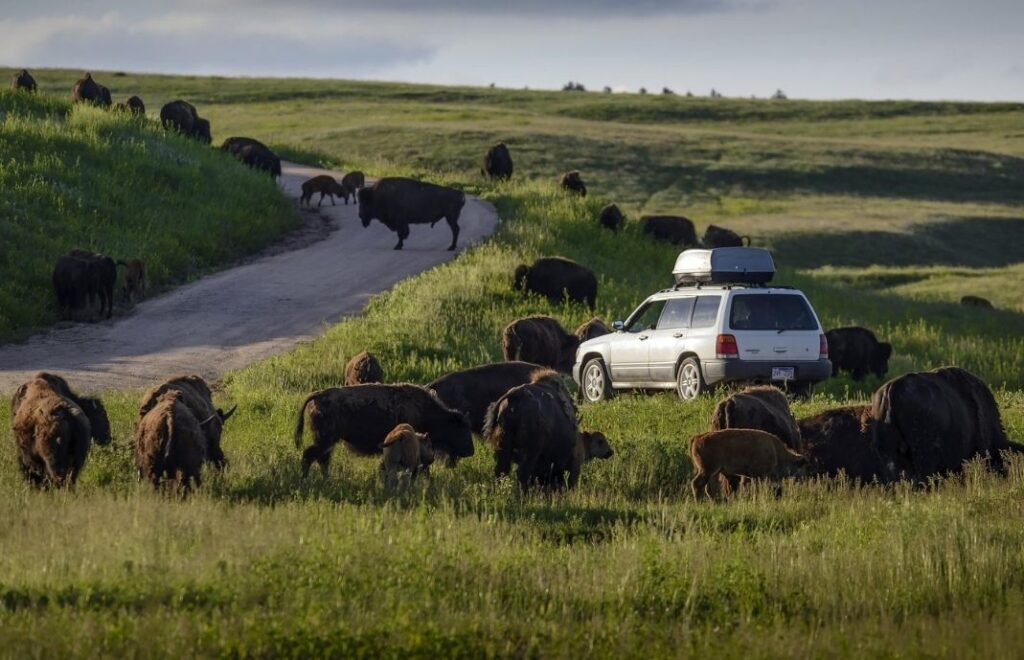
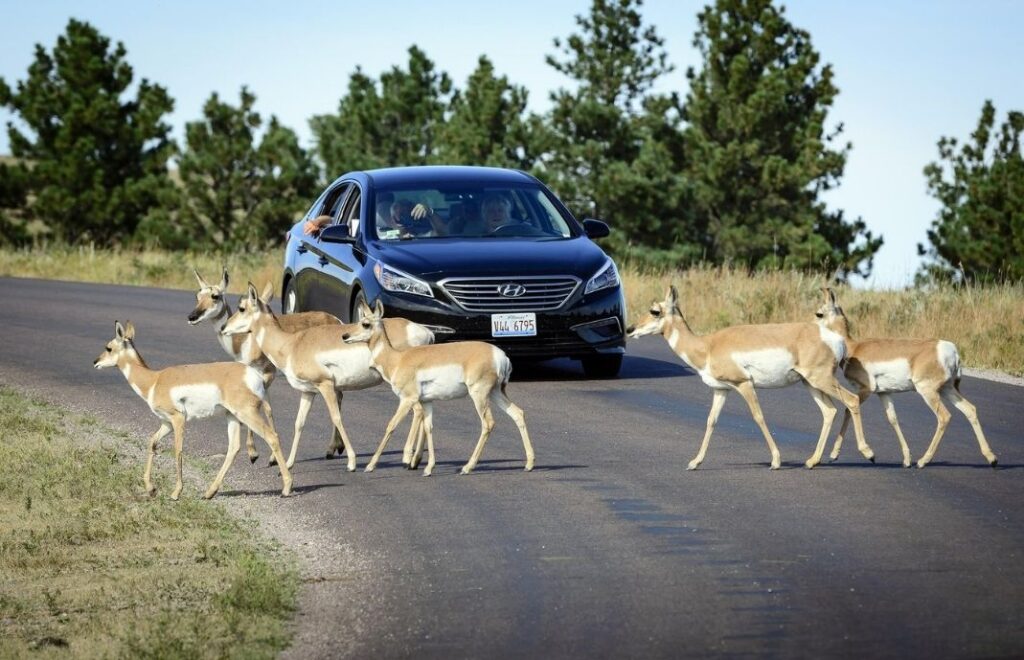
Wildlife is not a feature of Custer State Park. It is the presence that defines the experience. Bison move freely across the landscape, often without regard for roads or schedules, reminding visitors that this is their space. Encounters feel unscripted, shaped by patience rather than pursuit.
Pronghorn, elk, and deer appear quietly in open grasslands and forest edges, blending into the terrain until movement gives them away. Even the park’s burros, long part of its identity, reinforce the sense that animals here are not contained or choreographed. There is no clear boundary between observation and participation; you are sharing space, not standing apart from it.
What makes wildlife viewing in Custer State Park so powerful is its unpredictability. Sightings cannot be guaranteed, and that uncertainty encourages respect and attentiveness. The experience isn’t about spectacle or close encounters, but about presence. It’s about being aware, moving slowly, and understanding that the land operates on its own rhythm, independent of human expectation.
The roads that define the experience
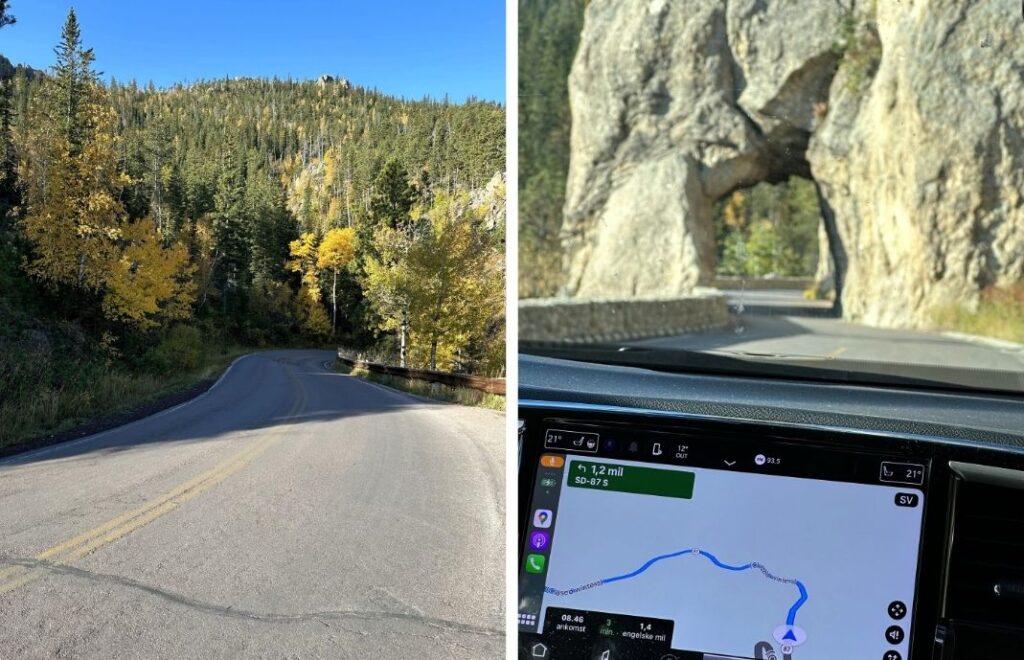
In Custer State Park, the journey itself is central to the experience. The park’s roads are designed not as shortcuts, but as invitations. They are winding slowly through changing landscapes that encourage observation rather than haste. Driving here feels intentional, shaped by curves, elevation shifts, and long views that reward patience.
Scenic routes pass through open prairie, forested hills, and granite-lined corridors, often with wildlife moving freely across or alongside the road. Pull-offs are placed to invite pauses, allowing time to watch light change, animals move, or weather rolls in. These moments of stillness are as much a part of the park as any viewpoint.
What makes the roads special is how they balance accessibility with restraint. You can experience a remarkable range of terrain without leaving your vehicle, yet the park never feels overexposed or overdeveloped. Movement is slowed naturally, preserving the sense that you are traveling through a living landscape rather than passing by it.
The 3 most popular scenic drives
Wildlife Loop Road
Takes you through the grasslands and rugged hills. Make sure you keep an eye out for bison, pronghorn, mule deer, elk and prairie dogs.
Loops around the southern part of Custer State Park and has numerous turn-out stops.
Distance: 29 km (18 miles)
Travel time: 45 minutes without stops
Iron Mountain Road
This is a must-do drive. You get to experience 14 switchbacks, 3 tight tunnels, 3 pigtails, 314 curves and unforgettable views of Mount Rushmore. Bison, deer and bighorn sheep also make appearances.
Distance: 27 km (17 miles)
Travel time: 45-60 minutes
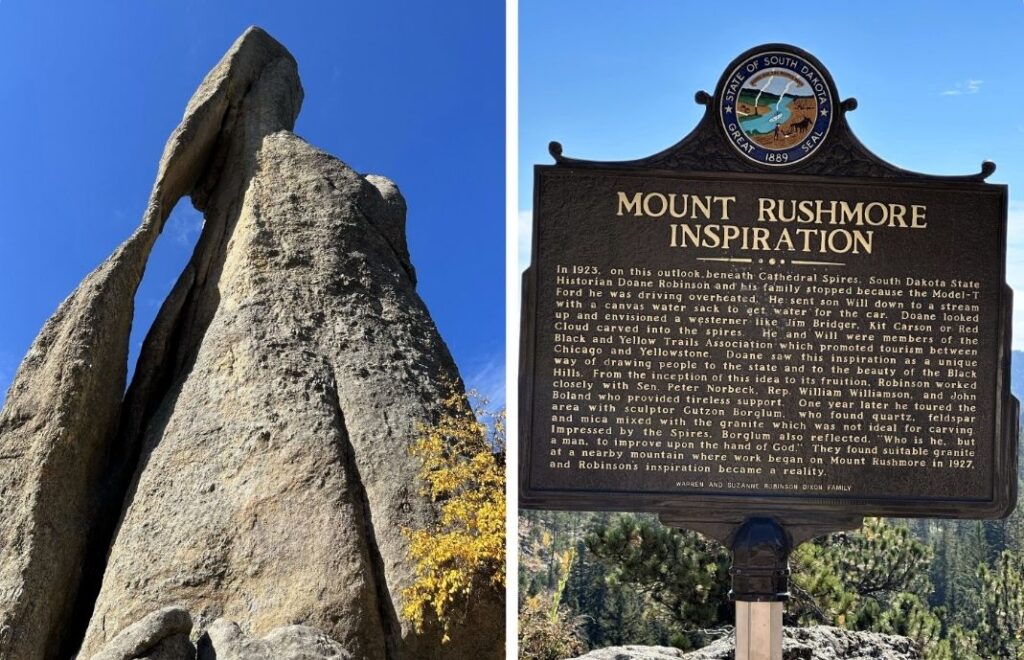
Needles Highway
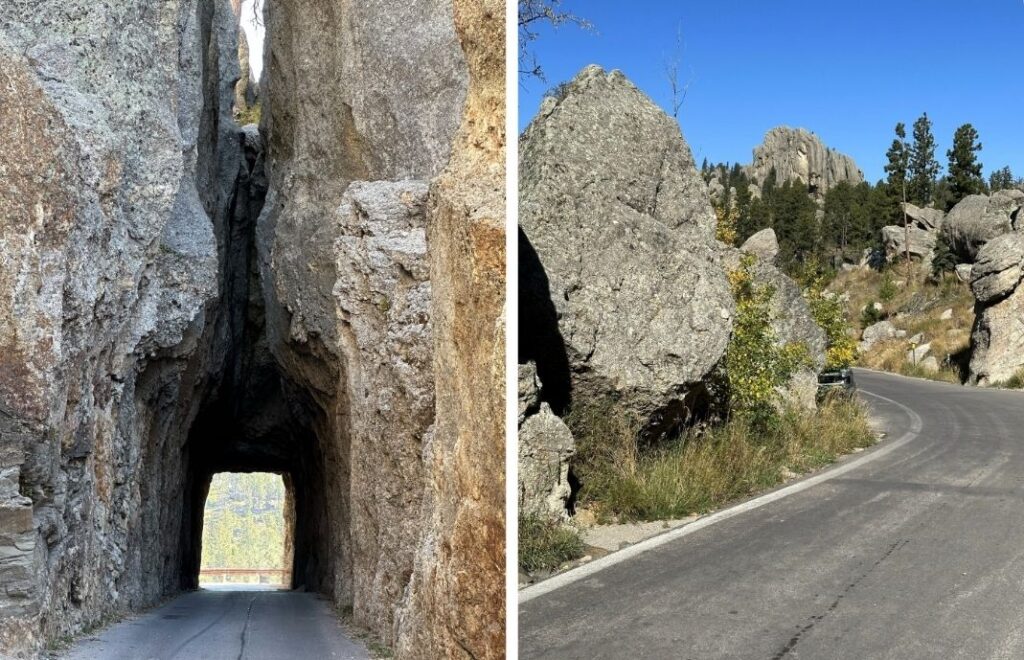
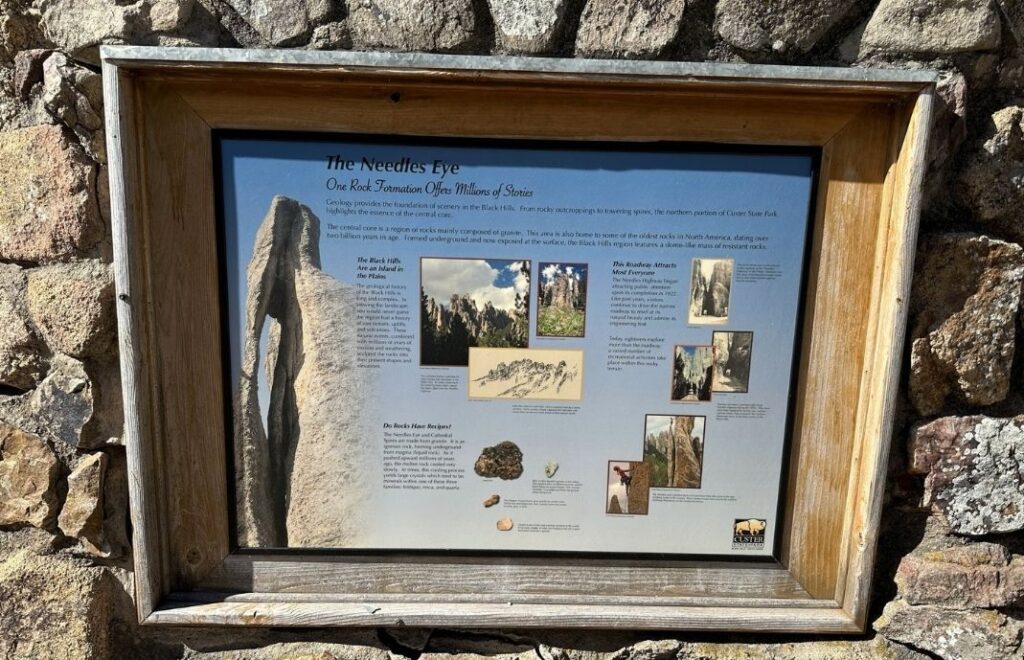
It takes it name from the needle-like spires that are found in parts of the park. It is a gorgeous drive with stunning overlooks of Custer State Park. This is, according to most visitors, the best thing to do in the park.
Distance: 22,5 km (14 miles)
Travel time: 46-60 minutes
Explore the park on foot
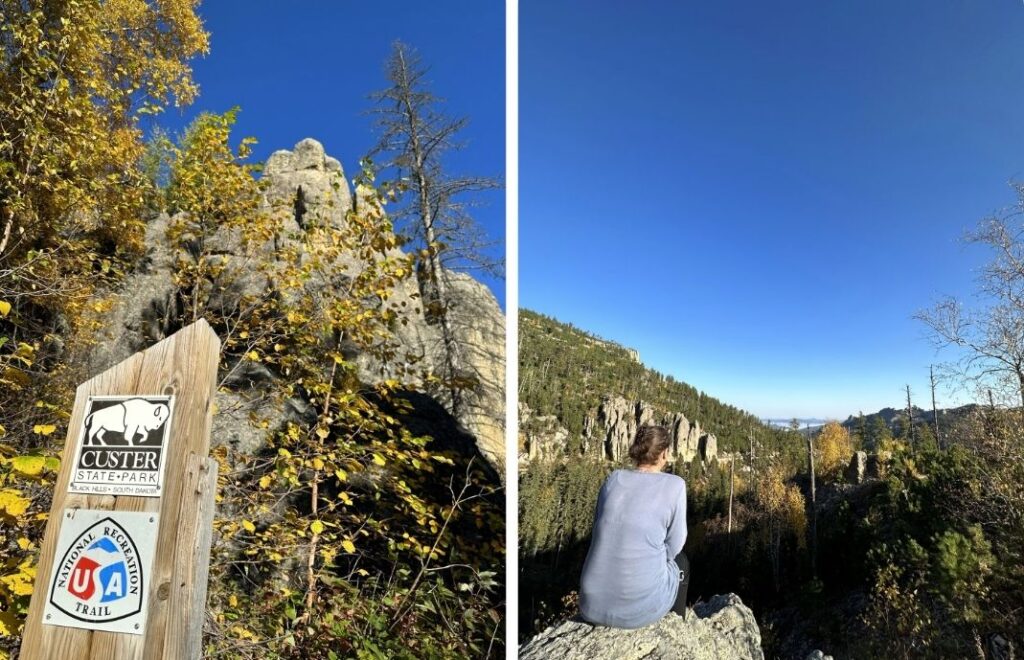
Walking through Custer State Park changes the way the landscape is experienced. Leaving the road behind, even briefly, brings a different awareness. Sounds become clearer, distances feel more intentional, and details that pass unnoticed from a car begin to stand out. Short walks offer easy access to this shift, allowing you to step into the park’s rhythm without committing to a full day on the trail.
Longer hikes deepen that connection. Time stretches differently on foot, shaped by terrain, elevation, and the steady pace of movement. Granite formations feel larger, grasslands more expansive, and forested sections more enclosing, creating a layered experience of space and scale.
What makes hiking here feel different is the sense of shared presence. Wildlife may appear unexpectedly, weather shifts are felt immediately, and the land dictates the pace. Walking isn’t about reaching a destination – it’s about immersion. In Custer State Park, time on foot transforms the landscape from something observed into something actively experienced, making even familiar scenery feel newly discovered.
Lakes, light, and stillness
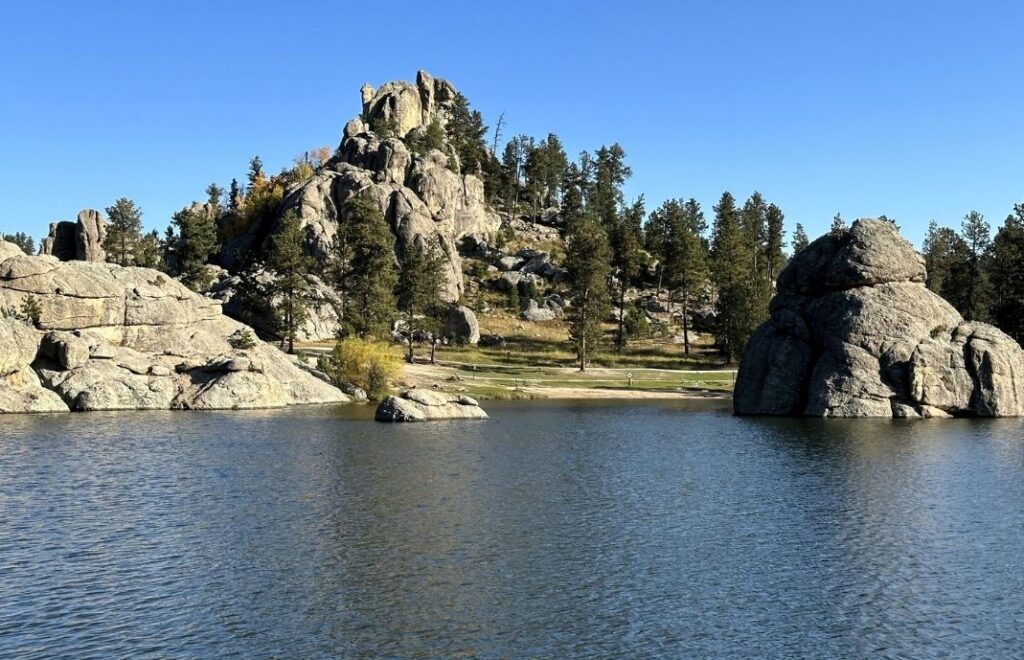
There is a quieter side to Custer State Park that reveals itself most clearly near water and at the edges of the day. The park’s lakes offer moments of calm, where movement slows and the landscape reflects itself back in subtle, shifting ways. Wind ripples the surface gently, carrying sound across open space rather than amplifying it.
Early mornings and evenings are especially revealing. Light softens granite and grassland, wildlife activity fades into the background, and silence feels intentional rather than empty. These moments invite pause – standing still, sitting quietly, or simply watching the sky change color.
This stillness provides an essential counterbalance to the park’s more dynamic experiences. It reminds visitors that Custer State Park is not only about movement and discovery, but also about presence. In these quieter moments, the landscape feels less like something to explore and more like something to settle into, offering a sense of peace that lingers long after you leave.
When to visit and what to expect
Custer State Park shifts noticeably with the seasons, and each brings its own atmosphere. Summer carries a sense of energy. Roads are active, wildlife is visible throughout the day, and the park feels lively without losing its sense of space. Light is strong, days are long, and movement defines the experience.
Shoulder seasons offer a different mood. In late spring and early fall, the park feels calmer and more reflective, shaped by softer light and fewer people. Wildlife rhythms become more apparent during these quieter periods, with animals moving according to weather and daylight rather than crowds.
What remains constant is the need for patience and attentiveness. Wildlife encounters are never guaranteed, and conditions can change quickly. Approaching the park with flexibility allows the experience to unfold naturally, shaped by season, timing, and the quiet unpredictability that makes Custer State Park feel alive rather than managed.
Responsible wildlife viewing
Wildlife encounters in Custer State Park are meaningful precisely because they are unscripted. Animals move freely, following their own needs and rhythms, and visitors are guests within that space. Keeping a respectful distance allows these encounters to remain natural rather than disruptive.
Patience plays an essential role. Wildlife reveals itself on its own terms, often when movement slows and expectations are released. Waiting quietly, observing without approaching, and allowing animals to pass without interference creates moments that feel genuine rather than staged.
Understanding the park as shared space changes the experience. Roads, trails, and open grasslands are not viewing platforms but living environments. Approaching wildlife with humility and restraint ensures that these encounters remain safe, ethical, and true to the wild character that makes Custer State Park so memorable.
Practical visitor guide
For those planning to experience Custer State Park firsthand, a bit of practical context helps shape the visit. The following guide covers the essentials, allowing you to focus on the experience once you arrive.
Location
Custer State Park is located in the southern Black Hills of South Dakota, surrounding the town of Custer and bordering several other major Black Hills landmarks. Its central position makes it an easy addition to a wider regional itinerary.
How to get there
The park is best accessed by car. Well-maintained highways connect it to nearby towns and Black Hills attractions, and driving is the primary way to experience the park itself. Once inside, scenic roads link different areas, allowing visitors to explore at their own pace.
Entrance fees
An entrance license is required to access the park. Fees are charged per vehicle and are valid for a set number of days, making it easy to return multiple times during a stay. Passes can be purchased at park entrances or in advance.
Opening hours
Custer State Park is open year-round, with roads and facilities accessible depending on weather conditions. Seasonal changes may affect certain routes, but the park remains active and visitable in all seasons.
Facilities and services
The park offers a range of visitor facilities, including campgrounds, picnic areas, restrooms, and designated pull-offs along scenic drives. Services are designed to support exploration while preserving the park’s natural character.
How much time do you need
A full day allows for a meaningful introduction to the park, but spending two or more days provides a deeper experience. The park rewards unhurried travel, whether through wildlife viewing, hiking, or simply moving slowly along its roads.
This post is a collaboration with Travel South Dakota. I am grateful for their cooperation.
