
The island of Gozo is part of the Maltese archipelago, yet it offers its own individual character. Just a short ferry ride from mainland Malta, Gozo feels like stepping into a slower, softer version of island life. The pace is gentler, the landscapes more rugged, and the atmosphere wonderfully unspoiled.
Here, rolling countryside meets dramatic cliffs, and quiet villages sit alongside hidden coves with impossibly clear water. It’s a place where days are shaped by simple pleasures – long swims, scenic drives, and lingering meals with a view.
On Gozo there is also a sense of stepping back in time, yet the island offers every modern amenity. Gozo’s standout attractions are the Citadel and the prehistoric temples, but there are also stunning churches, sandy beaches and charming villages.
Join me, and let’s explore what makes Gozo so special and why it’s a must-visit if you are looking to experience a more peaceful side of Malta.

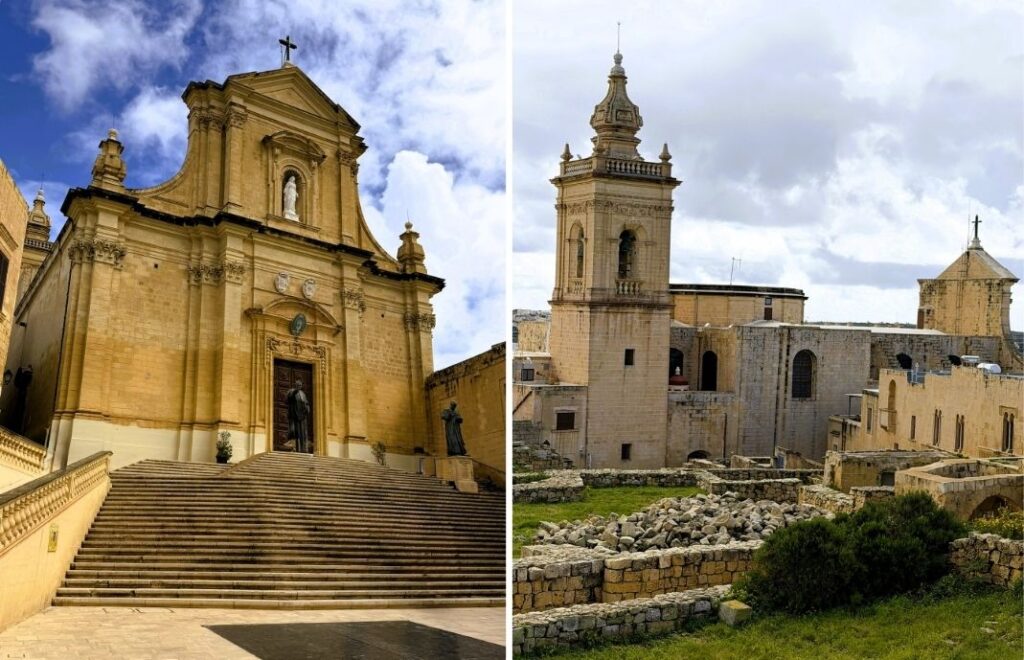
The Citadel
Sitting proud on a hill in Victoria, the Citadel served as a sanctuary from attack by pirates of the Mediterranean. With its distinctive skyline and imposing military architecture, the ancient, fortified city stands out as Gozo’s major landmark.
The Citadel reflects the marks left by its inhabitants, shaping the majestic you can visit today. It is rich in buildings of architectural, military, and historic value, and with open areas that host numerous rare species of flora and fauna.
Within the Citadel there are fascinating small museums and a state-of-the-art Visitor Center:
- Cathedral Museum
- Museum of Archaeology
- Folklore Museum
- Gozo Nature Museum
- Old Prison
- Old Gunpowder Magazine
- Grain Silos
- The Battery
- World War II Shelter
Along the winding streets you’ll find the historic Chapel of St. Joseph and several holy niches (shrines) and bass reliefs. A walk along the fortified ramparts rewards you with a breathtaking 360-degree panorama of Gozo’s hills, valleys and villages.
Visiting the Citadel allows you to step back in time, experiencing history in an unforgettable way.
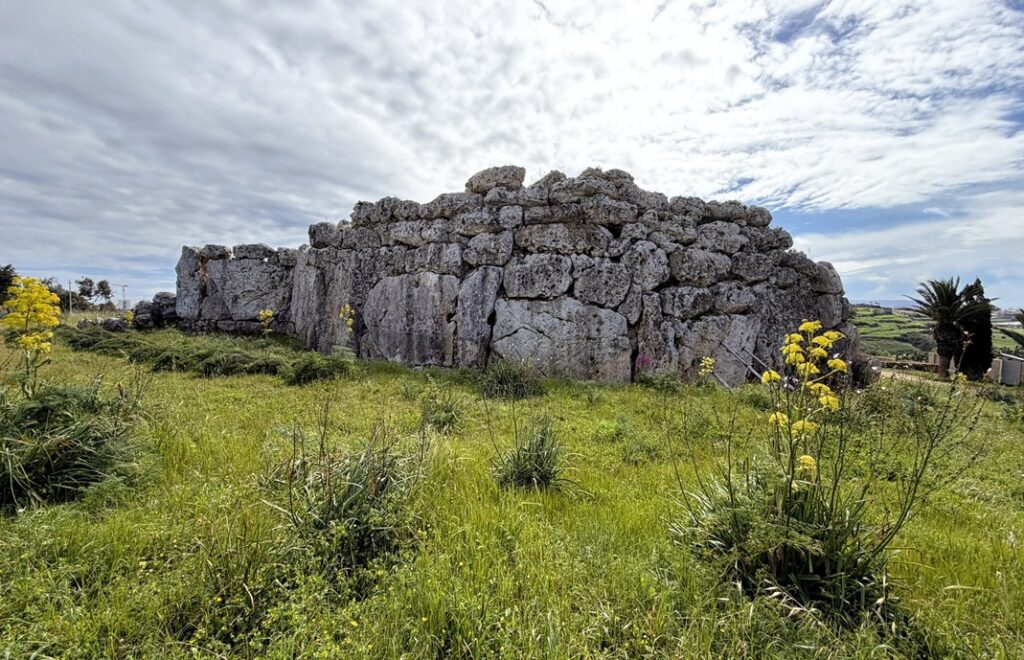
Ggantija Temples
Nestled in the heart of the remarkable Xaghra plateau, the Ggantija Archeological Park complex stands out as a unique prehistoric marvel. This extraordinary site (UNESCO) features two structures, constructed between approximately 3600 and 3200 B.C.
Despite its ancient origins, the site is remarkably well-preserved. Ggantija showcases the impressive craftmanship of Neolithic builders. They utilized both the durable Coralline limestone, prominent throughout the monument, and the softer Globigerina limestone. The last was used for intricate interior details like doorways, altars, and decorative slabs.
The complex consists of two structures, each with its own entrance yet sharing a common boundary wall. Animal bone remnants found at the site hint at communal rituals and feasting. Stone hearths suggest the use of fire.
It is believed that ceremonial gatherings took place outside the monument, in a large forecourt intentionally raised by its builders.
Your visit starts at the Interpretation Center, which offers insight into Neolithic life. Here you can also see a selection of significant artifacts unearthed from various prehistoric sites across Gozo.
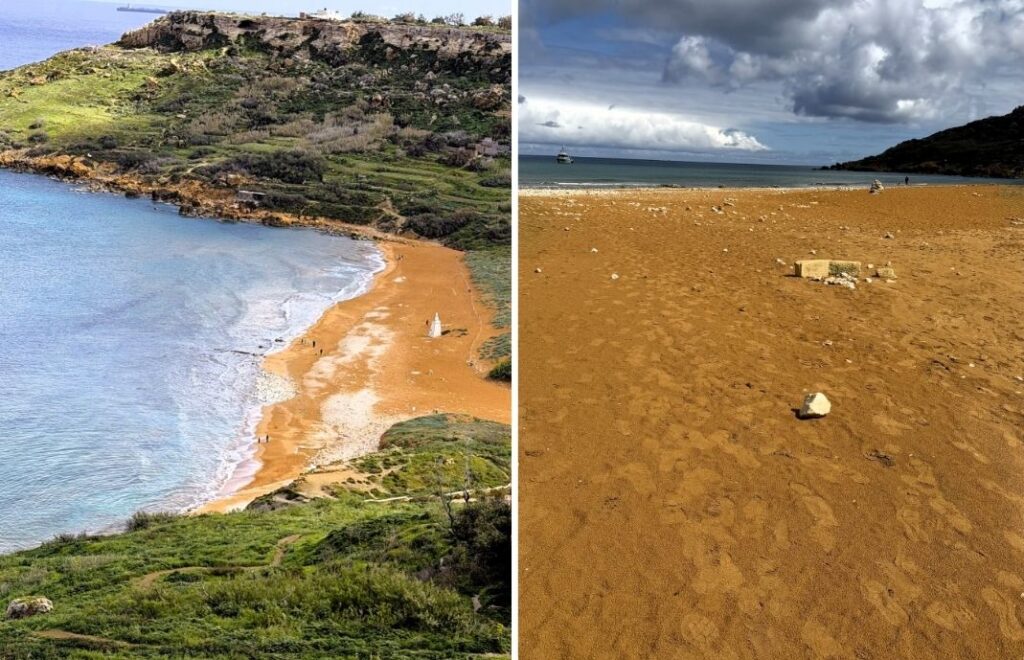
Ramla Bay
Welcome to Ramla Bay, arguably Malta’s finest beach. Locals call it “Ramla il-Hamra” – the Red Sandy Beach – an expansive stretch of red sand that offers a stunning and unique coastal experience. Because it also features an ecologically important rare sand-dune experience, Ramla Bay is classified as a protected site.
Ramla is not just a natural wonder. It is also rich in myth and history. Beneath its sands lie Roman remains, and features of interest from the time of the Knights, hinting at the area’s historical importance.
The beach is a perfect destination for relaxation, and an ideal spot for swimming, snorkeling, and soaking up the sun. Ramla remains wonderfully undeveloped, which is rare considering its popularity. There are a few cafes and a small stall set back from the beach, giving visitors a chance to buy refreshments.
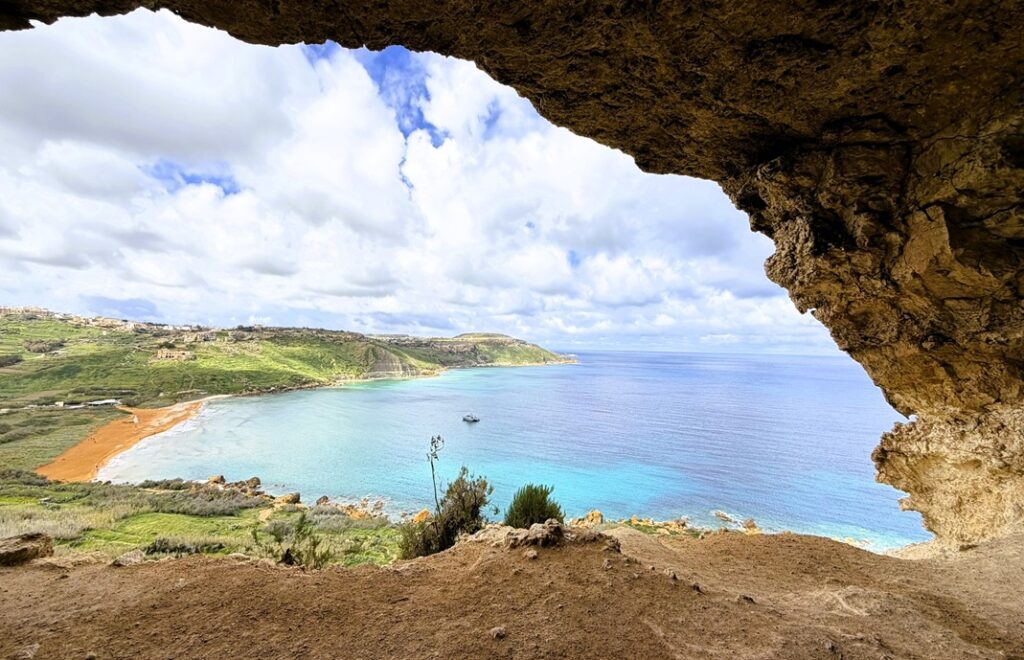
Mixta Cave
The captivating Mixta Cave is overlooking the beautiful Ramla Bay, and draw numerous visitors, thanks to its serene embrace. This natural allure is a great addition to your visit, and the surrounding scenery shifts with the changing seasons, weather, and time of day.
To reach this “hidden” gem, you need to walk along a winding country road. The route seems long, but the rewards are well worth the effort. Breathtaking vistas will appear as you arrive.
Mixta Cave is shrouded in aura of tranquility and mystery. This natural sanctuary guarantees an unforgettable experience. If there is one place in the Maltese Islands that is truly “instagrammable”, it’s undoubtedly this one.
Salt Pans
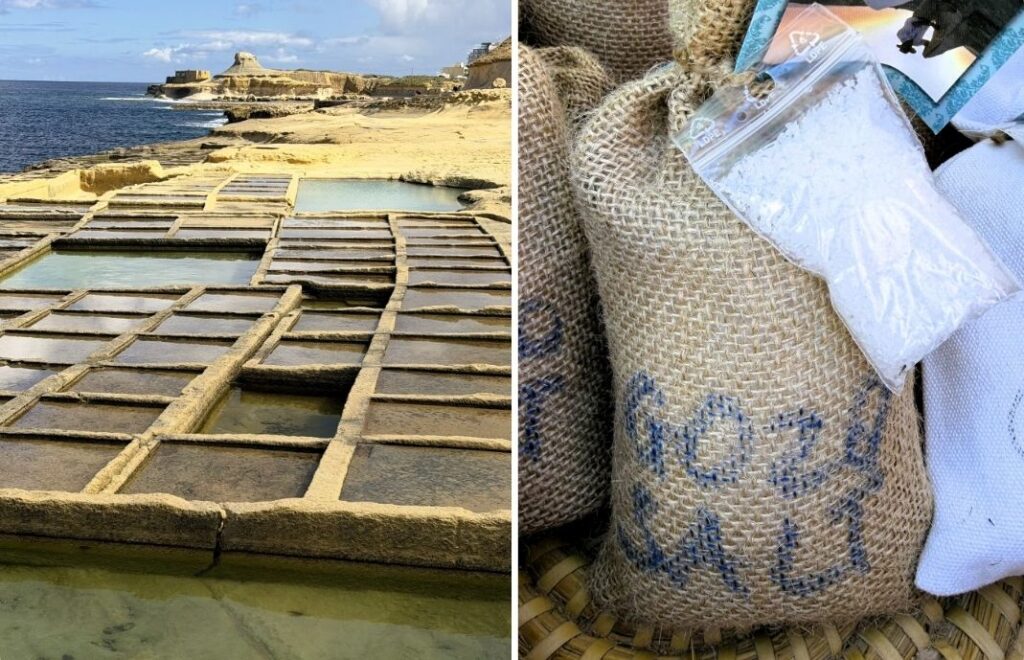
On the north coast of Gozo, just past Qbajjar Bay, the coastline features a distinctive chequerboard of rock-cut salt pans extending into the sea. These 350-year-old salt pans, which cover approximately 3 kilometers, are integral to a long-standing Gozitan tradition of sea salt production. This method dates back to the Phoenician era, with significant developments during Roman times. It is continued by local families over generations.
The salt pans, primarily located at Xwejni Bay, operate through a simple yet effective method. Seawater is collected in these shallow limestone reservoirs, and the sun’s heat evaporates the water over several days, leaving behind salt crystals. This process is reaped multiple times during the summer months, typically from mid-May to September. The collected salt is then dried and stored in caves carved into the coastal rock.
Local families keep the tradition alive. The Cinis family have been harvesting salt in this area since the 1860s. Others, like Josephine Xuereb and her family, have continued the practice, making it both a local heritage and a tourist attraction.
You can buy salt in local shops and it’s a great piece of Gozitan culture to take back home.
Gozo’s many churches
The story goes that Malta has enough churches to visit a different one every day of the year. This is almost completely true, and the concentration of churches on Gozo is just as dense. Every little village has its own church.
Interesting enough, the churches are often huge in comparison with the population they serve. But a good church is a matter of religious pride and Gozo’s villages are traditionally religious.
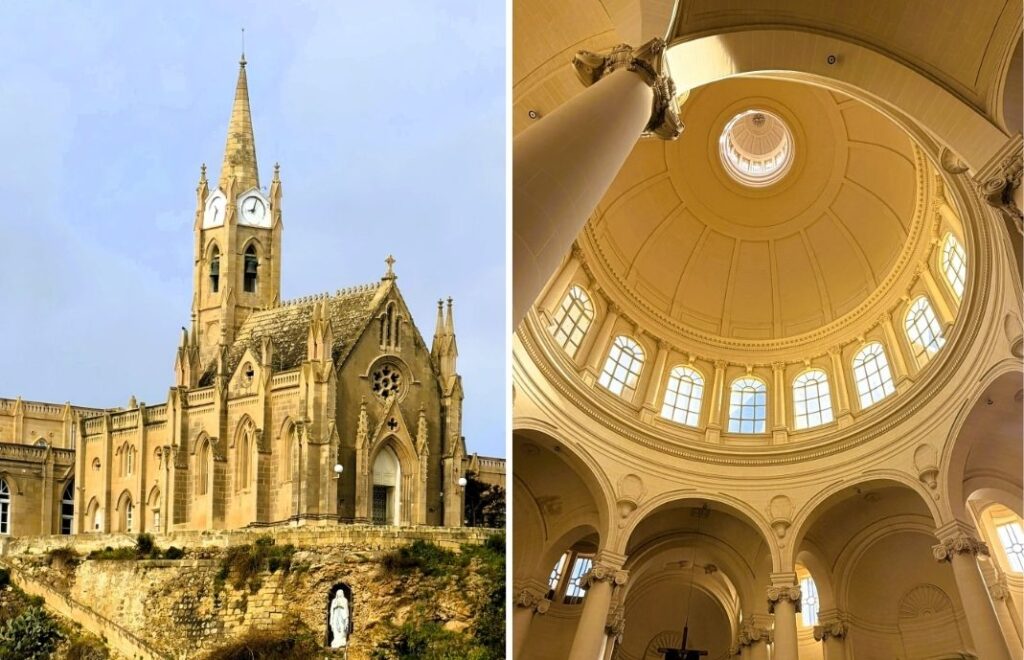
When you visit Gozo, you can marvel at churches from seventeenth-century baroque to twentieth-century neoclassical. From small and intimate to one of the largest domes in the world. And from serving simple parish duties to welcoming pilgrims from all over the world.
On Gozo, the churches are usually open for mass in the early morning and evening. They rarely close during the day, which gives you a great chance to drop in whenever you wish.
- The Rotunda Church in Xewkija – Famed for its enormous dome supported by eight large columns. The church is also decorated with fine sculptures, marble, and modern paintings.
- The Basilica of Saint George – Covered entirely in marble and gold stucco, with the spiral columns of the impressive main alter inspired by St. Peter’s at the Vatican.
- The Basilica of Ta’ Pinu – A fascinating place of pilgrimage where favors are sought and thank you notes are left.
Seafood
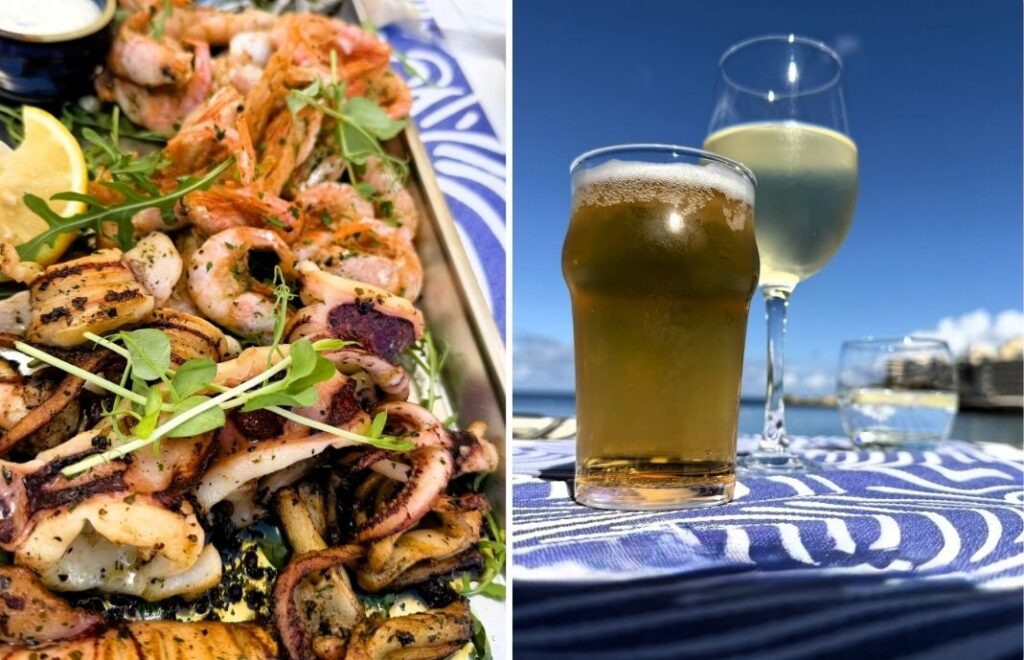
If you are a fan of seafood, you find yourself in seafood haven when visiting Gozo. The island is rich in maritime heritage, and this is reflected in the fresh and flavorful dishes available at local restaurants.
Thanks to the island’s proximity to the sea, you are assured that the catch of the day is always fresh. This offers a delightful experience for those who savor the flavors of the Mediterranean.
The seaside areas such as Marsalforn, Mgarr Harbour, and Xlendi, are home to numerous seafood restaurants. Here, the catch of the day is delivered straight from the boats to your plate.
Fresh from the sea:
- Traditional fish soup – known as aljotta – is a must-try. It is brimming with the essence of the sea.
- Fried calamari – often served with a squeeze of fresh lemon, is another popular dish.
- Octopus dishes are a revelation, cooked to tender perfection and typically garnished with garlic and herbs.
- Lampuki fish – a seasonal (late summer through autumn) is a versatile fish that can be prepared in various ways, from traditional pies to grilled fillets. The lampuki pie is a local favorite, featuring a delicious mix of fish, vegetables, and spices encased in a flaky pastry.
Exploring Gozo with Yippee
If you really want to experience Gozo beyond the usual viewpoints, taking a tour with Yippee is such a fun and easy way to do it. It turns the whole day into a little adventure – one where you don’t have to think about directions, timing, or what to see next.
Yippee offers great island tours, and you can choose between chauffeured tours or self-drive (with a skilled tour leader). The tours take you to Gozo’s famous landmarks, exclusive places and off the beaten track.
Tours run all year round and some are seasonal. It is advised you to book in advance.
Take your favorite pick:
- Tuk-Tuk Tour
- Quad Bike Tour
- Jeep Safari Tour
- Buggy Tour

My warmest gratitude to Marriott Bonvoy, Visit Malta, SAS, and Aviareps Sweden for inviting me to Malta. My flights), accommodation, meals, transportation, and activities were covered. There were no requirements from the partners regarding posts on social media or promotion. Options and photos (unless otherwise stated) are entirely my own.
