
Malta’s capital Valletta is an outstanding attraction and a UNESCO World Heritage Site. This city is shaped not just by time, but by purpose. It did not grow slowly over the centuries like so many European capitals. Instead, it was built deliberately and defiantly by the Order of St. John in the wake of one of history’s most dramatic sieges.
Their story has been literally carved into Malta’s stone. It echoes from its forts and palaces and is reflected in its enduring culture.
After the Great Siege of 1565, when the Knights of St. John successfully defended Malta against the Ottoman Empire, they set out to create something extraordinary: a fortified city that would stand as both a military stronghold and a symbol of resilience. Named after Grand Master Jean Parisot de Valette, Valletta became Europe’s first planned city of the modern era – designed with precision, strength, and vision.
Today, its straight streets, grand bastions, and ornate buildings still carry the imprint of the Knights who once walked them. Valletta is not just a place to visit. It’s a city where history feels intentional, where every corner tells a story of strategy, survival, and the ambition to build something that would endure.
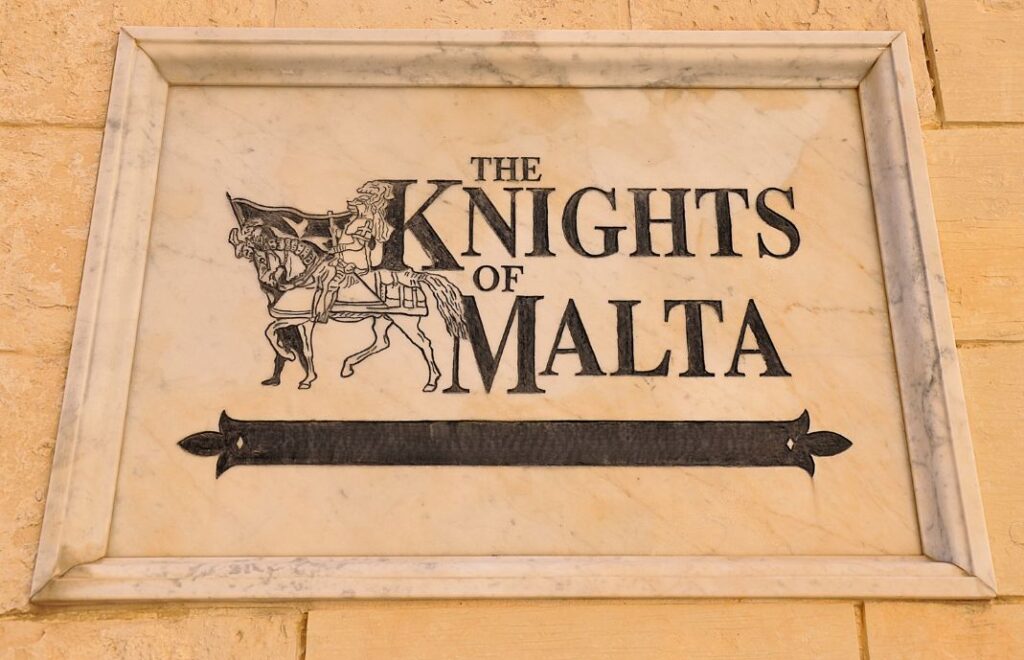
Who were the Knights?
The Order of St. John – often known simply as the Knights of Malta – were not just warriors, but a unique blend of soldiers, monks, and caregivers. Founded in the 11th century during the time of the Crusades, their original purpose was surprisingly peaceful: to care for sick and injured pilgrims traveling to Jerusalem. Over time, however, their role expanded, and they became a powerful military order, defending Christian territories and key trade routes across the Mediterranean.
Bound by religious vows of poverty, chastity, and obedience, the Knights lived a disciplined life, yet they were also drawn from noble families across Europe. This gave the order both influence and resources, allowing them to build fortifications, command fleets, and shape the political landscape of their time.
After losing their stronghold in Rhodes in 1522, the Knights were granted Malta in 1530 by Charles V. From this small island, they rose to prominence once again, culminating in their defining moment – the Great Siege of 1565. Their victory not only secured Malta but also marked a turning point in Mediterranean history.
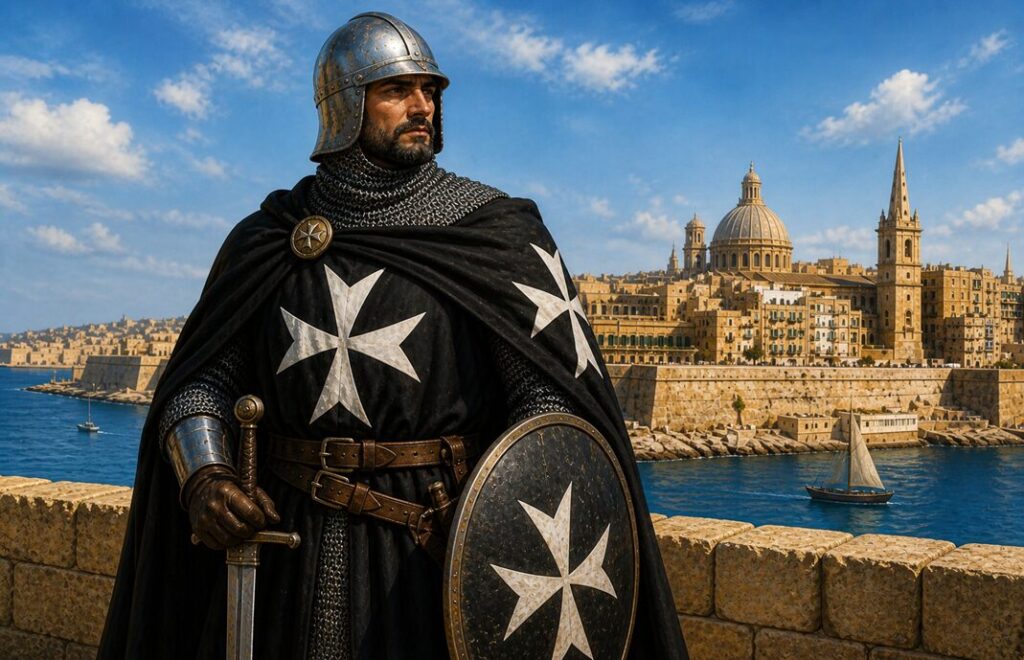
A siege that shaped a nation
In the summer of 1565, Malta became the stage for one of the most dramatic confrontations in Mediterranean history. The powerful Ottoman Empire launched a massive campaign to seize the island, recognizing its strategic importance at the crossroads of key sea routes. Facing them was a much smaller force: the Order of St. John, supported by local Maltese fighters and a handful of European allies.
For months, the island endured relentless attacks- forts bombarded, walls breached, and supplies stretched to their limits. The fighting was intense and often brutal, with key strongholds like Fort St. Elmo falling after fierce resistance. Yet despite overwhelming odds, the Knights, led by Jean Parisot de Valette, refused to surrender.
When relief forces from Sicily finally arrived, the balance shifted. The Ottomans withdrew, and against all expectations, Malta remained unconquered. The victory was more than just a military success. It echoed across Europe as a symbol of resilience and determination.
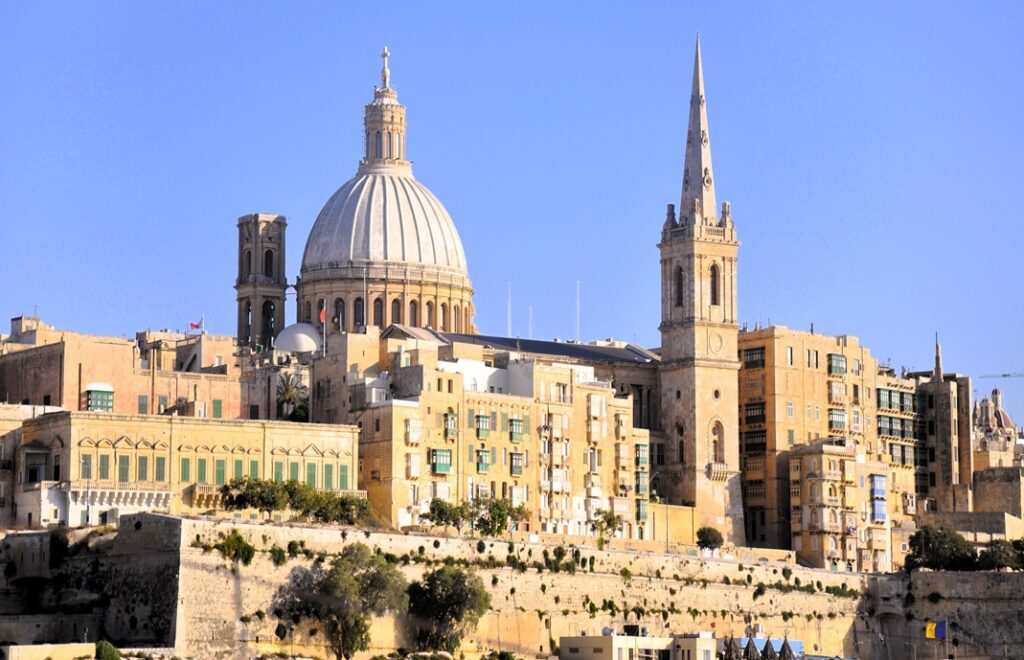
Valletta – a city built by heroes
To commemorate their victory and prepare for future threats, the Knights built a new city on the battlefield itself: Valletta.
It was named after the Grand Master Jean Parisot de Valette. The city was designed as a fortress city and became the Knights’ administrative and cultural capital.
In Valletta, the Knight’s legacy still lives on. Not just in stone walls and grand buildings but in the very identity of the city they created.
There are several noteworthy landmarks that you should not miss visiting:
St. John’s Co-Cathedral
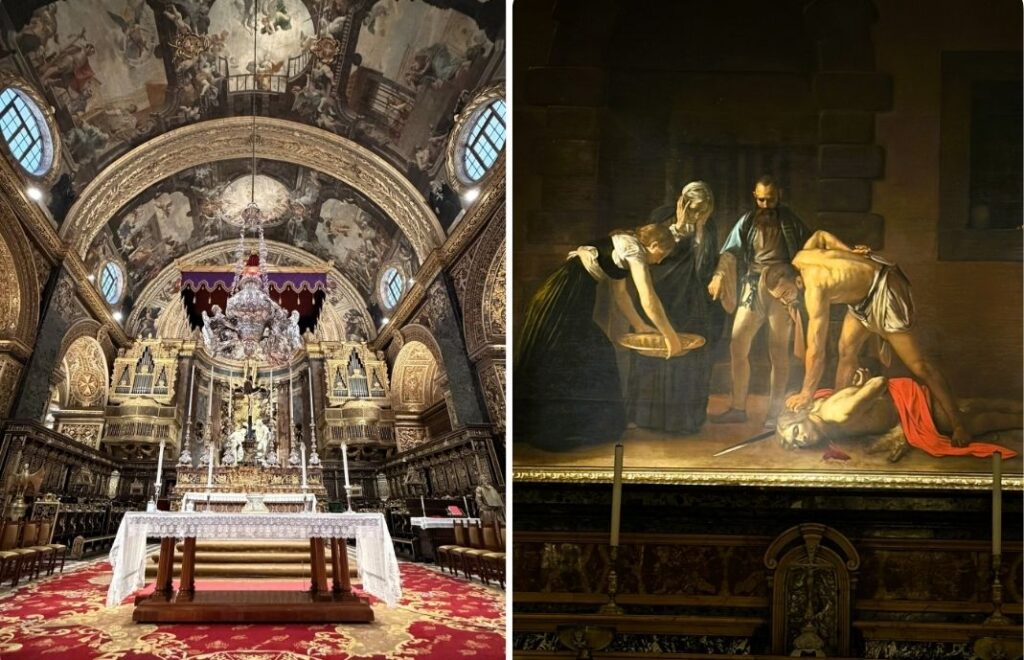
At first glance, St. John’s Co-Cathedral appears almost understated from the outside. Its plain façade giving little hint of what lies within. But step through its doors, and the world shifts. What unfolds is one of the most breathtaking interiors in Europe, a space where every surface seems to tell a story of power, faith, and artistic ambition.
Built by the Order of St. John in the late 16th century, the cathedral was designed not just as a place of worship, but as a reflection of the Knights themselves. Each chapel along its sides belongs to a different “langue,” or division of the Order, representing the many European nations from which the Knights came.
Richly decorated with marble, gold, and intricate carvings, these chapels feel almost like individual worlds within the larger whole.
Beneath your feet lies another layer of history: a floor of inlaid marble tombstones, marking the resting places of hundreds of Knights. It is both beautiful and solemn, a reminder of the lives dedicated to the Order and its cause.
Then there is the art. Inside the cathedral hangs one of Caravaggio’s most powerful works, The Beheading of Saint John the Baptist – a painting as dramatic and intense as the history that surrounds it.
St. John’s Co-Cathedral is not simply a church; it is a statement. A place where the Knights transformed devotion into grandeur, leaving behind a legacy that still feels as overwhelming today as it must have centuries ago.
The Auberges
Scattered throughout Valletta, the auberges stand as a reminder that the Order of St. John was not a single unified group, but a brotherhood drawn from across Europe. These grand buildings served as residences for the different “langues” of the Order – divisions based on nationality, including France, Italy, Spain, and more.
Each auberge was more than just a place to live. It was a center of administration, culture, and identity, where Knights from the same region gathered, planned, and maintained their traditions far from home. Architecturally, they reflected both unity and individuality – sharing a sense of strength and order, yet each carrying subtle details that spoke of its origins.
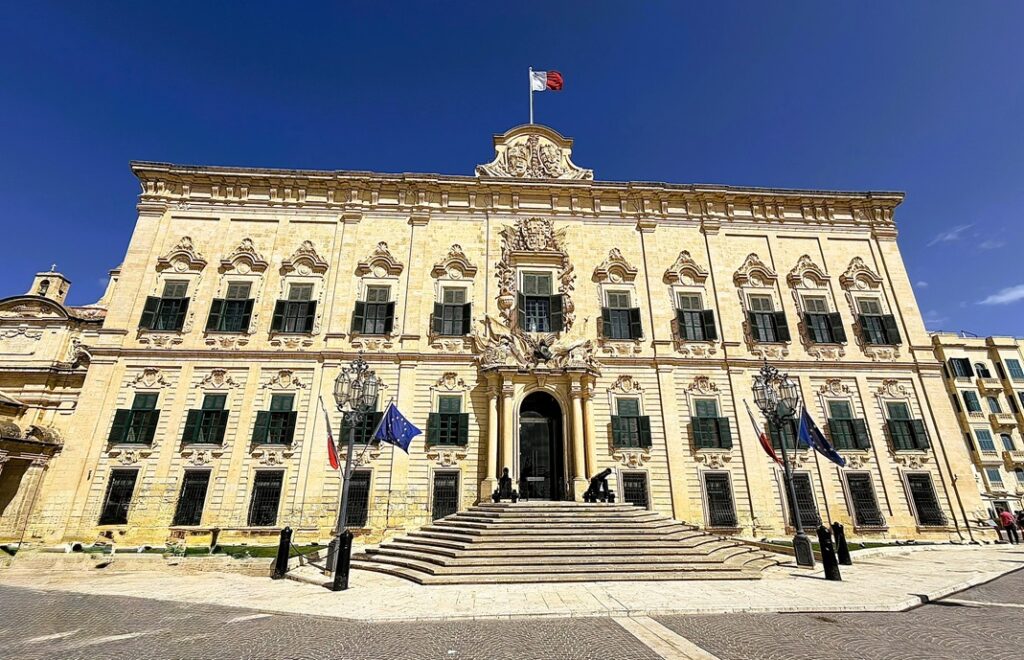
Among the most notable is the Auberge de Castille, now one of the most prominent buildings in Valletta, its commanding presence overlooking the city. Others, like the Auberge d’Italie, reveal a quieter elegance, their façades blending seamlessly into the streets they have shaped for centuries.
Walking through Valletta today, you pass these buildings almost as part of the city’s natural rhythm – but once, they were the beating heart of a powerful order. Together, the auberges tell a story of a city built not just by Knights, but by many nations united under a single purpose.
Upper Barrakka Gardens
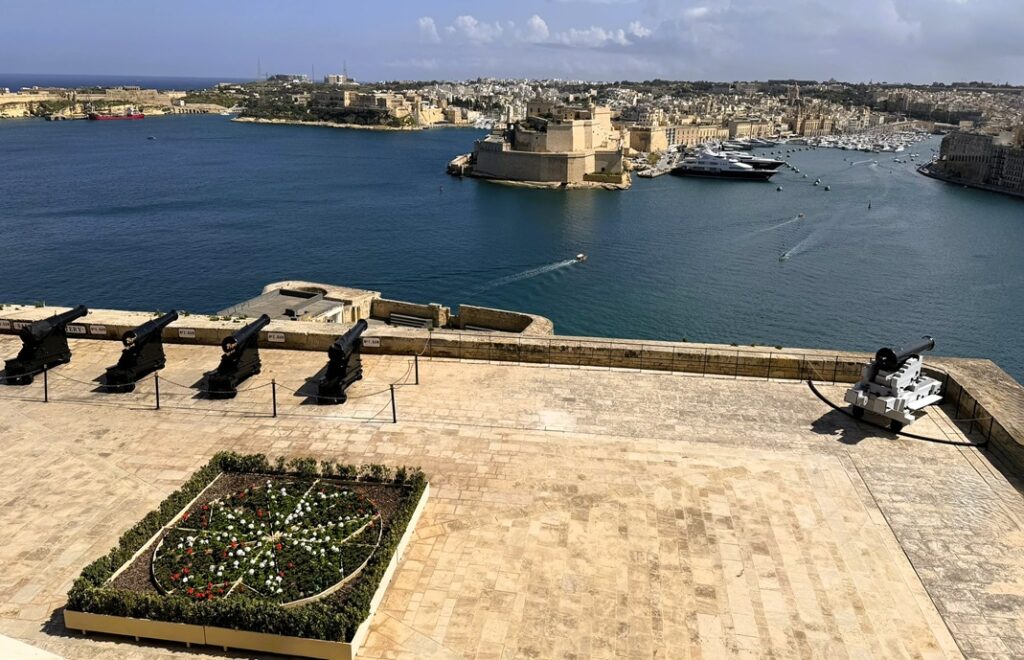
Perched high above the Grand Harbour in Valletta, the Upper Barrakka Gardens offer a moment of stillness in a city shaped by conflict and strategy. From here, the view stretches across the water to the Three Cities – a panorama that once held immense military importance, now softened by time and light.
Originally created in the 16th century as a private retreat for the Italian Knights of the Order of St. John, the gardens were a place to step away from the demands of duty. Even today, there’s a quiet elegance to the space – arched colonnades, shaded benches, and the gentle rhythm of the sea below.
Yet history is never far away. Beneath the gardens lies the Saluting Battery, where cannons still fire daily, echoing a tradition that once marked the island’s military precision and strength.
It’s this contrast that makes Upper Barrakka Gardens so memorable. A place where beauty and history meet, and where Valletta reveals both its past and its present in a single, sweeping view.
Fortifications across Malta and Gozo
The Knights were not just builders of cities, and their architectural influence spread well beyond the walls of Valletta. In fact, their vast defensive network is still visible across the islands.
Here are some of the spots that the Knights of St. John built that are worth visiting:
- Fort St. Angelo (Birgu): This was the Order’s original headquarter.
- Fort Ricasoli and Fort Manoel: Both were built to secure the Grand Harbour.
- Cottonera, Floriana & Santa Margherita Lines: Massive land fortifications around Valletta and the Three Cities.
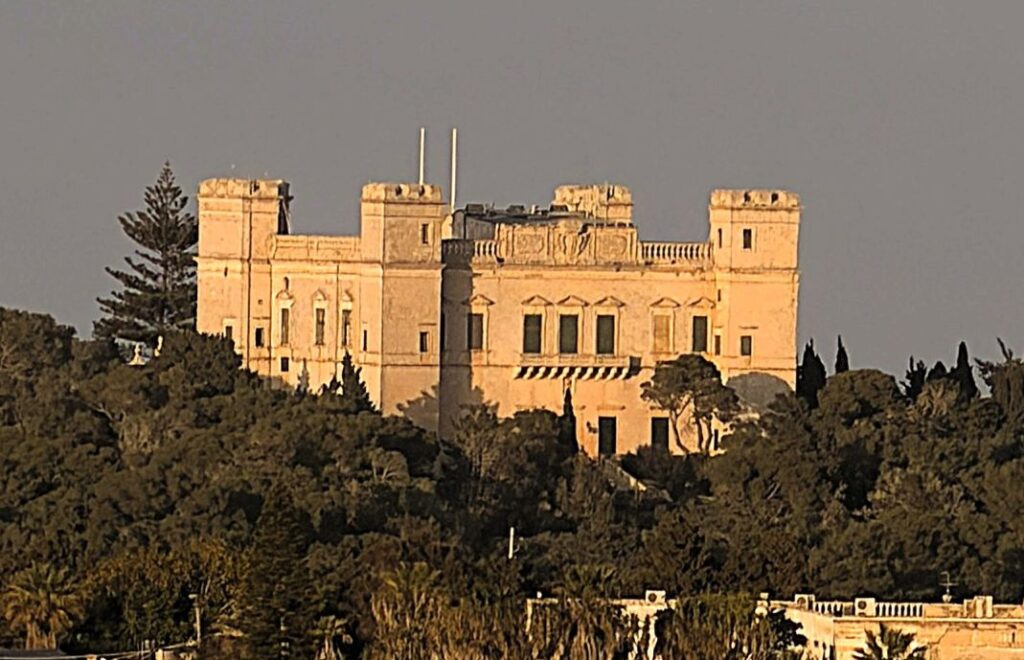
- Watchtowers: Spread all around the coast of Malta you will find several coastal towers, like the St. Agatha’s Tower (Red Tower) in Mellieħa. These served as early warning systems in case of attacks by the enemy.
- Fort Chambray (Gozo): The Knights also made an impact on the island of Gozo, with the building of this late 18th-century fort with panoramic views.
The Maltese Cross
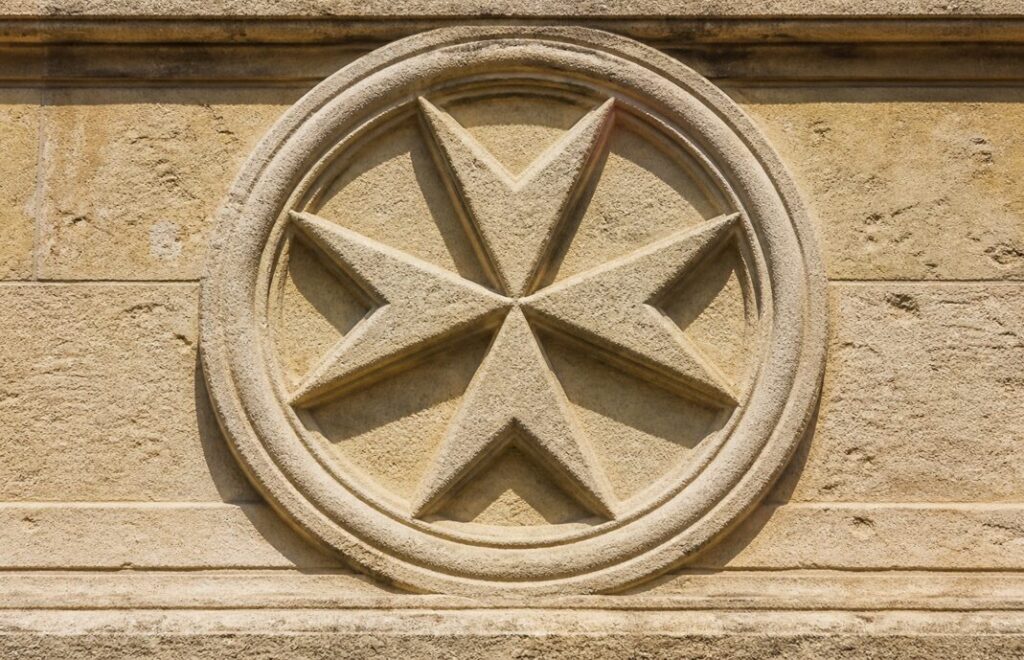
Simple in form yet rich in meaning, the Maltese Cross is the enduring emblem of the Order of St. John. It is still visible in Maltese life today.
The four arms represent the Four Cardinal Virtues: Prudence, Justice, Fortitude, and Temperance.
Its eight points are the signs of the Eight Beatitudes according to Saint Matthew, which includes loyalty, piety, generosity, and bravery.
All of these were guiding the Knights’ actions on the battlefield and their duty to care for others.
Over time, this symbol became inseparable from Malta itself. You’ll find it carved into stone walls, set into gates, and woven into the very identity of Valletta. It appears quietly and consistently, a reminder of the Order’s presence and the values they sought to uphold.
What makes the Maltese Cross so powerful is its balance – strong, symmetrical, and unmistakable. It speaks not only of history and heritage, but of a legacy that has endured far beyond the time of the Knights, becoming a symbol recognized around the world.
The fall and legacy of the Order
For all their strength and influence, the era of the Order of St. John in Malta ended abruptly in 1798, when Napoleon Bonaparte arrived on his way to Egypt. Bound by their own rules – which forbade them from fighting fellow Christians – the Knights were unable to mount a meaningful defense. Valletta fell quickly, and with it, nearly three centuries of the Order’s rule over the island.
Yet while their political power faded, their legacy did not. The city of Valletta remained. A carefully planned masterpiece of fortifications, palaces, and churches that continued to shape Malta’s identity long after the Knights were gone. Their influence can still be seen in the architecture, in the symbols carved into stone, and in the very structure of the city itself.
The Order, too, did not disappear entirely. It evolved into a humanitarian organization, continuing its original mission of care and service in a modern context. It is now known as the Sovereign Military Order of Malta but has no military role.
In many ways, the story of the Knights is not just one of rise and fall, but of transformation. Their time in Malta may have ended, but the mark they left behind still defines the island – quietly, powerfully, and everywhere you look.
