
Since the Middle Ages, Litomyšl has developed and maintained its privileged position as a center of culture and education. Here, beauty feels effortless. Like it was never designed to impress yet somehow does at every turn and through every street and courtyard.
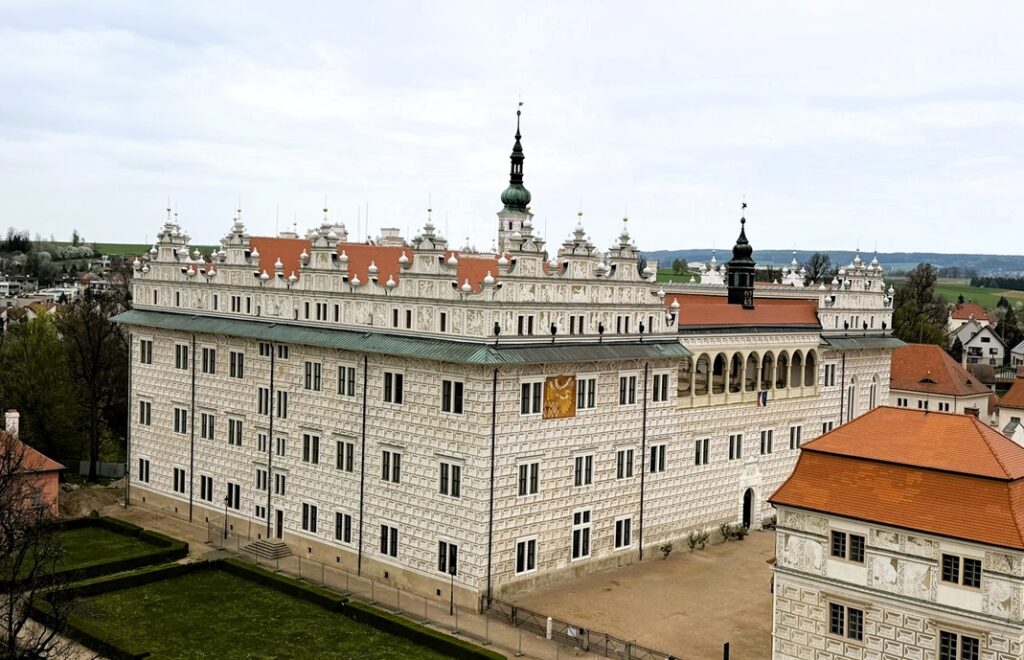
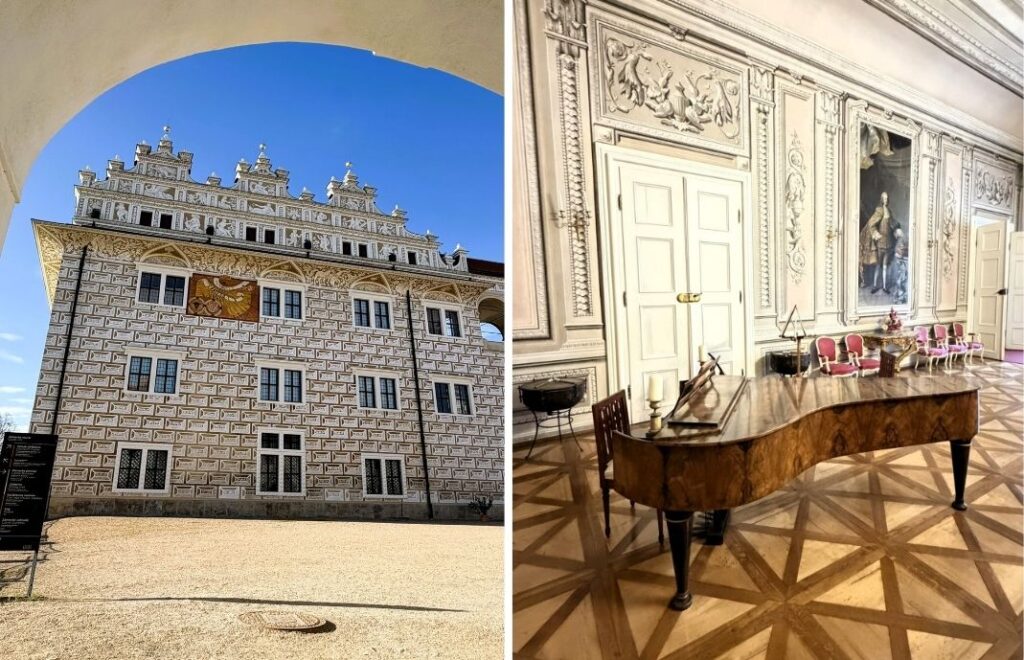
At its heart stands the enchanting Renaissance château, its façade wrapped in delicate sgraffito patterns that shimmer softly in the changing light. Wander beyond it and you’ll find a town that breathes culture, from the legacy of composer Bedřich Smetana to the hum of galleries, cafés, and open-air gatherings.
Litomyšl doesn’t demand attention. Instead, it quietly draws you in, then makes it surprisingly hard to leave.
Where is Litomyšl?
This beautiful East-Bohemian town is situated in the northern foothills of the Bohemian-Moravian Highlands.
Litomyšl lies perfectly between Prague and Olomouc, making it an easy and rewarding stop on a journey across the country. Despite its convenient location, it feels pleasantly tucked away – far from the crowds, yet close enough to everything that matters.
The history of Litomyšl
This charming city carries its history with a quiet elegance, shaped by centuries of cultural and architectural refinement. Founded in the 13th century along an important trade route, the town developed around a monastery that helped establish it as a spiritual and intellectual center early on.
Its golden age arrived during the Renaissance, when the powerful Pernštejn family transformed Litomyšl into a residence worthy of nobility. They left behind the remarkable château that still defines its skyline today.
In the centuries that followed, the town continued to lean toward culture rather than industry. Instead, Litomyšl nurtured education, music, and the arts, including its lasting connection to composer Bedřich Smetana. Even as history moved through wars and political change, Litomyšl managed to preserve its character. The result is a place where each layer of the past feels carefully woven into the present rather than replaced by it.
Why you should visit Litomyšl
Litomyšl is the kind of town where you can wander without a plan, drifting between elegant arcades, hidden courtyards, and sunlit squares that feel both refined and welcoming.
What makes Litomyšl stand out isn’t just its UNESCO-listed beauty, but the way it blends history with a living, creative energy. Here you will experience concerts echoing through historic halls, art spills into public spaces, and everyday life unfolds against a backdrop of remarkable design.
Gastronomy in Litomyšl is a quiet delight, where traditional Czech flavors meet a refined, modern touch. Cozy restaurants and stylish cafés line the arcades, offering everything from hearty local dishes to beautifully plated contemporary cuisine. It’s the kind of place where a simple meal turns into a lingering experience. The meals are best enjoyed slowly, perhaps with a glass of Moravian wine, as the atmosphere of the town gently settles around you.
Litomyšl doesn’t try to compete with bigger destinations. Instead, it offers something more personal, more intimate – a chance to experience Czech culture at its most graceful and unhurried.
Castle Hill
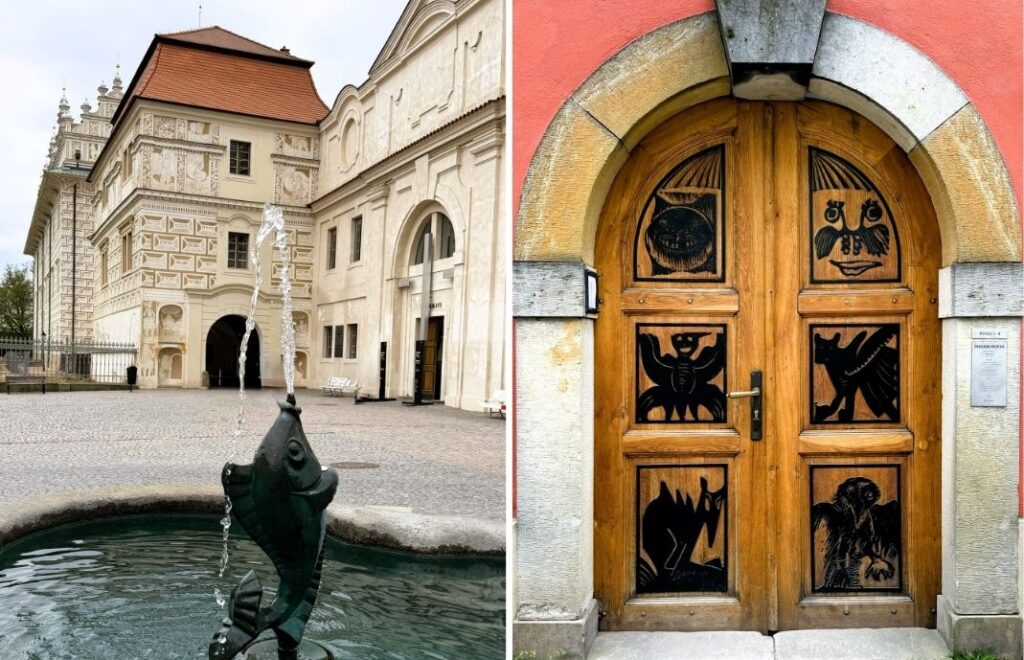
Perched above Litomyšl, Castle Hill feels like the town’s cultural and historical heart, where its most remarkable landmarks gather in quiet harmony. Here, the Renaissance château takes center stage, but it’s the surrounding space – open, elegant, and surprisingly calm – that gives the area its unique atmosphere.
The first mention of a fortified residence on the site of today’s castle dates from 981. At this time Litomyšl lay on a historic trade route, which the castle guarded. At the end of the 11th century, a church or Benedictine monastery was built here. In the second half of the 12th century, it was replaced by a Premonstratensian monastery called the Mount of Olives, due to the hill’s similarity to the biblical hill in Jerusalem.
At the foot of Mount Olives, a new town grew up. In 1259 Litomyšl gained the status of a royal town, and in 1344 the emperor Charles IV founded a new bishopric, the second after Prague. In the 16th century the castle was replaced by a chateau and the upper town by the castle brewery.
The most recent buildings on the hill date from 2011 to 2015 when Castle Hill underwent significant revitalization, and twelve buildings and areas were repaired.
Wander across the hill and you’ll find more than just architecture: gardens, hidden corners, and thoughtful modern additions create a seamless blend of past and present. It’s a place to slow down, to take in the details, and to appreciate how naturally history and everyday life coexist in Litomyšl.
Litomyšl Castle
This is one of the most significant Renaissance monuments in the Czech Republic. Its uniqueness was confirmed when it was placed on UNESCO’s list in 1999.
There is a feeling of love and romance attached to the castle. It is said that the new chateau was built by Vratislav of Pernštejn, inspired by his love for his beautiful Spanish wife, Maria Manrique de Lara.
The building dates from the period 1568-1582 and the inspiration came from Renaissance palaces in Northern Italy. However, the interior layout and furnishings of the chateau evolved over the centuries to suit the taste and needs of the owners. The Trauttmansdorff family lived here from the mid-17th century and then the Waldsteins, until the mid-19th century.
The final owner, Prince Albert Maria Thurn-und-Taxis, steered his estate safely through both World Wars. After 1945, his estates were confiscated. Today, the chateau is state-owned.
Litomyšl Castle is a four-wing, three-story building with an asymmetrical layout. The west wing is the largest, while the south wing has a two-story arcade gallery that encloses the main inner square courtyard. It is a unique feature of the Litomyšl castle. Arched arcade galleries continue around the west and east sides of the courtyard.
The Chateau’s jewel is its classicist theater from 1797. It’s preserved stage machinery, set designs and other original equipment are unique in Europe as only five comparable historic theatres exist on the continent. The original auditorium painting, scenic decorations, and stage equipment have been preserved.
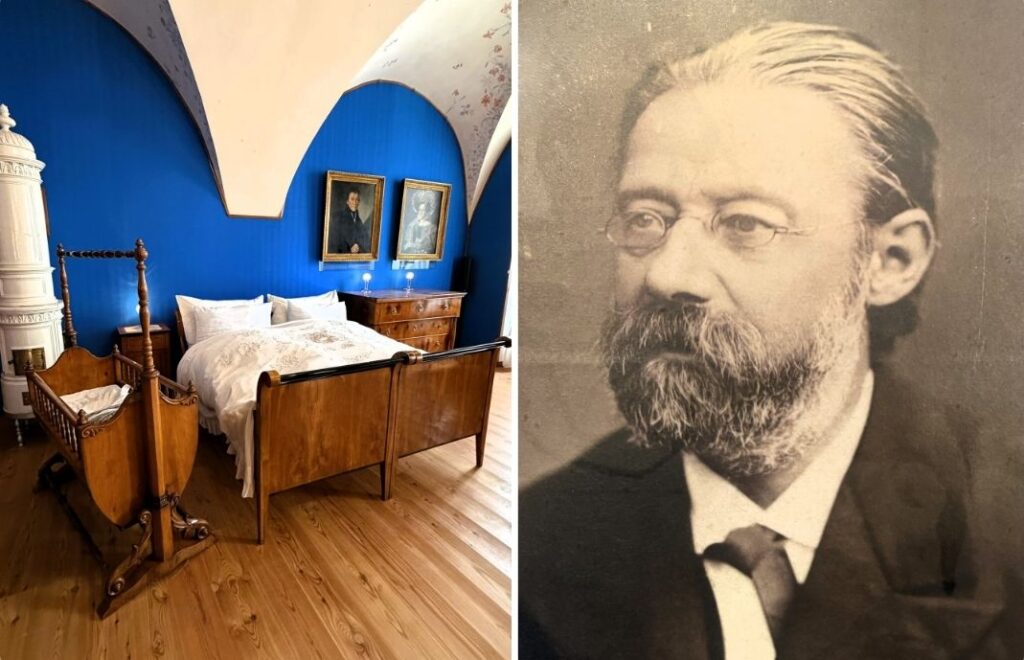
Bedřich Smetana’s birthplace
Trace the early notes of a life that would go on to shape a nation’s musical identity and visit the birthplace of Bedřich Smetana.
The birthplace is located on the ground floor of the former castle brewery, where Bedřich’s father, František Smetana, had been a brewer since 1823. On March 2, 1824, the Smetana’s long-awaited son Bedřich was born here. He was a remarkable child. He began learning to play the violin at age four and later the piano. At the age of six he composed his first compositions and performed publicly for the first time as a pianist.
You can visit his birthplace, and the exhibition is divided into two main parts. The first one, the “music salon” offers an unusual music-visual experience. It presents Smetana’s masterpieces in a concentrated way through an animated film.
Part two takes you into the apartment and the bedroom, where Smetana was born. The adjacent space is equipped with historical furniture from the Biedermeier period. There is a museum exhibition, and you can also listen to the composer’s life story told by a seven-year-old boy.
This is a place that reveals how even the most extraordinary stories can begin in the simplest of places.
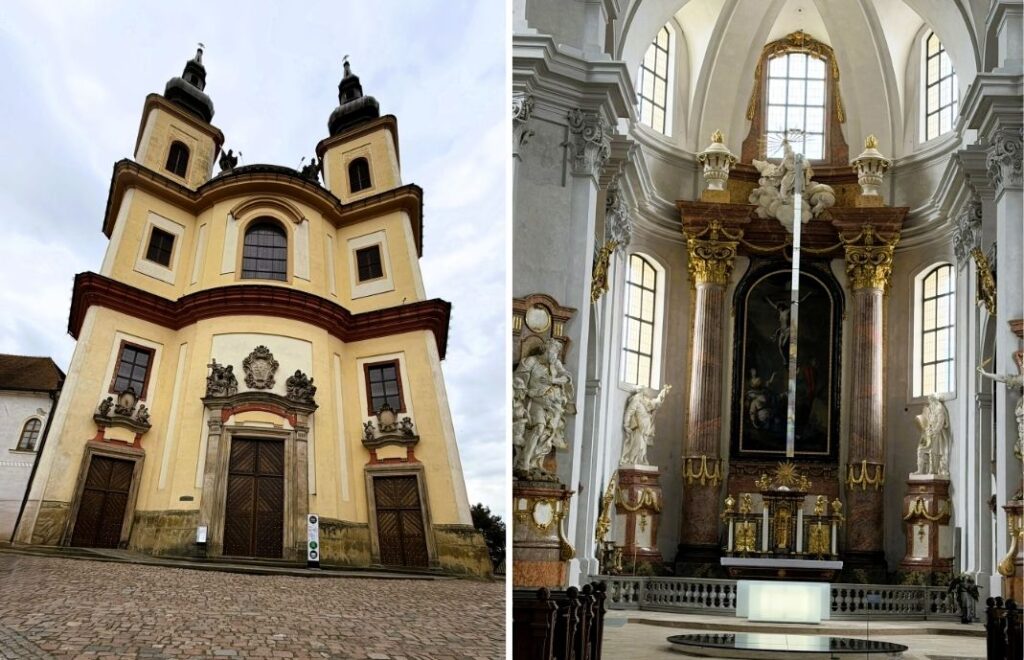
Church of the Finding of the Holy Cross
In Litomyšl, the Church of the Finding of the Holy Cross offers a striking contrast to the town’s Renaissance elegance. Hidden behind a modest exterior, the church reveals a dramatic Baroque interior – rich, theatrical, and unexpectedly immersive.
It rises on the castle hill and was built between 1714 and 1725. It burned down four times, was closed after 1968 and gradually fell into disrepair. Between 2011 and 2015 it underwent complete reconstruction. In 2017, three new live bells returned to the church after 75 years.
Step inside, and the atmosphere shifts instantly. Light filters through in a way that feels almost staged, drawing your eyes upward to ornate details and quiet symbolism.
There is also an exhibition called “Angels on the hill” that is worth seeing.
You can climb the steps (about 120) to the top and admire Litomyšl from above.
The Church of the Finding of the Holy Cross is not just a place to admire architecture, but one to experience. Here, silence, space, and design come together in a way that feels both powerful and deeply contemplated.
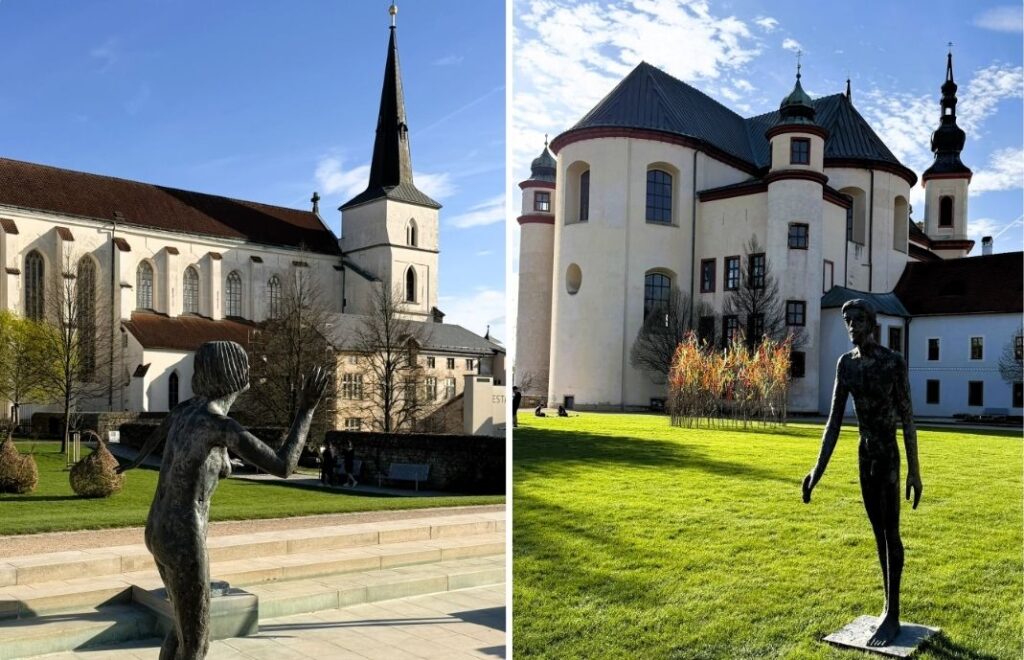
Monastery Gardens
This beautiful town park offers a wonderful view of Litomyšl and is located near the castle grounds. It is surrounded by two churches.
The original Monastery Gardens belonged to the complex of buildings of the Piarist Monastery and served as utility gardens. In 2000 this space returned to life and has become a favorite green spot for both locals and tourists.
Here you will find a gazebo, a chess board with perennials and flower beds. In the center there is a misting fountain with sculptures by Olbram Zoubek, where music plays quietly.
The extensive lawns invite you to sit down, relax and absorb the peaceful atmosphere that lingers over the park.
Portmoneum – Josef Váchal Museum
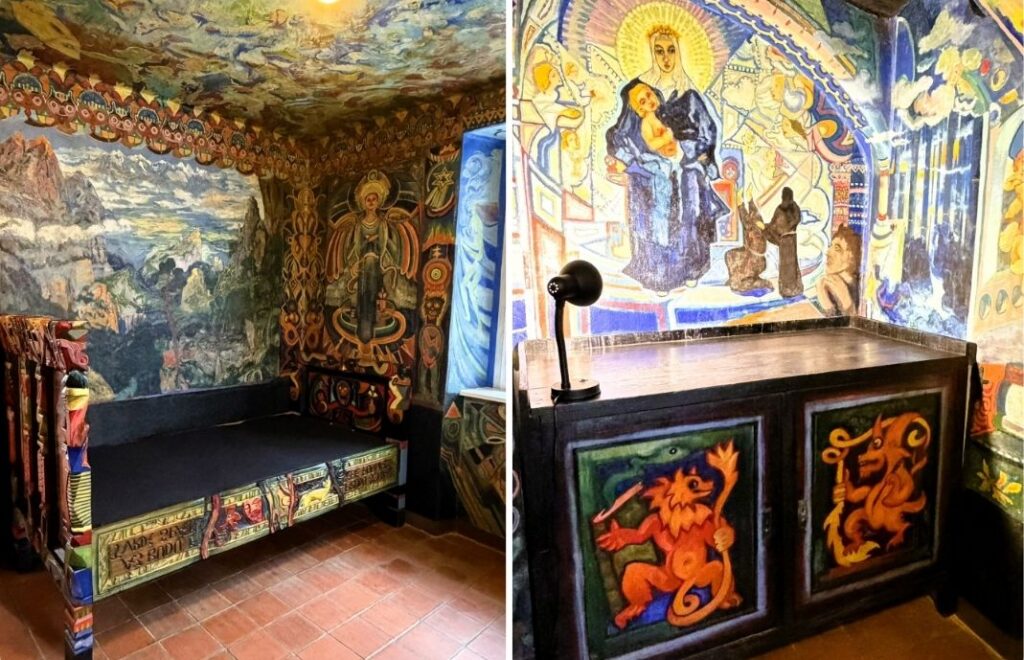
If you are into rarities, you should not miss Portmoneum, a museum with unique murals. It feels less like a museum and more like stepping inside someone’s imagination. Tucked along a quiet street, the small house is completely transformed by the visionary artist Josef Váchal. His hand-painted walls, ceilings, and furnishings create a world that is at once mystical, symbolic, and deeply personal.
Every surface tells a story, filled with vivid colors, intricate patterns, and dreamlike figures that blur the line between art and space. It’s an experience that feels almost otherworldly – unexpected, immersive, and unlike anything else you’ll find in Litomyšl.
Smetana Square
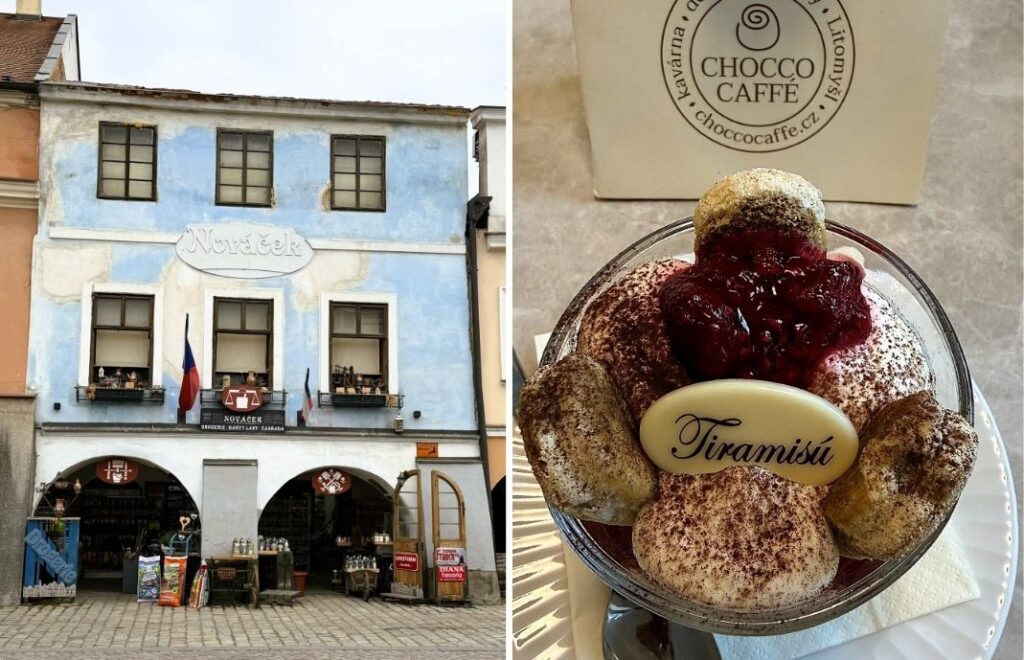
At the heart of Litomyšl, Smetana Square unfolds as a long, elegant boulevard lined with pastel-colored houses and graceful arcades. Unlike a traditional square, it is oval shaped and is one of the longest squares in Central Europe (500 meters).
Its stretched, almost theatrical shape invites you to wander rather than simply pass through, with each step revealing new architectural details and quiet corners.
The town hall divides the square into two halves. In its upper half is the Marian column, with statues of St. Wencelaus and St. John of Nepomuk. The column was built as an expression of the town’s gratitude for being bypassed by the period’s plague epidemic.
There’s a gentle rhythm to life here. Locals meet under the arches, cafés spilling softly into the street, and the hum of culture never far away. It’s a place that feels both refined and lived-in, where the beauty isn’t just in the buildings, but in the atmosphere they create.
Did you know that…
Even in a town as elegant as Litomyšl, there are stories and surprises hiding just beneath the surface. Here are a few details that might make you see it in a completely new light.
- Philologists trace the name Litomyšl to the personal name of L’utomysl castle. But there is no clear information available about the origin of the name.
- The town’s coat of arms has a silver lily on a red field.
- The first human settlement in the Litomyšl region dates to the Late Paleolithic (40,000 – 10,000 B.C.).
- Litomyšl has two existing founding charters (which is unusual). Both are dated 27 July 1259 and furnished with the seal of King Plemysl Otakar II.
- The old town hall is decorated with an Art Nouveau astronomical clock from 1907.
Where to stay in Litomyšl: Check-in: Hotel Aplaus
My warmest gratitude to Czech Tourism for inviting me. My flights, accommodation, meals, transportation, and activities were covered. There were no requirements from the partners regarding posts on social media or promotion. Options and photos (unless otherwise stated) are entirely my own.
