
With its curious conical roof, slightly crooked appearance, and picturesque setting beside the River Tyne, Preston Mill looks as though it has wandered straight out of a storybook. You might expect to find a fairytale character living inside rather than the machinery of an old Scottish watermill.
But behind its unusual appearance lies something equally fascinating: centuries of hard work, remarkable engineering, and a way of life that has almost disappeared.
And the best part? This is not simply a historic building filled with silent machinery. At Preston Mill, you can still experience the sights and sounds of Scotland’s milling past.
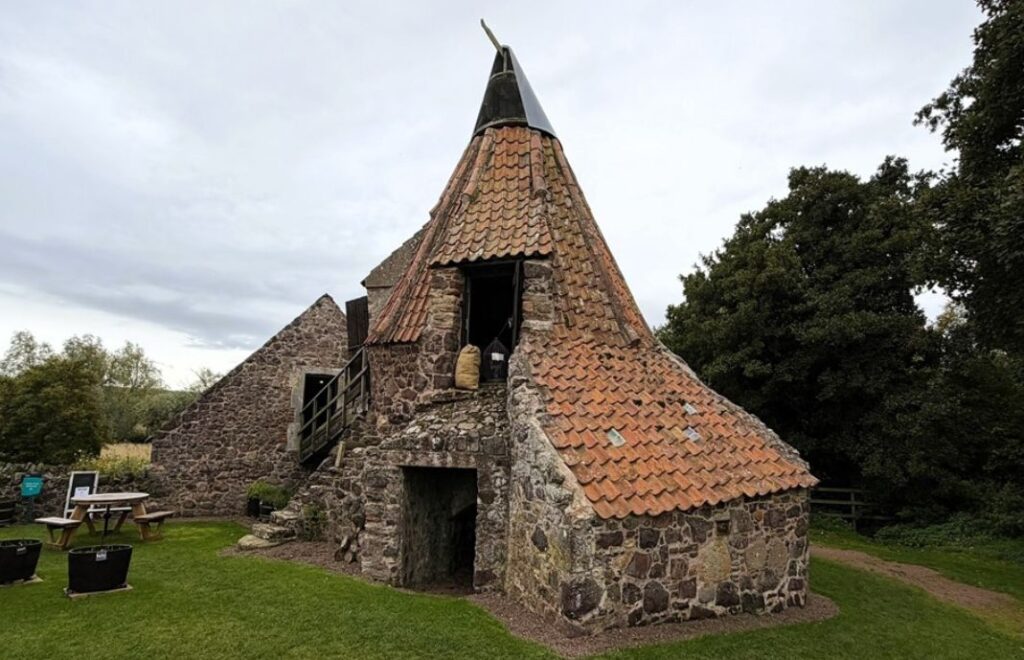
A little mill with a big personality
For centuries, Preston Mill was anything but a tourist attraction. It was a place of hard work, long days, and flour-covered faces, where the steady turning of a waterwheel helped keep the surrounding community fed. Yet this rather ordinary working mill has an extraordinary story of survival.
The history of milling at Preston stretches back at least to the 16th century. For hundreds of years, generations of millers worked beside the River Tyne, relying on the power of flowing water to turn grain into food. The buildings visitors see today date from the 18th century, although parts of the complex are considerably older.
Life at the mill was certainly no easy business. The miller needed to understand machinery, manage the water supply, maintain equipment, and deal with whatever challenges the Scottish weather brought his way. Heavy sacks, clouds of dust, troublesome mice, and the constant possibility of flooding were simply part of the job.
And flooding was no small concern. In 1948, a devastating flood badly damaged Preston Mill, threatening its future at a time when traditional watermills were already struggling to compete with modern industry.
Fortunately, this little mill was not ready to disappear.
In 1950, Preston Mill was donated to the National Trust for Scotland, becoming the organization’s first industrial property. Remarkably, it continued commercial production until 1959, making it the last working commercial watermill in the Lothians.
Today, Preston Mill has found a new purpose. Instead of producing oatmeal for the local community, it welcomes curious visitors eager to discover a way of life that has almost disappeared.
Perhaps the most wonderful thing is that the mill has not fallen completely silent. Its waterwheel still turns, its machinery can still spring into action, and the building continues to tell the stories of the people who once worked here.
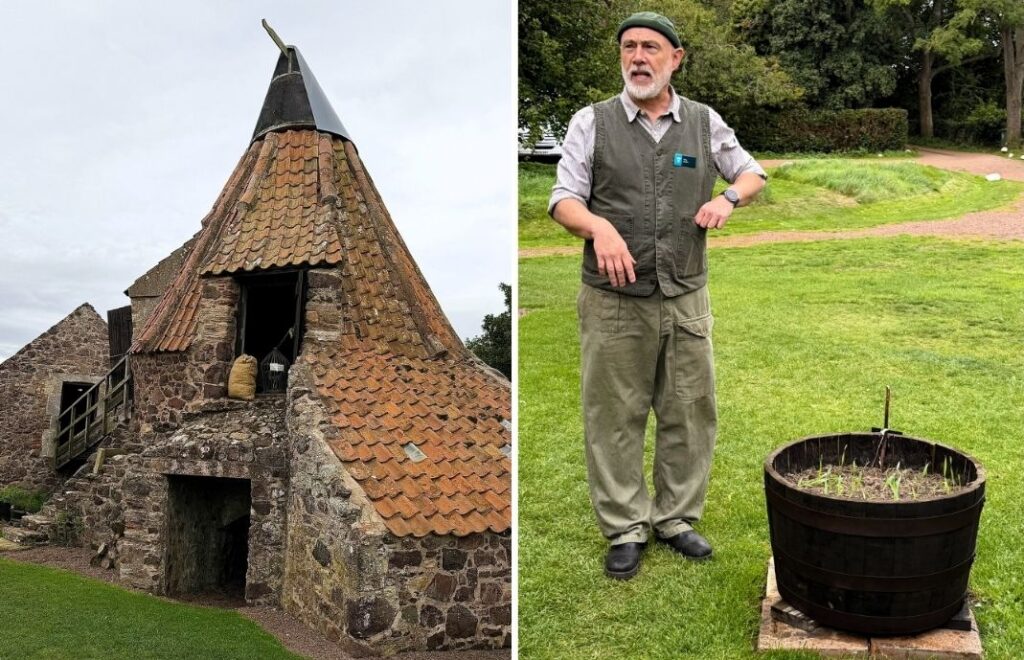
Inside Preston Mill: When the past comes to life
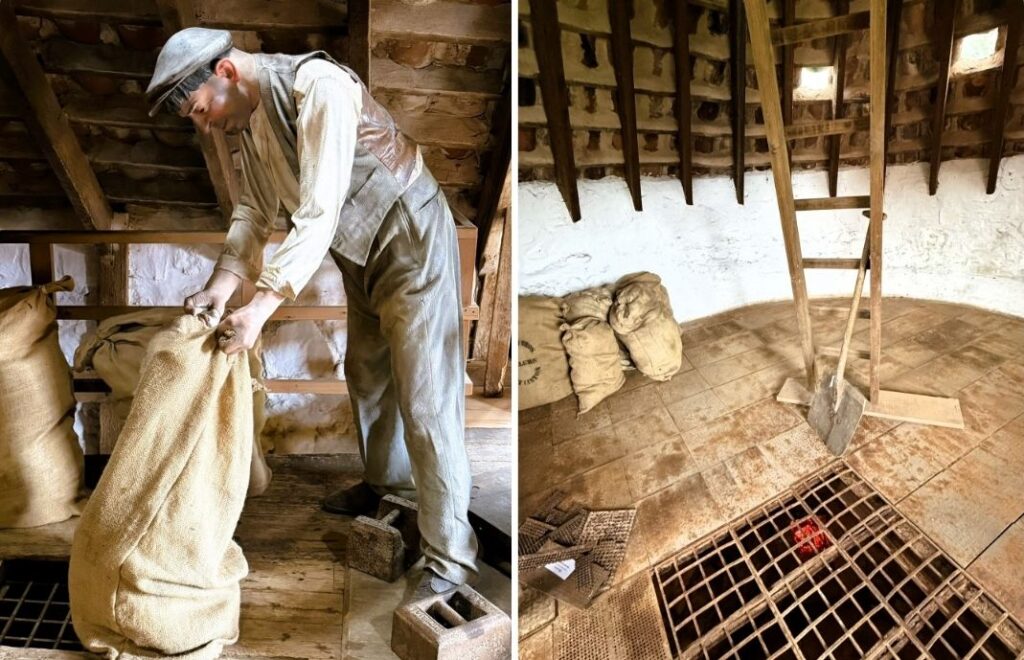
Step inside Preston Mill, and you quickly discover that this is no ordinary museum. Forget silent displays and machinery gathering dust. Here, the past comes alive with the creaking of wooden beams, the rumbling of ancient machinery, and the rhythmic turning of a waterwheel that has powered the mill for generations.
A guided tour takes you through the old buildings, revealing the fascinating workings of a traditional Scottish watermill. It is a wonderful tangle of wooden gears, shafts, millstones, and ingenious mechanisms, all designed to accomplish something remarkably simple: turning grain into food.
The process begins with the power of the River Tyne. Flowing water turns the great wheel, setting the machinery in motion. Oats are dried in the distinctive kiln before being processed into oatmeal, once an essential part of the Scottish diet. Watching how everything works together, without electricity or modern technology, gives you a newfound appreciation for the ingenuity of earlier generations.
And there is something particularly exciting about Preston Mill’s latest chapter. Following conservation work, the millstones began grinding grain again in 2026, bringing milling demonstrations back to life for the first time in around 30 years.
Perhaps the greatest pleasure of the visit is discovering how something so ordinary was once so extraordinary. What was everyday work for generations of millers has become a fascinating experience for today’s visitors.
At Preston Mill, history doesn’t just sit quietly behind a display. It turns, rattles, creaks, and occasionally makes a little flour.
The curious architecture
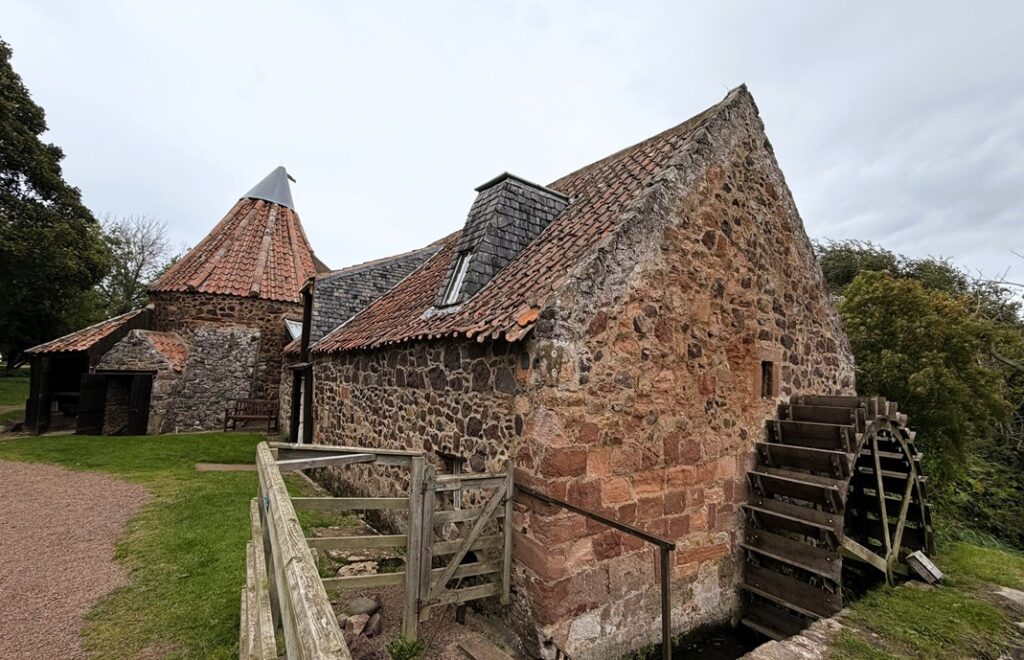
If Preston Mill looks as though it belongs in a fairytale, you are certainly not alone in thinking so. With its unusual shape, quirky angles, and wonderfully distinctive roof, it seems to have been designed by someone with a rather playful imagination.
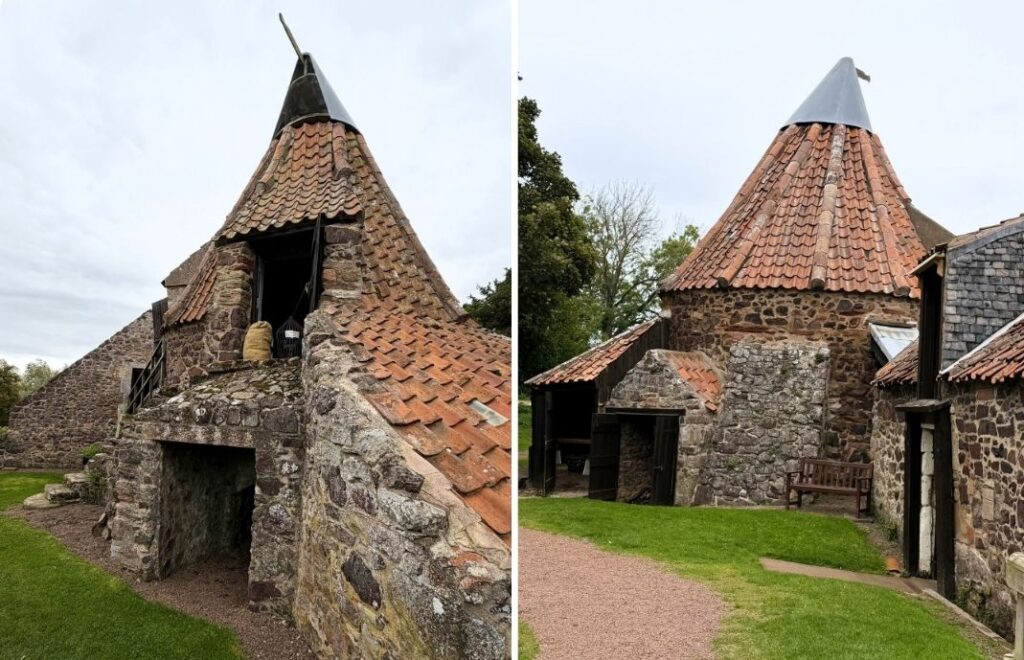
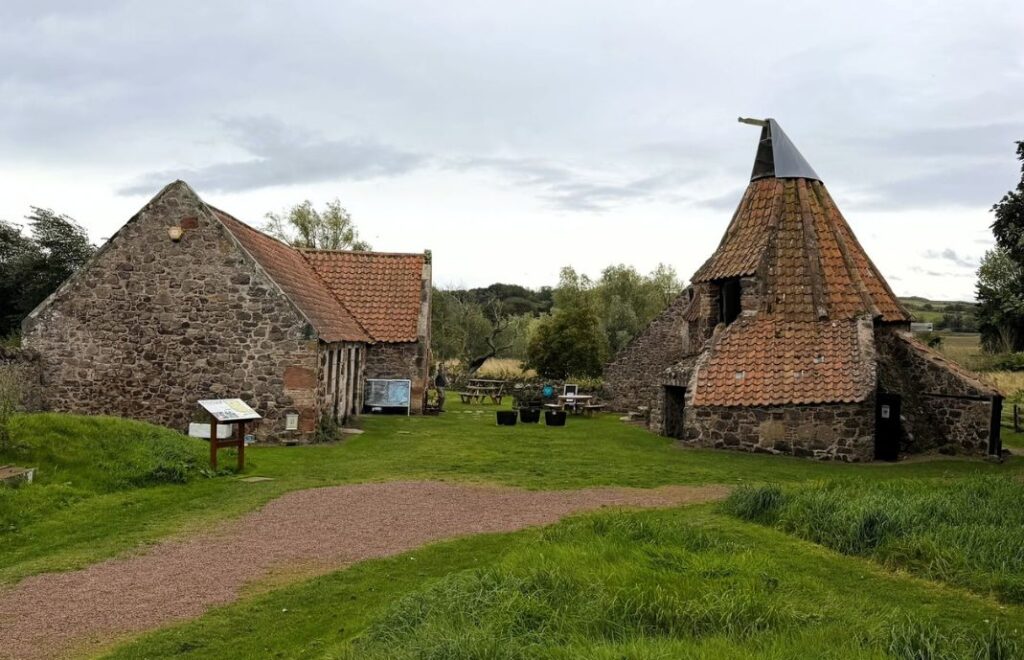
The real star of the show is the old drying kiln, topped with a striking Dutch-style conical roof that looks more like an oversized witch’s hat than part of a working mill. Add the building’s slightly crooked appearance, caused by subsidence over the years, and you have a wonderfully eccentric piece of Scottish architecture.
Of course, none of these peculiar features were intended to amuse future visitors. The unusual roof served a practical purpose, allowing smoke and moisture from the grain-drying process to escape.
But practicality rarely looked so charming.
Preston Mill may not be Scotland’s grandest historic building, but it certainly knows how to make an impression.
From watermill to Outlander film set
Who would have thought that a centuries-old Scottish watermill would one day find itself in the spotlight of an internationally popular television series?
Preston Mill enjoyed its moment of fame when it appeared in Outlander, doubling as the watermill at Lallybroch, the ancestral home of Jamie Fraser. Fans of the series may recognize it from the memorable scene in which Jamie gets into a rather awkward situation while repairing the mill’s waterwheel.
Suddenly, a humble building that had spent centuries grinding grain became a destination for Outlander enthusiasts eager to walk in the footsteps of their favorite characters.
And that is part of Preston Mill’s charm. Long before television crews arrived, it had already witnessed centuries of real Scottish life, with stories every bit as fascinating as fiction.
Not bad for a quirky little mill that never set out to become a star!
Practical guide
Planning a visit to Preston Mill? This quirky little attraction is an easy addition to a journey through East Lothian, offering a fascinating glimpse into Scotland’s working past. Here is everything you need to know before stepping back in time.
Where is Preston Mill?
Preston Mill is located in East Linton, East Lothian, approximately 37 km (23 miles) east of Edinburgh.
Set beside the River Tyne, the mill enjoys a picturesque countryside location, surrounded by peaceful walking trails and beautiful scenery.
Address: Preston Mill, East Linton, East Lothian, EH40 3DS, Scotland.
How to get there
By car: Preston Mill is easily reached from Edinburgh via the A1. Follow the brown tourist signs for Preston Mill as you approach East Linton. Visitor parking is available approximately 20 meters from the mill.
By train: East Linton railway station is the nearest station, approximately a 15-minute walk from Preston Mill.
By bus: Local bus services connect East Linton with surrounding towns. Several routes stop within walking distance of the attraction.
Opening hours
Preston Mill operates seasonal opening hours, with access to the historic buildings available through guided tours.
Check their website before visiting.
Entrance fees and tickets
Advance booking is strongly recommended, as guided tours have limited places and entry cannot always be guaranteed without a reservation.
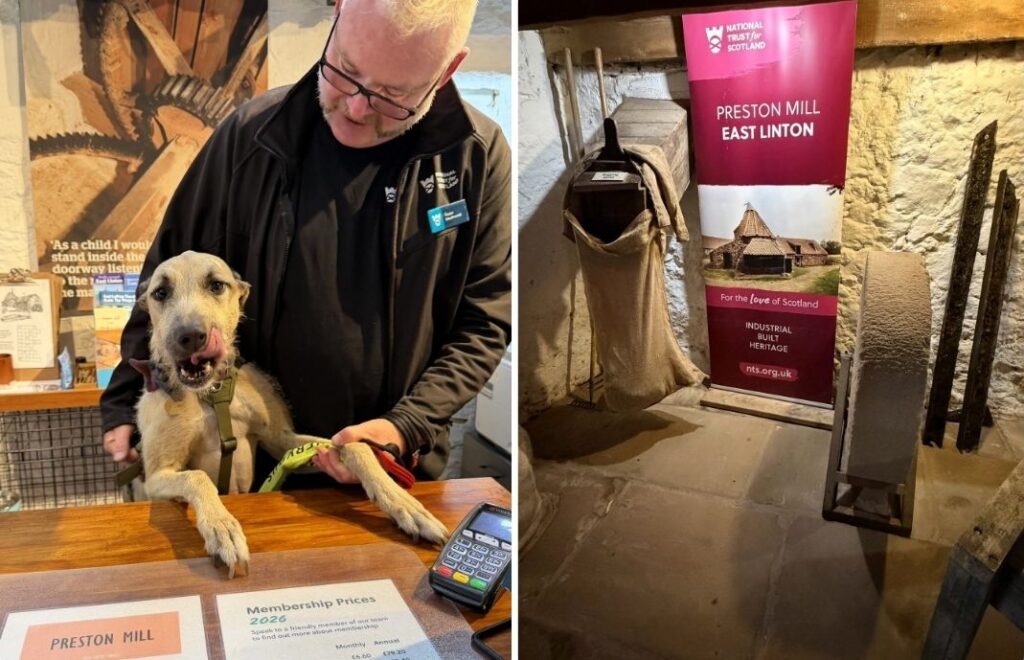
Admission is free for National Trust for Scotland members.
Exploring the mill
Visitors can only enter Preston Mill as part of a guided tour, which lasts approximately one hour.
The tour takes you through the historic buildings, revealing the machinery, milling processes, and everyday challenges faced by generations of millers.
The guides bring history to life, making the experience both entertaining and educational.
Don’t miss Phantassie Doocot
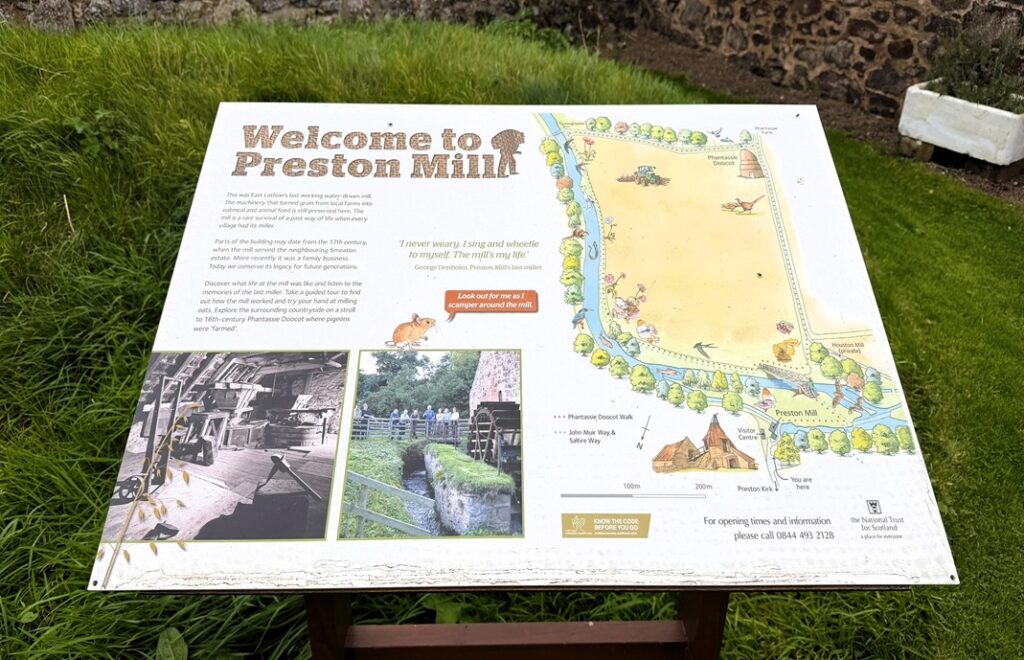
Before leaving, take a short walk to Phantassie Doocot, an unusual 16th-century dovecote located a little over 400 meters (a quarter of a mile) from Preston Mill.
This curious, beehive-shaped building was originally designed to accommodate around 500 pigeons, which provided meat and eggs for the estate.
The riverside walk is a lovely opportunity to enjoy the surrounding countryside, with the possibility of spotting kingfishers, herons, and other wildlife along the way.
Facilities and accessibility
Preston Mill has a small visitor center with an exhibition, gift shop, toilets, and a selection of drinks and snacks.
Picnic tables are available in the grounds, making it a pleasant place to enjoy a break.
The historic nature of the mill means that accessibility is limited in certain areas. The ground floor is partly accessible, but steep stairs lead to the upper floor. The exhibition and shop are fully accessible.
Dogs are welcome in the grounds but must be kept on a lead.
How much time should you allow?
Allow approximately 1.5 to 2 hours to explore Preston Mill, including the guided tour and some time to admire the unusual architecture.
If you also want to walk to Phantassie Doocot and enjoy the surrounding countryside, consider allowing an additional 30–60 minutes.
A final tip
Take a moment to admire Preston Mill from the outside before beginning your tour.
Its crooked walls, distinctive red roof, and picturesque setting make it one of Scotland’s most photogenic little historic buildings.
And if you are an Outlander fan, keep your eyes open for familiar filming locations.
My warmest gratitude to Visit Britain and Preston Mill for inviting me. There were no requirements from either of them regarding posts on social media or promotion. Options and photos (unless otherwise stated) are entirely my own.
