Just when you think the Galápagos Islands couldn’t possibly surprise you anymore, another extraordinary creature appears.
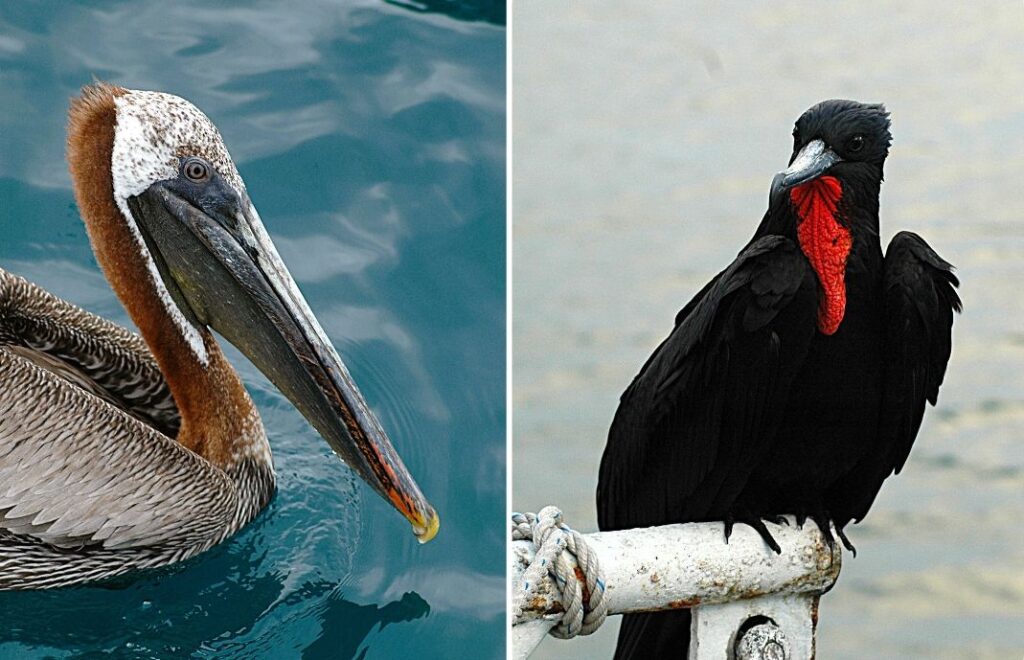
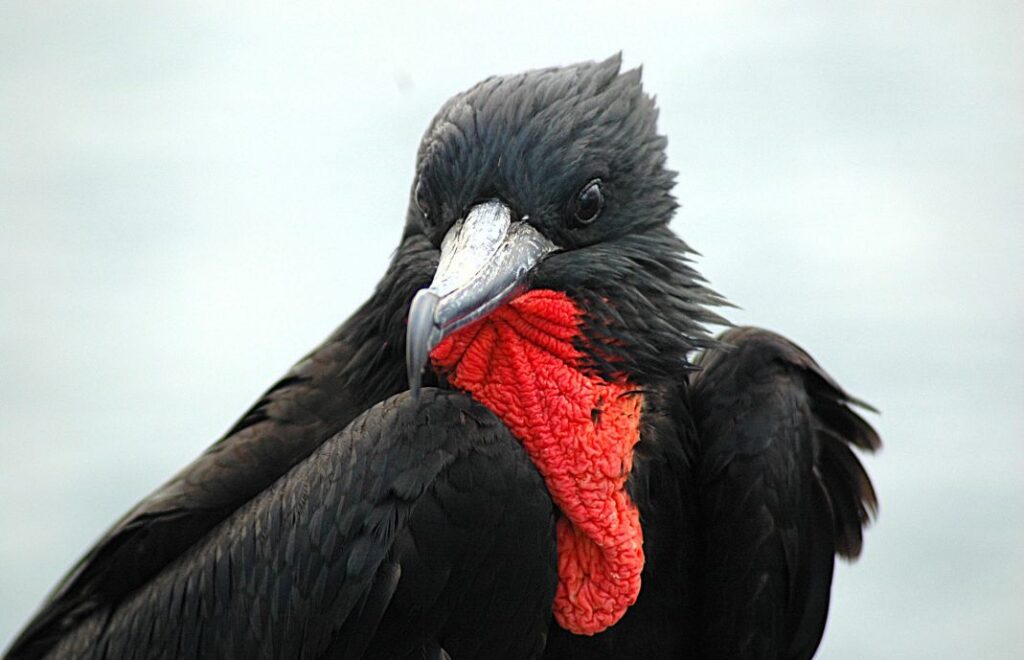
Perhaps it’s a magnificent frigatebird soaring overhead, proudly displaying an enormous red balloon beneath its beak.
Or a flightless cormorant that seems to have decided wings are terribly overrated.
Maybe it’s a tiny lava lizard enthusiastically doing push-ups on a volcanic rock, or a beautiful pink flamingo standing elegantly in a peaceful lagoon.
Welcome to the wonderful, weird, and endlessly fascinating wildlife of the Galápagos Islands.
While giant tortoises, blue-footed boobies, marine iguanas, and playful sea lions often steal the spotlight, these extraordinary volcanic islands are home to plenty of other remarkable characters.
And believe me, they have some fascinating stories to tell.
From aerial pirates and hopelessly romantic seabirds to prehistoric-looking reptiles and surprisingly tropical penguins, the Galápagos is a place where nature seems to have thrown the ordinary rulebook straight into the Pacific Ocean.
Honestly, I’m rather glad it did.
Let’s venture a little further into this extraordinary wildlife paradise and meet some of the wonderfully unusual creatures that make the Galápagos Islands one of the most magical destinations on Earth.
1. Frigatebirds: The pirates of the Galápagos sky
Some birds work hard to catch their dinner.
Frigatebirds occasionally prefer to let somebody else do the work.
These magnificent seabirds are among the Galápagos’ most spectacular aerial acrobats, soaring effortlessly above the islands on enormous, slender wings.
But beneath that graceful appearance lies a rather mischievous personality.
Frigatebirds are notorious aerial pirates!
They sometimes chase other seabirds through the sky, harassing them until the unfortunate victims regurgitate their freshly caught fish.
And then?
Our feathered little thieves swoop down and snatch the falling food before it reaches the ocean.
Not exactly impressive table manners.
But here’s where things get even more entertaining.
During courtship, male frigatebirds inflate enormous, bright-red throat pouches to attract females.
These spectacular balloons can take quite some time to inflate, transforming the males into some of the most extraordinary-looking birds in the Galápagos.
Imagine spending your afternoon sitting in a tree with a giant red balloon attached to your neck, hoping a beautiful lady will notice.
Although their food-stealing antics have earned them a rather questionable reputation, frigatebirds are also skilled hunters that catch much of their own food.
So, magnificent aerial acrobats, shameless opportunists, and hopeless romantics with inflatable red balloons?
Honestly, these birds have enough personality to fill an entire wildlife documentary.
2. American Flamingos: The Galápagos’ elegant pink beauties
Some birds are born to blend into their surroundings.
American flamingos clearly prefer to make a grand entrance.
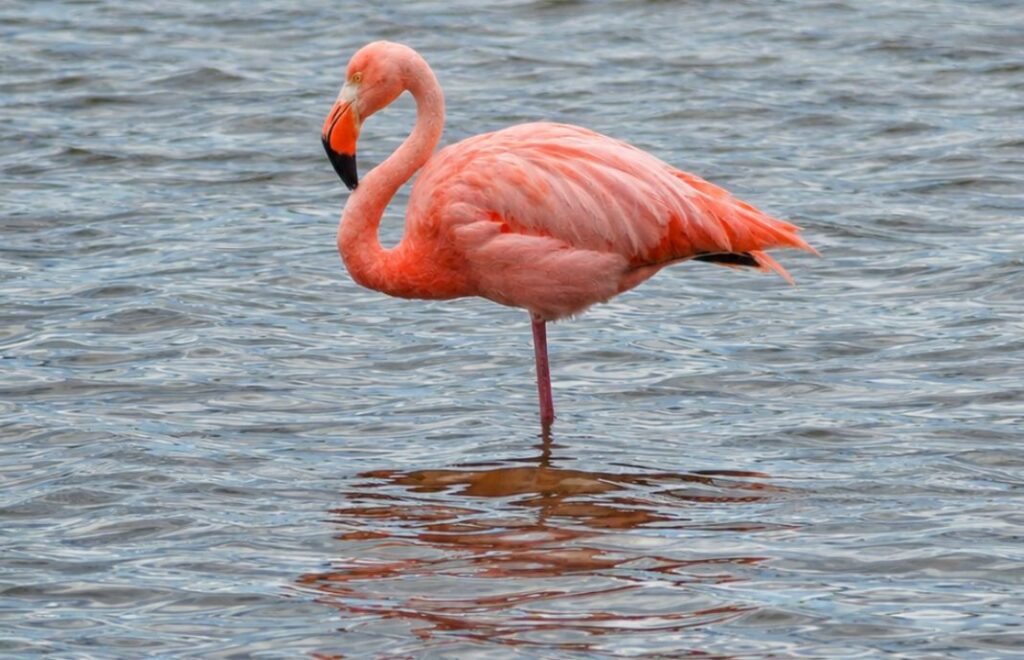
With their magnificent pink feathers, impossibly long legs, and wonderfully elegant appearance, these beautiful birds bring a spectacular splash of color to the Galápagos Islands.
But here’s something rather surprising.
Flamingos aren’t actually born pink.
Their chicks begin life covered in fluffy greyish-white down, looking considerably less glamorous than their parents.
So, where does that fabulous pink color come from?
Their dinner, of course.
Flamingos feed on tiny crustaceans, algae, and other aquatic organisms containing natural pigments called carotenoids.
Over time, these pigments help transform their feathers into those beautiful shades of pink.
Who knew that eating the right food could give you such a spectacular makeover?
Here’s another fascinating little secret.
Flamingos often stand on just one leg; a behavior scientists believe helps them conserve body heat.
One leg tucked away, head resting comfortably, and not a care in the world!
In the Galápagos, these elegant birds can be spotted feeding in shallow coastal lagoons, where their brilliant colors create a beautiful contrast against the volcanic landscape.
Although they look like sophisticated models posing for a wildlife magazine, their feeding technique is rather unusual.
They actually turn their heads upside down to filter food from the water.
Apparently, even the most glamorous creatures have their wonderfully peculiar habits.
Pink feathers, fabulous legs, and upside-down table manners. What’s not to love?
3. Waved Albatrosses: The Galápagos’ romantic drama queens
If the Galápagos Islands ever hosted a romantic reality television show, waved albatrosses would undoubtedly steal the spotlight.
Believe me, these magnificent seabirds know how to put on a performance.
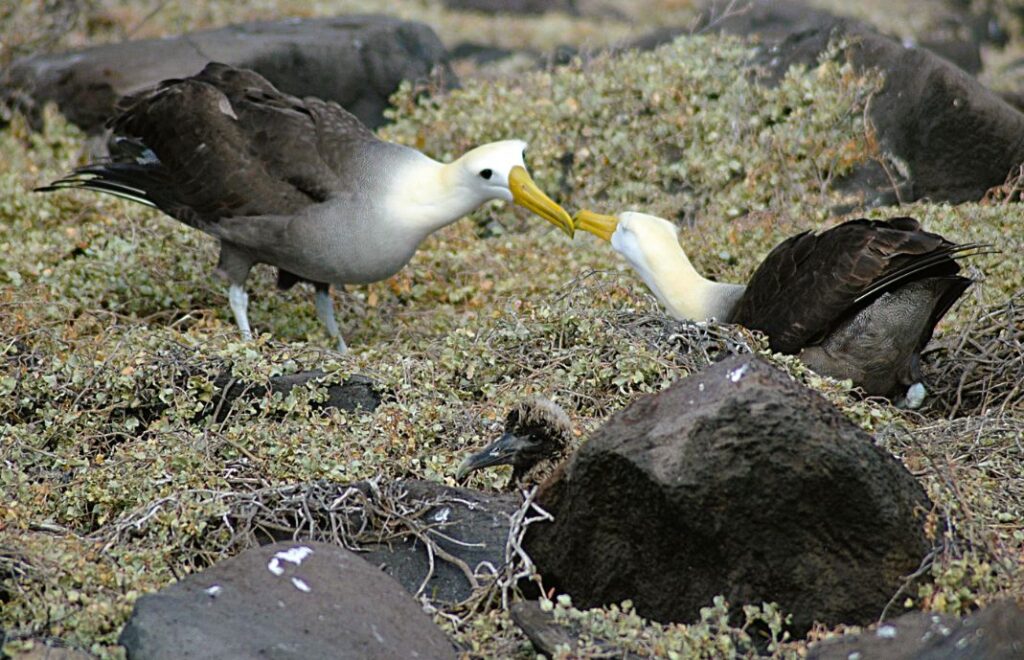
When romance is in the air, waved albatrosses engage in some of the most entertaining courtship rituals in the animal kingdom.
There are enthusiastic bill-clacking, dramatic head movements, sky-pointing, and plenty of whistling and honking.
Imagine two birds standing face-to-face, enthusiastically clicking their beaks together as though they’re having the most important conversation of their lives.
Perhaps they are.
But beneath all that wonderfully theatrical behavior lies something genuinely touching.
Waved albatrosses form long-lasting pair bonds, often reuniting with the same partner year after year.
Their elaborate courtship rituals help strengthen those remarkable relationships.
Here’s another fascinating fact.
These extraordinary seabirds have enormous wingspans, reaching around 2.5 meters, allowing them to glide effortlessly above the Pacific Ocean.
Yet despite their magnificent flying abilities, they return to the Galápagos, particularly Española Island, to breed.
So, beneath those dramatic performances are devoted partners with a remarkable connection to their island home.
Judging by their enthusiastic conversations, they certainly never run out of things to say!
Who needs romantic love letters when you’ve got a spectacular wingspan, an impressive bill-clacking routine, and a partner who understands every honk?
4. Lava Lizards: Tiny dragons with big attitudes
Size isn’t everything, and the Galápagos lava lizards are determined to prove it.
These tiny reptiles may be small, but they have enough attitude to rival their enormous iguana cousins.
Scurrying across sun-warmed volcanic rocks, these energetic little characters seem to be constantly on the move.
Here’s something particularly entertaining.
Male lava lizards perform enthusiastic push-ups to impress females and warn rival males to stay away.
Yes, really!
They repeatedly raise and lower their bodies, sometimes bobbing their heads as though they’re showing off at the local gym.
Apparently, the performance is meant to send a very important message.
Look how strong and impressive I am!
But there’s more to these miniature dragons than their exercise routines.
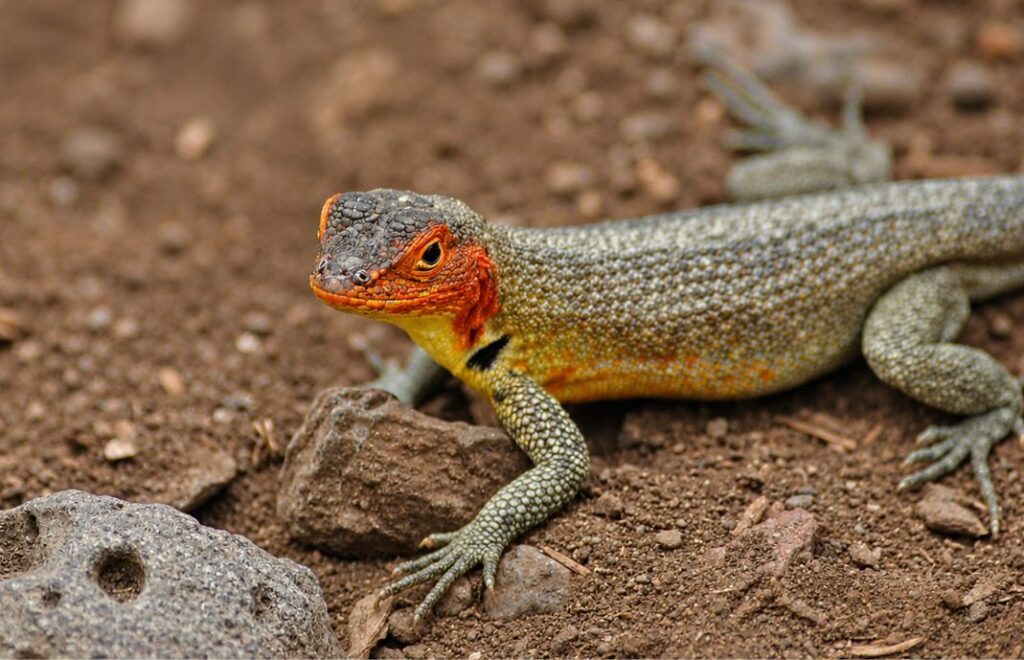
Galápagos lava lizards vary in color, often blending beautifully into their rocky surroundings.
Some females also display striking reddish or orange markings around their heads and throats.
Here’s another fascinating detail.
The Galápagos Islands are home to several species of lava lizard; many found only on particular islands.
Over time, these little reptiles have evolved different characteristics, making them another wonderful example of the archipelago’s extraordinary biodiversity.
So, when you’re exploring the Galápagos and spot a tiny lizard enthusiastically doing push-ups on a rock, don’t be surprised.
He’s probably not preparing for a fitness competition. He’s simply trying to impress the ladies.
5. Brown Pelicans: Spectacular dive-bombers
Some birds patiently search for their dinner.
Brown pelicans prefer to arrive with a spectacular splash.
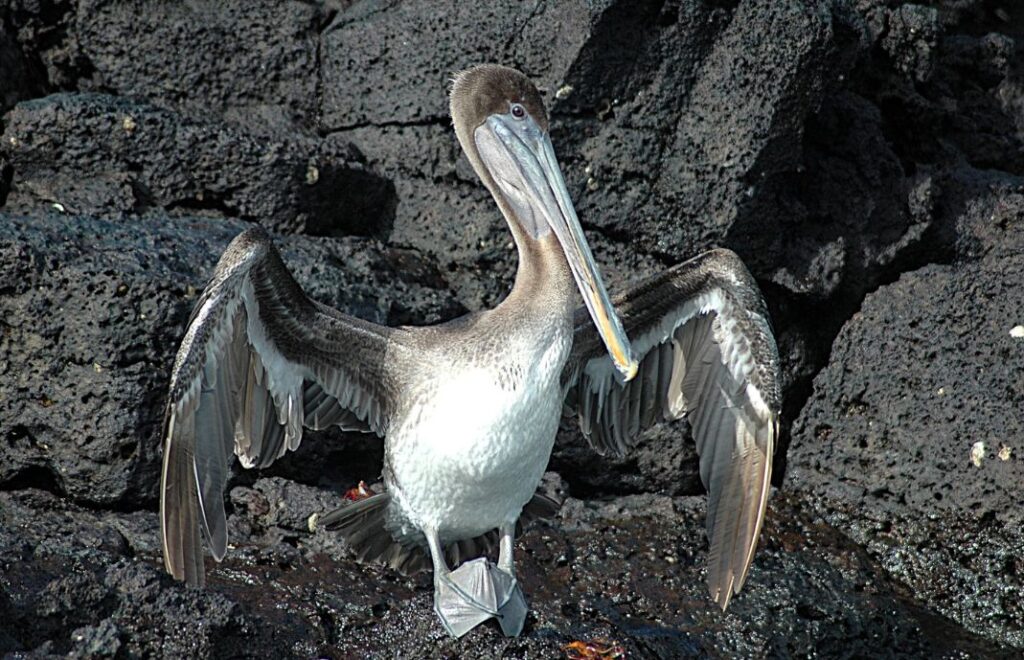
These magnificent seabirds are among the Galápagos’ most impressive fishermen, patrolling the coastline with their enormous beaks and unmistakable silhouettes.
And when they spot something delicious swimming beneath the surface?
It’s time for a dramatic dive!
With their wings partly folded, brown pelicans plunge towards the ocean, crashing into the water in pursuit of unsuspecting fish.
Not exactly a subtle entrance.
Here’s where things get particularly fascinating.
That enormous pouch beneath their beak acts like a built-in fishing net.
As the pelican hits the water, its expandable throat pouch scoops up fish along with a generous helping of seawater.
And then?
The clever bird drains away the water before swallowing its slippery prize.
Imagine having a fishing net permanently attached to your face.
But despite their slightly comical appearance, brown pelicans are remarkably skilled hunters.
Special air-filled structures beneath their skin help cushion the impact of those spectacular dives.
Here’s something rather charming.
When they’re not busy dive-bombing their dinner, these magnificent birds can often be spotted resting along the rocky shoreline, looking wonderfully dignified.
From elegant coastal cruiser to spectacular splash-landing champion in a matter of seconds.
Honestly, who needs a fishing rod when you’ve got wings, an enormous beak, and your very own built-in seafood shopping bag?
6. Española Mockingbirds: The cheeky little birds with no fear
Some birds are shy and prefer to keep a respectful distance from humans.
The Española mockingbird has apparently never heard of such a ridiculous idea!
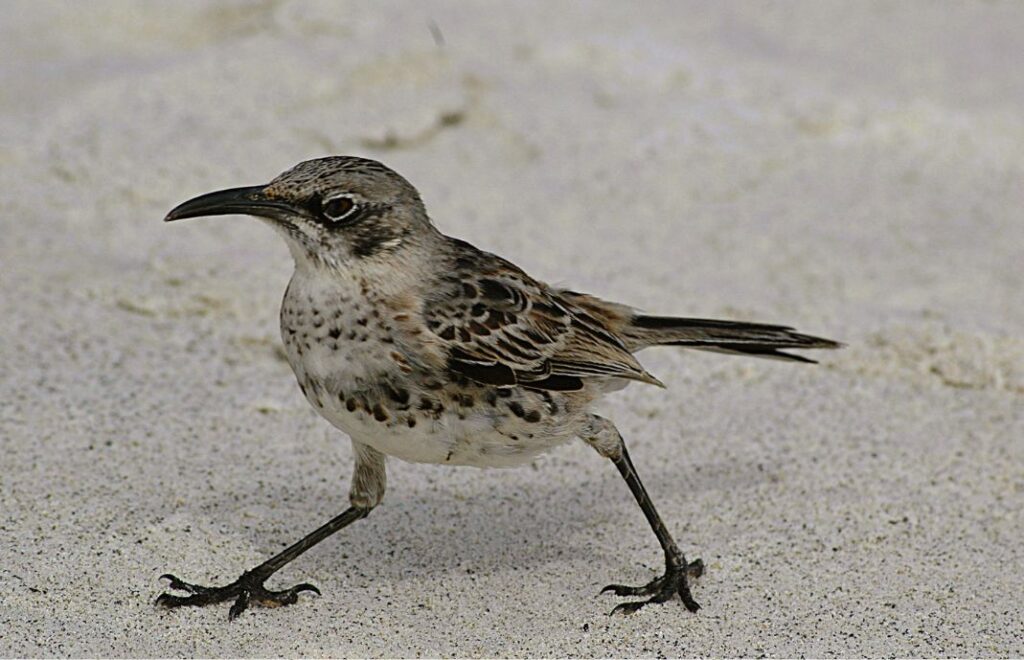
Also known as the Hood mockingbird, this wonderfully cheeky little character is found only on Española Island and its nearby islet in the Galápagos.
Here’s something particularly entertaining.
These fearless birds have absolutely no problem approaching visitors to investigate their belongings.
Backpacks, shoelaces, water bottles, and anything else that looks remotely interesting may attract their attention.
Personal space?
Apparently, that’s somebody else’s problem!
But beneath that bold little personality lies a remarkably resourceful survivor.
Española is a dry island where fresh water can be difficult to find, and these clever birds have developed some rather unusual feeding habits.
They eat insects, fruit, small animals, and occasionally even take advantage of food sources that most birds wouldn’t dream of touching.
They’ve even been observed drinking blood from wounded animals.
Not quite the innocent little songbird you were expecting, was it?
Here’s another fascinating detail.
Española mockingbirds belong to a group of Galápagos birds whose differences between islands helped Charles Darwin develop his ideas about evolution.
So, if one of these inquisitive little characters comes hopping towards you, don’t be surprised.
It’s probably just conducting a very important investigation into the strange creature visiting its island.
And judging by its confidence, it might even believe that you’re the most interesting wildlife encounter of the day.
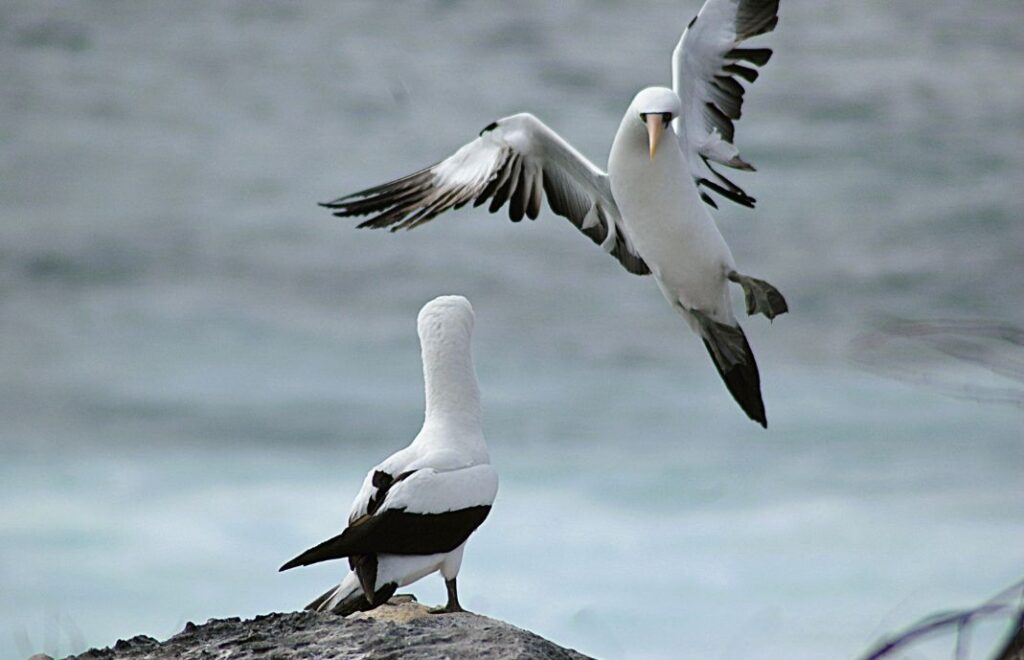
7. Nazca Boobies: Elegant birds with a dramatic family life
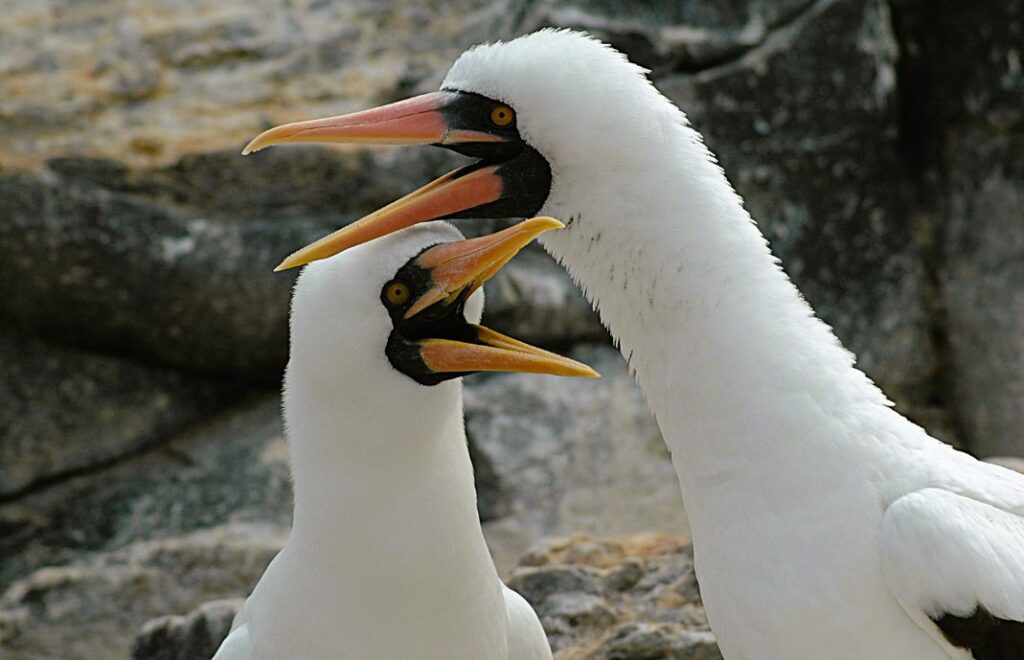
With their beautiful white feathers, striking black markings, and elegant orange-yellow beaks, Nazca boobies look like the sophisticated relatives of our wonderfully ridiculous Blue-footed Boobies.
No bright-blue shoes. No outrageous fashion statements. Just classic black and white with a splash of color.
But don’t let those innocent expressions fool you.
These elegant seabirds have some rather dramatic family secrets.
Nazca boobies are among the largest members of the booby family found in the Galápagos, and they’re spectacular underwater hunters.
They plunge headfirst into the Pacific Ocean to catch fish, sometimes diving from heights of around 30 meters.
Here’s where their story takes an unexpected turn.
Female Nazca boobies often lay two eggs, yet they almost always raise just one chick.
And the reason is rather shocking.
When both eggs hatch, the older, stronger chick typically forces its younger sibling out of the nest, where it cannot survive.
Not exactly the sort of loving family relationship you’d expect from such beautiful birds.
Scientists call this behavior obligate siblicide, and it’s one of nature’s harsher survival strategies.
But there’s a fascinating explanation.
Raising even one hungry seabird chick requires enormous amounts of food and energy, and producing two eggs provides a backup if the first fails.
So, behind those elegant feathers lies a surprisingly ruthless approach to family planning.
Apparently, even the most sophisticated-looking Galápagos residents can have some rather scandalous family dramas.
8. Galápagos Hawks: Fearless rulers of the skies
Every kingdom needs a ruler.
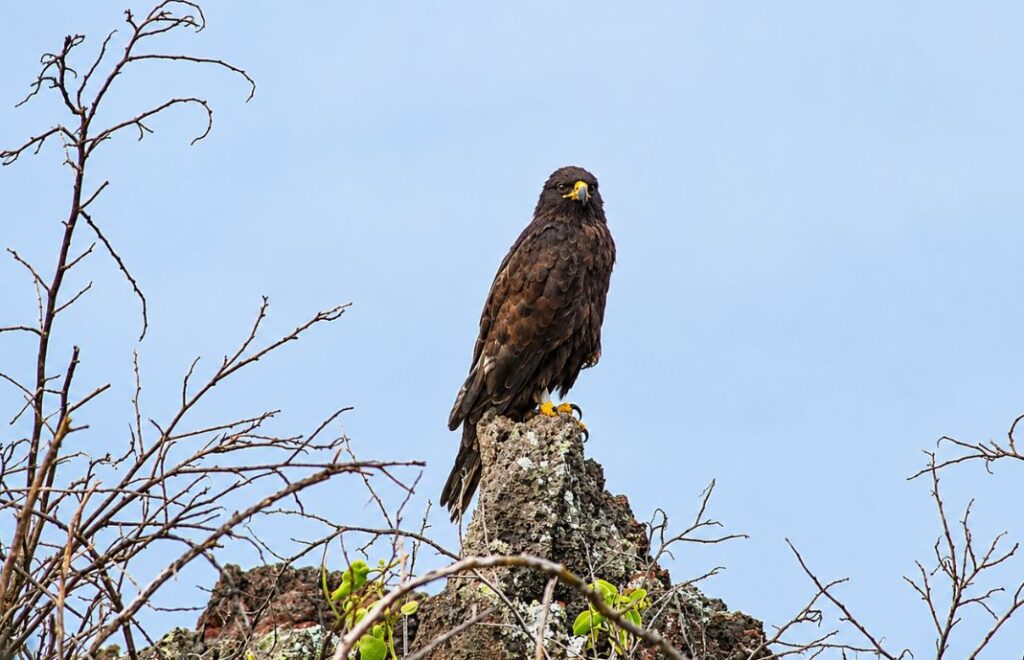
And in the Galápagos Islands, the magnificent Galápagos hawk seems to have appointed itself king of the skies.
With its piercing eyes, powerful talons, dark brown feathers, and impressive wingspan, this extraordinary bird of prey certainly looks the part.
Unlike some of our wonderfully ridiculous Galápagos residents, the hawk takes its hunting responsibilities very seriously.
As the islands’ only resident daytime bird of prey, the Galápagos hawk sits near the top of the food chain.
Lava lizards, snakes, insects, rodents, and even young iguanas can all find themselves on the menu.
Not exactly reassuring news for some of our other Galápagos celebrities.
Here’s where things get particularly interesting.
Galápagos hawks have a rather unusual approach to romance.
In some populations, a female may mate with several males, who then cooperate to defend their territory and help raise the chicks.
Yes, really!
One lady, several gentlemen, and a surprisingly organized family arrangement.
Apparently, these magnificent birds believe that parenting responsibilities are best shared.
But despite their powerful appearance, Galápagos hawks are vulnerable to threats, and their populations have disappeared from several islands.
Today, these extraordinary raptors are protected, helping preserve an important part of the islands’ natural balance.
If you spot a magnificent dark bird soaring above the volcanic landscape, take a moment to admire it.
Because while some Galápagos residents steal your lunch, this impressive feathered celebrity might actually be hunting for its own.
Every creature has a story to tell
If there’s one thing the Galápagos Islands have taught us, it’s that Mother Nature has an extraordinary imagination – and a rather wonderful sense of humor.
Where else can you find birds that steal each other’s lunches, lizards that perform push-ups, and elegant seabirds whose romantic conversations sound like something from a comedy show?
Let’s not forget the flightless cormorants that have traded flying for swimming, the glamorous flamingos with their upside-down table manners, and the spectacular pelicans that prefer to dive straight into their dinner.
Everywhere you look, another extraordinary character is waiting to surprise you.
But perhaps that’s what makes the Galápagos Islands so magical.
It’s not simply the famous wildlife celebrities that make these islands unforgettable.
Sometimes, it’s the smallest creatures that leave the biggest impressions.
A curious mockingbird hopping towards you. A colourful little lizard basking on a volcanic rock. Or a Nazca booby quietly reminding us that nature isn’t always as innocent as it appears.
Every creature, no matter how big or small, has its own fascinating story to tell.
Together, they create one of the most extraordinary wildlife destinations on Earth.
So, when you explore the Galápagos Islands, remember to look beyond the obvious.
Take your time. Look a little closer. And never underestimate the quiet little character sitting on the next rock.
Because in the Galápagos, even the most ordinary-looking creature can turn out to be wonderfully extraordinary.