
The Galápagos Islands are home to some of the most extraordinary wildlife on Earth. Giant tortoises, prehistoric-looking iguanas, curious little finches, and countless other remarkable creatures have made these remote volcanic islands their home.
But have you ever wondered how they got there in the first place?
Located roughly 1,000 kilometers off the coast of Ecuador, the Galápagos Islands emerged from the Pacific Ocean through volcanic activity. Unlike islands that were once connected to continents, these isolated islands formed without any existing populations of land animals.
So, how did tortoises, lizards, birds, and other creatures manage to reach such a remote destination?
The answer involves ocean currents, powerful winds, floating vegetation, extraordinary survival skills, and a remarkable amount of chance.
Some animals probably arrived as accidental passengers on natural rafts, while others flew or drifted across vast stretches of ocean.
Once they reached the islands, evolution gradually transformed many of their descendants into the unique species we recognize today.
Let’s explore one of nature’s most fascinating stories of survival and discovery.
1. First came the volcanoes. Then came life
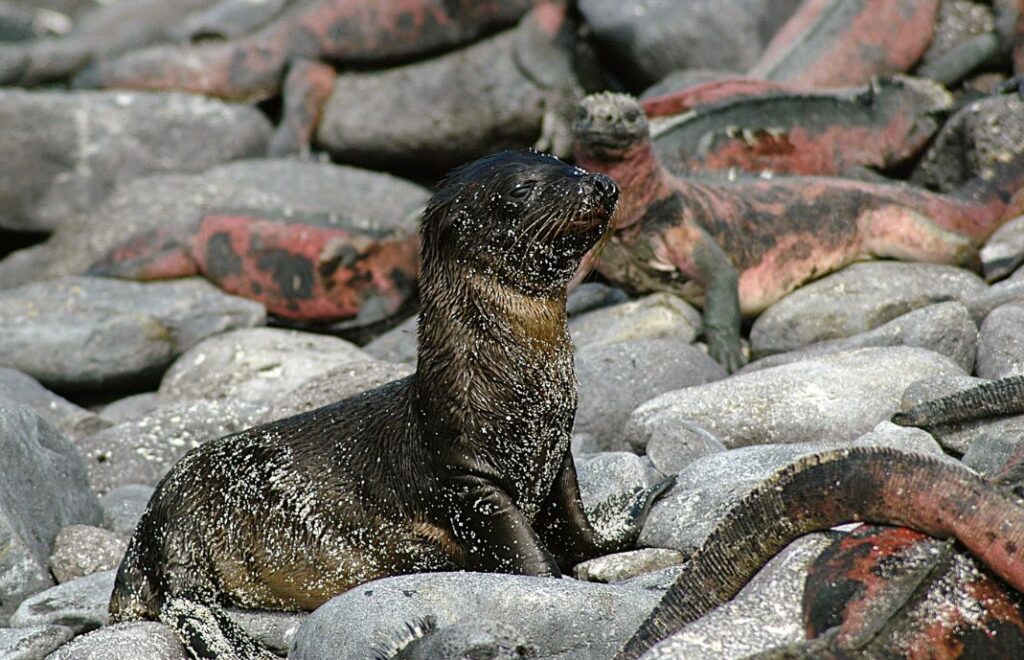
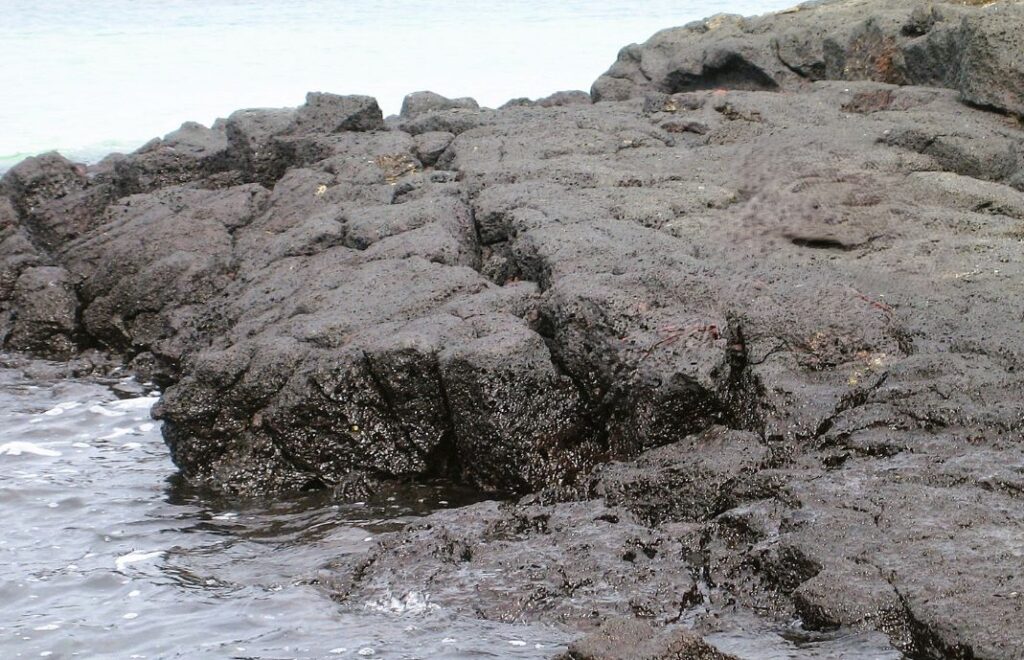
Long before giant tortoises, marine iguanas, and Darwin’s famous finches appeared, the Galápagos Islands were little more than barren volcanic landscapes rising from the Pacific Ocean.
Their extraordinary story began deep beneath the ocean floor.
The islands formed above a volcanic hotspot, where hot material rising from Earth’s interior generates magma that eventually reaches the surface. Over millions of years, repeated eruptions gradually built enormous underwater volcanoes, some of which eventually emerged above the waves.
Here’s something fascinating: the Galápagos Islands didn’t all form at the same time.
As the Nazca tectonic plate slowly moves eastward over the hotspot, new volcanoes develop while older islands drift away. Consequently, eastern islands such as Española are generally much older than western islands such as Fernandina.
Initially, these newly formed islands offered little more than exposed lava, volcanic rock, and harsh environmental conditions.
There were no forests, grasslands, or established populations of land animals.
Before the Galápagos could become a wildlife paradise, life first had to find a way across the ocean.
2. The accidental ocean travelers: Rafting across the Pacific
Imagine a powerful tropical storm sweeping across mainland South America, sending fallen trees, tangled branches, and enormous masses of vegetation rushing down swollen rivers towards the ocean.
Now imagine a few unsuspecting reptiles clinging to that vegetation as it drifts out into the Pacific.
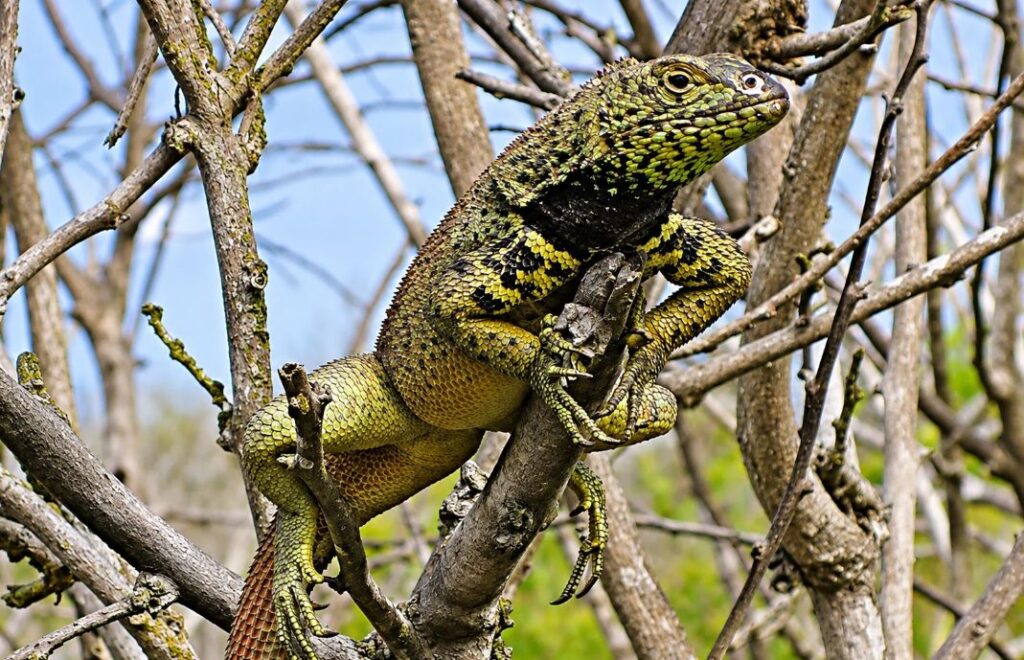
Scientists believe this extraordinary scenario helps explain how some land animals reached the Galápagos Islands.
Natural rafts of floating vegetation can be carried enormous distances by ocean currents, potentially transporting lizards, snakes, and other small creatures across open water.
The ancestors of today’s remarkable Galápagos iguanas may have arrived through this process, although their exact journeys remain uncertain.
But surviving such a voyage would have been extremely difficult. Saltwater, intense sunshine, dehydration, and a lack of food made the ocean a dangerous place for accidental passengers.
Reptiles, however, are particularly well suited to surviving extended periods with limited food and water.
Most journeys probably ended unsuccessfully, but over millions of years, even a handful of fortunate arrivals could establish new populations.
Quite an extraordinary achievement for travelers who never intended to leave home.
3. Flying first class: How birds reached the islands
While reptiles may have depended on floating vegetation to reach the Galápagos, birds had a rather more convenient way of crossing the Pacific Ocean.
They could simply spread their wings and fly.
Seabirds were particularly well equipped for the journey, as many species naturally travel enormous distances across open water.
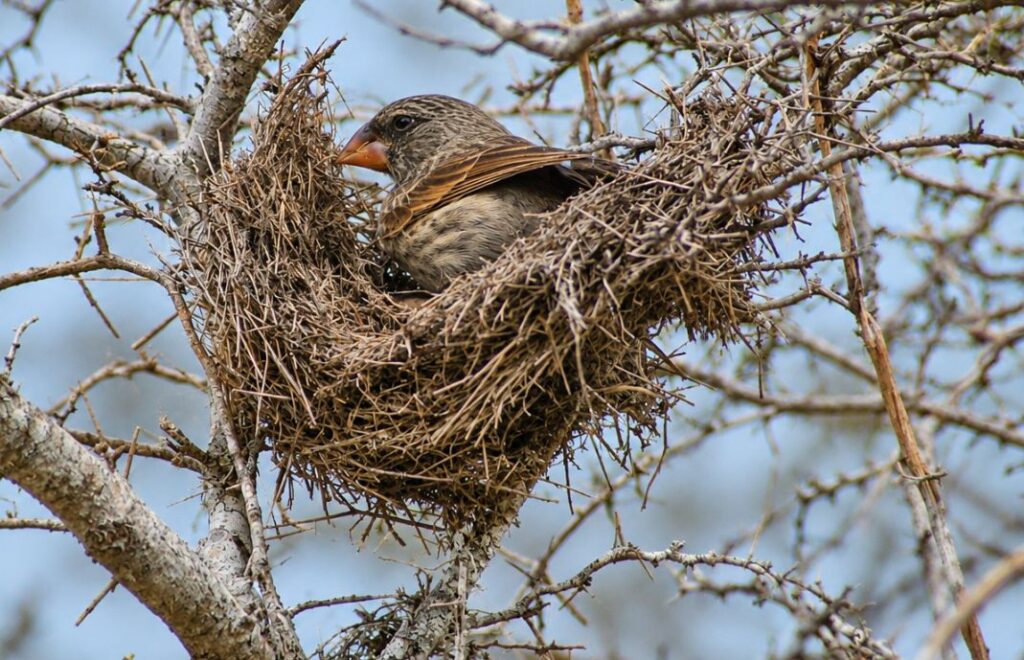
Land birds, however, faced a greater challenge. Scientists believe some may have reached the islands after being blown off course by powerful winds or storms.
Once established, these early arrivals began adapting to their new environments.
Darwin’s famous finches provide a remarkable example. Their ancestors are thought to have arrived from mainland South America before gradually evolving into different species with specialized beaks and feeding habits.
Perhaps the most extraordinary example is the Galápagos flightless cormorant.
Its ancestors could fly, yet over countless generations, this remarkable bird evolved smaller wings and lost its ability to take to the skies.
4. Seeds, stowaways, and nature’s accidental gardeners
When the Galápagos Islands first emerged from the Pacific Ocean, their barren volcanic landscapes offered little opportunity for plants to grow.
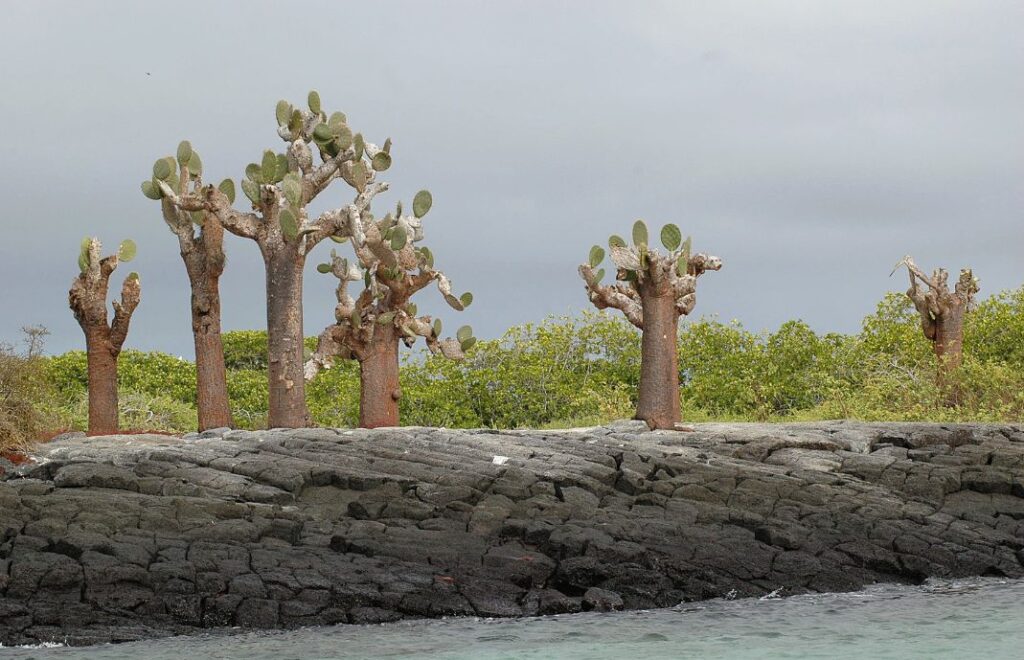
Yet today, the islands support everything from towering cacti to lush highland forests.
How did all this vegetation get there?
Scientists have identified several natural ways plants can colonize remote islands, and some are surprisingly ingenious.
Lightweight seeds and spores can travel enormous distances on the wind, while others float across the ocean, protected by tough outer coverings.
But birds also play an important role.
Seeds can hitch a ride attached to feathers or muddy feet. Others are swallowed with fruit and later deposited elsewhere, sometimes remaining capable of germinating.
An accidental gardening service, courtesy of the local birdlife.
Of course, reaching the islands was only the first challenge. Seeds also needed suitable conditions to grow and reproduce.
Over countless generations, successful plant arrivals helped create the diverse habitats that support the Galápagos’ extraordinary wildlife today.
5. How did the giant tortoises get there?
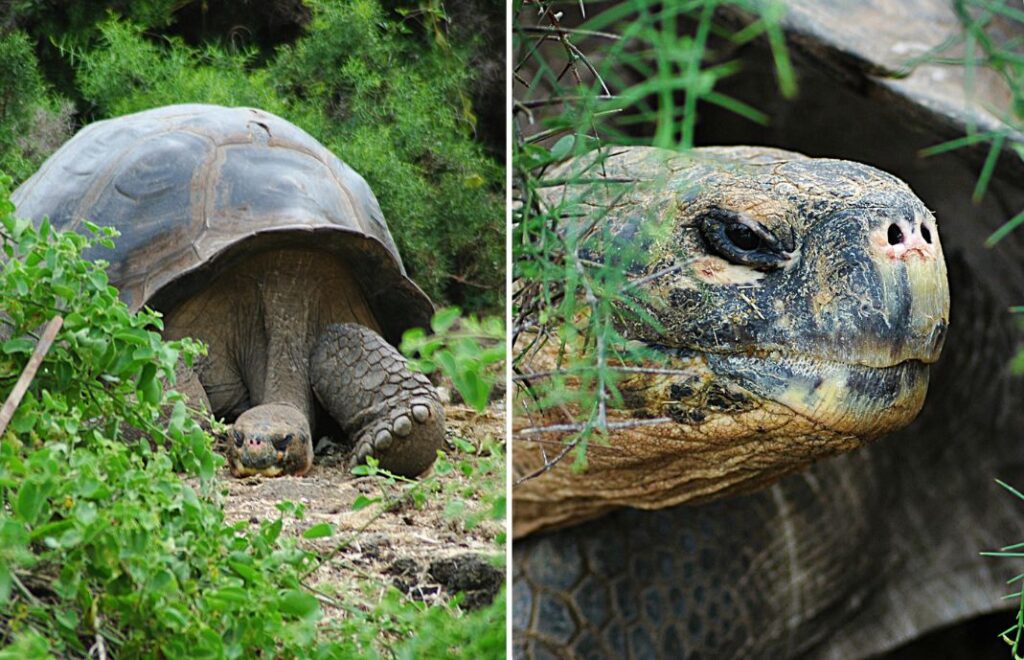
Of all the animals living in the Galápagos, giant tortoises might seem the least likely to have crossed nearly 1,000 kilometers of open ocean.
Yet scientists believe their ancestors probably arrived by floating.
Despite their enormous size, giant tortoises are surprisingly buoyant. They can float with their heads above water, allowing ocean currents to carry them considerable distances.
Even more remarkably, their slow metabolism enables them to survive for months without food or fresh water.
That’s quite an advantage when your unexpected ocean voyage doesn’t include a lunch service.
Genetic studies suggest that the ancestors of Galápagos giant tortoises originated in South America and established themselves on the islands approximately two to three million years ago.
Although nobody knows exactly how they made the journey, scientists consider drifting across the Pacific, either independently or on floating vegetation, a plausible explanation.
Once established, tortoises gradually spread between islands, where different environments helped shape their remarkable diversity.
Not bad for creatures that usually prefer taking life at their own leisurely pace.
6. From accidental visitors to extraordinary island wildlife
Reaching the Galápagos Islands was an extraordinary achievement, but for the animals that survived the journey, an even greater adventure was about to begin.
They had arrived in a world unlike the one their ancestors had left behind.
Isolated from mainland populations, these early settlers encountered unfamiliar habitats, different food sources, and new environmental challenges.
Over countless generations, evolutionary processes gradually shaped their descendants.
Natural selection favored traits that helped animals survive and reproduce, while geographic isolation allowed populations on different islands to develop independently.
The results were remarkable.
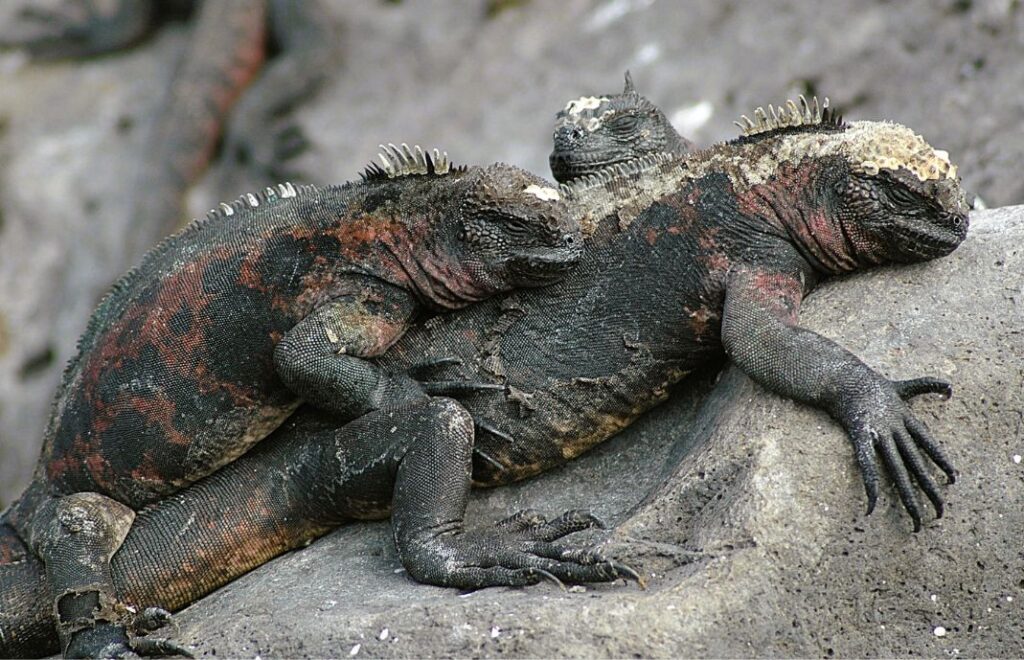
Darwin’s finches evolved different beak shapes suited to their diets. Marine iguanas became specialized feeders on marine algae, while flightless cormorants adapted to life as powerful underwater swimmers.
Many eventually became endemic species, meaning they occur naturally nowhere else on Earth.
Today, introduced animals and other human pressures threaten some of these extraordinary creatures, making conservation essential.
What began with a handful of unlikely arrivals eventually became one of the world’s greatest showcases of evolution.
The extraordinary journey of life
When you admire a giant tortoise wandering across a volcanic landscape, watch a marine iguana disappear beneath the waves, or marvel at the colorful feet of a Blue-footed Booby, it’s easy to forget that their ancestors had extraordinary journeys of their own.
Some flew across vast stretches of ocean. Others may have drifted for weeks aboard floating vegetation or survived remarkable voyages carried by Pacific currents.
None of them knew where they were going, yet their descendants helped create one of the most extraordinary wildlife communities on Earth.
Over millions of years, isolation, adaptation, and evolution transformed these remote volcanic islands into a living showcase of nature’s ingenuity.
Perhaps that’s what makes the Galápagos Islands so magical.
They remind us that even the most unlikely journeys can lead to something extraordinary.
No tickets. No suitcases. No carefully planned itineraries. Just life finding a way.
