
Dawn is breaking over Chobe National Park, and the world feels hushed, wrapped in the muted tones of an arid, dusty basin. Above me, the sky is a flawless blue, scattered with clouds puffed up like tufts of popcorn.
Botswana remains one of Africa’s rare treasures. A country where vast tracts of wilderness are left untouched. Seventeen percent of its half-million square kilometers are protected national parks. For wildlife, this is paradise. And for a safari enthusiast like me, it’s nothing short of a dream come true.
Chobe is renowned for its staggering elephant population – over 120,000 strong – often seen ambling gracefully to the riverbanks in great, rumbling herds. Buffalo congregate in dusty clusters, while impalas and kudus flick their tails through the golden grasses. Predators lurk nearby; lions lounge in the shade, their amber eyes half-closed yet alert, and leopards slink silently through the thickets.
As the day warms, the Chobe River becomes the park’s lifeblood. Hippos wallow in muddy shallows, crocodiles bask on sun-drenched banks, and a symphony of bird calls fills the air – fish eagles, with their haunting cries, reigning supreme. A river cruise here is pure magic: drifting past elephants swimming with their trunks raised like snorkels, watching the sun melt into hues of crimson and gold, and feeling the heartbeat of the wild in every ripple of water.
In Chobe, every turn of the track promises a story, every horizon a new adventure. This is Africa in its most primal, unfiltered form – timeless, untamed, and unforgettable.
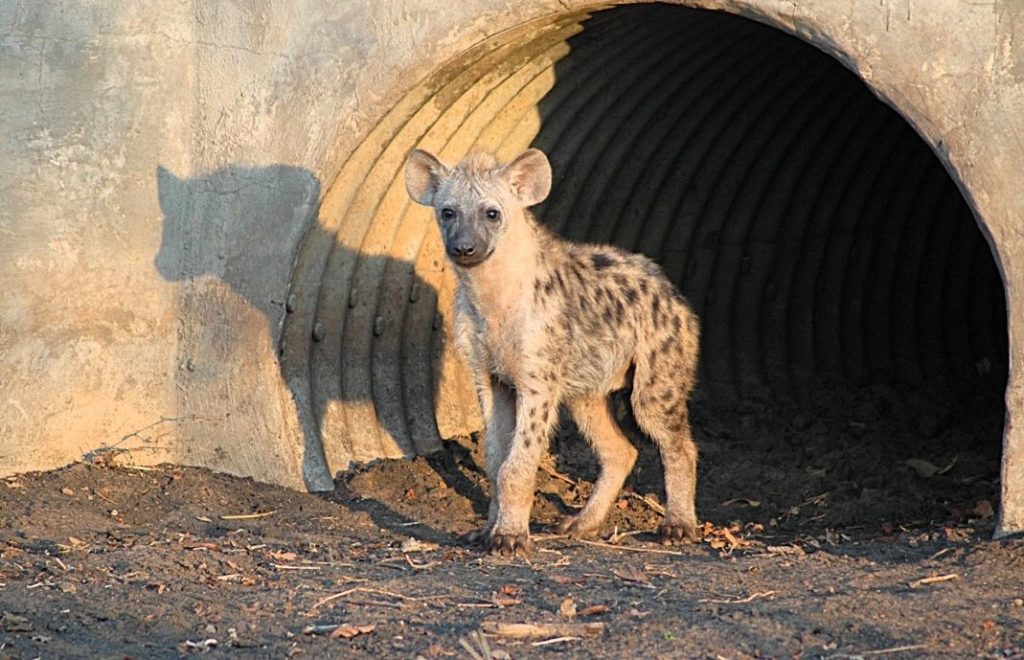
A sleepy hyena
We rumble past a small bridge with large drainage pipes running beneath it. From one of the dark openings, a young hyena emerges – blinking in the soft morning light, looking dazed and not quite awake. He pauses, eyes narrowing slightly as if trying to chase away the remnants of sleep, then fixes us with a steady, almost curious gaze.
The rising sun casts his silhouette boldly against the concrete wall, making him appear far larger and more imposing than his gangly frame truly is. Slowly, cautiously, he steps forward, sizing us up. Realizing we pose no threat, he saunters off with an unhurried grace, disappearing into the open savanna as the day begins to unfold.
Extraordinary encounters with wildlife
Our safari vehicle jolts along the dusty track, carrying us deeper into Chobe’s wild heart. A dazzle of zebras appears, their black-and-white “pajamas” striking a bold contrast against the lush green backdrop. Counting them proves impossible – their stripes merge into a mesmerizing blur, a natural masterpiece of camouflage.
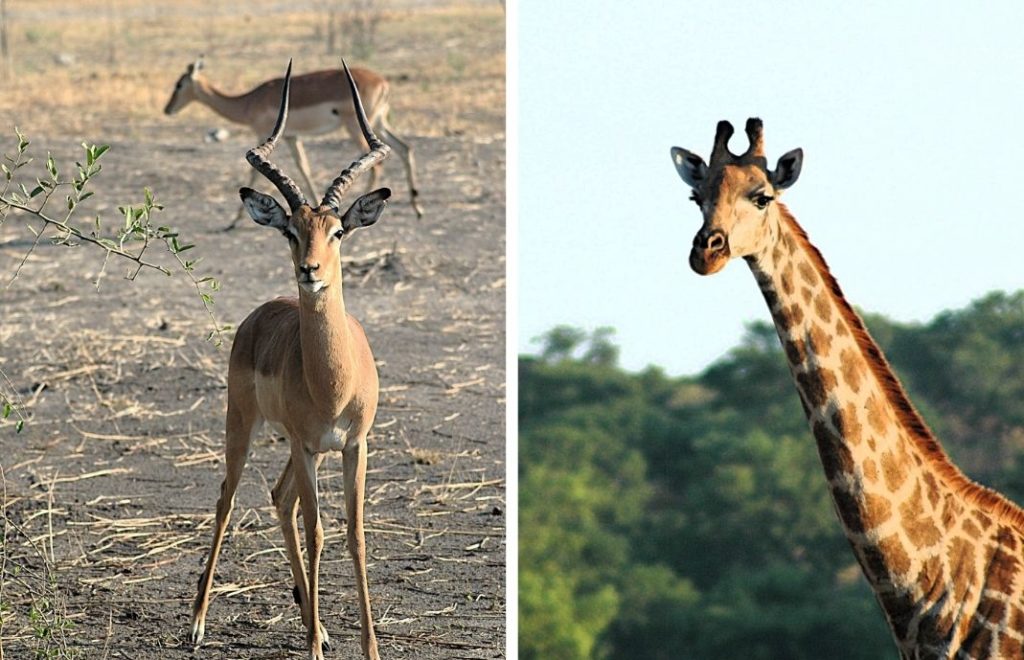
Soon, antelopes in every size and shape materialize across the plains, delicately nibbling at nature’s buffet. Their ears twitch constantly, attuned to the faintest whisper of danger, even as they chew their leafy breakfast.
Here in Chobe, the river that shares its name is the park’s lifeblood, sustaining all who roam these lands. Our driver steers toward its shimmering banks, hoping for an encounter with the park’s true giants.
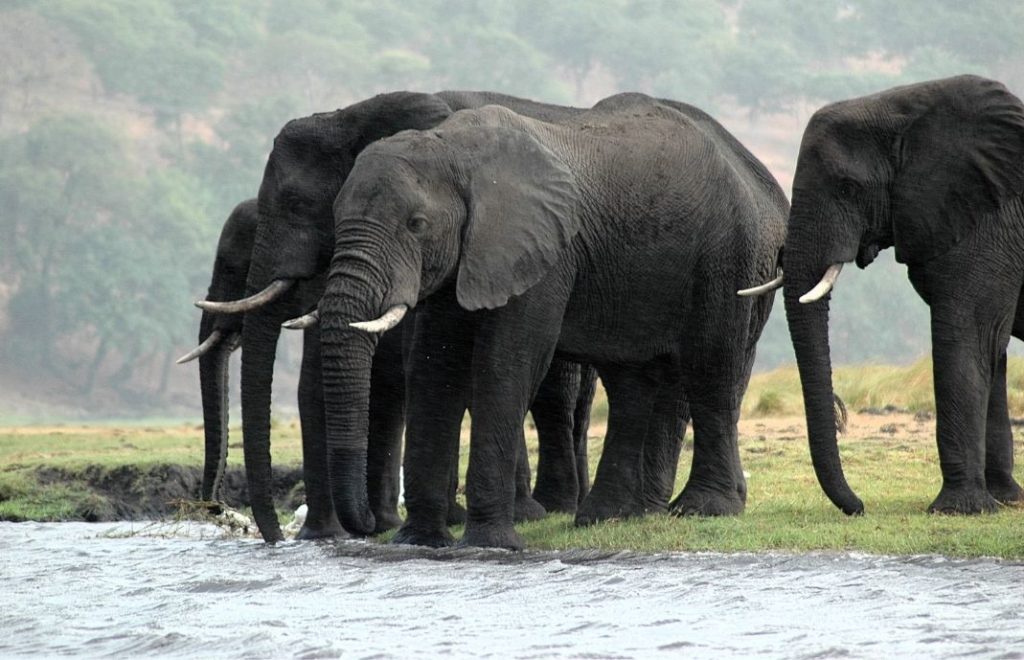
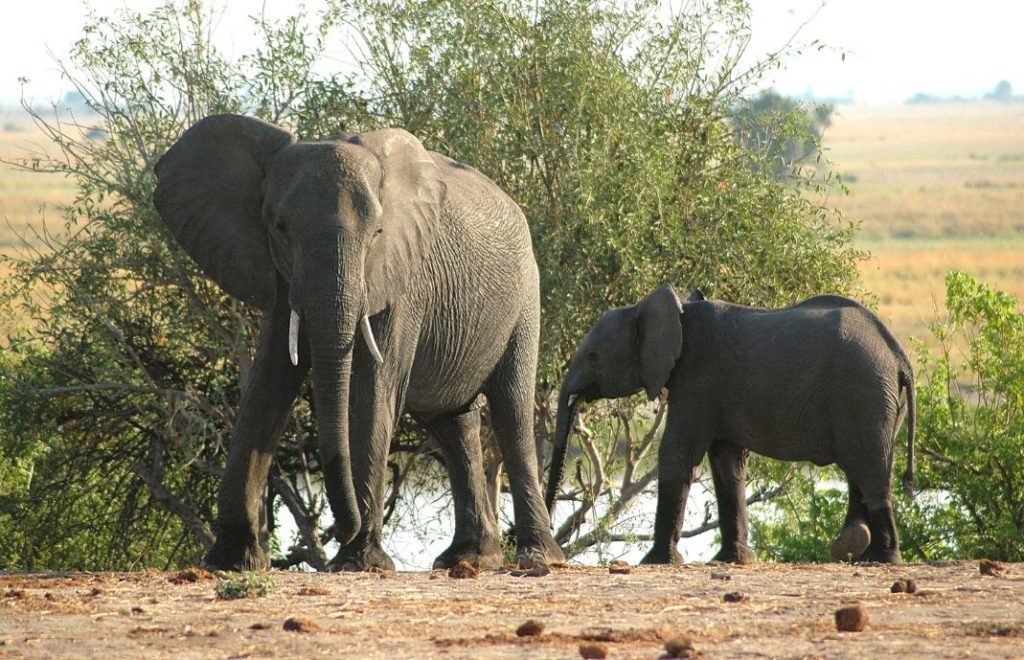
And then, as if summoned by magic, they appear – a family of elephants rising from the river’s edge, their gray hides glistening from a morning bath. Tiny calves totter after their towering guardians, dwarfed by the sheer magnitude of these colossi. The sight steals my breath – I forget the camera, lose all sense of time and place.
The earth trembles as the herd ambles past, trees shudder in their wake, and clouds of dust billow like golden veils behind them. Their ears flap with a rhythmic grace, creating a soft, leathery symphony that drifts across the savanna.
In this moment, life feels impossibly perfect – wild, raw, and magnificent. Nothing could be better than this.
Where’s Simba?
But oh, how wrong I was!
Still buzzing from the thrill of all we’ve seen, our driver kicks the search into high gear, scanning the horizon for more treasures of the wild. Lions, kudus, baboons, hippos, giraffes – he vows to find them all. And, in fact, we do… all but the lions.
But honestly, I don’t mind. Simply being here in Chobe, watching these creatures roam free in their natural kingdom, is the ultimate reward.
A few hours in, however, our guide seems less serene. He admits, a little exasperated, that he always finds lions. Desperation creeping in, he grabs the radio: “Anyone got eyes on the lions?” The airwaves crackle with chatter, but no solid leads. I reassure him – there’s no need to stress.
I’m savoring every second: the baboons, grooming and tumbling like rowdy children; the antelopes grazing gracefully among the shrubs; the sudden appearance of two ostriches, striding past the vehicle with regal nonchalance. Each moment feels like a gift.
Gradually, our driver relaxes. His pulse slows, his shoulders drop, and soon his smile returns. Lions can keep their secrets – for now. In this vast, untamed paradise, the magic lies in the unexpected. And today, that’s more than enough.
Boat safari on the Chobe River
We return to the river and step aboard the boat that will carry us into the heart of Chobe’s lifeline.
Almost immediately, the spectacle begins. A herd of elephants ambles down to the water’s edge, trunks dipping gracefully as they drink before plunging in for an afternoon swim. Across the river, a massive crocodile sprawls lazily on the bank, its armored body soaking up the sun’s last generous rays.
The boat glides upstream at an unhurried pace, the golden light of late afternoon dancing on the water. Suddenly, our captain perks up, pointing toward the left bank just ahead. Two bull elephants are locked in a power struggle, a primal clash of wills. Ears flare like battle flags, tusks grind against tusks, and deep, resonant bellows split the air. Their trunks lash like whips, and a cloud of dust swirls around their colossal feet.
The duel is short-lived. In the end, the smaller bull yields, retreating with a reluctant dignity, his massive frame fading into the bush.
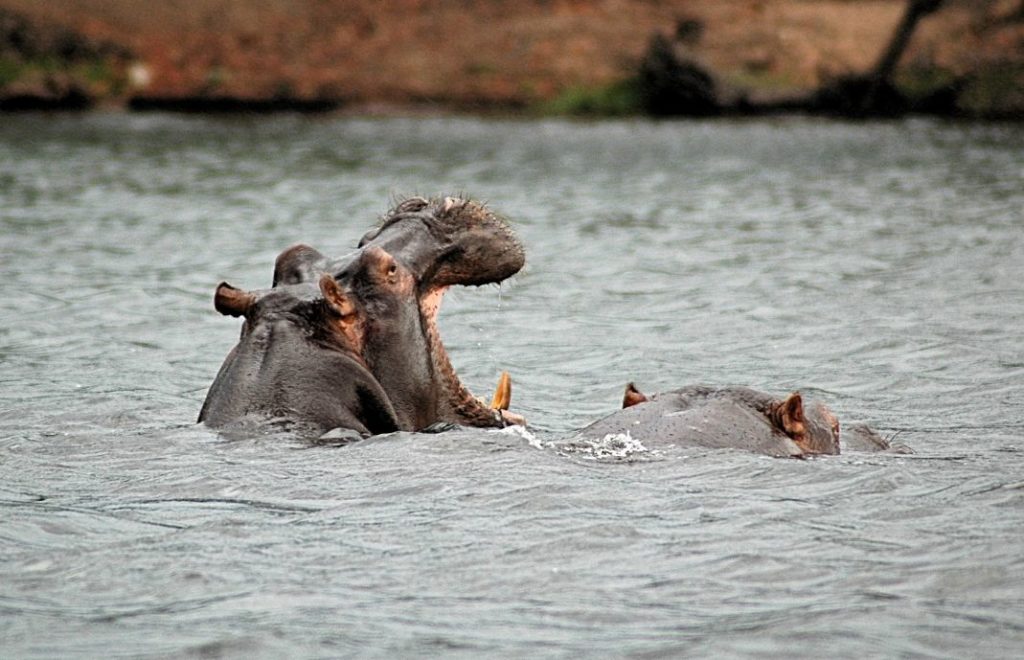
As the sun begins its slow descent, buffalo gather at the shoreline to quench their thirst, their dark silhouettes etched against the burnished sky. Nearby, a congregation of hippos bobs languidly in the shallows. Vast, hulking bodies barely visible beneath the water’s surface. One lifts its head and yawns, revealing a cavernous mouth bristling with teeth, a reminder of the raw power that lurks behind those placid eyes.
The river hums with life, the air tinged with the scent of earth and water, and I know with absolute certainty: this is Africa at its most elemental – a symphony of survival and grace.
A perfect farewell
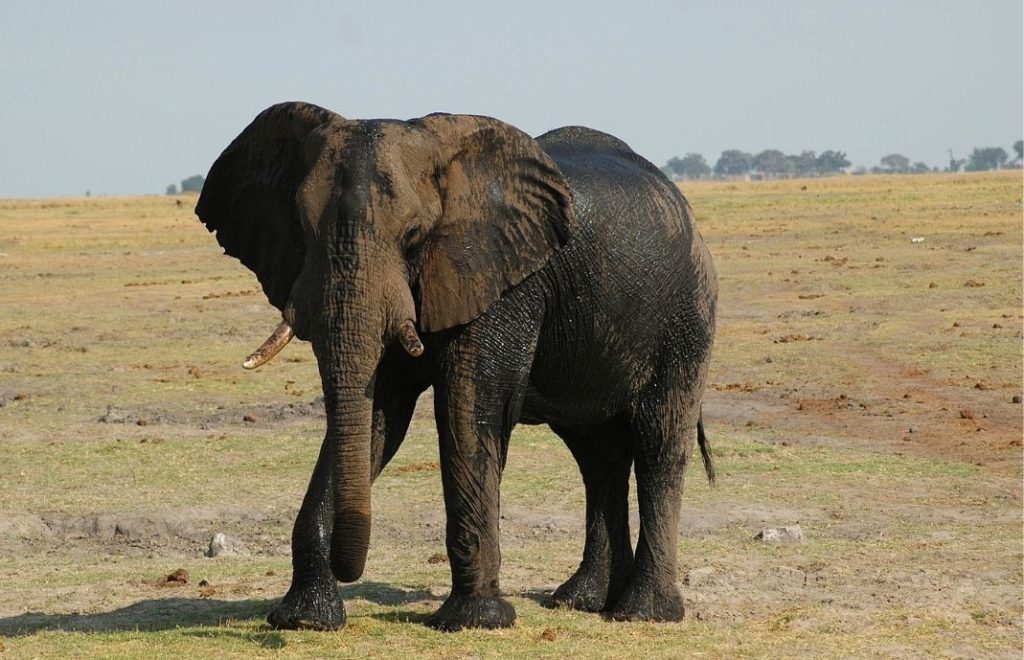
On the way back to the park gate, our driver eases off the accelerator. Just a few meters ahead, an enormous gray giant stands in the fading light, still damp from his afternoon bath. His mood appears… questionable. But as long as his ears remain still, the driver assures us, there’s no need to worry.
The elephant fixes us with a dark, unblinking stare, his breath heavy and deliberate. He tosses his magnificent head ever so slightly, then stamps a foot with quiet authority. For a moment, the tension hangs thick in the air. Then, with regal indifference, he decides we’re not worth the trouble and melts back into the thickets, leaving only the memory of his commanding presence.
The lions never appeared – perhaps curled up in their hidden lair, or simply wandering where dawn had first found them. Does it matter? Not in the least.
That’s the essence of safari: no guarantees, no promises. You never know which creatures will grace you with their presence, or where they’ll choose to reveal themselves. The real magic lies in the unpredictability, in surrendering to the rhythm of the wild and savoring every fleeting moment. And today, I’ve had more than my share of wonders.
Before you visit Chobe National Park
Why Chobe?
Chobe National Park is Botswana’s most famous and easily accessible reserve – a true haven for wildlife lovers.
Wildlife highlights
The park boasts an astonishing 45,000 elephants, along with large herds of buffalo, lions, zebras, jackals, wildebeest, giraffes, ostriches, hippos, and hyenas. The diversity here is simply unmatched.
Getting there
Access the park via multiple entry points, including Livingstone in Zambia (near Victoria Falls) or Maun, the safari hub in central Botswana.
Best time to visit
April to June is ideal, when animals congregate around waterholes and along the river, offering spectacular sightings.
Don’t miss
Experience Chobe from the water on a boat safari – it’s pure magic!
More inspiration: A guide to Chobe National Park
More inspiration to Botswana:
Walking with the San People
Gliding silently in a mokoro
There’s a cheetah on the hood
When is the best time to visit Botswana?
