
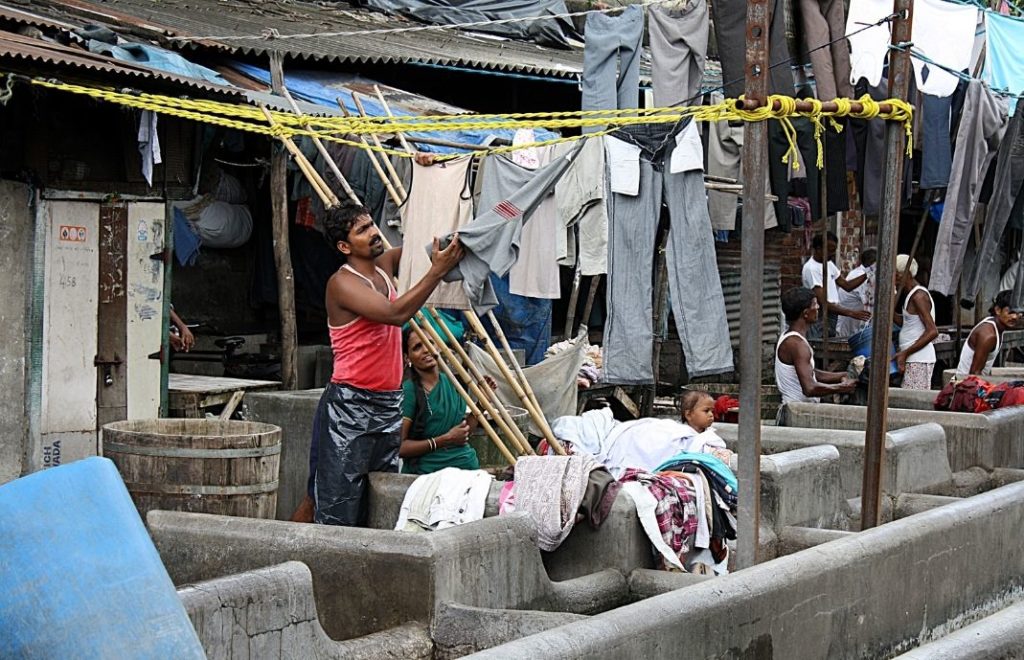
The scent rising from the clothes isn’t exactly a light summer breeze, nor do the garments gleam with detergent-white brilliance. I doubt the shirts are washed at the right temperature – or that any miracle stain remover is involved. There’s no hum of washing machines, no rhythmic tumble of dryers. Instead, garments are scrubbed in concrete vats, dried under the fierce Indian sun on long lines and rooftops, then pressed with heavy, coal-heated irons.
A train rattles past, mere meters away from the endless rows of fluttering laundry. It belches out a cloud of black smoke that clings to hair, clothes, and nostrils alike – both mine and the garments swaying overhead.
Welcome to Dhobi Ghat: Mumbai’s iconic open-air laundry, sprawled beside Mahalaxmi station.
The scene is utterly mesmerizing. In the heart of this frenetic city, life slows to the cadence of ancient routines – washing, drying, pressing – all unfolding in narrow alleys hemmed in by corrugated iron shacks. It is a living tableau of Mumbai: gritty, relentless, and fascinating beyond words.
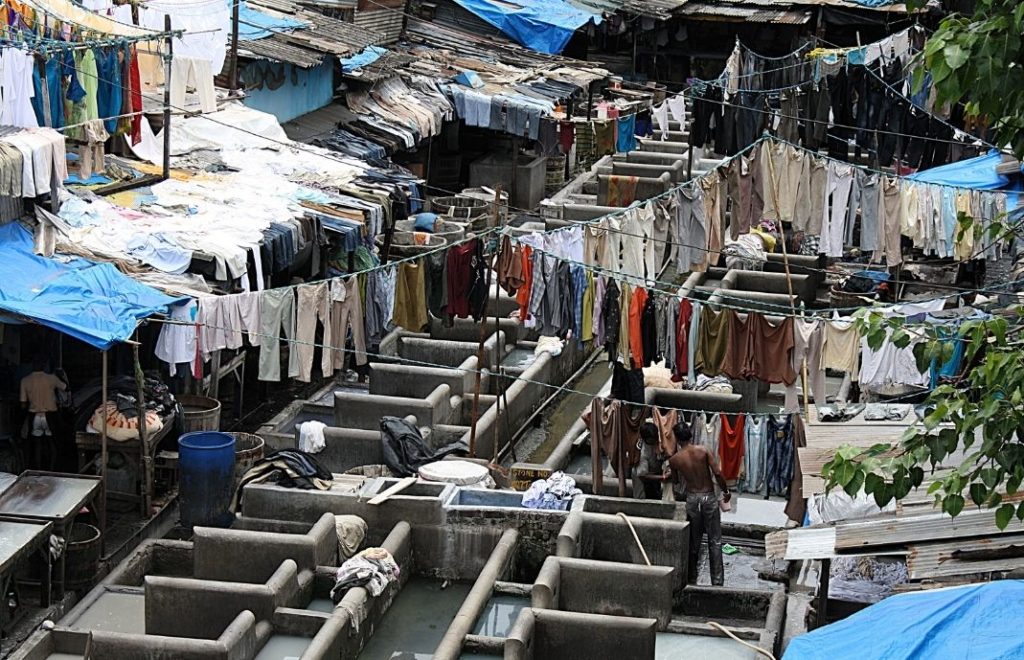
Laundry done the old fashion way
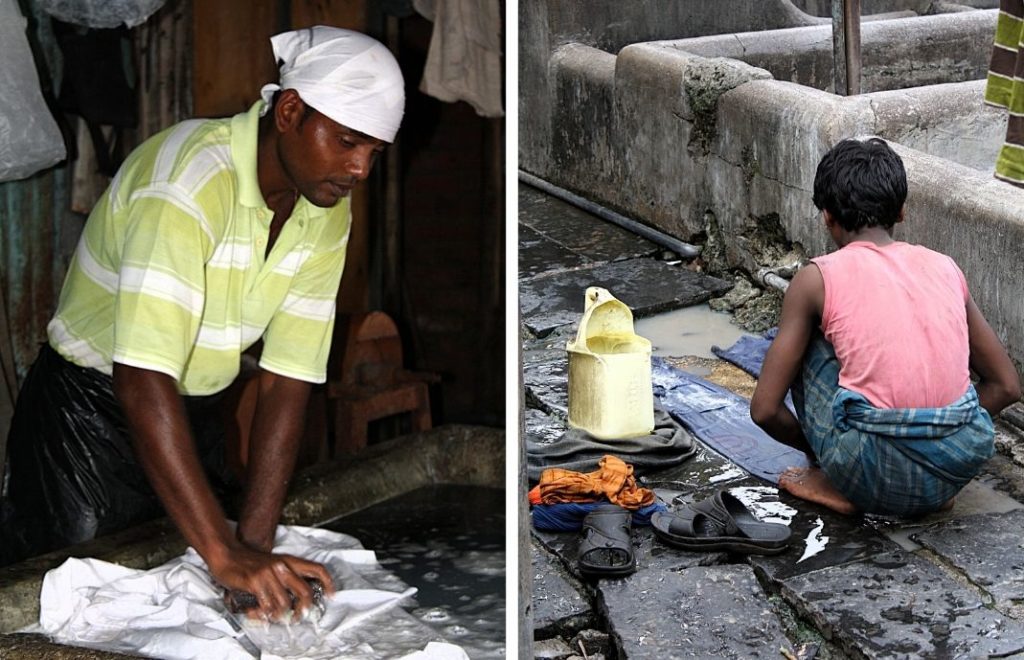
Swish… slap… and another resounding swish.
A battered brown shirt is taking a serious beating, smacked hard and mercilessly against the edge of a concrete basin. Water splashes in all directions around the determined “shirt assassin,” who clearly knows his craft – he’s been at this a long time.
For Mumbai’s upper and middle classes, sending clothes here for washing is common practice – far easier (and cheaper) than owning a washing machine.
The men and women who perform this labor, known as dhobis, often cannot read or write. Instead of names, they use a system of symbols to keep track of which garments belong to whom – a code passed down through generations.
I step aside just in time for a wiry man balancing a massive bundle of laundry across his shoulder. The load is nearly twice his size, a kaleidoscope of saris, shirts, trousers, and intimate items. Bent forward, eyes fixed on the narrow path, he navigates the maze of concrete tubs with the grace and precision of someone who’s spent a lifetime in this open-air labyrinth.
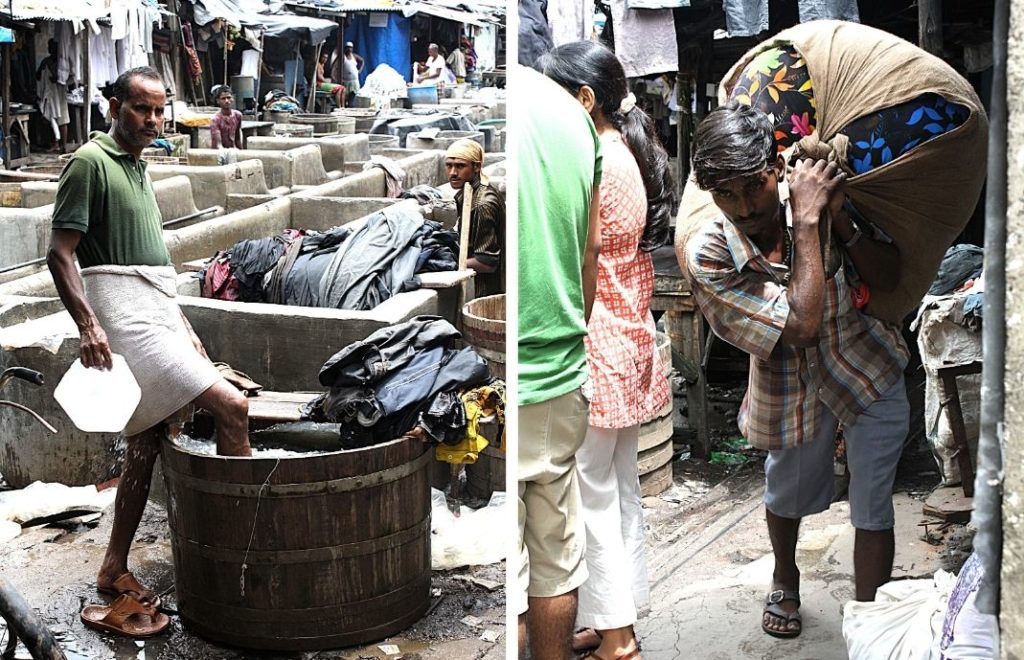
An ocean of laundry
Clothes are everywhere. Draped across rooftops, pegged to endless lines strung between poles, roofs, and anything sturdy enough to hold them. Corrugated metal sheets glint beneath a patchwork of trousers and shirts, while even the ground doubles as a drying rack.
Suddenly, chaos erupts. A young man, burdened with yet another bundle of garments, steps squarely onto a pair of freshly washed trousers. I don’t understand the words exchanged, but I’m fairly certain they weren’t pleasantries.
With a scowl, the offended dhobi snatches up the sullied trousers and hurls them back into the wash basin. The culprit presses on, shoulders hunched, weaving through the crowd toward his own station as others shuffle aside to let him pass.
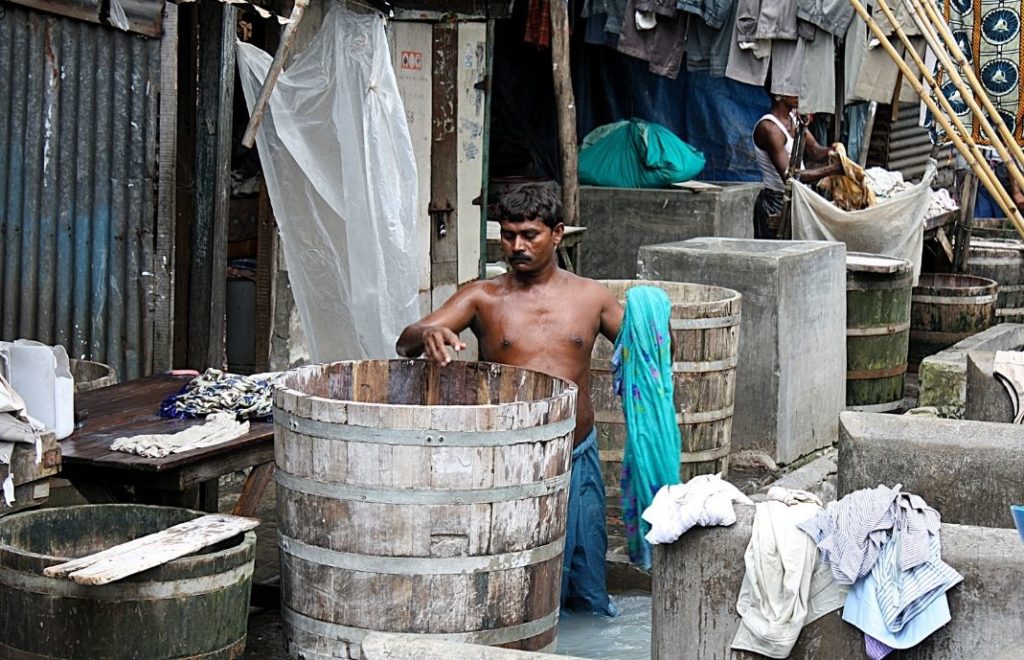
Efficiency is everything
It’s mesmerizing to wander through this labyrinth of concrete basins, each brimming with garments in various states of transformation. Whites, surprisingly, are washed separately from colors – a nod to some form of order amidst the seeming chaos. It’s a kaleidoscope of hues, sounds, and smells. Between loads of laundry, meals are cooked over open flames, and toddlers are bathed in the same tubs that moments earlier held shirts and saris. Nearby, a group of elderly men sip tea, patiently waiting for clothes to dry in the sun.
I can’t help but laugh when I spot a washerman tossing a handful of T-shirts into a tub, followed by his own feet, and then a pile of trousers on top. Here, efficiency is key. Water – and detergent, if any – is precious. Judging by the scent in the air, I wouldn’t bet on much soap being involved.
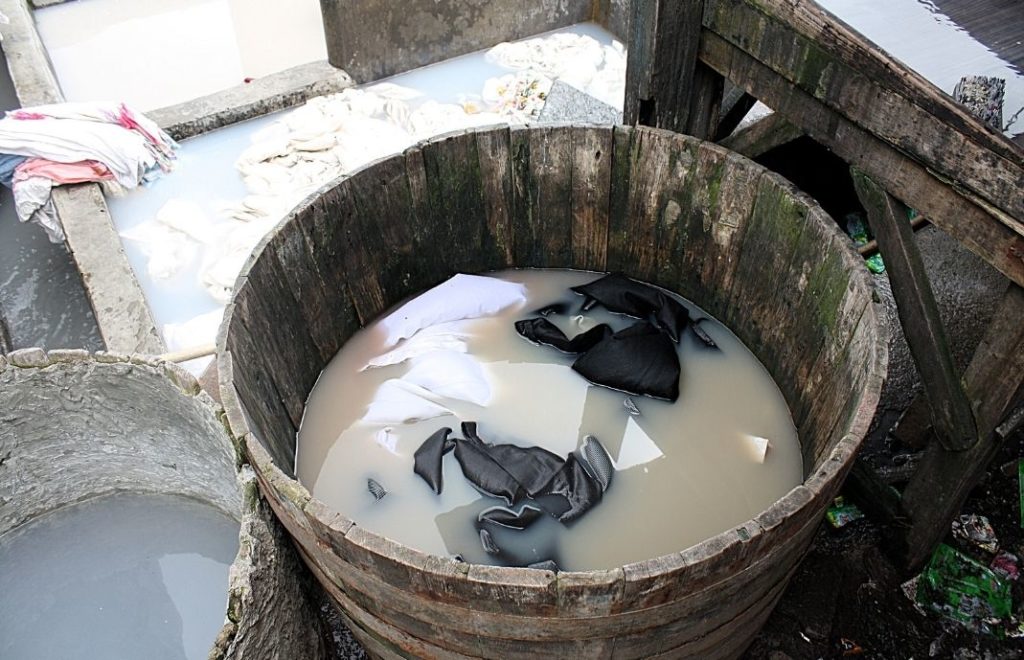
A world record well earned
Our guide explains that even Mumbai’s hotels and hospitals rely on Dhobi Ghat for their laundry. Judging by the crisp, clean sheets on my bed, the system works.
Founded in 1890, this vast open-air laundry is steeped in tradition, sustained by some 7,000 washermen and women who toil for 18 to 20 hours a day – washing, bleaching, drying, and ironing without pause. It’s a life of relentless rhythm, wet floors, and steaming vats.
Once the garments are sun-dried and pressed to perfection, they’re bundled and dispatched across the city, returning to owners who live in every corner of Mumbai.
In 2011, Dhobi Ghat secured its place in the Guinness World Records as “the largest number of people hand-washing clothes at a single location.” An extraordinary feat by any standard.
But this is more than a workplace – it’s a neighborhood. Around 200 families live here, their lives unfolding between the clatter of laundry work. Children dart through narrow alleys, laughter ringing out as mothers cook fragrant meals and chat over simmering pots. Elderly men sip tea in shaded corners or steal a quick nap in their humble homes.
The aromas of spices drift from open doorways, mingling with the humid air as I wander deeper into the maze of alleys. This is a world where skills are passed down through generations, a profession carried out with quiet pride.
By now, the morning sun beats down mercilessly, accelerating the drying process of countless garments swaying in the heat.
Dhobi Ghat was, without question, the highlight of my time in Mumbai. I must confess, though: my own clothes? They went back into the suitcase – washed later, at home, in a machine.
Good to know: Visiting Dhobi Ghat
Best time to visit
Go early in the morning to see the dhobis in full swing, pounding and scrubbing laundry in the concrete basins.
Afternoon option
Later in the day, you’ll witness the colorful spectacle of garments strung out to dry on rooftops and endless clotheslines.
Great viewpoint
If you’d rather not venture into the maze, head to the bridge above Mahalaxmi Station for a sweeping view of the entire laundry.
How to go
Join an organized tour for the safest and most informative experience. The best combination? A local train ride for an authentic taste of Mumbai life, followed by an immersive visit to the open-air laundry.
Why it matters
Mumbai is a megacity brimming with history, culture, culinary delights, Bollywood glamour – and home to the world’s largest outdoor laundry.
More inspiration to India:
Journey through the Jungle Book
A train journey gone off track
India’s Golden Triangle
