It feels almost surreal to launch yourself off a mountain pass at 4,700 meters above sea level, perched on two wheels and hurtling forward at speeds exceeding 80 km/h. The road coils like a ribbon of chaos, with hairpin turns sharper than a razor’s edge and sheer drops plunging hundreds of meters into oblivion. Guardrails? Forget it – they don’t exist here. Add to that the blur of trucks, buses, and cars barreling past in both directions, and the adrenaline surges like a living thing in your veins.
It doesn’t sound like the most brilliant idea, does it? Traveling all the way to the Andes just to cycle what’s ominously dubbed the World’s Most Dangerous Road – Death Road. Yet that was the plan all along.
Whether it was courage, madness, or a heady mix of both, we decided to find out for ourselves. The debate on how wise this decision was? That can wait until later.
The adventure begins in La Paz
La Paz, Bolivia – often hailed as the highest capital city in the world – is a destination that demands respect. Perched at a dizzying 3,600 meters, it greets newcomers with a swift reminder of its altitude. The first few days? A battle against altitude sickness. Dizzy spells, nausea, shortness of breath – they’re all part of the initiation.
After two days of wandering the narrow streets and vibrant markets, I finally feel steady enough to face the true reason I came here: the infamous Death Road.
Officially named North Yungas Road, this serpentine track claims around 300 lives every year. It’s no longer just a perilous route for locals – it’s a magnet for thrill-seekers chasing the ultimate adrenaline rush.
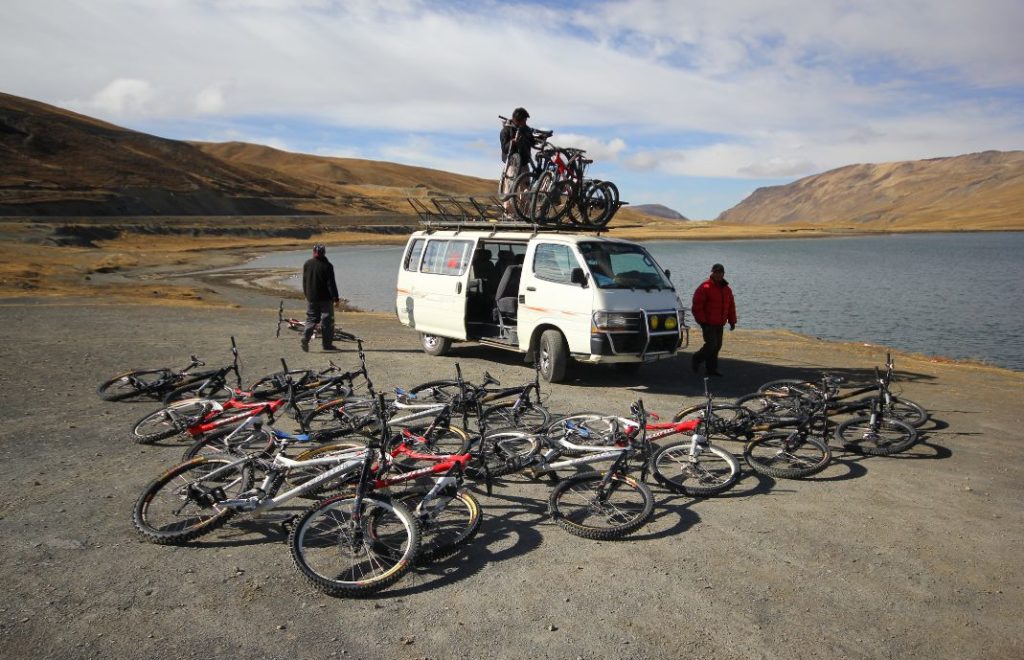
At dawn, a weathered minibus rattles me and a handful of other adventurers toward La Cumbre, the launch point for this heart-pounding descent. Sitting at an icy 4,700 meters, it marks the beginning of a 64-kilometer ride that plunges an astonishing 3,600 vertical meters, finishing in the lush village of Yolosa at 1,100 meters above sea level.
Snow blankets the peaks around us. The air is razor-sharp and frigid, each breath puffing like smoke into the crystalline morning. Our guide, bundled against the cold, briefs us through chattering teeth. I’m swaddled in layers like an Arctic explorer, silently wondering if I’ll freeze to death before I even begin.
But the moment I straddle the bike, nerves ignite into pure anticipation. And then – we’re off.
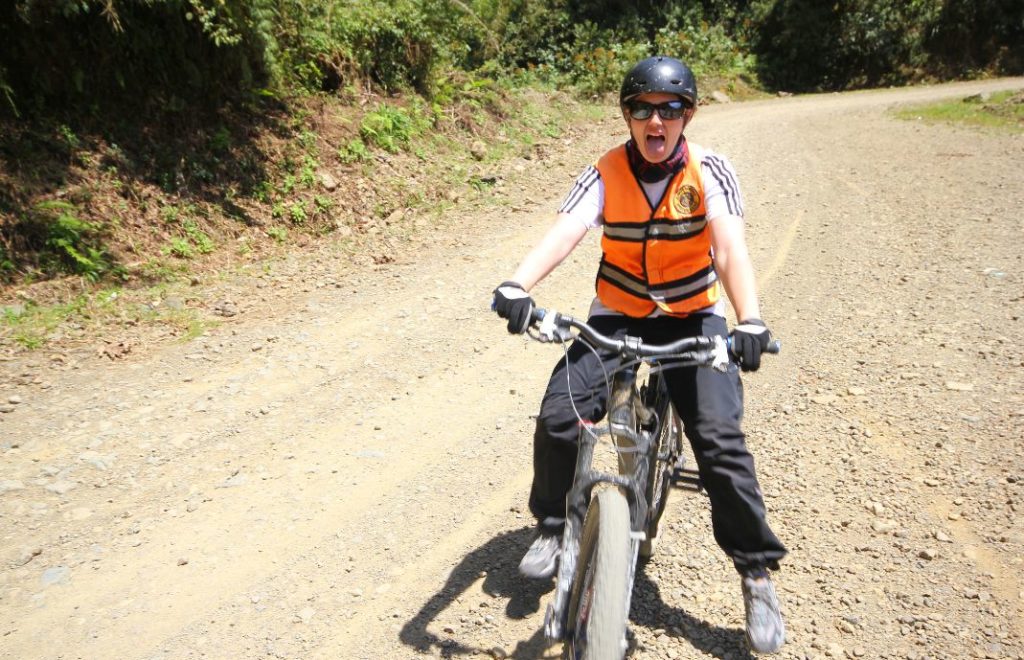
The icy wind lashes against my cheeks as the world blurs into motion. The first stretch is paved, but speed amplifies every curve. Ahead, the road coils downward like a dark ribbon, clinging precariously to sheer cliffs. There are no guardrails, no second chances.
Traffic barrels both ways. Buses groan under their loads, ancient trucks thunder past, scraping frighteningly close – so close their hulking mirrors graze the edge of my jacket as they swerve to dodge oncoming vehicles. Heart pounding, adrenaline surging, there’s only one thought echoing through my mind: stay on the road.
The Death Road lives up to its name, and then some. But as terror melts into exhilaration, one truth becomes clear: this is the wildest ride of my life.
The World’s Most Dangerous Road
A beloved child has many names, they say – and the World’s Most Dangerous Road is no exception. Officially known as North Yungas Road, it also answers to Grove’s Road, Coroico Road, Camino de las Yungas, and my personal favorite: El Camino de la Muerte – the Road of Death.
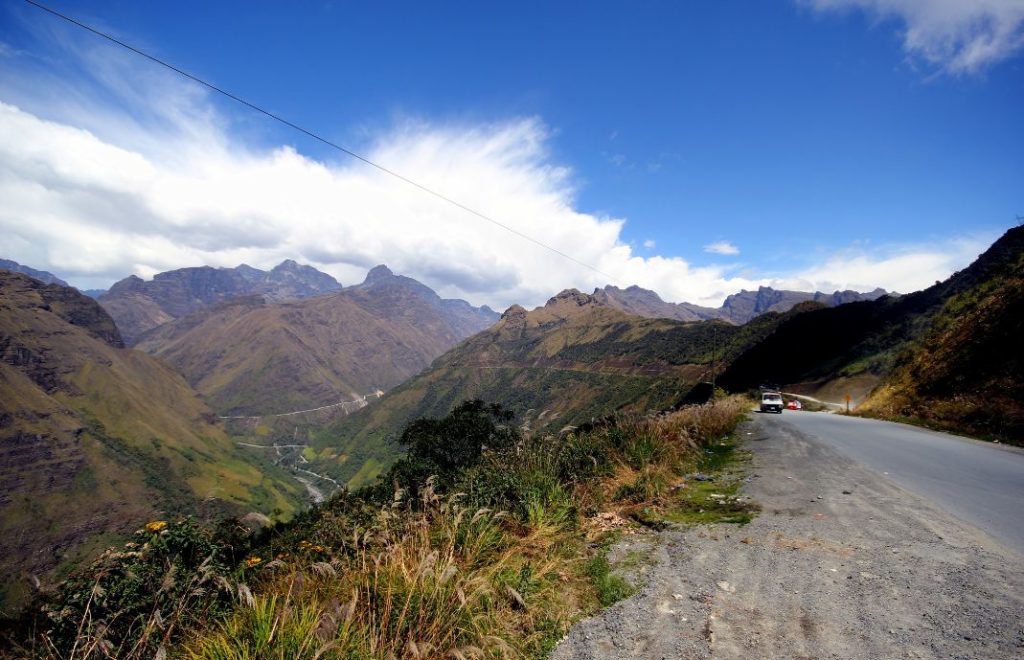
Built by prisoners during the war between Bolivia and Paraguay (1932-1935), the road has barely changed since. No guardrails. No warning signs. No lights. Much of it isn’t even paved. It’s a raw, treacherous track that snakes through the Andes like a scar.
In 1995, it was officially crowned the deadliest road in the world – a death trap on two or four wheels. Drivers often lean out of their windows, trying to gauge just how many millimeters remain between their tires and the crumbling edge that plunges into oblivion. One wrong move, and the jungle below claims another victim.
By the 1990s, thrill-seeking cyclists began turning this lethal pass into an adrenaline-fueled playground. Unlike the truckers of old, they embrace the danger, chasing speed and that razor-thin line between fear and ecstasy.
After a few kilometers, something remarkable happens: I realize I haven’t frozen to the seat. My death grip on the handlebars loosens, shoulders relax, and a sense of reckless joy begins to bloom. If it’s going to happen, so be it, I think. Better to savor this ride – for the speed, the scenery, the sheer insanity of it all.
The road swallows me into a tunnel carved from rock, pitch-black and slick with moisture. I can’t see a thing. I whisper a silent prayer that the track runs straight, because a sudden curve here would leave me explaining a very awkward insurance claim.
Before we started, we made an offering – a splash of liquor to Pachamama, Mother Earth, for luck. Now, I can only hope she’s accepted our gift and is riding shotgun.
The wind lashes my face, stinging but exhilarating. Around me, Bolivia’s jagged peaks pierce the sky like ancient sentinels. And in this wild, precarious moment, one thought rises above the rush:
If I die today, at least it will be in one of God’s most beautiful landscapes.
More offerings
When we set off, the cold bites like a feral dog, gnawing at fingers and cheeks. But with every meter we descend, the chill loosens its grip. By the time we pause for a water break, layers are peeled away, our breath no longer visible in the thinning air.
As we sip and stretch, a few scruffy strays wander over, noses twitching in hopeful anticipation. Our guide tosses them scraps, a gesture that feels oddly tender in this land of harsh cliffs and harder lives. Then he shares a story – one steeped in Bolivian folklore:
“They say the souls of drivers who perished on this road live on in these dogs. Feed them, and they’ll guard you on your journey.”
The words settle over us like a solemn blessing. I glance down at the eager faces, their ribs etched like fragile maps, and crumble a handful of biscuits into their waiting mouths.
Superstition or not, one thing is certain – on El Camino de la Muerte, you can never have too much protection.
New dangers await
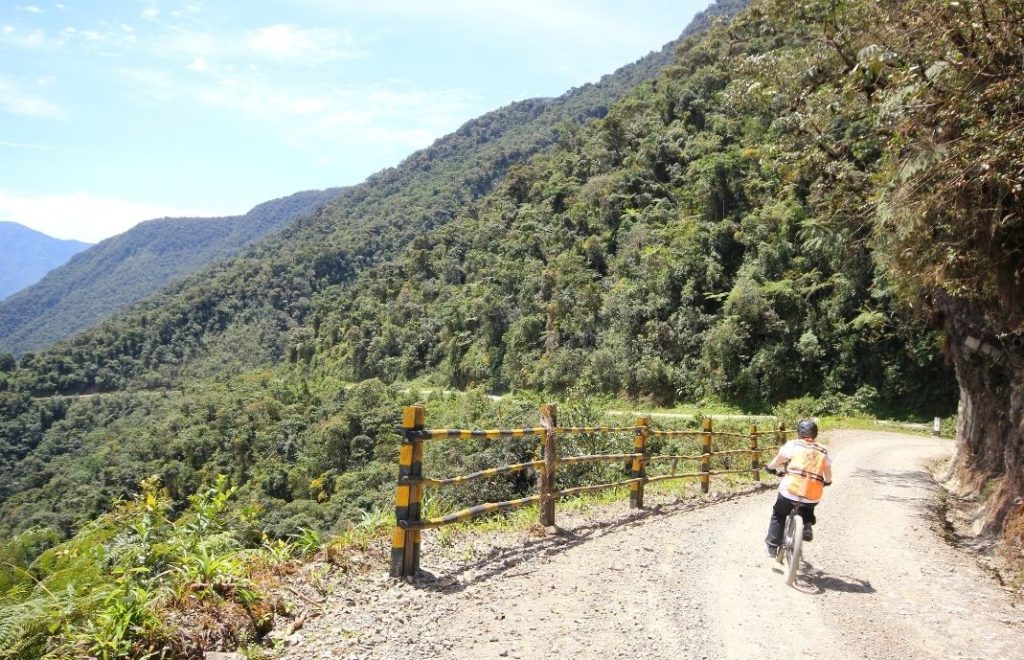
The smooth asphalt gives way to loose gravel, and with it comes a fresh dose of adrenaline. Our guide pulls us aside for yet another round of warnings – his voice serious, eyes shadowed beneath his helmet. We nod, tug gloves tighter, adjust sunglasses, and draw a deep breath. Then – back in the saddle.
The descent resumes with a hiss of wind in my ears. The bike shudders beneath me, tires skimming over dust and stone. Speed builds – too fast, too soon. Out of the corner of my eye, a white cross flashes by. Then another. And another. Ghostly markers of lives claimed by this road, the only “guardrail” against a void that plunges hundreds of meters down.
In 1994 alone, 24 vehicles plunged off this cliff-hugging route. The statistics flicker through my mind as I barrel toward another sharp bend. Brakes squeal, gravel spits, and I skid sideways into what I generously call an “elegant” drift.
The air pounds with the sound of my own heartbeat. It thumps against my ribs, echoes in my ears, as I navigate curve after treacherous curve. Blind corners loom ahead like open-mouthed threats. One slip, one unseen truck – and Pachamama claims another soul.
“Dear Pachamama, stay with me,” I whisper more than once, my silent plea snatched by the mountain wind.
I will survive!
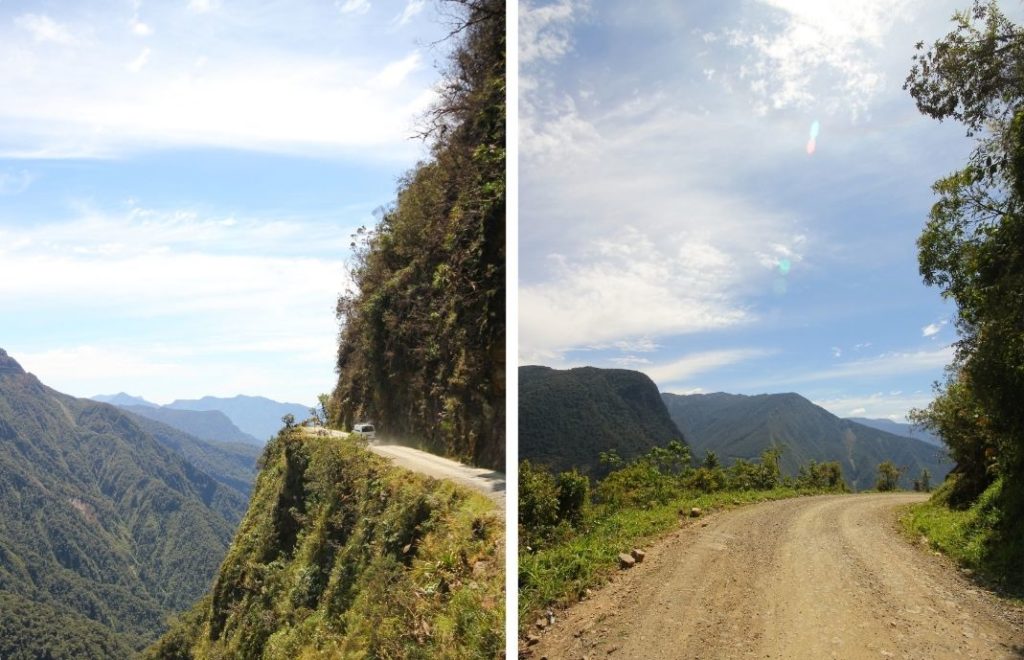
Far below, a rusted car carcass clings to the abyss – a chilling monument to someone else’s fate. My nerves are electric as I pedal through a massive puddle, the water glinting ominously where it has eaten away a good chunk of the road.
Up ahead, an ancient bus groans its way uphill, inching forward as if wading through honey. It passes with mere centimeters to spare, every creak sounding like a whispered prayer for mercy. Truth be told, it looks like death is only a breath away for that bus.
I ease off the brakes, but visibility is a joke. A thick cloud of dust billows around me, searing my throat and leaving me coughing as I peer through the haze. Then – suddenly – it clears, and the world opens up in a jaw-dropping panorama of emerald valleys and jagged peaks. The Andes stretch out like an untamed masterpiece.
The road levels out. I push harder, blood roaring, adrenaline pulsing like molten fire through my veins. My hands cramp around the handlebars, legs scream, sun scorches my cheeks – but I don’t care. The end is near.
And then… there it is. Yolosa, nestled like a secret in Bolivia’s lush jungle. I roll in coated in dust, soaked in sweat, heart hammering out an erratic rhythm. Muscles ache, lungs burn – but I’m alive. ALIVE!
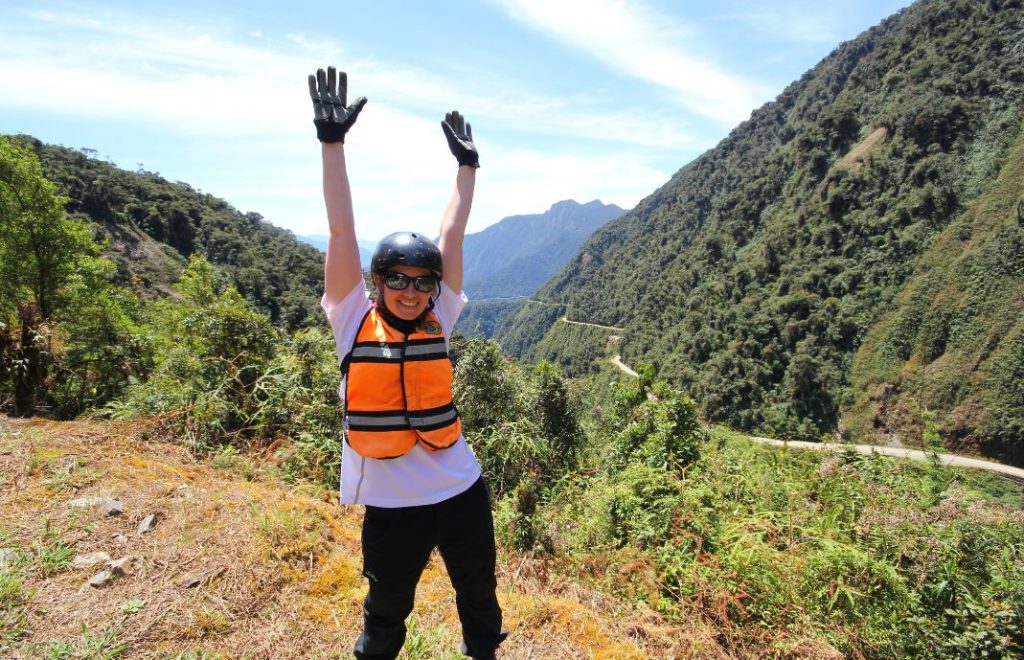
The jungle greets me in a riot of green, and I can’t hold back. I throw my arms skyward and roar into the wild:
“I SURVIVED THE WORLD’S MOST DANGEROUS ROAD!”
Good to know: Cycling the World’s Most Dangerous Road
Tour operator
I booked the adventure through Gravity Bolivia, a highly reputable and experienced operator.
Pace yourself
This is not a race. Take your time, ride at a speed you feel comfortable with, and focus on the experience – not the clock.
What’s included
The package covers:
- Transport from La Paz
- Mountain bike
- Helmet, gloves, and protective eyewear
- Professional guide and support vehicle
- Drinks and snacks
- A T-shirt and DVD as proof that you survived the ride!
Route & timing
Start point: La Cumbre (4,700 m)
Finish: Yolosa (1,100 m), where a well-earned lunch awaits.
Departure from La Paz: 07:30
Return: Around 20:00
Cycling duration: 4-5 hours
Accommodation option
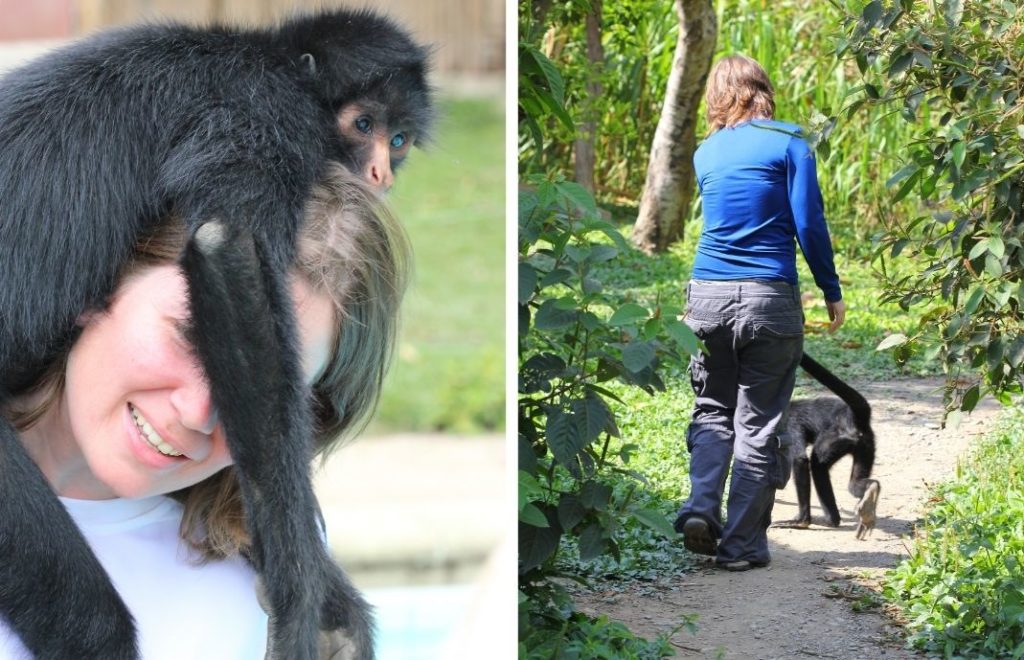
Instead of returning immediately, you can overnight at La Senda Verde Animal Rescue, a magical experience that I highly recommend. The next day includes a transfer to Coroico, followed by a bus back to La Paz.
Bonus tip
Consider volunteering at La Senda Verde Animal Rescue for a truly meaningful addition to your trip.
When to go
Avoid December to March, as the rainy season makes the ride extremely dangerous and is not recommended.