
Cuba is full of beauty, but nothing quite compares to the enchanting city of Trinidad. A dazzling splash of color, this UNESCO World Heritage site is a living museum of 18th- and 19th-century architecture, its labyrinth of cobbled streets whispering tales of colonial grandeur. Nestled gracefully between the sea and the mountains, its setting is nothing short of spectacular.
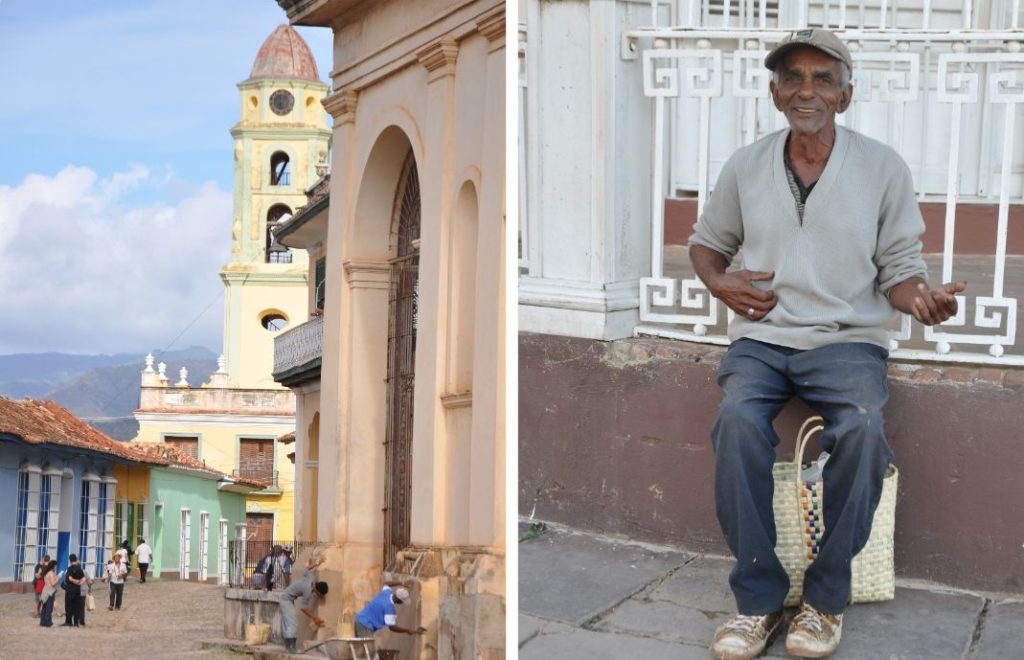
In the almost car-free historic center, time seems to pause. You can wander at leisure, admiring elegant colonnades, romantic wooden balconies, and facades adorned with intricate ironwork and handcrafted ceramic tiles. Each corner feels like a painting sprung to life.
But what captivates most isn’t the architecture – it’s the people. Warm, expressive, and full of rhythm, the soul of Trinidad lives in its residents, whose laughter and music spill from doorways and plazas, infusing the city with an irresistible, timeless charm.
Welcome to Trinidad
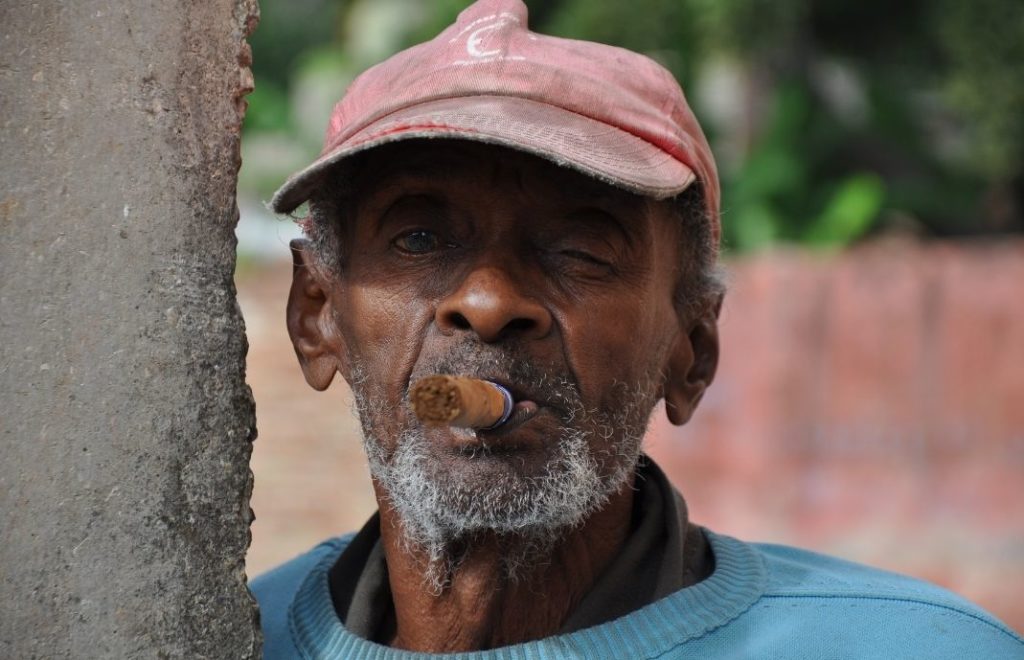
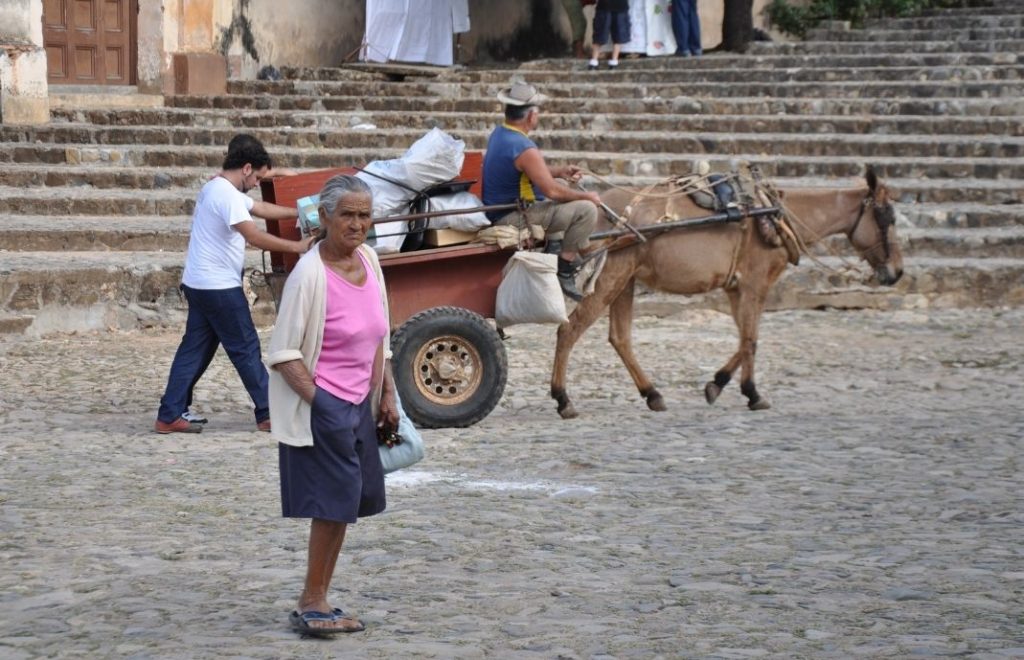
An old man in a faded pink cap and two mismatched shoes leans casually against a lamppost, savoring his first Havana cigar of the day. Across the cobblestones, an elderly woman shuffles at the pace of a patient turtle, her deeply lined face a living testament to centuries of stories.
Horses clop past, pulling carts piled high with goods. Children splash and laugh in a fountain while stray dogs doze lazily in the shade of towering trees. From sunlit courtyards, music drifts into the streets, mingling with the aroma of hand-rolled cigars and the mouthwatering scent of freshly baked pizza.
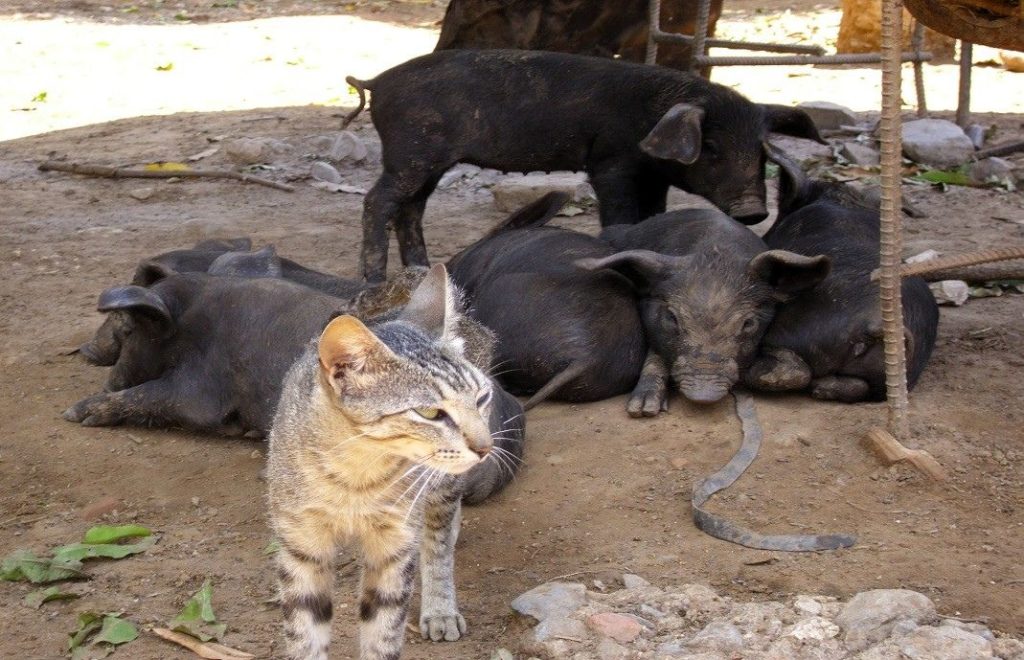
From the local bus station, I find my way to my casa particular – a stay in a Cuban family’s home. My hosts greet me warmly and lead me through a garden where pigs snuffle in the grass and a playful cat rubs against my legs, eager for attention. The room is simple but spotless, complete with a private bathroom. The shower proves to be a small challenge – hot water is more a luxury than a guarantee – but a few cool rinses feel like part of the adventure.
Within minutes, I feel like family. Conversations unfold in a charming mix of broken English and broad smiles – a reminder that the true soul of Trinidad lives in its people, their generosity as warm as the Cuban sun.
Charming authenticity
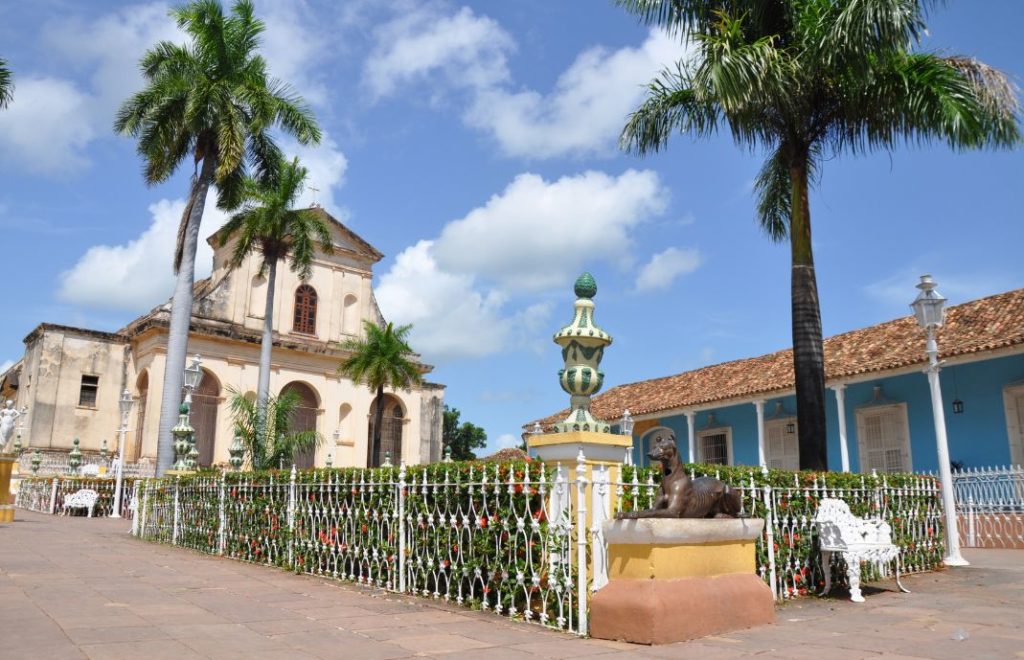
The old town is the beating heart of colonial Trinidad, a vibrant mosaic of history and culture. Museums, galleries, and restaurants line the cobbled streets like jewels on a string, each doorway inviting you deeper into the city’s storied past. At its center lies the elegant Plaza Mayor, framed by swaying palms, whitewashed benches, and bronze sculptures – a picture-perfect starting point for exploring this enchanting enclave.
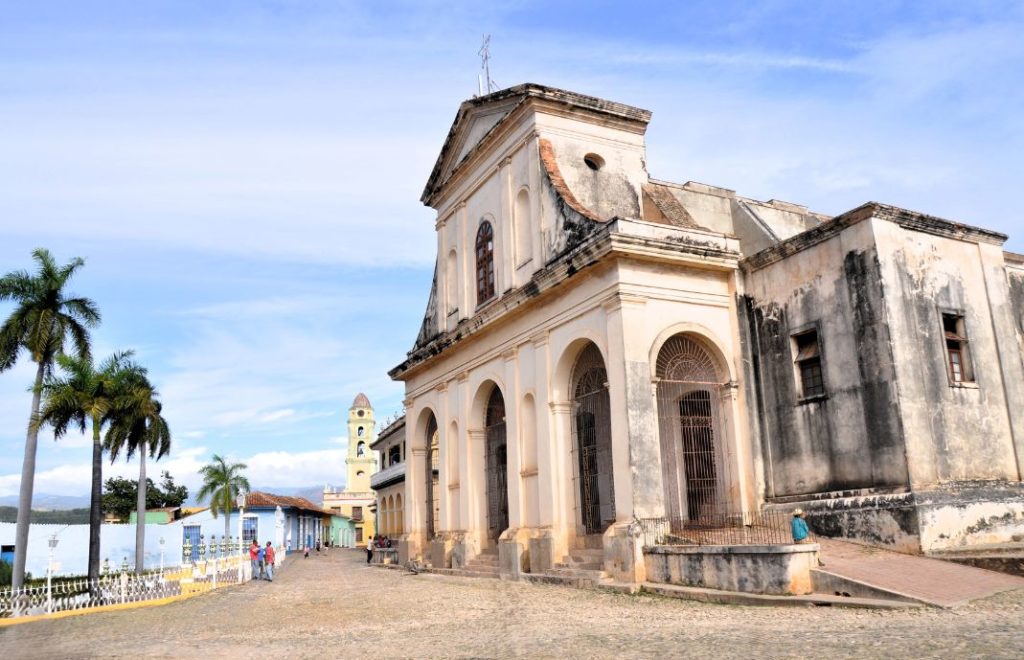
Dominating the square is the stately Iglesia de La Santísima Trinidad, a church that houses more than just faith. Inside resides a well-traveled statue of Jesus – and the city’s most coveted knees. For centuries, pilgrims have flocked here during Easter to kiss the knees of Jesús de Veracruz, Trinidad’s patron saint. So many lips have pressed against them that the once-smooth surface now bears the gentle wear of three hundred years of devotion.
Here, tradition thrives not as a relic, but as a living ritual. In every stone, every kiss, every whispered prayer, Trinidad’s authenticity shines – unpolished, unpretentious, and utterly captivating.
The story of Trinidad
Trinidad holds the distinction of being Cuba’s third-oldest city, after Baracoa and Bayamo. Founded in 1514 by Diego Velázquez, it began humbly – a fort and a handful of houses just a few kilometers from the coast. The Spanish were drawn by the glint of gold the Taíno people panned from the rivers, but the veins ran dry quickly, and the conquistadors soon turned their gaze toward the greater riches of North and South America.
In 1518, Hernán Cortés assembled troops and supplies in Trinidad before setting sail with eleven ships from the port of Casilda on his fateful expedition to conquer Mexico. The city’s fortunes shifted again in 1762, when the British briefly occupied Cuba and free trade was imposed, opening new economic horizons.
Then came the Haitian Revolution in 1791. Waves of French planters, fleeing the turmoil, sought refuge in Trinidad, injecting capital and expertise into its growing economy. By the mid-18th century, the sugar boom was in full swing, lasting nearly a century. Wealth flowed like molasses for plantation owners, who built opulent mansions, elegant churches, and schools with one hand – while driving enslaved laborers to exhaustion in the nearby Valley of the Sugar Mills (Valle de los Ingenios) with the other.
The grandeur you see in Trinidad today – the colonial palaces, the cobbled squares, the ornate facades – rests upon this complex, often brutal history. A paradox of beauty and hardship, etched into every stone.
A glimpse into Trinidad’s soul
Trinidad’s rich and layered history has blessed it with a remarkable collection of museums, each offering a unique window into Cuba’s past.
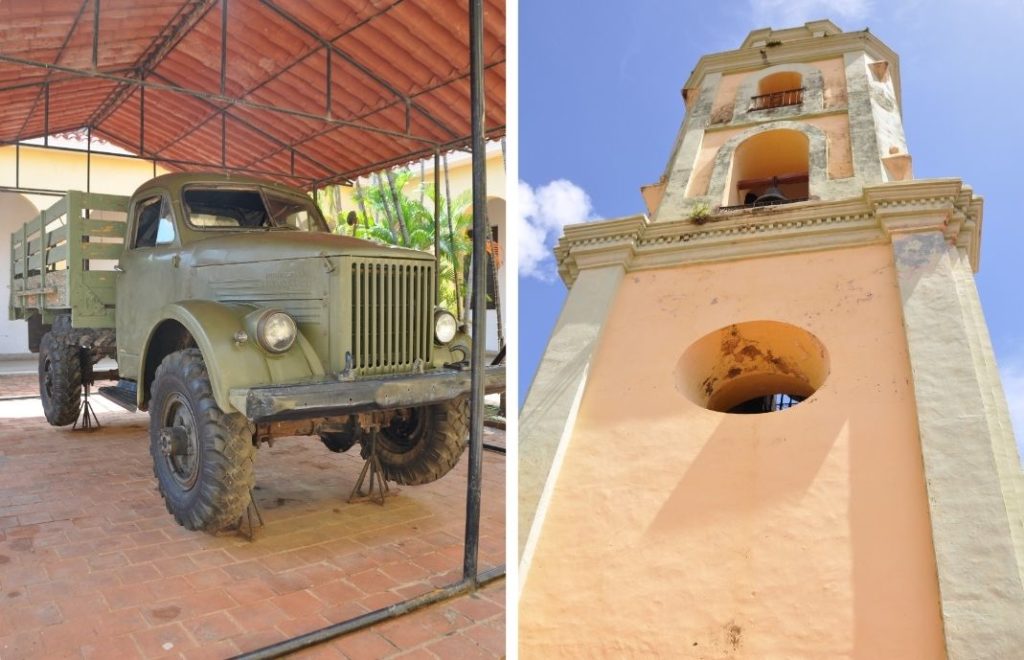
Start with the Museo de La Lucha contra Bandidos, an evocative space chronicling the government’s war against so-called “bandits” after the revolution. Its walls are lined with photographs of bearded guerrilla fighters – revolutionary heroes immortalized in black and white. Exhibits include weapons steeped in blood-soaked history, a hammock and pocketknife once owned by Che Guevara, and even a fragment of an American U-2 spy plane shot down during the Cuban Missile Crisis of 1962. Before you leave, climb the museum’s bell tower for a sweeping view over Trinidad’s ochre rooftops and distant green hills.
For something truly distinctive, pay a visit to Casa Templo de Santería Yemayá, a small shrine dedicated to the Afro-Cuban religion of Santería. At its heart stands the striking statue of Yemayá – the motherly goddess of the sea – black as midnight and cradling the infant Jesus in her arms. In a whimsical twist, her sacred presence shares the courtyard with a bustling chicken coop, a vivid reminder that this spiritual tradition is rooted in the rhythms of everyday life.
Finally, step inside the Museo Histórico, Trinidad’s city museum, to marvel at the opulent trappings of the 19th-century elite – gleaming chandeliers, ornate furniture, and European imports that speak of unimaginable wealth. Yet behind this splendor lies a sobering truth: these luxuries were built on the backs of enslaved laborers toiling under the Caribbean sun in the Valley of the Sugar Mills.
Together, these places reveal a city of contrasts – devotion and decadence, revolution and resilience – all woven into Trinidad’s enduring charm.
Where time stands still
What captivates most about Trinidad is not just its pastel-hued buildings or cobblestone streets. It’s the people, the pulse, the irresistible atmosphere. The city feels like a bag of surprises; you never quite know what you’ll discover when you step outside your door.
For a true taste of Cuban life, grab a cool ice cream or a slice of pizza from a corner shop and make your way to Parque Céspedes. Sink into one of its shaded benches, let the music drifting from nearby casas mingle with the chatter of locals, and simply savor the art of doing nothing.
In the park’s northwestern corner rises a striking yellow mansion from 1914 – the old town hall. Its façade proudly displays the coats of arms of both Cuba and Trinidad. Cuba’s emblem features a sunrise over the sea and the royal palm, the national tree. Trinidad’s is marked by a cross, a tower, and a ship – a nod to its colonial roots and maritime heritage.
At each corner of the square stands a bust honoring a hero of Cuba’s independence: Manuel Céspedes, Muñoz Maceo, José Martí, and Lino Pérez y Muñoz. Beneath them, majestic royal palms rise skyward, a living tribute to their sacrifice and courage.
Here, time seems suspended. The whispers of history, the warmth of the people, and the rhythm of the present flow together in perfect harmony – a moment to breathe, to reflect, to simply be.
Vamos a la playa
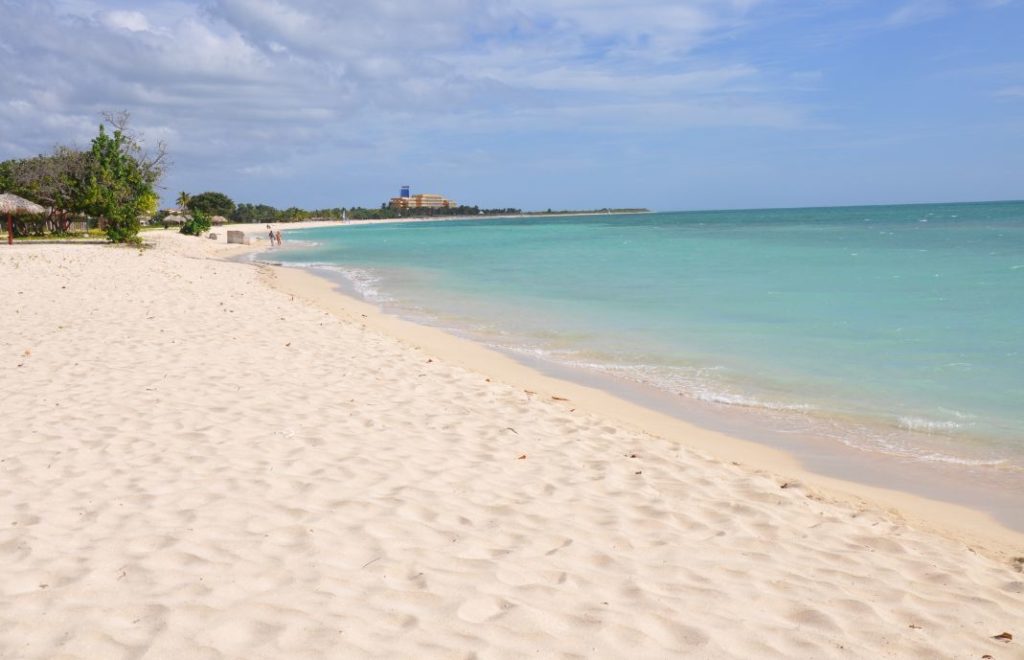
When the heat in Trinidad becomes too intense and the call of the sea grows irresistible, there’s only one thing to do: hail a taxi and head for Playa Ancón. This dazzling stretch of sugar-white sand, unfurling for kilometers along the southern coast, is considered one of Cuba’s finest beaches.
Here, turquoise waters lap gently against the shore, a postcard-perfect scene shared by sun-seeking tourists and laid-back locals alike. A small beachside restaurant serves up a simple menu and cold drinks, while roving vendors stroll the sand, offering everything from fresh fruit and sweet coconuts to – you guessed it – Cuba’s beloved beach staple: pizza.
Playa Ancón is more than a beach; it’s a blissful escape. A sunlit interlude where time slows, waves whisper, and the horizon stretches as far as your dreams.
Dance the night away
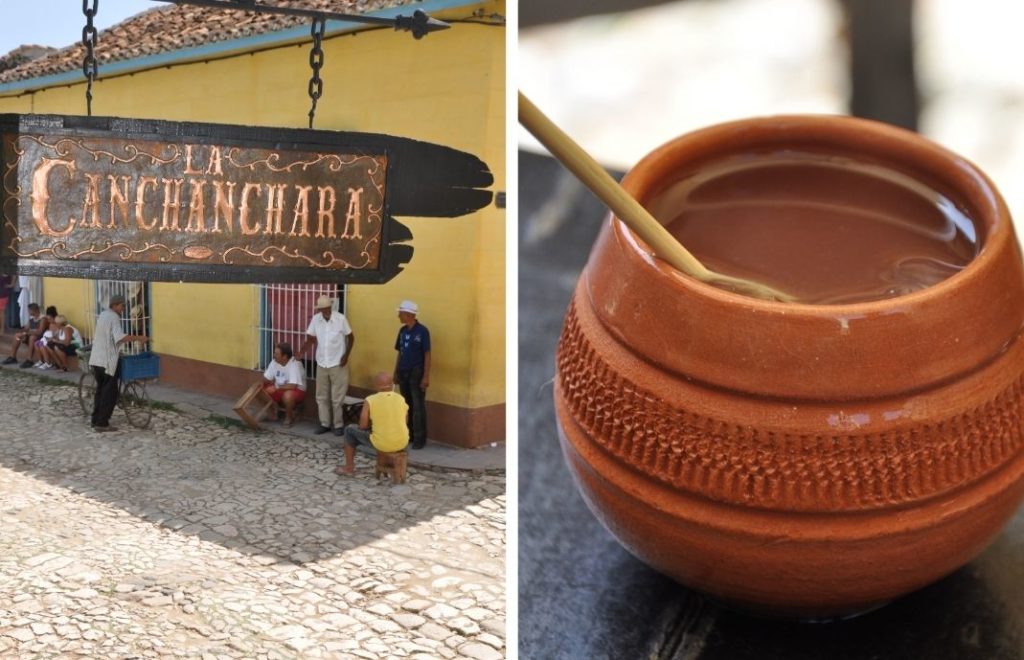
As the sun sinks low and Trinidad’s pastel façades glow in the golden hour, the evening begins with a visit to La Canchanchara, a cozy tavern where you can sip the city’s signature cocktail. A mix of rum, honey, lime, and water, it’s a refreshing alternative to Cuba’s world-famous mojito – and every bit as addictive.
When night falls, the heart of the city beats to the rhythm of salsa. Crowds gather on the stone steps outside Casa de la Música, where live bands ignite the square with intoxicating energy. Salsa kings and queens glide across the open-air dance floor, hips swaying to the feverish tempo. Don’t be shy – these dancers are quick to pull you into their world. Under a tropical starlit sky, with music soaring and laughter ringing, it’s impossible not to surrender to the spell.
But midnight is no time to call it a night. Instead, follow the pulse to Disco Ayala, one of the most unforgettable nightspots you’ll ever encounter. Hidden inside a natural limestone cave, this subterranean club feels like stepping into another dimension. Stalactites drip from the ceiling, walls shimmer in vibrant light, and the air throbs with reggaetón, salsa, techno, and world beats. You dance until your body begs for mercy, sweat mingling with the scent of rum and rhythm, as the cave echoes with primal joy.
Trinidad is more than a destination. It’s an experience that steals your breath and your heart. Authentic, colorful, and endlessly seductive, this city invites you to live fully, laugh freely, and dance until dawn. One thing is certain: Trinidad doesn’t just charm you – it stays with you forever.
Before you go to Trinidad
Explore the Old Town
The historic center is the soul of colonial Trinidad— – a maze of cobbled streets packed with museums, art galleries, and charming eateries.
Live like a local
Don’t miss the chance to experience the real Trinidad. Share a pizza or sip rum with the locals for just a few pesos – it’s the Cuban way.
Nature & history combined
Venture into the lush heart of the rainforest at Topes de Collantes National Park, or step back in time at a former sugar plantation in the fabled Valley of the Sugar Mills (Valle de los Ingenios).
Cool off at playa Ancón
When the heat becomes too much, head for the dazzling white sands of Playa Ancón, just a short ride from town.
Stay in a Casa Particular
Skip the hotels – nothing beats the authenticity of staying with a Cuban family. It’s an experience you’ll never forget!
More inspiration to visit Cuba:
7 places you don’t want to miss in Cuba
5 fantastic beaches in Cuba
Western Cuba: Where past and present part ways
Casa particulares – the soul of Cuba
