
Gloucester Cathedral is one of Britain’s most magnificent buildings – a sacred space that embodies over 1,300 years of Christian tradition and English heritage. From Benedictine monks and kings to filmmakers and modern-day pilgrims, countless people have been drawn to its awe-inspiring beauty and spiritual presence.
Founded in AD 679, the cathedral has played a central role in British history. Over the centuries, it has been a beacon of worship, music, and learning, its towering architecture and intricate stonework standing as a testament to faith and craftsmanship.
Beyond its religious and historical significance, Gloucester Cathedral is also beloved by fans of fantasy and film. Its breathtaking cloisters served as a filming location for multiple Harry Potter films, transforming into the enchanted corridors of Hogwarts School of Witchcraft and Wizardry. Walking through the same vaulted walkways as Harry, Ron, and Hermione is a magical experience for visitors of all ages.
Whether you’re a seeker of history, a lover of architecture, or a fan of magic, Gloucester Cathedral invites you to walk in the footsteps of saints and wizards alike – a place where the sacred and the cinematic beautifully collide.
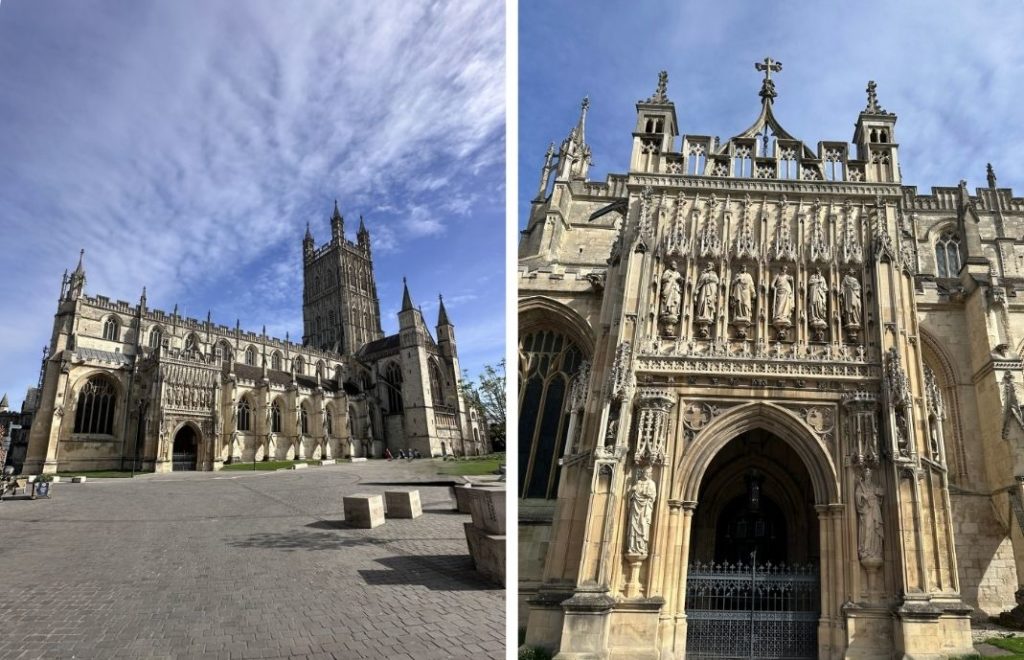
The Cloister: A sacred space of silence and mystery
Between 500 and 1,000 years ago, Gloucester Cathedral was known as St. Peter’s Abbey, home to a devoted community of Benedictine monks. These men lived a life centered on God, dedicating their days to prayer, song, work, and quiet reflection. Living together in silence, they believed that stillness brought them closer to the divine.
At the heart of their daily routine was the cloister – a peaceful, enclosed walkway where monks could meditate, read scriptures, and move between parts of the abbey in contemplative solitude.
Traditionally, cloisters were built on the south side of cathedrals to maximize sunlight and warmth. But in a quiet twist of design, the cloister at Gloucester Cathedral was constructed on the north side – and to this day, no one knows exactly why.
Mysterious in both layout and atmosphere, Gloucester’s cloisters are now famous not only for their monastic past but also for their cinematic presence. With their intricate fan vaulting and timeless serenity, they remain one of the cathedral’s most awe-inspiring spaces – a true blend of history, mystery, and medieval beauty.
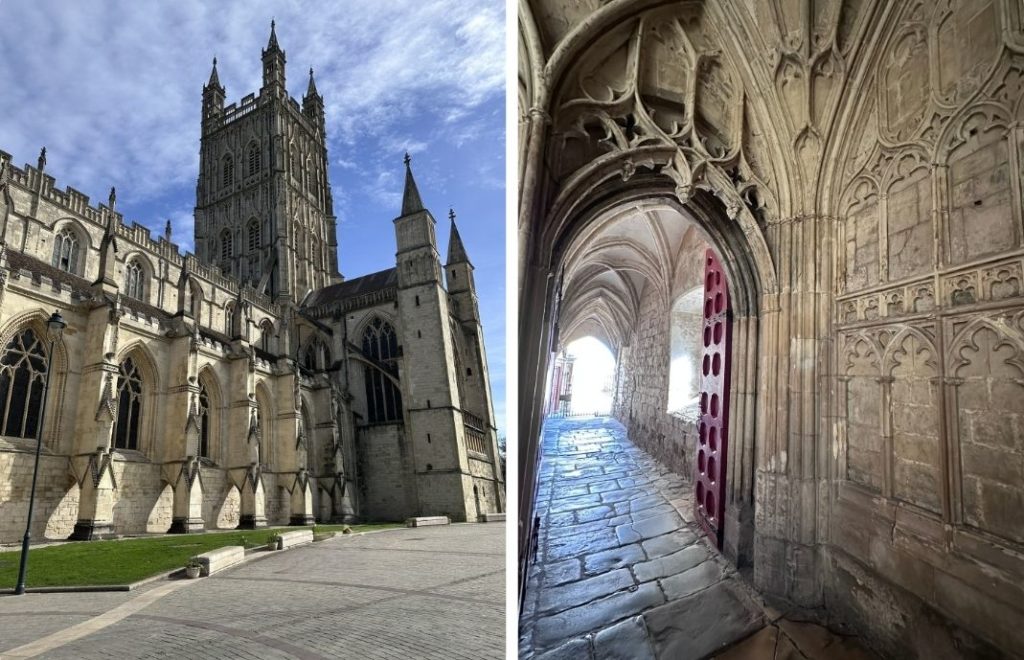
Harry Potter at Gloucester Cathedral: Step into the magic
You don’t need to have visited Gloucester Cathedral to recognize its cloistered corridors – just a glimpse of the Harry Potter films is enough. These historic walkways doubled as the legendary halls of Hogwarts School of Witchcraft and Wizardry, arguably the most famous school in the magical world.
When Warner Bros. brought the Harry Potter universe to life, they chose Gloucester Cathedral as a filming location for:
Harry Potter and the Philosopher’s Stone (2001)
Harry Potter and the Chamber of Secrets (2002)
Harry Potter and the Half-Blood Prince (2009)
The serene cloisters, once used by Benedictine monks for study, teaching, and reflection, became the perfect backdrop for Hogwarts, where students and professors wandered with books, secrets, and spells.
I had the joy of joining a guided tour through the cloisters, led by the incomparable Ann – a guide who didn’t just share information; she brought the magic to life. With energy, wit, and infectious enthusiasm, she recreated the film scenes right before our eyes. Her storytelling was so vivid and animated, I’m convinced she deserves a casting call should another Hogwarts movie be made.
Whether you’re a devoted Potterhead or simply curious about England’s rich filming heritage, Gloucester Cathedral is a must-visit location where cinematic magic and real-world history meet.
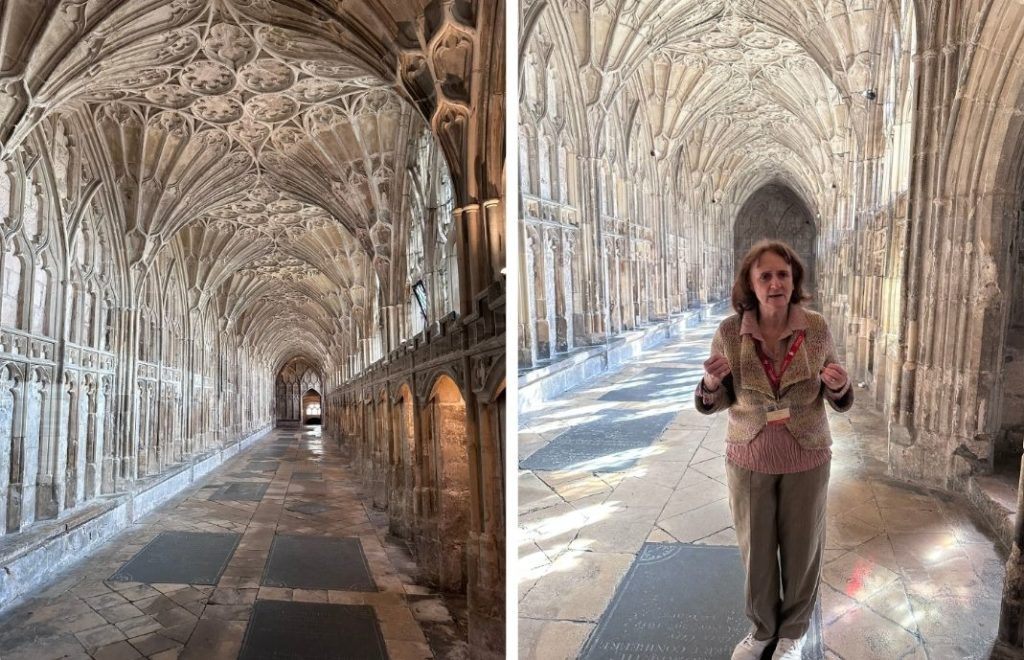
A guided tour through Hogwarts – With Ann as your spellbinding host
Join Ann, the ultimate Hogwarts guide, on a magical journey through the cloisters of Gloucester Cathedral -transformed, with a bit of movie magic, into the iconic corridors of Hogwarts School of Witchcraft and Wizardry.
Thanks to Ann’s passion and deep knowledge, it’s effortless to picture the scenes from Harry Potter and the Philosopher’s Stone (2001), The Chamber of Secrets (2002), and The Half-Blood Prince (2009) coming to life around you.
Ann doesn’t just retell what happened – she recreates it. With the flair of a true performer, she explains how Warner Bros. transformed this historic cathedral into a magical film set, cleverly concealing religious symbols and signage to preserve the illusion of a wizarding world.
Her reenactments are nothing short of brilliant. She acts out scenes, mimics characters, and brings the stories to life in a way that’s so engaging, fun, and surprisingly educational, even a group of adults were completely spellbound.
The entrance to Gryffindor Common Room – where you can stand exactly where Harry and Ron waited by the stone bench.
Then on to the corridor from The Half-Blood Prince – where students return to Hogwarts after the holidays.
Ann then takes us to the courtyard scene from The Philosopher’s Stone – when students run back to their houses after hearing there’s a troll loose in the dungeon.
Next stop is The troll corridor – including the exact spot where Harry and Ron hide behind a column as the creature crashes through the girls’ bathroom.
We follow Ann to The wall from The Chamber of Secrets – where the chilling words “The Chamber of Secrets has been opened. Enemies of the Heir, beware.” were written (Harry Potter and the Chamber of Secrets).
The tour end at The flooded hallway – the result of Moaning Myrtle wreaking havoc in The Philosopher’s Stone.
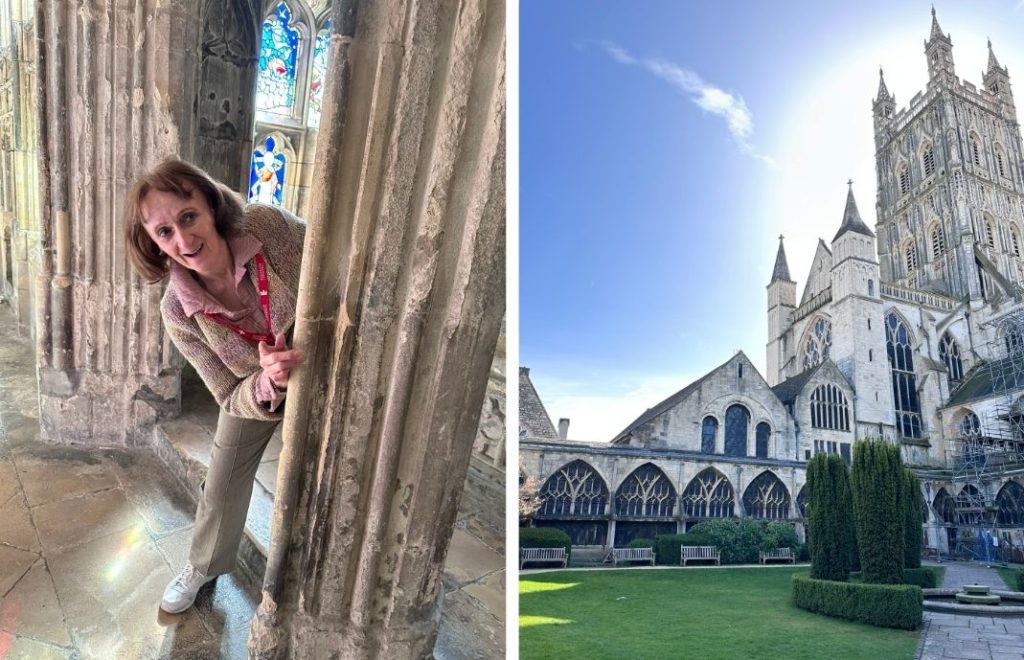
Gloucester Cathedral: A towering testament to time
Standing proudly at the heart of the historic city of Gloucester, this magnificent cathedral is a living monument to over 1,300 years of English history. Founded around AD 679 by Prince Osric of Mercia as St. Peter’s Abbey, it has evolved through the centuries into one of Britain’s most awe-inspiring sacred spaces.
In 1089, Abbot Serlo began construction of a grand Norman-style monastery. By the 1450s, the soaring tower – still dominating the skyline today – was under construction. When King Henry VIII dissolved the monasteries in 1541, he transformed the abbey into what we now know as Gloucester Cathedral.
You don’t need to be religious to be moved by this space. The towering ceilings, intricate stonework, and jaw-dropping stained glass windows – one of which is the size of a tennis court – make it an architectural marvel.
Visitors can climb the 269 steps to the top of the tower for panoramic views of Gloucester and beyond. You can also descend into the atmospheric crypt, one of the oldest parts of the cathedral.
Join one of the guided tours to uncover centuries of secrets and stories (tours are offered in English only) or explore at your own pace, soaking in the peaceful grandeur.
Whether you’re here for the history, the craftsmanship, or a brush with movie magic (hello, Harry Potter fans), Gloucester Cathedral is a spellbinding experience – inside and out.
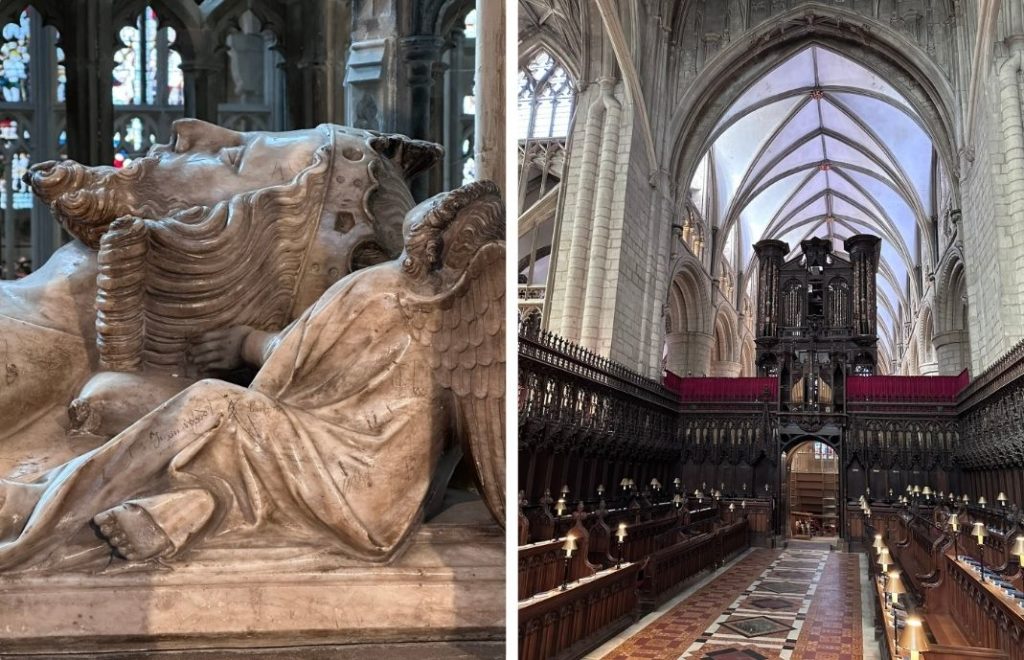
Stunning stained glass: History in light at Gloucester Cathedral
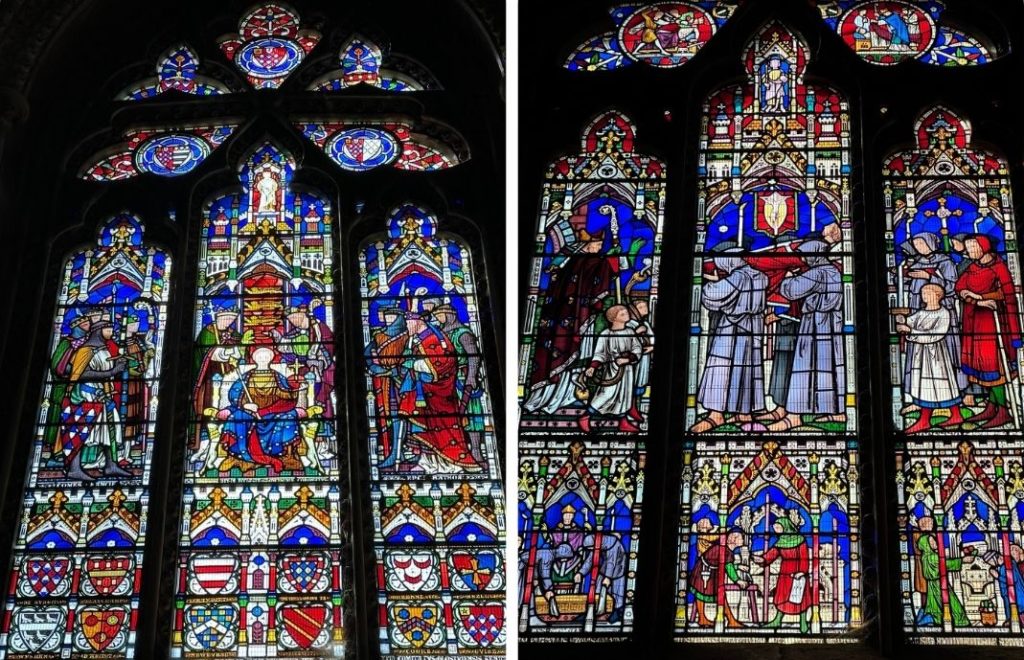
Among the many treasures of Gloucester Cathedral, two spectacular stained glass windows stand out – not just for their vivid colors and intricate artistry, but for the powerful and turbulent royal stories they depict.
One window captures the coronation of Henry III, who became King of England in 1216 at just nine years old – the first child king since the Norman Conquest. Though he reigned for an impressive 56 years, his legacy is less about achievement and more about endurance. His long rule was marked by internal strife and a failure to assert strong leadership, yet his coronation remains a key historical moment, beautifully rendered in glass.
The second window depicts the funeral of King Edward II, crowned in 1307. His reign was plagued by political turmoil, largely due to his preference for elevating companions from the lower classes over the established nobility – a habit that fuelled resentment and rebellion. He was eventually deposed in 1327 under grim circumstances.
Edward II’s death remains one of the most controversial in British history. While the official cause was listed as illness, many historians believe this to be a cover-up. The true nature of his death – rumoured to be brutal – remains a dark mystery.
His son, Edward III, later commissioned a magnificent tomb at what is believed to be Edward II’s final resting place – right here in Gloucester Cathedral. This tomb is considered one of the most beautiful in England, and is a poignant contrast to the turbulence of the king’s life.
These two windows are more than just decoration – they are illuminated chapters of royal history, casting colorful light on the dramatic rise, reign, and fall of England’s medieval monarchs. They are must-see highlights in a cathedral that is, in every sense, a window into the past.
My heartfelt thanks to Visit Britain and Gloucester Cathedral for the kind invitation. And a special shoutout to Ann, whose passion, storytelling, and charisma transformed the guided tour into something truly unforgettable. There were no requirements from the hosts for posts or social media promotion – as always, all opinions and photos are entirely my own.
