
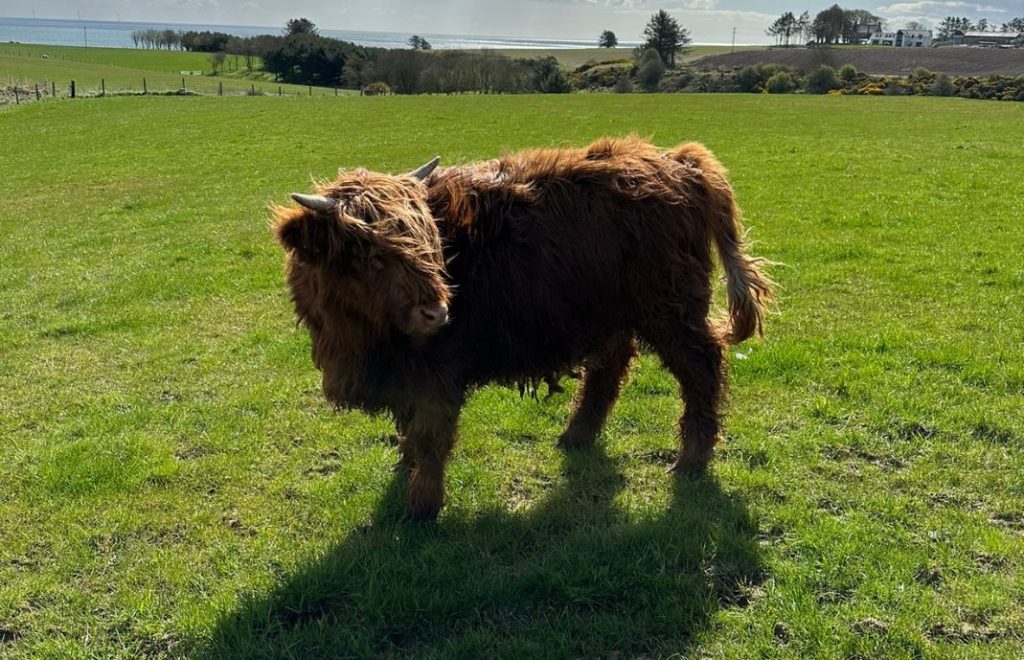
With their long, shaggy coats, sweeping horns, and unmistakable Beatles-style fringe, Scotland’s beloved Highland cattle are some of the most charming residents you’ll encounter in the wild Highlands. Calm, curious, and undeniably photogenic, these gentle giants are as much a part of the Scottish landscape as the lochs and heather-clad hills.
Highland cattle – known locally as Heilan coos – have been roaming the rugged terrain of Scotland’s Highlands for centuries. Bred for resilience, they’re incredibly hardy and self-sufficient, capable of withstanding the harshest weather with ease. Their distinctive double coat keeps them warm and dry through wind, snow, and rain.
But it’s not just their toughness that captures hearts – it’s their gentle demeanor and endearing expressions that make them a favorite among locals and visitors alike.
Now’s your chance to get up close with these legendary creatures and discover what makes them so special. Whether you’re exploring the countryside or visiting a farm experience, one thing’s certain: the moment you meet a Highland cow, you’ll fall in love – horns, hair, and all.
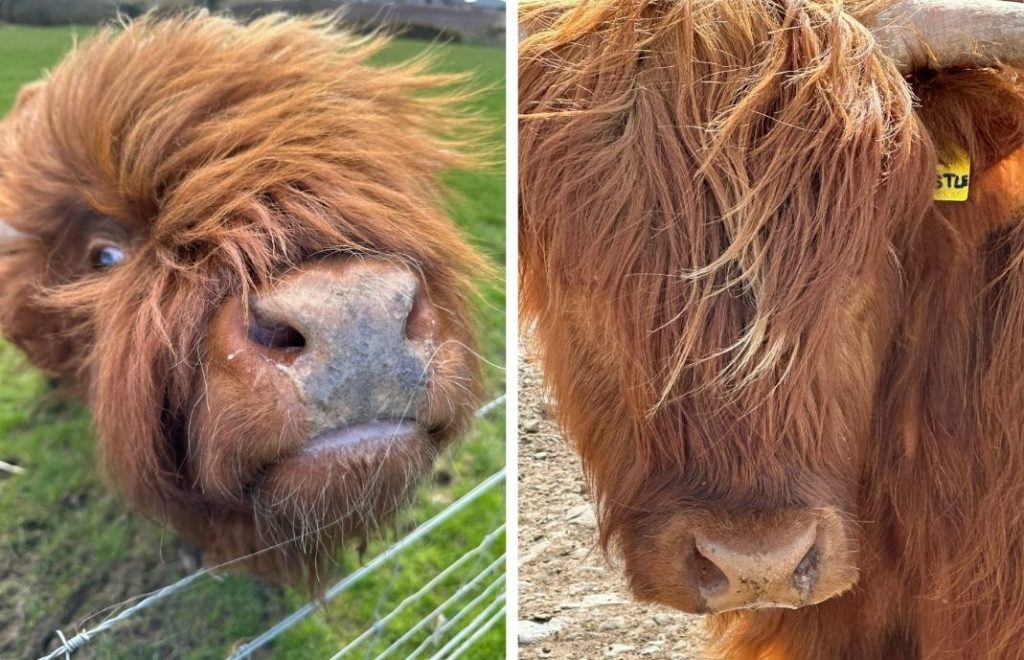
8 fascinating facts about Highland Cattle
Scotland’s beloved Highland cattle – those shaggy, long-horned, slow-blinking charmers – are not just adorable, they’re full of surprises.
Here are eight things you might not know about these iconic creatures:
1. The oldest registered cattle breed in the world
Highland cattle hold the impressive title of being the oldest officially recorded cattle breed. Their lineage dates back centuries, with records going as far as the 12th century – and their rugged genes are still going strong today.
2. How do they see?
That iconic fringe – called a “dossan” – covers their eyes completely. And yet, somehow, they navigate hillsides, forests, and moorlands with ease. Whether it’s heightened senses, echolocation, or just good instincts, no one knows exactly how they do it!
3. Royal influence: Queen Victoria’s favorite
Legend has it that Queen Victoria, during a visit to the Highlands, favored the red-haired cattle. To please the monarch, breeders began selecting for that color, which led to a decline in the original black-coated Highland cattle.
4. Originally two distinct breeds
Highland cattle were once split into two types:
- The West Highland, also called Kyloe, known for being smaller and tougher (often found on the western isles).
- The larger Highlander, found on the mainland.
5. Want to find them? Ask for “Hairy Coos”
If you’re looking to spot Highland cattle while visiting Scotland, just ask the locals where to find the “hairy coos” – their affectionate nickname. Most Scots will gladly point you in the right direction.
6. The Queen’s table
Rumor has it that the Queen herself kept a fold of Highland cattle – and that it was the only beef she would eat, praising its flavor and quality above all others.
7. Horns that tell a story
You can tell the difference between males and females by their horns:
- Bulls have thicker, forward-angled horns that curve slightly downward.
- Cows have longer, thinner horns that arch gracefully upward with elegant points.
8. A “Fold” of Highland Cattle
While the generic term for a group of cattle is a herd, with Highland cattle, the traditional term is a “fold.” This comes from the stone enclosures or shelters – called folds – where they were housed in harsh winters.
Bonus fact? Highland cows are incredibly fertile and long-lived, with some females giving birth to more than 15 calves during their lifetime – proving they’re as productive as they are photogenic.
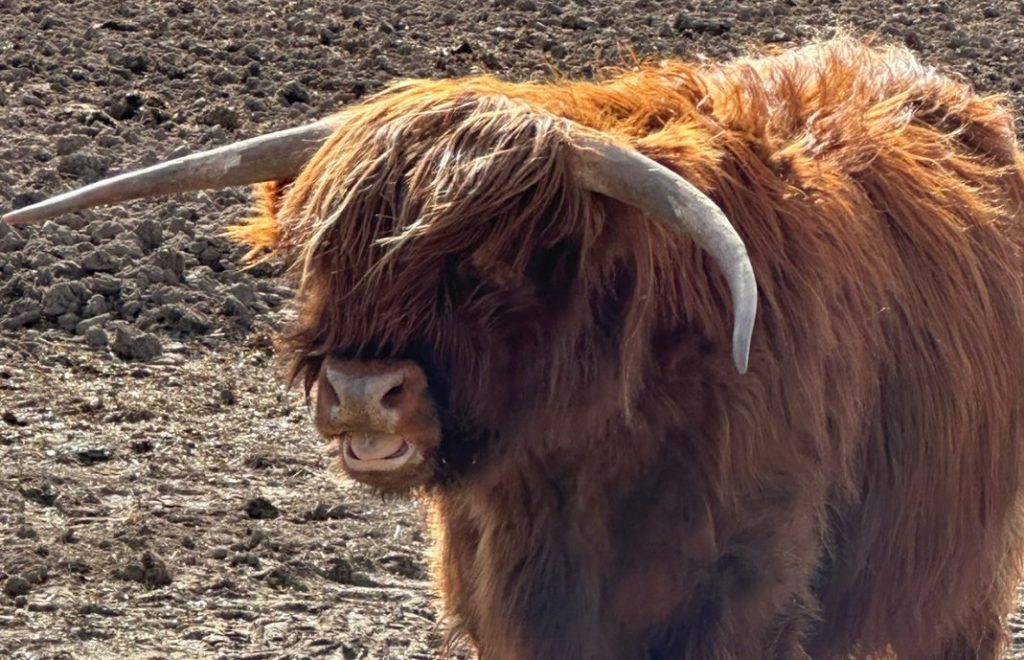
How to recognize Highland Cattle: Nature’s rugged Supermodels
Highland cattle are hard to miss – and even harder to forget. With their shaggy coats, sweeping horns, and adorable fringe, these majestic beasts are among the most distinctive animals in Scotland.
Here’s how to spot a Highland cow in the wild:
1. That iconic coat
Their long, thick double-layered coat is their most recognizable feature.
- The outer layer is oily and coarse, acting like a waterproof jacket.
- Beneath it lies a softer, insulating undercoat that keeps them warm even during the harshest Highland winters.
The coat naturally shortens in summer, adapting to the seasons like a built-in thermostat.
2. A rainbow of earthy tones
Though the classic image is the red-haired Highland cow, their coat color actually varies widely. You’ll find Highland cattle in: Red, black, yellow, brindle, silver, white, grey, brown and reddish-brown.
This colorful variety makes each cow truly unique.
3. The legendary fringe – “Dossan”
Their long, mop-like fringe (affectionately known as a “dossan”) often covers their eyes completely.
But don’t worry – they find their way just fine, and the fringe shields their eyes from flies and harsh weather.
4. Horns with attitude
Both males and females have distinctive curved horns:
- Bulls: Wider, thicker horns that curve forward and slightly downward.
- Cows: Longer, more slender horns that sweep upward with elegant points.
5. Built for survival
These animals are true Highlanders – rugged, resilient, and incredibly tough.
- Bulls can weigh up to 800 kg,
- Cows up to 500 kg.
Yet despite their size, they’re known for their gentle nature and easygoing temperament.
With their timeless charm and unique appearance, Highland cattle are more than just a breed – they’re a living symbol of Scotland. Once you’ve seen one, you’ll understand why the world has fallen in love with these hairy Highland icons.
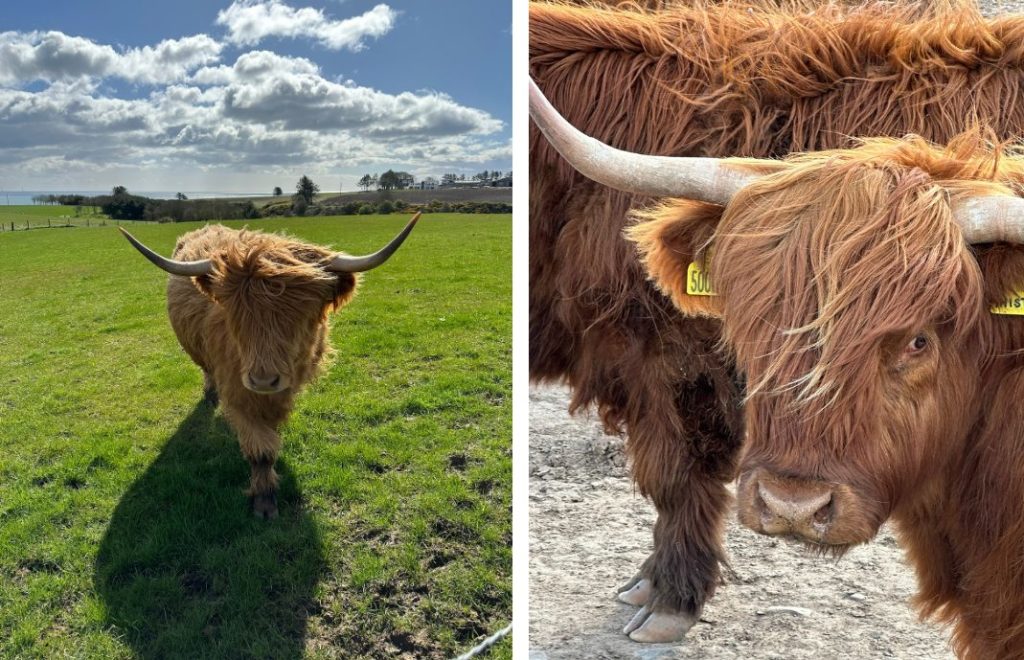
The history of Highland Cattle: Scotland’s shaggy icons through the ages
Long before they became Instagram darlings and postcard mascots, Highland cattle were at the heart of Scotland’s rural heritage – hard-working, hardy, and essential to life in the Highlands.
Cattle of the Corrie and Glen
In the 1800s, thousands of Highland cattle roamed the Scottish countryside, especially through Strathspey. During the summer months, they were herded into the high corries -mountain pastures – where the cooler air and abundant grazing helped fatten them for market.
Their human companions, the herders, lived in temporary stone huts called shielings, keeping watch over the animals and fending off both predators and thieves.
From Highland Hills to Southern Markets
Once the cattle were plump and ready, they were driven long distances to bustling markets in towns like Falkirk, Crieff, and Carlisle. English buyers were eager to pay top prices for these stocky, muscular beasts, which they affectionately referred to as “Scotch runts” – a misleading nickname, given their resilience and prized beef.
Their value made them targets. Cattle rustling became so common that farmers banded together to fund a private guard force, tasked with recovering stolen livestock and protecting their herds.
Two types, one spirit
Historically, Highland cattle were divided into two types:
- West Highland (Kyloe):
Originating from Scotland’s outer islands, where the climate was harsher and grazing was scarce. These animals were smaller, narrower, with longer coats and predominantly black coloring – evolved for survival in tough conditions. - Mainland Highlanders:
Bred on the mainland, where the environment was gentler and forage more abundant. They were larger, with coats in various hues – most commonly grey-brown or reddish-brown.
Though there were physical differences, genetically the breeds were nearly identical.
A unified breed today
Over time, the two classes were merged, and today they are recognized simply as Highland cattle. Though their working role may have shifted, their image as symbols of Scottish tradition, beauty, and toughness remains as strong as ever.
From their ancient mountain roots to modern farm fields, Highland cattle have held their ground – not just surviving, but thriving as a proud part of Scotland’s living legacy.
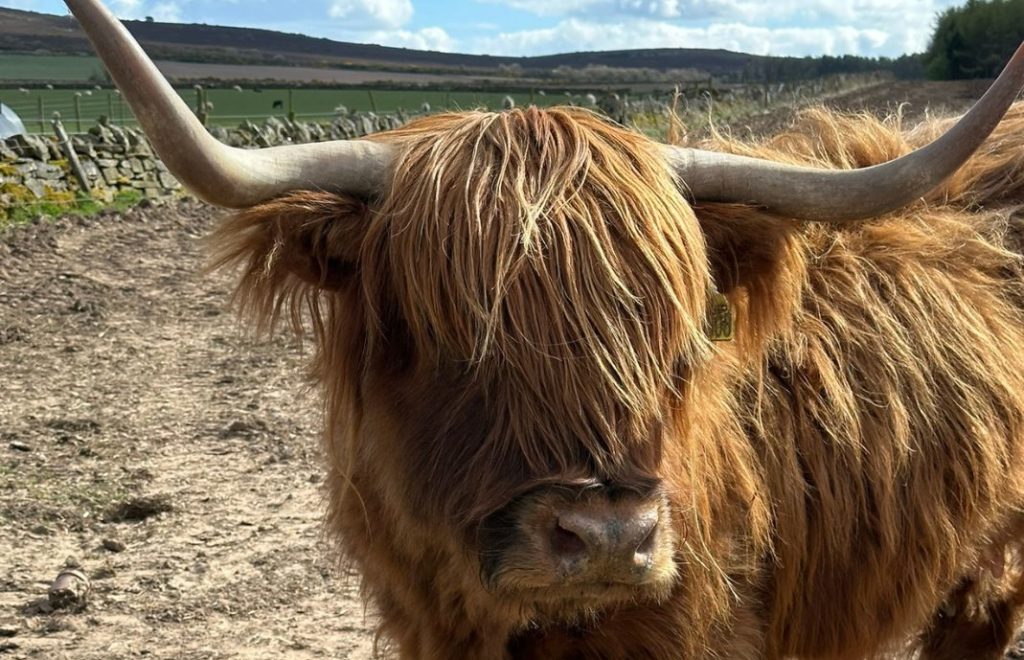
What are Highland Cattle used for?
While Highland cattle might be known for their good looks and laid-back attitude, they’re also valued for more than just their charm. These rugged Highlanders play a modest but meaningful role in agriculture and food production.
1. Milk – just enough for the calves
Highland cows do produce milk, but not in quantities comparable to traditional dairy breeds.
On average, a Highland cow gives about 7.5 liters of milk per day, just enough to nourish her calf – and occasionally provide a small surplus on family farms.
Because of this, commercial milking isn’t practical, but their milk is rich and perfectly suited to their hardy calves.
2. Premium beef production
Where Highland cattle truly shine is in their meat quality. Their beef is widely praised for being:
- Lean, with a lower fat and cholesterol content than chicken
- High in protein
- Well-marbled, giving it a tender texture
- Boasting a rich, slightly gamey flavor thanks to their natural diet and free-range lifestyle
Raised slowly on rough forage, often grazing in open fields and rugged hills, Highland cattle develop meat that’s as flavorful as it is nutritious – a favorite among chefs and conscious consumers alike.
So while they may not fill milk tanks, Highland cattle are highly prized for their sustainable, high-quality beef – and of course, for being one of the most photogenic animals ever to grace a pasture.
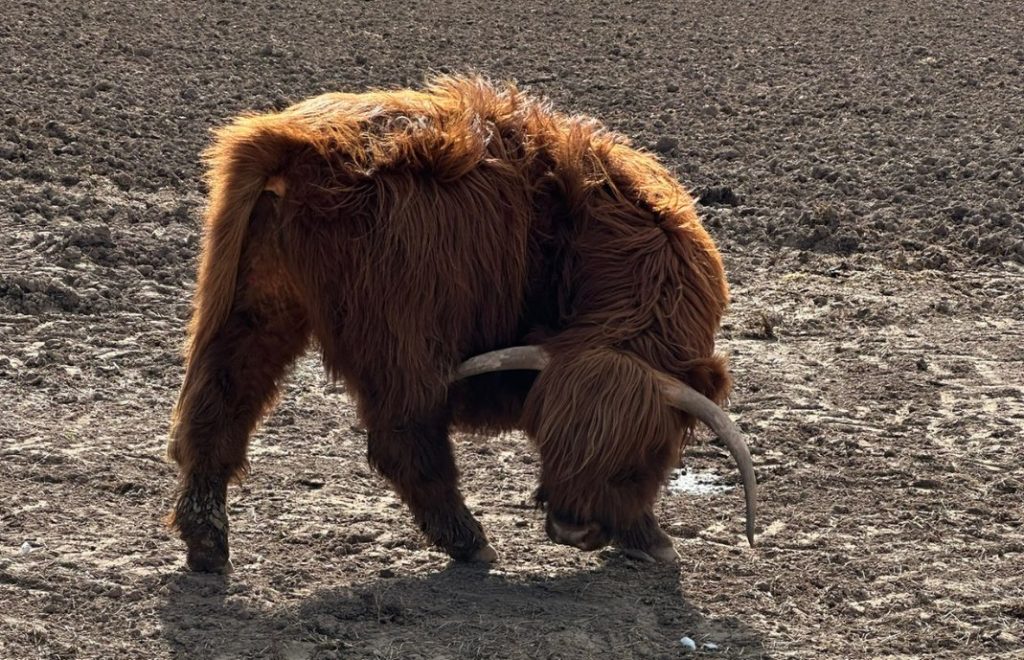
Highland Cattle on show: Fluffy cows in the spotlight
When it’s time for Highland cattle to strut their stuff at competitions and exhibitions, these shaggy stars are given the full “spa treatment.” Their thick coats are carefully pampered with conditioner and oil, giving them that irresistibly soft, plush look – hence their adorable nickname: “fluffy cows.”
But behind the fringe and fluff lies a serious business. During shows, Highland cattle are judged according to four main criteria:
1. Head
Judges look for a broad, balanced head with good spacing between the eyes and well-formed, symmetrical horns – an iconic feature of the breed.
2. Neck
The neck should be strong and well-proportioned, blending smoothly into the shoulders for an elegant and robust appearance.
3. Back and body
A straight back, solid frame, and short, straight legs are essential for good structure and movement. A wide chest and depth of body are also desirable traits.
4. Coat (Hair)
Perhaps the most eye-catching feature, the coat is judged for its length, texture, and overall condition. A good Highland coat should be full, even, and well-groomed, with a healthy shine and signature tousled style.
When you see Highland cattle at a show, you’re not just seeing animals – you’re seeing centuries of careful breeding, tradition, and pride. From the tips of their horns to the flow of their fringe, these “fluffy cows” represent the very best of Scottish livestock heritage – with a little extra glamour for good measure.
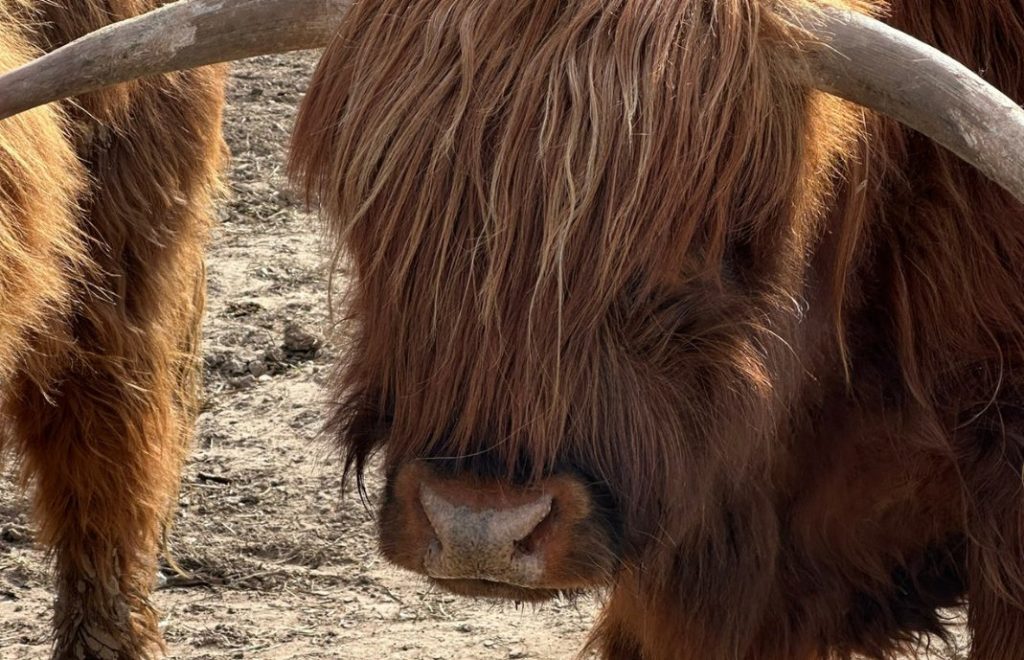
Are Highland Cattle friendly? Absolutely – Yes!
Despite their powerful build and imposing horns, Highland cattle are famously gentle – some of the calmest and most good-natured animals you’ll ever meet. These shaggy giants are known for their peaceful temperament, making them a favorite among farmers, families, and visitors alike.
Easygoing and easy to handle
Highland cattle are docile by nature, rarely showing aggression and generally avoiding confrontation.
- They are easy to manage, even for less experienced handlers.
- In the herd, they maintain a clear social hierarchy with little to no fighting—respecting order without chaos.
People-friendly companions
They’re not just calm – they’re curious and affectionate, often approaching people for a gentle nudge or a scratch behind the ears.
Some have even been kept as pets, forming real bonds with their owners.
Part of the family since the 1200s
Highland cattle have lived alongside humans for centuries, dating all the way back to the 13th century.
In harsh winters, it wasn’t uncommon for these animals to be brought indoors, sharing space with families to help heat the home – and to keep them safe from thieves!
Whether they’re grazing in a field or leaning in for a cuddle, Highland cattle are living proof that true strength and gentleness can go hand in hand. Friendly, fluffy, and full of heart – they’re not just livestock; they’re part of the family.
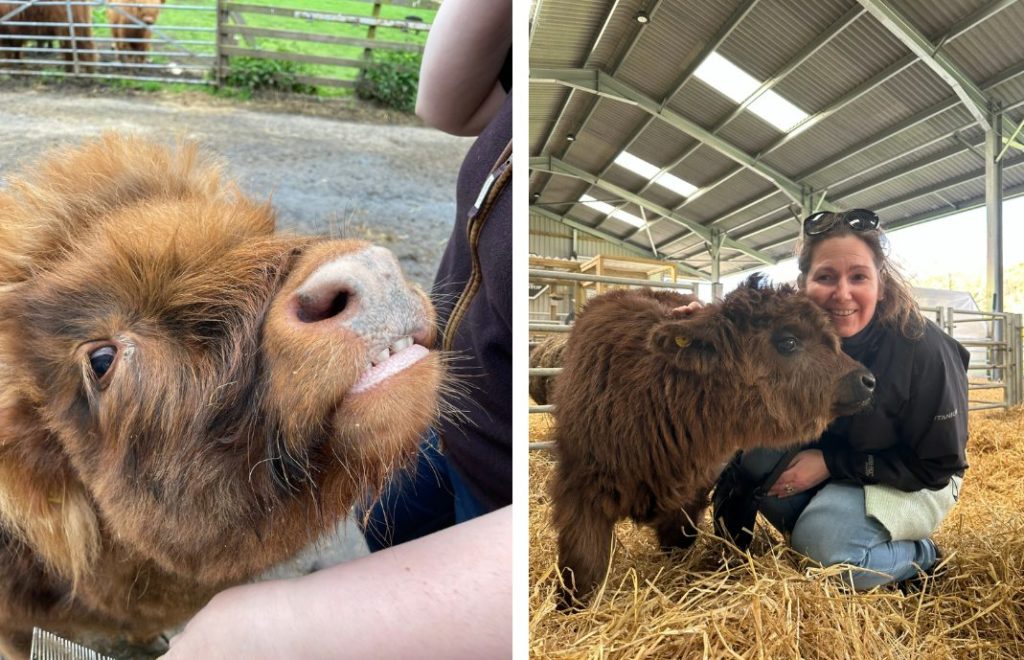
The cutest little Highlanders
It’s hard not to fall head over heels for Highland calves—those fluffy little bundles with tiny horns, oversized fringes, and wobbly legs. But behind those big brown eyes is a baby built for survival, and a mother with fierce dedication.
Born for the Highlands
A Highland cow can give birth to 15 or more calves over her lifetime and may continue having calves up to the age of 18.
- Birth is usually natural and unassisted.
- Newborn calves weigh between 22 and 34 kilograms and grow quickly.
Within moments of being born, the calf can stand, walk, and recognize its mother, forming an immediate and powerful bond.
Mothers with a mission
Highland cows are known as incredibly protective mothers. While normally calm and approachable, a cow with her calf is not to be disturbed – her motherly instincts kick in with full force.
For your safety (and theirs), it’s best to observe from a respectful distance during this time.
It takes a fold
It’s not just the mother who keeps watch. In Highland cattle society, the entire fold looks after the young, forming a close-knit community of protection and care. It’s this collective nurturing that helps calves thrive – even in the roughest of Highland weather.
From the moment they’re born, these adorable calves are surrounded by love, strength, and a fluffy wall of protection. They’re not just cute – they’re the future of one of Scotland’s most iconic breeds.
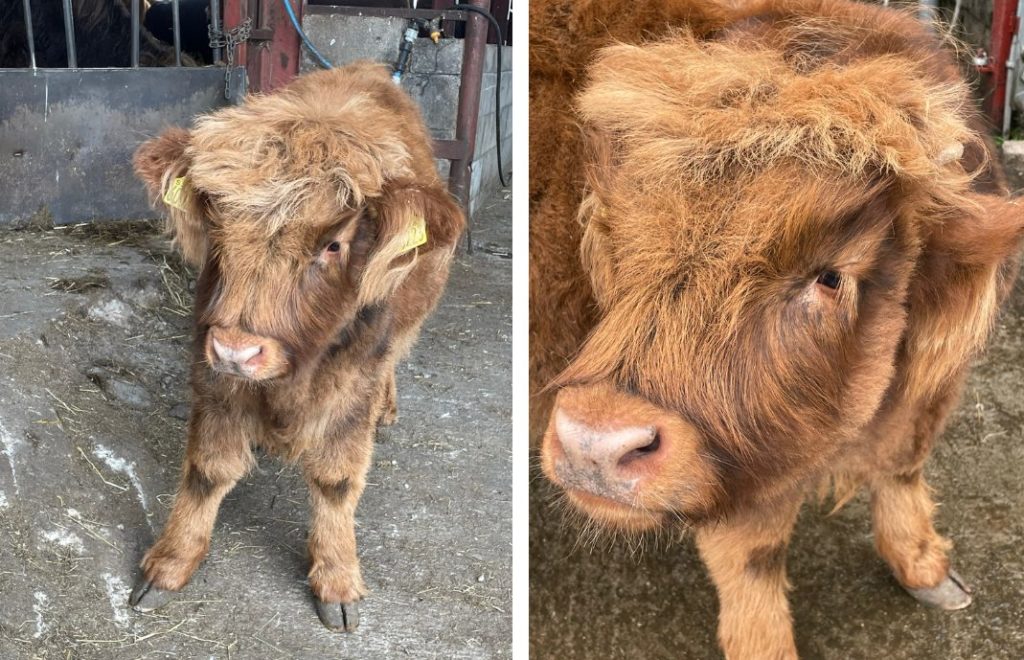
Even more fascinating facts about Highland Cattle
Think you already know everything about Scotland’s beloved shaggy giants? Think again!
These magnificent creatures are full of surprises – from their surprising speed to their complex social lives. Here are more fun and curious facts about Highland cattle that make them even more lovable:
1. Speedy for their size
Despite their hefty frame, Highland cattle can run up to 40 km/h! You may not see them sprinting often, but when they do – especially when startled or playful – they’re surprisingly quick on their feet.
2. Horns with purpose
Those impressive horns aren’t just for show. Highland cattle use them to:
- Dig through snow in winter to uncover grass and roots.
- Defend themselves from predators.
- Establish dominance in bull-to-bull challenges.
3. A long, patient pregnancy
Gestation lasts between 277 and 290 days, and cows typically give birth to just one calf at a time. Twins are extremely rare.
4. Built to last
Highland cattle are known for their longevity, often living 15 to 22 years – a long life compared to many other cattle breeds.
5. Natural enemies
While humans remain their primary threat historically, in the wild they would have had to watch out for:
- Wolves
- Coyotes
- Pumas
- Bears
Thanks to their horns, strong build, and herd protection, they’re no easy target.
6. Friends for life
When Highland cattle become friends, they show affection by licking each other’s faces and even engaging in gentle play-fighting – a sweet and social bond that strengthens herd unity.
7. Respect your elders
In the Highland fold, age rules. The oldest animals dominate the younger ones, and bulls generally outrank cows in the hierarchy. It’s a calm but clear social structure that keeps the peace.
8. Eating machines
Highland cattle spend about eight hours a day grazing, and can eat up to 70 kg of grass daily.
To put that in fun perspective: that’s the equivalent of eating 700 blueberry muffins a day (though admittedly, grass is a bit healthier).
Tough, charming, and full of personality, Highland cattle are more than just a pretty (fluffy) face. They’re smart, social, and superbly suited for life in the wilds of Scotland – and utterly irresistible to the rest of us.
Learn more about the amazing wildlife in Scotland:
Get to know the Shetland Pony
