
They are truly one-of-a-kind creatures. Shetland ponies have roamed the rugged Shetland Islands for over 4,000 years, and it’s this wild, windswept environment that has shaped them into some of the hardiest and most resilient ponies on Earth.
As the smallest horse breed in the British Isles – standing at around 100 cm tall – Shetland ponies are the perfect companions: whether as lovable pets, trusted friends, or sturdy mounts for young riders.
Their compact size, remarkable strength, and distinctive flowing manes and luxurious coats have enchanted horse lovers for centuries. Even today, they remain beloved by children and adults alike around the globe.
Now’s your chance to get to know the Shetland pony up close – and discover why these charming little horses continue to capture hearts wherever they go.
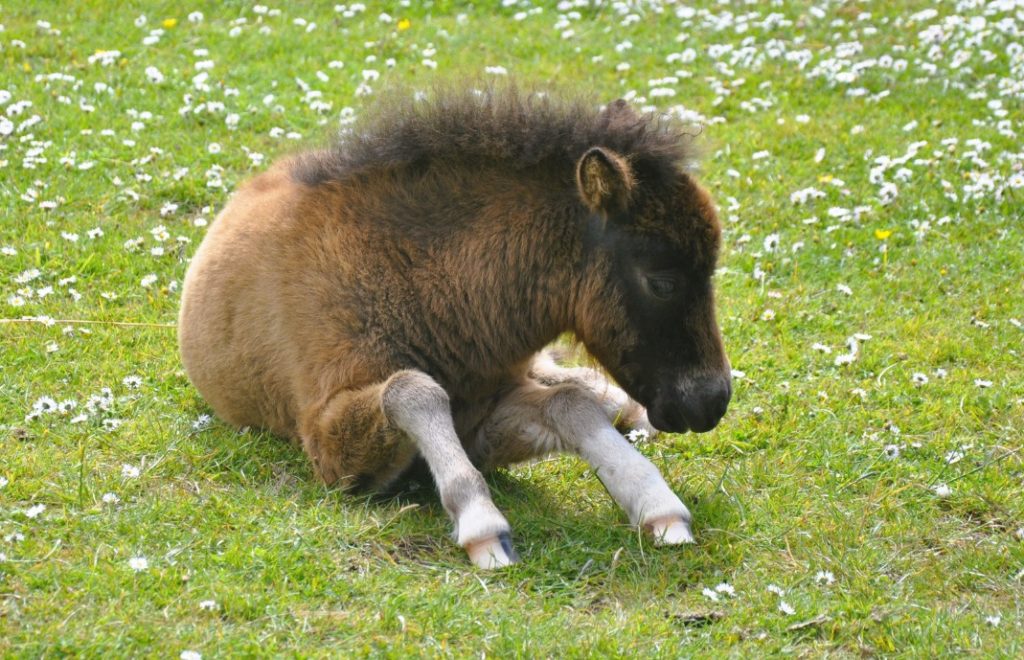
A true Shetlander
The Shetland pony hails from the windswept Shetland Islands, located northeast of mainland Scotland. These remote isles are known for their stark, treeless landscapes, where thin soils, hardy grasses, stone-strewn hills, and relentless winds shape both land and life.
It’s precisely this rugged environment that has given rise to the pony’s most distinctive traits – from its small but powerful frame to its thick, weather-resistant coat and incredible endurance.
In every way, the Shetland pony is a reflection of its homeland: tough, resilient, and beautifully adapted to the wild north.
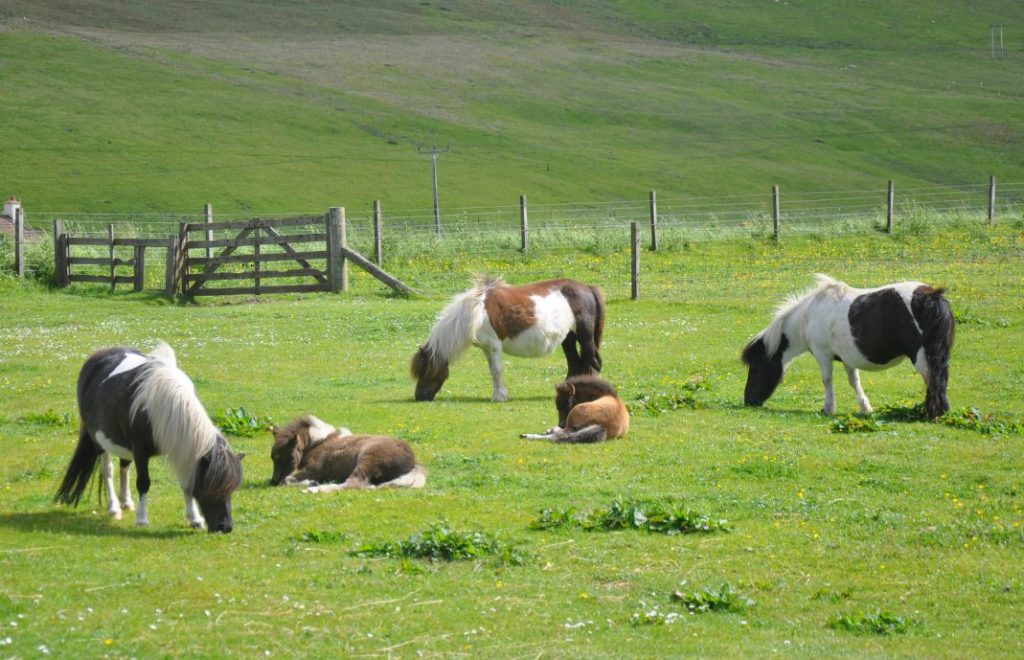
The Shetland Pony – An ancient island resident
Shetland ponies have called these remote islands home since the Bronze Age, with researchers estimating their presence here stretches back as far as 8,000 years. Archaeological discoveries reveal that small ponies roamed Shetland as early as 3000 BC, though the exact origins of this diminutive yet powerful breed remain shrouded in mystery and debate.
One theory suggests the ponies may have arrived from Norway, brought by early settlers or seafarers. However, since the Shetland pony is considered a warm-blooded breed, many experts believe its roots lie further south than Scandinavia.
Another compelling theory is that the breed migrated from southern Europe, traveling across ancient land bridges and ice-covered terrain. Over time, it’s believed that these early ponies interbred with Oriental stock, giving rise to the modern Shetland pony – a remarkable blend of ancient endurance and exotic lineage.
Whatever its true origins, the Shetland pony remains a living link to the deep past – a resilient little horse shaped by millennia of wind, stone, and sea.
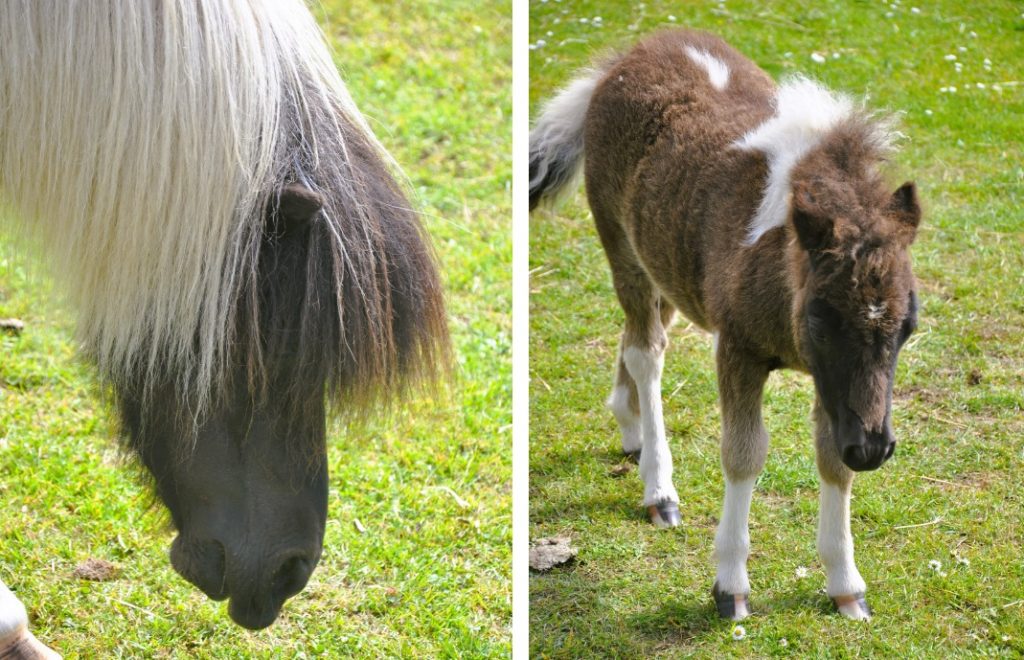
From farmlands to coal mines: The working life of the Shetland Pony
For centuries, Shetland ponies played a vital role in everyday life, helping farmers with agriculture and transportation across the islands’ challenging terrain.
But their role took a dramatic turn in the 1840s, when the British government passed a law banning women and children from working underground in coal mines. Due to their compact size and immense strength, Shetland ponies were brought in to take over the job. They could easily navigate narrow tunnels and haul heavy loads of coal, performing tasks once done by humans.
Despite their small stature, Shetland ponies are astonishingly strong – capable of pulling twice their own body weight, a feat that even the largest draft horses often can’t match.
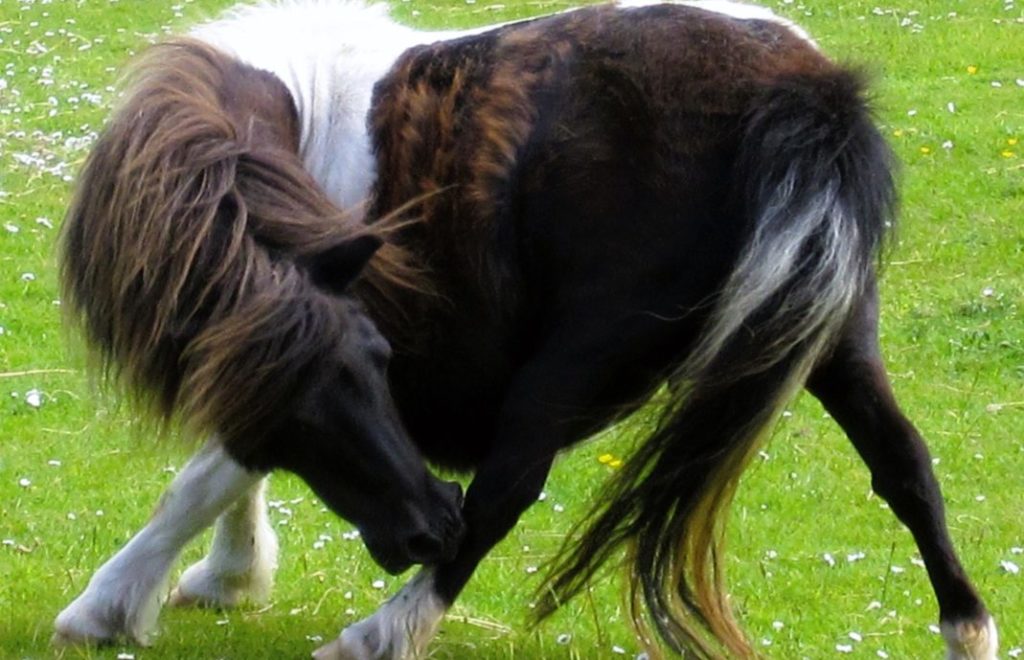
The rise of Shetland Pony breeding
As demand for these sturdy ponies grew – especially in mining operations – exports from the Shetland Islands increased rapidly. By the 1880s, organized breeding programs were established to ensure the preservation and quality of the breed.
In 1890, the Shetland Pony Stud-Book Society was founded with the mission of officially registering purebred ponies and maintaining breed standards.
Just a few years earlier, in 1885, the first Shetland ponies had already made their way across the Atlantic to the United States, where their popularity – and legacy – continued to grow.
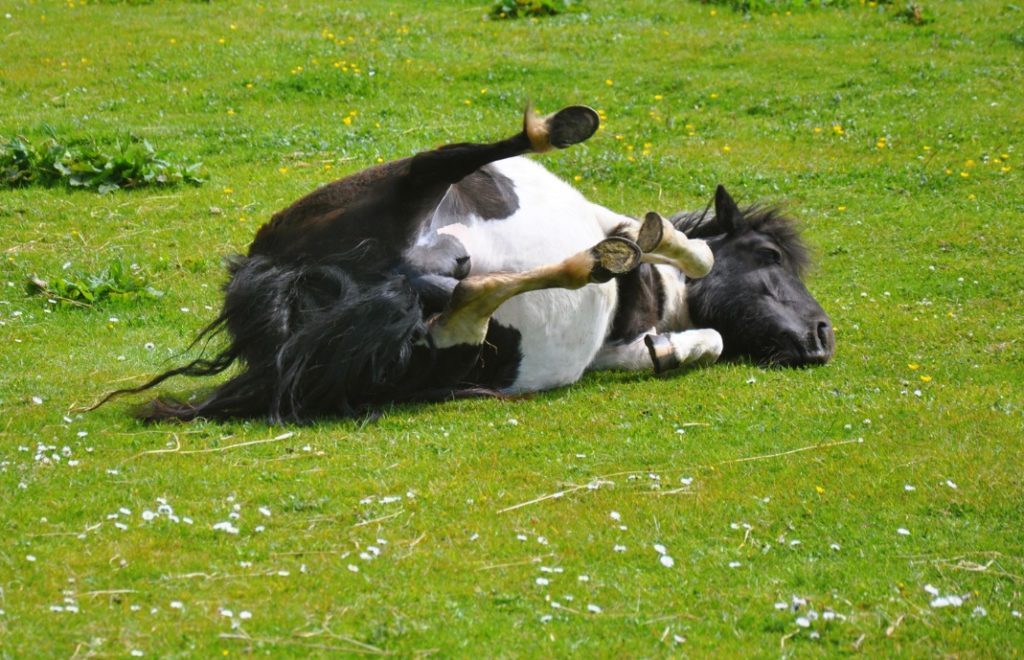
One of the smallest horse breeds in the world
Standing at an average height of just 102 cm – with American-bred Shetland ponies reaching up to 107 cm – the Shetland pony ranks as one of the smallest horse breeds on the planet, second only to a few rare dwarf pony types.
But don’t let their tiny size fool you.
Small but mighty: The strength of the Shetland Pony
Weighing in at around 150 kg, the Shetland pony boasts a remarkably compact physique, with a thick neck, short sturdy legs, and a build that’s all muscle and power.
Far more than just adorable, the Shetland pony is also one of the strongest pony breeds in the world. These little powerhouses can pull twice their own body weight – a feat that even large draft horses often struggle to match.
Their strength, combined with their charm and hardiness, makes the Shetland pony a true marvel in miniature.
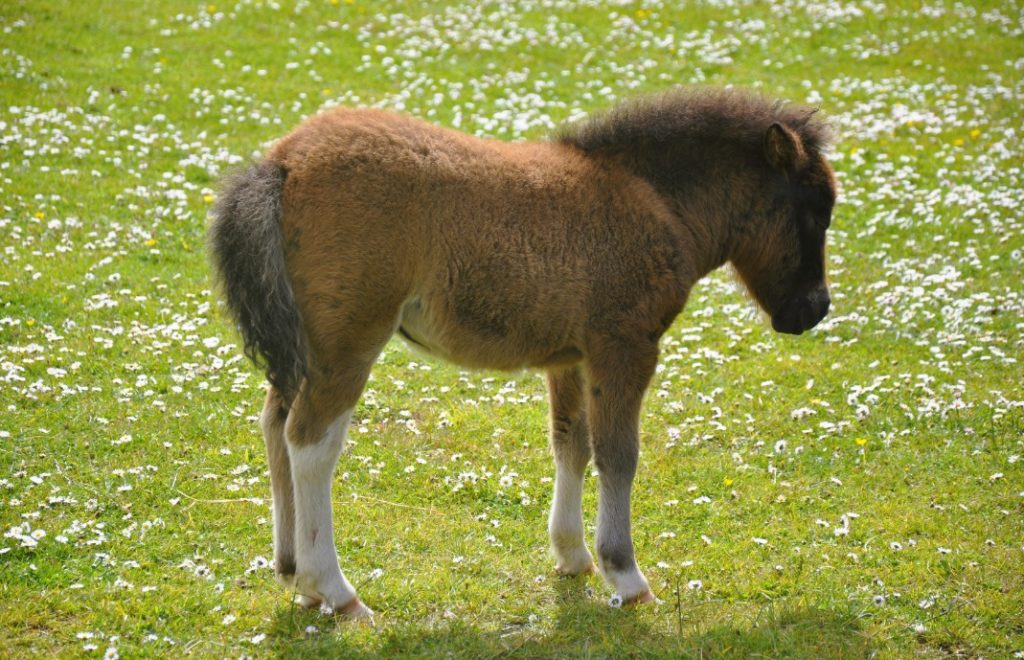
Thick coat and flowing mane: Nature’s armor
One of the Shetland pony’s most distinctive features is its dense coat and luxurious mane – traits that aren’t just beautiful, but brilliantly practical.
In the harsh winters of the Shetland Islands, these ponies grow a double layer of fur, acting as a natural barrier against biting winds and relentless rain. Come summer, they shed the extra insulation, revealing a short, sleek, and glossy coat that helps them stay cool in warmer weather.
A colorful character
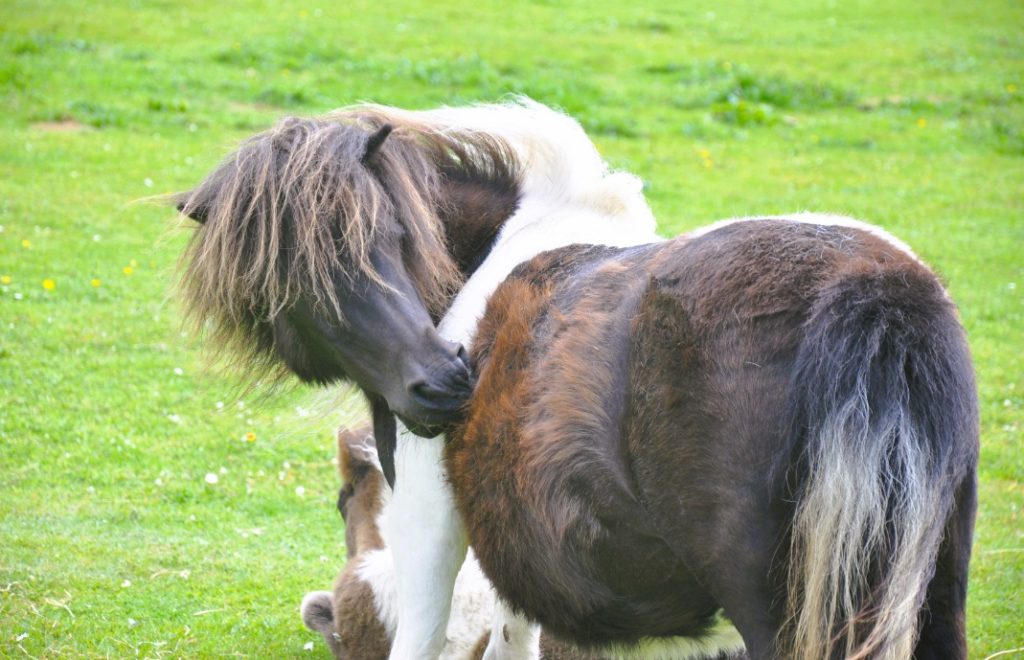
Shetland ponies come in an impressive variety of colors, from classic black and rich chestnut to soft grey-beige and striking pinto-white with bold patches of brown or black.
You might also spot ponies with “piebald” coats (black and white) or “skewbald” patterns (white mixed with any color except black). Their wide range of colors adds to their charm, making each pony as unique and eye-catching as the next.
Whether standing proud in a snowy field or grazing under a summer sky, the Shetland pony is a true icon of rugged beauty and natural adaptation.

Lovers of water
Shetland ponies have a well-known fondness for water. Naturally skilled swimmers, they require no special training when it comes to splashing around or crossing rivers. It’s simply in their nature.
This affinity becomes a real blessing on hot summer days, when they’ll often take a refreshing dip to cool off – yet another reminder of how adaptable and spirited these ponies truly are.
Simple diet, ancient instincts
Centuries of surviving Shetland’s long, harsh winters have shaped the ponies into remarkably efficient foragers. With limited food sources available, they evolved to thrive on a minimal diet, supported by a slow and steady metabolism.
Today, their ideal menu is high-quality hay and natural grasses. While they may look like they could eat endlessly, overfeeding – especially on rich plants like clover – can quickly lead to weight issues, making careful diet management essential.
These ponies are hardy, resilient, and surprisingly low-maintenance – proof that nature knows how to build for survival in even the toughest of environments.
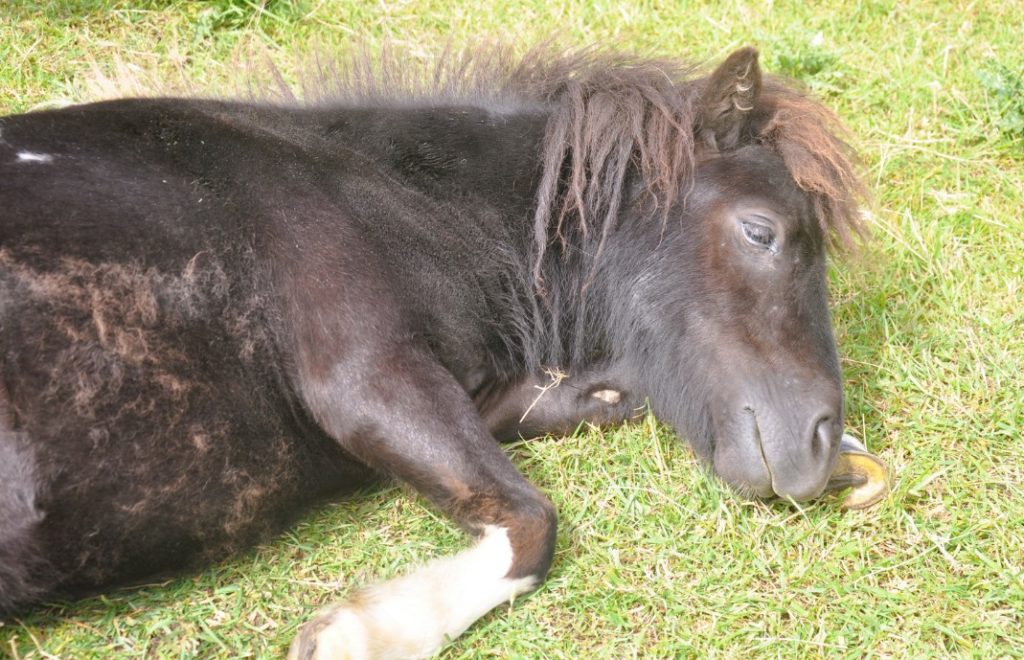
Pregnancy and foals
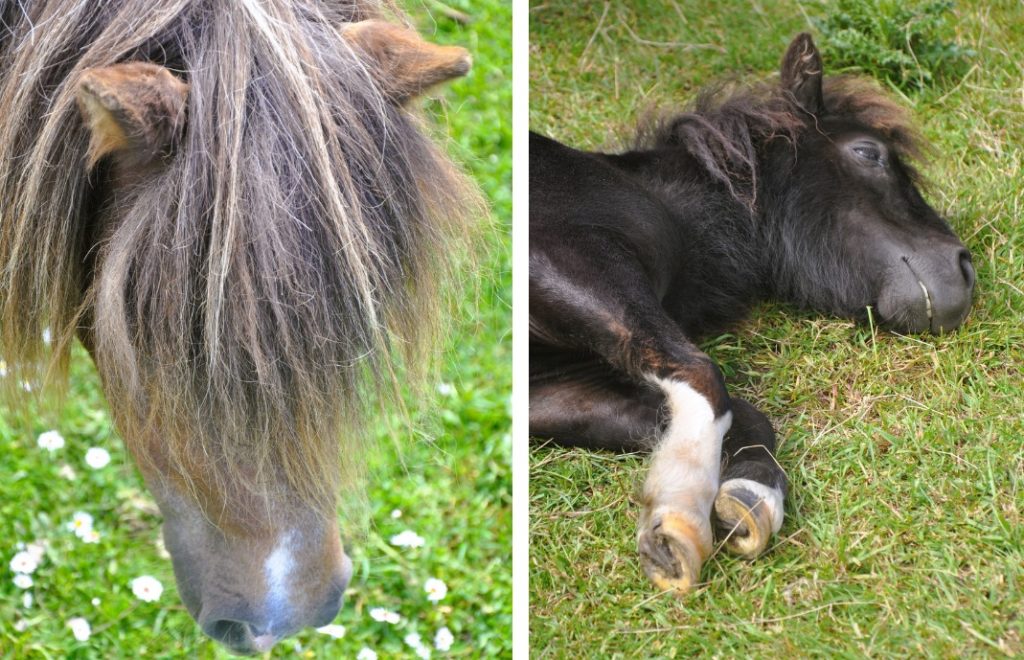
A Shetland pony’s pregnancy lasts about 11 months, much like other horse and pony breeds. Once born, the foal stays close to its mother for around five to six months, learning, growing, and gaining strength.
In true pony fashion, Shetland foals are quick on their feet – literally. They’re able to stand within an hour of birth and begin walking shortly after, a testament to their resilience and independence from the very start.
A remarkable lifespan
Shetland ponies are known for their impressive longevity, often living up to 30 years or more – longer than most horse breeds.
Studies have shown that Shetlands possess a more efficient respiratory system during exercise, along with thicker, more compact bone structure. While they aren’t as fast as larger horses, these physiological traits contribute to their robust health and extended lifespan.
The most famous example? A pony named Sugar Puff, who passed away in 2007 at the incredible age of 56, holding the record as one of the oldest ponies ever recorded.
Strong, smart, and full of personality, the Shetland pony isn’t just adorable – it’s built for a lifetime.
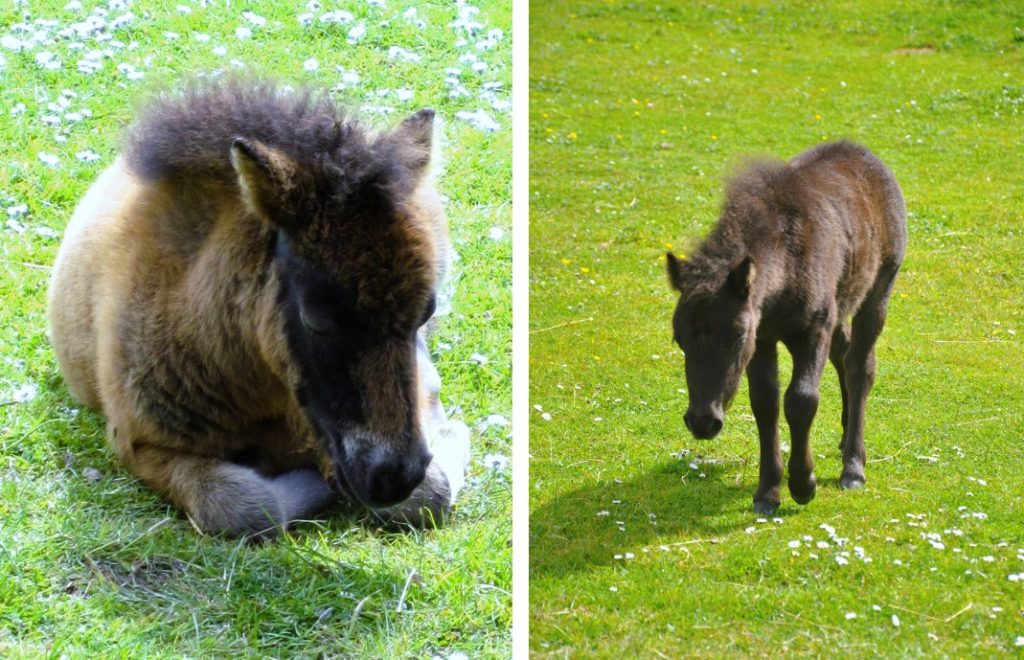
A child-friendly breed
With their small size, gentle temperament, and playful nature, Shetland ponies are the ideal companions for children. Whether it’s a child’s very first ride or they’ve already had some time in the saddle, Shetland ponies offer a safe and approachable introduction to horseback riding.
Children can usually ride Shetlands until around the age of 12, depending on their size and experience. Their calm demeanor makes them a hit with young riders – but don’t let the sweet face fool you.
These little charmers can also be stubborn, strong-willed, and fiercely independent. That’s why consistent training and adult supervision are essential to ensure they remain well-mannered and responsive.
Bringing home a Shetland Pony
Thinking of adding one to the family? The cost of owning a Shetland pony is surprisingly accessible, ranging from around USD 500 to USD 1,500, depending on lineage, training, and age.
There are also many rescue and adoption organizations that rehome ponies in need of a loving family. With the right care, space, and commitment, owning a Shetland pony can be a magical and rewarding experience – especially for a child growing up with a best friend on four hooves.
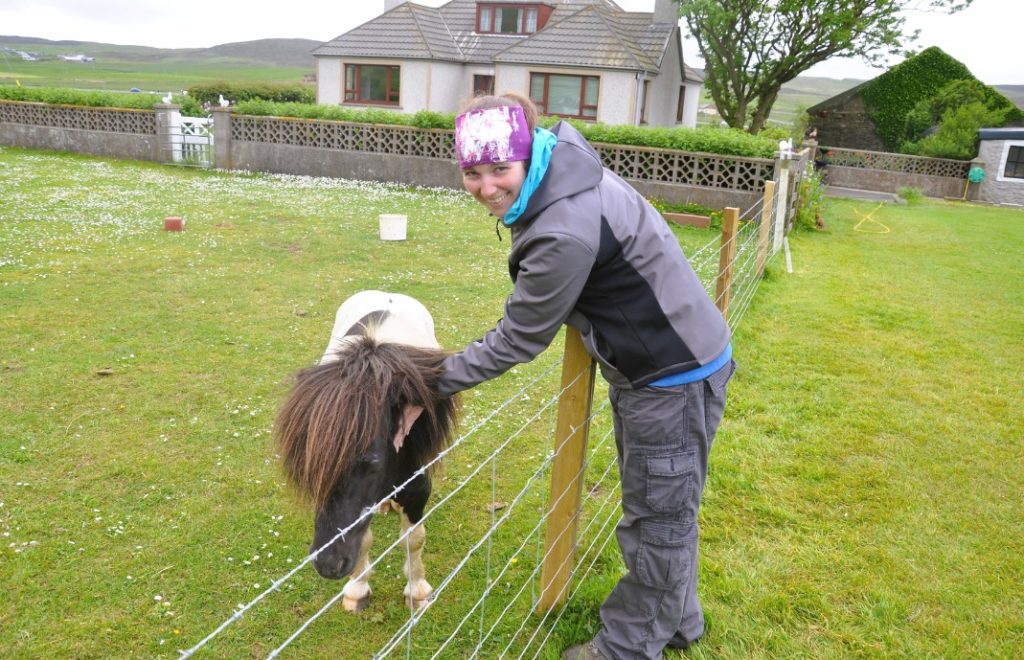
Social by nature
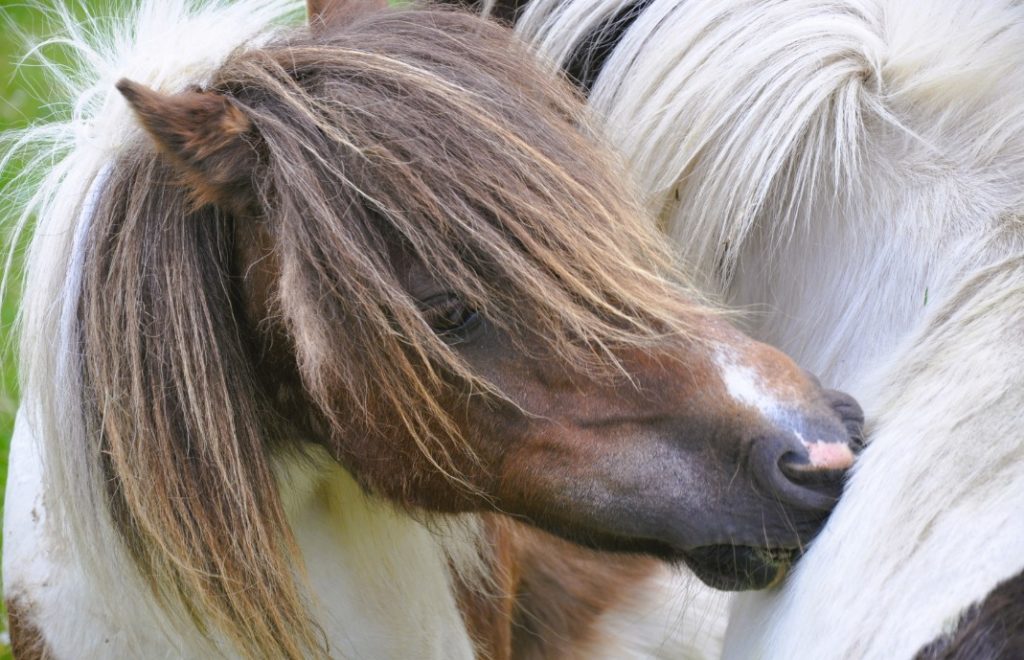
Shetland ponies are deeply social animals, happiest when living with companions. Their instinct to form herds evolved over thousands of years as a survival strategy – offering safety, connection, and comfort in numbers.
If you’re planning to buy or adopt a Shetland pony, it’s strongly recommended to have at least two. If that’s not possible, ensure your pony has another animal companion – whether it’s another horse, a donkey, or even a cow. What matters most is that they aren’t left alone, as isolation can lead to stress and behavioral issues.
They may be small, but they need space
Despite their compact size, Shetland ponies require plenty of room to roam. Ideally, their pasture should be at least 4,000 square meters (around one acre), giving them enough space to graze, trot, and stretch their legs naturally.
Though incredibly hardy and well-adapted to outdoor living, Shetlands still need a proper shelter or stable – a safe place to retreat from heat, cold, wind, or rain.
Caring for a Shetland pony isn’t just about space and shelter. It’s about understanding that behind those bright eyes and bushy manes is a sensitive, social creature who thrives on companionship and room to move.
Laws and legends: The Shetland Pony’s protected past
As early as the 1700s, Shetland pony owners began marking their animals – a practice born out of necessity during a time of unrest and exploitation.
During this period, the islands of Orkney and Shetland were ruled by the notorious Earl Patrick Stewart, whose oppressive policies made him deeply unpopular. He infamously declared that any free-roaming ponies were “ownerless” – a claim designed to seize livestock from unsuspecting islanders.
Adding to the problem, tail hair from Shetland ponies was highly prized. Its strength and flexibility made it ideal for fishing lines and for stringing the bows of the Shetland fiddle, known locally as a gue or gu. But removing this hair was a delicate matter. If too much was taken from the tail or mane, the pony would suffer exposure to Shetland’s harsh climate.
As a result, removing tail hair was strictly forbidden, unless done with great care and in minimal amounts.
And it wasn’t just hair theft that carried consequences. Riding another man’s pony without permission was considered a serious offense, punishable by harsh penalties. In a culture where ponies were vital for survival, ownership and respect for these animals ran deep.
Today, these stories form a rich chapter in the Shetland pony’s history – reminding us how deeply they’ve been woven into island life. Not just as animals, but as valued and fiercely protected members of the community.
More ponies than people
Shetland ponies may be bred for export and riding across the globe, but the finest ponies – the true champions of the breed – remain on Shetland soil.
Today, there are an estimated 100,000 Shetland ponies worldwide, meaning these little equines outnumber the human population of Shetland by nearly four to one.
On the islands themselves, around 1,000 ponies roam under the care of 170 proud owners. They’re not just livestock – they’re living heritage, and an unmistakable part of the landscape.
Whether grazing on open moorland or trotting along stone-lined fields, Shetland ponies are a common and cherished sight – and without question, the islands’ most beloved attraction.
So if you’re lucky enough to visit, be sure to stop and say hello to one of these pint-sized local celebrities. You’ll understand instantly why they’ve captured hearts for generations.
Get to know more about Scotland’s remarkable wildlife:
Meet the Highland Cattle: Scotland’s iconic gentle giants
The best places to see puffins in the Orkney Islands
Shetland is beyond any other island.
Click here for more inspiration to visit this unique place
